


It’s funny how certain dishes just have this incredible power to transport you back to childhood. For me, Chili Mac is one of those magical meals. Growing up, it was the ultimate comfort food – warm, cheesy, and utterly satisfying after a long day of school or a chilly afternoon playing outside. But as I transitioned to a vegetarian lifestyle, I wondered if I could recapture that nostalgic joy without the meat. Let me tell you, this Vegetarian Chili Mac recipe is not just a successful meatless makeover; it’s a revelation! My family, who are a mix of vegetarians and meat-eaters, absolutely adore it. The rich, smoky chili, brimming with hearty beans and vegetables, nestled into a creamy, cheesy bed of macaroni – it’s a flavour and texture explosion that’s both familiar and excitingly new. Honestly, I think I might even prefer this vegetarian version to the original! It’s become a staple in our house for cozy weeknight dinners, potlucks with friends, and even as a fun, crowd-pleasing dish for game days. It’s surprisingly easy to throw together, packed with flavour, and guaranteed to bring smiles to everyone around the table. If you’re craving a comforting, hearty, and incredibly delicious vegetarian meal that will satisfy your chili mac desires, this recipe is an absolute must-try. Get ready to experience a new family favourite!
Ingredients for Hearty Vegetarian Chili Mac
The secret to an exceptional Vegetarian Chili Mac lies in using quality ingredients that build layers of flavour and texture. This recipe focuses on creating a robust and satisfying chili base that perfectly complements the creamy macaroni and cheese. Here’s a comprehensive list of ingredients you’ll need, along with detailed notes and substitution options to help you customize this dish to your liking:
For the Flavorful Vegetarian Chili:
- Olive Oil (2 tablespoons): Olive oil serves as the base for sautéing the vegetables and building flavour. Use extra virgin olive oil for the best flavour, but regular olive oil will also work. Substitution: Any neutral cooking oil like canola oil or avocado oil can be used.
- Yellow Onion (1 large, diced): Onion forms the aromatic foundation of the chili. Yellow onions are preferred for their balanced flavour when cooked, but white onions or even red onions (for a slightly sharper taste) can be used. Dicing ensures even cooking.
- Garlic (4 cloves, minced): Garlic is essential for adding pungent, aromatic depth to the chili. Freshly minced garlic is highly recommended for the best flavour. Substitution: If using garlic powder, start with 1 teaspoon and adjust to taste, but fresh garlic is far superior.
- Bell Pepper (1 large, diced – any color, or a mix): Bell peppers add sweetness, colour, and a slight crunch to the chili. Use any colour bell pepper you prefer – green, red, yellow, or orange, or a mix for visual appeal and varied flavour profiles.
- Ground Meat Substitute (1 lb, Plant-Based): This is the heart of the vegetarian chili. Options include:
- TVP (Textured Vegetable Protein): TVP is a dehydrated soy product that rehydrates and takes on a ground meat-like texture. It’s high in protein and a great budget-friendly option. You’ll need to rehydrate it according to package directions, often with hot vegetable broth.
- Lentils (1 cup, dry, brown or green): Lentils provide a hearty, earthy flavour and excellent texture. Brown or green lentils hold their shape well during cooking. Red lentils tend to become mushy and are less suitable for this recipe. You’ll need to cook the lentils separately until just tender before adding them to the chili.
- Canned Lentils (2 cans, 15 oz each, drained and rinsed): For a quicker option, canned lentils work well. Drain and rinse them thoroughly before adding to the chili.
- Mushrooms (8 oz, cremini or portobello, finely chopped): Finely chopped mushrooms, especially cremini or portobello, offer a meaty umami flavour and texture. Sauté them well to release their moisture and intensify their flavour.
- Walnuts (1 cup, chopped): Chopped walnuts provide a unique texture and nutty flavour. Toast them lightly before adding to the chili for enhanced flavour.
- Commercial Plant-Based Ground Meat: Several brands offer pre-made plant-based ground meat alternatives made from soy, pea protein, or other plant sources. These are convenient and often seasoned, but can be pricier.
- Kidney Beans (1 can, 15 oz, drained and rinsed): Kidney beans are classic in chili, offering a creamy texture and mild flavour. Dark or light kidney beans both work well.
- Black Beans (1 can, 15 oz, drained and rinsed): Black beans add a slightly sweeter flavour and different texture compared to kidney beans, contributing to the complexity of the chili.
- Diced Tomatoes (1 can, 28 oz, undrained): Diced tomatoes form the liquid base of the chili and provide essential tomato flavour and acidity. Use undrained for the liquid content.
- Crushed Tomatoes (1 can, 15 oz): Crushed tomatoes add a smoother texture and richer tomato flavour to the chili.
- Tomato Paste (2 tablespoons): Tomato paste intensifies the tomato flavour and adds depth and richness to the chili base.
- Vegetable Broth (1 cup, low sodium): Vegetable broth adds moisture and enhances the overall flavour of the chili. Low sodium broth allows you to control the salt level. Substitution: Water can be used if broth is unavailable, but broth adds more flavour.
- Chili Powder (2-3 tablespoons, adjust to taste): Chili powder is the primary spice blend in chili, providing warmth and depth of flavour. Adjust the amount to your preferred spice level.
- Ground Cumin (2 teaspoons): Cumin adds an earthy, warm, and slightly smoky flavour that is characteristic of chili.
- Dried Oregano (1 teaspoon): Oregano adds a slightly peppery and aromatic note to the chili.
- Smoked Paprika (1 teaspoon): Smoked paprika is crucial for adding a smoky depth of flavour, mimicking the smoky notes traditionally found in chili with meat. Use Spanish smoked paprika (pimentón de la Vera) for the most authentic flavour.
- Salt and Black Pepper (to taste): Seasoning is essential. Adjust salt and pepper throughout the cooking process to bring out the flavours of all the ingredients.
- Optional Chili Ingredients (for extra flavour):
- Cocoa Powder (1 teaspoon, unsweetened): Adds depth and richness, enhancing the chili’s complexity.
- Cinnamon (1/2 teaspoon, ground): Adds warmth and subtle sweetness.
- Bay Leaf (1): Adds a subtle, earthy aroma (remove before serving).
- Apple Cider Vinegar (1 tablespoon): Adds brightness and acidity to balance the richness.
- Maple Syrup or Brown Sugar (1 teaspoon): Adds a touch of sweetness to balance the spices (especially helpful if using very acidic tomatoes).
- Jalapeño Pepper (1, minced, optional): For extra heat, add a minced jalapeño pepper (remove seeds for less heat).
For the Creamy Macaroni and Cheese:
- Elbow Macaroni (1 lb): Elbow macaroni is the classic choice for mac and cheese, but other short pasta shapes like shells, cavatappi, or rotini will also work.
- Butter (1/4 cup, unsalted): Butter is the base for the roux in the cheese sauce, adding richness and flavour. Vegan Substitution: Use vegan butter or olive oil for a dairy-free option.
- All-Purpose Flour (1/4 cup): Flour is used to make a roux, which thickens the cheese sauce. Gluten-free all-purpose flour blends can be used for a gluten-free option.
- Milk (3 cups): Milk forms the liquid base of the cheese sauce. Whole milk will create the richest sauce, but 2% or even non-dairy milk (like unsweetened almond milk or oat milk) can be used.
- Sharp Cheddar Cheese (8 oz, shredded): Sharp cheddar cheese provides a classic cheesy flavour. Use a good quality cheddar and shred it yourself for smoother melting.
- Monterey Jack Cheese (4 oz, shredded): Monterey Jack cheese adds a creamy melt and mild flavour, complementing the cheddar. Substitution: Pepper Jack for a spicy kick, or other melting cheeses like Gruyere or Fontina.
- Salt, Black Pepper, and Nutmeg (to taste): Season the cheese sauce with salt, pepper, and a pinch of nutmeg for warmth and complexity.
Optional Toppings (for serving):
- Shredded Cheddar Cheese (extra): For topping and extra cheesy goodness.
- Sour Cream or Greek Yogurt (or vegan sour cream): For a cool and tangy contrast.
- Fresh Cilantro (chopped): For freshness and flavour.
- Green Onions (sliced): For mild onion flavour and freshness.
- Diced Avocado: For creaminess and healthy fats.
- Jalapeño Slices (fresh or pickled): For extra heat.
- Tortilla Chips (crushed): For crunch and texture.
Step-by-Step Instructions for Delicious Vegetarian Chili Mac
Making Vegetarian Chili Mac is a satisfying culinary project that’s broken down into manageable steps. First, you’ll create the flavourful chili, then the creamy mac and cheese, and finally combine them for the ultimate comfort food experience. Follow these detailed instructions for perfect results:
Part 1: Preparing the Hearty Vegetarian Chili
- Sauté Aromatics: Heat olive oil in a large pot or Dutch oven over medium heat. Add the diced onion and bell pepper and cook for 5-7 minutes, until softened and translucent. Add the minced garlic and cook for another minute until fragrant, being careful not to burn the garlic.
- Brown the Ground Meat Substitute: Add your chosen ground meat substitute (TVP, lentils, mushrooms, walnuts, or commercial plant-based ground meat) to the pot.
- If using TVP: Ensure it’s rehydrated according to package directions before adding. Sauté for 5-7 minutes, until slightly browned and heated through.
- If using cooked lentils: Add cooked lentils to the pot. Sauté for 2-3 minutes to heat through.
- If using mushrooms: Sauté the chopped mushrooms for 8-10 minutes, until they release their moisture and begin to brown, intensifying their flavour.
- If using walnuts: Add chopped walnuts and toast lightly for 2-3 minutes until fragrant.
- If using commercial plant-based ground meat: Follow package instructions; usually, it just needs to be heated through.
- Bloom the Spices and Tomato Paste: Stir in the tomato paste, chili powder, cumin, oregano, and smoked paprika. Cook for 1-2 minutes, stirring constantly, until fragrant. This step, “blooming” the spices, enhances their flavour and depth.
- Add Tomatoes and Beans: Pour in the diced tomatoes (undrained) and crushed tomatoes. Add the kidney beans and black beans (drained and rinsed). Stir to combine all ingredients.
- Add Broth and Simmer: Pour in the vegetable broth. Add the bay leaf (if using). Bring the chili to a simmer, then reduce the heat to low, cover the pot, and simmer for at least 20-30 minutes, or up to 1 hour for deeper flavour development. The longer it simmers, the richer the chili will become. Stir occasionally.
- Season and Adjust: After simmering, season the chili with salt and black pepper to taste. Add any optional chili ingredients like cocoa powder, cinnamon, apple cider vinegar, maple syrup, or jalapeño pepper, if desired. Simmer for another 5-10 minutes to allow the flavours to meld. Remove the bay leaf before proceeding. Taste and adjust seasoning as needed. Keep the chili warm while you prepare the mac and cheese.
Part 2: Making Creamy Macaroni and Cheese
- Cook Macaroni: Cook elbow macaroni according to package directions until al dente. Drain well and set aside.
- Make the Roux: While the pasta is cooking, prepare the cheese sauce. In a separate saucepan, melt butter over medium heat. Add the flour and whisk constantly for 1-2 minutes to cook the roux. It should be smooth and pale golden.
- Whisk in Milk and Thicken: Gradually whisk in the milk, a little at a time, ensuring each addition is fully incorporated before adding more to prevent lumps. Continue whisking until all the milk is added and the sauce is smooth. Increase the heat to medium-high and bring the sauce to a simmer, stirring constantly. Reduce the heat to low and simmer for 5-7 minutes, stirring occasionally, until the sauce thickens slightly and coats the back of a spoon.
- Melt in the Cheese: Remove the saucepan from the heat. Gradually add the shredded cheddar cheese and Monterey Jack cheese, stirring constantly until the cheese is completely melted and the sauce is smooth and creamy.
- Season the Cheese Sauce: Season the cheese sauce with salt, black pepper, and a pinch of nutmeg to taste.
- Combine Macaroni and Cheese Sauce: Add the cooked and drained macaroni to the cheese sauce. Stir to coat the macaroni evenly with the cheese sauce.
Part 3: Assembling and Serving Vegetarian Chili Mac
- Combine Chili and Mac and Cheese: There are two main ways to combine the chili and mac and cheese:
- Layered Casserole Style: In a large baking dish (9×13 inch), spread half of the macaroni and cheese on the bottom. Top with all of the vegetarian chili. Spread the remaining macaroni and cheese over the chili layer.
- Combined in a Pot: For a quicker and more rustic approach, add the macaroni and cheese directly to the pot of chili and stir to combine everything evenly.
- Bake (Optional for Casserole Style): If making a casserole, bake in a preheated oven at 350°F (175°C) for 20-25 minutes, or until heated through and bubbly around the edges. For a golden brown top, you can broil for the last 1-2 minutes, watching carefully to prevent burning.
- Serve and Garnish: Serve the Vegetarian Chili Mac hot, directly from the casserole dish or pot. Offer a variety of toppings for guests to customize their bowls, such as shredded cheddar cheese, sour cream (or vegan sour cream), fresh cilantro, green onions, diced avocado, jalapeño slices, and crushed tortilla chips. Enjoy this ultimate vegetarian comfort food!
Nutrition Facts for Vegetarian Chili Mac
This Vegetarian Chili Mac is a hearty and satisfying meal that provides a good balance of carbohydrates, protein, and some healthy fats, largely thanks to the beans, cheese, and olive oil. Here’s an approximate nutritional breakdown per serving. Keep in mind that these values are estimates and can vary based on specific ingredients, brands, and portion sizes.
- Servings: 6-8 servings
- Serving Size: Approximately 1.5-2 cups
Approximate Nutritional Values per Serving (estimated for 8 servings, using TVP as meat substitute and whole milk):
- Calories: 450-550 kcal
- Protein: 25-30 g
- Fat: 20-25 g
- Saturated Fat: 10-12 g
- Monounsaturated Fat: 6-8 g
- Polyunsaturated Fat: 2-3 g
- Cholesterol: 50-60 mg
- Sodium: 700-900 mg (depending on broth, cheese, and added salt)
- Carbohydrates: 50-60 g
- Fiber: 10-12 g
- Sugar: 8-10 g
- Vitamins and Minerals (approximate, significant sources):
- Vitamin A
- Vitamin C
- Vitamin K
- Folate
- Iron
- Potassium
- Calcium
Important Notes on Nutrition:
- Good Source of Protein: The beans, cheese, and ground meat substitute (especially TVP or lentils) provide a significant amount of protein, making this a satisfying and muscle-supporting meal.
- High in Fiber: Beans and vegetables contribute a high amount of dietary fiber, which is beneficial for digestive health, satiety, and blood sugar control.
- Calcium-Rich: The cheese provides a good source of calcium, important for bone health.
- Sodium Content: The sodium content can be moderately high, especially depending on the cheese, broth, and canned beans used. Using low-sodium broth, rinsing canned beans, and using lower-sodium cheese options can help reduce sodium content.
- Calorie Density: This is a calorie-dense meal due to the cheese and pasta. Portion control is advisable for weight management.
- Vegetarian-Friendly: This recipe is designed to be vegetarian. For vegan options, see substitution notes for cheese, butter, and milk.
Disclaimer: These nutritional values are estimates based on common ingredients and online nutritional databases. For precise nutritional information, it is recommended to use a nutrition calculator with the specific brands and quantities of ingredients you use.
Preparation Time for Vegetarian Chili Mac
Planning your time in the kitchen is key, especially when making a multi-component dish like Vegetarian Chili Mac. Here’s a breakdown of the preparation and cooking times to help you manage your cooking process efficiently:
- Prep Time: Approximately 30-45 minutes
- Vegetable Chopping: Washing, peeling, and chopping onions, bell peppers, garlic, and any other vegetables you are adding to the chili.
- Ingredient Measurement: Gathering and measuring all spices, beans, tomatoes, pasta, cheese, and other ingredients.
- TVP Rehydration (if using): Rehydrating TVP according to package instructions.
- Cheese Shredding: Shredding cheese (if buying blocks of cheese).
- Cook Time: Approximately 45-60 minutes
- Chili Cooking: 30-45 minutes (including sautéing, simmering)
- Mac and Cheese Cooking: 15-20 minutes (including pasta cooking, cheese sauce making)
- Baking Time (Optional Casserole): 20-25 minutes
- Resting Time: Minimal resting time is needed.
- Total Time: Approximately 1 hour 15 minutes – 1 hour 45 minutes
Tips for Time Management:
- Mise en Place is Key: Complete all vegetable chopping, spice measuring, and cheese shredding before you start cooking. This significantly streamlines the cooking process.
- Utilize Canned Beans and Tomatoes: Canned beans and diced/crushed tomatoes save considerable time compared to cooking dried beans or using fresh tomatoes.
- Multi-tasking: While the chili is simmering, you can cook the macaroni and prepare the cheese sauce simultaneously. This maximizes your time in the kitchen.
- Pre-Shredded Cheese: Using pre-shredded cheese is a time-saver, although freshly shredded cheese melts smoother and often has better flavour.
- Make Chili Ahead: The chili component can be made a day or two in advance. In fact, the flavour of chili often improves after a day or two in the refrigerator. Reheat the chili while you make the mac and cheese on the day you plan to serve it.
- Read Recipe Before Starting: Read through the entire recipe before you begin cooking to understand all the steps and timings involved. This helps you plan your workflow and ensures a smoother cooking experience.
- Simplified Mac and Cheese (Optional): For a quicker mac and cheese, you can use a “no-roux” method, where you melt cheese directly into warm milk or cream, although the roux-based method is more stable and classic.
While Vegetarian Chili Mac isn’t a lightning-fast weeknight meal, the hands-on cooking time is manageable, especially with good preparation. The comforting and flavourful result is well worth the time invested, and it’s a dish that can easily feed a crowd or provide delicious leftovers.
How to Serve Vegetarian Chili Mac
Serving Vegetarian Chili Mac is all about embracing the comfort food vibe and offering plenty of customization options. Here are some ideas for serving your chili mac to make it a crowd-pleasing and enjoyable meal:
Serving Suggestions:
- Bowls, Casual and Cozy: The most classic and comfortable way to serve chili mac is in large bowls. This emphasizes the hearty, informal nature of the dish.
- Casserole Dish, Family Style: If you baked it as a casserole, serve it directly from the baking dish. This is visually appealing and great for family dinners or potlucks.
- Individual Casserole Dishes (Optional): For a slightly more elegant presentation, you can portion the chili mac into individual oven-safe dishes before baking (if baking).
- Topping Bar: Set up a topping bar with various options so everyone can customize their chili mac to their liking. This is especially fun for gatherings and allows for personal preferences.
Topping Ideas (Create a Topping Bar!):
- Shredded Cheese (Cheddar, Monterey Jack, Pepper Jack): Extra cheese is always welcome! Offer a variety for different flavour profiles.
- Sour Cream or Greek Yogurt (Regular or Vegan): Provides a cool, tangy contrast to the rich chili mac.
- Fresh Cilantro (Chopped): Adds freshness and a bright, herbaceous flavour.
- Green Onions (Sliced): Mild onion flavour and a pop of colour.
- Diced Avocado or Guacamole: Creaminess and healthy fats.
- Jalapeño Slices (Fresh or Pickled): For those who like extra heat.
- Hot Sauce (Various Types): Offer different hot sauce options for varying levels of spice and flavour.
- Crushed Tortilla Chips or Fritos: Adds a satisfying crunch and salty flavour.
- Pickled Red Onions: Tangy and slightly sweet pickled onions add a nice bite.
- Black Olives (Sliced): Adds a salty, briny flavour.
- Diced Tomatoes or Pico de Gallo: Fresh tomato flavour and acidity.
- Corn Kernels (Roasted or Grilled): Adds sweetness and texture.
- Sautéed Onions and Peppers: For extra vegetables and flavour.
Side Dish Suggestions:
- Cornbread: Classic chili accompaniment! Serve warm cornbread on the side for soaking up the chili mac juices.
- Garlic Bread or Texas Toast: Buttery, garlicky bread is another great option for dipping and enjoying with chili mac.
- Simple Green Salad: A light and refreshing green salad with a vinaigrette provides a nice contrast to the richness of the chili mac.
- Coleslaw: Creamy or vinegar-based coleslaw adds a cool and crunchy element.
- Side of Steamed or Roasted Vegetables: Broccoli, green beans, or carrots can add a healthy and lighter side to balance the meal.
Drink Pairings:
- Beer: A cold beer, especially a lager or amber ale, pairs well with chili mac.
- Soda: Classic comfort food drinks like cola or root beer are always a hit.
- Iced Tea or Lemonade: Refreshing non-alcoholic options.
- Milk (for kids and the ultra-comfort food experience): A glass of cold milk can enhance the nostalgic comfort food feeling.
Ambiance and Setting:
- Casual and Relaxed: Chili mac is best enjoyed in a relaxed and informal setting.
- Game Day or Movie Night: Perfect for game day gatherings, movie nights, or casual weeknight dinners.
- Cozy Atmosphere: Create a cozy atmosphere with comfortable seating, maybe a blanket, and your favourite people.
Additional Tips for Exceptional Vegetarian Chili Mac
To take your Vegetarian Chili Mac from good to outstanding, consider these five additional tips that will enhance flavour, texture, and overall enjoyment:
- Spice it Up (or Down): Adjust the Heat Level: Chili is all about flavour, and spice is a key component. This recipe provides a moderate spice level, but you can easily adjust it to your preference.
- For more heat: Add more chili powder, a pinch of cayenne pepper, minced jalapeño peppers (with seeds for more heat, without for less), or your favourite hot sauce to the chili while it simmers.
- For milder chili: Start with less chili powder (2 tablespoons instead of 3), omit the jalapeño, and ensure your chili powder is mild, not hot. You can always add a touch of sweetness (maple syrup or brown sugar) to balance any spice that is present. Remember, you can always add spice later, but it’s harder to remove it once it’s in the chili.
- Cheese Makes it Better: Experiment with Cheese Varieties: While cheddar and Monterey Jack are a classic and delicious combination, don’t be afraid to experiment with different cheeses in your mac and cheese sauce.
- Sharp Cheeses: White cheddar, sharp provolone, or Gruyere will add more intense flavour.
- Smoky Cheeses: Smoked Gouda or smoked cheddar will complement the smoked paprika in the chili and add a wonderful depth.
- Spicy Cheeses: Pepper Jack or habanero cheddar will add a spicy kick to the mac and cheese.
- Creamy Cheeses: Fontina or Havarti will enhance the creaminess of the sauce.
- Vegan Cheese: For a vegan version, use a blend of good quality vegan cheddar and mozzarella shreds, or experiment with nutritional yeast for a cheesy flavour boost.
- Make Ahead Magic: Chili Mac is Great for Meal Prep: Vegetarian Chili Mac is an excellent dish for making ahead, and it actually tastes even better the next day as the flavours meld together.
- Make the Chili in Advance: The chili component can be made 1-2 days ahead of time and stored in the refrigerator. Reheat it on the stovetop before making the mac and cheese and combining.
- Assemble Ahead (Unbaked Casserole): You can assemble the chili mac casserole (layering chili and mac and cheese in a baking dish) a few hours ahead of time and keep it covered in the refrigerator. Bake it just before serving, adding a few extra minutes to the baking time if it’s cold from the fridge.
- Leftovers are Delicious: Leftover chili mac reheats beautifully in the microwave or oven. Store leftovers in airtight containers in the refrigerator for up to 3-4 days.
- Texture is Key: Add Crunch and Variety: To elevate the texture of your chili mac beyond just creamy and cheesy, incorporate elements of crunch and variety.
- Toppings: As mentioned in the serving section, toppings like crushed tortilla chips, Fritos, crispy fried onions, or toasted breadcrumbs add a satisfying crunch.
- Vegetable Texture: Don’t overcook all the vegetables in the chili to mush. Keep some bell pepper and onion with a bit of bite for textural contrast.
- Pasta Shape: Experiment with different pasta shapes for the mac and cheese. Shells or cavatappi can hold more cheese sauce and provide interesting textures.
- Elevate the Chili Base: Layer Flavours Deeply: For a truly complex and flavourful chili base, focus on layering flavours at each stage of cooking.
- Bloom Spices: As instructed in the recipe, blooming the spices in oil before adding liquids is crucial for releasing their full flavour potential.
- Tomato Paste Depth: Sautéing tomato paste with the spices adds a caramelized richness.
- Umami Boosters: Consider adding umami-rich ingredients like a splash of soy sauce or Worcestershire sauce (vegetarian Worcestershire sauce is available), a dash of balsamic vinegar, or a small amount of marmite or vegemite (use sparingly, as they are potent) to the chili for depth.
- Fresh Herbs: Stir in fresh herbs like chopped parsley or oregano at the end of cooking for a bright, fresh finish to the chili.
Frequently Asked Questions (FAQ) about Vegetarian Chili Mac
Here are five frequently asked questions about Vegetarian Chili Mac to help you troubleshoot, customize, and perfect your dish:
Q1: Can I make Vegetarian Chili Mac in a slow cooker or Instant Pot?
A: Yes, both slow cookers and Instant Pots are great options for making Vegetarian Chili Mac, especially the chili component.
- Slow Cooker Chili Mac: For slow cooker chili, sauté the onions, peppers, garlic, and ground meat substitute in a skillet first to develop flavour. Then transfer to a slow cooker. Add all remaining chili ingredients (beans, tomatoes, spices, broth). Cook on low for 6-8 hours or high for 3-4 hours. Cook macaroni separately on the stovetop. Make cheese sauce separately on the stovetop. Combine cooked macaroni, cheese sauce, and slow cooker chili just before serving. You can keep it warm in the slow cooker on the “warm” setting.
- Instant Pot Chili Mac: For Instant Pot chili, use the “Sauté” function to sauté onions, peppers, garlic, and ground meat substitute. Add spices and tomato paste and sauté briefly. Add remaining chili ingredients (beans, tomatoes, broth). Secure the lid and cook on “Manual” or “Pressure Cook” for 8-10 minutes, followed by a natural pressure release for 10-15 minutes, then quick release any remaining pressure. Cook macaroni and make cheese sauce separately on the stovetop while the chili is cooking in the Instant Pot. Combine everything just before serving. Some Instant Pot recipes combine the macaroni directly into the pot, but this can sometimes lead to mushy pasta, so cooking it separately is generally recommended for best texture.
Q2: Can I use different types of beans in my Vegetarian Chili Mac?
A: Absolutely! Feel free to mix and match beans based on your preference and what you have on hand. Great bean options for chili mac include:
- Pinto Beans: Classic chili beans with a creamy texture.
- Cannellini Beans (White Kidney Beans): Mild flavour and creamy texture, similar to kidney beans.
- Great Northern Beans: Mild flavour and slightly firmer texture.
- Red Beans: Another classic chili bean, similar to kidney beans.
- Black-Eyed Peas: Add a slightly different flavour profile and texture.
- Chickpeas (Garbanzo Beans): While less traditional in chili, chickpeas can add a hearty texture and nutty flavour.
You can use a combination of 2-3 different types of beans to add complexity and varied textures to your chili mac.
Q3: Can I freeze Vegetarian Chili Mac?
A: Yes, you can freeze Vegetarian Chili Mac, but the texture of the macaroni and cheese may change slightly upon thawing and reheating. For best results:
- Freeze Chili and Mac and Cheese Separately: For optimal texture, freeze the chili and the mac and cheese separately in airtight containers. Thaw them in the refrigerator overnight. Reheat the chili and mac and cheese separately, and then combine them just before serving. This helps prevent the pasta from becoming too mushy during freezing and thawing.
- Freeze Assembled Chili Mac (Less Ideal Texture): If you want to freeze assembled chili mac, let it cool completely. Portion it into freezer-safe containers or freezer bags. Thaw in the refrigerator overnight. Reheat in the oven at 350°F (175°C) or microwave until heated through. The pasta may be slightly softer after freezing and thawing, but it will still be delicious.
Q4: Can I make Vegetarian Chili Mac gluten-free?
A: Yes, you can easily make Vegetarian Chili Mac gluten-free with a few simple substitutions:
- Gluten-Free Pasta: Use gluten-free elbow macaroni or another gluten-free short pasta shape made from rice, corn, quinoa, or a blend of gluten-free flours.
- Gluten-Free Flour for Roux: Use a gluten-free all-purpose flour blend (that contains xanthan gum or guar gum) in place of all-purpose wheat flour to make the roux for the cheese sauce. Ensure the gluten-free flour blend is designed for baking and cooking.
- Check Ingredient Labels: Double-check labels of all ingredients, especially vegetable broth and any pre-made ground meat substitutes, to ensure they are certified gluten-free, as some may contain hidden gluten.
Q5: What’s the best cheese for Vegetarian Chili Mac?
A: The “best” cheese is subjective and depends on your flavour preferences, but here are some top cheese choices and combinations for Vegetarian Chili Mac:
- Sharp Cheddar: A classic choice for mac and cheese and chili mac, providing a bold, cheesy flavour.
- Monterey Jack: Adds a creamy melt and mild flavour, complementing cheddar and other cheeses well.
- Pepper Jack: For a spicy kick, Pepper Jack adds heat and flavour.
- Colby Jack: A milder, creamy jack cheese that melts beautifully.
- Gruyere: Adds a nutty, complex flavour and excellent melting properties.
- Fontina: Creates an incredibly creamy and smooth cheese sauce with a slightly nutty flavour.
- Smoked Gouda: Adds a smoky depth that pairs wonderfully with the chili flavours.
- Provolone (Sharp): Sharp provolone offers a stronger, more pronounced flavour than mild provolone.
Recommended Cheese Combinations:
- Classic: Sharp Cheddar + Monterey Jack (as in the recipe)
- Sharp and Flavorful: Sharp Cheddar + Gruyere
- Spicy and Creamy: Pepper Jack + Colby Jack
- Smoky and Rich: Smoked Gouda + Sharp Cheddar
- Extra Creamy: Fontina + Monterey Jack
Experiment with different cheeses to find your perfect cheese blend for Vegetarian Chili Mac!
Print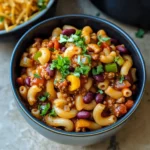
Vegetarian Chili Mac recipe
Ingredients
For the Flavorful Vegetarian Chili:
-
- Olive Oil (2 tablespoons): Olive oil serves as the base for sautéing the vegetables and building flavour. Use extra virgin olive oil for the best flavour, but regular olive oil will also work. Substitution: Any neutral cooking oil like canola oil or avocado oil can be used.
-
- Yellow Onion (1 large, diced): Onion forms the aromatic foundation of the chili. Yellow onions are preferred for their balanced flavour when cooked, but white onions or even red onions (for a slightly sharper taste) can be used. Dicing ensures even cooking.
-
- Garlic (4 cloves, minced): Garlic is essential for adding pungent, aromatic depth to the chili. Freshly minced garlic is highly recommended for the best flavour. Substitution: If using garlic powder, start with 1 teaspoon and adjust to taste, but fresh garlic is far superior.
-
- Bell Pepper (1 large, diced – any color, or a mix): Bell peppers add sweetness, colour, and a slight crunch to the chili. Use any colour bell pepper you prefer – green, red, yellow, or orange, or a mix for visual appeal and varied flavour profiles.
-
- Ground Meat Substitute (1 lb, Plant-Based): This is the heart of the vegetarian chili. Options include:
-
- TVP (Textured Vegetable Protein): TVP is a dehydrated soy product that rehydrates and takes on a ground meat-like texture. It’s high in protein and a great budget-friendly option. You’ll need to rehydrate it according to package directions, often with hot vegetable broth.
-
- Lentils (1 cup, dry, brown or green): Lentils provide a hearty, earthy flavour and excellent texture. Brown or green lentils hold their shape well during cooking. Red lentils tend to become mushy and are less suitable for this recipe. You’ll need to cook the lentils separately until just tender before adding them to the chili.
-
- Canned Lentils (2 cans, 15 oz each, drained and rinsed): For a quicker option, canned lentils work well. Drain and rinse them thoroughly before adding to the chili.
-
- Mushrooms (8 oz, cremini or portobello, finely chopped): Finely chopped mushrooms, especially cremini or portobello, offer a meaty umami flavour and texture. Sauté them well to release their moisture and intensify their flavour.
-
- Walnuts (1 cup, chopped): Chopped walnuts provide a unique texture and nutty flavour. Toast them lightly before adding to the chili for enhanced flavour.
-
- Commercial Plant-Based Ground Meat: Several brands offer pre-made plant-based ground meat alternatives made from soy, pea protein, or other plant sources. These are convenient and often seasoned, but can be pricier.
-
- Ground Meat Substitute (1 lb, Plant-Based): This is the heart of the vegetarian chili. Options include:
-
- Kidney Beans (1 can, 15 oz, drained and rinsed): Kidney beans are classic in chili, offering a creamy texture and mild flavour. Dark or light kidney beans both work well.
-
- Black Beans (1 can, 15 oz, drained and rinsed): Black beans add a slightly sweeter flavour and different texture compared to kidney beans, contributing to the complexity of the chili.
-
- Diced Tomatoes (1 can, 28 oz, undrained): Diced tomatoes form the liquid base of the chili and provide essential tomato flavour and acidity. Use undrained for the liquid content.
-
- Crushed Tomatoes (1 can, 15 oz): Crushed tomatoes add a smoother texture and richer tomato flavour to the chili.
-
- Tomato Paste (2 tablespoons): Tomato paste intensifies the tomato flavour and adds depth and richness to the chili base.
-
- Vegetable Broth (1 cup, low sodium): Vegetable broth adds moisture and enhances the overall flavour of the chili. Low sodium broth allows you to control the salt level. Substitution: Water can be used if broth is unavailable, but broth adds more flavour.
-
- Chili Powder (2-3 tablespoons, adjust to taste): Chili powder is the primary spice blend in chili, providing warmth and depth of flavour. Adjust the amount to your preferred spice level.
-
- Ground Cumin (2 teaspoons): Cumin adds an earthy, warm, and slightly smoky flavour that is characteristic of chili.
-
- Dried Oregano (1 teaspoon): Oregano adds a slightly peppery and aromatic note to the chili.
-
- Smoked Paprika (1 teaspoon): Smoked paprika is crucial for adding a smoky depth of flavour, mimicking the smoky notes traditionally found in chili with meat. Use Spanish smoked paprika (pimentón de la Vera) for the most authentic flavour.
-
- Salt and Black Pepper (to taste): Seasoning is essential. Adjust salt and pepper throughout the cooking process to bring out the flavours of all the ingredients.
-
- Optional Chili Ingredients (for extra flavour):
-
- Cocoa Powder (1 teaspoon, unsweetened): Adds depth and richness, enhancing the chili’s complexity.
-
- Cinnamon (1/2 teaspoon, ground): Adds warmth and subtle sweetness.
-
- Bay Leaf (1): Adds a subtle, earthy aroma (remove before serving).
-
- Apple Cider Vinegar (1 tablespoon): Adds brightness and acidity to balance the richness.
-
- Maple Syrup or Brown Sugar (1 teaspoon): Adds a touch of sweetness to balance the spices (especially helpful if using very acidic tomatoes).
-
- Jalapeño Pepper (1, minced, optional): For extra heat, add a minced jalapeño pepper (remove seeds for less heat).
-
- Optional Chili Ingredients (for extra flavour):
For the Creamy Macaroni and Cheese:
-
- Elbow Macaroni (1 lb): Elbow macaroni is the classic choice for mac and cheese, but other short pasta shapes like shells, cavatappi, or rotini will also work.
-
- Butter (1/4 cup, unsalted): Butter is the base for the roux in the cheese sauce, adding richness and flavour. Vegan Substitution: Use vegan butter or olive oil for a dairy-free option.
-
- All-Purpose Flour (1/4 cup): Flour is used to make a roux, which thickens the cheese sauce. Gluten-free all-purpose flour blends can be used for a gluten-free option.
-
- Milk (3 cups): Milk forms the liquid base of the cheese sauce. Whole milk will create the richest sauce, but 2% or even non-dairy milk (like unsweetened almond milk or oat milk) can be used.
-
- Sharp Cheddar Cheese (8 oz, shredded): Sharp cheddar cheese provides a classic cheesy flavour. Use a good quality cheddar and shred it yourself for smoother melting.
-
- Monterey Jack Cheese (4 oz, shredded): Monterey Jack cheese adds a creamy melt and mild flavour, complementing the cheddar. Substitution: Pepper Jack for a spicy kick, or other melting cheeses like Gruyere or Fontina.
-
- Salt, Black Pepper, and Nutmeg (to taste): Season the cheese sauce with salt, pepper, and a pinch of nutmeg for warmth and complexity.
Instructions
Part 1: Preparing the Hearty Vegetarian Chili
-
- Sauté Aromatics: Heat olive oil in a large pot or Dutch oven over medium heat. Add the diced onion and bell pepper and cook for 5-7 minutes, until softened and translucent. Add the minced garlic and cook for another minute until fragrant, being careful not to burn the garlic.
-
- Brown the Ground Meat Substitute: Add your chosen ground meat substitute (TVP, lentils, mushrooms, walnuts, or commercial plant-based ground meat) to the pot.
-
- If using TVP: Ensure it’s rehydrated according to package directions before adding. Sauté for 5-7 minutes, until slightly browned and heated through.
-
- If using cooked lentils: Add cooked lentils to the pot. Sauté for 2-3 minutes to heat through.
-
- If using mushrooms: Sauté the chopped mushrooms for 8-10 minutes, until they release their moisture and begin to brown, intensifying their flavour.
-
- If using walnuts: Add chopped walnuts and toast lightly for 2-3 minutes until fragrant.
-
- If using commercial plant-based ground meat: Follow package instructions; usually, it just needs to be heated through.
-
- Brown the Ground Meat Substitute: Add your chosen ground meat substitute (TVP, lentils, mushrooms, walnuts, or commercial plant-based ground meat) to the pot.
-
- Bloom the Spices and Tomato Paste: Stir in the tomato paste, chili powder, cumin, oregano, and smoked paprika. Cook for 1-2 minutes, stirring constantly, until fragrant. This step, “blooming” the spices, enhances their flavour and depth.
-
- Add Tomatoes and Beans: Pour in the diced tomatoes (undrained) and crushed tomatoes. Add the kidney beans and black beans (drained and rinsed). Stir to combine all ingredients.
-
- Add Broth and Simmer: Pour in the vegetable broth. Add the bay leaf (if using). Bring the chili to a simmer, then reduce the heat to low, cover the pot, and simmer for at least 20-30 minutes, or up to 1 hour for deeper flavour development. The longer it simmers, the richer the chili will become. Stir occasionally.
-
- Season and Adjust: After simmering, season the chili with salt and black pepper to taste. Add any optional chili ingredients like cocoa powder, cinnamon, apple cider vinegar, maple syrup, or jalapeño pepper, if desired. Simmer for another 5-10 minutes to allow the flavours to meld. Remove the bay leaf before proceeding. Taste and adjust seasoning as needed. Keep the chili warm while you prepare the mac and cheese.
Part 2: Making Creamy Macaroni and Cheese
-
- Cook Macaroni: Cook elbow macaroni according to package directions until al dente. Drain well and set aside.
-
- Make the Roux: While the pasta is cooking, prepare the cheese sauce. In a separate saucepan, melt butter over medium heat. Add the flour and whisk constantly for 1-2 minutes to cook the roux. It should be smooth and pale golden.
-
- Whisk in Milk and Thicken: Gradually whisk in the milk, a little at a time, ensuring each addition is fully incorporated before adding more to prevent lumps. Continue whisking until all the milk is added and the sauce is smooth. Increase the heat to medium-high and bring the sauce to a simmer, stirring constantly. Reduce the heat to low and simmer for 5-7 minutes, stirring occasionally, until the sauce thickens slightly and coats the back of a spoon.
-
- Melt in the Cheese: Remove the saucepan from the heat. Gradually add the shredded cheddar cheese and Monterey Jack cheese, stirring constantly until the cheese is completely melted and the sauce is smooth and creamy.
-
- Season the Cheese Sauce: Season the cheese sauce with salt, black pepper, and a pinch of nutmeg to taste.
-
- Combine Macaroni and Cheese Sauce: Add the cooked and drained macaroni to the cheese sauce. Stir to coat the macaroni evenly with the cheese sauce.
Part 3: Assembling and Serving Vegetarian Chili Mac
-
- Combine Chili and Mac and Cheese: There are two main ways to combine the chili and mac and cheese:
-
- Layered Casserole Style: In a large baking dish (9×13 inch), spread half of the macaroni and cheese on the bottom. Top with all of the vegetarian chili. Spread the remaining macaroni and cheese over the chili layer.
-
- Combined in a Pot: For a quicker and more rustic approach, add the macaroni and cheese directly to the pot of chili and stir to combine everything evenly.
-
- Combine Chili and Mac and Cheese: There are two main ways to combine the chili and mac and cheese:
-
- Bake (Optional for Casserole Style): If making a casserole, bake in a preheated oven at 350°F (175°C) for 20-25 minutes, or until heated through and bubbly around the edges. For a golden brown top, you can broil for the last 1-2 minutes, watching carefully to prevent burning.
-
- Serve and Garnish: Serve the Vegetarian Chili Mac hot, directly from the casserole dish or pot. Offer a variety of toppings for guests to customize their bowls, such as shredded cheddar cheese, sour cream (or vegan sour cream), fresh cilantro, green onions, diced avocado, jalapeño slices, and crushed tortilla chips. Enjoy this ultimate vegetarian comfort food!
Nutrition
- Serving Size: one normal portion
- Calories: 450-550
- Sugar: 8-10 g
- Sodium: 700-900 mg
- Fat: 20-25 g
- Saturated Fat: 10-12 g
- Carbohydrates: 50-60 g
- Fiber: 10-12 g
- Protein: 25-30 g
- Cholesterol: 50-60 mg