
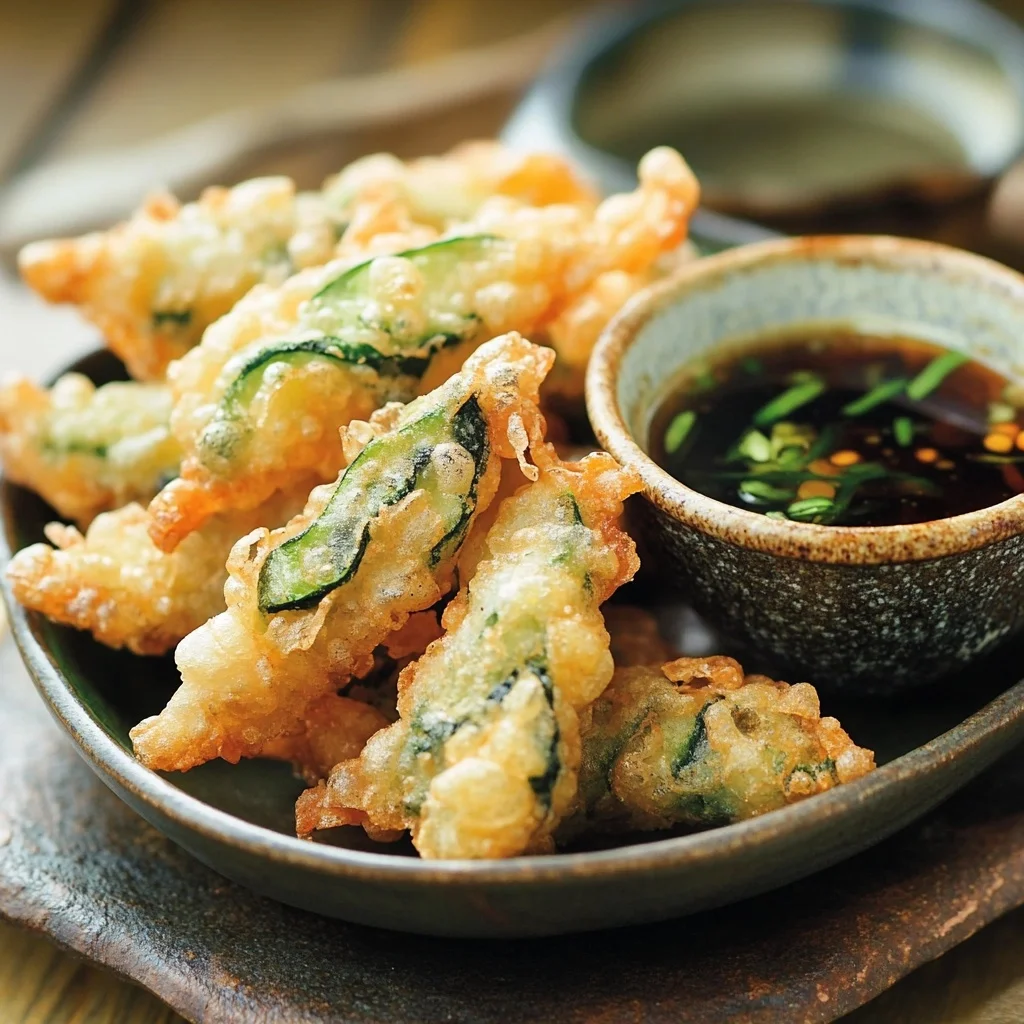

As someone who loves exploring the culinary delights from different cultures, I often find myself drawn to the vibrant and diverse world of Japanese cuisine. One recipe that stands out for its simplicity and elegance is Vegetable Tempura with Dipping Sauce. This dish combines the light, crispy texture of tempura batter with the fresh flavors of seasonal vegetables, creating a delightful harmony that never fails to impress my family and friends. Whether it’s a casual weeknight dinner or a fancy get-together, this recipe has become a beloved staple in our household.
Ingredients
Creating the perfect Vegetable Tempura requires a selection of fresh vegetables and a few other basic ingredients for the batter and dipping sauce. Here’s what you’ll need:
For the Tempura:
- 1 cup all-purpose flour
- 1/2 cup cornstarch
- 1 teaspoon baking powder
- 1 cup cold sparkling water
- Vegetable oil for frying
- Assorted vegetables (such as sweet potatoes, bell peppers, zucchini, eggplant, and mushrooms), sliced into bite-sized pieces
For the Dipping Sauce:
- 1/2 cup soy sauce
- 1/2 cup mirin
- 1/4 cup dashi stock
- 1 tablespoon sugar
- Grated daikon radish (optional)
Instructions
Making Vegetable Tempura is an art that involves mastering the batter and frying techniques to achieve that coveted crispiness. Here’s a step-by-step guide to achieving tempura perfection:
- Prepare the Dipping Sauce: In a small saucepan, combine the soy sauce, mirin, dashi stock, and sugar. Heat over medium heat until the sugar dissolves. Remove from heat and let it cool. Add grated daikon radish if desired for an extra zing.
- Prepare the Vegetables: Wash and dry the vegetables thoroughly. Slice them into uniform, bite-sized pieces to ensure even cooking.
- Make the Batter: In a mixing bowl, combine the flour, cornstarch, and baking powder. Gradually add the cold sparkling water, gently whisking until just combined. Be careful not to overmix as this can result in a dense batter.
- Heat the Oil: In a deep frying pan or wok, heat the vegetable oil to 350°F (175°C). You can test the temperature by dropping a small amount of batter into the oil; if it sizzles and rises to the surface, the oil is ready.
- Fry the Vegetables: Dip each piece of vegetable into the batter, ensuring it is evenly coated. Carefully lower it into the hot oil. Fry in small batches to avoid overcrowding the pan, which can lower the oil temperature. Fry until the batter is golden and crispy, about 2-3 minutes per side.
- Drain and Serve: Remove the tempura with a slotted spoon and drain on paper towels to remove excess oil. Serve immediately with the dipping sauce.
Nutrition Facts
Understanding the nutritional content of the food we consume is essential for maintaining a balanced diet. Here are the nutrition facts for Vegetable Tempura with Dipping Sauce:
Servings: This recipe serves 4 people.
Calories per Serving: Approximately 250 calories.
Preparation Time
Preparing Vegetable Tempura with Dipping Sauce is a relatively quick process, making it an excellent choice for those busy weeknights when time is of the essence. Here’s how the preparation time breaks down:
- Prep Time: 20 minutes for slicing vegetables and mixing the batter.
- Cook Time: 15 minutes for frying the vegetables.
- Total Time: 35 minutes.
How to Serve Vegetable Tempura
Vegetable Tempura is a delightful and versatile dish that can be tailored to fit various dining occasions, making it a popular choice in Japanese cuisine. Whether you’re hosting a formal dinner or looking for a quick lunch option, the way you serve Vegetable Tempura can enhance the overall dining experience. Here are some detailed serving suggestions to consider:
As an Appetizer Before a Larger Japanese Meal
Serving Vegetable Tempura as an appetizer is a fantastic way to whet the appetite before a more substantial meal. The light, crispy texture and subtle flavors of tempura can set the stage for the main course, which may include sushi, sashimi, or a hearty ramen. To elevate this experience, consider presenting the tempura on a decorative plate, garnished with a small mound of grated daikon radish and a few slices of lemon or lime. This not only adds a pop of color but also provides a refreshing contrast to the fried vegetables. A small dish of tentsuyu (tempura dipping sauce) can also be served alongside, allowing guests to dip each piece for added flavor.
As a Main Course Accompanied by a Bowl of Steamed Rice
For a more substantial meal, Vegetable Tempura can shine as the main course, especially when paired with a steaming bowl of fluffy white rice. The rice serves as a neutral base that complements the tempura’s flavors while helping to balance the meal. To create a well-rounded dining experience, consider adding miso soup and pickled vegetables as side dishes. For presentation, arrange the tempura artfully on a large platter, perhaps with a few vibrant dipping sauces to entice the eyes and the palate. This arrangement not only highlights the dish but also invites diners to share and enjoy the food together.
Alongside a Fresh Green Salad for a Light Lunch
For those seeking a lighter meal, serving Vegetable Tempura alongside a fresh green salad makes for a fulfilling yet healthy option. The crispiness of the tempura pairs wonderfully with the crunch of fresh greens, creating a delightful textural contrast. Opt for a salad that includes a variety of colorful vegetables, such as mixed greens, cherry tomatoes, cucumbers, and shredded carrots. Drizzle the salad with a light sesame or soy-based dressing to enhance the Japanese theme, and consider adding a few slices of avocado for creaminess. This combination not only provides a satisfying meal but also offers a well-balanced array of nutrients.
With a Variety of Other Tempura Items for a Tempura Platter
Creating a tempura platter that includes a variety of items can turn Vegetable Tempura into a crowd-pleasing centerpiece for gatherings or celebrations. Combine different types of vegetables, such as sweet potatoes, zucchini, and bell peppers, with proteins like shrimp, fish, or even tofu for a diverse offering. This not only caters to different tastes but also adds visual appeal with an array of colors and shapes. Serve the platter on a large, flat serving dish, and provide a selection of dipping sauces, such as spicy mayo or ponzu, for guests to enjoy. This approach encourages sharing and interaction, making it ideal for parties or family-style dinners.
As a Side Dish at a Buffet-Style Gathering
Vegetable Tempura can also serve as a delightful side dish at buffet-style gatherings, where guests can sample a variety of dishes. Its light and crispy nature makes it an appealing option that can complement heavier fare. When serving tempura at a buffet, it’s beneficial to keep it warm in a chafing dish or warming tray to maintain its crispy texture. Consider offering a selection of dipping sauces and garnishes, such as sesame seeds or sliced scallions, to allow guests to customize their experience. Additionally, labeling the dish can help inform guests about the ingredients, especially those who may have dietary restrictions.
Conclusion
Vegetable Tempura is not only a delicious dish in its own right but also a versatile option that can adapt to various serving styles and occasions. Whether as an appetizer, main course, or part of a buffet, this delightful dish can enhance any meal with its vibrant flavors and textures. With these serving suggestions, you can create memorable dining experiences that highlight the beauty and culinary artistry of Japanese cuisine.
Additional Tips for Perfecting Vegetable Tempura
To elevate your Vegetable Tempura to the next level, consider these additional tips that focus on technique, ingredient selection, and serving suggestions to ensure your dish is both flavorful and visually appealing.
Keep the Batter Cold
One of the most crucial secrets to achieving that light and airy texture in your tempura batter is to keep it cold. When the batter is cold, it creates a contrast with the hot oil, which helps to produce a crisp, flaky exterior. To maintain this chill, consider the following methods:
- Ice Bowl Method: Place your mixing bowl for the batter inside a larger bowl filled with ice. This will help keep the temperature low as you mix the ingredients.
- Chill Ingredients: Before preparing your batter, consider chilling the flour and even the water in the refrigerator for a short while. Using very cold water, ideally with ice cubes, can also help.
- Batter Preparation: Mix the batter just before frying. The less time the batter sits, the colder it will remain, which contributes to a crispier texture.
Use a Light Hand with the Batter
When coating your vegetables, the key to achieving that coveted crunch lies in how much batter you use. A light hand is essential:
- Thin Coating: Dip each piece of vegetable into the batter quickly, ensuring only a thin layer coats the surface. This prevents heaviness and allows the hot oil to work its magic.
- Shake Off Excess: After dipping, gently shake off any excess batter before frying. This not only helps maintain a light texture but also reduces the amount of batter that may flake off during cooking.
- Practice Makes Perfect: If you’re new to tempura, practice dipping a few vegetables first. This will help you gauge how much batter to use for optimal results.
Choose Seasonal Vegetables
The flavor and texture of your Vegetable Tempura can be greatly enhanced by your choice of vegetables. Here are some recommendations:
- Flavor Profiles: Seasonal vegetables often have superior flavor and are typically more affordable. In the spring, consider asparagus, snap peas, or young zucchini. In summer, opt for bell peppers, eggplant, or tomatoes. Fall brings options like mushrooms, sweet potatoes, and pumpkin, while winter offers root vegetables like carrots and parsnips.
- Variety and Color: Aim for a colorful assortment of vegetables to make your dish visually appealing. Mixing different shapes and sizes can create an interesting presentation and provide a variety of textures.
- Preparation: Cut vegetables into uniform sizes to ensure even cooking. Thinner, more delicate vegetables may require less frying time compared to sturdier options.
Maintain Oil Temperature
Consistency in oil temperature is critical to achieving that perfect crispy texture without absorbing excess oil. Here’s how to manage it effectively:
- Use a Thermometer: Invest in a deep-frying thermometer to monitor the oil’s temperature accurately. The ideal frying temperature for tempura is between 350°F to 375°F (175°C to 190°C).
- Batch Frying: Avoid overcrowding the frying pan or pot, as this can lower the oil temperature significantly. Fry in small batches to maintain a consistent temperature.
- Adjust as Needed: If you notice the oil temperature dropping during frying, allow it to heat back up before adding more vegetables. Conversely, if the oil starts to smoke, it’s too hot, and you should remove it from the heat briefly.
Serve Immediately
Tempura is best enjoyed straight from the fryer while it’s still hot and crispy. Here are some tips for serving:
- Presentation: Serve your Vegetable Tempura on a plate lined with absorbent paper to catch any excess oil, and consider garnishing with a sprinkle of sea salt or a drizzle of dipping sauce for added flavor.
- Dipping Sauce: Accompany your tempura with traditional dipping sauces such as tentsuyu (a mixture of dashi, soy sauce, and mirin) or a simple ponzu sauce, which complements the dish beautifully.
- Temperature Maintenance: If you’re preparing a large batch, consider keeping the finished tempura in a warm oven (set to low heat) while you finish frying additional batches. However, avoid keeping them in there for too long, as this can lead to steaming and loss of crispness.
By incorporating these tips into your cooking process, you’ll not only enhance the flavor and texture of your Vegetable Tempura but also impress your guests with a dish that’s as delightful to look at as it is to eat. Enjoy the art of tempura-making and savor the results of your culinary efforts!
FAQ Section
Here are some frequently asked questions about making Vegetable Tempura with Dipping Sauce:
- Can I use other types of flour for the batter? Yes, you can experiment with different flours like rice flour or chickpea flour for a gluten-free option.
- What other vegetables can I use? You can use a variety of vegetables such as asparagus, broccoli, or carrots, depending on your preference.
- Can I make the tempura batter ahead of time? It’s best to make the batter just before frying to ensure it remains cold and bubbly, which is essential for a crispy texture.
- How do I store leftover tempura? Store leftovers in an airtight container in the refrigerator. Reheat in an oven to help maintain some of the crispiness.
- Can I freeze tempura? While it’s possible to freeze, reheating may not retain the original crispiness. It’s best enjoyed fresh.
In conclusion, Vegetable Tempura with Dipping Sauce is not just a dish; it’s an experience that brings the essence of Japanese cuisine to your table. Whether you’re a seasoned cook or a beginner, this recipe is an excellent way to explore the rich flavors and textures of tempura. Enjoy the journey of creating and savoring this delightful dish, and may it become a cherished part of your culinary repertoire.