
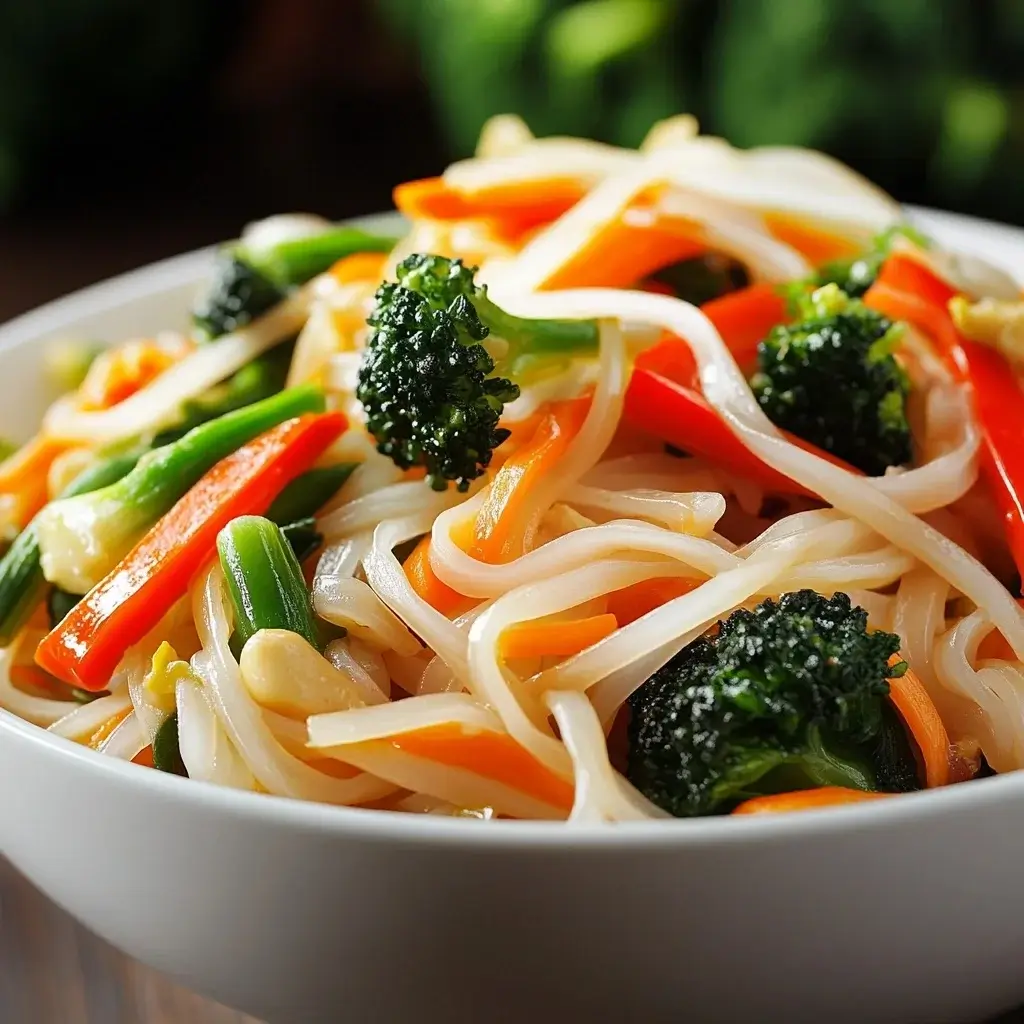

When I first stumbled upon the Vegetable Pad Thai with Rice Noodles recipe, I was intrigued by its promise of vibrant flavors and a quick cooking time. As an aficionado of Thai cuisine, I am often on the lookout for recipes that can deliver authentic taste without requiring a culinary degree. This recipe did not disappoint. After preparing it for a family dinner, the feedback was overwhelmingly positive. Even the pickiest eaters at the table were enamored by the combination of tangy tamarind, crunchy peanuts, and fresh vegetables. The aroma filled our kitchen with a tantalizing scent that made everyone eagerly anticipate the meal. It’s safe to say that this Vegetable Pad Thai has earned a permanent spot in our family meal rotation.
Ingredients
The beauty of this Vegetable Pad Thai lies in its simplicity and the fresh ingredients it requires. Here’s what you’ll need:
- 8 oz (225 grams) rice noodles
- 2 tablespoons vegetable oil
- 2 cloves garlic, minced
- 1 cup carrots, julienned
- 1 cup bean sprouts
- 1 red bell pepper, sliced thinly
- 3 green onions, chopped
- 1/4 cup unsalted peanuts, crushed
- 2 tablespoons tamarind paste
- 3 tablespoons soy sauce
- 1 tablespoon brown sugar
- 1 tablespoon lime juice
- 1/4 cup fresh cilantro, chopped
- Optional: chili flakes to taste
Instructions
Creating this delightful dish is straightforward. Follow these steps to whip up your own Vegetable Pad Thai:
- Start by soaking the rice noodles in warm water for about 20 minutes or until they are soft. Drain and set aside.
- In a small bowl, mix together the tamarind paste, soy sauce, brown sugar, and lime juice to create the Pad Thai sauce. Adjust to taste if necessary.
- Heat the vegetable oil in a large pan or wok over medium heat. Add the minced garlic and sauté for about 30 seconds until fragrant.
- Add the carrots, bell pepper, and bean sprouts to the pan. Stir-fry the vegetables for about 3-4 minutes, or until they begin to soften.
- Push the vegetables to one side of the pan and add the drained rice noodles. Pour the prepared sauce over the noodles.
- Toss everything together until the noodles are well-coated with the sauce and the vegetables are evenly distributed.
- Add the green onions and continue to stir-fry for another 2 minutes.
- Remove from heat and sprinkle with crushed peanuts, fresh cilantro, and chili flakes if desired.
- Serve hot, with lime wedges on the side for an extra tangy kick.
Nutrition Facts
This Vegetable Pad Thai recipe yields approximately 4 servings. Each serving contains around 350 calories. It’s a balanced meal that provides a good mix of carbohydrates, proteins, and healthy fats. The use of fresh vegetables adds not only vibrant colors but also essential vitamins and minerals, making it a nutritious choice for any meal.
Preparation Time
One of the perks of this Vegetable Pad Thai is its quick preparation time. From start to finish, you can have this dish ready in about 30 minutes. The most time-consuming part is soaking the rice noodles, which can be done while you prepare the other ingredients. This makes it an ideal choice for a busy weeknight dinner or a quick lunch.
How to Serve
Serving Vegetable Pad Thai is not only about presenting the dish; it’s an opportunity to enhance the dining experience through thoughtful arrangements and complementary elements. Here are some creative serving suggestions to elevate your meal:
Individual Plates
For a more formal dining atmosphere, consider plating the Vegetable Pad Thai in individual portions. This approach allows each guest to have their own beautifully arranged dish, showcasing the vibrant colors and textures of the ingredients. To do this effectively, use a wide, shallow bowl or a large, flat plate. Carefully twirl the noodles with a fork or tongs to create a nest-like appearance in the center of the plate. Garnish each serving with a sprinkle of chopped peanuts, a few fresh basil leaves, and a wedge of lime on the side. This presentation not only enhances the visual appeal but also makes it easy for guests to enjoy their meal without the need for serving utensils, creating a polished dining experience.
Family Style
Alternatively, serving Vegetable Pad Thai family style invites a sense of togetherness and interaction. Present the dish in a large, attractive bowl or on a colorful platter at the center of the table, allowing everyone to help themselves. This setup encourages conversation and bonding as guests pass the dish around, sharing stories and laughter. To enhance the family-style experience, provide a set of serving utensils, such as tongs or a large spoon, making it easy for guests to serve themselves. Consider adding a few decorative elements to the table, such as a simple floral centerpiece or colorful napkins, to create an inviting atmosphere that complements the communal dining experience.
With Sides
To create a more complete and satisfying meal, consider pairing the Vegetable Pad Thai with complementary sides. A light Thai salad, featuring crisp greens, shredded carrots, and a tangy lime dressing, can provide a refreshing contrast to the richness of the Pad Thai. Alternatively, crispy spring rolls filled with vegetables or tofu make for a delightful appetizer that can be enjoyed alongside the main dish. These sides not only add variety to the meal but also allow guests to explore different flavors and textures, enhancing their overall dining experience.
Garnishes
Enhancing the flavors of your Vegetable Pad Thai can be achieved through thoughtful garnishing. Offer a selection of garnishes on the side, allowing guests to customize their plates to their liking. Fresh lime wedges provide a zesty kick that can brighten the dish, while sprigs of fresh cilantro add a burst of herbal freshness. For those who enjoy heat, provide chili flakes or sliced fresh chilies as an option. Consider including additional toppings, such as crispy shallots or sesame seeds, to offer even more flavor and texture variations. This interactive element not only personalizes the meal for each guest but also encourages them to experiment with different flavor combinations.
With Drinks
To complement the rich and flavorful nature of Vegetable Pad Thai, carefully selected beverages can elevate the entire dining experience. Thai iced tea, with its creamy texture and hint of sweetness, pairs wonderfully with the savory notes of the dish. Alternatively, a refreshing cucumber mint cooler can provide a light and invigorating contrast, cleansing the palate between bites. For a non-alcoholic option, consider serving coconut water or sparkling water with a slice of lime for a refreshing touch. If you wish to offer something more substantial, a light beer or a crisp white wine can also enhance the meal’s flavor profile. Be sure to offer options that suit all guests’ preferences, ensuring everyone enjoys their dining experience to the fullest.
By incorporating these serving suggestions, you can create a memorable meal that not only highlights the delicious flavors of Vegetable Pad Thai but also fosters a warm and inviting atmosphere for your guests. Whether you choose individual plates for an elegant touch or a family-style approach for a more casual gathering, these thoughtful details will undoubtedly enhance the overall dining experience.
Additional Tips
To elevate your Vegetable Pad Thai and ensure a delightful culinary experience, consider the following comprehensive tips:
Adjust the Spice Level
If you have a penchant for heat, it’s easy to customize the spice level of your Pad Thai to suit your taste. Start by adding extra chili flakes to the sauce before mixing it with the noodles. For a more intense flavor, consider incorporating fresh Thai bird chilies, which pack a punch. Alternatively, a few drops of sriracha sauce can transform your dish into a spicy delight. Remember to taste as you go; this way, you can gradually increase the heat without overwhelming the dish. Additionally, serving a side of chili oil allows each diner to adjust the spice to their liking at the table.
Protein Additions
While this recipe celebrates the vibrant flavors of vegetables, don’t hesitate to enhance the nutritional profile by adding protein. Tofu is a fantastic vegetarian option; opt for firm or extra-firm tofu, which holds its shape well when stir-fried. For a crispy texture, marinate the tofu in soy sauce and cornstarch before frying it until golden brown. If you prefer seafood, shrimp is a popular choice—simply sauté them until they turn pink and opaque. For meat lovers, thinly sliced chicken breast can be stir-fried alongside the vegetables for a heartier dish. Regardless of your choice, ensure that your protein is well-seasoned to complement the Pad Thai sauce and elevate the overall flavor.
Use Fresh Ingredients
The quality of your ingredients can significantly impact the flavor and texture of your Pad Thai. Whenever possible, opt for fresh, seasonal vegetables and herbs. Crunchy bell peppers, vibrant carrots, and snap peas not only enhance the dish’s aesthetic appeal but also contribute to a more robust flavor profile. Fresh herbs like cilantro and green onions add brightness and freshness. Additionally, consider tossing in bean sprouts at the very end of the cooking process; their crisp texture provides a delightful contrast to the tender noodles and vegetables. Organic ingredients, when available, can also lead to a more vibrant and flavorful dish.
Don’t Overcook the Noodles
Achieving the perfect noodle texture is crucial for an authentic Pad Thai experience. Start by soaking the rice noodles in hot water until they are just pliable but still firm—this usually takes about 20-30 minutes, depending on the thickness of the noodles. Drain them and rinse under cold water to stop the cooking process. When stir-frying, add the noodles directly to the pan with the vegetables and sauce, allowing them to absorb the flavors without becoming mushy. If you find your noodles are sticking together, a splash of water or a drizzle of oil can help separate them without compromising texture.
Prep Ahead
To make the cooking process smoother and more enjoyable, preparation is key. Take the time to chop all your vegetables in advance and store them in airtight containers. This not only saves time during cooking but also helps maintain the freshness of the ingredients. Prepare your sauce ahead of time as well; mixing together the tamarind paste, soy sauce, sugar, and lime juice allows the flavors to meld beautifully. By having everything ready to go, you can focus on the cooking process without the stress of last-minute chopping or measuring, ensuring that your Vegetable Pad Thai turns out perfectly every time.
Experiment with Garnishes
Don’t forget the finishing touches that can elevate your Vegetable Pad Thai. Consider garnishing your dish with crushed peanuts for added crunch and flavor. Fresh lime wedges not only brighten the dish but also provide a zesty kick when squeezed over the top. A sprinkle of sesame seeds can add an extra layer of nuttiness, while fresh herbs like basil or mint can introduce an aromatic quality that complements the dish beautifully. Experimenting with garnishes not only enhances the visual appeal of your meal but also allows you to customize flavors to your liking.
By incorporating these tips into your Vegetable Pad Thai preparation, you can create a dish that is not only delicious but also tailored to your personal preferences, making each bite a delightful experience. Enjoy your culinary adventure!
FAQ Section
Here are some common questions and answers about Vegetable Pad Thai:
- Can I use different vegetables? Absolutely! Feel free to substitute or add any vegetables you have on hand, such as broccoli, zucchini, or snow peas.
- Is there a gluten-free version? Yes, simply use gluten-free soy sauce or tamari in place of regular soy sauce.
- How long can I store leftovers? Leftovers can be stored in an airtight container in the refrigerator for up to 3 days. Reheat in a pan with a splash of water to loosen the noodles.
- Can I make this dish vegan? This recipe is already vegetarian, but to make it vegan, ensure the soy sauce and tamarind paste you use are vegan-friendly.
- What can I use instead of tamarind paste? If tamarind paste is unavailable, you can substitute it with a mixture of equal parts lime juice and brown sugar.