


Celebrating Easter at our house used to be a strictly traditional affair – turkey, gravy, cranberry sauce, and of course, stuffing loaded with sausage. But when I transitioned to a vegan diet a few years ago, I knew I couldn’t compromise on flavor, especially when it came to stuffing. The challenge was on to create a vegan stuffing that was just as comforting, savory, and satisfying as the classic version, without sacrificing any of the deliciousness. After much experimentation (and a few less-than-perfect attempts!), I finally landed on a recipe that has become an absolute family favorite. And honestly, even my meat-loving relatives rave about it! This Vegan Stuffing is packed with hearty bread, savory vegetables, aromatic herbs, and a depth of flavor that will surprise you. It’s moist, flavorful, and has that perfect balance of textures – slightly crisp edges and a soft, flavorful interior. Whether you’re vegan, vegetarian, or simply looking to lighten up your Thanksgiving spread, this recipe is a guaranteed crowd-pleaser. Prepare to be amazed by how delicious and satisfying plant-based stuffing can be!
The Foundation of Flavor: Key Ingredients for Amazing Vegan Stuffing
Creating truly exceptional vegan stuffing is all about layering flavors and textures using plant-based ingredients. Each component in this recipe is carefully chosen to contribute to the overall richness, heartiness, and savory goodness. Here’s a breakdown of the essential ingredients you’ll need:
- 1 Loaf (1 pound) Crusty Bread, Day-Old, Cubed: The bread is the heart of any stuffing, and for vegan stuffing, choosing the right type and preparing it correctly is key. Day-old bread is crucial because it’s drier and will absorb the flavorful broth and seasonings without becoming soggy. Crusty bread, like a French baguette, sourdough, or Italian loaf, is ideal because it provides a good structure and texture. Cut the bread into roughly 1-inch cubes. You can leave the crust on for added texture. If you only have fresh bread, you can dry it out by cubing it and leaving it spread out on a baking sheet overnight or toasting it in a low oven (200°F/95°C) for about 30-40 minutes, stirring occasionally, until lightly dried but not browned.
- 1/2 Cup Olive Oil: Olive oil is used for sautéing the vegetables and adds richness and flavor to the stuffing. Extra virgin olive oil is recommended for its flavor and health benefits. You can substitute with other plant-based oils like avocado oil or coconut oil, but olive oil contributes a classic savory note.
- 2 Large Onions, Diced: Onions form the aromatic base of the stuffing, adding depth and sweetness. Yellow or white onions work well. Dice the onions into small, even pieces for uniform cooking.
- 4 Celery Stalks, Diced: Celery is another essential aromatic vegetable that adds a subtle savory and slightly peppery note to the stuffing. Dice the celery into small, even pieces, similar in size to the diced onions.
- 2 Carrots, Diced: Carrots contribute sweetness, color, and a slight earthy flavor to the stuffing. Dice the carrots into small, even pieces.
- 8 oz Mushrooms, Sliced or Quartered: Mushrooms add an earthy, umami flavor and a meaty texture to the vegan stuffing, making it more satisfying and savory. Cremini (baby bella) or white button mushrooms are excellent choices. You can also use other varieties like shiitake, oyster, or portobello mushrooms for a more complex flavor profile. Slice or quarter the mushrooms depending on their size.
- 4-5 Cloves Garlic, Minced: Garlic enhances the savory flavors and adds pungency to the stuffing. Freshly minced garlic is always preferred for the best flavor. You can adjust the amount of garlic to your preference.
- 1 1/2 Cups Vegetable Broth: Vegetable broth is used to moisten the stuffing and add flavor. Use low-sodium vegetable broth to control the salt content. For a richer flavor, consider using a high-quality store-bought brand or homemade vegetable broth. You can also use mushroom broth for an even deeper umami flavor.
- 1/2 Cup Dry White Wine (Optional, but Recommended): Dry white wine, like Sauvignon Blanc or Pinot Grigio, adds acidity and complexity to the stuffing. It deglazes the skillet and adds a layer of flavor that elevates the dish. If you prefer to omit wine, simply use an additional 1/2 cup of vegetable broth.
- 1/4 Cup Fresh Parsley, Chopped: Fresh parsley adds a pop of color and a fresh, herbaceous note that brightens up the stuffing. Italian parsley or curly parsley both work well.
- 1/4 Cup Fresh Sage, Chopped: Fresh sage is a classic herb for stuffing, contributing a warm, earthy, and slightly peppery flavor that is quintessential for Thanksgiving.
- 2 Tablespoons Fresh Thyme Leaves: Fresh thyme adds a delicate, earthy, and slightly lemony flavor that complements the sage and parsley beautifully.
- 1 Teaspoon Dried Rosemary, Crumbled: Dried rosemary adds a piney, aromatic, and slightly pungent flavor. Use it sparingly as it can be quite strong. Crumbled dried rosemary is preferred over whole sprigs for even distribution of flavor.
- 1 Teaspoon Salt, or to taste: Salt is essential for seasoning and enhancing the flavors of all the ingredients. Use sea salt or kosher salt for best flavor. Adjust the amount to your preference.
- 1/2 Teaspoon Black Pepper, or to taste: Freshly ground black pepper adds a pungent and slightly spicy note. Adjust the amount to your preference.
- Optional Add-ins (for extra flavor and texture):
- 1/2 Cup Dried Cranberries or Chopped Dried Apricots: Dried cranberries or apricots add a touch of sweetness and chewiness, balancing the savory flavors.
- 1/2 Cup Chopped Walnuts or Pecans, Toasted: Toasted nuts add a delightful crunch and nutty flavor.
- 1/2 Cup Cooked Lentils or Chickpeas: For added protein and heartiness, incorporate cooked lentils or chickpeas.
- 1/4 Cup Nutritional Yeast: Nutritional yeast adds a cheesy, umami flavor that can enhance the savory notes and create a more “meaty” taste.
Ingredient Quality Matters: Using high-quality, fresh ingredients will make a significant difference in the flavor of your vegan stuffing. Invest in good quality bread, fresh herbs, and flavorful broth for the best results.
Crafting Culinary Comfort: Step-by-Step Vegan Stuffing Instructions
Making delicious vegan stuffing is easier than you might think! Follow these step-by-step instructions to create a stuffing that will impress everyone at your Thanksgiving table:
- Prepare the Bread: Preheat your oven to 300°F (150°C). Spread the bread cubes in a single layer on a large baking sheet. Bake for 15-20 minutes, or until lightly dried and crisp but not browned. Alternatively, you can air-dry the bread cubes overnight. Slightly dried bread is crucial for the right stuffing texture. Set aside the dried bread cubes.
- Sauté Aromatics and Vegetables: Heat olive oil in a large, wide skillet or Dutch oven over medium heat. Add the diced onions, celery, and carrots. Cook, stirring occasionally, until the vegetables are softened and the onions are translucent, about 8-10 minutes.
- Add Mushrooms and Garlic: Add the sliced or quartered mushrooms to the skillet and cook, stirring occasionally, until the mushrooms release their moisture and start to brown, about 8-10 minutes. Add the minced garlic and cook for another minute until fragrant, being careful not to burn the garlic.
- Deglaze with White Wine (Optional): If using white wine, pour it into the skillet and scrape up any browned bits from the bottom of the pan with a wooden spoon. Cook until the wine has mostly evaporated, about 2-3 minutes. This deglazing step adds depth and flavor to the stuffing.
- Add Broth and Seasonings: Pour in the vegetable broth, add the chopped fresh parsley, sage, thyme, crumbled rosemary, salt, and black pepper. Bring the mixture to a simmer and cook for 2-3 minutes to allow the flavors to meld. Taste the broth mixture and adjust seasoning as needed, adding more salt, pepper, or herbs to your preference.
- Combine Bread and Broth Mixture: In a very large bowl, gently combine the dried bread cubes and the hot broth and vegetable mixture. Toss gently to ensure the bread is evenly moistened. Do not overmix, as you want to maintain some texture and avoid making the stuffing mushy. If using optional add-ins like dried cranberries, nuts, lentils, or nutritional yeast, gently fold them in at this stage.
- Bake or Stuff (Oven Method):
- Baking in a Dish: For a casserole-style stuffing, transfer the stuffing mixture to a greased 9×13 inch baking dish. Cover the dish with foil and bake in a preheated oven at 350°F (175°C) for 20 minutes. Remove the foil and bake for another 20-25 minutes, or until heated through and the top is lightly golden brown and slightly crisp.
- Stuffing a Bird (Not Vegan, for reference if adapting): If you were stuffing a turkey (though this is a vegan recipe, for informational purposes), loosely stuff the cavity of the turkey with the stuffing mixture. Do not pack it tightly, as the stuffing will expand during cooking. Bake the turkey according to your recipe, ensuring the stuffing reaches a safe internal temperature of 165°F (74°C). For vegan purposes, we are focusing on baking separately.
- Serve and Enjoy: Remove the Vegan Stuffing from the oven and let it rest for 5-10 minutes before serving. This allows the stuffing to set up slightly and makes it easier to serve. Garnish with fresh parsley or sage sprigs, if desired. Serve warm and enjoy your delicious and flavorful Vegan Stuffing!
Tips for Cooking Success:
- Don’t Over-Saturate the Bread: Add broth gradually and toss gently to avoid making the stuffing soggy. The stuffing should be moist but not wet.
- Taste and Adjust Seasoning: Seasoning is crucial. Taste the broth mixture before adding the bread and adjust salt, pepper, and herbs to your preference.
- Crispy Top: For a crispier top, bake the stuffing uncovered for the last 20-25 minutes. You can also broil the top for the last few minutes, watching carefully to prevent burning.
- Make-Ahead Option: You can assemble the stuffing mixture (up to step 6) a day ahead and store it, covered, in the refrigerator. Bake as directed, adding an extra 10-15 minutes to the baking time if starting from cold.
- Oven Temperature Accuracy: Oven temperatures can vary. Use an oven thermometer to ensure your oven is accurately calibrated for best baking results.
Nutrition Information: Wholesome Goodness in Every Serving
Vegan Stuffing is not only delicious but also packed with nutrients from whole grains, vegetables, and herbs. Here’s an estimated nutritional breakdown for one serving (approximately 1 cup) of Vegan Stuffing. Please note that these are estimates and can vary based on specific ingredients and serving sizes.
Servings: Approximately 10-12 servings (depending on portion size)
Estimated Calories Per Serving (1 cup): 250-350 calories (This is an estimate and can fluctuate based on ingredient choices, particularly the amount of oil, bread type, and add-ins).
Approximate Nutritional Breakdown Per Serving (Estimated):
- Protein: 5-7 grams
- Fat: 10-15 grams (Primarily from olive oil and nuts, if added)
- Saturated Fat: 1-2 grams (Low in saturated fat)
- Cholesterol: 0 mg (Vegan and cholesterol-free)
- Sodium: 300-400 mg (Sodium content will vary depending on the broth and seasoning used. Using low-sodium broth helps control sodium).
- Carbohydrates: 30-40 grams
- Fiber: 4-6 grams (Good source of fiber from bread, vegetables, and whole grains)
- Sugar: 3-5 grams (Natural sugars from vegetables and dried fruit, if added)
Important Nutritional Highlights:
- High in Fiber: Provides a good amount of dietary fiber, promoting digestive health and satiety.
- Plant-Based Protein: Contains plant-based protein from bread, vegetables, and optional add-ins like lentils or nuts.
- Rich in Vitamins and Minerals: Vegetables like onions, celery, carrots, and mushrooms contribute vitamins and minerals. Herbs provide antioxidants and phytonutrients.
- Healthy Fats: Olive oil provides healthy monounsaturated fats, beneficial for heart health. Nuts, if added, also contribute healthy fats.
- Vegan and Vegetarian Friendly: Naturally vegan and vegetarian, making it a great option for plant-based diets.
Important Considerations:
- These are estimated values and should be used as a general guide. For precise nutritional information, use a nutrition calculator and input the exact brands and quantities of ingredients used.
- While nutritious, be mindful of portion sizes, especially if calorie intake is a concern.
- To reduce fat content, you can reduce the amount of olive oil slightly or use a lower-fat oil spray for sautéing.
- This dish is naturally vegan and can be made gluten-free by using gluten-free bread.
Preparation Timeline: Planning Your Vegan Stuffing for Success
Efficient time management in the kitchen is key, especially during holidays. Here’s a breakdown of the preparation time for Vegan Stuffing:
- Prep Time: 30-40 minutes (This includes cubing bread, chopping vegetables and herbs, measuring ingredients).
- Bread Drying Time: 15-20 minutes (Oven drying) or Overnight (Air drying)
- Sautéing & Cooking Time: 20-25 minutes (Sautéing vegetables, cooking broth mixture).
- Baking Time: 40-45 minutes (Covered and uncovered baking).
- Rest Time: 5-10 minutes
- Total Time (from start to finish): Approximately 1 hour 50 minutes to 2 hours 10 minutes (excluding overnight air-drying of bread).
Make-Ahead Strategies:
- Dry Bread Cubes Ahead: Dry the bread cubes a day or two in advance and store them in an airtight container at room temperature.
- Chop Vegetables Ahead: Chop the onions, celery, carrots, and mushrooms a day ahead and store them separately in airtight containers in the refrigerator.
- Prepare Broth Mixture Ahead: You can sauté the vegetables, deglaze with wine, and prepare the broth and herb mixture (up to step 5) a day ahead. Store it in the refrigerator. Reheat the broth mixture before combining with the bread.
- Assemble Stuffing Ahead (Unbaked): You can combine the dried bread cubes with the cooled broth and vegetable mixture (up to step 6) a day ahead and store it, covered, in the refrigerator. Bake as directed, adding an extra 10-15 minutes to the baking time if starting from cold.
Serving Suggestions: Elevating Your Vegan Stuffing Experience
Vegan Stuffing is a versatile and delicious dish that can be served in various ways as part of a larger meal or as a standalone side.
- Thanksgiving Feast Staple:
- Traditional Thanksgiving Side: Serve Vegan Stuffing as a classic side dish alongside other Thanksgiving favorites like vegan gravy, cranberry sauce, roasted vegetables, mashed potatoes, and vegan turkey roast.
- Stuffing Balls/Cakes: For a fun presentation, shape the stuffing into small balls or patties and bake them until crisp. Serve as appetizers or alongside the main meal.
- Weeknight Meal Accompaniment:
- Side for Roasted Vegetables: Pair Vegan Stuffing with roasted vegetables like Brussels sprouts, butternut squash, sweet potatoes, or roasted broccoli for a hearty and satisfying weeknight meal.
- Base for Bowls: Use Vegan Stuffing as a base for grain bowls topped with roasted vegetables, legumes, and a flavorful sauce.
- Filling for Bell Peppers or Tomatoes: Stuff roasted bell peppers or tomatoes with Vegan Stuffing for a creative and flavorful vegetarian main course.
- Leftover Transformations:
- Stuffing Frittata or Hash: Use leftover stuffing to make a delicious frittata or hash for breakfast or brunch the next day.
- Stuffing-Topped Shepherd’s Pie: Top a vegan shepherd’s pie with leftover stuffing instead of mashed potatoes for a unique twist.
- Stuffing Croutons: Crisp up leftover stuffing in a skillet with olive oil and use as crunchy croutons for salads or soups.
- Garnishes & Enhancements:
- Fresh Herb Sprigs: Garnish with fresh parsley, sage, or thyme sprigs for visual appeal and aroma.
- Toasted Nuts: Sprinkle toasted walnuts, pecans, or pumpkin seeds over the stuffing for added crunch.
- Drizzle of Olive Oil: A drizzle of high-quality olive oil over the finished stuffing can enhance its richness and flavor.
- Vegan Gravy: Serve with a generous ladle of homemade vegan gravy for extra moisture and savory flavor.
- Cranberry Sauce: The sweetness and tartness of cranberry sauce complement the savory stuffing beautifully.
Bonus Tips for Vegan Stuffing Brilliance
Elevate your Vegan Stuffing to the next level with these five extra tips for exceptional flavor and texture:
- Toast the Nuts (if using): Toasting nuts before adding them to the stuffing enhances their flavor and crunch. Spread nuts on a baking sheet and bake at 350°F (175°C) for 5-7 minutes, or until fragrant and lightly golden. Watch carefully to prevent burning.
- Caramelize the Onions: For a deeper, sweeter onion flavor, caramelize the onions slowly over low heat for about 20-30 minutes instead of just sautéing them. This will add a rich depth of flavor to the stuffing.
- Use High-Quality Bread: The quality of the bread significantly impacts the stuffing. Choose a crusty, flavorful bread like sourdough, baguette, or Italian loaf from a good bakery. Avoid soft, pre-sliced sandwich bread, which can become mushy.
- Infuse the Broth with Herbs: For extra herb flavor, simmer the vegetable broth with whole sprigs of fresh herbs (sage, thyme, rosemary) for about 15-20 minutes before using it in the recipe. Strain the broth before adding it to the stuffing.
- Add a Touch of Acidity: A squeeze of fresh lemon juice or a splash of apple cider vinegar added to the stuffing just before baking can brighten the flavors and balance the richness.
Frequently Asked Questions: Your Vegan Stuffing Queries Answered
Have questions about making perfect Vegan Stuffing? Here are answers to some common queries:
Q1: Can I make this stuffing gluten-free?
A: Yes, you can easily make this stuffing gluten-free by using gluten-free bread cubes. Look for gluten-free crusty bread or gluten-free stuffing bread at specialty stores or online. Ensure all other ingredients, like broth, are also certified gluten-free if necessary.
Q2: Can I add fruit to my vegan stuffing?
A: Absolutely! Dried cranberries, chopped dried apricots, or even diced fresh apples or pears are delicious additions to vegan stuffing. They add sweetness and chewiness that complements the savory flavors. Add them along with the herbs in step 5 or fold them in with the bread in step 6.
Q3: What if I don’t have fresh herbs? Can I use dried herbs?
A: While fresh herbs provide the best flavor, you can use dried herbs if needed. Use about 1 teaspoon of dried sage, 1 teaspoon of dried thyme, and 1/2 teaspoon of dried rosemary to substitute for the fresh herbs in the recipe. Dried parsley is less flavorful than fresh, so if using dried parsley, you may want to increase the amount slightly.
Q4: How do I prevent my vegan stuffing from being dry?
A: To prevent dry stuffing, ensure you use enough vegetable broth to moisten the bread thoroughly. Add the broth gradually and toss gently until the bread is evenly moistened but not soggy. You can also add a little more olive oil or melted vegan butter for extra moisture. Baking the stuffing covered for part of the time also helps retain moisture.
Q5: Can I cook this stuffing in a slow cooker?
A: Yes, you can adapt this recipe for a slow cooker. Sauté the vegetables and prepare the broth mixture as directed. Then, combine the dried bread cubes with the broth mixture in a slow cooker. Cook on low for 4-6 hours or on high for 2-3 hours, or until heated through. Slow cooker stuffing will be moister than oven-baked stuffing.
Conclusion: Savor the Flavor of Compassion with Delicious Vegan Stuffing
This Vegan Stuffing recipe is a testament to the fact that plant-based cooking can be incredibly flavorful, satisfying, and comforting. It’s a dish that’s perfect for Thanksgiving, holiday gatherings, or any time you crave a hearty and savory side. By combining simple, wholesome ingredients with aromatic herbs and thoughtful preparation, you can create a vegan stuffing that is every bit as delicious and beloved as traditional versions. So, embrace the flavors of the season, gather your ingredients, and get ready to create a Vegan Stuffing that will become a cherished tradition for years to come. Happy Cooking and Happy Easter!
Print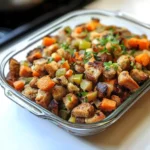
Vegan Stuffing recipe
Ingredients
-
- 1 Loaf (1 pound) Crusty Bread, Day-Old, Cubed: The bread is the heart of any stuffing, and for vegan stuffing, choosing the right type and preparing it correctly is key. Day-old bread is crucial because it’s drier and will absorb the flavorful broth and seasonings without becoming soggy. Crusty bread, like a French baguette, sourdough, or Italian loaf, is ideal because it provides a good structure and texture. Cut the bread into roughly 1-inch cubes. You can leave the crust on for added texture. If you only have fresh bread, you can dry it out by cubing it and leaving it spread out on a baking sheet overnight or toasting it in a low oven (200°F/95°C) for about 30-40 minutes, stirring occasionally, until lightly dried but not browned.
-
- 1/2 Cup Olive Oil: Olive oil is used for sautéing the vegetables and adds richness and flavor to the stuffing. Extra virgin olive oil is recommended for its flavor and health benefits. You can substitute with other plant-based oils like avocado oil or coconut oil, but olive oil contributes a classic savory note.
-
- 2 Large Onions, Diced: Onions form the aromatic base of the stuffing, adding depth and sweetness. Yellow or white onions work well. Dice the onions into small, even pieces for uniform cooking.
-
- 4 Celery Stalks, Diced: Celery is another essential aromatic vegetable that adds a subtle savory and slightly peppery note to the stuffing. Dice the celery into small, even pieces, similar in size to the diced onions.
-
- 2 Carrots, Diced: Carrots contribute sweetness, color, and a slight earthy flavor to the stuffing. Dice the carrots into small, even pieces.
-
- 8 oz Mushrooms, Sliced or Quartered: Mushrooms add an earthy, umami flavor and a meaty texture to the vegan stuffing, making it more satisfying and savory. Cremini (baby bella) or white button mushrooms are excellent choices. You can also use other varieties like shiitake, oyster, or portobello mushrooms for a more complex flavor profile. Slice or quarter the mushrooms depending on their size.
-
- 4–5 Cloves Garlic, Minced: Garlic enhances the savory flavors and adds pungency to the stuffing. Freshly minced garlic is always preferred for the best flavor. You can adjust the amount of garlic to your preference.
-
- 1 1/2 Cups Vegetable Broth: Vegetable broth is used to moisten the stuffing and add flavor. Use low-sodium vegetable broth to control the salt content. For a richer flavor, consider using a high-quality store-bought brand or homemade vegetable broth. You can also use mushroom broth for an even deeper umami flavor.
-
- 1/2 Cup Dry White Wine (Optional, but Recommended): Dry white wine, like Sauvignon Blanc or Pinot Grigio, adds acidity and complexity to the stuffing. It deglazes the skillet and adds a layer of flavor that elevates the dish. If you prefer to omit wine, simply use an additional 1/2 cup of vegetable broth.
-
- 1/4 Cup Fresh Parsley, Chopped: Fresh parsley adds a pop of color and a fresh, herbaceous note that brightens up the stuffing. Italian parsley or curly parsley both work well.
-
- 1/4 Cup Fresh Sage, Chopped: Fresh sage is a classic herb for stuffing, contributing a warm, earthy, and slightly peppery flavor that is quintessential for Thanksgiving.
-
- 2 Tablespoons Fresh Thyme Leaves: Fresh thyme adds a delicate, earthy, and slightly lemony flavor that complements the sage and parsley beautifully.
-
- 1 Teaspoon Dried Rosemary, Crumbled: Dried rosemary adds a piney, aromatic, and slightly pungent flavor. Use it sparingly as it can be quite strong. Crumbled dried rosemary is preferred over whole sprigs for even distribution of flavor.
-
- 1 Teaspoon Salt, or to taste: Salt is essential for seasoning and enhancing the flavors of all the ingredients. Use sea salt or kosher salt for best flavor. Adjust the amount to your preference.
-
- 1/2 Teaspoon Black Pepper, or to taste: Freshly ground black pepper adds a pungent and slightly spicy note. Adjust the amount to your preference.
-
- Optional Add-ins (for extra flavor and texture):
-
- 1/2 Cup Dried Cranberries or Chopped Dried Apricots: Dried cranberries or apricots add a touch of sweetness and chewiness, balancing the savory flavors.
-
- 1/2 Cup Chopped Walnuts or Pecans, Toasted: Toasted nuts add a delightful crunch and nutty flavor.
-
- 1/2 Cup Cooked Lentils or Chickpeas: For added protein and heartiness, incorporate cooked lentils or chickpeas.
-
- 1/4 Cup Nutritional Yeast: Nutritional yeast adds a cheesy, umami flavor that can enhance the savory notes and create a more “meaty” taste.
-
- Optional Add-ins (for extra flavor and texture):
Instructions
-
- Prepare the Bread: Preheat your oven to 300°F (150°C). Spread the bread cubes in a single layer on a large baking sheet. Bake for 15-20 minutes, or until lightly dried and crisp but not browned. Alternatively, you can air-dry the bread cubes overnight. Slightly dried bread is crucial for the right stuffing texture. Set aside the dried bread cubes.
-
- Sauté Aromatics and Vegetables: Heat olive oil in a large, wide skillet or Dutch oven over medium heat. Add the diced onions, celery, and carrots. Cook, stirring occasionally, until the vegetables are softened and the onions are translucent, about 8-10 minutes.
-
- Add Mushrooms and Garlic: Add the sliced or quartered mushrooms to the skillet and cook, stirring occasionally, until the mushrooms release their moisture and start to brown, about 8-10 minutes. Add the minced garlic and cook for another minute until fragrant, being careful not to burn the garlic.
-
- Deglaze with White Wine (Optional): If using white wine, pour it into the skillet and scrape up any browned bits from the bottom of the pan with a wooden spoon. Cook until the wine has mostly evaporated, about 2-3 minutes. This deglazing step adds depth and flavor to the stuffing.
-
- Add Broth and Seasonings: Pour in the vegetable broth, add the chopped fresh parsley, sage, thyme, crumbled rosemary, salt, and black pepper. Bring the mixture to a simmer and cook for 2-3 minutes to allow the flavors to meld. Taste the broth mixture and adjust seasoning as needed, adding more salt, pepper, or herbs to your preference.
-
- Combine Bread and Broth Mixture: In a very large bowl, gently combine the dried bread cubes and the hot broth and vegetable mixture. Toss gently to ensure the bread is evenly moistened. Do not overmix, as you want to maintain some texture and avoid making the stuffing mushy. If using optional add-ins like dried cranberries, nuts, lentils, or nutritional yeast, gently fold them in at this stage.
-
- Bake or Stuff (Oven Method):
-
- Baking in a Dish: For a casserole-style stuffing, transfer the stuffing mixture to a greased 9×13 inch baking dish. Cover the dish with foil and bake in a preheated oven at 350°F (175°C) for 20 minutes. Remove the foil and bake for another 20-25 minutes, or until heated through and the top is lightly golden brown and slightly crisp.
-
- Stuffing a Bird (Not Vegan, for reference if adapting): If you were stuffing a turkey (though this is a vegan recipe, for informational purposes), loosely stuff the cavity of the turkey with the stuffing mixture. Do not pack it tightly, as the stuffing will expand during cooking. Bake the turkey according to your recipe, ensuring the stuffing reaches a safe internal temperature of 165°F (74°C). For vegan purposes, we are focusing on baking separately.
-
- Bake or Stuff (Oven Method):
-
- Serve and Enjoy: Remove the Vegan Stuffing from the oven and let it rest for 5-10 minutes before serving. This allows the stuffing to set up slightly and makes it easier to serve. Garnish with fresh parsley or sage sprigs, if desired. Serve warm and enjoy your delicious and flavorful Vegan Stuffing!
Nutrition
- Serving Size: one normal portion
- Calories: 250-350
- Sugar: 3-5 grams
- Sodium: 300-400 mg
- Fat: 10-15 grams
- Saturated Fat: 1-2 grams
- Carbohydrates: 30-40 grams
- Fiber: 4-6 grams
- Protein: 5-7 grams