

There’s something irresistible about the way spicy Korean tofu stew bubbles away on the stove, filling the kitchen with a warm, inviting aroma that promises both comfort and bold flavor. One chilly evening, craving something hearty yet satisfying, I discovered Sundubu Jjigae—a vibrant stew packed with silky soft tofu, fiery chili paste, and a symphony of savory ingredients that dance on the tongue. What I love most is how effortlessly this dish comes together, making it perfect for those nights when you want homemade goodness without hours in the kitchen. Whether you’re cooking for one or sharing with friends, this spicy Korean tofu stew is a cozy, crowd-pleasing meal that never fails to bring smiles and seconds.
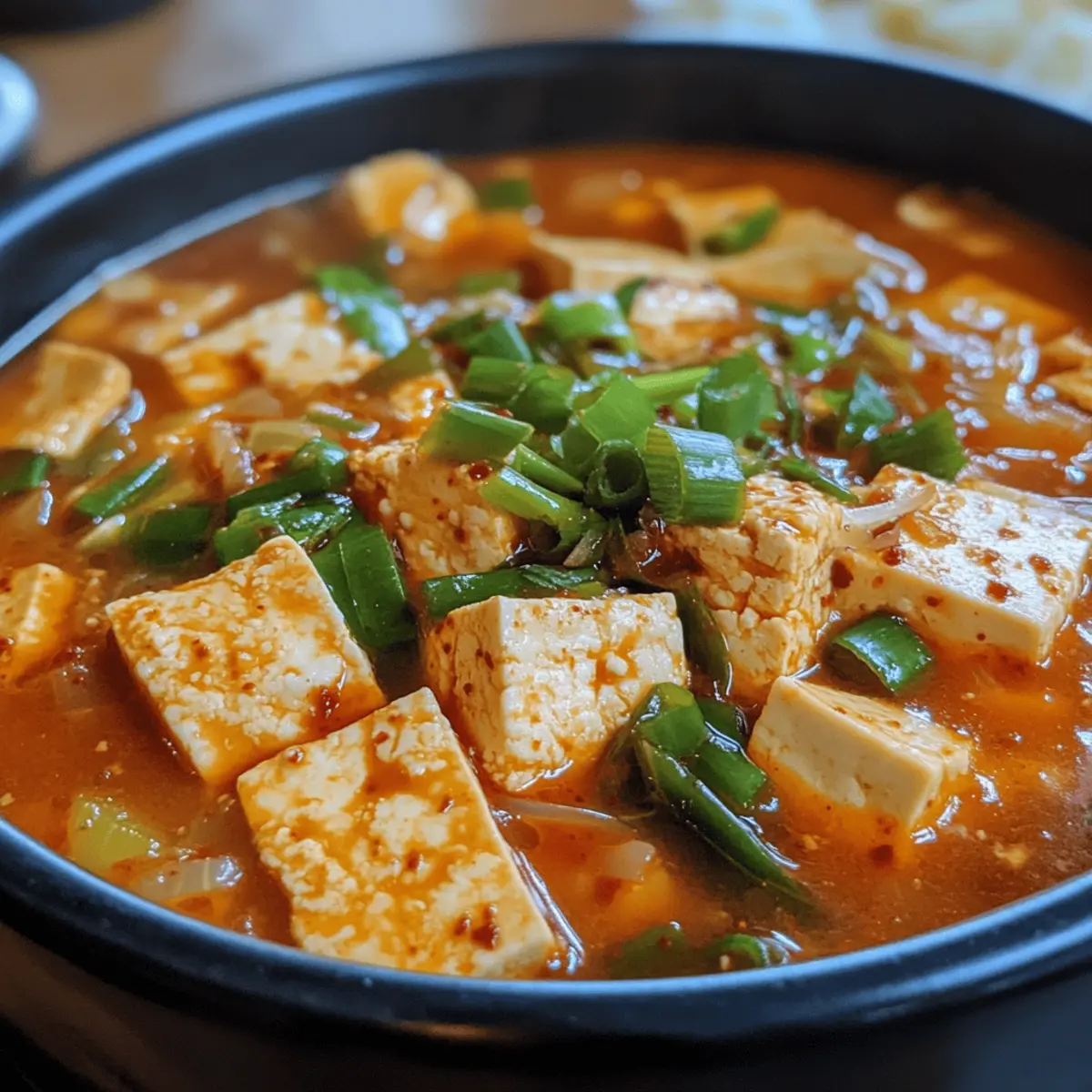
Why choose Spicy Korean Tofu Stew (Sundubu Jjigae)?
Flavor-packed simplicity: This stew bursts with bold, spicy flavors balanced by silky tofu. Quick and easy: Ready in under 30 minutes, it’s ideal for busy nights. Comfort in a bowl: Perfectly warm and satisfying for chilly evenings. Customizable heat levels: Adjust spice to your taste effortlessly. Vegan-friendly option: Nutritious and hearty without meat. Crowd pleaser: Shares well for family dinners or entertaining friends.
Spicy Korean Tofu Stew (Sundubu Jjigae) Ingredients
For the Broth and Base
- Anchovy broth or vegetable stock – creates a rich, savory foundation for the stew’s deep flavor.
- Gochujang (Korean chili paste) – the key spice that brings authentic heat and complexity to this Spicy Korean Tofu Stew (Sundubu Jjigae).
- Gochugaru (Korean chili flakes) – adds smoky, layered heat; adjust amount to your preferred spice level.
- Garlic – minced to brighten and deepen the stew’s savory notes.
- Soy sauce – balances heat with a touch of umami and saltiness.
For the Tofu and Protein
- Silken tofu – silky-soft texture that melts gently into the stew, the heart of this dish.
- Optional seafood (clams, shrimp, mussels) – adds briny sweetness, perfect for a pescatarian twist.
- Optional pork belly or beef slices – for those who enjoy a meaty boost and extra richness.
For Vegetables and Garnishes
- Zucchini – tender, subtle sweetness that complements spicy broth.
- Green onions – sliced thin for fresh crunch and color at the finish.
- Enoki mushrooms – delicate texture that soaks up the stew’s flavors beautifully.
- Egg – crack one in during the last simmer for a luscious, silky finish.
Seasonings and Extras
- Sesame oil – a finishing drizzle for fragrant warmth.
- Toasted sesame seeds – optional garnish adding a nutty crunch and touch of elegance.
How to Make Spicy Korean Tofu Stew
- Warm broth: In a medium pot, bring anchovy broth or vegetable stock to a gentle boil over medium heat, creating a savory foundation before adding any bold flavors.
- Whisk in spices: Reduce heat to low, stir gochujang, gochugaru, minced garlic, and soy sauce into the broth until it turns a vibrant red and releases a fragrant, spicy aroma.
- Cook protein: Add pork belly slices or optional seafood, simmer until meat is just opaque and seafood turns pink, about 2–3 minutes for perfect texture and flavor infusion.
- Add vegetables: Stir in zucchini and enoki mushrooms, simmer another 3 minutes until vegetables are tender-crisp and the broth deepens to a rich, fiery hue.
For the Tofu & Egg:
- Gently add tofu: Carefully nestle silken tofu cubes into the bubbling stew, simmer for 2 minutes to warm through without breaking the tender chunks.
- Finish with egg: Crack an egg into the center, cover pot, and let simmer 1 minute until whites set but yolk remains delightfully runny.
For Serving:
- Garnish & serve: Drizzle sesame oil, sprinkle green onions and toasted sesame seeds, then ladle hot stew into bowls for immediate serving and cozy enjoyment.
Optional: Serve with steamed rice and kimchi for authentic pairing.
Exact quantities are listed in the recipe card below.
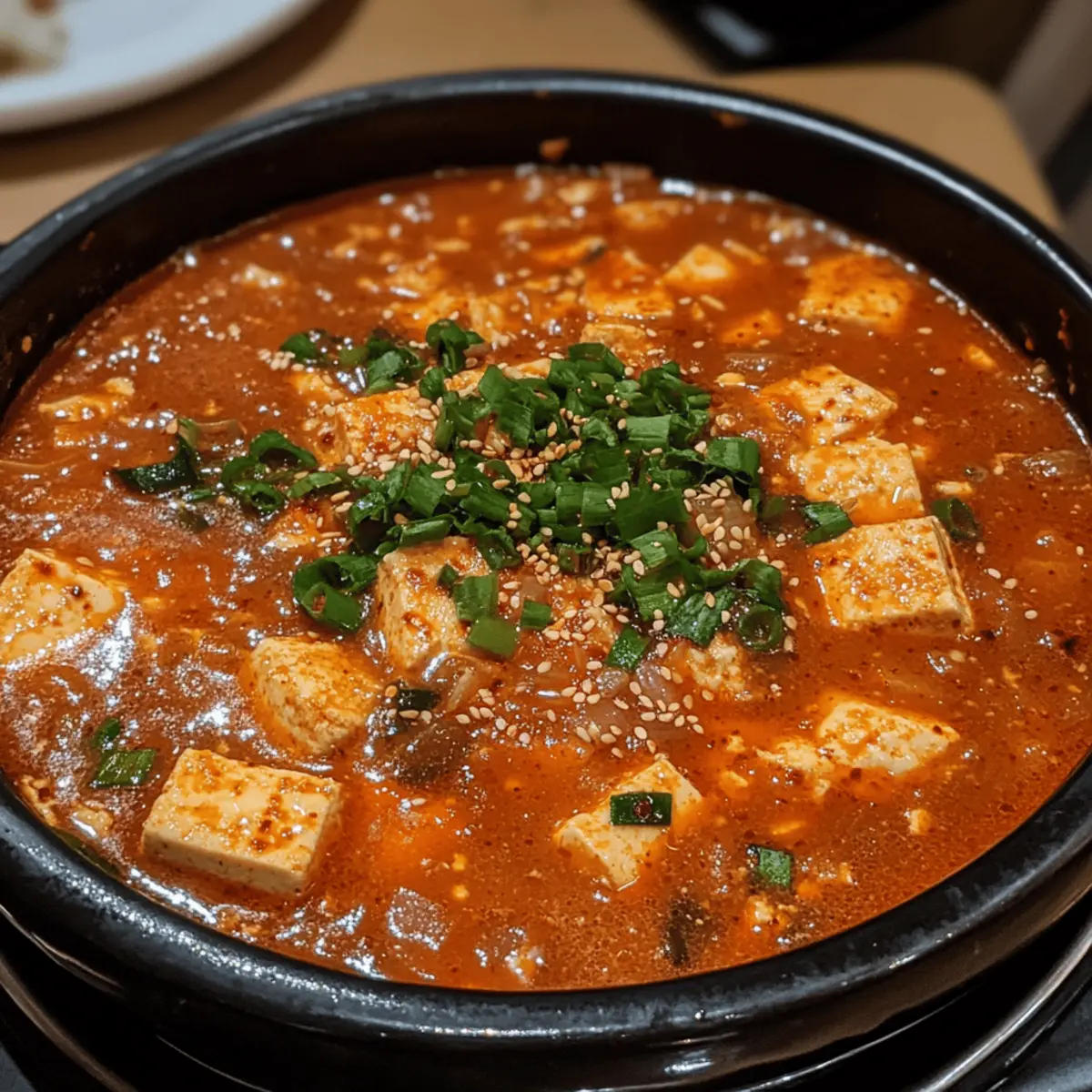
Make Ahead Options
These Spicy Korean Tofu Stew (Sundubu Jjigae) ingredients are perfect for meal prep enthusiasts! You can chop the zucchini, green onions, and enoki mushrooms up to 3 days in advance, storing them in an airtight container in the refrigerator to maintain freshness. Additionally, mix the broth ingredients—anchovy broth or vegetable stock, gochujang, gochugaru, garlic, and soy sauce—up to 24 hours ahead. Just keep them covered in the fridge. When you’re ready to enjoy your delectable stew, heat the broth mixture, add the proteins, followed by the prepped veggies, and finish with the silken tofu and a perfectly runny egg for cozy, restaurant-quality results without the evening rush!
How to Store and Freeze Spicy Korean Tofu Stew
Fridge: Store leftover Spicy Korean Tofu Stew in an airtight container for up to 3 days to maintain freshness and flavor.
Freezer: Allow the stew to cool completely, then transfer to a freezer-safe container. It can be frozen for up to 2 months; just remember to leave space for expansion.
Reheating: Thaw overnight in the fridge before reheating on the stove over low heat until warm. Add a splash of broth if it seems thick.
Freezing Tofu: Note that silken tofu may change texture when frozen, but it will still provide a delicious flavor in your stew!
What to Serve with Spicy Korean Tofu Stew (Sundubu Jjigae)?
Looking to create a delightful meal that complements the rich, spicy notes of your stew? Here are some delicious pairing ideas!
-
Steamed Jasmine Rice: A fluffy bed of rice soaks up the flavorful broth, balancing the heat and offering a comforting base to the dish.
-
Kimchi: This tangy and spicy fermented cabbage adds a delightful crunch and acidity, perfectly contrasting the warmth of the stew.
-
Korean Pancakes (Pajeon): Crispy and tender, these savory pancakes provide a chewy texture and savory bite, making every mouthful exciting. They also have a light onion flavor that matches well with the stew.
-
Pickled Radish (Danmuji): Sweet and tangy, these crunchy pickles cleanse the palate and enhance the bold flavors, bringing a refreshing lift to each bite.
-
Sesame Spinach Salad: A light, nutty salad offers a fresh side that balances the stew’s richness, with a subtle crunch that contrasts beautifully with the silky tofu.
-
Green Onion Salad: This simple yet vibrant salad complements the stew’s flavor profile while adding a refreshing zing.
-
Korean-style Lemonade: A sweet and tangy drink that refreshes your palate and cools the heat from the stew, creating a well-rounded dining experience.
-
Miso Soup: A light and umami-rich soup pairs nicely, creating a warm, comforting start to your meal that sets the tone for the stew.
Transform your dinner into a full-fledged feast with these delightful accompaniments that enhance the flavors of your Spicy Korean Tofu Stew while offering a balanced culinary experience!
Variations & Substitutions for Spicy Korean Tofu Stew (Sundubu Jjigae)
Feel free to explore and customize your stew to match your taste preferences and dietary needs!
- Vegetable Boost: Add bok choy, spinach, or mushrooms for extra nutrients and flavor depth. The more veggies, the merrier!
- Gluten-Free Option: Substitute soy sauce with tamari or coconut aminos to fit a gluten-free diet without sacrificing flavor.
- Nutty Twist: Incorporate a spoonful of almond or peanut butter for a creamy consistency and a hint of nuttiness in the broth.
- Extra Protein: Toss in some firm tofu or tempeh for a heartier vegetarian version that packs in additional protein.
- Heat Level: For a milder stew, reduce the gochujang and gochugaru. Add fresh cilantro or green parsley for a refreshing contrast to the spice.
- Savory Seafood: If you adore ocean flavors, replace pork with firm white fish like cod, which brings healthful omega-3s and a delicate taste.
- Zesty Kick: Drizzle in lime or lemon juice just before serving to brighten the dish and add a zesty flavor that cuts through the heat.
- Creamy Variant: Stir in a couple of tablespoons of coconut cream at the end for a rich, creamy texture that changes the flavor profile beautifully.
Expert Tips for Spicy Korean Tofu Stew (Sundubu Jjigae)
- Handle tofu gently: Use a spoon to add silken tofu carefully to avoid breaking its delicate texture in the stew.
- Control the spice: Adjust gochugaru and gochujang gradually to suit your heat preference, ensuring the stew isn’t overpowering.
- Simmer proteins just right: Overcooking seafood or pork can toughen them; cook until just opaque for tender, juicy results.
- Balance flavors: Taste the broth before serving—add a splash of soy sauce or a pinch of sugar if needed to perfect savory depth.
- Egg timing matters: Crack the egg in last and cover briefly to get a silky, runny yolk that enriches the stew’s warmth.
- Serve immediately: Sundubu Jjigae is best enjoyed hot to savor its comforting, spicy aroma and full flavors at their peak.
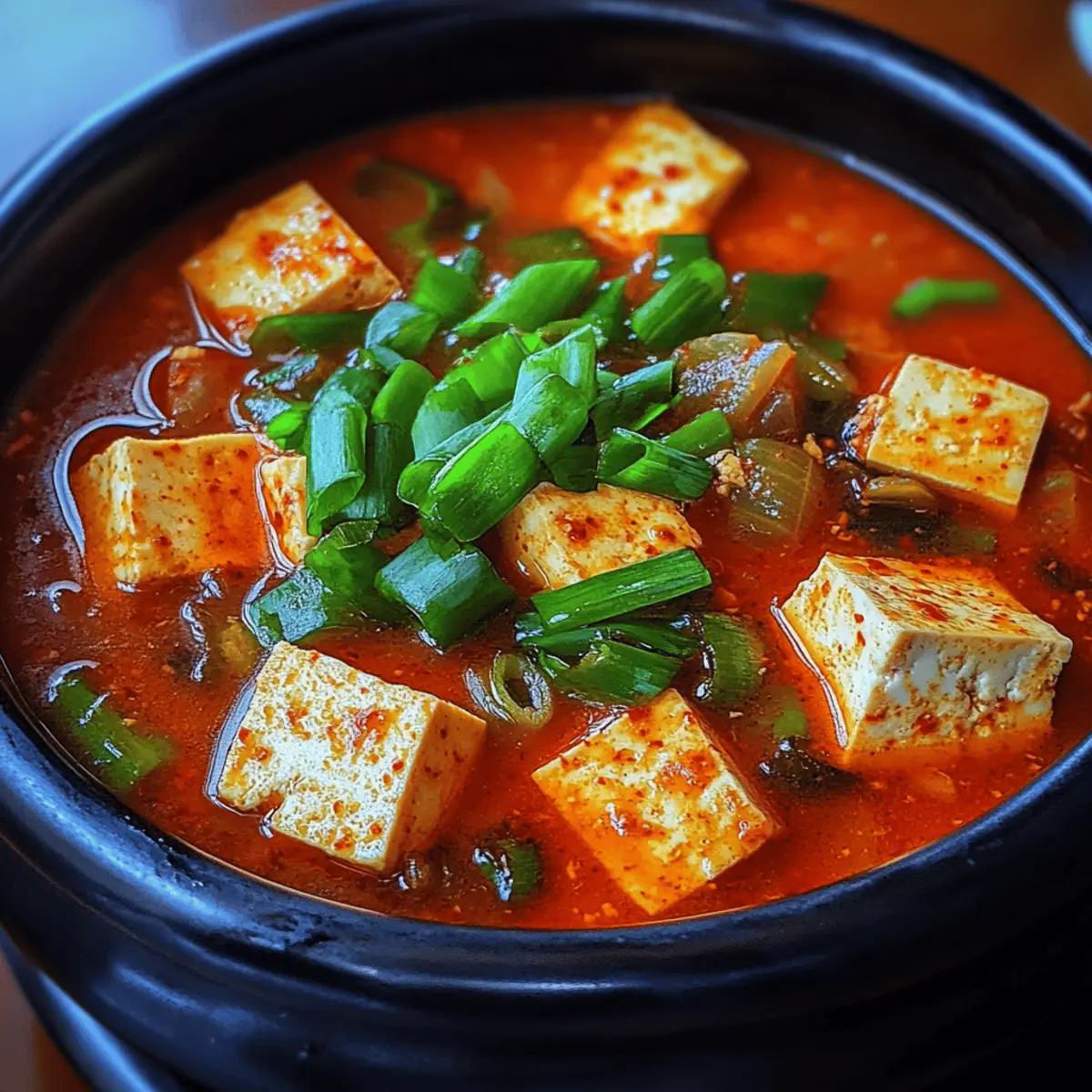
Spicy Korean Tofu Stew (Sundubu Jjigae) Recipe FAQs
What type of tofu is best for Spicy Korean Tofu Stew (Sundubu Jjigae)?
Silken tofu is the star here because of its soft, silky texture that gently melts into the stew. Make sure to handle it delicately to keep those tender chunks intact—firm tofu just won’t give you the authentic feel this stew deserves.
How long can I store leftover Spicy Korean Tofu Stew in the fridge?
You can keep your leftovers fresh and flavorful for up to 3 to 4 days in an airtight container in the refrigerator. Be sure to cool the stew to room temperature before storing to maintain quality.
Can I freeze Spicy Korean Tofu Stew, and how does freezing affect the tofu?
Absolutely! After the stew cools completely, transfer it to a freezer-safe container leaving a little headspace for expansion. Freeze for up to 2 months. Keep in mind, silken tofu’s texture softens further after freezing, but it still delivers rich taste once reheated—perfect for meal prep or busy nights!
What should I do if the stew is too spicy or too bland?
The beauty of this stew is its adaptable heat. If it’s too spicy, add a splash of vegetable stock or a pinch of sugar to mellow the heat without losing depth. If it’s bland, a little more soy sauce or gochujang can boost umami and spice. Taste as you go, and adjust gradually to find your perfect balance.
Is Spicy Korean Tofu Stew safe for pets if I share?
No, this stew contains ingredients like garlic, chili paste, and soy sauce that can be harmful to pets. It’s best to keep this delicious and spicy treat just for humans and offer your furry friends pet-safe snacks instead!
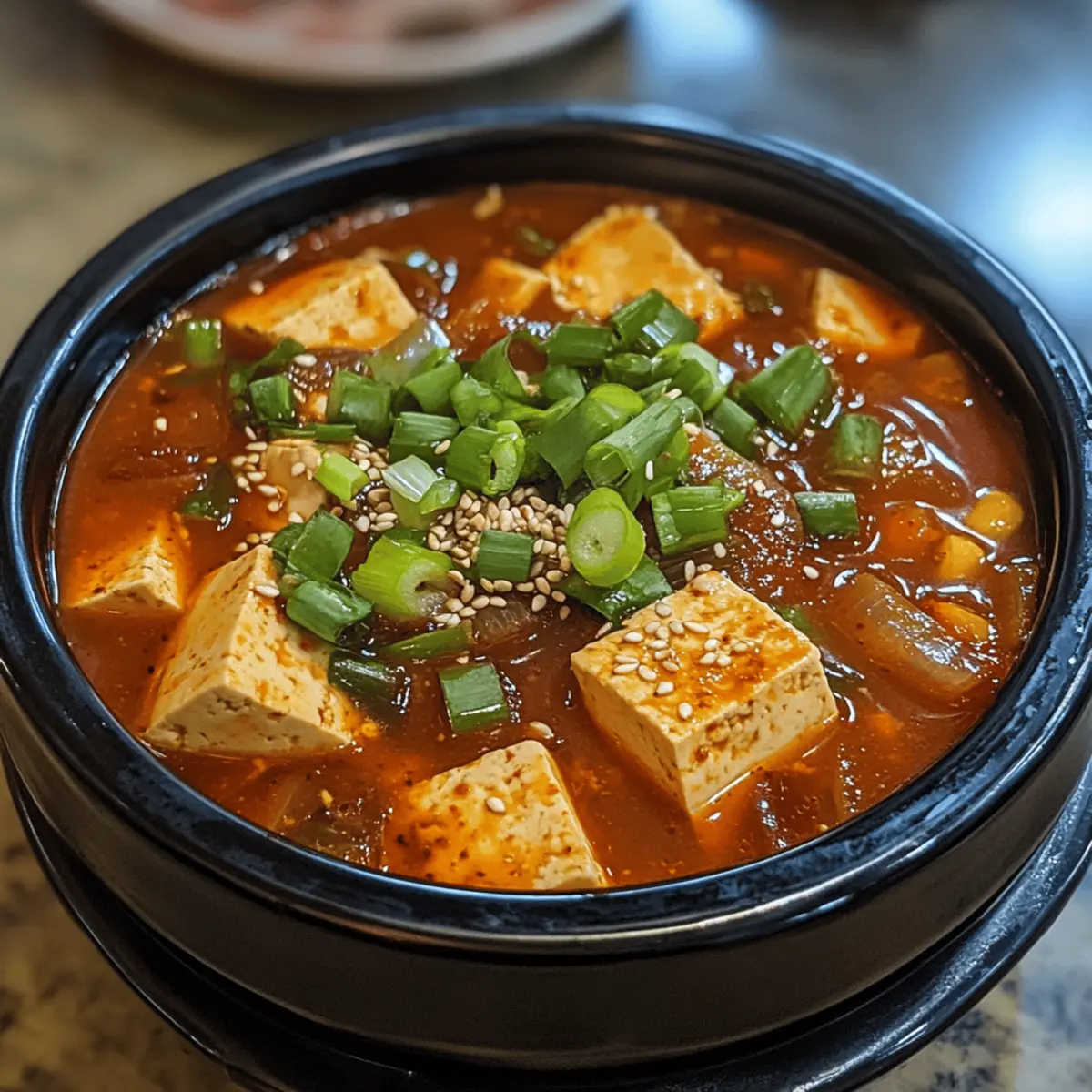
Ultimate Spicy Korean Tofu Stew (Sundubu Jjigae) to Warm You Up
Ingredients
Equipment
Method
- In a medium pot, bring anchovy broth or vegetable stock to a gentle boil over medium heat.
- Reduce heat to low, stir in gochujang, gochugaru, minced garlic, and soy sauce until the broth is vibrant red.
- Add pork belly slices or optional seafood, simmer until meat is opaque and seafood turns pink, about 2–3 minutes.
- Stir in zucchini and enoki mushrooms, simmer another 3 minutes until vegetables are tender-crisp.
- Carefully nestle silken tofu cubes into the stew, simmer for 2 minutes.
- Crack an egg into the center, cover pot, and let simmer for 1 minute until whites set.
- Drizzle sesame oil, sprinkle green onions and toasted sesame seeds, then serve hot.