
In the world of food, there are grand, complicated dishes that demand days of prep and a dozen specialty ingredients. And then there is Tomato Butter Pasta. I discovered this recipe not in a fancy cookbook, but whispered like a secret among food lovers online. The description was so simple it felt like a typo: canned tomatoes, an onion, and a stick of butter. That’s it. My skepticism was high, but my curiosity was higher. On a dreary, run-down evening when my culinary ambition was at an all-time low, I decided to give it a try. As the sauce simmered on the stove for the better part of an hour, my apartment began to fill with the most incredible aroma—not just of tomatoes, but something richer, sweeter, and deeply comforting. When I finally tossed the velvety, vibrant orange sauce with hot pasta and took the first bite, I was stunned into silence. It was luxurious. It was complex. It tasted of time and care, yet I had done almost nothing. That night, this recipe, born from the mind of the legendary Marcella Hazan, became more than just a meal; it became a philosophy. It is a testament to the magic of simplicity, a culinary hug in a bowl, and the single most impressive dish you can make with the least amount of effort. It is, without exaggeration, perfect.
Why This Tomato Butter Pasta Will Change Your Life
Before we get to the simple steps, it’s crucial to understand why this recipe is not just food, but a phenomenon. It’s a culinary lesson in a pot, and its brilliance lies in concepts that can make you a better cook overall.
The Legendary Genius of Marcella Hazan
You cannot talk about this recipe without paying homage to its creator, the iconic Marcella Hazan. Widely regarded as the godmother of Italian cooking in America, Hazan’s philosophy was built on a foundation of absolute respect for ingredients and an elegant, unwavering simplicity. She taught generations of home cooks that authentic Italian food wasn’t about complicated techniques or long ingredient lists; it was about choosing the best possible ingredients and letting them shine. This tomato sauce is perhaps the most famous and perfect embodiment of her culinary ethos. It’s a recipe that trusts the ingredients to do the heavy lifting, a quiet rebellion against the “more is more” mentality. Making this sauce is like taking a mini masterclass from a legend.
The Alchemy of Three Humble Ingredients
The magic here is how three everyday ingredients transform into something far greater than the sum of their parts. This isn’t just mixing; it’s a slow, gentle alchemy.
- The Tomatoes: The sauce’s soul. During the long, slow simmer, the tomatoes break down completely. Their bright, sometimes sharp acidity mellows and sweetens, concentrating their flavor into a pure, intense expression of “tomato.”
- The Butter: This is the game-changer. Where most tomato sauces use olive oil, Hazan calls for a generous amount of butter. The butter performs two miracles. First, it tames the acidity of the tomatoes, smoothing out any sharp edges. Second, it adds an incredible richness and a velvety, mouth-coating texture that olive oil simply cannot replicate. It creates a sauce that is both light and luxuriously creamy without a drop of actual cream.
- The Onion: This is the stroke of pure genius. Instead of chopping and sautéing the onion, you simply peel it, cut it in half, and let it simmer whole in the sauce. As it cooks, the onion releases its sweet, aromatic essence, infusing the entire sauce with a deep, savory background note that is complex and fragrant. Because it remains whole, it doesn’t add the texture or pungent bite of raw onion, only its soul. At the end, you simply discard it, leaving behind its gift of flavor.
A Masterclass in Slow-Simmered Flavor
In our fast-paced world, this recipe is a gentle reminder of the virtue of patience. The 45-minute simmer is not passive time; it is the most critical ingredient. This is when the flavors meld, the sauce reduces and thickens naturally, and the chemical reactions that turn three simple things into a masterpiece take place. The barest of simmers, a gentle “plop-plop” every few seconds, is all that’s needed. Rushing this step will result in a sauce that is watery and one-dimensional. Giving it the time it deserves will reward you with a depth of flavor that tastes like it took all day to achieve.
An Effortlessly Elegant Recipe for Any Skill Level
This is quite possibly the most rewarding recipe for a novice cook. The prep time is under five minutes: open a can, peel an onion, unwrap some butter. There is no complex knife work, no precarious browning, no delicate timing. It is forgiving, requires minimal attention, and delivers a result that will make you feel like a culinary superstar. It’s the perfect dish for a busy weeknight, a last-minute dinner party, or any time you want to impress with disarming simplicity.
The Quintessential Tomato Butter Pasta Recipe
This recipe is adapted from Marcella Hazan’s “Essentials of Classic Italian Cooking.” Do not be tempted to complicate it until you have tried it once in its purest form.
Ingredients
- Canned Whole Peeled Tomatoes: 1 (28-ounce) can. This is the most important ingredient choice. Use the highest quality you can find, preferably San Marzano tomatoes. They are grown in the volcanic soil near Mount Vesuvius, which gives them a sweeter, less acidic flavor and a meatier texture.
- Unsalted Butter: 5 tablespoons. Using unsalted butter allows you to control the final seasoning of the sauce.
- Yellow Onion: 1 medium onion, peeled and cut in half from root to stem.
- Salt: To taste.
- Pasta: 1 pound (450g). Spaghetti, rigatoni, penne, or any shape you love.
- Freshly Grated Parmesan Cheese: For serving. Optional, but highly recommended.
Instructions
- Prepare the Sauce Base: Open the can of whole peeled tomatoes and pour them into a medium saucepan or Dutch oven. Crush the tomatoes with your hands, a potato masher, or the back of a wooden spoon. There is a rustic charm to hand-crushing them, and it gives you control over the final texture.
- Add the Butter and Onion: Add the 5 tablespoons of butter and the two halves of the peeled onion to the saucepan with the tomatoes. Add a pinch of salt.
- Simmer the Sauce: Place the saucepan over medium heat and bring the sauce to a simmer. Once it begins to bubble, reduce the heat to the lowest possible setting that will maintain a very gentle, lazy simmer. The sauce should just barely bubble, with a “plop” every few seconds.
- Wait Patiently: Let the sauce simmer uncovered for at least 45 minutes, stirring occasionally. The sauce is done when it has thickened considerably, the fat from the butter has separated and floats on the surface, and the color has deepened to a rich, vibrant orange-red.
- Cook the Pasta: While the sauce is in its final 15 minutes of simmering, bring a large pot of water to a rolling boil. Salt the water generously (it should taste like the sea). Add the pasta and cook according to package directions until it is al dente (firm to the bite).
- Finish the Sauce: Once the sauce is done, turn off the heat. Remove and discard the onion halves (or save them for a snack—they are delicious!). Taste the sauce and add salt as needed until the flavors pop.
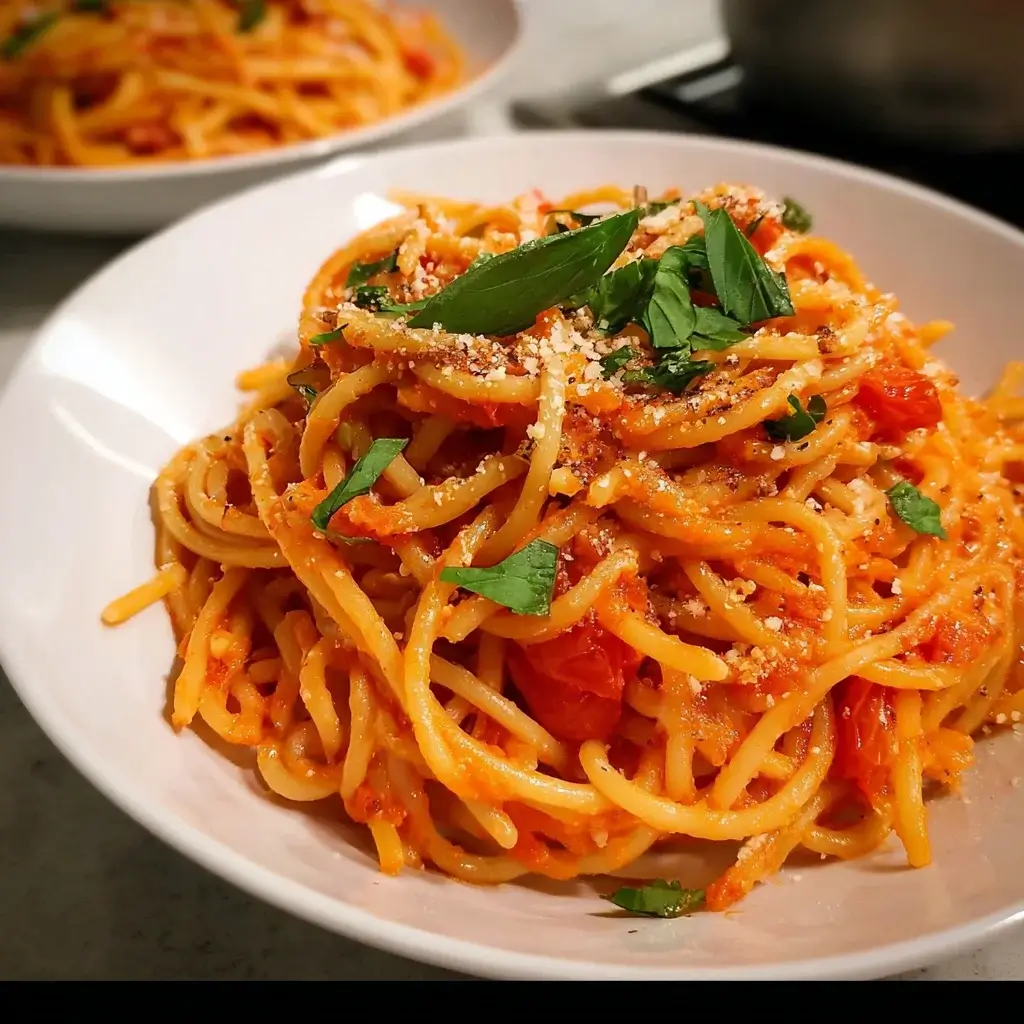
- Combine and Serve: Just before you drain the pasta, reserve about one cup of the starchy pasta water. Drain the pasta and return it to the pot. Pour the finished tomato butter sauce over the pasta. Add a splash of the reserved pasta water and toss everything together vigorously over low heat for one minute. This helps the sauce cling to every strand of pasta, creating a perfectly emulsified dish.
- Serve Immediately: Divide the pasta among warm bowls and serve immediately, offering plenty of freshly grated Parmesan cheese at the table.
Nutrition Facts
- Servings: 4-6 (sauce makes enough for 1 pound of pasta)
- Calories per serving: Approximately 450-550 kcal (This is for the pasta and sauce, and does not include cheese.)
Preparation and Cooking Time
- Preparation Time: 5 minutes
- Cook Time: 45-50 minutes
- Total Time: 50-55 minutes
How to Serve and Elevate Your Tomato Butter Pasta
While stunning in its simplicity, this pasta can also serve as a canvas for a more complete meal.
- The Classic Presentation:
- Serve hot, directly after tossing the pasta and sauce.
- Provide a block of Parmesan cheese and a grater on the table for guests to add as much as they like. Nothing beats the flavor of freshly grated cheese.
- Simple Garnishes for a Touch of Freshness:
- Fresh Basil: Tear a few fresh basil leaves over the top of each bowl just before serving for a classic aromatic touch.
- Red Pepper Flakes: For those who like a bit of heat, a small pinch of red pepper flakes can be stirred into the sauce during the last few minutes of cooking or sprinkled on top.
- High-Quality Olive Oil: A final, light drizzle of a fruity, extra virgin olive oil can add another layer of complexity.
- Building a Complete Meal:
- Crusty Bread: This is non-negotiable. A good loaf of Italian or sourdough bread is essential for mopping up every last bit of the incredible sauce from the bowl.
- Simple Green Salad: A salad of arugula or mixed greens with a simple lemon vinaigrette provides a fresh, peppery contrast that cuts through the richness of the pasta perfectly.
- Simple Protein: While not traditional, if you want a heartier meal, this sauce is wonderful tossed with simple grilled chicken, sautéed shrimp, or served alongside a classic Italian sausage.
5 Essential Tips for Perfect Tomato Butter Sauce
Master these small details to ensure your sauce is flawless every single time.
- The Tomato is King: It bears repeating: your sauce will only be as good as your tomatoes. Splurge on the can of DOP-certified San Marzano tomatoes. The difference in sweetness, acidity, and texture is palpable and is the true foundation of this recipe’s magic.
- Trust the Simmer: Do not rush the 45-minute cooking time. This is where the flavor development happens. A rapid boil will break the sauce and make it taste harsh. A low, slow, lazy simmer coaxes out the sweetness and creates the velvety texture you’re looking for. Set a timer and let it do its work.
- The Pasta Water Finale is Crucial: Don’t skip the step of reserving pasta water and tossing the pasta and sauce together with a splash of it. This starchy, salty water is the secret ingredient of Italian cooks. It helps the oil-based sauce emulsify and cling to the pasta, creating a cohesive dish rather than just noodles with sauce on top.
- Make a Double Batch and Freeze: This sauce freezes beautifully. Double the recipe and, after it has cooled, pour the extra sauce into freezer-safe containers or bags. It will keep for up to 3 months. It’s an incredible gift to your future self, ready for a delicious, effortless meal at a moment’s notice.
- Don’t Throw Away the Onion!: While Marcella instructs you to discard the onion, many cooks find it to be the best part! It becomes incredibly soft, sweet, and infused with tomato-butter flavor. You can eat it on its own, mash it and stir it back into the sauce for a thicker texture, or spread it on a piece of crusty bread.
Frequently Asked Questions (FAQ)
Here are answers to some of the most common questions about this iconic recipe.
1. Do I really just put the onion in whole without chopping it?
Yes, absolutely. This is the genius of the recipe. A whole, halved onion infuses the sauce with its sweet, aromatic flavor without adding the texture or sharp pungency of chopped onion. It creates a smoother, more elegant sauce. Trust the process!
2. Can I make this sauce vegan?
Yes, you can make a vegan version. The key is to replace the butter with a high-quality fat. You can use a good brand of vegan butter for a similar creamy effect. Alternatively, you can use about 1/3 cup of a high-quality extra virgin olive oil. The flavor profile will be different—more peppery and fruity rather than rich and creamy—but it will still be a delicious tomato sauce.
3. Can I use fresh tomatoes instead of canned?
You can, but it requires more work and will yield a slightly different result. You would need about 2 pounds of very ripe tomatoes (like Roma or plum). You’ll need to peel and seed them first. The sauce may also require a longer simmering time to break down and thicken properly. For consistency and ease, high-quality canned tomatoes are generally recommended for this specific recipe.
4. I only have salted butter. Can I use it?
Yes, you can use salted butter in a pinch. However, you must be much more cautious when adding salt at the end. Different brands of salted butter have different amounts of salt. Wait until the sauce is completely finished, taste it, and only then add a very small amount of extra salt if needed. Using unsalted butter gives you complete control over the final seasoning.
5. What’s the best pasta shape for this sauce?
The beauty of this sauce is its versatility. It’s smooth and velvety, so it wonderfully coats long strands like spaghetti, linguine, or fettuccine. It is also fantastic with tube-shaped pasta like rigatoni or penne, as the rich sauce gets trapped inside. A shell-like conchiglie is also a great choice for cupping the sauce. There is no wrong answer here
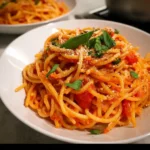
Tomato Butter Pasta recipe
Ingredients
-
Canned Whole Peeled Tomatoes: 1 (28-ounce) can. This is the most important ingredient choice. Use the highest quality you can find, preferably San Marzano tomatoes. They are grown in the volcanic soil near Mount Vesuvius, which gives them a sweeter, less acidic flavor and a meatier texture.
-
Unsalted Butter: 5 tablespoons. Using unsalted butter allows you to control the final seasoning of the sauce.
-
Yellow Onion: 1 medium onion, peeled and cut in half from root to stem.
-
Salt: To taste.
-
Pasta: 1 pound (450g). Spaghetti, rigatoni, penne, or any shape you love.
-
Freshly Grated Parmesan Cheese: For serving. Optional, but highly recommended.
Instructions
-
Prepare the Sauce Base: Open the can of whole peeled tomatoes and pour them into a medium saucepan or Dutch oven. Crush the tomatoes with your hands, a potato masher, or the back of a wooden spoon. There is a rustic charm to hand-crushing them, and it gives you control over the final texture.
-
Add the Butter and Onion: Add the 5 tablespoons of butter and the two halves of the peeled onion to the saucepan with the tomatoes. Add a pinch of salt.
-
Simmer the Sauce: Place the saucepan over medium heat and bring the sauce to a simmer. Once it begins to bubble, reduce the heat to the lowest possible setting that will maintain a very gentle, lazy simmer. The sauce should just barely bubble, with a “plop” every few seconds.
-
Wait Patiently: Let the sauce simmer uncovered for at least 45 minutes, stirring occasionally. The sauce is done when it has thickened considerably, the fat from the butter has separated and floats on the surface, and the color has deepened to a rich, vibrant orange-red.
-
Cook the Pasta: While the sauce is in its final 15 minutes of simmering, bring a large pot of water to a rolling boil. Salt the water generously (it should taste like the sea). Add the pasta and cook according to package directions until it is al dente (firm to the bite).
-
Finish the Sauce: Once the sauce is done, turn off the heat. Remove and discard the onion halves (or save them for a snack—they are delicious!). Taste the sauce and add salt as needed until the flavors pop.
-
Combine and Serve: Just before you drain the pasta, reserve about one cup of the starchy pasta water. Drain the pasta and return it to the pot. Pour the finished tomato butter sauce over the pasta. Add a splash of the reserved pasta water and toss everything together vigorously over low heat for one minute. This helps the sauce cling to every strand of pasta, creating a perfectly emulsified dish.
-
Serve Immediately: Divide the pasta among warm bowls and serve immediately, offering plenty of freshly grated Parmesan cheese at the table.
Nutrition
- Serving Size: one normal portion
- Calories: 450-550 kcal