
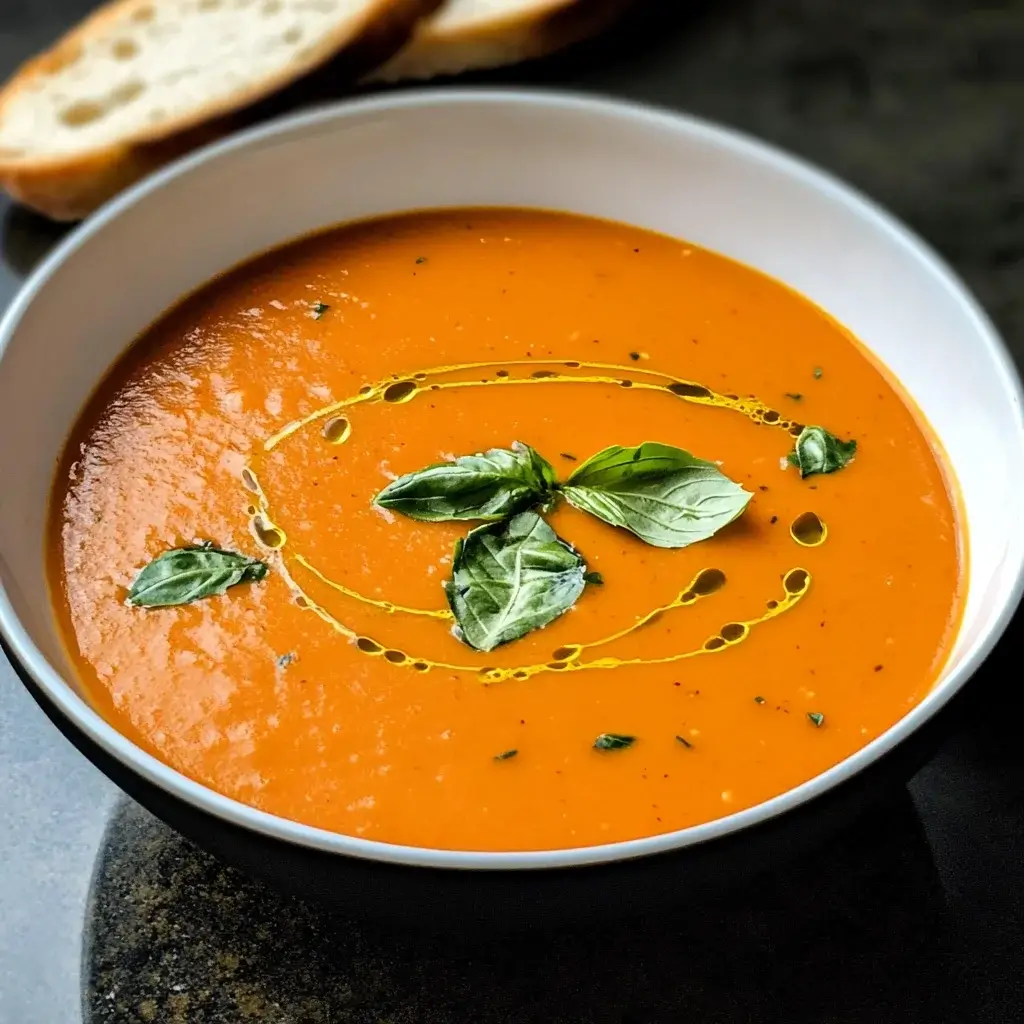

There are few dishes that evoke such a universal feeling of comfort as a simple bowl of tomato soup. For me, it’s the taste of childhood, of rainy afternoons spent indoors, of feeling cared for. For years, my experience was limited to the condensed, metallic-tasting soup from a red and white can. It was fine, but it was a shadow of what tomato soup could be. The real turning point came when I was hosting my first “grown-up” dinner party. I wanted to make something elegant yet simple, and I landed on the idea of a from-scratch Tomato Basil Bisque. I was nervous, armed with a can of high-quality tomatoes and a large bunch of fragrant, fresh basil. As the soup simmered, a magical aroma filled my small apartment—a rich, savory scent of slow-cooked tomatoes, sweet basil, and garlic that was a world away from the canned soup of my youth. When I served it in small cups as a starter, the reaction was immediate and unanimous praise. My friends were stunned that something so velvety, so deeply flavorful, could come from such simple ingredients. That recipe, refined over the years, is the one I’m sharing today. It’s the recipe that transformed a childhood comfort food into an elegant, soul-soothing elixir that proves homemade is always, always worth it.
Beyond the Can: What Makes This Tomato Basil Bisque a Revelation
Before we get to the recipe itself, let’s explore what elevates this dish from a simple soup to a true “bisque” and why it will become your one-and-only tomato soup recipe. This isn’t just about combining ingredients; it’s about understanding the alchemy that happens in the pot.
The Quintessential Power Couple: Tomato and Basil
Tomato and basil are one of culinary history’s most iconic pairings, and for good reason. They are a perfect example of flavor synergy.
- Tomatoes: When cooked down, tomatoes develop a deep, rich, savory flavor known as umami, while also retaining a bright, fruity acidity.
- Basil: Fresh basil brings a sweet, aromatic, and slightly peppery-clove flavor.
When combined, the sweet notes of the basil cut through the acidity of the tomatoes, and the savory depth of the tomatoes grounds the aromatic flightiness of the basil. Together, they create a flavor profile that is perfectly balanced, complex, and utterly irresistible. This recipe honors that relationship by using fresh basil and adding it at the very end to preserve its delicate flavor.
What Makes it a “Bisque”? The Secret to a Velvety Texture
The term “bisque” traditionally refers to a smooth, creamy, highly seasoned soup of French origin, originally based on a strained broth of crustaceans. In modern culinary language, it’s often used to describe any thick, creamy, puréed vegetable soup. The hallmark of a great bisque is its luxurious, velvety mouthfeel. While many recipes achieve this with cups of heavy cream, this recipe builds its creaminess in layers:
- The Aromatics: A base of slowly sautéed onion and garlic provides a foundational sweetness and depth.
- The Emulsification: The real magic happens during the blending process. As the cooked vegetables and broth are puréed, the natural starches and pectins from the tomatoes and vegetables break down and emulsify with the liquids, creating a naturally thick and creamy consistency.
- The Finishing Touch: A modest amount of heavy cream (or a dairy-free alternative) is stirred in at the end. Its role isn’t just to make the soup creamy, but to enrich it, mellow any harsh acidity, and lend a final, luxurious finish to the texture.
The Art of Simplicity: Quality Over Quantity
This recipe proves that you don’t need a long list of complicated ingredients to create a dish with profound flavor. With fewer than ten core ingredients, the quality of each one becomes paramount. This is a soup where using a high-quality can of tomatoes, a truly fresh bunch of basil, and a good-quality broth will make a world of difference. It’s a celebration of simple, honest ingredients transformed into something truly extraordinary.
The Anatomy of a Perfect Bisque: An Ingredient Deep Dive
The success of this recipe hinges on selecting the right ingredients. Let’s break down the key players.
The Heart and Soul: The Tomatoes
This is the most critical choice you will make. You have two main options:
- Fresh Tomatoes: While romantic, using fresh tomatoes is often not the best choice unless you have access to exceptionally ripe, in-season heirloom tomatoes. Out-of-season fresh tomatoes can be watery, acidic, and lack the deep flavor needed for a great soup.
- Canned Tomatoes (The Winner): This is the professional’s choice. Canned tomatoes are picked and packed at the peak of their ripeness, preserving their sun-drenched flavor. For the absolute best bisque, seek out Canned San Marzano Tomatoes. These are a specific variety of plum tomato grown in the volcanic soil near Mount Vesuvius in Italy. They are prized for being naturally sweeter, less acidic, meatier, and having fewer seeds than other varieties. They are often sold as “D.O.P.” (Denominazione d’Origine Protetta), which certifies their origin and quality. They are worth every extra penny for this recipe. If you can’t find them, any high-quality canned whole peeled plum tomatoes will be your next best bet.
The Fragrant Partner: The Basil
For this recipe, fresh basil is non-negotiable. Dried basil has a completely different, more muted and minty flavor profile. It lacks the vibrant, sweet aroma that makes this pairing so special. You will stir the fresh basil in at the very end of the cooking process, just before blending, to capture its essential oils at their peak.
The Creaminess Factor: The Dairy
- Heavy Cream: Provides the richest, most traditional flavor and texture.
- Half-and-Half: A lighter alternative that still provides a creamy finish.
- Full-Fat Coconut Milk (for Dairy-Free/Vegan): To make this recipe vegan, substitute the butter with olive oil and use full-fat canned coconut milk instead of heavy cream. It will add a very subtle, pleasant tropical note that pairs surprisingly well with the tomato and basil.
Complete with the ingredients amount
- 2 tablespoons unsalted butter (or olive oil for vegan)
- 1 large yellow onion, chopped
- 4-6 cloves garlic, minced
- 1 (28-ounce) can high-quality whole peeled tomatoes, preferably San Marzano
- 4 cups vegetable broth (or chicken broth)
- 1 teaspoon salt
- 1/2 teaspoon black pepper
- 1/2 teaspoon granulated sugar (optional, but recommended to balance acidity)
- 1 large bunch of fresh basil, stems removed (about 1 packed cup of leaves)
- 1/2 cup heavy cream (or full-fat coconut milk for dairy-free)
Instructions
- Build the Flavor Base: In a large Dutch oven or heavy-bottomed pot, melt the butter over medium heat. Add the chopped onion and a pinch of salt. Cook, stirring occasionally, for about 8-10 minutes, until the onion is very soft, translucent, and sweet. Do not let it brown.
- Add Garlic: Add the minced garlic and cook for another minute until fragrant, stirring constantly to prevent burning.
- Incorporate Tomatoes and Broth: Pour the entire can of whole peeled tomatoes (with their juices) into the pot. Use your spoon to gently crush the tomatoes against the side of the pot. Add the vegetable broth, salt, pepper, and the optional sugar.
- Simmer and Meld Flavors: Bring the mixture to a boil, then reduce the heat to low. Cover the pot and let the soup simmer gently for at least 30 minutes (or up to an hour for even deeper flavor). This simmering time is crucial for melding the flavors together and softening the tomatoes completely.
- Wilt the Basil: Turn off the heat. Add the fresh basil leaves to the hot soup and stir them in. Let them sit in the hot soup for 1-2 minutes to wilt. This gentle heating releases their flavor without making them bitter.
- Blend to Velvety Perfection:
- Using an Immersion (Stick) Blender: This is the easiest and safest method. Insert the blender directly into the pot and blend until the soup is completely smooth and velvety. This may take 2-3 minutes.
- Using a Countertop Blender: Carefully ladle the soup into the blender in batches, filling it no more than halfway each time. Remove the center cap of the lid and cover the opening with a folded kitchen towel to allow steam to escape. Blend each batch until perfectly smooth and transfer to a clean pot.
- The Final Enrichment: Return the blended soup to the stove over low heat. Slowly stir in the heavy cream. Gently heat the soup until it is warm, but do not let it boil, as this can cause the cream to curdle.
- Taste and Serve: Taste the bisque one last time and adjust seasoning with more salt or pepper if needed. Serve immediately.
Nutrition Facts
- Servings: 6
- Calories per serving: Approximately 220 calories
Disclaimer: This is an estimate and will vary based on the specific ingredients used (e.g., chicken vs. vegetable broth, cream vs. coconut milk).
Preparation time
- Prep Time: 10 minutes
- Cook Time: 45 minutes
- Total Time: 55 minutes
How to Serve: The Art of the Accompaniment
A perfect bowl of Tomato Basil Bisque is a masterpiece on its own, but the right pairing or garnish can turn it into an unforgettable meal.
- The Quintessential Pairing: The Grilled Cheese Sandwich
This is the most iconic duo for a reason. The crunchy, buttery bread and gooey, savory cheese are the perfect textural and flavor counterpoint to the smooth, creamy soup.- Classic: Use thick-sliced white or sourdough bread with sharp cheddar or American cheese.
- Gourmet: Try Gruyère cheese with a smear of Dijon mustard on sourdough.
- Italian-Style: Use mozzarella and provolone on ciabatta bread, perhaps with a thin layer of pesto.
- Elegant Garnishes for a Touch of Flair:
- A drizzle of high-quality olive oil or basil-infused oil.
- A swirl of heavy cream, pesto, or crème fraîche.
- Homemade garlic and herb croutons.
- Crispy Parmesan cheese crisps (frico).
- A scattering of fresh, finely chopped basil or chives.
- A sprinkle of crunchy, toasted pine nuts.
Additional tips: 5 Secrets to the Best Tomato Basil Bisque
Master this recipe with these five insider tips that make all the difference.
- Invest in San Marzano Tomatoes: It cannot be overstated. This is the single most impactful thing you can do to elevate your soup. Their natural sweetness and low acidity mean you’ll have a perfectly balanced soup with a much deeper, more authentic tomato flavor.
- Add Basil at the End, Off the Heat: Never boil fresh basil. Boiling destroys its delicate essential oils and can make it taste bitter. Adding the fresh leaves to the hot soup after you’ve turned off the heat is the perfect way to gently wilt them and extract their pure, sweet flavor right before blending.
- The Unsung Hero: A Pinch of Sugar: Even with the best tomatoes, a tiny bit of sugar is a secret weapon. It doesn’t make the soup sweet; it works chemically to balance the natural acidity of the tomatoes, making the overall flavor rounder, richer, and more deeply “tomatoey.”
- Embrace the Immersion Blender: If you make puréed soups often, an immersion (stick) blender is a worthy investment. It allows you to blend the soup directly in the pot, which is not only easier and involves less cleanup, but it’s also much safer than transferring batches of scalding hot liquid to a traditional blender.
- Don’t Boil After Adding Cream: Once the cream is in, keep the heat low and gentle. Bringing the soup to a rolling boil after adding dairy can cause it to “break” or curdle, resulting in a grainy texture. A gentle warming is all that’s needed.
FAQ section
Here are answers to some of the most common questions about making Tomato Basil Bisque.
1. Can I use fresh tomatoes instead of canned?
You can, but only if they are extremely ripe, flavorful, in-season tomatoes (like garden-fresh heirlooms). You will need about 2 pounds. You’ll need to core them and it’s best to peel them first by scoring the bottom with an “X,” blanching them in boiling water for 30-60 seconds, and then plunging them into an ice bath—the skins should slip right off. Be aware that the flavor will be different, likely brighter and less concentrated than when using high-quality canned tomatoes.
2. How can I make this recipe vegan and dairy-free?
It’s very easy to adapt! Simply make these two swaps:
- Use 2 tablespoons of high-quality olive oil instead of butter for sautéing the onions.
- Substitute the 1/2 cup of heavy cream with 1/2 cup of full-fat, unsweetened coconut milk from a can. It adds a wonderful richness and a subtle flavor that complements the tomatoes beautifully.
3. My soup tastes a little acidic. How can I fix it?
There are a few ways to fix this. The first is to ensure you added the 1/2 teaspoon of sugar, as its primary role is to balance acidity. If it’s still too acidic, you can try adding another pinch of sugar. Another fantastic trick is to add a very small pinch (about 1/8 teaspoon) of baking soda. It will foam up briefly as it neutralizes the acid. Add it sparingly and stir it in well before tasting again.
4. How do I store and reheat leftover bisque?
This soup is fantastic for meal prep and leftovers. Let the bisque cool completely, then store it in an airtight container in the refrigerator for up to 4 days. To reheat, warm it gently in a saucepan over medium-low heat, stirring occasionally. Avoid boiling it. It also freezes well (before adding cream is best, but after is okay too) for up to 3 months.
5. Why isn’t my soup a bright, vibrant red?
The final color of your soup will be more of a creamy, rich, orange-red or rustic terracotta color rather than a bright, artificial red. This is natural! The color depends on the tomatoes used and the addition of the cream, which lightens the color. A deep, rustic hue is a sign of a genuinely homemade soup.

Tomato Basil Bisque recipe
Ingredients
- 2 tablespoons unsalted butter (or olive oil for vegan)
- 1 large yellow onion, chopped
- 4–6 cloves garlic, minced
- 1 (28-ounce) can high-quality whole peeled tomatoes, preferably San Marzano
- 4 cups vegetable broth (or chicken broth)
- 1 teaspoon salt
- 1/2 teaspoon black pepper
- 1/2 teaspoon granulated sugar (optional, but recommended to balance acidity)
- 1 large bunch of fresh basil, stems removed (about 1 packed cup of leaves)
- 1/2 cup heavy cream (or full-fat coconut milk for dairy-free)
Instructions
- Build the Flavor Base: In a large Dutch oven or heavy-bottomed pot, melt the butter over medium heat. Add the chopped onion and a pinch of salt. Cook, stirring occasionally, for about 8-10 minutes, until the onion is very soft, translucent, and sweet. Do not let it brown.
- Add Garlic: Add the minced garlic and cook for another minute until fragrant, stirring constantly to prevent burning.
- Incorporate Tomatoes and Broth: Pour the entire can of whole peeled tomatoes (with their juices) into the pot. Use your spoon to gently crush the tomatoes against the side of the pot. Add the vegetable broth, salt, pepper, and the optional sugar.
- Simmer and Meld Flavors: Bring the mixture to a boil, then reduce the heat to low. Cover the pot and let the soup simmer gently for at least 30 minutes (or up to an hour for even deeper flavor). This simmering time is crucial for melding the flavors together and softening the tomatoes completely.
- Wilt the Basil: Turn off the heat. Add the fresh basil leaves to the hot soup and stir them in. Let them sit in the hot soup for 1-2 minutes to wilt. This gentle heating releases their flavor without making them bitter.
- Blend to Velvety Perfection:
- Using an Immersion (Stick) Blender: This is the easiest and safest method. Insert the blender directly into the pot and blend until the soup is completely smooth and velvety. This may take 2-3 minutes.
- Using a Countertop Blender: Carefully ladle the soup into the blender in batches, filling it no more than halfway each time. Remove the center cap of the lid and cover the opening with a folded kitchen towel to allow steam to escape. Blend each batch until perfectly smooth and transfer to a clean pot.
- The Final Enrichment: Return the blended soup to the stove over low heat. Slowly stir in the heavy cream. Gently heat the soup until it is warm, but do not let it boil, as this can cause the cream to curdle.
- Taste and Serve: Taste the bisque one last time and adjust seasoning with more salt or pepper if needed. Serve immediately.
Nutrition
- Serving Size: one normal portion
- Calories: 220 calories