
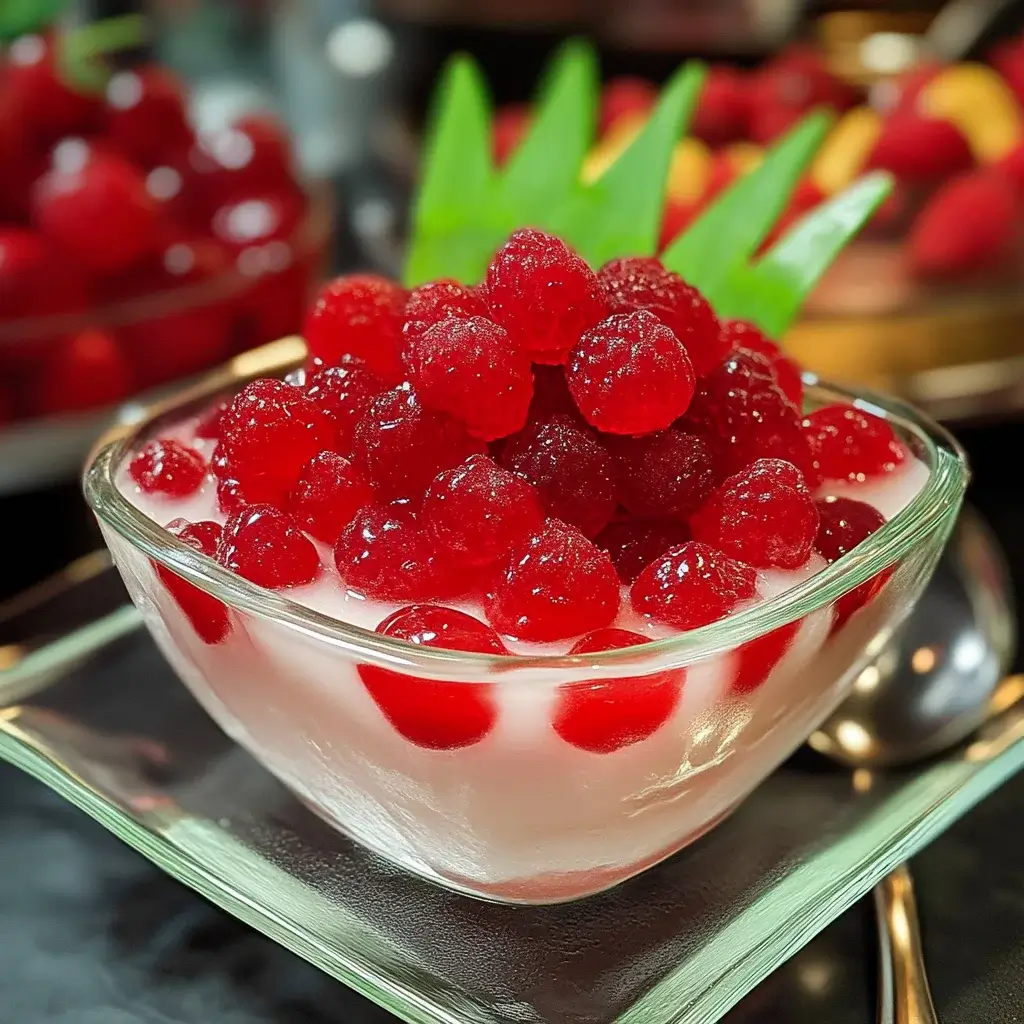

There’s a certain magic in discovering a dessert that’s not just sweet, but also an adventure for the senses. My first encounter with Thai Red Rubies Dessert, often served in a convenient and delightful ‘tub’, was exactly that – a revelation. Imagine a vibrant concoction of glistening, ruby-red jewels nestled in a creamy, fragrant coconut milk bath, all served over a bed of refreshing shaved ice. The first spoonful was an explosion of textures: the satisfying crunch of the “rubies” contrasting beautifully with the smooth, velvety coconut cream and the icy coolness. The flavor profile was equally captivating – the delicate sweetness of the coconut milk, subtly perfumed with pandan, perfectly complementing the mild, slightly nutty taste of the water chestnuts. It wasn’t just a dessert; it was an experience, a refreshing escape to the sun-kissed beaches of Thailand with every bite. My family, initially intrigued by the striking appearance, quickly became converts. It’s now our go-to treat on warm days, a fun and exotic dessert that’s surprisingly easy to make at home, bringing a touch of Thai summer to our table. Let me share the secrets to creating this enchanting dessert, so you too can experience the joy of Thai Red Rubies in a Tub!
Ingredients: Unlocking the Secrets of Thai Red Rubies Dessert Tub
Creating the perfect Thai Red Rubies Dessert Tub relies on a balance of fresh, quality ingredients. While the ingredient list is relatively short, each component plays a crucial role in achieving the authentic taste and texture of this beloved Thai treat. Here’s what you’ll need to make approximately 4-6 servings of this delightful dessert:
- For the “Red Rubies” (Tub Tim Grob):
- 1 can (8 oz) Water Chestnuts, drained and rinsed (Choose whole water chestnuts for easier cutting)
- Red Food Coloring (Gel food coloring is recommended for vibrant color with less liquid, but liquid food coloring works too)
- ½ cup Tapioca Flour (also known as tapioca starch)
- For the Coconut Milk Syrup:
- 2 cans (13.5 oz each) Full-Fat Coconut Milk (Full-fat is crucial for richness and creamy texture)
- ½ cup Granulated Sugar (Adjust to your sweetness preference; palm sugar can be used for a more authentic flavor)
- ¼ teaspoon Salt
- 2-3 Pandan Leaves, knotted (Optional, but highly recommended for authentic aroma; can substitute with a few drops of pandan extract if unavailable)
- For Serving:
- Shaved Ice (Plenty! The coolness is essential)
- Optional Toppings:
- Cooked and thinly sliced Jackfruit (fresh or canned in syrup, drained)
- Cooked and cubed Cantaloupe or Honeydew Melon
- Cooked Palm Seeds (Attap seeds, look for canned ones in syrup)
- Roasted Peanuts, roughly chopped (for added crunch and nutty flavor)
- Sweet Corn Kernels (cooked, for a less traditional but popular addition in some variations)
Ingredient Notes and Substitutions for Flexibility:
- Water Chestnuts: Fresh water chestnuts are ideal for their crisp texture, but canned water chestnuts are a convenient and readily available substitute. Ensure they are whole and not sliced or diced. Drain and rinse them thoroughly to remove any metallic taste from the can.
- Food Coloring: Red gel food coloring is preferred as it provides a vibrant red color with minimal liquid, preventing the rubies from becoming too wet. Liquid food coloring can be used, but use it sparingly to avoid diluting the mixture. For a more natural approach, you could experiment with beet juice, but the color may be less vibrant and the flavor slightly altered.
- Tapioca Flour: Tapioca flour is essential for creating the chewy, slightly gelatinous coating around the water chestnuts that gives the “rubies” their unique texture. Cornstarch can be used as a substitute in a pinch, but the texture will be slightly softer and less chewy. Avoid using other types of flour like wheat flour or rice flour as they won’t provide the desired texture.
- Coconut Milk: Full-fat coconut milk is crucial for the rich, creamy texture and authentic flavor of the dessert. Avoid using “lite” or reduced-fat coconut milk as it will result in a thinner and less flavorful syrup. If you prefer a richer coconut flavor, you can use coconut cream for part of the coconut milk, but be mindful of the increased richness.
- Sugar: Granulated sugar is commonly used and works well. For a more authentic Thai flavor, consider using palm sugar. Palm sugar has a caramel-like sweetness and a slightly less refined flavor than white sugar. If using palm sugar, you may need to adjust the quantity based on its sweetness level.
- Pandan Leaves: Pandan leaves are the secret ingredient to the aromatic and fragrant coconut milk syrup. They impart a unique, slightly floral and vanilla-like aroma that is characteristic of many Thai desserts. If you can’t find fresh or frozen pandan leaves, you can use pandan extract, but use it sparingly as it can be quite potent. Start with a few drops and adjust to taste.
- Salt: A pinch of salt might seem counterintuitive in a dessert, but it’s essential for balancing the sweetness and enhancing the overall flavor of the coconut milk syrup. Don’t skip it!
- Toppings: Toppings are optional but highly recommended to add extra flavor and texture complexity to the dessert. Jackfruit, melon, and palm seeds are classic Thai toppings. Roasted peanuts add a delightful crunch and nutty flavor. Feel free to experiment with other tropical fruits you enjoy.
Instructions: Crafting Your Own Thai Red Rubies Dessert Tub
Making Thai Red Rubies Dessert Tub is a fun and rewarding process. While it involves a few steps, each step is relatively simple, and the result is well worth the effort. Here’s a detailed step-by-step guide to creating this refreshing and visually stunning dessert:
Step 1: Preparing the “Red Rubies” (Tub Tim Grob)
- Cut the Water Chestnuts: Drain and rinse the canned water chestnuts thoroughly. Pat them dry with paper towels. Cut each water chestnut into halves or quarters, depending on their size. You want bite-sized pieces that resemble small jewels. Cutting them into slightly irregular shapes will enhance the ruby-like appearance.
- Color the Water Chestnuts: Place the cut water chestnuts in a bowl. Add a few drops of red food coloring. Start with a small amount and add more gradually until you achieve a vibrant, ruby-red color. Toss the water chestnuts gently to ensure they are evenly coated with the food coloring. Let them sit for about 10-15 minutes to allow the color to absorb.
- Coat with Tapioca Flour (First Coating): Place the colored water chestnuts in a mesh strainer or sieve to drain any excess moisture. Transfer the slightly damp water chestnuts to a clean bowl. Sprinkle about half of the tapioca flour over the water chestnuts. Toss them gently to coat evenly. You want a light, even coating.
- Boil Briefly: Bring a pot of water to a rolling boil. Carefully add the tapioca-coated water chestnuts to the boiling water. Cook for about 2-3 minutes, or until the tapioca coating becomes slightly translucent and the “rubies” float to the surface. Don’t overcook them at this stage.
- Ice Bath Shock: Immediately remove the “rubies” from the boiling water using a slotted spoon and plunge them into a bowl of ice water. This ice bath is crucial to stop the cooking process and create the signature chewy texture of the rubies. Let them sit in the ice bath for about 5-10 minutes, or until completely cooled.
- Coat with Tapioca Flour (Second Coating): Drain the “rubies” from the ice bath and pat them dry gently with paper towels. Place them back in the bowl. Sprinkle the remaining tapioca flour over the “rubies” and toss gently to coat them again. This second coating helps to create a thicker, chewier layer.
- Boil Again (Final Cooking): Bring the same pot of water back to a rolling boil. Add the double-coated “rubies” to the boiling water. Cook for another 3-5 minutes, or until they become fully translucent and float to the surface again. This time, they should be more noticeably translucent and have a slightly plump appearance.
- Ice Bath (Final Shock): Immediately remove the cooked “rubies” from the boiling water and plunge them back into the ice bath. Let them cool completely in the ice bath. This final ice bath step is essential for achieving the perfect chewy and slightly crunchy texture. Once cooled, drain the “rubies” and set them aside.
Step 2: Making the Coconut Milk Syrup
- Combine Ingredients: In a saucepan, combine the coconut milk, granulated sugar (or palm sugar), and salt. If using pandan leaves, knot them and add them to the saucepan.
- Simmer Gently: Heat the mixture over medium-low heat. Stir gently until the sugar and salt are completely dissolved. Bring the mixture to a gentle simmer, stirring occasionally.
- Infuse with Pandan (If Using): If using pandan leaves, let the mixture simmer gently for about 10-15 minutes to allow the pandan aroma to infuse into the coconut milk syrup. Do not boil vigorously, as this can cause the coconut milk to separate.
- Cool Completely: Remove the saucepan from the heat. If using pandan leaves, remove them and discard. Let the coconut milk syrup cool completely to room temperature, and then chill it in the refrigerator until it is cold and thickened slightly. Chilling is crucial as the dessert is served cold.
Step 3: Assembling the Thai Red Rubies Dessert Tub
- Prepare Shaved Ice: Prepare a generous amount of shaved ice. You can use an ice shaver, a blender to crush ice, or purchase pre-shaved ice. The key is to have finely shaved ice for the best texture.
- Assemble in Tubs or Bowls: In individual serving tubs, bowls, or glasses, place a generous amount of shaved ice at the bottom.
- Add Red Rubies: Spoon a generous portion of the cooked “red rubies” over the shaved ice.
- Pour Coconut Milk Syrup: Pour a generous amount of the chilled coconut milk syrup over the “rubies” and shaved ice.
- Add Toppings (Optional): If desired, add your chosen toppings. Arrange slices of jackfruit, melon cubes, palm seeds, sweet corn, and sprinkle with roasted peanuts, if using.
- Serve Immediately: Thai Red Rubies Dessert Tub is best served immediately to enjoy the contrasting textures and cold temperature. Serve with spoons and enjoy!
Tips for Perfect Thai Red Rubies:
- Don’t Overcrowd the Pot: When boiling the “rubies,” work in batches if necessary to avoid overcrowding the pot. Overcrowding can lower the water temperature and cause the rubies to stick together and not cook properly.
- Ice Bath is Key: The ice bath is crucial for achieving the signature chewy texture. Don’t skip or shorten the ice bath steps.
- Gentle Stirring: When coating the water chestnuts with tapioca flour and when boiling them, stir gently to avoid breaking them apart.
- Taste and Adjust Sweetness: Adjust the amount of sugar in the coconut milk syrup to your preference. Taste the syrup before chilling and add more sugar if needed.
- Make Ahead Components: You can prepare the “red rubies” and coconut milk syrup separately ahead of time. Store them in the refrigerator and assemble the dessert just before serving. This makes it convenient for parties or gatherings.
Nutrition Facts: A Sweet Treat in Moderation
Thai Red Rubies Dessert Tub is a delicious and refreshing treat, but like most desserts, it’s best enjoyed in moderation as part of a balanced diet. The nutritional content can vary depending on the specific ingredients used, portion sizes, and added toppings.
Serving Size: Approximately 1 cup (about 240ml)
Servings per Recipe: 4-6
Estimated Nutritional Information per Serving (approximate):
- Calories: 250-350 kcal (depending on sugar and toppings)
- Protein: 1-2g
- Fat: 15-25g (primarily from coconut milk)
- Saturated Fat: High (from coconut milk)
- Cholesterol: 0mg
- Sodium: 50-100mg
- Carbohydrates: 30-45g
- Fiber: 1-2g
- Sugar: 25-35g (added sugar and natural sugars from ingredients)
- Vitamins and Minerals: Coconut milk contains some manganese, iron, and magnesium, but in relatively small amounts per serving. Water chestnuts are low in calories and provide some dietary fiber.
Nutritional Considerations:
- High in Saturated Fat: Coconut milk is high in saturated fat. While some studies suggest that the saturated fat in coconut may have different effects than saturated fats from animal sources, it’s still recommended to consume it in moderation, especially for those concerned about cholesterol levels.
- High in Sugar: The dessert contains added sugar from the syrup and potentially from canned toppings. Be mindful of sugar intake, especially if you are managing blood sugar levels.
- Moderate Calories: The calorie content can be moderate to high depending on portion size and toppings.
- Hydrating: The shaved ice and coconut milk contribute to hydration, which can be beneficial, especially in warm weather.
Disclaimer: Nutritional information is an estimate and should be used as a general guide. For precise nutritional values, use a nutrition calculator with the specific brands and quantities of ingredients you use.
Preparation Time: From Kitchen to Refreshment in Under an Hour
While there are several steps involved in making Thai Red Rubies Dessert Tub, the active preparation time is relatively short. The majority of the time is spent waiting for things to cool or simmer.
- Prep Time: 30-40 minutes (This includes cutting water chestnuts, coloring, coating with tapioca flour, making coconut milk syrup, preparing toppings)
- Cook Time: 15-20 minutes (Boiling the rubies, simmering coconut milk syrup)
- Chilling Time: At least 1-2 hours for coconut milk syrup to cool and thicken (can be chilled overnight)
- Assembly Time: 5-10 minutes
- Total Time (Active & Inactive): Approximately 2-3 hours (including chilling time)
The active hands-on time is less than an hour, making it a manageable dessert to prepare, especially if you break down the steps. You can make the “rubies” and coconut milk syrup ahead of time and assemble just before serving.
How to Serve: Presenting Your Thai Red Rubies Dessert Tub
Thai Red Rubies Dessert Tub is all about the experience, from the vibrant colors to the refreshing textures and flavors. Here are some serving suggestions to enhance the enjoyment:
- Chilled is Key: Serve the dessert ice-cold. Ensure the coconut milk syrup is well-chilled, and use plenty of shaved ice.
- Individual Tubs or Bowls: Traditionally served in individual tubs or small bowls for easy handling and portion control. Clear glass bowls or cups showcase the beautiful layers of shaved ice, red rubies, and creamy coconut milk.
- Generous Portions: Don’t be stingy with the shaved ice, rubies, and coconut milk syrup. A generous portion is part of the indulgence.
- Eye-Catching Presentation: Arrange the toppings attractively on top of the dessert. Create layers or patterns with the jackfruit, melon, palm seeds, and peanuts for a visually appealing treat.
- Serve Immediately: Assemble the dessert just before serving to prevent the shaved ice from melting too quickly and the rubies from losing their texture.
- With Spoons: Provide spoons for easy scooping and enjoying all the layers and components of the dessert.
- Garnish (Optional): A sprig of fresh mint or a small edible flower can add a touch of elegance as a garnish.
Additional Tips for Dessert Tub Perfection
Here are five essential tips to elevate your Thai Red Rubies Dessert Tub to the next level:
- Quality Coconut Milk Matters: Using high-quality, full-fat coconut milk is crucial for the rich, creamy texture and authentic flavor of the syrup. Look for brands that are thick and have a high coconut fat content. Avoid brands that are watery or have added stabilizers that can affect the texture.
- Don’t Overcook the Rubies: Overcooking the tapioca-coated water chestnuts can make them mushy and lose their signature chewy texture. Follow the cooking times closely and ensure you shock them in ice water immediately after boiling to stop the cooking process. They should be slightly firm and chewy, not soft and mushy.
- Adjust Sweetness to Your Taste: The sweetness level of Thai desserts can vary. Start with the recommended amount of sugar in the coconut milk syrup and adjust to your preference. You can always add more sugar if you prefer a sweeter dessert. If using palm sugar, be aware that its sweetness level can vary, so taste and adjust accordingly.
- Prepare Components Ahead of Time: To make the assembly process quicker and easier, prepare the “red rubies” and coconut milk syrup ahead of time. You can make them a day in advance and store them separately in the refrigerator. This allows the coconut milk syrup to chill and thicken properly and makes assembling the dessert just before serving a breeze.
- Experiment with Toppings and Flavors: While traditional toppings like jackfruit, melon, and palm seeds are classic, feel free to experiment with other tropical fruits or toppings you enjoy. Consider adding mango, lychee, rambutan, or even a drizzle of condensed milk for extra sweetness. You can also infuse the coconut milk syrup with other flavors like ginger, lemongrass, or kaffir lime leaves for a unique twist.
FAQ: Your Questions about Thai Red Rubies Dessert Tub Answered
Here are some frequently asked questions about making Thai Red Rubies Dessert Tub:
Q1: Can I make this dessert less sweet?
A: Yes, you can easily adjust the sweetness to your liking. Reduce the amount of sugar in the coconut milk syrup. Start with half the amount of sugar and taste as you go, adding more gradually until you reach your desired sweetness level. You can also use a sugar substitute, but be aware that it may alter the taste and texture slightly.
Q2: Can I use a different type of food coloring?
A: Yes, you can use different food coloring if you prefer. While red is traditional for “rubies,” you can experiment with other colors like pink, orange, or even green for a playful twist. Gel food coloring is generally recommended for vibrant colors, but liquid food coloring works too.
Q3: Can I make this dessert vegan?
A: Yes, Thai Red Rubies Dessert Tub is naturally vegan as it does not contain any animal products. Ensure you are using plant-based food coloring if you are strictly vegan.
Q4: How long does the coconut milk syrup last in the refrigerator?
A: The coconut milk syrup can be stored in an airtight container in the refrigerator for up to 3-4 days. The flavor may even deepen slightly over time.
Q5: Can I use cornstarch instead of tapioca flour for the “rubies”?
A: While tapioca flour is ideal for the chewy texture, you can use cornstarch as a substitute in a pinch. However, the texture of the “rubies” will be slightly softer and less chewy compared to using tapioca flour. Tapioca flour provides a more distinct chewiness that is characteristic of Tub Tim Grob.
Enjoy creating this delightful and refreshing Thai Red Rubies Dessert Tub! It’s a perfect treat for hot days, parties, or any time you crave a taste of Thailand.
Print
Thai Red Rubies Dessert Tub recipe
Ingredients
-
- For the “Red Rubies” (Tub Tim Grob):
-
- 1 can (8 oz) Water Chestnuts, drained and rinsed (Choose whole water chestnuts for easier cutting)
-
- Red Food Coloring (Gel food coloring is recommended for vibrant color with less liquid, but liquid food coloring works too)
-
- ½ cup Tapioca Flour (also known as tapioca starch)
-
- For the “Red Rubies” (Tub Tim Grob):
-
- For the Coconut Milk Syrup:
-
- 2 cans (13.5 oz each) Full-Fat Coconut Milk (Full-fat is crucial for richness and creamy texture)
-
- ½ cup Granulated Sugar (Adjust to your sweetness preference; palm sugar can be used for a more authentic flavor)
-
- ¼ teaspoon Salt
-
- 2–3 Pandan Leaves, knotted (Optional, but highly recommended for authentic aroma; can substitute with a few drops of pandan extract if unavailable)
-
- For the Coconut Milk Syrup:
-
- For Serving:
-
- Shaved Ice (Plenty! The coolness is essential)
-
- Optional Toppings:
-
- Cooked and thinly sliced Jackfruit (fresh or canned in syrup, drained)
-
- Cooked and cubed Cantaloupe or Honeydew Melon
-
- Cooked Palm Seeds (Attap seeds, look for canned ones in syrup)
-
- Roasted Peanuts, roughly chopped (for added crunch and nutty flavor)
-
- Sweet Corn Kernels (cooked, for a less traditional but popular addition in some variations)
-
- Optional Toppings:
-
- For Serving:
Instructions
Step 1: Preparing the “Red Rubies” (Tub Tim Grob)
-
- Cut the Water Chestnuts: Drain and rinse the canned water chestnuts thoroughly. Pat them dry with paper towels. Cut each water chestnut into halves or quarters, depending on their size. You want bite-sized pieces that resemble small jewels. Cutting them into slightly irregular shapes will enhance the ruby-like appearance.
-
- Color the Water Chestnuts: Place the cut water chestnuts in a bowl. Add a few drops of red food coloring. Start with a small amount and add more gradually until you achieve a vibrant, ruby-red color. Toss the water chestnuts gently to ensure they are evenly coated with the food coloring. Let them sit for about 10-15 minutes to allow the color to absorb.
-
- Coat with Tapioca Flour (First Coating): Place the colored water chestnuts in a mesh strainer or sieve to drain any excess moisture. Transfer the slightly damp water chestnuts to a clean bowl. Sprinkle about half of the tapioca flour over the water chestnuts. Toss them gently to coat evenly. You want a light, even coating.
-
- Boil Briefly: Bring a pot of water to a rolling boil. Carefully add the tapioca-coated water chestnuts to the boiling water. Cook for about 2-3 minutes, or until the tapioca coating becomes slightly translucent and the “rubies” float to the surface. Don’t overcook them at this stage.
-
- Ice Bath Shock: Immediately remove the “rubies” from the boiling water using a slotted spoon and plunge them into a bowl of ice water. This ice bath is crucial to stop the cooking process and create the signature chewy texture of the rubies. Let them sit in the ice bath for about 5-10 minutes, or until completely cooled.
-
- Coat with Tapioca Flour (Second Coating): Drain the “rubies” from the ice bath and pat them dry gently with paper towels. Place them back in the bowl. Sprinkle the remaining tapioca flour over the “rubies” and toss gently to coat them again. This second coating helps to create a thicker, chewier layer.
-
- Boil Again (Final Cooking): Bring the same pot of water back to a rolling boil. Add the double-coated “rubies” to the boiling water. Cook for another 3-5 minutes, or until they become fully translucent and float to the surface again. This time, they should be more noticeably translucent and have a slightly plump appearance.
-
- Ice Bath (Final Shock): Immediately remove the cooked “rubies” from the boiling water and plunge them back into the ice bath. Let them cool completely in the ice bath. This final ice bath step is essential for achieving the perfect chewy and slightly crunchy texture. Once cooled, drain the “rubies” and set them aside.
Step 2: Making the Coconut Milk Syrup
-
- Combine Ingredients: In a saucepan, combine the coconut milk, granulated sugar (or palm sugar), and salt. If using pandan leaves, knot them and add them to the saucepan.
-
- Simmer Gently: Heat the mixture over medium-low heat. Stir gently until the sugar and salt are completely dissolved. Bring the mixture to a gentle simmer, stirring occasionally.
-
- Infuse with Pandan (If Using): If using pandan leaves, let the mixture simmer gently for about 10-15 minutes to allow the pandan aroma to infuse into the coconut milk syrup. Do not boil vigorously, as this can cause the coconut milk to separate.
-
- Cool Completely: Remove the saucepan from the heat. If using pandan leaves, remove them and discard. Let the coconut milk syrup cool completely to room temperature, and then chill it in the refrigerator until it is cold and thickened slightly. Chilling is crucial as the dessert is served cold.
Step 3: Assembling the Thai Red Rubies Dessert Tub
-
- Prepare Shaved Ice: Prepare a generous amount of shaved ice. You can use an ice shaver, a blender to crush ice, or purchase pre-shaved ice. The key is to have finely shaved ice for the best texture.
-
- Assemble in Tubs or Bowls: In individual serving tubs, bowls, or glasses, place a generous amount of shaved ice at the bottom.
-
- Add Red Rubies: Spoon a generous portion of the cooked “red rubies” over the shaved ice.
-
- Pour Coconut Milk Syrup: Pour a generous amount of the chilled coconut milk syrup over the “rubies” and shaved ice.
-
- Add Toppings (Optional): If desired, add your chosen toppings. Arrange slices of jackfruit, melon cubes, palm seeds, sweet corn, and sprinkle with roasted peanuts, if using.
-
- Serve Immediately: Thai Red Rubies Dessert Tub is best served immediately to enjoy the contrasting textures and cold temperature. Serve with spoons and enjoy!
Nutrition
- Serving Size: one normal portion
- Calories: 250-350
- Sugar: 25-35g
- Sodium: 50-100mg
- Fat: 15-25g
- Carbohydrates: 30-45g
- Fiber: 1-2g
- Protein: 1-2g