
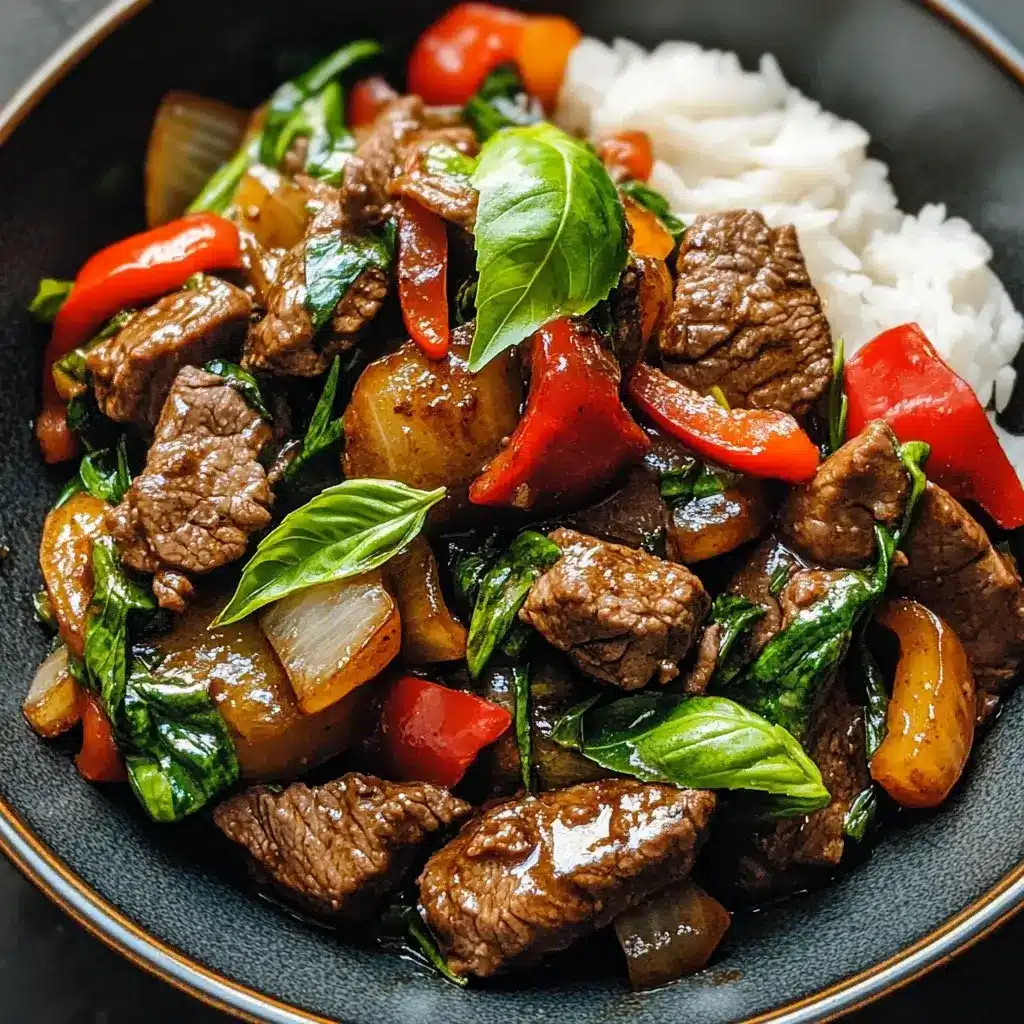

Thai Basil Beef Stir Fry, or as it’s authentically known, Pad Kra Pao Nuea, has become a staple in our home, and for incredibly good reason. It’s the kind of dish that transports you straight to the bustling streets of Thailand with every bite. The vibrant aroma of Thai basil frying in hot oil, mingling with the savory scent of beef and chilies, is simply intoxicating. My family absolutely adores it – even my spice-sensitive child can’t resist the flavorful, slightly sweet, and subtly spicy dance of this dish. What I personally love most is its speed and simplicity; from chopping board to table in under 30 minutes, it’s a lifesaver on busy weeknights. But don’t let the speed fool you – this isn’t just a quick meal; it’s an explosion of authentic Thai flavors that will tantalize your taste buds and leave you craving more. This recipe is my tried and true version, honed over many happy stir-fries, and I’m thrilled to share all the secrets to making a truly exceptional Thai Basil Beef Stir Fry that will become a beloved dish in your own kitchen.
Ingredients: Unlocking Authentic Thai Basil Beef Flavor
The magic of Thai Basil Beef Stir Fry lies in the harmonious blend of fresh, vibrant ingredients. Each component plays a crucial role in creating the signature spicy, savory, and aromatic profile that defines this iconic dish. Let’s delve into each ingredient, understanding its importance and exploring potential substitutions when needed.
- Beef:
- 1 lb Beef Sirloin or Ribeye, thinly sliced against the grain: For the best texture and tenderness in a stir-fry, choose a cut of beef that’s naturally tender and well-marbled. Sirloin and ribeye are excellent choices. Slicing against the grain is paramount; it shortens the muscle fibers, resulting in melt-in-your-mouth beef that’s not chewy. Aim for slices about ¼ inch thick.
- Substitution: Flank steak, skirt steak, or even tenderloin can be used. If using less tender cuts like flank or skirt steak, consider marinating the beef for a longer period to tenderize it further. You can also use ground beef for a quicker and more budget-friendly version, although the texture will be different.
- Marinade (Optional but Highly Recommended):
- 1 tbsp Soy Sauce: Soy sauce is the foundation of the marinade, adding saltiness and umami depth. Use regular soy sauce or low-sodium soy sauce to control salt levels.
- 1 tbsp Oyster Sauce (or Vegetarian Oyster Sauce): Oyster sauce brings a unique savory sweetness and viscosity to the marinade and the final dish. It’s a key ingredient in many authentic Asian stir-fries. For a vegetarian option, use vegetarian oyster sauce made from mushrooms.
- 1 tsp Cornstarch: Cornstarch is the secret ingredient for incredibly tender stir-fry beef. It creates a coating that helps the beef retain moisture during high-heat cooking and gives it a velvety texture.
- 1 tsp Sugar: Sugar balances the saltiness and adds a touch of sweetness that is characteristic of Thai cuisine. White sugar, brown sugar, or palm sugar can be used.
- 1 tbsp Vegetable Oil: Oil in the marinade helps to keep the beef moist and prevents it from sticking to the wok or pan during stir-frying. It also aids in heat transfer for even cooking.
- Aromatics & Spices:
- 4-6 cloves Garlic, minced: Garlic is a fundamental aromatic in Thai cooking, providing pungency and depth of flavor. Mince it finely to release its oils and flavor quickly in the hot wok.
- 2-4 Thai Bird’s Eye Chilies, thinly sliced (adjust to spice preference): Thai bird’s eye chilies deliver the signature heat of Thai Basil Beef. They are quite potent, so start with 2 chilies and adjust to your spice tolerance. For less heat, remove the seeds and membranes. For more heat, use more chilies or keep the seeds.
- 1 inch Ginger, peeled and minced (optional but adds depth): Ginger provides a warm, spicy, and slightly citrusy note that complements the garlic and chilies. While optional, it adds another layer of complexity to the flavor profile.
- 1 tbsp Vegetable Oil (for stir-frying): Use a neutral oil with a high smoke point for stir-frying, such as vegetable oil, canola oil, or peanut oil.
- Sauce:
- 2 tbsp Oyster Sauce (or Vegetarian Oyster Sauce): Oyster sauce is used again in the sauce to amplify its savory sweetness throughout the dish.
- 1 tbsp Fish Sauce (Nam Pla): Fish sauce is the soul of Thai cuisine, adding a salty, umami-rich depth that is irreplaceable. Don’t be intimidated by its aroma – it mellows out beautifully when cooked and provides a crucial element of authentic Thai flavor. For a vegetarian option, you can try using soy sauce with a pinch of seaweed flakes for a hint of umami, but the flavor profile will be slightly different.
- 1 tbsp Soy Sauce: Soy sauce reinforces the salty and savory base of the sauce.
- 1 tbsp Dark Soy Sauce (Optional, for color and slight sweetness): Dark soy sauce is thicker and sweeter than regular soy sauce. It adds a beautiful dark color to the dish and a touch of molasses-like sweetness. If you don’t have it, you can skip it or use a tiny bit of molasses or brown sugar mixed with regular soy sauce.
- 1 tbsp Sugar (Palm Sugar preferred for authenticity): Sugar balances the saltiness and spiciness and adds the signature Thai sweet-savory balance. Palm sugar has a richer, caramel-like flavor, but white sugar or brown sugar works well too.
- 2 tbsp Chicken Broth or Water: A little liquid helps to create a smooth and glossy sauce that coats the beef and vegetables beautifully.
- Vegetables & Basil:
- 1 Red Bell Pepper, sliced: Red bell pepper adds sweetness, color, and a slight crunch to the stir-fry.
- 1 Yellow Onion, sliced: Yellow onion provides a savory base and sweetness when stir-fried.
- 1 cup Thai Basil Leaves (Kra Pao): Thai basil is the star ingredient! It has a distinctive anise-licorice flavor with a hint of spice that is essential for authentic Pad Kra Pao. Use fresh Thai basil; dried basil is not a substitute.
- Substitution for Thai Basil (Less Authentic): If you absolutely cannot find Thai basil, you can use Italian basil as a very, very distant second choice. However, the flavor will be significantly different and less authentic. Holy basil is sometimes mentioned as a substitute, but it’s actually Kra Pao itself, and harder to find outside of Southeast Asia than Thai basil (Horapha). Sweet basil (Italian basil) will provide a basil flavor, but lacks the characteristic anise notes of Thai basil.
- For Serving (Optional but Recommended):
- Cooked Jasmine Rice: Jasmine rice is the classic accompaniment to Thai Basil Beef. Its fragrant aroma and slightly sticky texture complement the stir-fry perfectly.
- Fried Egg (Kai Dao): A crispy fried egg with a runny yolk is a traditional and incredibly delicious topping for Pad Kra Pao. The richness of the yolk adds another layer of flavor and texture when mixed with the stir-fry and rice.
- Lime Wedges: Lime wedges are often served on the side to add a squeeze of fresh acidity to balance the richness and spiciness of the dish.
Instructions: Mastering the Art of Thai Basil Beef Stir Fry
Creating authentic Thai Basil Beef Stir Fry is all about technique and timing. Stir-frying is a high-heat, fast-cooking method, so having all your ingredients prepped and ready to go is crucial. Follow these step-by-step instructions to achieve a restaurant-quality dish in your own kitchen.
- Prepare the Beef (Maximize Tenderness and Flavor):
- If marinating (highly recommended): In a medium bowl, combine the thinly sliced beef with soy sauce, oyster sauce (or vegetarian oyster sauce), cornstarch, sugar, and vegetable oil. Mix well with your hands, ensuring the marinade coats all the beef slices.
- Marinate for at least 15 minutes at room temperature, or up to 30 minutes in the refrigerator. Longer marinating can tenderize less tender cuts, but 15-30 minutes is sufficient for sirloin or ribeye.
- Tip: Marinating is key for tender beef and enhanced flavor. Don’t skip this step if you have the time.
- Prepare the Sauce (Flavor Foundation):
- In a small bowl, whisk together oyster sauce (or vegetarian oyster sauce), fish sauce, soy sauce, dark soy sauce (if using), sugar (or palm sugar), and chicken broth or water. Stir until the sugar is dissolved. Set aside.
- Tip: Having the sauce pre-mixed ensures a smooth and efficient stir-fry process. You can adjust the ratios of soy sauce, fish sauce, and sugar to your taste preference.
- Prep the Aromatics and Vegetables (Ready for the Wok):
- Mince the garlic and ginger (if using). Thinly slice the Thai bird’s eye chilies (remove seeds for less heat). Slice the red bell pepper and yellow onion. Pick the Thai basil leaves from the stems and set aside.
- Tip: Having all your ingredients chopped and ready (“mise en place”) is essential for stir-frying because the cooking process is very fast.
- Stir-Fry the Beef (High Heat, Quick Cooking):
- Heat a wok or large skillet over high heat until it’s smoking hot. Add 1 tablespoon of vegetable oil and swirl to coat the surface.
- Add the marinated beef (or plain sliced beef if not marinating) to the wok in a single layer. Avoid overcrowding the wok, as this will lower the temperature and steam the beef instead of searing it. Work in batches if necessary.
- Stir-fry the beef for 1-2 minutes per side, or until it’s browned and just cooked through. Don’t overcook it at this stage, as it will continue to cook in the sauce. Remove the beef from the wok and set aside.
- Tip: High heat is crucial for stir-frying. A smoking hot wok creates that desirable “wok hei” – a slightly smoky, charred flavor that’s characteristic of authentic stir-fries.
- Stir-Fry Aromatics and Vegetables (Building Flavor Layers):
- Add another tablespoon of vegetable oil to the wok. Add the minced garlic, ginger (if using), and sliced chilies. Stir-fry for about 30 seconds, or until fragrant and the garlic is lightly golden. Be careful not to burn the garlic.
- Add the sliced red bell pepper and yellow onion to the wok. Stir-fry for 2-3 minutes, or until they are slightly softened but still crisp-tender.
- Tip: Sautéing the aromatics in hot oil first releases their flavors and infuses the oil, creating a flavorful base for the vegetables and beef.
- Combine and Simmer (Marrying Flavors):
- Pour the prepared sauce into the wok with the vegetables. Bring the sauce to a simmer and cook for about 1 minute, or until it slightly thickens.
- Return the stir-fried beef to the wok and toss to coat it evenly with the sauce. Cook for another 1-2 minutes, allowing the flavors to meld and the beef to finish cooking through.
- Tip: Simmering the sauce briefly helps to thicken it and allows the flavors to deepen and combine.
- Add Thai Basil (The Final Aromatic Touch):
- Remove the wok from the heat. Add the fresh Thai basil leaves to the wok and gently stir them into the stir-fry until they are just wilted and fragrant. The residual heat from the stir-fry is enough to wilt the basil without overcooking it.
- Tip: Add Thai basil at the very end to preserve its fresh, vibrant flavor and aroma. Overcooking basil will diminish its flavor.
- Serve Immediately (Enjoy the Freshness):
- Serve the Thai Basil Beef Stir Fry hot over cooked jasmine rice.
- Optionally, top with a crispy fried egg (Kai Dao) and serve with lime wedges on the side for squeezing over the dish.
- Enjoy immediately! Stir-fries are best enjoyed fresh and hot.
Nutrition Facts: A Balanced and Flavorful Meal
(Note: Nutritional information is an estimate and can vary based on specific ingredients, beef cut, and serving sizes.)
Serving Size: Approximately 1.5 cups (stir-fry only, excluding rice and egg)
Estimated Nutritional Values per Serving:
- Calories: 400-500 kcal (depending on beef cut and oil used)
- Protein: 35-45g
- Fat: 20-30g (can vary based on beef cut and oil used)
- Saturated Fat: 8-12g (can vary based on beef cut)
- Cholesterol: 120-150mg
- Sodium: 700-900mg (can be lower with low-sodium soy sauce and controlled fish sauce)
- Carbohydrates: 15-20g
- Fiber: 3-5g
- Sugar: 8-10g
Key Nutritional Highlights:
- High in Protein: Beef is an excellent source of high-quality protein, essential for muscle building and satiety.
- Good Source of Iron and B Vitamins: Beef is rich in iron and B vitamins, which are important for energy levels and overall health.
- Moderate in Fat (Adjustable): The fat content can be adjusted by choosing leaner cuts of beef and using less oil.
- Vegetables Add Vitamins and Fiber: Bell peppers and onions contribute vitamins, minerals, and dietary fiber.
- Flavorful and Satisfying: Despite being relatively calorie-dense, this dish is very flavorful and satisfying, potentially leading to better portion control compared to bland meals.
Preparation Time: Quick and Weeknight-Friendly
- Prep Time: 20-25 minutes (slicing beef, chopping vegetables, preparing sauce)
- Cook Time: 10-15 minutes (stir-frying beef, vegetables, and sauce)
- Total Time: 30-40 minutes
Thai Basil Beef Stir Fry is renowned for its speed. It’s perfect for busy weeknights when you crave a delicious and satisfying meal without spending hours in the kitchen. Most of the time is spent in ingredient preparation, and the actual cooking is incredibly fast.
How to Serve Thai Basil Beef Stir Fry: Presentation and Pairings
Serving Thai Basil Beef Stir Fry is all about enhancing the dining experience with simple yet thoughtful touches. The right accompaniments and presentation can elevate this dish from a quick weeknight meal to a restaurant-worthy experience.
Serving Suggestions:
- Classic Jasmine Rice Bowl: Serve generously over a bed of fluffy jasmine rice. This is the traditional and most common way to enjoy Pad Kra Pao.
- Crispy Fried Egg (Kai Dao) Topping: A fried egg with crispy edges and a runny yolk is a must-try topping. Place it directly on top of the stir-fry and rice for a beautiful presentation and added richness.
- Garnish with Fresh Basil Sprigs: A few sprigs of fresh Thai basil can be used as a garnish to enhance the aroma and visual appeal.
- Lime Wedges on the Side: Always serve with lime wedges. A squeeze of fresh lime juice at the table brightens the flavors and adds a refreshing tang.
- Family Style or Individual Plates: Serve family style in a large serving bowl, allowing everyone to help themselves, or plate individual portions for a more formal setting.
Side Dish Pairings (To Complete the Meal):
- Thai Spring Rolls (Popiah Tod): Crispy spring rolls make a great appetizer to start the meal.
- Tom Yum Soup: A classic hot and sour Thai soup can be served as a starter for a complete Thai feast.
- Cucumber Salad (Ajad): A refreshing cucumber salad with a sweet and sour dressing provides a cooling contrast to the spicy stir-fry.
- Steamed Vegetables (Broccoli, Bok Choy): If you want to add more vegetables to your meal, steamed broccoli or bok choy are simple and healthy options.
- Thai Iced Tea (Cha Yen): A sweet and creamy Thai iced tea is the perfect beverage to cool down after a spicy meal.
Additional Tips for Exceptional Thai Basil Beef Stir Fry
- Wok Hei Secret: High Heat and Hot Wok: The key to achieving authentic “wok hei” (wok aroma) is using very high heat and a properly heated wok. Preheat your wok until it’s smoking hot before adding oil. This ensures quick searing and that slightly charred, smoky flavor that’s characteristic of good stir-fries. If using an electric stove, it might be harder to achieve wok hei, but still aim for the highest heat possible.
- Beef Slicing Technique Matters: Always slice beef against the grain for maximum tenderness. Identify the direction of the muscle fibers and slice perpendicular to them. Thinner slices also cook faster and more evenly in a stir-fry.
- Don’t Overcrowd the Wok: Overcrowding the wok will lower the temperature and cause the beef and vegetables to steam instead of stir-fry. Work in batches if needed to ensure everything cooks quickly and browns properly.
- Taste and Adjust Seasoning: Thai cuisine is all about balancing flavors. Taste the sauce and the stir-fry at various stages and adjust the seasoning to your liking. You may want to add more fish sauce for saltiness, sugar for sweetness, or chilies for heat.
- Fresh Ingredients are Key: For the best flavor, use fresh, high-quality ingredients, especially Thai basil. Dried basil is not a suitable substitute. Fresh garlic, chilies, and vegetables also contribute significantly to the overall flavor profile.
FAQ: Your Thai Basil Beef Stir Fry Questions Answered
Q1: Can I use ground beef instead of sliced beef for Thai Basil Beef Stir Fry?
A: Yes, you can definitely use ground beef. It’s a common and quicker variation of Thai Basil Beef, sometimes called Pad Kra Pao Moo Sub (if using ground pork, but you can use beef). Brown the ground beef in the wok before adding the aromatics and vegetables, and proceed with the recipe as instructed. The texture will be different, but it’s still a delicious and convenient option.
Q2: I can’t find Thai basil. What can I substitute?
A: Authentic Thai Basil Beef relies heavily on the unique flavor of Thai basil (Kra Pao). If you absolutely cannot find it, the closest (though still not ideal) substitute would be Italian basil (sweet basil). However, be aware that Italian basil lacks the characteristic anise-licorice notes of Thai basil, and the flavor will be less authentic. Avoid dried basil altogether. Try checking Asian grocery stores, farmers markets, or specialty produce stores for Thai basil.
Q3: How spicy is Thai Basil Beef Stir Fry?
A: The spiciness of Thai Basil Beef depends entirely on the amount of chilies used. This recipe suggests 2-4 Thai bird’s eye chilies, which will result in a moderately spicy dish. If you are sensitive to spice, start with 1-2 chilies and remove the seeds and membranes. For extra spicy, use more chilies or keep the seeds. You can also serve chili flakes or sriracha on the side for those who want to add more heat.
Q4: Can I make Thai Basil Beef Stir Fry vegetarian or vegan?
A: Yes, you can easily adapt this recipe for vegetarians or vegans. Substitute firm or extra-firm tofu (pressed and cubed), tempeh, or mushrooms (like shiitake or oyster mushrooms) for the beef. Use vegetarian oyster sauce and soy sauce instead of fish sauce and regular oyster sauce. Ensure all other ingredients are plant-based. The flavor will be slightly different, but still delicious and flavorful.
Q5: Can I prepare Thai Basil Beef Stir Fry ahead of time?
A: Stir-fries are best enjoyed fresh and hot, immediately after cooking. However, you can prepare some components ahead of time to save time on the day of cooking. You can slice the beef, chop the vegetables, and prepare the sauce in advance and store them separately in the refrigerator. When ready to cook, the stir-frying process itself is very quick. Reheating cooked stir-fry can make the beef tougher and the vegetables softer, so it’s best to cook it fresh if possible.
Thai Basil Beef Stir Fry is a culinary adventure in a pan – a quick, vibrant, and deeply flavorful dish that captures the essence of Thai street food. With its perfect balance of spicy, savory, sweet, and aromatic notes, this recipe is sure to become a new favorite in your repertoire. Gather your ingredients, fire up your wok, and get ready to experience the magic of authentic Thai Basil Beef Stir Fry right in your own home! Enjoy your delicious meal!
Print
Thai Basil Beef Stir Fry recipe
Ingredients
-
- Beef:
-
- 1 lb Beef Sirloin or Ribeye, thinly sliced against the grain: For the best texture and tenderness in a stir-fry, choose a cut of beef that’s naturally tender and well-marbled. Sirloin and ribeye are excellent choices. Slicing against the grain is paramount; it shortens the muscle fibers, resulting in melt-in-your-mouth beef that’s not chewy. Aim for slices about ¼ inch thick.
-
- Substitution: Flank steak, skirt steak, or even tenderloin can be used. If using less tender cuts like flank or skirt steak, consider marinating the beef for a longer period to tenderize it further. You can also use ground beef for a quicker and more budget-friendly version, although the texture will be different.
-
- Beef:
-
- Marinade (Optional but Highly Recommended):
-
- 1 tbsp Soy Sauce: Soy sauce is the foundation of the marinade, adding saltiness and umami depth. Use regular soy sauce or low-sodium soy sauce to control salt levels.
-
- 1 tbsp Oyster Sauce (or Vegetarian Oyster Sauce): Oyster sauce brings a unique savory sweetness and viscosity to the marinade and the final dish. It’s a key ingredient in many authentic Asian stir-fries. For a vegetarian option, use vegetarian oyster sauce made from mushrooms.
-
- 1 tsp Cornstarch: Cornstarch is the secret ingredient for incredibly tender stir-fry beef. It creates a coating that helps the beef retain moisture during high-heat cooking and gives it a velvety texture.
-
- 1 tsp Sugar: Sugar balances the saltiness and adds a touch of sweetness that is characteristic of Thai cuisine. White sugar, brown sugar, or palm sugar can be used.
-
- 1 tbsp Vegetable Oil: Oil in the marinade helps to keep the beef moist and prevents it from sticking to the wok or pan during stir-frying. It also aids in heat transfer for even cooking.
-
- Marinade (Optional but Highly Recommended):
-
- Aromatics & Spices:
-
- 4–6 cloves Garlic, minced: Garlic is a fundamental aromatic in Thai cooking, providing pungency and depth of flavor. Mince it finely to release its oils and flavor quickly in the hot wok.
-
- 2–4 Thai Bird’s Eye Chilies, thinly sliced (adjust to spice preference): Thai bird’s eye chilies deliver the signature heat of Thai Basil Beef. They are quite potent, so start with 2 chilies and adjust to your spice tolerance. For less heat, remove the seeds and membranes. For more heat, use more chilies or keep the seeds.
-
- 1 inch Ginger, peeled and minced (optional but adds depth): Ginger provides a warm, spicy, and slightly citrusy note that complements the garlic and chilies. While optional, it adds another layer of complexity to the flavor profile.
-
- 1 tbsp Vegetable Oil (for stir-frying): Use a neutral oil with a high smoke point for stir-frying, such as vegetable oil, canola oil, or peanut oil.
-
- Aromatics & Spices:
-
- Sauce:
-
- 2 tbsp Oyster Sauce (or Vegetarian Oyster Sauce): Oyster sauce is used again in the sauce to amplify its savory sweetness throughout the dish.
-
- 1 tbsp Fish Sauce (Nam Pla): Fish sauce is the soul of Thai cuisine, adding a salty, umami-rich depth that is irreplaceable. Don’t be intimidated by its aroma – it mellows out beautifully when cooked and provides a crucial element of authentic Thai flavor. For a vegetarian option, you can try using soy sauce with a pinch of seaweed flakes for a hint of umami, but the flavor profile will be slightly different.
-
- 1 tbsp Soy Sauce: Soy sauce reinforces the salty and savory base of the sauce.
-
- 1 tbsp Dark Soy Sauce (Optional, for color and slight sweetness): Dark soy sauce is thicker and sweeter than regular soy sauce. It adds a beautiful dark color to the dish and a touch of molasses-like sweetness. If you don’t have it, you can skip it or use a tiny bit of molasses or brown sugar mixed with regular soy sauce.
-
- 1 tbsp Sugar (Palm Sugar preferred for authenticity): Sugar balances the saltiness and spiciness and adds the signature Thai sweet-savory balance. Palm sugar has a richer, caramel-like flavor, but white sugar or brown sugar works well too.
-
- 2 tbsp Chicken Broth or Water: A little liquid helps to create a smooth and glossy sauce that coats the beef and vegetables beautifully.
-
- Sauce:
-
- Vegetables & Basil:
-
- 1 Red Bell Pepper, sliced: Red bell pepper adds sweetness, color, and a slight crunch to the stir-fry.
-
- 1 Yellow Onion, sliced: Yellow onion provides a savory base and sweetness when stir-fried.
-
- 1 cup Thai Basil Leaves (Kra Pao): Thai basil is the star ingredient! It has a distinctive anise-licorice flavor with a hint of spice that is essential for authentic Pad Kra Pao. Use fresh Thai basil; dried basil is not a substitute.
-
- Substitution for Thai Basil (Less Authentic): If you absolutely cannot find Thai basil, you can use Italian basil as a very, very distant second choice. However, the flavor will be significantly different and less authentic. Holy basil is sometimes mentioned as a substitute, but it’s actually Kra Pao itself, and harder to find outside of Southeast Asia than Thai basil (Horapha). Sweet basil (Italian basil) will provide a basil flavor, but lacks the characteristic anise notes of Thai basil.
-
- Vegetables & Basil:
-
- For Serving (Optional but Recommended):
-
- Cooked Jasmine Rice: Jasmine rice is the classic accompaniment to Thai Basil Beef. Its fragrant aroma and slightly sticky texture complement the stir-fry perfectly.
-
- Fried Egg (Kai Dao): A crispy fried egg with a runny yolk is a traditional and incredibly delicious topping for Pad Kra Pao. The richness of the yolk adds another layer of flavor and texture when mixed with the stir-fry and rice.
-
- Lime Wedges: Lime wedges are often served on the side to add a squeeze of fresh acidity to balance the richness and spiciness of the dish.
-
- For Serving (Optional but Recommended):
Instructions
-
- Prepare the Beef (Maximize Tenderness and Flavor):
-
- If marinating (highly recommended): In a medium bowl, combine the thinly sliced beef with soy sauce, oyster sauce (or vegetarian oyster sauce), cornstarch, sugar, and vegetable oil. Mix well with your hands, ensuring the marinade coats all the beef slices.
-
- Marinate for at least 15 minutes at room temperature, or up to 30 minutes in the refrigerator. Longer marinating can tenderize less tender cuts, but 15-30 minutes is sufficient for sirloin or ribeye.
-
- Tip: Marinating is key for tender beef and enhanced flavor. Don’t skip this step if you have the time.
-
- Prepare the Beef (Maximize Tenderness and Flavor):
-
- Prepare the Sauce (Flavor Foundation):
-
- In a small bowl, whisk together oyster sauce (or vegetarian oyster sauce), fish sauce, soy sauce, dark soy sauce (if using), sugar (or palm sugar), and chicken broth or water. Stir until the sugar is dissolved. Set aside.
-
- Tip: Having the sauce pre-mixed ensures a smooth and efficient stir-fry process. You can adjust the ratios of soy sauce, fish sauce, and sugar to your taste preference.
-
- Prepare the Sauce (Flavor Foundation):
-
- Prep the Aromatics and Vegetables (Ready for the Wok):
-
- Mince the garlic and ginger (if using). Thinly slice the Thai bird’s eye chilies (remove seeds for less heat). Slice the red bell pepper and yellow onion. Pick the Thai basil leaves from the stems and set aside.
-
- Tip: Having all your ingredients chopped and ready (“mise en place”) is essential for stir-frying because the cooking process is very fast.
-
- Prep the Aromatics and Vegetables (Ready for the Wok):
-
- Stir-Fry the Beef (High Heat, Quick Cooking):
-
- Heat a wok or large skillet over high heat until it’s smoking hot. Add 1 tablespoon of vegetable oil and swirl to coat the surface.
-
- Add the marinated beef (or plain sliced beef if not marinating) to the wok in a single layer. Avoid overcrowding the wok, as this will lower the temperature and steam the beef instead of searing it. Work in batches if necessary.
-
- Stir-fry the beef for 1-2 minutes per side, or until it’s browned and just cooked through. Don’t overcook it at this stage, as it will continue to cook in the sauce. Remove the beef from the wok and set aside.
-
- Tip: High heat is crucial for stir-frying. A smoking hot wok creates that desirable “wok hei” – a slightly smoky, charred flavor that’s characteristic of authentic stir-fries.
-
- Stir-Fry the Beef (High Heat, Quick Cooking):
-
- Stir-Fry Aromatics and Vegetables (Building Flavor Layers):
-
- Add another tablespoon of vegetable oil to the wok. Add the minced garlic, ginger (if using), and sliced chilies. Stir-fry for about 30 seconds, or until fragrant and the garlic is lightly golden. Be careful not to burn the garlic.
-
- Add the sliced red bell pepper and yellow onion to the wok. Stir-fry for 2-3 minutes, or until they are slightly softened but still crisp-tender.
-
- Tip: Sautéing the aromatics in hot oil first releases their flavors and infuses the oil, creating a flavorful base for the vegetables and beef.
-
- Stir-Fry Aromatics and Vegetables (Building Flavor Layers):
-
- Combine and Simmer (Marrying Flavors):
-
- Pour the prepared sauce into the wok with the vegetables. Bring the sauce to a simmer and cook for about 1 minute, or until it slightly thickens.
-
- Return the stir-fried beef to the wok and toss to coat it evenly with the sauce. Cook for another 1-2 minutes, allowing the flavors to meld and the beef to finish cooking through.
-
- Tip: Simmering the sauce briefly helps to thicken it and allows the flavors to deepen and combine.
-
- Combine and Simmer (Marrying Flavors):
-
- Add Thai Basil (The Final Aromatic Touch):
-
- Remove the wok from the heat. Add the fresh Thai basil leaves to the wok and gently stir them into the stir-fry until they are just wilted and fragrant. The residual heat from the stir-fry is enough to wilt the basil without overcooking it.
-
- Tip: Add Thai basil at the very end to preserve its fresh, vibrant flavor and aroma. Overcooking basil will diminish its flavor.
-
- Add Thai Basil (The Final Aromatic Touch):
-
- Serve Immediately (Enjoy the Freshness):
-
- Serve the Thai Basil Beef Stir Fry hot over cooked jasmine rice.
-
- Optionally, top with a crispy fried egg (Kai Dao) and serve with lime wedges on the side for squeezing over the dish.
-
- Enjoy immediately! Stir-fries are best enjoyed fresh and hot.
-
- Serve Immediately (Enjoy the Freshness):
Nutrition
- Serving Size: one normal portion
- Calories: 400-500
- Sugar: 8-10g
- Sodium: 700-900mg
- Fat: 20-30g
- Saturated Fat: 8-12g
- Carbohydrates: 15-20g
- Fiber: 3-5g
- Protein: 35-45g
- Cholesterol: 120-150mg