
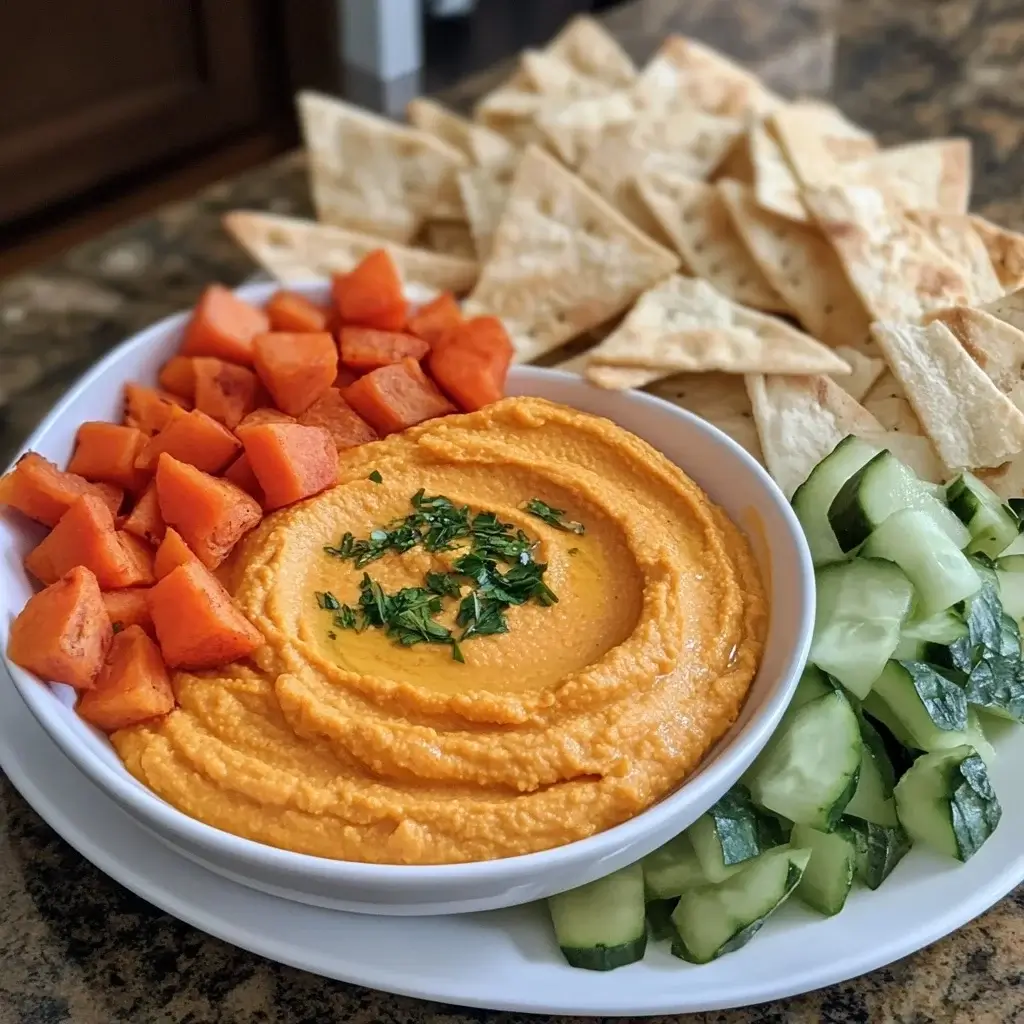
I recently tried out a recipe that has quickly become a family favorite: Sweet Potato Hummus with Pita Chips. The vibrant, creamy texture of the hummus, combined with the crunchy, homemade pita chips, creates a snack that is not only healthy but also irresistibly delicious. Even my picky eaters were asking for more after their first taste. The sweet potato adds a unique sweetness and a velvety texture to the traditional hummus, making it a standout dish at any gathering or as a delightful snack to enjoy at home.
Ingredients
To make this heavenly Sweet Potato Hummus with Pita Chips, you’ll need the following ingredients:
- 2 medium sweet potatoes, peeled and cubed
- 1 can (15 oz) chickpeas, drained and rinsed
- 3 tablespoons tahini
- 2 tablespoons olive oil
- 2 cloves garlic, minced
- Juice of 1 lemon
- 1 teaspoon ground cumin
- 1/2 teaspoon smoked paprika
- Salt and pepper to taste
- 3 whole wheat pita breads, cut into triangles
- 1 tablespoon olive oil (for pita chips)
- 1 teaspoon sea salt (for pita chips)
Instructions
Follow these steps to prepare your delightful Sweet Potato Hummus with homemade Pita Chips:
Step 1: Preheat your oven to 400°F (200°C). Spread the cubed sweet potatoes on a baking sheet, drizzle with olive oil, and season with salt and pepper. Roast for 25-30 minutes or until tender.
Step 2: While the sweet potatoes are roasting, prepare the pita chips. Arrange the pita triangles on a separate baking sheet, brush with olive oil, and sprinkle with sea salt. Bake in the oven for 8-10 minutes or until golden and crispy. Remove and set aside.
Step 3: Once the sweet potatoes are cooked, let them cool slightly. In a food processor, combine the roasted sweet potatoes, chickpeas, tahini, olive oil, garlic, lemon juice, cumin, and smoked paprika. Blend until smooth and creamy. Season with additional salt and pepper if needed.
Step 4: Transfer the hummus to a serving bowl and drizzle with a little olive oil and a sprinkle of smoked paprika for garnish.
Step 5: Serve the sweet potato hummus with the crispy pita chips and enjoy!
Nutrition Facts
Servings: 6
Calories per serving: Approximately 210 calories
Preparation Time
From start to finish, this Sweet Potato Hummus with Pita Chips recipe takes about 45 minutes to prepare, including the roasting time for the sweet potatoes and the baking time for the pita chips. The active preparation time is around 15 minutes, making it a quick and easy appetizer or snack option for any occasion.
How to Serve
This delightful hummus pairs wonderfully with a variety of accompaniments, enhancing both its flavor and presentation. Here are several thoughtful serving suggestions to elevate your hummus experience:
- Fresh Vegetable Platter
Create a vibrant and colorful platter of fresh vegetables to accompany your hummus. Ideal choices include crunchy carrots, crisp cucumbers, sweet bell peppers, and even snap peas. You can cut the vegetables into bite-sized sticks or rounds for easy dipping. Consider adding radishes for a peppery crunch and cherry tomatoes for a burst of sweetness. Not only does this combination provide a healthy and refreshing contrast to the creamy hummus, but it also adds a rainbow of colors to your table, making it visually appealing. - Sandwiches and Wraps
Hummus makes for a delicious and nutritious spread in sandwiches and wraps. Use it as a base layer to add creaminess and flavor, replacing traditional spreads like mayonnaise or mustard. For a Mediterranean twist, layer hummus with roasted vegetables, fresh spinach, avocado, and grilled chicken or turkey in a whole-grain wrap. You can also create a veggie sandwich with hummus, sliced cucumbers, sprouts, and a sprinkle of feta cheese on whole grain bread. This not only enhances the meal’s flavor but also boosts its nutritional profile. - Grain Bowl Delight
Elevate your grain bowls by drizzling hummus over the top for added richness and depth of flavor. Start with a base of cooked grains such as quinoa, brown rice, or farro. Then, layer on your favorite toppings, which can include roasted vegetables, chickpeas, fresh herbs, and a sprinkle of nuts or seeds. The creamy texture of the hummus will meld beautifully with the grains and vegetables, creating a satisfying and wholesome dish that is full of nutrients and flavors. - Baked Sweet Potatoes
For a unique twist on a classic dish, use hummus as a topping for baked sweet potatoes. Simply bake the sweet potatoes until tender, then slice them open and generously spoon in your favorite hummus. You can further enhance the dish by adding toppings such as chopped green onions, a drizzle of olive oil, or a sprinkle of paprika. This combination provides a delightful contrast between the sweetness of the potato and the savory, creamy flavor of the hummus, making for a comforting and nutritious meal. - Mediterranean-Inspired Snack
Create a Mediterranean-inspired snack by serving hummus with a side of olives and feta cheese. Arrange a small bowl of assorted olives—such as Kalamata, green, and black—alongside crumbles of feta cheese. This combination not only complements the hummus beautifully but also introduces a variety of flavors and textures that are characteristic of Mediterranean cuisine. You can also add some pita chips or warm pita bread for dipping, rounding out the experience and making it perfect for a light lunch or an appetizer for gatherings. - Garnishing Options
Don’t forget to consider garnishing your hummus to enhance its presentation and add layers of flavor. A drizzle of high-quality olive oil can elevate the dish, while a sprinkle of smoked paprika, sumac, or za’atar can add an aromatic touch. Fresh herbs, such as chopped parsley, cilantro, or dill, can provide a burst of freshness and color. A few toasted pine nuts or sesame seeds on top can add a delightful crunch. These garnishes not only beautify the dish but also invite guests to dive in and enjoy.
By incorporating these serving suggestions, you can create an array of delightful dishes that highlight the versatility of hummus, making it a star in any meal or snack time. Whether enjoyed with fresh vegetables, as part of a hearty wrap, or as a flavorful topping, hummus provides a delicious and healthful addition to your culinary repertoire.
Additional Tips for Perfect Sweet Potato Hummus
To ensure your Sweet Potato Hummus turns out perfectly each time, consider these helpful tips that can elevate your dish and refine its flavor and texture:
Tip 1: Peel the Chickpeas for Extra Smoothness
For those who prefer an ultra-smooth texture in their hummus, consider peeling the chickpeas after draining and rinsing them. This step can significantly enhance the creaminess of your hummus. While peeling is optional and may seem tedious, the result is a velvety, luxurious consistency that can make your hummus stand out. If you choose to peel them, simply pinch each chickpea between your fingers to remove the skin. This technique is particularly beneficial if you’re serving the hummus at gatherings where presentation and texture are key.
Tip 2: Customize Your Seasoning
One of the best aspects of making hummus at home is the ability to adjust the flavors to suit your personal taste. The balance of lemon juice and garlic can dramatically alter the profile of your hummus. If you enjoy a tangy flavor, consider adding an extra squeeze of fresh lemon juice. Conversely, if you prefer a more pronounced garlic taste, feel free to increase the amount of garlic. You can also experiment with additional spices such as cumin or smoked paprika to add depth and complexity. Always taste as you go; start with small increments and adjust until you achieve your desired flavor.
Tip 3: Achieve Your Desired Consistency
The consistency of your hummus is crucial for both taste and presentation. If you find that your hummus is too thick, don’t worry! Simply add a tablespoon of water or olive oil gradually, stirring well after each addition until you reach the desired creaminess. Olive oil not only helps with texture but also adds a rich flavor, making it a preferred choice for many. If you’re looking to reduce calories, water can be a great alternative. Remember that the consistency can also be affected by the type of sweet potatoes used; some varieties are drier than others, so adjust as necessary.
Tip 4: Spice It Up!
For those who enjoy a bit of heat, consider adding a pinch of cayenne pepper or a few dashes of your favorite hot sauce to the mix. This can create an exciting contrast to the sweetness of the sweet potatoes and make the hummus more dynamic. If you’re unsure about the level of spice, start with a small amount and gradually add more until you find the perfect balance that suits your palate. Additionally, garnishing your hummus with a sprinkle of smoked paprika or red pepper flakes can provide visual appeal while enhancing the flavor.
Tip 5: Proper Storage for Freshness
To keep your Sweet Potato Hummus fresh and delicious, store any leftovers in an airtight container in the refrigerator. Proper storage can help maintain its flavor and texture for up to a week. When it’s time to enjoy your hummus again, give it a good stir before serving; this helps reincorporate any ingredients that may have settled and restores its creamy consistency. If you notice the hummus has thickened during storage, feel free to add a splash of water or olive oil to loosen it up again.
By following these tips, you can customize your Sweet Potato Hummus to suit your preferences and ensure that each batch is a delightful addition to your meals or gatherings. Whether served as a dip with fresh vegetables, spread on sandwiches, or enjoyed with pita bread, these enhancements will elevate your hummus experience.
FAQ Section
Q1: Can I use canned sweet potatoes instead of fresh ones?
A: Yes, you can certainly use canned sweet potatoes as a substitute for fresh ones in your recipes. Canned sweet potatoes are convenient and save time, as they come pre-cooked and ready to use. However, there are a few important considerations to keep in mind to ensure the best outcome for your dish.
First, when selecting canned sweet potatoes, look for those that are packed in water or their own juices rather than syrup, as the syrup can add unwanted sweetness and alter the flavor profile of your dish. Always check the label for any added ingredients that may affect the taste or texture.
In summary, while canned sweet potatoes are a viable option and can be used effectively in many recipes, fresh sweet potatoes will likely yield a more flavorful and textured result.
Q2: Is it possible to make this hummus without tahini?
A: Absolutely! Making hummus without tahini is not only possible, but it can also be a delicious alternative, especially for those who may have sesame allergies or prefer a different flavor profile. Tahini, which is a paste made from ground sesame seeds, adds a rich, nutty flavor and creamy texture to hummus. However, if you find yourself without tahini, there are several effective substitutes you can use.
One popular alternative is Greek yogurt. When substituting Greek yogurt for tahini, use an equal amount for a creamy consistency. The yogurt will add a tangy flavor, which can complement the sweetness of the sweet potatoes beautifully, creating a unique twist on traditional hummus.
In conclusion, while tahini is a traditional ingredient in hummus, there are many ways to enjoy a delicious and creamy hummus without it. Whether using Greek yogurt, omitting it entirely, or opting for nut butters, you can create a delightful hummus that suits your dietary preferences and taste.
Q3: Can I freeze sweet potato hummus?
A: Yes, sweet potato hummus freezes exceptionally well, making it a great option for meal prep or batch cooking. Freezing hummus allows you to enjoy this nutritious dip at your convenience, without worrying about it spoiling in the refrigerator. Here are some detailed steps and tips for freezing sweet potato hummus effectively.
To freeze sweet potato hummus, start by transferring it into a freezer-safe container. It’s important to leave some space at the top of the container to allow for expansion as the hummus freezes. You can also portion the hummus into smaller containers or even ice cube trays for convenient single servings.
In summary, freezing sweet potato hummus is a practical and efficient way to keep this healthy snack on hand. With proper storage and thawing techniques, you can enjoy the same delightful flavors and textures as when it was freshly made.
Q4: What if I don’t have smoked paprika on hand?
A: If you find yourself without smoked paprika, there are several alternatives that can help you achieve a similar smoky flavor profile in your dishes. Smoked paprika, known for its rich, smoky taste and vibrant red color, is a key ingredient that enhances the depth of flavor in many recipes, including sweet potato hummus.
One of the easiest substitutes for smoked paprika is regular paprika. While it lacks the smoky flavor, it will still provide a pleasant color and mild peppery taste. To add a hint of smokiness, consider adding a dash of liquid smoke. Use this sparingly, as it is quite potent; a few drops can go a long way in imparting that desired smoky essence.
In conclusion, while smoked paprika is a fantastic ingredient that adds depth to recipes, there are plenty of alternatives you can use to create a flavorful dish even when it’s not available. Whether you opt for regular paprika with a hint of liquid smoke or other spices, you can still craft a delicious sweet potato hummus that satisfies your taste buds.
Q5: How can I make the pita chips gluten-free?
A: Making gluten-free pita chips is a straightforward process that allows individuals with gluten sensitivities or celiac disease to enjoy this crispy snack without worry. The key to gluten-free pita chips lies in the type of pita bread you choose.
To start, you can easily replace traditional whole wheat pita with gluten-free pita options available in many grocery stores. These gluten-free pitas are often made from a blend of alternative flours, such as rice flour, almond flour, or chickpea flour, which can provide a delicious and nutritious alternative. When selecting gluten-free pita, be sure to check the ingredients to ensure that it meets your dietary needs.
Once you have your gluten-free pita, the preparation process remains largely the same as with regular pita chips. Preheat your oven to 375°F (190°C). Cut the gluten-free pita into triangles or strips, depending on your preference. Arrange the cut pieces on a baking sheet, ensuring they are spaced out to allow for even crisping.
In summary, creating gluten-free pita chips is an easy and accessible task that allows everyone to enjoy this tasty snack. By choosing gluten-free pita bread and following simple preparation steps, you can make a delicious accompaniment to your sweet potato hummus or any dip of your choice, ensuring that dietary restrictions don’t mean sacrificing flavor or enjoyment.