

From our kitchen to yours, let me share a dish that has become a true comfort food staple in our home: Spinach and Ricotta Stuffed Shells with Marinara. There’s something undeniably satisfying about twirling a forkful of perfectly cooked pasta, bursting with a creamy, flavorful filling, all bathed in a rich, homemade marinara sauce. Honestly, this recipe started as a way to sneak more greens into my family’s diet, but it quickly transformed into a requested meal, even by the pickiest eaters! The combination of tender pasta shells, the light and cheesy ricotta and spinach filling, and the bright, tangy marinara is just heavenly. It’s a dish that feels both comforting and a little bit special, perfect for a cozy weeknight dinner or a more impressive weekend gathering. The aroma while it bakes is simply intoxicating, and the first bite? Pure bliss! If you’re searching for a vegetarian meal that’s hearty, flavorful, and crowd-pleasing, you’ve found it. Get ready to discover the joy of homemade Spinach and Ricotta Stuffed Shells – it’s a recipe you’ll make again and again.
Ingredients for Spinach and Ricotta Stuffed Shells with Marinara
Creating delicious Spinach and Ricotta Stuffed Shells with Marinara starts with selecting fresh, high-quality ingredients. The simplicity of this dish allows each component to shine, so choosing the best ingredients will significantly elevate the final taste and texture. Here’s a detailed breakdown of everything you’ll need:
For the Stuffed Shells:
- Jumbo Pasta Shells (24-30 shells): Jumbo pasta shells are the star of the show, providing the perfect vessels for our flavorful spinach and ricotta filling. Look for good quality jumbo shells; brands like Barilla or De Cecco are readily available and work well. Make sure to purchase a little extra, as some shells might break during cooking.
- Fresh Spinach (1 pound): Fresh spinach forms the leafy green base of our filling, adding nutrients and a subtle earthy flavor. You can use baby spinach or mature spinach. Baby spinach is more tender and requires less cooking time, while mature spinach might need a bit longer to wilt down. Frozen spinach can be used as a substitute (see FAQ section for details), but fresh spinach provides a brighter flavor and better texture.
- Ricotta Cheese (15 ounces, whole milk or part-skim): Ricotta cheese is the creamy, cheesy heart of the filling. Whole milk ricotta will provide a richer, creamier texture, while part-skim ricotta is a lighter option. Look for good quality ricotta cheese; brands like Calabro or BelGioioso are known for their smooth texture and fresh flavor. Avoid ricotta that seems overly watery.
- Parmesan Cheese, grated (½ cup, plus extra for topping): Parmesan cheese adds a salty, savory, and umami depth to the filling and enhances the overall cheesy flavor. Use freshly grated Parmesan cheese for the best flavor and melting quality. High-quality Parmigiano-Reggiano is ideal, but Grana Padano is a good and more budget-friendly alternative. You’ll also need extra for topping the shells before baking.
- Egg (1 large): An egg acts as a binder in the filling, helping to hold it together and prevent it from being too loose. Use a large egg and whisk it lightly before adding it to the ricotta mixture.
- Garlic, minced (2 cloves): Garlic adds a pungent, savory flavor that complements the spinach and ricotta beautifully. Freshly minced garlic is always preferred for its robust aroma and flavor.
- Dried Oregano (1 teaspoon): Dried oregano adds a classic Italian herb flavor to the filling, enhancing the overall savory profile. Use good quality dried oregano for the best aroma. Fresh oregano, finely chopped (about 1 tablespoon), can also be used if you have it on hand.
- Dried Basil (1 teaspoon): Dried basil adds another layer of Italian herb flavor, complementing the oregano and spinach. Like oregano, use good quality dried basil or fresh basil, finely chopped (about 1 tablespoon).
- Salt and Black Pepper: Seasoning is crucial to bring out the flavors of the filling. Use kosher salt or sea salt and freshly ground black pepper to taste. Remember to season in layers throughout the cooking process, tasting and adjusting as needed.
- Nutmeg, grated (pinch): A pinch of freshly grated nutmeg (or ground nutmeg) adds a subtle warm, nutty note that enhances the richness of the ricotta and spinach. A little nutmeg goes a long way, so just a pinch is enough.
For the Marinara Sauce:
- Olive Oil (2 tablespoons): Olive oil is used as the base for sautéing the aromatics in the marinara sauce. Use good quality extra virgin olive oil for its flavor and health benefits.
- Yellow Onion, diced (1 medium): Onion forms the aromatic base of the marinara sauce, providing a mild, sweet flavor when sautéed. Yellow onion is a good all-purpose choice.
- Garlic, minced (3 cloves): Garlic is essential for a flavorful marinara sauce, adding a pungent, savory depth. Use freshly minced garlic for the best flavor.
- Canned Crushed Tomatoes (28 ounces): Canned crushed tomatoes are the main ingredient of the marinara sauce, providing the tomato base and rich flavor. Use good quality crushed tomatoes; San Marzano tomatoes are often considered the best for their sweetness and low acidity.
- Tomato Paste (2 tablespoons): Tomato paste adds concentrated tomato flavor and richness to the marinara sauce, deepening its color and intensity.
- Dried Oregano (1 teaspoon): Dried oregano adds a classic Italian herb flavor to the marinara sauce.
- Dried Basil (1 teaspoon): Dried basil complements the oregano and crushed tomatoes, enhancing the Italian flavor profile of the sauce.
- Sugar (1 teaspoon): A pinch of sugar balances the acidity of the tomatoes and enhances their natural sweetness.
- Salt and Black Pepper: Seasoning is crucial for a flavorful marinara sauce. Use kosher salt or sea salt and freshly ground black pepper to taste.
- Fresh Basil Leaves (for garnish, optional): Fresh basil leaves add a vibrant green color and fresh, herbaceous aroma as a garnish for the finished dish.
By gathering these fresh, high-quality ingredients, you’re setting the stage for a truly delicious and satisfying dish of Spinach and Ricotta Stuffed Shells with Marinara. The combination of creamy filling, tender pasta, and flavorful sauce is a classic for a reason – it’s simply irresistible comfort food.
Instructions: Making Spinach and Ricotta Stuffed Shells with Marinara
Creating Spinach and Ricotta Stuffed Shells with Marinara is a rewarding culinary endeavor. While it involves a few steps, each is straightforward, and the final result is well worth the effort. Follow these detailed instructions to make this comforting and flavorful dish:
Step 1: Prepare the Marinara Sauce
- Sauté Aromatics: In a large saucepan or Dutch oven, heat the olive oil over medium heat. Add the diced onion and sauté until softened and translucent, about 5-7 minutes. Don’t let the onion brown.
- Add Garlic: Add the minced garlic to the pot and cook for another minute until fragrant, being careful not to burn it.
- Add Tomato Paste: Stir in the tomato paste and cook for 1-2 minutes, stirring constantly. Cooking the tomato paste deepens its flavor.
- Add Crushed Tomatoes and Seasonings: Pour in the canned crushed tomatoes. Add the dried oregano, dried basil, sugar, salt, and black pepper. Stir well to combine.
- Simmer Sauce: Bring the sauce to a simmer, then reduce the heat to low, cover, and simmer for at least 30 minutes, or up to 1 hour, stirring occasionally. Simmering allows the flavors to meld and deepen. The longer it simmers, the richer the flavor will become. While the sauce simmers, you can prepare the stuffed shells.
Step 2: Cook the Jumbo Pasta Shells
- Cook Shells Al Dente: While the marinara sauce is simmering, cook the jumbo pasta shells according to package directions for al dente. Al dente means “to the tooth” in Italian – the pasta should be cooked through but still slightly firm to the bite. This prevents the shells from becoming mushy when baked.
- Drain and Rinse: Once cooked, drain the pasta shells thoroughly in a colander. Rinse them with cold water to stop the cooking process and prevent them from sticking together.
- Set Aside: Gently set the cooked shells aside to cool slightly while you prepare the filling.
Step 3: Prepare the Spinach and Ricotta Filling
- Cook Spinach: If using fresh spinach, you need to wilt it first. There are a couple of ways to do this:
- Microwave Method: Place the spinach in a microwave-safe bowl with a tablespoon of water. Microwave on high for 2-3 minutes, or until wilted.
- Stovetop Method: Heat a large skillet over medium heat. Add the spinach and cook, stirring occasionally, until it wilts down, about 3-5 minutes. You may need to do this in batches if you have a large amount of spinach.
- Drain Spinach Thoroughly: Once wilted, it’s crucial to remove as much excess moisture from the spinach as possible. Place the spinach in a fine-mesh sieve or colander and press out the excess water with the back of a spoon or your hands. You can also squeeze it in a clean kitchen towel or cheesecloth. This step prevents the filling from becoming watery.
- Chop Spinach: Roughly chop the drained spinach.
- Combine Filling Ingredients: In a medium bowl, combine the ricotta cheese, grated Parmesan cheese, egg, minced garlic, dried oregano, dried basil, nutmeg, salt, and black pepper. Mix well to combine all ingredients evenly.
- Add Spinach to Filling: Add the chopped, drained spinach to the ricotta mixture and stir until well combined.
Step 4: Stuff the Pasta Shells
- Preheat Oven: Preheat your oven to 375°F (190°C).
- Assemble Dish: Spread a thin layer of the marinara sauce (about 1 cup) in the bottom of a 9×13 inch baking dish. This layer prevents the shells from sticking and keeps them moist during baking.
- Stuff Shells: Take each cooked jumbo pasta shell and spoon or pipe (using a piping bag or zip-top bag with a corner cut off for easier stuffing) the spinach and ricotta filling into each shell. Be generous with the filling, but avoid overstuffing so they don’t burst.
- Arrange Shells in Baking Dish: Arrange the stuffed shells in the baking dish in a single layer, open-side up, on top of the marinara sauce base. Pack them snugly but not too tightly.
- Pour Marinara Sauce Over Shells: Pour the remaining marinara sauce evenly over the stuffed shells, making sure to cover them well. You want the shells to be mostly submerged in the sauce, but the tops can be slightly exposed.
- Sprinkle with Parmesan Cheese: Sprinkle the top of the stuffed shells evenly with the remaining grated Parmesan cheese. This will create a golden, cheesy crust as it bakes.
Step 5: Bake the Stuffed Shells
- Cover and Bake: Cover the baking dish tightly with aluminum foil. This helps to steam the shells and keep them moist while they bake.
- Bake: Bake in the preheated oven for 25 minutes, covered.
- Uncover and Bake Further: Remove the foil and continue to bake for another 15-20 minutes, or until the cheese is melted, golden brown, and bubbly, and the marinara sauce is heated through and bubbling. The pasta shells should be tender, and the filling should be hot and cooked through.
- Broil for Extra Browning (Optional): For extra browning on top, you can broil for the last 1-2 minutes, watching carefully to prevent burning.
Step 6: Garnish and Serve
- Rest Before Serving: Let the baked Spinach and Ricotta Stuffed Shells rest for 5-10 minutes before serving. This allows the sauce to thicken slightly and the flavors to settle.
- Garnish: Garnish with fresh basil leaves, if desired, for a pop of color and fresh aroma.
- Serve Hot: Serve the Spinach and Ricotta Stuffed Shells hot, directly from the baking dish or portioned onto plates.
Enjoy your homemade Spinach and Ricotta Stuffed Shells with Marinara! This dish is a comforting and flavorful vegetarian meal that’s perfect for family dinners, potlucks, or any occasion where you want a satisfying and delicious pasta bake.
Nutrition Facts for Spinach and Ricotta Stuffed Shells with Marinara
(Estimated per serving, based on 6 servings)
Please note that these are approximate values and can vary based on specific ingredient brands, portion sizes, and the amount of marinara sauce and cheese used.
- Servings: 6
- Calories per Serving: Approximately 500-600 calories
Approximate Macronutrient Breakdown per Serving:
- Protein: 25-30 grams
- Fat: 25-30 grams (This will vary depending on the type of ricotta used and amount of Parmesan)
- Carbohydrates: 50-60 grams
- Fiber: 5-7 grams
Key Nutritional Highlights:
- Good Source of Protein: Ricotta cheese, Parmesan cheese, and eggs contribute to a significant protein content, which is important for satiety and muscle building.
- Moderate Fat Content: Primarily from ricotta and Parmesan, providing flavor and satiety.
- Good Source of Carbohydrates: Pasta shells provide energy-sustaining carbohydrates.
- Rich in Vitamins and Minerals: Spinach is packed with vitamins (Vitamin A, Vitamin C, Vitamin K, Folate) and minerals (iron, calcium, potassium). Tomatoes in marinara sauce are a good source of Vitamin C and antioxidants.
- Calcium: Ricotta and Parmesan cheese are good sources of calcium, important for bone health.
- Fiber: Spinach and whole wheat pasta (if used) contribute to dietary fiber, promoting digestive health.
Important Considerations:
- Sodium: The sodium content can be moderate due to Parmesan cheese, marinara sauce (especially if store-bought), and salt added during cooking. Opt for low-sodium marinara sauce if sodium intake is a concern, and be mindful of salt additions.
- Fat Content: While fats are necessary and contribute to flavor, the fat content is moderate. Portion control is important for those watching their fat intake.
- Vegetarian: This recipe is naturally vegetarian.
- Gluten-Free (with adjustments): To make it gluten-free, use gluten-free jumbo pasta shells.
Spinach and Ricotta Stuffed Shells with Marinara is not only delicious but also offers a good balance of nutrients, making it a satisfying and relatively wholesome meal option, especially when enjoyed as part of a balanced diet. It’s a comforting dish that provides both flavor and nutritional value.
Preparation Time for Spinach and Ricotta Stuffed Shells with Marinara
The preparation time for Spinach and Ricotta Stuffed Shells with Marinara is moderately paced, involving several steps, but each is manageable. Here’s a breakdown of the estimated times:
- Prep Time: Approximately 45-60 minutes
- This includes:
- Making Marinara Sauce (chopping vegetables, sautéing, simmering) – 30 minutes (mostly hands-off simmering time)
- Cooking Pasta Shells – 15 minutes
- Preparing Spinach (wilting and draining) – 10 minutes
- Making Ricotta Filling (mixing ingredients) – 10 minutes
- Stuffing Pasta Shells – 15 minutes
- Assembling dish (layering sauce and shells) – 5 minutes
- This includes:
- Cook Time (Bake Time): 40-45 minutes
- Baking stuffed shells in the oven.
- Total Time (Active + Inactive): Approximately 1 hour 25 minutes – 1 hour 45 minutes (including simmering sauce and baking time)
Time-Saving Tips:
- Use Store-Bought Marinara Sauce: To significantly reduce prep time, use a good quality store-bought marinara sauce. This eliminates about 30-45 minutes of prep and cook time. Look for a flavorful, robust marinara sauce.
- Prepare Marinara Sauce Ahead: If making homemade marinara, you can prepare it a day or two in advance and store it in the refrigerator. This breaks up the cooking process.
- Cook Pasta Shells Ahead: Cook the jumbo pasta shells a few hours in advance and store them in a container of cold water with a drizzle of olive oil to prevent sticking. Drain and rinse before stuffing.
- Use Pre-Grated Parmesan: Using pre-grated Parmesan cheese saves a few minutes of prep time.
- Frozen Spinach (for faster prep): Using frozen spinach (thawed and squeezed dry) can save a few minutes compared to wilting fresh spinach.
While the total time might seem a bit longer, much of it is hands-off simmering time for the marinara sauce and baking time for the shells. The active hands-on time is closer to 1 hour – 1 hour 15 minutes, especially if using store-bought sauce. Making Spinach and Ricotta Stuffed Shells is a process that’s perfect for a weekend meal or when you want to create a comforting and satisfying dish from scratch.
How to Serve Spinach and Ricotta Stuffed Shells with Marinara
Spinach and Ricotta Stuffed Shells with Marinara is a hearty and comforting dish that can be served in various ways, from a casual family dinner to a more elegant gathering. Here are some serving suggestions to enhance your stuffed shells experience:
Serving Styles:
- As a Main Course: Stuffed shells are substantial enough to be a satisfying main course, especially for a vegetarian meal. Serve 3-4 stuffed shells per person for a generous portion.
- Family Style: Serve the baked stuffed shells directly from the baking dish in the center of the table, allowing everyone to serve themselves. This is a great option for family dinners or casual gatherings.
- Individual Plates: For a more formal presentation, portion 2-3 stuffed shells per plate, arranging them artfully and garnishing with fresh basil.
Garnishes and Toppings:
- Fresh Basil Leaves: Fresh basil leaves are a classic garnish, adding a pop of color and fresh, herbaceous aroma. Sprinkle chopped or whole basil leaves over the baked shells just before serving.
- Extra Grated Parmesan Cheese: Offer extra grated Parmesan cheese at the table so guests can add more to their liking.
- Red Pepper Flakes: For those who like a little heat, a sprinkle of red pepper flakes adds a subtle kick.
- Fresh Parsley: Chopped fresh parsley is another herb that complements Italian dishes and adds freshness.
- Drizzle of Olive Oil: A drizzle of high-quality extra virgin olive oil just before serving adds richness and flavor.
- Balsamic Glaze (optional): A light drizzle of balsamic glaze can add a touch of sweetness and tanginess, but use sparingly as it can overpower the delicate flavors of the dish.
Accompaniments and Side Dishes:
- Garlic Bread or Breadsticks: Serve warm garlic bread, crusty Italian bread, or breadsticks alongside the stuffed shells for soaking up the delicious marinara sauce.
- Simple Green Salad: A light and crisp green salad with a vinaigrette dressing is a perfect accompaniment to balance the richness of the stuffed shells. The acidity of the salad cuts through the richness.
- Caesar Salad: A classic Caesar salad also pairs well with Italian pasta dishes.
- Roasted Vegetables: Roasted asparagus, broccoli, or zucchini are healthy and flavorful side dishes that complement the stuffed shells.
- Steamed Green Beans: Simple steamed green beans with a squeeze of lemon are a light and fresh side.
- Red Wine: A medium-bodied red wine, such as Chianti, Sangiovese, or Merlot, pairs beautifully with Italian tomato-based pasta dishes.
- White Wine: For a lighter option, a crisp dry white wine like Pinot Grigio or Sauvignon Blanc also works well.
Serving Occasions:
- Weeknight Family Dinners: Stuffed shells are a comforting and satisfying meal for any weeknight.
- Weekend Gatherings: Perfect for casual weekend dinners with family or friends.
- Potlucks and Casseroles: Stuffed shells are a great dish to bring to potlucks or as a casserole to share.
- Holiday Meals (Vegetarian Option): Can be a vegetarian main course option for holiday meals, especially Italian-themed ones.
- Comfort Food Cravings: Ideal when you’re craving classic Italian comfort food.
By considering these serving suggestions, you can create a complete and delightful dining experience centered around your delicious Spinach and Ricotta Stuffed Shells with Marinara. The key is to keep the side dishes and accompaniments complementary and not overly heavy to balance the richness of the main dish.
Additional Tips for Perfect Spinach and Ricotta Stuffed Shells
Making perfect Spinach and Ricotta Stuffed Shells with Marinara is achievable with a few key techniques and attention to detail. Here are 5 additional tips to elevate your stuffed shells to the next level of deliciousness:
- Don’t Overcook the Pasta Shells: It’s crucial to cook the jumbo pasta shells just al dente, meaning slightly firm to the bite. Overcooked shells will become mushy and prone to tearing when you try to stuff them. Follow the package directions carefully and start checking for doneness a minute or two before the recommended time. They should be cooked through but still hold their shape. Remember, they will continue to cook further in the oven.
- Drain Spinach Thoroughly (Crucial!): Whether you use fresh or frozen spinach, removing excess moisture is absolutely essential. Watery spinach will make the ricotta filling soggy and dilute the flavors. For fresh spinach, wilt it and then squeeze out as much water as possible. For frozen spinach, thaw it completely and then squeeze out every last drop of moisture. This step cannot be overstated – dry spinach is key to a great filling texture.
- Season Filling and Sauce Generously: Don’t be shy with seasoning! Taste and adjust the seasoning of both the ricotta filling and the marinara sauce throughout the preparation process. Salt and pepper are essential for bringing out the flavors. For the filling, taste it before stuffing the shells and add more salt, pepper, or spices as needed. For the marinara sauce, taste it after simmering and adjust seasonings, sugar, or herbs to your liking. Well-seasoned components make for a much more flavorful final dish.
- Use a Piping Bag (or Improvise) for Easy Stuffing: Stuffing jumbo shells can be a bit messy with just a spoon. Using a piping bag or a zip-top bag with a corner snipped off makes the process much cleaner and more efficient. It allows you to precisely fill each shell with the ricotta mixture without making a mess. If you don’t have piping bags, a zip-top bag works wonderfully as a simple and effective alternative.
- Don’t Overcrowd the Baking Dish: Arrange the stuffed shells in a single layer in the baking dish and avoid overcrowding them. Overcrowding can prevent them from baking evenly and may lead to a longer baking time and potentially unevenly cooked pasta. If you have too many shells for one 9×13 inch dish, use two smaller dishes or bake in batches. Giving the shells some space ensures they bake properly and get nicely heated through.
By following these additional tips, alongside the main recipe instructions, you’ll be well on your way to creating consistently delicious and perfectly textured Spinach and Ricotta Stuffed Shells with Marinara. These tips focus on key areas – pasta cooking, spinach preparation, seasoning, stuffing technique, and baking – to help you achieve restaurant-quality stuffed shells at home.
FAQ: Spinach and Ricotta Stuffed Shells with Marinara
Here are 5 frequently asked questions about making Spinach and Ricotta Stuffed Shells with Marinara, along with detailed answers to help you succeed:
Q1: Can I use frozen spinach instead of fresh spinach?
A: Yes, you can absolutely use frozen spinach as a convenient substitute for fresh spinach in this recipe. Frozen spinach works perfectly well and can actually save you a step in wilting. Here’s how to use frozen spinach effectively:
- Thaw Spinach Completely: Thaw the frozen spinach completely before using. You can thaw it in the refrigerator overnight or quickly thaw it in the microwave following package instructions.
- Drain Thoroughly (Even More Crucial!): Frozen spinach tends to hold a significant amount of water. After thawing, it is absolutely crucial to drain it even more thoroughly than fresh spinach. Squeeze out as much moisture as possible. The best method is to place the thawed spinach in a clean kitchen towel or cheesecloth and squeeze out all excess water until you can’t squeeze out any more. This step is even more critical with frozen spinach than fresh to prevent a watery filling.
- Amount Substitution: You’ll typically need about 10-12 ounces of frozen spinach to equal 1 pound of fresh spinach once wilted and drained. Check the packaging of your frozen spinach to determine the equivalent amount.
- No Need to Wilt: Since frozen spinach is already cooked and then frozen, you can skip the wilting step. Just thaw, drain, chop (if needed), and add it directly to your ricotta filling mixture.
Using frozen spinach is a great time-saver and works wonderfully in this recipe, just remember the key is thorough draining to avoid a watery filling.
Q2: Can I make stuffed shells ahead of time?
A: Yes, Spinach and Ricotta Stuffed Shells are an excellent make-ahead dish, perfect for meal prepping or getting ahead for a dinner party. Here are a few options for making them in advance:
- Assemble and Refrigerate Unbaked: You can assemble the stuffed shells completely, up to the point of baking, and then refrigerate them for up to 24 hours. Cover the baking dish tightly with plastic wrap or foil. When ready to bake, let the dish sit at room temperature for about 30 minutes before baking as directed in the recipe. You might need to add a few extra minutes to the baking time since they will be starting from cold.
- Bake and Refrigerate: You can bake the stuffed shells completely, let them cool slightly, and then refrigerate them for up to 2-3 days. Store them covered in the baking dish or in airtight containers. To reheat, bake in a 350°F (175°C) oven, covered with foil, until heated through, about 20-30 minutes. You can also reheat individual portions in the microwave.
- Marinara Sauce Ahead: The marinara sauce can be made several days in advance and stored in the refrigerator. This is a great way to break up the prep time.
Making stuffed shells ahead of time is very convenient. They actually hold up quite well and are often even more flavorful after the flavors have had time to meld in the refrigerator.
Q3: Can I freeze leftover stuffed shells?
A: Yes, you can freeze leftover Spinach and Ricotta Stuffed Shells, although the texture of the ricotta filling might change slightly upon thawing and reheating (it can become a little grainier, but still delicious). Here’s how to freeze them properly:
- Cool Completely: Let the baked stuffed shells cool completely before freezing.
- Portion and Freeze: Freeze in individual portions or in smaller freezer-safe containers or bags. Freezing in portions makes it easier to thaw and reheat only what you need.
- Wrap Tightly: If freezing in portions, wrap each portion tightly in plastic wrap and then place them in a freezer bag or container. If freezing in a container, ensure it is airtight.
- Freeze Flat (if using bags): If using freezer bags, lay them flat in the freezer to freeze solid. This makes for easier storage.
- Freeze for Up to 2-3 Months: Frozen stuffed shells are best used within 2-3 months for optimal quality.
- Thaw Properly: Thaw frozen stuffed shells in the refrigerator overnight or use the defrost setting on your microwave.
- Reheat: Reheat thawed stuffed shells in a 350°F (175°C) oven, covered with foil, until heated through, about 20-30 minutes. You can also reheat individual portions in the microwave. Add a splash of water or extra marinara sauce if they seem dry during reheating.
While freezing might slightly alter the texture, it’s a great way to preserve leftovers and enjoy them later. They’re still a very satisfying and convenient meal when reheated.
Q4: Can I use different cheese instead of ricotta?
A: While ricotta cheese is traditional and provides the signature creamy texture for stuffed shells, you can experiment with other cheeses for variations in flavor and texture. Here are a few alternatives:
- Part-Skim Mozzarella: Part-skim mozzarella cheese, shredded, can be used in combination with or instead of some of the ricotta. It will provide a meltier, stretchier cheese pull. Using all mozzarella will result in a less creamy and more stringy filling.
- Cottage Cheese (Drained and Blended): Cottage cheese, when drained very well and blended or processed until smooth, can be used as a lower-fat alternative to ricotta. Blend it until smooth to mimic ricotta’s texture.
- Mascarpone Cheese: Mascarpone cheese is even richer and creamier than ricotta. Using mascarpone will result in a very decadent and luxurious filling, but it is higher in fat and calories.
- Goat Cheese (Fresh): Fresh goat cheese (chèvre), crumbled, can be used for a tangier and more distinct flavor profile. Combine it with some mozzarella or ricotta for a balanced texture.
- Combination of Cheeses: You can also use a combination of ricotta with any of the above cheeses to create your own custom flavor and texture. For example, a mix of ricotta and mozzarella is a popular choice for a balance of creaminess and meltiness.
Experimenting with different cheeses can create interesting flavor variations. However, ricotta provides a classic, mild, and creamy base that complements the spinach and marinara beautifully, so it remains the most traditional and often preferred choice.
Q5: Can I add meat to the filling?
A: Yes, while this recipe is for vegetarian Spinach and Ricotta Stuffed Shells, you can easily add meat to the filling to make it a non-vegetarian version. Here are some meat options and how to incorporate them:
- Italian Sausage (Ground): Italian sausage (sweet or hot) is a classic addition. Remove the sausage from its casings and brown it in a skillet over medium heat, breaking it up with a spoon as it cooks. Drain off any excess grease before adding it to the ricotta filling mixture. Use about ½ to 1 pound of Italian sausage for this recipe.
- Ground Beef or Ground Turkey: Ground beef or ground turkey can also be used. Brown the ground meat in a skillet, drain off excess grease, and add it to the ricotta filling. Use about ½ to 1 pound of ground meat.
- Prosciutto or Pancetta (Diced and Crisped): For a savory and salty addition, you can crisp up diced prosciutto or pancetta in a skillet until crispy. Drain off excess fat and add the crisped prosciutto or pancetta to the ricotta filling. Use about 2-4 ounces.
- Cooked Chicken or Shredded Chicken: Cooked and shredded chicken (rotisserie chicken works well) can be added for protein. Use about 1-2 cups of shredded chicken.
When adding meat, adjust the seasoning of the filling accordingly, and consider that meat will add more richness and flavor to the dish. Ensure any meat you add is fully cooked before incorporating it into the ricotta filling and baking the stuffed shells.
These FAQs and answers should provide you with comprehensive guidance for making delicious Spinach and Ricotta Stuffed Shells with Marinara, addressing common questions and offering solutions to potential variations and challenges. Enjoy your stuffed shells and happy cooking!
Print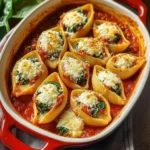
Spinach and Ricotta Stuffed Shells with Marinara recipe
Ingredients
For the Stuffed Shells:
-
- Jumbo Pasta Shells (24-30 shells): Jumbo pasta shells are the star of the show, providing the perfect vessels for our flavorful spinach and ricotta filling. Look for good quality jumbo shells; brands like Barilla or De Cecco are readily available and work well. Make sure to purchase a little extra, as some shells might break during cooking.
-
- Fresh Spinach (1 pound): Fresh spinach forms the leafy green base of our filling, adding nutrients and a subtle earthy flavor. You can use baby spinach or mature spinach. Baby spinach is more tender and requires less cooking time, while mature spinach might need a bit longer to wilt down. Frozen spinach can be used as a substitute (see FAQ section for details), but fresh spinach provides a brighter flavor and better texture.
-
- Ricotta Cheese (15 ounces, whole milk or part-skim): Ricotta cheese is the creamy, cheesy heart of the filling. Whole milk ricotta will provide a richer, creamier texture, while part-skim ricotta is a lighter option. Look for good quality ricotta cheese; brands like Calabro or BelGioioso are known for their smooth texture and fresh flavor. Avoid ricotta that seems overly watery.
-
- Parmesan Cheese, grated (½ cup, plus extra for topping): Parmesan cheese adds a salty, savory, and umami depth to the filling and enhances the overall cheesy flavor. Use freshly grated Parmesan cheese for the best flavor and melting quality. High-quality Parmigiano-Reggiano is ideal, but Grana Padano is a good and more budget-friendly alternative. You’ll also need extra for topping the shells before baking.
-
- Egg (1 large): An egg acts as a binder in the filling, helping to hold it together and prevent it from being too loose. Use a large egg and whisk it lightly before adding it to the ricotta mixture.
-
- Garlic, minced (2 cloves): Garlic adds a pungent, savory flavor that complements the spinach and ricotta beautifully. Freshly minced garlic is always preferred for its robust aroma and flavor.
-
- Dried Oregano (1 teaspoon): Dried oregano adds a classic Italian herb flavor to the filling, enhancing the overall savory profile. Use good quality dried oregano for the best aroma. Fresh oregano, finely chopped (about 1 tablespoon), can also be used if you have it on hand.
-
- Dried Basil (1 teaspoon): Dried basil adds another layer of Italian herb flavor, complementing the oregano and spinach. Like oregano, use good quality dried basil or fresh basil, finely chopped (about 1 tablespoon).
-
- Salt and Black Pepper: Seasoning is crucial to bring out the flavors of the filling. Use kosher salt or sea salt and freshly ground black pepper to taste. Remember to season in layers throughout the cooking process, tasting and adjusting as needed.
-
- Nutmeg, grated (pinch): A pinch of freshly grated nutmeg (or ground nutmeg) adds a subtle warm, nutty note that enhances the richness of the ricotta and spinach. A little nutmeg goes a long way, so just a pinch is enough.
For the Marinara Sauce:
-
- Olive Oil (2 tablespoons): Olive oil is used as the base for sautéing the aromatics in the marinara sauce. Use good quality extra virgin olive oil for its flavor and health benefits.
-
- Yellow Onion, diced (1 medium): Onion forms the aromatic base of the marinara sauce, providing a mild, sweet flavor when sautéed. Yellow onion is a good all-purpose choice.
-
- Garlic, minced (3 cloves): Garlic is essential for a flavorful marinara sauce, adding a pungent, savory depth. Use freshly minced garlic for the best flavor.
-
- Canned Crushed Tomatoes (28 ounces): Canned crushed tomatoes are the main ingredient of the marinara sauce, providing the tomato base and rich flavor. Use good quality crushed tomatoes; San Marzano tomatoes are often considered the best for their sweetness and low acidity.
-
- Tomato Paste (2 tablespoons): Tomato paste adds concentrated tomato flavor and richness to the marinara sauce, deepening its color and intensity.
-
- Dried Oregano (1 teaspoon): Dried oregano adds a classic Italian herb flavor to the marinara sauce.
-
- Dried Basil (1 teaspoon): Dried basil complements the oregano and crushed tomatoes, enhancing the Italian flavor profile of the sauce.
-
- Sugar (1 teaspoon): A pinch of sugar balances the acidity of the tomatoes and enhances their natural sweetness.
-
- Salt and Black Pepper: Seasoning is crucial for a flavorful marinara sauce. Use kosher salt or sea salt and freshly ground black pepper to taste.
-
- Fresh Basil Leaves (for garnish, optional): Fresh basil leaves add a vibrant green color and fresh, herbaceous aroma as a garnish for the finished dish.
Instructions
Step 1: Prepare the Marinara Sauce
-
- Sauté Aromatics: In a large saucepan or Dutch oven, heat the olive oil over medium heat. Add the diced onion and sauté until softened and translucent, about 5-7 minutes. Don’t let the onion brown.
-
- Add Garlic: Add the minced garlic to the pot and cook for another minute until fragrant, being careful not to burn it.
-
- Add Tomato Paste: Stir in the tomato paste and cook for 1-2 minutes, stirring constantly. Cooking the tomato paste deepens its flavor.
-
- Add Crushed Tomatoes and Seasonings: Pour in the canned crushed tomatoes. Add the dried oregano, dried basil, sugar, salt, and black pepper. Stir well to combine.
-
- Simmer Sauce: Bring the sauce to a simmer, then reduce the heat to low, cover, and simmer for at least 30 minutes, or up to 1 hour, stirring occasionally. Simmering allows the flavors to meld and deepen. The longer it simmers, the richer the flavor will become. While the sauce simmers, you can prepare the stuffed shells.
Step 2: Cook the Jumbo Pasta Shells
-
- Cook Shells Al Dente: While the marinara sauce is simmering, cook the jumbo pasta shells according to package directions for al dente. Al dente means “to the tooth” in Italian – the pasta should be cooked through but still slightly firm to the bite. This prevents the shells from becoming mushy when baked.
-
- Drain and Rinse: Once cooked, drain the pasta shells thoroughly in a colander. Rinse them with cold water to stop the cooking process and prevent them from sticking together.
-
- Set Aside: Gently set the cooked shells aside to cool slightly while you prepare the filling.
Step 3: Prepare the Spinach and Ricotta Filling
-
- Cook Spinach: If using fresh spinach, you need to wilt it first. There are a couple of ways to do this:
-
- Microwave Method: Place the spinach in a microwave-safe bowl with a tablespoon of water. Microwave on high for 2-3 minutes, or until wilted.
-
- Stovetop Method: Heat a large skillet over medium heat. Add the spinach and cook, stirring occasionally, until it wilts down, about 3-5 minutes. You may need to do this in batches if you have a large amount of spinach.
-
- Cook Spinach: If using fresh spinach, you need to wilt it first. There are a couple of ways to do this:
-
- Drain Spinach Thoroughly: Once wilted, it’s crucial to remove as much excess moisture from the spinach as possible. Place the spinach in a fine-mesh sieve or colander and press out the excess water with the back of a spoon or your hands. You can also squeeze it in a clean kitchen towel or cheesecloth. This step prevents the filling from becoming watery.
-
- Chop Spinach: Roughly chop the drained spinach.
-
- Combine Filling Ingredients: In a medium bowl, combine the ricotta cheese, grated Parmesan cheese, egg, minced garlic, dried oregano, dried basil, nutmeg, salt, and black pepper. Mix well to combine all ingredients evenly.
-
- Add Spinach to Filling: Add the chopped, drained spinach to the ricotta mixture and stir until well combined.
Step 4: Stuff the Pasta Shells
-
- Preheat Oven: Preheat your oven to 375°F (190°C).
-
- Assemble Dish: Spread a thin layer of the marinara sauce (about 1 cup) in the bottom of a 9×13 inch baking dish. This layer prevents the shells from sticking and keeps them moist during baking.
-
- Stuff Shells: Take each cooked jumbo pasta shell and spoon or pipe (using a piping bag or zip-top bag with a corner cut off for easier stuffing) the spinach and ricotta filling into each shell. Be generous with the filling, but avoid overstuffing so they don’t burst.
-
- Arrange Shells in Baking Dish: Arrange the stuffed shells in the baking dish in a single layer, open-side up, on top of the marinara sauce base. Pack them snugly but not too tightly.
-
- Pour Marinara Sauce Over Shells: Pour the remaining marinara sauce evenly over the stuffed shells, making sure to cover them well. You want the shells to be mostly submerged in the sauce, but the tops can be slightly exposed.
-
- Sprinkle with Parmesan Cheese: Sprinkle the top of the stuffed shells evenly with the remaining grated Parmesan cheese. This will create a golden, cheesy crust as it bakes.
Step 5: Bake the Stuffed Shells
-
- Cover and Bake: Cover the baking dish tightly with aluminum foil. This helps to steam the shells and keep them moist while they bake.
-
- Bake: Bake in the preheated oven for 25 minutes, covered.
-
- Uncover and Bake Further: Remove the foil and continue to bake for another 15-20 minutes, or until the cheese is melted, golden brown, and bubbly, and the marinara sauce is heated through and bubbling. The pasta shells should be tender, and the filling should be hot and cooked through.
-
- Broil for Extra Browning (Optional): For extra browning on top, you can broil for the last 1-2 minutes, watching carefully to prevent burning.
Step 6: Garnish and Serve
-
- Rest Before Serving: Let the baked Spinach and Ricotta Stuffed Shells rest for 5-10 minutes before serving. This allows the sauce to thicken slightly and the flavors to settle.
-
- Garnish: Garnish with fresh basil leaves, if desired, for a pop of color and fresh aroma.
-
- Serve Hot: Serve the Spinach and Ricotta Stuffed Shells hot, directly from the baking dish or portioned onto plates.
Nutrition
- Serving Size: one normal portion
- Calories: 500-600
- Fat: 25-30 grams
- Carbohydrates: 50-60 grams
- Fiber: 5-7 grams
- Protein: 25-30 grams