

Easter dinner at our house is always a big occasion, a celebration of spring, family, and of course, incredible food. For years, we rotated through the usual suspects – ham, turkey – but I was yearning for something truly special, something that would not only taste amazing but also look stunning on the table. That’s when I stumbled upon the recipe for Spinach-and-Pine-Nut-Stuffed Leg of Lamb, and let me tell you, it was love at first bite. The first time I made it, the aroma alone had everyone gathered in the kitchen, noses twitching with anticipation. The combination of the rich, savory lamb with the earthy spinach and toasted pine nuts was simply divine. The stuffing kept the lamb incredibly moist and infused it with layers of flavor that went far beyond a typical roast. It was a revelation. Since then, Spinach-and-Pine-Nut-Stuffed Leg of Lamb has become our Easter tradition, and honestly, we look for any excuse to make it throughout the year. It’s not just a meal; it’s an experience. It’s the centerpiece that brings everyone together, sparking conversation and creating memories. If you’re looking to elevate your next special occasion, or even just a Sunday dinner, I wholeheartedly recommend giving this recipe a try. Prepare to be wowed by the flavor, the presentation, and the sheer joy of sharing this incredible dish with those you love.
Ingredients: The Symphony of Flavors in Your Stuffed Lamb
Creating a truly exceptional Spinach-and-Pine-Nut-Stuffed Leg of Lamb starts with selecting high-quality ingredients. Each component plays a crucial role in building the complex and satisfying flavors of this dish. Here’s a detailed breakdown of what you’ll need:
- Leg of Lamb (Bone-In, 5-7 pounds): The star of the show, a bone-in leg of lamb is essential for this recipe.
- Bone-In vs. Boneless: Choosing a bone-in leg of lamb offers several advantages over boneless. The bone imparts significant flavor and moisture to the meat during roasting, resulting in a richer, more succulent lamb. It also helps the lamb retain its shape and prevents it from drying out. While boneless legs are easier to carve, the bone-in version delivers superior flavor and tenderness for a roast of this caliber.
- Size and Weight: A 5-7 pound leg of lamb is ideal for serving 6-8 people generously. Adjust the size depending on your guest count. If you’re serving a larger crowd, you may opt for a larger leg of lamb or consider making two smaller ones.
- Preparation: Before stuffing, ensure the leg of lamb is properly trimmed of excess fat. Some fat is desirable for flavor and moisture, but too much can render out and create a greasy result. Pat the lamb dry with paper towels before seasoning and stuffing to ensure proper browning and crisping of the skin.
- Fresh Spinach (1 pound): The earthy and slightly sweet flavor of fresh spinach forms the base of the stuffing.
- Fresh vs. Frozen: Fresh spinach is highly recommended for this recipe. Frozen spinach can be used in a pinch, but it often contains more moisture and can result in a wetter stuffing. If using frozen spinach, be sure to thaw it completely and squeeze out as much excess water as possible before using.
- Preparation: Thoroughly wash the fresh spinach to remove any grit or sand. Remove thick stems, as they can be tough. You can roughly chop the spinach before sautéing, or allow it to wilt down whole in the pan as it cooks. Sautéing the spinach before stuffing reduces its volume and enhances its flavor.
- Pine Nuts (1/2 cup): Toasted pine nuts add a buttery, slightly resinous flavor and delightful crunch to the stuffing.
- Toasting: Toasting pine nuts is crucial to bring out their nutty flavor and enhance their texture. You can toast them in a dry skillet over medium heat, stirring frequently, until they are lightly golden and fragrant. Be careful not to burn them, as they can go from toasted to burnt quickly. Alternatively, you can toast them in the oven at 350°F (175°C) for 5-7 minutes, watching closely.
- Alternatives: If pine nuts are unavailable or you prefer a different flavor profile, you can substitute with other nuts such as walnuts, almonds (slivered or chopped), or pecans. Each nut will impart a slightly different flavor and texture to the stuffing.
- Onion (1 large, chopped): Onion provides a savory base note to the stuffing and aromatic depth to the lamb.
- Type of Onion: Yellow or white onions are suitable for this recipe. Yellow onions offer a balanced flavor that becomes sweeter when cooked, while white onions have a sharper, more pungent flavor.
- Chopping: Dice the onion finely so it cooks evenly and incorporates smoothly into the stuffing.
- Garlic (4 cloves, minced): Garlic adds pungent aroma and savory flavor that complements both the lamb and the spinach.
- Fresh vs. Jarred: Freshly minced garlic is always preferred for the most intense and authentic garlic flavor. Jarred minced garlic can be used in a pinch, but fresh garlic will deliver a superior taste.
- Mincing: Mince the garlic finely to ensure it distributes evenly throughout the stuffing and releases its flavor fully during cooking.
- Dried Breadcrumbs (1 cup): Breadcrumbs help to bind the stuffing together and absorb excess moisture.
- Type of Breadcrumbs: Plain dried breadcrumbs are recommended. You can use panko breadcrumbs for a slightly coarser texture, or Italian breadcrumbs for added seasoning, although you may need to adjust the other seasonings accordingly.
- Homemade Breadcrumbs: For an extra touch, you can make your own breadcrumbs from day-old bread. Simply pulse stale bread in a food processor until you achieve the desired crumb consistency.
- Grated Parmesan Cheese (1/2 cup): Parmesan cheese adds a salty, umami-rich flavor and creamy texture to the stuffing.
- Freshly Grated: Freshly grated Parmesan cheese is highly recommended for the best flavor and melting quality. Pre-grated Parmesan cheese often contains cellulose and may not melt as smoothly.
- Alternatives: Pecorino Romano cheese can be used as a flavorful substitute for Parmesan, offering a sharper, saltier taste.
- Eggs (2 large, lightly beaten): Eggs act as a binder for the stuffing, helping it hold its shape during cooking.
- Beating: Lightly beat the eggs before adding them to the stuffing mixture to ensure they incorporate evenly.
- Olive Oil (3 tablespoons): Olive oil is used for sautéing the vegetables and adding richness to the stuffing.
- Extra Virgin Olive Oil: Extra virgin olive oil is recommended for its flavor and health benefits.
- Dried Herbs (2 teaspoons total, such as rosemary, thyme, oregano): Dried herbs add aromatic complexity and depth of flavor to the lamb and stuffing.
- Herb Combinations: Rosemary and thyme are classic herbs that pair beautifully with lamb. Oregano adds a Mediterranean touch. You can use a combination of your favorite dried herbs, or use an Italian herb blend.
- Fresh Herbs: If you prefer fresh herbs, use about 2 tablespoons of chopped fresh herbs in place of 2 teaspoons of dried herbs. Fresh rosemary, thyme, and oregano are excellent choices.
- Salt and Black Pepper: Essential for seasoning both the lamb and the stuffing.
- Kosher Salt and Freshly Ground Black Pepper: Kosher salt and freshly ground black pepper are recommended for their superior flavor and texture.
- Red Wine (1 cup, optional, for deglazing and pan sauce): Red wine adds depth and richness to the pan drippings, which can be used to create a delicious pan sauce.
- Type of Red Wine: A dry red wine such as Cabernet Sauvignon, Merlot, or Pinot Noir works well. You can also use a robust red wine like Chianti or Côtes du Rhône.
- Substitution: If you prefer not to use red wine, you can substitute with beef broth or chicken broth.
- Beef Broth or Chicken Broth (2 cups, for roasting and pan sauce): Broth adds moisture during roasting and forms the base of the pan sauce.
- Low Sodium Broth: Using low sodium broth allows you to control the salt level of the dish more precisely.
By gathering these high-quality ingredients, you are setting the foundation for a truly memorable Spinach-and-Pine-Nut-Stuffed Leg of Lamb. Each element contributes to the overall flavor and texture, creating a harmonious and satisfying dish.
Instructions: Mastering the Art of Stuffed Lamb
Creating a show-stopping Spinach-and-Pine-Nut-Stuffed Leg of Lamb requires careful execution of each step. Follow these detailed instructions to ensure your lamb is perfectly cooked, flavorful, and beautifully stuffed:
Step 1: Prepare the Lamb
- Preheat Oven: Preheat your oven to 325°F (160°C). This lower temperature ensures slow, even cooking and tender lamb.
- Prepare the Leg of Lamb: Pat the leg of lamb dry with paper towels. Trim any excess fat, leaving a thin layer for flavor and moisture.
- Create Pockets for Stuffing: Using a sharp knife, carefully create several deep pockets or slits throughout the leg of lamb. These pockets will be filled with the spinach and pine nut stuffing. Make sure the pockets are deep enough to hold a generous amount of stuffing, but be careful not to cut all the way through the lamb. Aim for pockets that are about 2-3 inches deep.
- Season the Lamb: Generously season the entire leg of lamb, inside and out, with salt, black pepper, and about half of the dried herbs (such as rosemary and thyme). Make sure to season inside the pockets as well. Massaging the seasonings into the lamb will help them penetrate the meat and enhance the flavor.
Step 2: Make the Spinach and Pine Nut Stuffing
- Toast Pine Nuts: Heat a dry skillet over medium heat. Add the pine nuts and toast, stirring frequently, until lightly golden and fragrant, about 3-5 minutes. Remove from skillet and set aside to cool.
- Sauté Onion and Garlic: Heat olive oil in a large skillet over medium heat. Add the chopped onion and cook until softened and translucent, about 5-7 minutes. Add the minced garlic and cook for another minute until fragrant, being careful not to burn the garlic.
- Sauté Spinach: Add the fresh spinach to the skillet in batches. Cook, stirring, until the spinach wilts down significantly. If using frozen spinach, ensure it’s thawed and squeezed dry before adding. Continue cooking until any excess moisture from the spinach evaporates.
- Combine Stuffing Ingredients: In a large bowl, combine the sautéed spinach mixture, toasted pine nuts, dried breadcrumbs, grated Parmesan cheese, remaining dried herbs, salt, and black pepper. Mix well to combine all ingredients evenly.
- Bind the Stuffing: Add the lightly beaten eggs to the bowl and mix thoroughly until the stuffing is well combined and holds together slightly. The eggs will help bind the stuffing and prevent it from drying out during roasting.
Step 3: Stuff the Leg of Lamb
- Stuff the Pockets: Using your hands or a spoon, generously stuff the spinach and pine nut mixture into the pockets you created in the leg of lamb. Pack the stuffing firmly into each pocket, ensuring they are well filled. Don’t overstuff to the point where the lamb is bursting open, but make sure the pockets are nicely filled.
- Tie the Lamb (Optional but Recommended): If desired, use kitchen twine to tie the leg of lamb in a few places to help it maintain its shape during roasting and keep the stuffing securely inside. This step is particularly helpful if you made larger pockets or if your lamb is naturally less compact.
Step 4: Roast the Leg of Lamb
- Sear the Lamb (Optional for Enhanced Browning): For extra browning and flavor, you can sear the leg of lamb before roasting. Heat a large oven-safe skillet or roasting pan over medium-high heat with a tablespoon of olive oil. Sear the lamb on all sides until nicely browned, about 2-3 minutes per side. This step is optional but recommended for deeper flavor and color.
- Roast in Oven: Place the stuffed leg of lamb in a roasting pan. Pour beef or chicken broth into the bottom of the pan, about 1-2 cups, to prevent sticking and create moist heat during roasting.
- Roasting Time: Roast in the preheated oven for approximately 20-25 minutes per pound for medium-rare, 25-30 minutes per pound for medium, or 30-35 minutes per pound for medium-well. Use a meat thermometer to ensure accurate doneness. Insert the thermometer into the thickest part of the lamb, avoiding the bone.
- Rare: 125-130°F (52-54°C)
- Medium-Rare: 130-135°F (54-57°C)
- Medium: 135-140°F (57-60°C)
- Medium-Well: 140-145°F (60-63°C)
- Well-Done: 145°F+ (63°C+) (Not recommended for leg of lamb as it can become dry)
- Baste Occasionally: Baste the lamb with pan juices every 30-45 minutes during roasting to keep it moist and flavorful.
Step 5: Rest and Carve
- Rest the Lamb: Once the lamb reaches your desired internal temperature, remove it from the oven and transfer it to a cutting board. Tent loosely with foil and let it rest for at least 15-20 minutes before carving. Resting allows the juices to redistribute throughout the meat, resulting in a more tender and flavorful roast.
- Make Pan Sauce (Optional): While the lamb is resting, you can make a pan sauce from the pan drippings. Place the roasting pan on the stovetop over medium heat. Deglaze the pan by adding red wine (if using) and scraping up any browned bits from the bottom of the pan. Cook for a few minutes until the wine reduces slightly. Add the remaining beef or chicken broth and simmer until the sauce thickens slightly. Strain the sauce through a fine-mesh sieve if desired for a smoother consistency. Season with salt and pepper to taste.
- Carve and Serve: Carve the leg of lamb against the grain. To carve, locate the bone and slice along it to remove large pieces of meat. Then, slice the meat into thinner portions. Serve the carved lamb with the spinach and pine nut stuffing and the optional pan sauce.
By following these detailed instructions, you will be able to create a magnificent Spinach-and-Pine-Nut-Stuffed Leg of Lamb that is sure to impress your guests and become a cherished recipe in your culinary repertoire.
Nutrition Facts: A Wholesome and Flavorful Feast
Spinach-and-Pine-Nut-Stuffed Leg of Lamb is not only a delicious centerpiece but also offers a good source of protein, vitamins, and minerals. Here’s a general overview of the nutrition facts per serving (serving size is estimated to be about 4-5 ounces of lamb and a generous portion of stuffing, approximately 6-8 servings from a 5-7 pound leg of lamb). Please note that the exact nutritional values can vary depending on the specific ingredients used, the cut of lamb, and portion sizes.
Servings: Approximately 6-8 servings
Calories per serving (estimated): 450-650 calories (This can vary based on the fat content of the lamb and portion size).
Approximate Nutrition Breakdown per Serving (estimated):
- Protein: 40-50 grams – Lamb is an excellent source of high-quality protein, essential for muscle building and overall health.
- Fat: 25-40 grams – The fat content will vary depending on the cut of lamb and trimming. Leg of lamb is leaner than some other cuts of lamb, but still contains fat, contributing to flavor and satiety. A significant portion of the fat in lamb is monounsaturated and polyunsaturated fats, which are considered healthier fats.
- Saturated Fat: 10-15 grams – Lamb does contain saturated fat, so moderation is key as part of a balanced diet.
- Cholesterol: 150-200 mg – Lamb contains cholesterol, typical of animal protein sources.
- Carbohydrates: 10-15 grams – Carbohydrates primarily come from the breadcrumbs, spinach, and onions in the stuffing.
- Fiber: 2-3 grams – Fiber is contributed by the spinach and vegetables in the stuffing, beneficial for digestion.
- Vitamins and Minerals:
- Vitamin B12: Lamb is a rich source of Vitamin B12, crucial for nerve function and red blood cell formation.
- Iron: Lamb is a good source of heme iron, which is more easily absorbed by the body than non-heme iron from plant sources. Iron is essential for oxygen transport and energy production.
- Zinc: Lamb provides zinc, important for immune function, wound healing, and cell growth.
- Niacin (Vitamin B3): Niacin plays a role in energy metabolism and nervous system function.
- Selenium: Lamb contains selenium, an antioxidant mineral that supports thyroid function and immune health.
- Vitamin K: Spinach is a rich source of Vitamin K, important for blood clotting and bone health.
- Vitamin A: Spinach is also a good source of Vitamin A, crucial for vision, immune function, and cell growth.
- Vitamin C: Spinach contains Vitamin C, an antioxidant that supports immune function and collagen production.
- Folate: Spinach provides folate, important for cell growth and development, especially during pregnancy.
- Potassium: Spinach is a source of potassium, an electrolyte important for blood pressure regulation and nerve function.
Health Considerations:
- Lean Protein Source: Leg of lamb provides a significant amount of lean protein, which is important for satiety and muscle maintenance.
- Nutrient-Rich Stuffing: The spinach and pine nut stuffing adds valuable vitamins, minerals, and fiber to the dish.
- Moderate Fat Content: While leg of lamb contains fat, choosing leaner cuts and trimming excess fat can help manage fat intake. Pairing with plenty of vegetables and whole grains can create a balanced meal.
- Sodium Content: Be mindful of sodium content, especially if using broth and Parmesan cheese, which can be higher in sodium. Using low-sodium broth and controlling salt additions can help manage sodium levels.
Spinach-and-Pine-Nut-Stuffed Leg of Lamb, when enjoyed in moderation as part of a balanced diet, can be a nutritious and flavorful meal option, providing essential nutrients and satisfying flavors.
Preparation Time: Planning Your Stuffed Lamb Feast
Preparing Spinach-and-Pine-Nut-Stuffed Leg of Lamb involves several steps, but with good planning, it’s manageable and rewarding. Here’s a breakdown of the estimated time involved:
- Active Prep Time: 45-60 minutes
- This includes preparing the lamb (trimming, creating pockets, seasoning), making the spinach and pine nut stuffing (toasting nuts, sautéing vegetables, mixing stuffing), and stuffing the lamb.
- These are the hands-on steps that require your active involvement in the kitchen.
- Cooking Time: 1.5-2.5 hours (depending on desired doneness and size of lamb)
- This is the time the lamb spends roasting in the oven. During this time, you’ll need to baste the lamb occasionally.
- Cooking time varies depending on the weight of the lamb and your desired level of doneness (rare, medium-rare, medium, etc.). Using a meat thermometer is essential for accurate cooking.
- Resting Time: 15-20 minutes
- Resting time is crucial after roasting to allow the juices to redistribute, resulting in a more tender and flavorful roast.
- Total Time (Approximate): 2 hours 15 minutes – 3 hours 30 minutes (including prep, cooking, and resting)
Time-Saving Tips:
- Prep Ahead: Many components of this recipe can be prepared ahead of time. You can make the spinach and pine nut stuffing a day in advance and store it in the refrigerator. This can save you significant time on the day of cooking.
- Grocery Shopping in Advance: Gather all ingredients a day or two before you plan to cook to ensure you have everything you need and avoid last-minute trips to the store.
- Delegate Tasks: If you’re cooking for a crowd, delegate tasks to helpers. Someone can chop vegetables, another can toast pine nuts, and another can prepare the seasonings. Teamwork makes the process faster and more enjoyable.
Planning Ahead for a Special Occasion:
- Day Before: Make the spinach and pine nut stuffing and store it in the refrigerator. You can also trim and season the leg of lamb and store it in the refrigerator overnight.
- Cooking Day: On the day of cooking, stuff the lamb, roast it, and prepare the pan sauce while the lamb is resting. This allows you to manage the cooking process more efficiently and enjoy the day without feeling rushed.
While Spinach-and-Pine-Nut-Stuffed Leg of Lamb requires a moderate amount of time to prepare, the impressive result and delicious flavors are well worth the effort. Proper planning and prep-ahead strategies can make the process smoother and more enjoyable.
How to Serve: Presenting Your Stuffed Lamb with Flair
Spinach-and-Pine-Nut-Stuffed Leg of Lamb is a visually stunning and flavorful dish that deserves a beautiful presentation. Here are some serving suggestions to elevate your meal:
- Classic Centerpiece:
- Whole Roasted Leg: Present the whole roasted leg of lamb on a large platter as the centerpiece of your table. Garnish the platter with fresh rosemary sprigs, thyme sprigs, and lemon wedges for a visually appealing and aromatic touch.
- Carving at the Table: Carve the lamb at the table for a dramatic presentation and to allow guests to enjoy the aroma and anticipation. This is especially impressive for special occasions.
- Elegant Plating:
- Slices with Stuffing: Carve the lamb into slices and arrange them artfully on individual plates. Spoon a generous portion of the spinach and pine nut stuffing alongside the lamb slices.
- Pan Sauce Drizzle: Drizzle the optional pan sauce over the lamb slices and stuffing for added flavor and moisture.
- Garnish: Garnish each plate with a sprig of fresh rosemary or thyme for a finishing touch.
- Side Dish Pairings:
- Roasted Vegetables: Serve alongside roasted vegetables such as potatoes, carrots, asparagus, Brussels sprouts, or green beans. The roasted vegetables complement the richness of the lamb and stuffing.
- Creamy Polenta or Mashed Potatoes: Creamy polenta or mashed potatoes provide a comforting and flavorful base to accompany the lamb and stuffing.
- Green Salad: A fresh green salad with a light vinaigrette provides a refreshing contrast to the richness of the lamb.
- Asparagus with Lemon and Parmesan: Asparagus with lemon and Parmesan is a simple and elegant side dish that pairs beautifully with lamb.
- Mint Sauce or Jelly: Offer traditional accompaniments like mint sauce or mint jelly on the side for guests who enjoy these classic pairings with lamb.
- Wine Pairing Suggestions:
- Red Wine: Serve with a medium-bodied to full-bodied red wine that complements the richness of the lamb. Cabernet Sauvignon, Merlot, Pinot Noir, Chianti, or Côtes du Rhône are excellent choices.
- Rosé Wine: For a lighter option, a dry rosé wine can also pair well, especially in warmer weather.
- Serving Tips:
- Warm Plates: Serve the lamb on warm plates to keep the food at the ideal temperature for longer.
- Serving Utensils: Provide appropriate carving knives and serving spoons for easy serving.
- Dietary Accommodations: Be mindful of any dietary restrictions or preferences of your guests. Ensure you have vegetarian or vegan options available if needed.
By considering these serving suggestions, you can create a memorable dining experience around your Spinach-and-Pine-Nut-Stuffed Leg of Lamb, making it a true centerpiece of flavor and presentation.
Additional Tips for Stuffed Lamb Perfection
To ensure your Spinach-and-Pine-Nut-Stuffed Leg of Lamb is a resounding success, here are five valuable tips to keep in mind:
- Don’t Overstuff: While it’s important to fill the pockets generously with stuffing, avoid overstuffing the lamb. Overstuffing can cause the lamb to split open during roasting and the stuffing may not cook through properly. Pack the stuffing firmly into the pockets, but leave a little room for expansion. If you have extra stuffing, you can bake it separately in a greased baking dish alongside the lamb.
- Use a Meat Thermometer: Relying on cooking time alone is not the most accurate way to determine doneness for a leg of lamb. Using a meat thermometer is crucial for ensuring your lamb is cooked to your desired level of doneness (rare, medium-rare, medium, etc.). Insert the thermometer into the thickest part of the lamb, avoiding the bone, to get an accurate reading.
- Rest the Lamb Properly: Resist the temptation to carve the lamb immediately after it comes out of the oven. Resting the lamb for at least 15-20 minutes is essential. During resting, the juices redistribute throughout the meat, making it more tender, moist, and flavorful. Tent the lamb loosely with foil while it rests to keep it warm.
- Flavor Boost with Marinade (Optional): For an extra layer of flavor, consider marinating the leg of lamb overnight or for at least a few hours before stuffing and roasting. A simple marinade of olive oil, lemon juice, garlic, rosemary, thyme, salt, and pepper can enhance the lamb’s natural flavor and tenderize the meat. Drain the marinade before stuffing and roasting.
- Adjust Stuffing to Your Liking: The spinach and pine nut stuffing is delicious as written, but feel free to customize it to your preferences. You can add other vegetables like sautéed mushrooms, chopped sun-dried tomatoes, or artichoke hearts. For a spicier stuffing, add a pinch of red pepper flakes. You can also experiment with different cheeses, such as feta or goat cheese, in place of or in addition to Parmesan. Taste the stuffing mixture before filling the lamb and adjust seasonings as needed.
By following these additional tips, you can elevate your Spinach-and-Pine-Nut-Stuffed Leg of Lamb to new heights of flavor and perfection, ensuring a truly memorable meal.
FAQ: Your Stuffed Lamb Questions Answered
Here are some frequently asked questions about making Spinach-and-Pine-Nut-Stuffed Leg of Lamb to help you navigate the recipe with confidence:
Q1: Can I use a boneless leg of lamb for this recipe?
A: While a bone-in leg of lamb is recommended for optimal flavor and moisture, you can use a boneless leg of lamb if preferred. You may need to butterfly the boneless leg to create a surface for stuffing or simply create a cavity in the center. Keep in mind that a boneless leg of lamb may cook slightly faster than a bone-in leg, so adjust cooking time accordingly and use a meat thermometer to ensure proper doneness. The flavor may also be slightly less rich compared to a bone-in roast.
Q2: Can I prepare the stuffed lamb ahead of time?
A: Yes, you can prepare the stuffed leg of lamb ahead of time. You can stuff the lamb and refrigerate it, covered, for up to 24 hours before roasting. This can be a great time-saver when preparing for a dinner party or holiday meal. Bring the stuffed lamb to room temperature for about 30-60 minutes before roasting to ensure even cooking.
Q3: What if I don’t have pine nuts? What can I substitute?
A: If you don’t have pine nuts or prefer a different nut, you can substitute with other nuts such as walnuts, almonds (slivered or chopped), or pecans. Each nut will impart a slightly different flavor and texture to the stuffing. Toast any nuts before adding them to the stuffing to enhance their flavor.
Q4: How do I prevent the stuffing from drying out?
A: To prevent the stuffing from drying out:
- Ensure Sufficient Moisture: The eggs in the stuffing help bind it and add moisture. Make sure you use the correct amount of eggs.
- Don’t Overcook: Overcooking the lamb can also dry out the stuffing. Use a meat thermometer to cook the lamb to the desired doneness and avoid overcooking.
- Roast with Broth: Roasting the lamb in a pan with broth creates moist heat that helps prevent both the lamb and stuffing from drying out.
- Baste Regularly: Basting the lamb with pan juices during roasting helps keep it moist and flavorful.
Q5: Can I make a vegetarian version of this stuffing to serve alongside the lamb?
A: Yes, you can easily adapt the spinach and pine nut stuffing to be vegetarian and serve it as a side dish. Simply prepare the stuffing as directed, omitting the need to stuff it into the lamb. Bake the stuffing separately in a greased baking dish at 350°F (175°C) for about 20-30 minutes, or until heated through and lightly browned on top. This vegetarian stuffing makes a delicious accompaniment to the roasted leg of lamb and is also a great option for vegetarian guests.
By addressing these frequently asked questions, you’ll be well-prepared to tackle any challenges and confidently create a stunning and delicious Spinach-and-Pine-Nut-Stuffed Leg of Lamb. Enjoy the process and the incredible flavors!
Print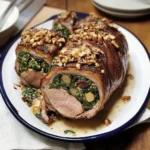
Spinach and Pine Nut Stuffed Leg of Lamb recipe
Ingredients
- Leg of Lamb (Bone-In, 5-7 pounds): The star of the show, a bone-in leg of lamb is essential for this recipe.
- Bone-In vs. Boneless: Choosing a bone-in leg of lamb offers several advantages over boneless. The bone imparts significant flavor and moisture to the meat during roasting, resulting in a richer, more succulent lamb. It also helps the lamb retain its shape and prevents it from drying out. While boneless legs are easier to carve, the bone-in version delivers superior flavor and tenderness for a roast of this caliber.
- Size and Weight: A 5-7 pound leg of lamb is ideal for serving 6-8 people generously. Adjust the size depending on your guest count. If you’re serving a larger crowd, you may opt for a larger leg of lamb or consider making two smaller ones.
- Preparation: Before stuffing, ensure the leg of lamb is properly trimmed of excess fat. Some fat is desirable for flavor and moisture, but too much can render out and create a greasy result. Pat the lamb dry with paper towels before seasoning and stuffing to ensure proper browning and crisping of the skin.
- Fresh Spinach (1 pound): The earthy and slightly sweet flavor of fresh spinach forms the base of the stuffing.
- Fresh vs. Frozen: Fresh spinach is highly recommended for this recipe. Frozen spinach can be used in a pinch, but it often contains more moisture and can result in a wetter stuffing. If using frozen spinach, be sure to thaw it completely and squeeze out as much excess water as possible before using.
- Preparation: Thoroughly wash the fresh spinach to remove any grit or sand. Remove thick stems, as they can be tough. You can roughly chop the spinach before sautéing, or allow it to wilt down whole in the pan as it cooks. Sautéing the spinach before stuffing reduces its volume and enhances its flavor.
- Pine Nuts (1/2 cup): Toasted pine nuts add a buttery, slightly resinous flavor and delightful crunch to the stuffing.
- Toasting: Toasting pine nuts is crucial to bring out their nutty flavor and enhance their texture. You can toast them in a dry skillet over medium heat, stirring frequently, until they are lightly golden and fragrant. Be careful not to burn them, as they can go from toasted to burnt quickly. Alternatively, you can toast them in the oven at 350°F (175°C) for 5-7 minutes, watching closely.
- Alternatives: If pine nuts are unavailable or you prefer a different flavor profile, you can substitute with other nuts such as walnuts, almonds (slivered or chopped), or pecans. Each nut will impart a slightly different flavor and texture to the stuffing.
- Onion (1 large, chopped): Onion provides a savory base note to the stuffing and aromatic depth to the lamb.
- Type of Onion: Yellow or white onions are suitable for this recipe. Yellow onions offer a balanced flavor that becomes sweeter when cooked, while white onions have a sharper, more pungent flavor.
- Chopping: Dice the onion finely so it cooks evenly and incorporates smoothly into the stuffing.
- Garlic (4 cloves, minced): Garlic adds pungent aroma and savory flavor that complements both the lamb and the spinach.
- Fresh vs. Jarred: Freshly minced garlic is always preferred for the most intense and authentic garlic flavor. Jarred minced garlic can be used in a pinch, but fresh garlic will deliver a superior taste.
- Mincing: Mince the garlic finely to ensure it distributes evenly throughout the stuffing and releases its flavor fully during cooking.
- Dried Breadcrumbs (1 cup): Breadcrumbs help to bind the stuffing together and absorb excess moisture.
- Type of Breadcrumbs: Plain dried breadcrumbs are recommended. You can use panko breadcrumbs for a slightly coarser texture, or Italian breadcrumbs for added seasoning, although you may need to adjust the other seasonings accordingly.
- Homemade Breadcrumbs: For an extra touch, you can make your own breadcrumbs from day-old bread. Simply pulse stale bread in a food processor until you achieve the desired crumb consistency.
- Grated Parmesan Cheese (1/2 cup): Parmesan cheese adds a salty, umami-rich flavor and creamy texture to the stuffing.
- Freshly Grated: Freshly grated Parmesan cheese is highly recommended for the best flavor and melting quality. Pre-grated Parmesan cheese often contains cellulose and may not melt as smoothly.
- Alternatives: Pecorino Romano cheese can be used as a flavorful substitute for Parmesan, offering a sharper, saltier taste.
- Eggs (2 large, lightly beaten): Eggs act as a binder for the stuffing, helping it hold its shape during cooking.
- Beating: Lightly beat the eggs before adding them to the stuffing mixture to ensure they incorporate evenly.
- Olive Oil (3 tablespoons): Olive oil is used for sautéing the vegetables and adding richness to the stuffing.
- Extra Virgin Olive Oil: Extra virgin olive oil is recommended for its flavor and health benefits.
- Dried Herbs (2 teaspoons total, such as rosemary, thyme, oregano): Dried herbs add aromatic complexity and depth of flavor to the lamb and stuffing.
- Herb Combinations: Rosemary and thyme are classic herbs that pair beautifully with lamb. Oregano adds a Mediterranean touch. You can use a combination of your favorite dried herbs, or use an Italian herb blend.
- Fresh Herbs: If you prefer fresh herbs, use about 2 tablespoons of chopped fresh herbs in place of 2 teaspoons of dried herbs. Fresh rosemary, thyme, and oregano are excellent choices.
- Salt and Black Pepper: Essential for seasoning both the lamb and the stuffing.
- Kosher Salt and Freshly Ground Black Pepper: Kosher salt and freshly ground black pepper are recommended for their superior flavor and texture.
- Red Wine (1 cup, optional, for deglazing and pan sauce): Red wine adds depth and richness to the pan drippings, which can be used to create a delicious pan sauce.
- Type of Red Wine: A dry red wine such as Cabernet Sauvignon, Merlot, or Pinot Noir works well. You can also use a robust red wine like Chianti or Côtes du Rhône.
- Substitution: If you prefer not to use red wine, you can substitute with beef broth or chicken broth.
- Beef Broth or Chicken Broth (2 cups, for roasting and pan sauce): Broth adds moisture during roasting and forms the base of the pan sauce.
- Low Sodium Broth: Using low sodium broth allows you to control the salt level of the dish more precisely.
By gathering these high-quality ingredients, you are setting the foundation for a truly memorable Spinach-and-Pine-Nut-Stuffed Leg of Lamb. Each element contributes to the overall flavor and texture, creating a harmonious and satisfying dish.
Instructions
Step 1: Prepare the Lamb
- Preheat Oven: Preheat your oven to 325°F (160°C). This lower temperature ensures slow, even cooking and tender lamb.
- Prepare the Leg of Lamb: Pat the leg of lamb dry with paper towels. Trim any excess fat, leaving a thin layer for flavor and moisture.
- Create Pockets for Stuffing: Using a sharp knife, carefully create several deep pockets or slits throughout the leg of lamb. These pockets will be filled with the spinach and pine nut stuffing. Make sure the pockets are deep enough to hold a generous amount of stuffing, but be careful not to cut all the way through the lamb. Aim for pockets that are about 2-3 inches deep.
- Season the Lamb: Generously season the entire leg of lamb, inside and out, with salt, black pepper, and about half of the dried herbs (such as rosemary and thyme). Make sure to season inside the pockets as well. Massaging the seasonings into the lamb will help them penetrate the meat and enhance the flavor.
Step 2: Make the Spinach and Pine Nut Stuffing
- Toast Pine Nuts: Heat a dry skillet over medium heat. Add the pine nuts and toast, stirring frequently, until lightly golden and fragrant, about 3-5 minutes. Remove from skillet and set aside to cool.
- Sauté Onion and Garlic: Heat olive oil in a large skillet over medium heat. Add the chopped onion and cook until softened and translucent, about 5-7 minutes. Add the minced garlic and cook for another minute until fragrant, being careful not to burn the garlic.
- Sauté Spinach: Add the fresh spinach to the skillet in batches. Cook, stirring, until the spinach wilts down significantly. If using frozen spinach, ensure it’s thawed and squeezed dry before adding. Continue cooking until any excess moisture from the spinach evaporates.
- Combine Stuffing Ingredients: In a large bowl, combine the sautéed spinach mixture, toasted pine nuts, dried breadcrumbs, grated Parmesan cheese, remaining dried herbs, salt, and black pepper. Mix well to combine all ingredients evenly.
- Bind the Stuffing: Add the lightly beaten eggs to the bowl and mix thoroughly until the stuffing is well combined and holds together slightly. The eggs will help bind the stuffing and prevent it from drying out during roasting.
Step 3: Stuff the Leg of Lamb
- Stuff the Pockets: Using your hands or a spoon, generously stuff the spinach and pine nut mixture into the pockets you created in the leg of lamb. Pack the stuffing firmly into each pocket, ensuring they are well filled. Don’t overstuff to the point where the lamb is bursting open, but make sure the pockets are nicely filled.
- Tie the Lamb (Optional but Recommended): If desired, use kitchen twine to tie the leg of lamb in a few places to help it maintain its shape during roasting and keep the stuffing securely inside. This step is particularly helpful if you made larger pockets or if your lamb is naturally less compact.
Step 4: Roast the Leg of Lamb
- Sear the Lamb (Optional for Enhanced Browning): For extra browning and flavor, you can sear the leg of lamb before roasting. Heat a large oven-safe skillet or roasting pan over medium-high heat with a tablespoon of olive oil. Sear the lamb on all sides until nicely browned, about 2-3 minutes per side. This step is optional but recommended for deeper flavor and color.
- Roast in Oven: Place the stuffed leg of lamb in a roasting pan. Pour beef or chicken broth into the bottom of the pan, about 1-2 cups, to prevent sticking and create moist heat during roasting.
- Roasting Time: Roast in the preheated oven for approximately 20-25 minutes per pound for medium-rare, 25-30 minutes per pound for medium, or 30-35 minutes per pound for medium-well. Use a meat thermometer to ensure accurate doneness. Insert the thermometer into the thickest part of the lamb, avoiding the bone.
- Rare: 125-130°F (52-54°C)
- Medium-Rare: 130-135°F (54-57°C)
- Medium: 135-140°F (57-60°C)
- Medium-Well: 140-145°F (60-63°C)
- Well-Done: 145°F+ (63°C+) (Not recommended for leg of lamb as it can become dry)
- Baste Occasionally: Baste the lamb with pan juices every 30-45 minutes during roasting to keep it moist and flavorful.
Step 5: Rest and Carve
- Rest the Lamb: Once the lamb reaches your desired internal temperature, remove it from the oven and transfer it to a cutting board. Tent loosely with foil and let it rest for at least 15-20 minutes before carving. Resting allows the juices to redistribute throughout the meat, resulting in a more tender and flavorful roast.
- Make Pan Sauce (Optional): While the lamb is resting, you can make a pan sauce from the pan drippings. Place the roasting pan on the stovetop over medium heat. Deglaze the pan by adding red wine (if using) and scraping up any browned bits from the bottom of the pan. Cook for a few minutes until the wine reduces slightly. Add the remaining beef or chicken broth and simmer until the sauce thickens slightly. Strain the sauce through a fine-mesh sieve if desired for a smoother consistency. Season with salt and pepper to taste.
- Carve and Serve: Carve the leg of lamb against the grain. To carve, locate the bone and slice along it to remove large pieces of meat. Then, slice the meat into thinner portions. Serve the carved lamb with the spinach and pine nut stuffing and the optional pan sauce.
By following these detailed instructions, you
Nutrition
- Serving Size: one normal portion
- Calories: 450-650 calories
- Fat: 25-40 grams
- Saturated Fat: 10-15 grams
- Carbohydrates: 10-15 grams
- Fiber: 2-3 grams
- Protein: 40-50 grams
- Cholesterol: 150-200 mg