
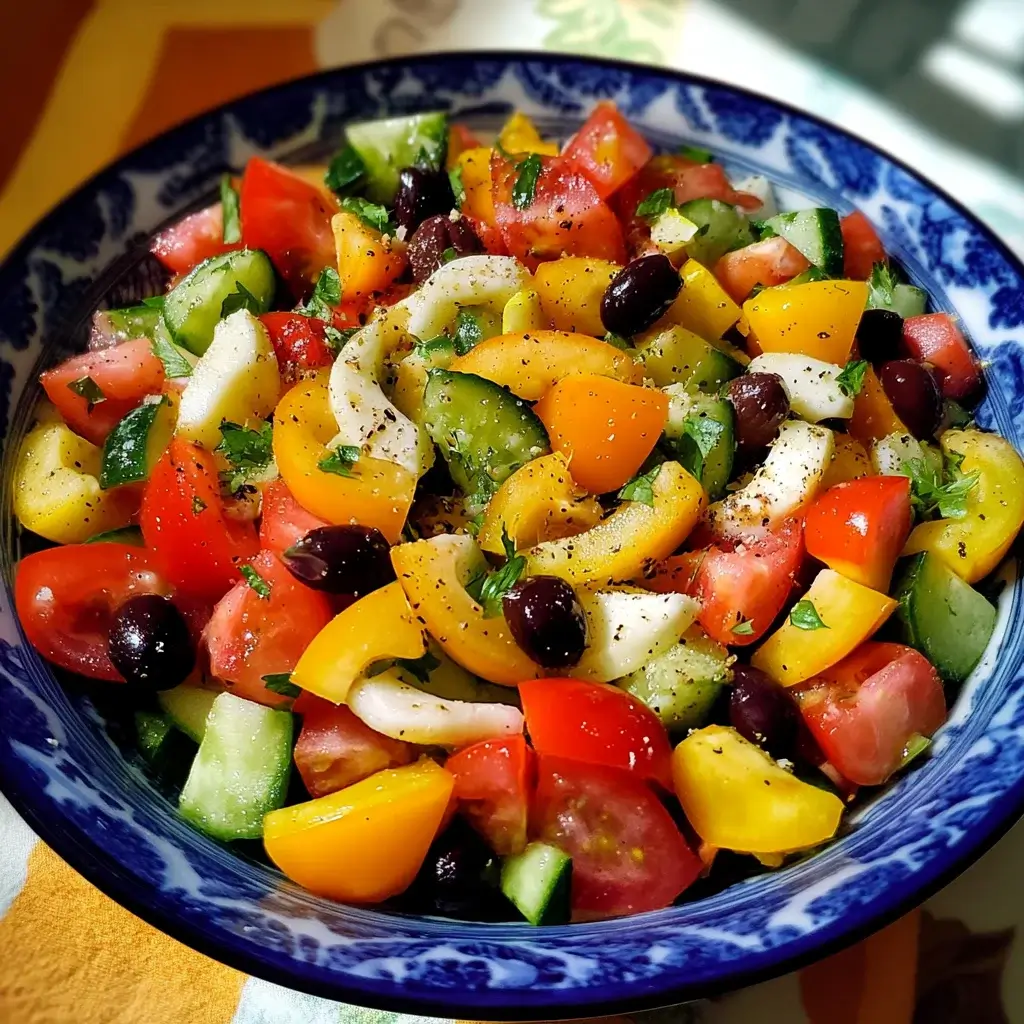

The first time I truly understood the magic of simplicity in food was on a scorching August afternoon in a tiny, sun-drenched village in Andalusia. We’d been exploring, feeling the heat seep into our bones, and stumbled upon a local café with a chalkboard menu. The “Ensalada de Verano” (Summer Salad) sounded unassuming, but what arrived was a revelation. It wasn’t fancy, didn’t involve complex techniques, yet every bite was an explosion of pure, unadulterated flavor – ripe tomatoes bursting with sweetness, crisp cucumber, the gentle bite of onion, all swimming in a pool of grassy olive oil and tangy sherry vinegar. It was, quite simply, the most refreshing and satisfying salad I’d ever eaten. Back home, recreating that experience became a mini-obsession. This recipe is the culmination of that quest, a tribute to those vibrant Spanish flavors. My family now requests this “sunshine salad” all summer long; it’s our go-to for barbecues, light lunches, or whenever we crave something genuinely fresh and uplifting. It’s proof that sometimes, the best dishes are born from the finest, simplest ingredients treated with respect.
The Heart of Spanish Simplicity: Key Ingredients Explored
Before we dive into the recipe itself, it’s crucial to understand that the soul of a Spanish Summer Salad lies in the quality of its components. This isn’t a dish where you can hide mediocre ingredients. Each element plays a starring role, contributing to the overall harmony of flavors and textures.
- Tomatoes – The Undisputed Star: In Spain, summer means an abundance of incredibly flavorful tomatoes. For this salad, seek out the ripest, most aromatic tomatoes you can find. Heirloom varieties like Brandywine, Cherokee Purple, or Spanish Raf tomatoes (if you can find them!) are excellent. Beefsteak tomatoes, Roma tomatoes (for their meatiness), or even sweet cherry or grape tomatoes (halved or quartered) will work beautifully. The key is flavor and juiciness. They should taste like sunshine.
- Cucumbers – The Cool Crunch: Choose firm, crisp cucumbers. Kirby cucumbers are fantastic for their minimal seeds and thin skin. English cucumbers are also a great choice as they are virtually seedless and don’t require peeling if well-washed. The refreshing crunch of cucumber is essential to balance the sweetness of the tomatoes.
- Onions – The Piquant Bite: Red onion is often preferred for its milder flavor and vibrant color, but a sweet white onion (like Vidalia or Walla Walla) can also be used. The key is to slice it thinly. Some Spaniards will soak the sliced onion in cold water for 10-15 minutes to mellow its sharpness, which is a great tip if you find raw onion too strong.
- Peppers – Sweetness and Color: Green Italian frying peppers (the long, pale green ones) or standard green bell peppers are traditional. However, feel free to add red, yellow, or orange bell peppers for extra sweetness and a more colorful presentation. Roasting the peppers first can add a lovely smoky depth, but for a classic fresh summer salad, raw and crisp is the way to go.
- Olives – The Salty, Briny Accent: Spanish olives are a must! Manzanilla olives (often stuffed with pimiento) are a classic choice. Arbequina, Hojiblanca, or even a mix of good-quality Spanish green and black olives will add that quintessential briny, fruity note.
- Extra Virgin Olive Oil – The Golden Elixir: This is non-negotiable. Use the best quality Spanish extra virgin olive oil you can afford. A fruity, slightly peppery Arbequina or a robust Picual will elevate your salad from good to sublime. The olive oil isn’t just a dressing component; it’s a key flavor.
- Vinegar – The Tangy Counterpoint: Sherry vinegar (Vinagre de Jerez) is the traditional and highly recommended choice. Its nutty, complex flavor is uniquely Spanish. If unavailable, a good quality red wine vinegar can be substituted, but sherry vinegar truly makes a difference.
- Garlic (Optional but Recommended): A subtle hint of garlic can enhance all the other flavors. You can either finely mince a small clove into the dressing or, for a more delicate touch, rub a cut clove of garlic around the inside of the salad bowl before adding the ingredients.
- Salt and Pepper – The Essential Seasonings: Good quality sea salt (flaky sea salt like Maldon is wonderful for finishing) and freshly cracked black pepper are crucial to bring all the flavors to life.
Complete Ingredients
This recipe serves 4-6 people as a generous side or 2-3 as a light main course.
- 4-5 medium ripe tomatoes (about 1.5 lbs / 680g), cored and cut into wedges or chunks
- 1 large English cucumber (or 2-3 Kirby cucumbers), peeled (optional, depending on skin toughness), and sliced or diced
- 1 medium red onion (or 1/2 large), thinly sliced
- 1 green bell pepper (or a mix of colors), cored, seeded, and thinly sliced or diced
- 1/2 cup (about 75g) good quality Spanish olives (e.g., Manzanilla, Arbequina), pitted and halved if large
- (Optional: 1-2 hard-boiled eggs, quartered)
- (Optional: 1 small can/jar (5-7 oz / 140-200g) good quality tuna or Bonito del Norte in olive oil, drained and flaked)
For the Simple Vinaigrette:
- 1/4 cup (60ml) extra virgin olive oil (preferably Spanish)
- 2-3 tablespoons sherry vinegar (or good quality red wine vinegar)
- 1 small clove garlic, minced (optional, or rub bowl with garlic)
- 1/2 teaspoon sea salt, or to taste
- 1/4 teaspoon freshly ground black pepper, or to taste
- (Optional pinch of dried oregano or a few fresh basil leaves, chiffonade)
Instructions
The beauty of this Spanish Summer Salad lies in its simplicity. Minimal fuss, maximum flavor.
Step 1: Prepare the Vegetables
- Tomatoes: Wash the tomatoes thoroughly. Core them and cut them into bite-sized wedges or rough chunks. Place them in a large salad bowl. Sprinkle lightly with a pinch of salt – this helps draw out their juices, which will become part of the delicious dressing.
- Cucumber: Wash the cucumber. Peel it if the skin is thick or waxy; otherwise, peeling is optional. Slice it into rounds about 1/4-inch thick, or dice it into chunks similar in size to the tomatoes. Add to the bowl with the tomatoes.
- Onion: Peel the red onion and slice it very thinly. If you prefer a milder onion flavor, you can soak the slices in a bowl of cold water for 10-15 minutes, then drain thoroughly before adding to the salad.
- Bell Pepper: Wash the bell pepper(s). Remove the stem, seeds, and white pith. Slice thinly into strips or dice into chunks. Add to the salad bowl.
- Olives: If your olives have pits, remove them. Halve any large olives. Add them to the bowl.
- (Optional) Garlic Rub: If you prefer a very subtle garlic flavor, take a peeled garlic clove, cut it in half, and rub the cut side all over the inside of your empty salad bowl before adding any vegetables. Discard the clove.
Step 2: Prepare Optional Add-ins (if using)
- Hard-Boiled Eggs: If using, peel your hard-boiled eggs and cut them into quarters. Set aside to add at the end or gently mix in.
- Tuna/Bonito del Norte: Drain the canned tuna or Bonito del Norte well. Gently flake it into large pieces. Set aside to add at the end or gently mix in.
Step 3: Make the Vinaigrette
- In a small bowl or jar, combine the extra virgin olive oil, sherry vinegar, minced garlic (if using instead of the garlic rub), salt, and freshly ground black pepper.
- Whisk vigorously until the dressing is emulsified (slightly thickened and combined).
- Taste and adjust seasoning if necessary – you might prefer a little more vinegar for tang or salt to enhance the flavors. If using oregano or basil, whisk it in now.
Step 4: Assemble and Dress the Salad
- Pour the vinaigrette over the vegetables in the large salad bowl.
- Gently toss everything together to ensure all the ingredients are lightly coated with the dressing. Be careful not to overmix, especially if you’ve added delicate ingredients like tuna or egg.
- If using hard-boiled eggs or tuna, you can either gently fold them in now or arrange them on top of the salad after tossing.
Step 5: Rest (Optional but Recommended)
- For the best flavor, allow the salad to sit at room temperature for at least 15-20 minutes before serving. This allows the vegetables to marinate in the dressing and the flavors to meld together beautifully. Don’t refrigerate tomatoes if you can help it, as chilling dulls their flavor. If you must make it further ahead, prepare veggies and dressing separately and combine just before this resting period.
Nutrition Facts
- Servings: 4-6 servings (as a side)
- Calories per serving (approximate, without tuna/egg): Around 180-250 calories.
- Calories per serving (approximate, with tuna and egg): Around 280-380 calories.
- Disclaimer: Nutritional information is an estimate and can vary significantly based on specific ingredients used (e.g., amount of olive oil, size of vegetables, type of olives) and exact portion sizes. These values are provided as a general guideline.
Preparation Time
- Active Preparation Time: 15-20 minutes (chopping vegetables, making dressing)
- Soaking Time for Onion (Optional): 10-15 minutes
- Resting Time (Recommended): 15-20 minutes
- Total Time (including optional steps): Approximately 30-55 minutes
Why This Spanish Summer Salad Will Become Your Go-To
Beyond its incredible taste, this salad offers a multitude of benefits that make it a perfect addition to your culinary repertoire:
- Peak Season Perfection: It’s designed to make the most of summer’s bounty when tomatoes, cucumbers, and peppers are at their absolute best.
- Incredibly Healthy: Packed with vitamins, minerals, antioxidants from fresh vegetables, and healthy monounsaturated fats from olive oil, it’s a cornerstone of the Mediterranean diet.
- Effortlessly Simple: With no cooking required (unless you boil eggs), it comes together quickly, making it ideal for busy weeknights or lazy summer days.
- Naturally Gluten-Free & Dairy-Free: It caters to various dietary needs without any special modifications.
- Versatile Champion: Serve it as a light lunch, a vibrant side dish for grilled meats or fish, or as part of a larger tapas spread.
- Intensely Refreshing: The combination of juicy vegetables and tangy vinaigrette is incredibly cooling and hydrating, perfect for hot weather.
- Customizable Canvas: While the classic version is fantastic, it’s easily adaptable to include other ingredients you love (see variations below).
How to Serve
This vibrant Spanish Summer Salad is incredibly versatile. Here are some traditional and creative ways to serve it:
- As a Light Lunch or Starter:
- Perfect on its own, especially on a hot day.
- Serve with a side of crusty artisan bread (pan de pueblo) to soak up the delicious, olive oil-rich juices at the bottom of the bowl – this is a crucial part of the experience, often called “hacer barquitos” (making little boats) or “pringando.”
- Alongside Main Courses:
- An ideal accompaniment to grilled fish (sardines, sea bass, cod).
- Excellent with grilled meats like chicken, pork skewers (pinchos morunos), or lamb chops.
- A refreshing counterpoint to richer Spanish dishes like Tortilla Española (Spanish Omelette) or Paella (often served as a starter or side).
- As Part of a Tapas Spread:
- Its freshness balances out richer tapas such as Patatas Bravas, Gambas al Ajillo (Garlic Shrimp), or Chorizo al Vino.
- A colorful and healthy addition to any selection of small plates.
- For Gatherings and Barbecues:
- It’s a crowd-pleaser and travels reasonably well (keep the dressing separate and toss just before serving if transporting a long distance).
- Its bright colors make it a visually appealing dish on any buffet table.
- Presentation Tips:
- Serve in a wide, shallow bowl to showcase all the colorful ingredients.
- Garnish with a sprig of fresh parsley or a drizzle of extra virgin olive oil just before serving.
- If adding tuna or hard-boiled eggs, arrange them artfully on top after tossing the salad.
Variations on a Classic: Customizing Your Spanish Summer Salad
While the classic combination is hard to beat, this salad is a wonderful base for experimentation. Here are a few popular variations:
- Ensalada Mixta: This is perhaps the most common “mixed salad” found in Spain and often includes the base ingredients plus:
- Canned Tuna or Bonito del Norte: High-quality Spanish tuna packed in olive oil adds protein and a lovely savory depth.
- Hard-Boiled Eggs: Quartered or sliced, they add richness and substance.
- White Asparagus: Canned or jarred white asparagus spears are a popular addition in Spain.
- Sweet Corn: Some versions include a sprinkle of sweet corn kernels.
- Pipirrana (Andalusian Chopped Salad): A close cousin, originating from Andalusia. The ingredients (tomato, cucumber, green pepper, onion) are typically diced much finer, and the dressing often includes ground cumin for a distinctive warm, earthy note. It’s sometimes served almost like a gazpacho, very juicy.
- Ensalada Murciana (Murcian Salad): This version from the Murcia region often features tomatoes, onion, hard-boiled egg, olives, and “capellanes” (dried and salted cod or similar fish), all dressed with olive oil. It’s more robust and relies on preserved elements.
- Adding Legumes: A handful of cooked chickpeas or white beans can make the salad more substantial and add extra fiber and protein.
- Cheese, if you dare: While not strictly traditional for this type of everyday summer salad, a sprinkle of crumbled feta (Greek, I know, but it works) or some shavings of a firm Spanish cheese like Manchego Curado could be a tasty, albeit less authentic, addition.
- Herbs: Experiment with fresh herbs. A little chopped fresh parsley is common. Fresh oregano, basil, or even mint can add different aromatic dimensions.
Additional Tips (5 tips)
- Quality Over Quantity: The success of this salad hinges almost entirely on the quality of your ingredients. Use the ripest, most flavorful summer tomatoes, crisp cucumbers, good Spanish extra virgin olive oil, and authentic sherry vinegar. It makes all the difference.
- Don’t Over-Chill Tomatoes: Tomatoes lose much of their flavor and develop a mealy texture when refrigerated. If possible, store your tomatoes at room temperature and make the salad with them as is. If you must chill the salad after making it, try to let it sit out for 20-30 minutes before serving to allow the flavors to wake up.
- Dress Just Before Serving (or Resting): While a short 15-30 minute rest after dressing allows flavors to meld, don’t dress this salad hours in advance, especially if using very juicy tomatoes. The salt will draw out a lot of water, and the vegetables can become limp. For best texture, chop veggies ahead, make dressing ahead, and combine shortly before you plan to eat.
- Embrace the “Caldo” (Juices): Don’t discard the flavorful liquid that collects at the bottom of the bowl! This “caldo” or “jugo” – a mix of tomato juice, olive oil, and vinegar – is considered by many to be the best part. Always serve with plenty of crusty bread for mopping it up.
- Season in Layers: Lightly salt the tomatoes first to help them release their juices. Then, taste and adjust the seasoning of the vinaigrette before adding it to the salad. Finally, taste the dressed salad and add a final pinch of flaky sea salt or pepper if needed just before serving. This layering approach ensures a well-seasoned salad throughout.
FAQ Section (5 Q/A)
Q1: What makes this salad specifically “Spanish” compared to other Mediterranean salads?
A1: Several elements contribute to its Spanish identity. Firstly, the prominent use of Spanish ingredients like sherry vinegar (Vinagre de Jerez) and Spanish olives (like Manzanilla or Arbequina) is key. Secondly, the simplicity and focus on showcasing a few high-quality, seasonal ingredients without too many additions is very characteristic of everyday Spanish cuisine. While other Mediterranean countries have similar fresh salads (e.g., Greek salad, Israeli salad), the specific flavor profile from sherry vinegar, the types of olives, and often the inclusion of green peppers or specific regional additions like Bonito del Norte tuna, distinguish the Spanish Summer Salad or Ensalada Mixta.
Q2: Can I make this Spanish Summer Salad ahead of time?
A2: Yes, with a few caveats. You can chop all the vegetables (tomatoes, cucumbers, peppers, onions) a few hours in advance and store them in an airtight container in the refrigerator. The vinaigrette can also be made ahead and stored separately (whisk again before use as it may separate). However, it’s best to combine the vegetables and dressing only about 15-30 minutes before serving to allow flavors to meld without the vegetables becoming too soggy from the salt and vinegar. If adding tuna or hard-boiled eggs, add them just before serving.
Q3: What are the best tomatoes to use for an authentic taste?
A3: For the most authentic and delicious taste, use ripe, seasonal, field-grown tomatoes. In Spain, varieties like “Tomate Rosa” (Pink Tomato), “Tomate de Pera” (Pear Tomato, similar to Roma but often more flavorful), or specific regional heirlooms are prized. If you can’t find these, look for flavorful beefsteak tomatoes, ripe on-the-vine tomatoes, or good quality heirloom varieties available in your area. The key is that they should be juicy, sweet, and have a pronounced “tomato” flavor. Avoid hard, underripe tomatoes.
Q4: Is this salad healthy? What are its main health benefits?
A4: Yes, this Spanish Summer Salad is exceptionally healthy! It’s packed with:
* Vitamins and Antioxidants: From the abundance of fresh vegetables like tomatoes (rich in lycopene), peppers (Vitamin C), onions (quercetin), and cucumbers.
* Healthy Fats: Primarily monounsaturated fats from the extra virgin olive oil, which are beneficial for heart health.
* Fiber: From all the vegetables, aiding digestion and promoting satiety.
* Minerals: Such as potassium from tomatoes and cucumbers.
It’s naturally low in calories (especially without heavy add-ins), gluten-free, and dairy-free, aligning perfectly with the principles of the heart-healthy Mediterranean diet.
Q5: Besides bread, what main dishes pair well with this salad in Spanish cuisine?
A5: This salad is a fantastic accompaniment to many Spanish main courses. It pairs beautifully with:
* Grilled Fish or Seafood: Such as grilled sardines (sardinas a la plancha), hake (merluza), sea bream (dorada), or even simple grilled shrimp.
* Grilled Meats: Chicken (pollo a la plancha), pork loin (lomo de cerdo), or lamb cutlets (chuletas de cordero).
* Tortilla Española: The classic Spanish potato and onion omelette. The fresh, acidic salad cuts through the richness of the tortilla perfectly.
* Paella: While paella is a complete meal, a small serving of this salad is often offered as a light starter or a refreshing side.
* Empanadas or Empanadillas: Savory Spanish pastries filled with meat, tuna, or vegetables.
* Simple Roasted Chicken: A whole roasted chicken (pollo asado) with this salad makes for a wonderful family meal.
Spanish Summer Salad recipe
Ingredients
- 4–5 medium ripe tomatoes (about 1.5 lbs / 680g), cored and cut into wedges or chunks
- 1 large English cucumber (or 2–3 Kirby cucumbers), peeled (optional, depending on skin toughness), and sliced or diced
- 1 medium red onion (or 1/2 large), thinly sliced
- 1 green bell pepper (or a mix of colors), cored, seeded, and thinly sliced or diced
- 1/2 cup (about 75g) good quality Spanish olives (e.g., Manzanilla, Arbequina), pitted and halved if large
- (Optional: 1-2 hard-boiled eggs, quartered)
- (Optional: 1 small can/jar (5-7 oz / 140-200g) good quality tuna or Bonito del Norte in olive oil, drained and flaked)
Instructions
Step 1: Prepare the Vegetables
- Tomatoes: Wash the tomatoes thoroughly. Core them and cut them into bite-sized wedges or rough chunks. Place them in a large salad bowl. Sprinkle lightly with a pinch of salt – this helps draw out their juices, which will become part of the delicious dressing.
- Cucumber: Wash the cucumber. Peel it if the skin is thick or waxy; otherwise, peeling is optional. Slice it into rounds about 1/4-inch thick, or dice it into chunks similar in size to the tomatoes. Add to the bowl with the tomatoes.
- Onion: Peel the red onion and slice it very thinly. If you prefer a milder onion flavor, you can soak the slices in a bowl of cold water for 10-15 minutes, then drain thoroughly before adding to the salad.
- Bell Pepper: Wash the bell pepper(s). Remove the stem, seeds, and white pith. Slice thinly into strips or dice into chunks. Add to the salad bowl.
- Olives: If your olives have pits, remove them. Halve any large olives. Add them to the bowl.
- (Optional) Garlic Rub: If you prefer a very subtle garlic flavor, take a peeled garlic clove, cut it in half, and rub the cut side all over the inside of your empty salad bowl before adding any vegetables. Discard the clove.
Step 2: Prepare Optional Add-ins (if using)
- Hard-Boiled Eggs: If using, peel your hard-boiled eggs and cut them into quarters. Set aside to add at the end or gently mix in.
- Tuna/Bonito del Norte: Drain the canned tuna or Bonito del Norte well. Gently flake it into large pieces. Set aside to add at the end or gently mix in.
Step 3: Make the Vinaigrette
- In a small bowl or jar, combine the extra virgin olive oil, sherry vinegar, minced garlic (if using instead of the garlic rub), salt, and freshly ground black pepper.
- Whisk vigorously until the dressing is emulsified (slightly thickened and combined).
- Taste and adjust seasoning if necessary – you might prefer a little more vinegar for tang or salt to enhance the flavors. If using oregano or basil, whisk it in now.
Step 4: Assemble and Dress the Salad
- Pour the vinaigrette over the vegetables in the large salad bowl.
- Gently toss everything together to ensure all the ingredients are lightly coated with the dressing. Be careful not to overmix, especially if you’ve added delicate ingredients like tuna or egg.
- If using hard-boiled eggs or tuna, you can either gently fold them in now or arrange them on top of the salad after tossing.
Step 5: Rest (Optional but Recommended)
- For the best flavor, allow the salad to sit at room temperature for at least 15-20 minutes before serving. This allows the vegetables to marinate in the dressing and the flavors to meld together beautifully. Don’t refrigerate tomatoes if you can help it, as chilling dulls their flavor. If you must make it further ahead, prepare veggies and dressing separately and combine just before this resting period.
Nutrition
- Serving Size: one normal portion
- Calories: 180-250