
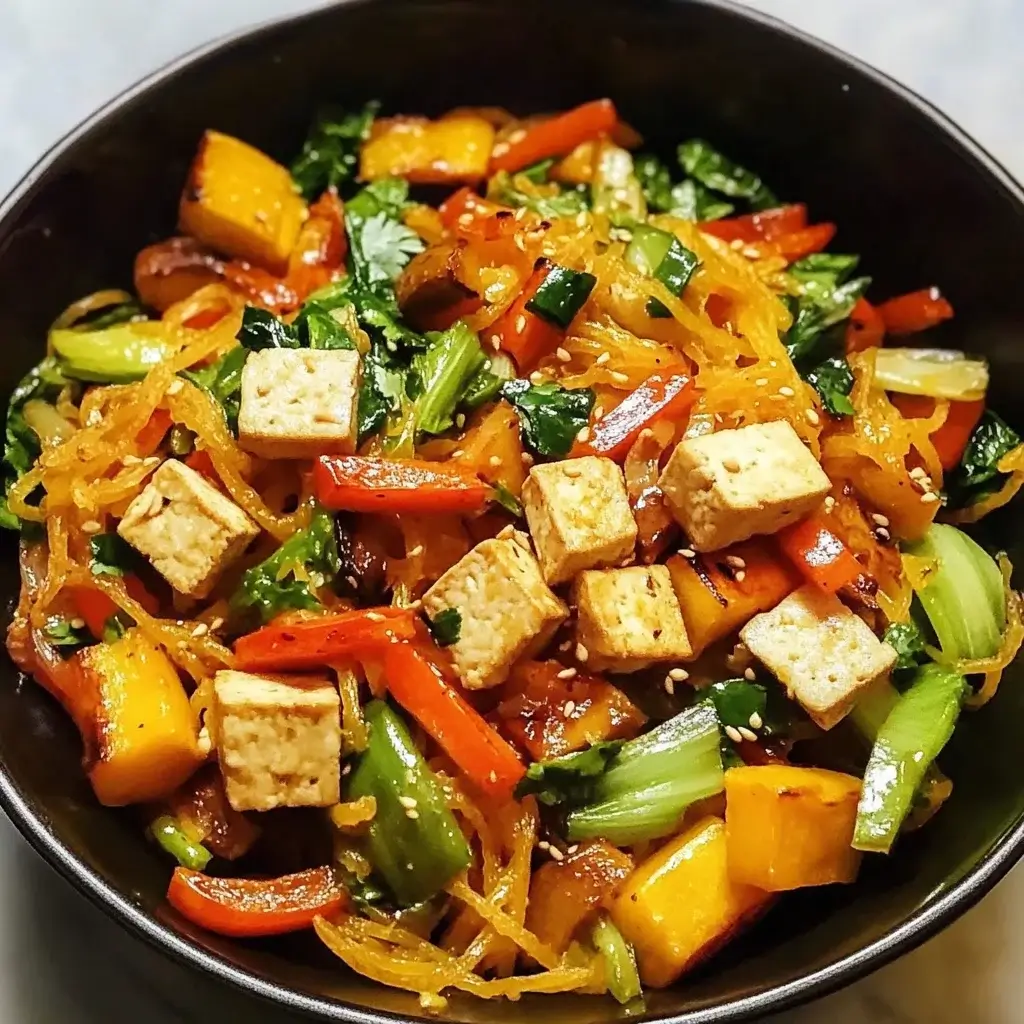

Confession time: I used to eye spaghetti squash with suspicion at the grocery store. It looked…well, like a gourd. The name itself, “spaghetti squash,” felt like a culinary over-promise. Could a vegetable really mimic pasta? My initial attempts at roasting it were, let’s just say, underwhelming – watery strands lacking any real oomph. Then, I stumbled upon the idea of using spaghetti squash as a base for a stir-fry. Suddenly, everything clicked. The slightly sweet, tender strands became the perfect blank canvas for vibrant vegetables, protein-packed tofu, and a flavourful, savory sauce. This Spaghetti Squash Stir-Fry with Veggies and Tofu isn’t just a healthy meal; it’s a flavour explosion. It’s become a regular in our weeknight rotation, loved by even the pickiest eaters in my household (who are now spaghetti squash converts themselves!). It’s light yet satisfying, packed with nutrients, and incredibly versatile – you can easily swap out veggies based on what you have on hand or what’s in season. If you’re looking for a delicious, healthy, and surprisingly easy way to incorporate more vegetables into your diet, and maybe even finally fall in love with spaghetti squash, this recipe is for you. Prepare to be amazed!
Vegan Spaghetti Squash Stir-Fry with Veggies and Tofu: A Delicious and Healthy Meal
This recipe showcases the incredible versatility of spaghetti squash, transforming it from a humble gourd into the star of a vibrant and flavourful stir-fry. Combining the naturally sweet, pasta-like strands of spaghetti squash with crispy tofu, a medley of colorful vegetables, and a savory stir-fry sauce, this dish is a nutritional powerhouse that doesn’t compromise on taste. Perfect for a weeknight dinner, this Vegan Spaghetti Squash Stir-Fry is gluten-free, low-carb, and packed with plant-based protein and fiber. It’s a fantastic way to enjoy a healthy and satisfying meal that’s both easy to prepare and endlessly customizable. Whether you’re a seasoned stir-fry enthusiast or new to the world of plant-based cooking, this recipe will quickly become a go-to favorite.
Ingredients
This recipe is designed to be flexible, allowing you to use your favorite vegetables and adjust the sauce to your preferred taste. Here’s a breakdown of the key components:
For the Spaghetti Squash:
- 1 medium Spaghetti Squash (about 2-3 pounds): Look for a squash that feels heavy for its size and has a firm, unblemished rind. The size will determine how many servings you get.
- 1 tablespoon Olive Oil (or other cooking oil): For roasting or microwaving the squash and adding a touch of richness.
- Salt and Black Pepper: To season the squash and enhance its natural flavour.
For the Tofu:
- 1 block (14-16 ounces) Extra-Firm Tofu: Extra-firm tofu is crucial for stir-fries as it holds its shape best and crisps up nicely. Firm tofu can also be used, but you’ll need to press it for longer to remove excess water.
- 1 tablespoon Soy Sauce or Tamari (for gluten-free): To marinate the tofu and add savory umami flavour. Tamari is a gluten-free alternative to soy sauce.
- 1 tablespoon Cornstarch or Arrowroot Powder: For coating the tofu and promoting crispiness when pan-frying or baking. Arrowroot powder is a gluten-free option.
- 2 tablespoons Cooking Oil (for pan-frying or baking): Choose a neutral oil with a high smoke point like avocado oil, canola oil, or vegetable oil for cooking the tofu.
For the Vegetables (Customize as you like!):
- 1 tablespoon Cooking Oil: For stir-frying the vegetables.
- 1 large Onion: Sliced or diced. Yellow or white onions work well.
- 2 cloves Garlic: Minced. Essential for flavour.
- 1 inch Ginger: Freshly grated or minced. Adds a warm, spicy note.
- 1 Red Bell Pepper: Sliced into strips. Adds sweetness and colour.
- 1 Green Bell Pepper: Sliced into strips. Adds a slightly different flavour profile and colour.
- 1 cup Broccoli Florets: Bite-sized pieces. Adds texture and nutritional value.
- 1 cup Carrots: Sliced into thin rounds or julienned. Adds sweetness and crunch.
- 1 cup Snow Peas or Sugar Snap Peas: Adds sweetness and a delicate crunch.
- Optional Vegetables: Mushrooms, zucchini, bok choy, spinach, kale, asparagus, edamame – feel free to get creative and use what you have on hand or what’s in season.
For the Stir-Fry Sauce:
- ¼ cup Soy Sauce or Tamari (gluten-free): The base of the sauce, providing salty umami flavour.
- 2 tablespoons Rice Vinegar: Adds tanginess and balances the sweetness and saltiness.
- 1 tablespoon Sesame Oil: Adds a distinctive nutty aroma and flavour. Essential for stir-fries.
- 1 tablespoon Maple Syrup or Agave Nectar: Adds a touch of sweetness to balance the savory and tangy flavours. Agave is a vegan alternative to honey.
- 1 tablespoon Cornstarch or Arrowroot Powder (gluten-free): To thicken the sauce and give it a glossy finish.
- ½ teaspoon Red Pepper Flakes (optional): For a touch of heat. Adjust to your preference or omit entirely.
- ¼ cup Water or Vegetable Broth: To thin out the sauce and help it coat the ingredients.
Optional Garnishes:
- Sesame Seeds: Toasted, for nutty flavour and visual appeal.
- Chopped Green Onions: For fresh flavour and colour.
- Chopped Cilantro: For fresh, herbaceous flavour.
- Chopped Peanuts or Cashews: For added crunch and nutty flavour.
Instructions: Cooking Your Spaghetti Squash Stir-Fry
Follow these detailed instructions to create a delicious and satisfying Spaghetti Squash Stir-Fry with Veggies and Tofu.
Step 1: Prepare the Spaghetti Squash
There are several ways to cook spaghetti squash. Roasting yields the most flavour, but microwaving is quicker.
- Roasting Method (Recommended for best flavour):
- Preheat oven to 400°F (200°C).
- Carefully halve the spaghetti squash lengthwise using a sharp knife. Scoop out the seeds and stringy pulp with a spoon.
- Brush the cut sides with olive oil and season with salt and pepper.
- Place the squash cut-side down on a baking sheet.
- Roast for 40-60 minutes, or until the squash is tender and easily pierced with a fork. The roasting time will depend on the size of your squash.
- Let the squash cool slightly, then use a fork to scrape out the spaghetti-like strands into a large bowl.
- Microwave Method (Quicker):
- Pierce the spaghetti squash several times with a fork.
- Place the whole squash in the microwave and microwave on high for 10-15 minutes, rotating halfway through. Cooking time will vary depending on your microwave and the size of the squash. The squash is ready when it’s slightly softened and can be pierced easily with a fork.
- Let the squash cool slightly, then carefully halve it lengthwise. Scoop out the seeds and stringy pulp.
- Use a fork to scrape out the spaghetti-like strands into a large bowl.
Step 2: Prepare the Tofu
- Press the Tofu: Remove the tofu from its packaging and drain off any excess water. Wrap the tofu in paper towels or a clean kitchen towel and place it on a plate. Place a heavy object on top of the tofu (like a stack of books or a cast iron skillet) and press for at least 30 minutes to remove excess water. Pressing tofu is essential for achieving a crispy texture.
- Cube and Marinate (Optional): Cut the pressed tofu into bite-sized cubes. In a bowl, toss the tofu cubes with soy sauce or tamari. Let it marinate for at least 15 minutes, or up to 30 minutes for more flavour. Marinating is optional but enhances the flavour of the tofu.
- Coat the Tofu: In a separate bowl, toss the marinated tofu cubes with cornstarch or arrowroot powder, ensuring they are evenly coated. This coating will help them crisp up during cooking.
- Cook the Tofu (Pan-Fry or Bake):
- Pan-Frying (For crispy tofu): Heat cooking oil in a large skillet or wok over medium-high heat. Add the coated tofu cubes in a single layer (work in batches if necessary to avoid overcrowding the pan). Cook for 5-7 minutes per side, or until golden brown and crispy on all sides. Remove from the pan and set aside.
- Baking (A healthier option): Preheat oven to 400°F (200°C). Line a baking sheet with parchment paper. Toss the coated tofu cubes with a drizzle of cooking oil. Spread the tofu cubes in a single layer on the baking sheet. Bake for 20-25 minutes, flipping halfway through, until golden brown and slightly crispy.
Step 3: Stir-Fry the Vegetables
- Heat cooking oil in the same skillet or wok over medium-high heat.
- Add sliced onions and stir-fry for 2-3 minutes until softened and translucent.
- Add minced garlic and grated ginger and stir-fry for another minute until fragrant. Be careful not to burn the garlic and ginger.
- Add bell pepper strips, broccoli florets, and carrot slices. Stir-fry for 5-7 minutes, until the vegetables are tender-crisp but still have a slight bite. The cooking time will depend on the vegetables you use and your desired level of crispness.
- Add snow peas or sugar snap peas and stir-fry for another 1-2 minutes, until bright green and slightly softened.
Step 4: Make the Stir-Fry Sauce
- While the vegetables are stir-frying, prepare the sauce. In a small bowl, whisk together soy sauce or tamari, rice vinegar, sesame oil, maple syrup or agave nectar, cornstarch or arrowroot powder, red pepper flakes (if using), and water or vegetable broth until smooth and the cornstarch is dissolved.
Step 5: Combine Everything and Serve
- Pour the stir-fry sauce over the vegetables in the skillet or wok. Stir-fry for 1-2 minutes, until the sauce thickens and coats the vegetables evenly.
- Add the cooked tofu and spaghetti squash strands to the skillet or wok. Gently toss everything together to combine and heat through. Be careful not to overmix and break the spaghetti squash strands too much.
- Taste and adjust seasoning if needed. You may want to add a little more soy sauce for saltiness, rice vinegar for tanginess, or maple syrup for sweetness, depending on your preference.
- Serve immediately, garnished with toasted sesame seeds, chopped green onions, cilantro, and/or chopped peanuts or cashews, if desired.
Nutrition Facts (Estimated)
(Please note: Nutritional values are estimates and can vary based on specific ingredients, brands, and serving sizes. This is an approximate guide per serving, assuming 4 servings from the recipe)
- Serving Size: Approximately 2 cups
- Calories per Serving: Approximately 400-450 calories
- Protein: 20-25g
- Fat: 15-20g (primarily healthy fats from cooking oils, sesame oil, and tofu)
- Saturated Fat: 2-3g
- Cholesterol: 0mg
- Sodium: Varies depending on soy sauce/tamari and broth choices, aim for low sodium options to reduce sodium content. Approximately 600-800mg
- Carbohydrates: 40-50g
- Fiber: 8-10g
- Sugar: Naturally occurring sugars from vegetables and maple syrup/agave.
- Vitamins and Minerals: Excellent source of Vitamin A, Vitamin C, Vitamin K, Vitamin B6, Folate, Potassium, Manganese, and Copper, due to the variety of vegetables and tofu.
Key Nutritional Highlights:
- High in Protein: Tofu provides a significant amount of plant-based protein, essential for muscle building and satiety.
- Rich in Fiber: Spaghetti squash and vegetables are excellent sources of dietary fiber, promoting digestive health, regulating blood sugar, and keeping you feeling full and satisfied.
- Low in Carbohydrates: Compared to traditional pasta stir-fries, this dish is lower in carbohydrates due to the use of spaghetti squash instead of noodles, making it a suitable option for those watching their carb intake or following a low-carb diet.
- Packed with Vitamins and Minerals: The variety of colorful vegetables provides a wide range of essential vitamins and minerals, contributing to overall health and well-being.
- Vegan and Gluten-Free (with Tamari and Arrowroot): Naturally vegan and easily made gluten-free by using tamari instead of soy sauce and arrowroot powder instead of cornstarch, making it suitable for various dietary needs and preferences.
Preparation Time
- Prep Time: 30 minutes (preparing spaghetti squash, pressing tofu, chopping vegetables, making sauce)
- Cook Time: 40-60 minutes (roasting spaghetti squash) + 20-30 minutes (stir-frying tofu and vegetables) If microwaving squash, reduce cook time by 30-40 minutes
- Total Time: 1 hour 10 minutes – 1 hour 30 minutes (Roasting method) / 40 minutes – 1 hour (Microwave method)
While the total time might seem a bit longer if roasting the spaghetti squash, much of the roasting time is hands-off. You can use this time to prepare the tofu, vegetables, and sauce. Microwaving the spaghetti squash significantly reduces the total preparation time for a quicker weeknight meal.
How to Serve Your Spaghetti Squash Stir-Fry
This delicious and versatile Spaghetti Squash Stir-Fry is fantastic on its own or served in a variety of ways. Here are some serving suggestions:
- As a Complete Meal in Bowls:
- Serve generous portions of the stir-fry in bowls for a satisfying and healthy lunch or dinner. This is the most common and straightforward way to enjoy it.
- Garnish each bowl with your choice of toppings like sesame seeds, chopped green onions, cilantro, or peanuts/cashews for added flavour and texture.
- Over Grains (Optional for added carbs):
- For those who prefer a more substantial meal or want to add some complex carbohydrates, serve the stir-fry over a bed of cooked brown rice, quinoa, or even cauliflower rice for a lower-carb option.
- The grains will soak up the delicious stir-fry sauce and complement the flavours of the vegetables and tofu.
- As a Side Dish:
- Serve smaller portions of the Spaghetti Squash Stir-Fry as a vibrant and flavourful side dish alongside grilled or baked protein like chicken, fish, or other vegetarian/vegan protein sources.
- It makes a healthy and colourful addition to any meal.
- As Leftovers (Cold or Reheated):
- This stir-fry is delicious both hot and cold. Enjoy leftovers cold as a refreshing salad-style meal or reheat it gently in a skillet or microwave for a warm meal.
- The flavours often meld together even more beautifully overnight, making it a great option for meal prepping.
- Garnish Options to Enhance the Experience:
- Toasted Sesame Seeds: Add a nutty flavour and visual appeal.
- Chopped Green Onions: Provide fresh, mild onion flavour and colour.
- Fresh Cilantro or Parsley: Add herbaceous freshness.
- Chopped Peanuts or Cashews: Offer a satisfying crunch and nutty flavour.
- Sriracha or Chili Garlic Sauce: For those who like extra heat, serve with a side of sriracha or chili garlic sauce to drizzle over the stir-fry.
- Lime Wedges: A squeeze of fresh lime juice can brighten up the flavours of the stir-fry.
Additional Tips for a Perfect Spaghetti Squash Stir-Fry
Here are five helpful tips to ensure your Spaghetti Squash Stir-Fry is a resounding success:
- Roast or Cook Spaghetti Squash Until Just Tender: Avoid overcooking the spaghetti squash, as it can become mushy. It should be tender enough to easily shred with a fork, but still have a slight bite. Overcooked squash will be watery and less appealing in the stir-fry.
- Press Tofu Thoroughly for Best Texture: Don’t skip the tofu pressing step! Removing excess water is crucial for achieving crispy tofu that holds its shape in the stir-fry. The drier the tofu, the better it will crisp up when pan-fried or baked.
- Prep All Ingredients Before You Start Stir-Frying (Mise en Place): Stir-frying is a quick cooking method, so it’s essential to have all your ingredients prepped and ready to go before you start cooking. Chop all vegetables, prepare the tofu, and whisk together the sauce ahead of time. This will make the stir-frying process smooth and efficient.
- Don’t Overcrowd the Pan When Stir-Frying: Overcrowding the pan will lower the temperature and cause the vegetables and tofu to steam instead of stir-fry, resulting in soggy ingredients. Cook in batches if necessary to ensure everything cooks evenly and develops a nice texture. Use a large skillet or wok to provide ample surface area.
- Adjust the Sauce to Your Personal Taste: The stir-fry sauce is the flavour powerhouse of this dish. Taste the sauce before adding it to the stir-fry and adjust the ingredients to your preference. If you like it sweeter, add a bit more maple syrup or agave. For more tanginess, add a touch more rice vinegar. If you prefer it spicier, increase the red pepper flakes or add a dash of sriracha. Don’t be afraid to customize it to your liking!
FAQ: Your Spaghetti Squash Stir-Fry Questions Answered
Here are answers to some frequently asked questions about making Spaghetti Squash Stir-Fry with Veggies and Tofu:
Q1: Can I use other vegetables in this stir-fry?
A: Absolutely! This recipe is very versatile. Feel free to substitute or add other vegetables based on your preferences and what you have available. Good additions include mushrooms, zucchini, bok choy, spinach, kale, asparagus, edamame, snap peas, and more. Get creative and use seasonal vegetables for variety.
Q2: Can I use a different protein source instead of tofu?
A: Yes, you can substitute tofu with other protein sources. For vegan options, try edamame, tempeh (cubed and stir-fried), or chickpeas (roasted or pan-fried). For non-vegan options, cooked chicken, shrimp, or beef strips would also work well in this stir-fry. Adjust cooking times accordingly for different protein sources.
Q3: How can I make this stir-fry spicier?
A: To increase the spice level, you can add more red pepper flakes to the sauce. Alternatively, you can add a pinch of cayenne pepper or a dash of your favorite hot sauce, like sriracha or chili garlic sauce, to the sauce or drizzle it over the finished stir-fry. You can also include a minced chili pepper like a jalapeño or serrano pepper when stir-frying the vegetables.
Q4: How should I store leftovers and for how long?
A: Store leftover Spaghetti Squash Stir-Fry in an airtight container in the refrigerator. It will keep well for 3-4 days. Reheat leftovers gently in a skillet over medium heat or in the microwave until heated through. You can add a splash of water or vegetable broth if the stir-fry seems dry during reheating.
Q5: Can I make the stir-fry sauce ahead of time?
A: Yes, you can definitely make the stir-fry sauce ahead of time. Whisk together all the sauce ingredients and store it in an airtight container in the refrigerator for up to a week. This is a great time-saving tip for busy weeknights. Just remember to whisk it again before using as the cornstarch may settle at the bottom.
Enjoy creating and devouring this healthy and flavourful Spaghetti Squash Stir-Fry with Veggies and Tofu! It’s a delightful way to enjoy a plant-based meal that’s both nutritious and incredibly satisfying.
Print
Spaghetti Squash Stir-Fry with Veggies and Tofu recipe
Ingredients
For the Spaghetti Squash:
- 1 medium Spaghetti Squash (about 2–3 pounds): Look for a squash that feels heavy for its size and has a firm, unblemished rind. The size will determine how many servings you get.
- 1 tablespoon Olive Oil (or other cooking oil): For roasting or microwaving the squash and adding a touch of richness.
- Salt and Black Pepper: To season the squash and enhance its natural flavour.
For the Tofu:
- 1 block (14-16 ounces) Extra-Firm Tofu: Extra-firm tofu is crucial for stir-fries as it holds its shape best and crisps up nicely. Firm tofu can also be used, but you’ll need to press it for longer to remove excess water.
- 1 tablespoon Soy Sauce or Tamari (for gluten-free): To marinate the tofu and add savory umami flavour. Tamari is a gluten-free alternative to soy sauce.
- 1 tablespoon Cornstarch or Arrowroot Powder: For coating the tofu and promoting crispiness when pan-frying or baking. Arrowroot powder is a gluten-free option.
- 2 tablespoons Cooking Oil (for pan-frying or baking): Choose a neutral oil with a high smoke point like avocado oil, canola oil, or vegetable oil for cooking the tofu.
For the Vegetables (Customize as you like!):
- 1 tablespoon Cooking Oil: For stir-frying the vegetables.
- 1 large Onion: Sliced or diced. Yellow or white onions work well.
- 2 cloves Garlic: Minced. Essential for flavour.
- 1 inch Ginger: Freshly grated or minced. Adds a warm, spicy note.
- 1 Red Bell Pepper: Sliced into strips. Adds sweetness and colour.
- 1 Green Bell Pepper: Sliced into strips. Adds a slightly different flavour profile and colour.
- 1 cup Broccoli Florets: Bite-sized pieces. Adds texture and nutritional value.
- 1 cup Carrots: Sliced into thin rounds or julienned. Adds sweetness and crunch.
- 1 cup Snow Peas or Sugar Snap Peas: Adds sweetness and a delicate crunch.
- Optional Vegetables: Mushrooms, zucchini, bok choy, spinach, kale, asparagus, edamame – feel free to get creative and use what you have on hand or what’s in season.
For the Stir-Fry Sauce:
- ¼ cup Soy Sauce or Tamari (gluten-free): The base of the sauce, providing salty umami flavour.
- 2 tablespoons Rice Vinegar: Adds tanginess and balances the sweetness and saltiness.
- 1 tablespoon Sesame Oil: Adds a distinctive nutty aroma and flavour. Essential for stir-fries.
- 1 tablespoon Maple Syrup or Agave Nectar: Adds a touch of sweetness to balance the savory and tangy flavours. Agave is a vegan alternative to honey.
- 1 tablespoon Cornstarch or Arrowroot Powder (gluten-free): To thicken the sauce and give it a glossy finish.
- ½ teaspoon Red Pepper Flakes (optional): For a touch of heat. Adjust to your preference or omit entirely.
- ¼ cup Water or Vegetable Broth: To thin out the sauce and help it coat the ingredients.
Instructions
- Roasting Method (Recommended for best flavour):
- Preheat oven to 400°F (200°C).
- Carefully halve the spaghetti squash lengthwise using a sharp knife. Scoop out the seeds and stringy pulp with a spoon.
- Brush the cut sides with olive oil and season with salt and pepper.
- Place the squash cut-side down on a baking sheet.
- Roast for 40-60 minutes, or until the squash is tender and easily pierced with a fork. The roasting time will depend on the size of your squash.
- Let the squash cool slightly, then use a fork to scrape out the spaghetti-like strands into a large bowl.
- Microwave Method (Quicker):
- Pierce the spaghetti squash several times with a fork.
- Place the whole squash in the microwave and microwave on high for 10-15 minutes, rotating halfway through. Cooking time will vary depending on your microwave and the size of the squash. The squash is ready when it’s slightly softened and can be pierced easily with a fork.
- Let the squash cool slightly, then carefully halve it lengthwise. Scoop out the seeds and stringy pulp.
- Use a fork to scrape out the spaghetti-like strands into a large bowl.
Step 2: Prepare the Tofu
- Press the Tofu: Remove the tofu from its packaging and drain off any excess water. Wrap the tofu in paper towels or a clean kitchen towel and place it on a plate. Place a heavy object on top of the tofu (like a stack of books or a cast iron skillet) and press for at least 30 minutes to remove excess water. Pressing tofu is essential for achieving a crispy texture.
- Cube and Marinate (Optional): Cut the pressed tofu into bite-sized cubes. In a bowl, toss the tofu cubes with soy sauce or tamari. Let it marinate for at least 15 minutes, or up to 30 minutes for more flavour. Marinating is optional but enhances the flavour of the tofu.
- Coat the Tofu: In a separate bowl, toss the marinated tofu cubes with cornstarch or arrowroot powder, ensuring they are evenly coated. This coating will help them crisp up during cooking.
- Cook the Tofu (Pan-Fry or Bake):
- Pan-Frying (For crispy tofu): Heat cooking oil in a large skillet or wok over medium-high heat. Add the coated tofu cubes in a single layer (work in batches if necessary to avoid overcrowding the pan). Cook for 5-7 minutes per side, or until golden brown and crispy on all sides. Remove from the pan and set aside.
- Baking (A healthier option): Preheat oven to 400°F (200°C). Line a baking sheet with parchment paper. Toss the coated tofu cubes with a drizzle of cooking oil. Spread the tofu cubes in a single layer on the baking sheet. Bake for 20-25 minutes, flipping halfway through, until golden brown and slightly crispy.
Step 3: Stir-Fry the Vegetables
- Heat cooking oil in the same skillet or wok over medium-high heat.
- Add sliced onions and stir-fry for 2-3 minutes until softened and translucent.
- Add minced garlic and grated ginger and stir-fry for another minute until fragrant. Be careful not to burn the garlic and ginger.
- Add bell pepper strips, broccoli florets, and carrot slices. Stir-fry for 5-7 minutes, until the vegetables are tender-crisp but still have a slight bite. The cooking time will depend on the vegetables you use and your desired level of crispness.
- Add snow peas or sugar snap peas and stir-fry for another 1-2 minutes, until bright green and slightly softened.
Step 4: Make the Stir-Fry Sauce
- While the vegetables are stir-frying, prepare the sauce. In a small bowl, whisk together soy sauce or tamari, rice vinegar, sesame oil, maple syrup or agave nectar, cornstarch or arrowroot powder, red pepper flakes (if using), and water or vegetable broth until smooth and the cornstarch is dissolved.
Step 5: Combine Everything and Serve
- Pour the stir-fry sauce over the vegetables in the skillet or wok. Stir-fry for 1-2 minutes, until the sauce thickens and coats the vegetables evenly.
- Add the cooked tofu and spaghetti squash strands to the skillet or wok. Gently toss everything together to combine and heat through. Be careful not to overmix and break the spaghetti squash strands too much.
- Taste and adjust seasoning if needed. You may want to add a little more soy sauce for saltiness, rice vinegar for tanginess, or maple syrup for sweetness, depending on your preference.
- Serve immediately, garnished with toasted sesame seeds, chopped green onions, cilantro, and/or chopped peanuts or cashews, if desired.
Nutrition
- Serving Size: one normal portion
- Calories: 400-450
- Sodium: 600-800mg
- Fat: 15-20g
- Saturated Fat: 2-3g
- Carbohydrates: 40-50g
- Fiber: 8-10g
- Protein: 20-25g