

The first time I saw a Snow Skin Mooncake, I was mesmerized. It was at a friend’s Mid-Autumn Festival gathering, and amidst the traditional golden-brown baked mooncakes, these delicate, almost translucent orbs in pastel hues stood out like jewels. Their soft, mochi-like skin, a complete departure from the dense pastry I was used to, was a revelation. Biting into one, the cool, chewy exterior gave way to a smooth, fragrant filling – it was unlike any mooncake I’d ever experienced. I immediately knew I had to learn how to make them. My first few attempts were a bit clumsy, the skins a little sticky, the patterns not quite perfect. But the joy of creating something so beautiful and delicious was immense. Now, making snow skin mooncakes has become a cherished pre-festival ritual. My family adores their lighter texture and the endless possibilities for fillings and colours. They are a modern, elegant twist on a beloved tradition, and surprisingly fun to craft at home.
The Ethereal Beauty of Snow Skin Mooncakes: A Modern Tradition
Snow Skin Mooncakes, known as “Bing Pi Yue Bing” (冰皮月餅) in Mandarin or “Ping Pei Mooncakes” in Cantonese, are a relatively modern innovation in the vast world of mooncakes, originating from Hong Kong in the 1980s. Unlike their traditional baked counterparts, snow skin mooncakes are a no-bake confection, celebrated for their delicate, chewy, mochi-like skin and their often vibrant, creative fillings. They represent a lighter, fresher alternative to the often rich and oily baked varieties, appealing to a contemporary palate.
The “snow skin” itself is typically made from a combination of glutinous rice flour (cooked, known as Gao Fen), regular rice flour, wheat starch, powdered sugar, a liquid like milk or fruit juice (which can also impart colour and flavour), and a little shortening for pliability. This results in a soft, slightly elastic, and translucent skin that is served chilled. The fillings can range from traditional lotus seed paste and red bean paste to more modern interpretations like custard, chocolate, matcha, fruit purees, and even ice cream (though true ice cream mooncakes are a category of their own). Their visual appeal is a huge part of their charm; the pliable dough is easily coloured and pressed into intricate molds, creating stunning, edible works of art perfect for celebrating the Mid-Autumn Festival or any special occasion.
Understanding the Key Components: Skin and Filling
The magic of a snow skin mooncake lies in the harmonious balance between its two main components: the delicate, chewy skin and the flavourful, smooth filling.
The Snow Skin (Bing Pi / Ping Pei):
This is what truly defines a snow skin mooncake. Its characteristic texture – soft, slightly chewy, elastic, and cool to the touch – comes primarily from glutinous rice flour. However, it’s not just any glutinous rice flour; it must be cooked glutinous rice flour (Gao Fen or 熟糯米粉). This is crucial because the mooncakes are not baked. Using raw flour would result in an unpalatable taste and texture.
- Gao Fen (Cooked Glutinous Rice Flour): The primary ingredient, providing the signature chewiness.
- Regular Rice Flour: Often added to provide some structure and reduce excessive stickiness.
- Wheat Starch (澄粉 or Tang Mian Fen): This is the starch extracted from wheat flour. It gelatinizes when cooked with liquid and contributes to the skin’s soft, slightly translucent, and tender texture. It’s the same ingredient used to make Har Gow (shrimp dumpling) wrappers.
- Powdered Sugar (Icing Sugar): Provides sweetness and contributes to a smoother texture.
- Shortening (Solid Vegetable Shortening): Adds pliability and softness to the dough, making it easier to handle and preventing it from cracking. Some recipes might use other fats like coconut oil.
- Liquid: Cold milk is commonly used for a neutral flavour and creamy white color. Water can also be used. For colored and flavored skins, fruit juices (like pandan juice, strawberry juice, mango puree) or milk infused with extracts or food coloring can be incorporated.
The goal is a dough that is smooth, pliable, not too sticky, and can be easily wrapped around the filling and pressed into a mold without tearing or losing its shape.
The Filling (Xian / Haan):
The fillings for snow skin mooncakes are incredibly versatile, offering a delightful contrast to the mild skin.
- Traditional Fillings: Classic choices like smooth lotus seed paste (lian rong), red bean paste (hong dou sha), and mung bean paste (lu dou sha) are still very popular. These are often less sweet than their counterparts in baked mooncakes. Salted egg yolks can also be incorporated for that beloved sweet-savory combination.
- Modern & Creative Fillings: This is where snow skin mooncakes truly shine with innovation. Popular modern fillings include:
- Custard Filling (Nai Wong): A rich, creamy, and sweet egg-based custard, often with a hint of coconut. This is a very popular choice.
- Chocolate Fillings: Ganache, chocolate truffle, or chocolate-flavoured pastes.
- Matcha Filling: Green tea flavoured paste or custard.
- Fruit Pastes/Purees: Mango, durian (extremely popular in Southeast Asia), strawberry, pineapple.
- Coffee or Tiramisu Flavoured Fillings.
- Purple Sweet Potato or Taro Paste.
- Consistency: The filling needs to be firm enough to be rolled into a ball and hold its shape. It should not be too wet, as excess moisture can make the snow skin soggy. Pre-made fillings are widely available in Asian markets, or you can make your own. If making your own, ensure it’s cooked down to the right consistency.
The ratio of skin to filling is a matter of preference, but typically it’s around 1:1 or with slightly more filling than skin by weight (e.g., 30g skin to 35-40g filling for a 75g mooncake mold).
The Special Ingredient: Gao Fen (熟糯米粉) – Cooked Glutinous Rice Flour
Gao Fen (pronounced “gow fun”) is the cornerstone of a successful snow skin mooncake. It translates directly to “cooked glutinous rice flour.” Using raw glutinous rice flour will result in a mooncake that tastes floury and is unsafe to eat since the skin is not baked. Cooking the flour transforms its properties, making it digestible and giving it the desired chewy texture.
Why is it essential?
- Edibility: Snow skin mooncakes are a no-bake dessert. Consuming raw flour is not recommended.
- Texture: Cooking gelatinizes the starches in the glutinous rice flour, contributing to the characteristic soft, chewy, and slightly elastic texture of the snow skin.
- Flavour: Raw flour has a distinct “raw” taste, which is eliminated by cooking.
How to Obtain Gao Fen:
- Buy it Pre-Made: Many Asian supermarkets, especially around the Mid-Autumn Festival season, sell pre-cooked glutinous rice flour specifically labeled as “Gao Fen,” “熟糯米粉,” “熟粉,” or “Cooked Glutinous Rice Flour.” This is the most convenient option. It might also be called “fried glutinous rice flour.”
- Make it at Home: If you can’t find pre-made Gao Fen, you can easily make it yourself from regular glutinous rice flour (also known as sweet rice flour or mochi flour). There are two common methods:
- Pan-Frying (Dry Roasting):
- Place regular glutinous rice flour in a clean, dry skillet or wok.
- Heat over low to medium-low heat.
- Stir and toss the flour constantly to prevent burning.
- Cook for about 10-15 minutes, or until the flour loses its raw smell, becomes very light, slightly off-white or pale yellowish, and fragrant. It might lose a little volume. Be careful not to brown it.
- Let it cool completely, then sift it to remove any clumps. Store in an airtight container.
- Steaming:
- Spread regular glutinous rice flour thinly on a heatproof plate or tray lined with parchment paper.
- Steam over medium-high heat for about 20-25 minutes. The flour will clump together.
- Remove from the steamer and let it cool completely.
- Once cooled, break up the clumps and sift the flour thoroughly. It might need to be passed through a food processor or blender briefly (once cool and dry) to break it down into a fine powder before sifting if clumps are very hard. Ensure it’s completely dry before storing.
- Pan-Frying (Dry Roasting):
For this recipe, we will assume you are either buying pre-made Gao Fen or have prepared it beforehand. Gao Fen is also used for dusting the mooncakes and molds to prevent sticking.
Ingredients for Delicate Snow Skin Mooncakes
This recipe will make approximately 8-10 small to medium-sized mooncakes (e.g., 50-75g molds), depending on your mold size and desired skin-to-filling ratio.
For the Snow Skin Dough:
- 100g (approx. 1 cup, but weigh for accuracy) Gao Fen (熟糯米粉 – cooked glutinous rice flour), plus extra for dusting
- 50g (approx. 1/3 cup) regular rice flour (not glutinous)
- 50g (approx. 1/3 cup + 1 tbsp) wheat starch (澄面 – Tang Mian Fen)
- 80g (approx. 2/3 cup) powdered sugar (icing sugar), sifted
- 40g (approx. 3 tbsp) solid vegetable shortening (e.g., Crisco), at room temperature
- 150-170ml (approx. 2/3 cup) cold milk (or cold water, pandan juice, or other fruit juice for color/flavor)
- Optional: A few drops of food coloring (gel-based preferred for intensity)
- Optional: 1/2 teaspoon flavour extract (e.g., vanilla, pandan, rosewater)
For the Filling (Example: Ready-Made Lotus Seed Paste & Salted Egg Yolks):
- 300-400g store-bought smooth lotus seed paste (or red bean paste, mung bean paste, etc.)
- 4-5 cooked salted egg yolks, halved if large (optional)
(Alternatively, you can make your own custard filling, matcha filling, etc. The total weight of filling needed will depend on your chosen skin-to-filling ratio and mooncake size.)
Equipment:
- Kitchen scale (highly recommended for accuracy)
- Mixing bowls
- Whisk
- Spatula
- Cling film (plastic wrap)
- Mooncake molds (plunger type with interchangeable patterns are popular, 50g to 100g sizes are common)
- Small rolling pin (optional)
- Bench scraper or knife for dividing dough
Step-by-Step Instructions for Crafting Your Mooncakes
This process is divided into preparing the filling, making the snow skin, and assembling the mooncakes.
Part 1: Prepare the Filling
(If using store-bought paste and optional salted egg yolks):
- Portion the Filling: Decide on the weight of your filling per mooncake. For example, if using a 50g mold, you might use 25-30g of filling. If using a 75g mold, perhaps 40-45g of filling.
- Divide the lotus seed paste (or other paste) into equal portions according to your chosen weight. Roll each portion into a smooth ball.
- Add Salted Egg Yolk (Optional): If using salted egg yolks, flatten a ball of paste, place half a yolk (or a whole small one) in the center, and carefully wrap the paste around the yolk, ensuring it’s fully enclosed. Roll into a smooth ball again.
- Place the filling balls on a plate, cover with cling film, and chill in the refrigerator for at least 30 minutes to firm up. This makes them easier to wrap with the snow skin.
(If making a homemade filling like custard, prepare it according to its specific recipe, cool it completely, and then portion and chill as above.)
Part 2: Prepare the Snow Skin Dough
- Sift Dry Ingredients: In a large mixing bowl, sift together the Gao Fen (cooked glutinous rice flour), regular rice flour, wheat starch, and powdered sugar. Whisk to combine.
- Add Shortening: Add the room temperature shortening to the dry ingredients. Using your fingertips, rub the shortening into the flour mixture until it resembles fine breadcrumbs.
- Add Liquid and Flavoring: If using food coloring or flavor extract, mix it into your cold milk (or other liquid) first. Gradually pour the cold liquid into the flour mixture, mixing with a spatula or your hand until a soft, shaggy dough begins to form. Start with 150ml and add a little more only if needed; the dough should be soft but not overly sticky.
- Knead Briefly: Turn the dough out onto a lightly floured (with Gao Fen) surface or a non-stick silicone mat. Knead it very gently for just 1-2 minutes until it comes together into a smooth ball. Do NOT over-knead, as this can make the skin tough. The dough should be soft, pliable, and slightly elastic.
- Divide and Color (Optional): If you want to make mooncakes of different colors, divide the dough into portions and knead a few drops of gel food coloring into each portion until evenly colored.
- Chill the Dough: Wrap the dough ball (or colored portions) tightly in cling film. Refrigerate for at least 30-60 minutes to allow it to rest and firm up slightly. This makes it less sticky and easier to handle.
Part 3: Assemble and Mold the Mooncakes
- Portion the Snow Skin: Remove the chilled snow skin dough from the refrigerator. Decide on the weight of your skin per mooncake. For example, for a 50g mold, you might use 20-25g of skin. For a 75g mold, perhaps 30-35g of skin. Use a kitchen scale to divide the dough into equal portions. Roll each portion into a smooth ball. Keep the dough balls covered with cling film to prevent them from drying out.
- Prepare Your Workspace: Lightly dust your work surface, your hands, and the inside of your mooncake mold with Gao Fen. Tap out any excess from the mold.
- Wrap the Filling:
- Take one ball of snow skin dough. Flatten it into a thin disc using your palm or a small rolling pin. Aim for the edges to be slightly thinner than the center. The disc should be large enough to encase the filling ball.
- Place a chilled filling ball in the center of the snow skin disc.
- Carefully bring the edges of the skin up and around the filling, pinching them together to seal tightly. Ensure there are no air pockets trapped inside.
- Gently roll the wrapped ball between your palms to make it smooth and round.
- Dust and Mold:
- Lightly dust the surface of the wrapped ball with a little more Gao Fen.
- Place the ball, seam-side down if noticeable, into the prepared mooncake mold.
- Place the mold flat on your work surface. Press down firmly and evenly on the plunger for about 5-10 seconds to imprint the pattern.
- Carefully lift the mold and gently push the plunger to eject the mooncake onto your work surface or a clean plate. If it sticks, you may need to dust the mold or the dough ball a bit more.
- Repeat: Continue with the remaining skin and filling portions. If the dough becomes too soft or sticky while working, chill it briefly. If the mold starts to accumulate too much flour, clean it out.
- Chill Before Serving: Place the finished snow skin mooncakes on a tray, cover them lightly with cling film (try not to let the wrap touch the delicate pattern), and refrigerate for at least 1-2 hours before serving. This allows them to firm up and the flavours to meld. They are best served chilled.
Nutritional Facts (Approximate)
- Servings: This recipe makes about 8-10 mooncakes.
- Calories per serving (approximate, for one 50-75g mooncake with lotus paste filling): Around 200-300 calories.
Please note: This is a very rough estimate. The actual nutritional content will vary greatly depending on:
- The exact size of the mooncake.
- The type and amount of filling (e.g., custard or chocolate fillings might be higher in calories and fat than plain bean paste).
- The precise amount of sugar and shortening used in the skin.
Generally, snow skin mooncakes are considered a lighter alternative to traditional baked mooncakes, which are often higher in fat and sugar due to the pastry and rich fillings. However, they are still a sweet treat and should be enjoyed in moderation.
Preparation and Chilling Time: A Labor of Love
Making snow skin mooncakes is a multi-stage process that requires some patience, especially with chilling times.
- Gao Fen Preparation (if making from scratch): 20-30 minutes active, plus cooling time.
- Filling Preparation (if making homemade, e.g., custard): 30-45 minutes active, plus several hours chilling time.
- Filling Portioning & Chilling (for store-bought or homemade): 15-20 minutes active, plus minimum 30 minutes chilling.
- Snow Skin Dough Preparation: 20-30 minutes active.
- Snow Skin Dough Chilling: Minimum 30-60 minutes (inactive).
- Assembling and Molding Mooncakes: 30-60 minutes active (depending on quantity and skill).
- Final Chilling Before Serving: Minimum 1-2 hours (inactive).
Total Estimated Time (if using store-bought filling and pre-made Gao Fen):
- Active Time: Approximately 1.5 – 2.5 hours.
- Inactive Chilling Time: Approximately 2 – 4 hours minimum, spread across different stages.
It’s often best to plan this over an afternoon or break it into stages (e.g., prepare filling one day, make skin and assemble the next).
How to Serve and Store Snow Skin Mooncakes
Proper serving and storage are key to enjoying your delicate snow skin mooncakes at their best.
Serving:
- Serve Chilled: Snow skin mooncakes are always served cold, directly from the refrigerator. Their texture and flavour are optimal when chilled.
- Allow to Soften Slightly (Optional): If they are very firm straight from the fridge, you can let them sit at room temperature for about 5-10 minutes before serving to allow the skin to soften just a touch. However, do not leave them out for too long, especially in warm weather, as the skin can become too soft or even “sweat.”
- Presentation: Their intricate patterns make them beautiful on their own. Arrange them on a platter.
- Accompaniments: Traditionally, mooncakes are enjoyed with Chinese tea (like Oolong, Pu-erh, or Jasmine tea), which helps to balance the sweetness.
- Gifting: Homemade snow skin mooncakes make wonderful, thoughtful gifts for the Mid-Autumn Festival. Package them in attractive boxes designed for mooncakes.
Storing:
- Refrigeration is Essential: Snow skin mooncakes MUST be stored in the refrigerator due to their fresh ingredients and no-bake nature.
- Airtight Container: Place them in an airtight container to prevent them from drying out or absorbing odors from the fridge. You can place them in individual compartments within a mooncake box and then put the box in an airtight container or bag.
- Shelf Life: Homemade snow skin mooncakes are best consumed within 3-5 days of making them. They do not have the long shelf life of traditional baked mooncakes.
- Freezing (Not Generally Recommended for Best Texture): While some people freeze snow skin mooncakes, the texture of the skin can change upon thawing, potentially becoming tougher or more watery. If you choose to freeze them, wrap each mooncake individually in cling film, then place them in a freezer-safe airtight container. Thaw them slowly in the refrigerator. They are best eaten fresh.
Additional Tips for Snow Skin Success (5 tips)
Crafting perfect snow skin mooncakes can be a delightful experience with these tips:
- Use a Kitchen Scale for Precision: Accuracy is key in baking and confection-making. Weighing your ingredients, especially the flours and liquids for the skin, and portioning the skin and filling accurately by weight, will yield the most consistent and successful results. This also ensures a good skin-to-filling ratio.
- Don’t Over-Knead the Snow Skin Dough: Knead the dough just until it comes together smoothly. Over-kneading can develop the gluten too much (even with less glutenous flours involved), making the skin tough rather than tender and chewy.
- Chill the Dough and Fillings Adequately: Chilling the snow skin dough makes it less sticky and easier to handle and roll out. Chilled fillings are firmer and easier to wrap. Don’t skip these chilling steps.
- Dust Generously (But Not Excessively) with Gao Fen: A light dusting of Gao Fen on your work surface, hands, the dough balls, and inside the mold is crucial to prevent sticking. However, too much excess flour can mar the appearance of the mooncake or make the skin taste floury. Tap off any excess flour from the mold before pressing and brush off excess from the finished mooncake gently if needed.
- Handle Gently and Press Firmly in Mold: When wrapping the filling, handle the delicate snow skin gently to avoid tearing. When pressing into the mold, ensure you press firmly and evenly to get a clear, sharp imprint of the pattern.
FAQ Section (5 Q/A) About Snow Skin Mooncakes
Here are answers to some common questions about making these delightful treats:
- Q: Why is my snow skin dough so sticky and hard to handle?
- A: Stickiness can be due to several factors:
- Too much liquid: The ratio of liquid to dry ingredients might be off. Use a scale for accuracy.
- Dough is too warm: Chilling the dough thoroughly helps to reduce stickiness.
- Not enough Gao Fen for dusting: Ensure your hands and work surface are lightly dusted.
- High humidity: Ambient humidity can affect doughs. You might need a tiny bit more flour or ensure longer chilling.
- Over-kneading: Can sometimes make it sticky if it breaks down the structure.
- A: Stickiness can be due to several factors:
- Q: Can I use regular glutinous rice flour directly from the bag instead of Gao Fen (cooked glutinous rice flour)?
- A: No, you absolutely must use cooked glutinous rice flour (Gao Fen). Snow skin mooncakes are not baked, so using raw flour would result in an unpleasant raw flour taste and could be unsafe to consume. You must either buy pre-cooked Gao Fen or cook your regular glutinous rice flour yourself (by pan-frying or steaming) before using it in the recipe.
- Q: My snow skin mooncakes cracked when I molded them or after chilling. Why?
- A: Cracking can occur if:
- The dough is too dry: It might not have enough moisture or shortening. Ensure your measurements are accurate. If it feels dry, you can try kneading in a tiny bit more cold milk or water (a few drops at a time).
- Too much pressure applied too quickly in the mold: Press firmly but evenly.
- The filling is too large for the amount of skin: This can stretch the skin too thinly.
- The dough was not rested enough: Resting allows the flours to hydrate.
- A: Cracking can occur if:
- Q: How do I prevent the snow skin mooncakes from sticking to the mold?
- A: This is a common issue. The key is proper dusting:
- Ensure the mooncake mold (especially intricate parts) is lightly but thoroughly dusted with Gao Fen before each use. Tap out any excess.
- Lightly dust the rolled ball of dough (after wrapping the filling) with Gao Fen before placing it in the mold.
- If it still sticks, the dough might be too wet or warm. Chill it further.
- A: This is a common issue. The key is proper dusting:
- Q: What are some other popular modern filling ideas for snow skin mooncakes besides lotus paste or custard?
- A: The possibilities are vast! Some popular modern choices include:
- Chocolate Ganache or Truffle: Rich and decadent.
- Matcha Paste or Matcha White Chocolate Ganache: For green tea lovers.
- Fruit-Based Fillings: Durian paste (very popular!), mango puree reduced to a paste, strawberry jam thickened with pectin, or even a firm yuzu curd.
- Coffee or Tiramisu-Inspired Fillings: Coffee-flavoured pastes or mascarpone-based fillings (ensure they are stable).
- Nut-Based Pastes: Black sesame paste, peanut butter paste.
- Cheese-Based Fillings: Cream cheese mixed with fruit purees or cookie crumbles (ensure a firm consistency).
- A: The possibilities are vast! Some popular modern choices include:
Making Snow Skin Mooncakes is a delightful way to celebrate tradition with a modern flair. Enjoy the process of creating these beautiful and delicious treats for your loved ones!
Print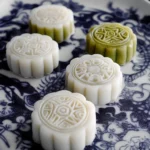
Snow Skin Mooncakes recipe
Ingredients
For the Snow Skin Dough:
-
- 100g (approx. 1 cup, but weigh for accuracy) Gao Fen (熟糯米粉 – cooked glutinous rice flour), plus extra for dusting
-
- 50g (approx. 1/3 cup) regular rice flour (not glutinous)
-
- 50g (approx. 1/3 cup + 1 tbsp) wheat starch (澄面 – Tang Mian Fen)
-
- 80g (approx. 2/3 cup) powdered sugar (icing sugar), sifted
-
- 40g (approx. 3 tbsp) solid vegetable shortening (e.g., Crisco), at room temperature
-
- 150–170ml (approx. 2/3 cup) cold milk (or cold water, pandan juice, or other fruit juice for color/flavor)
-
- Optional: A few drops of food coloring (gel-based preferred for intensity)
-
- Optional: 1/2 teaspoon flavour extract (e.g., vanilla, pandan, rosewater)
For the Filling (Example: Ready-Made Lotus Seed Paste & Salted Egg Yolks):
-
- 300–400g store-bought smooth lotus seed paste (or red bean paste, mung bean paste, etc.)
-
- 4–5 cooked salted egg yolks, halved if large (optional)
(Alternatively, you can make your own custard filling, matcha filling, etc. The total weight of filling needed will depend on your chosen skin-to-filling ratio and mooncake size.)
- 4–5 cooked salted egg yolks, halved if large (optional)
Instructions
(If using store-bought paste and optional salted egg yolks):
-
- Portion the Filling: Decide on the weight of your filling per mooncake. For example, if using a 50g mold, you might use 25-30g of filling. If using a 75g mold, perhaps 40-45g of filling.
-
- Divide the lotus seed paste (or other paste) into equal portions according to your chosen weight. Roll each portion into a smooth ball.
-
- Add Salted Egg Yolk (Optional): If using salted egg yolks, flatten a ball of paste, place half a yolk (or a whole small one) in the center, and carefully wrap the paste around the yolk, ensuring it’s fully enclosed. Roll into a smooth ball again.
-
- Place the filling balls on a plate, cover with cling film, and chill in the refrigerator for at least 30 minutes to firm up. This makes them easier to wrap with the snow skin.
(If making a homemade filling like custard, prepare it according to its specific recipe, cool it completely, and then portion and chill as above.)
Part 2: Prepare the Snow Skin Dough
-
- Sift Dry Ingredients: In a large mixing bowl, sift together the Gao Fen (cooked glutinous rice flour), regular rice flour, wheat starch, and powdered sugar. Whisk to combine.
-
- Add Shortening: Add the room temperature shortening to the dry ingredients. Using your fingertips, rub the shortening into the flour mixture until it resembles fine breadcrumbs.
-
- Add Liquid and Flavoring: If using food coloring or flavor extract, mix it into your cold milk (or other liquid) first. Gradually pour the cold liquid into the flour mixture, mixing with a spatula or your hand until a soft, shaggy dough begins to form. Start with 150ml and add a little more only if needed; the dough should be soft but not overly sticky.
-
- Knead Briefly: Turn the dough out onto a lightly floured (with Gao Fen) surface or a non-stick silicone mat. Knead it very gently for just 1-2 minutes until it comes together into a smooth ball. Do NOT over-knead, as this can make the skin tough. The dough should be soft, pliable, and slightly elastic.
-
- Divide and Color (Optional): If you want to make mooncakes of different colors, divide the dough into portions and knead a few drops of gel food coloring into each portion until evenly colored.
-
- Chill the Dough: Wrap the dough ball (or colored portions) tightly in cling film. Refrigerate for at least 30-60 minutes to allow it to rest and firm up slightly. This makes it less sticky and easier to handle.
Part 3: Assemble and Mold the Mooncakes
-
- Portion the Snow Skin: Remove the chilled snow skin dough from the refrigerator. Decide on the weight of your skin per mooncake. For example, for a 50g mold, you might use 20-25g of skin. For a 75g mold, perhaps 30-35g of skin. Use a kitchen scale to divide the dough into equal portions. Roll each portion into a smooth ball. Keep the dough balls covered with cling film to prevent them from drying out.
-
- Prepare Your Workspace: Lightly dust your work surface, your hands, and the inside of your mooncake mold with Gao Fen. Tap out any excess from the mold.
-
- Wrap the Filling:
-
- Take one ball of snow skin dough. Flatten it into a thin disc using your palm or a small rolling pin. Aim for the edges to be slightly thinner than the center. The disc should be large enough to encase the filling ball.
-
- Place a chilled filling ball in the center of the snow skin disc.
-
- Carefully bring the edges of the skin up and around the filling, pinching them together to seal tightly. Ensure there are no air pockets trapped inside.
-
- Gently roll the wrapped ball between your palms to make it smooth and round.
-
- Wrap the Filling:
-
- Dust and Mold:
-
- Lightly dust the surface of the wrapped ball with a little more Gao Fen.
-
- Place the ball, seam-side down if noticeable, into the prepared mooncake mold.
-
- Place the mold flat on your work surface. Press down firmly and evenly on the plunger for about 5-10 seconds to imprint the pattern.
-
- Carefully lift the mold and gently push the plunger to eject the mooncake onto your work surface or a clean plate. If it sticks, you may need to dust the mold or the dough ball a bit more.
-
- Dust and Mold:
-
- Repeat: Continue with the remaining skin and filling portions. If the dough becomes too soft or sticky while working, chill it briefly. If the mold starts to accumulate too much flour, clean it out.
-
- Chill Before Serving: Place the finished snow skin mooncakes on a tray, cover them lightly with cling film (try not to let the wrap touch the delicate pattern), and refrigerate for at least 1-2 hours before serving. This allows them to firm up and the flavours to meld. They are best served chilled.
Nutrition
- Serving Size: one normal portion
- Calories: 200-300