
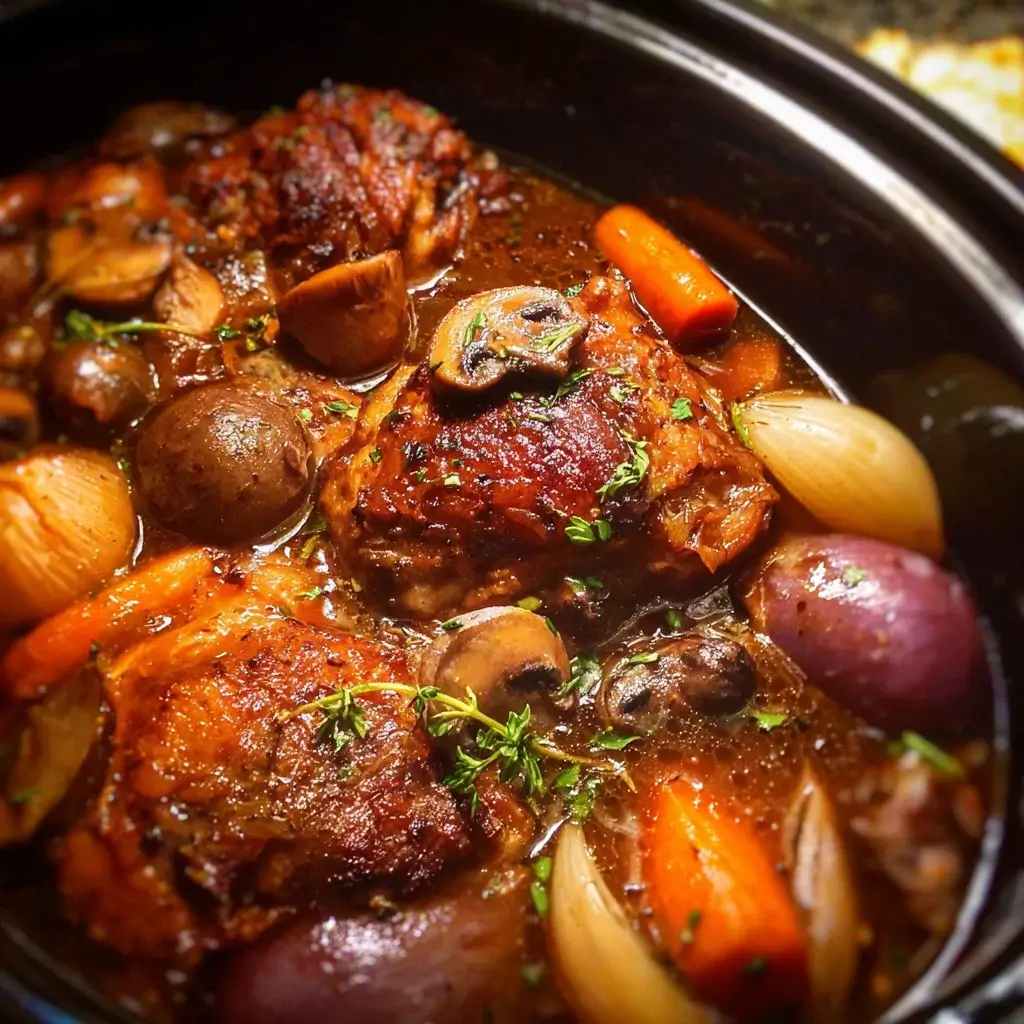

There’s a certain magic that happens when you let a dish simmer away for hours, filling your home with an aroma that promises something truly special. For years, I was intimidated by the thought of making Coq au Vin. The name itself sounded so classically French, so complex, that I assumed it was best left to restaurant chefs. But then I discovered the transformative power of my slow cooker. My first attempt at this Slow Cooker Coq au Vin recipe was a revelation. I prepped the ingredients on a lazy Sunday morning, seared the chicken to a perfect golden-brown, and then entrusted everything to the gentle, steady heat of my crock pot. Hours later, my family was drawn to the kitchen, not by me calling them for dinner, but by the deep, intoxicating aroma of red wine, bacon, and herbs that had taken over the house. The result was nothing short of spectacular. The chicken was so tender it practically melted off the bone, and the sauce was a velvety, wine-infused dream. It tasted like a dish that required days of effort, yet my active time was minimal. It has since become our go-to for cozy family dinners, special occasions, and any time we crave a comforting, elegant meal without the fuss. This recipe proves that you don’t need to be a French chef to create a masterpiece; sometimes, all you need is a little patience and a great slow cooker.
The Ultimate Slow Cooker Coq Au Vin: Ingredients You’ll Need
The beauty of Coq au Vin lies in its harmonious blend of simple, yet profound flavors. Each ingredient plays a crucial role in building the rich, layered taste that defines this classic stew. Here’s a detailed look at what you’ll need and why it matters.
- Chicken: 3 to 4 pounds of bone-in, skin-on chicken pieces. Chicken thighs are the absolute best choice for this recipe. Their higher fat content ensures they remain succulent and flavorful during the long, slow cooking process, preventing them from drying out. You can also use a mix of thighs and drumsticks. While chicken breasts can be used, they are much leaner and have a higher tendency to become tough; if you use them, consider adding them in the last 1-2 hours of cooking.
- Bacon or Lardons: 6 ounces of thick-cut bacon or pancetta, diced into small pieces (lardons). This is the foundational flavor of your stew. As the bacon renders, its salty, smoky fat creates the perfect medium for searing the chicken and sautéing the vegetables, infusing the entire dish with a savory depth from the very beginning.
- Red Wine: 1 bottle (750 ml) of dry red wine. This is the heart and soul of Coq au Vin, which literally translates to “rooster in wine.” A dry, medium-bodied red is ideal. Traditionally, a French Burgundy (made from Pinot Noir grapes) is used. However, any good quality, drinkable Pinot Noir, Merlot, or a Côtes du Rhône will work beautifully. A key rule of thumb: if you wouldn’t enjoy drinking it, don’t cook with it. The alcohol will cook off, but the flavor of the wine will concentrate and define the sauce.
- Brandy or Cognac: ¼ cup. This is an optional but highly recommended step for achieving a truly authentic and complex flavor profile. The brandy is used to deglaze the pan after searing, adding a subtle sweetness and a remarkable depth that sets a superior Coq au Vin apart.
- Mushrooms: 1 pound of cremini (baby bella) mushrooms, cleaned and halved or quartered if large. Cremini mushrooms have a deeper, earthier flavor than white button mushrooms, which stands up well to the robust sauce. They are added near the end of cooking to ensure they retain a pleasant, meaty texture rather than becoming mushy.
- Pearl Onions: 1 cup of frozen or fresh pearl onions. These small, sweet onions are a classic component. They become wonderfully tender and absorb the flavors of the wine sauce. If you can’t find them, you can substitute with one large yellow onion, roughly chopped, but the pearl onions add a traditional aesthetic and texture.
- Carrots: 2 medium carrots, peeled and sliced into ½-inch thick rounds. Carrots lend a subtle sweetness that balances the acidity of the wine and the saltiness of the bacon.
- Celery: 2 celery stalks, sliced into ½-inch pieces. Celery adds a fresh, aromatic base note to the stew’s flavor profile.
- Garlic: 4 to 6 cloves, minced. Don’t be shy with the garlic. It provides a pungent, aromatic kick that melds beautifully with the other ingredients.
- Chicken Broth: 1 cup of low-sodium chicken broth or stock. The broth helps to balance the intensity of the wine, adding more savory liquid to the sauce without diluting the core flavors. Using low-sodium allows you to control the final saltiness of the dish.
- Tomato Paste: 2 tablespoons. Tomato paste is a powerhouse of umami. It adds a rich color, a touch of sweetness, and a savory depth that helps to thicken and round out the sauce.
- Fresh Herbs: 4 sprigs of fresh thyme and 2 bay leaves. These herbs form a classic “bouquet garni.” They slowly release their woodsy, earthy aromas into the stew as it cooks. You can tie them together with kitchen twine for easy removal later.
- All-Purpose Flour: ¼ cup. This is used to dredge the chicken before searing. It helps create a beautiful brown crust and acts as the initial thickener for the sauce.
- Butter and Flour (for Beurre Manié): 2 tablespoons of unsalted butter, softened to room temperature, and 2 tablespoons of all-purpose flour. A “beurre manié” (French for “kneaded butter”) is a simple paste of equal parts soft butter and flour. It’s a classic French technique used at the end of cooking to thicken the sauce to a perfect, velvety consistency without creating lumps.
- Salt and Black Pepper: To taste. For seasoning the chicken and adjusting the final sauce.
- Fresh Parsley: ¼ cup, chopped, for garnish. A sprinkle of fresh parsley at the end adds a burst of color and a clean, fresh flavor that brightens up the rich, slow-cooked stew.
Step-by-Step Instructions for Perfect Crock Pot Coq au Vin
Follow these detailed steps to build layers of flavor, ensuring your slow-cooked stew is as rich and delicious as its traditionally prepared counterpart. The initial work on the stovetop is essential and should not be skipped.
Phase 1: Building the Flavor Foundation (Stovetop)
- Prepare the Chicken: Pat the chicken pieces completely dry with paper towels. This is a critical step for achieving a proper sear and crispy skin. In a shallow dish or a large bowl, combine the ¼ cup of flour with a generous amount of salt and freshly ground black pepper. Dredge each piece of chicken in the flour mixture, shaking off any excess. Set aside.
- Render the Bacon: In a large, heavy-bottomed skillet or Dutch oven, cook the diced bacon over medium heat until it is crisp and the fat has rendered, about 8-10 minutes. Using a slotted spoon, remove the crispy bacon bits from the skillet and set them aside on a plate. Do not discard the rendered bacon fat in the pan—this is liquid gold for flavor.
- Sear the Chicken: Increase the heat to medium-high. Working in batches to avoid overcrowding the pan, place the flour-dredged chicken pieces skin-side down in the hot bacon fat. Sear for 4-5 minutes per side, until a deep, golden-brown crust has formed. The chicken does not need to be cooked through at this point. The goal is to develop flavor through the Maillard reaction. As each batch is seared, transfer the chicken to the basin of your slow cooker (a 6-quart or larger model is recommended).
- Sauté the Aromatics: Reduce the heat to medium. If needed, pour off all but about 2 tablespoons of fat from the skillet. Add the sliced carrots and celery to the pan and cook, stirring occasionally, until they begin to soften, about 5-7 minutes. Add the minced garlic and cook for another minute until fragrant, being careful not to let it burn.
Phase 2: Deglazing and Creating the Sauce
- Deglaze with Brandy (Optional): Carefully pour the ¼ cup of brandy or cognac into the hot skillet. Use a wooden spoon or spatula to scrape up all the browned bits (the “fond”) from the bottom of the pan. This process, called deglazing, unlocks an immense amount of flavor. Let the brandy bubble and reduce for about a minute.
- Add Wine and Other Liquids: Pour the entire bottle of red wine into the skillet, continuing to scrape the bottom. Bring the mixture to a simmer. Stir in the tomato paste until it dissolves, then add the chicken broth, pearl onions, bay leaves, and fresh thyme sprigs. Bring the sauce back to a gentle simmer.
Phase 3: The Slow Cook
- Combine and Cook: Carefully pour the hot wine and vegetable mixture from the skillet over the chicken in the slow cooker. Give it a gentle stir to ensure everything is well-combined. Secure the lid on the slow cooker.
- Set the Timer: Cook on the LOW setting for 6 to 8 hours or on the HIGH setting for 3 to 4 hours. The low and slow method is highly recommended as it results in more tender chicken and a more developed flavor profile.
Phase 4: The Finishing Touches
- Cook the Mushrooms: About 30-40 minutes before the cooking time is complete, add the prepared mushrooms to the slow cooker. Stir them gently into the sauce. This timing ensures they cook through and absorb the flavor of the stew without becoming overly soft or mushy.
- Thicken the Sauce (Beurre Manié): In a small bowl, use a fork to mash together the 2 tablespoons of softened butter and 2 tablespoons of flour until a smooth, thick paste forms. This is your beurre manié. Stir this paste, one teaspoon at a time, into the simmering liquid in the slow cooker. The sauce will begin to thicken and take on a beautiful, glossy sheen. Continue adding the paste until your desired consistency is reached. Allow the sauce to simmer for another 15-20 minutes after adding the thickener.
- Final Seasoning and Serving: Remove the bay leaves and thyme sprigs. Stir in the reserved crispy bacon bits you set aside earlier. Taste the sauce and adjust the seasoning with additional salt and pepper if needed. Garnish generously with freshly chopped parsley before serving.
Nutrition Facts
- Servings: 6-8 servings
- Calories per serving: Approximately 550-650 kcal
Disclaimer: The nutritional information provided is an estimate and can vary based on the specific ingredients used, such as the cut of chicken, the type of wine, and the amount of bacon fat retained.
Preparation and Cooking Time
- Preparation Time: 25 minutes (chopping vegetables, searing chicken)
- Cooking Time: 4 to 8 hours (in the slow cooker)
- Total Time: 4 hours 25 minutes to 8 hours 25 minutes
How to Serve Your Masterpiece: Classic and Modern Pairings
Serving Coq au Vin is all about providing the perfect canvas to soak up every last drop of its incredible sauce. Here are some classic and creative ways to present your dish:
- The Foundation (Starchy Bases):
- Creamy Mashed Potatoes: This is the quintessential pairing. The fluffy, buttery potatoes are the perfect vessel for the rich, wine-infused gravy.
- Crusty Bread: A rustic baguette or a crusty sourdough loaf is non-negotiable. Use it for dipping, mopping, and ensuring no sauce is left behind.
- Wide Egg Noodles: Buttered egg noodles provide a wonderful texture and their wide shape captures the sauce beautifully.
- Creamy Polenta: A fantastic gluten-free alternative, soft and creamy polenta provides a comforting and delicious bed for the stew.
- Roasted Potatoes: Small, crispy roasted potatoes tossed with garlic and rosemary add another layer of savory flavor.
- Vegetable Sides:
- Simple Green Salad: A lightly dressed salad with a classic vinaigrette provides a fresh, acidic contrast that cuts through the richness of the stew.
- Haricots Verts: Slender French green beans, blanched and tossed with a little butter and toasted almonds, add a crisp, green element to the plate.
- Roasted Asparagus or Broccoli: A simple side of roasted vegetables adds color and nutrition.
- Garnishes and Finishes:
- Fresh Parsley: Always finish with a sprinkle of chopped fresh parsley for a pop of color and freshness.
- Extra Crispy Bacon: Garnish with the bacon bits you reserved for an extra crunch.
- Sautéed Mushrooms: For true mushroom lovers, you can sauté some extra mushrooms in butter and garlic to pile on top.
- Wine Pairing:
- Serve the Coq au Vin with a glass of the same type of red wine you used in the recipe, such as a Pinot Noir or Merlot. This creates a seamless and harmonious dining experience.
Pro Tips for an Unforgettable Coq au Vin
- Don’t Ever Skip the Sear: It might be tempting to dump everything into the slow cooker to save time, but this is the most critical step for flavor development. Searing the chicken creates the Maillard reaction, resulting in a deep, complex, and savory crust that raw chicken will never achieve. Similarly, sautéing the aromatics and deglazing the pan builds the foundational layers of flavor that make the sauce so rich.
- Make It a Day Ahead: Like many stews, Coq au Vin is one of those magical dishes that tastes even better the next day. Preparing it a day in advance allows the flavors to meld, deepen, and mature. Simply cool it completely, store it in the refrigerator, and then gently reheat it on the stovetop or in the slow cooker.
- Master the Beurre Manié: While a cornstarch slurry can work in a pinch, the beurre manié (kneaded butter and flour) is the superior method for thickening this sauce. The fat from the butter coats the flour starches, allowing them to disperse evenly in the hot liquid without clumping. It also adds a final touch of richness and a glossy, velvety finish to the sauce that is simply unparalleled.
- Choose Your Chicken Wisely: For the best results, always use bone-in, skin-on chicken thighs. The bone imparts a deeper flavor to the sauce, and the fat and collagen in the thigh meat keep it incredibly moist and tender over the long cooking time. The skin, even if you remove it before serving, adds crucial flavor during the searing process.
- Finish with Freshness: The long, slow cooking process creates deep, mellow flavors. To balance this richness and bring the dish to life, a final burst of freshness is key. A generous handful of chopped fresh parsley stirred in or sprinkled over the top just before serving cuts through the richness and adds a vibrant, clean note that elevates the entire dish.
Frequently Asked Questions About Slow Cooker Coq au Vin
1. Can I use chicken breasts instead of thighs?
Yes, you can use boneless, skinless chicken breasts, but you’ll need to make some adjustments. Chicken breasts are much leaner and can dry out easily in a slow cooker. It’s best to sear them as instructed but add them to the slow cooker only for the last 1.5 to 2 hours of cooking on LOW. This will ensure they are cooked through but still tender.
2. Can I make this recipe without alcohol?
While the wine is a central component of Coq au Vin’s flavor, you can make a non-alcoholic version. Replace the red wine with an equal amount of high-quality, low-sodium chicken or beef broth. To mimic the acidity and depth of the wine, add 2-3 tablespoons of red wine vinegar or a splash of balsamic vinegar along with the broth. Omit the brandy. The final dish will be a delicious chicken stew, though it will lack the characteristic flavor of classic Coq au Vin.
3. How do I properly store and reheat leftovers?
Leftover Coq au Vin is fantastic! Allow the stew to cool completely to room temperature, then transfer it to an airtight container. It can be stored in the refrigerator for up to 4 days. To reheat, gently warm it in a saucepan over medium-low heat on the stovetop, stirring occasionally until heated through. You can also reheat it in the microwave in individual portions.
4. Is Coq au Vin freezer-friendly?
Yes, Coq au Vin freezes very well, making it a great make-ahead meal. Cool the stew completely, then place it in a freezer-safe, airtight container or a heavy-duty freezer bag. It can be frozen for up to 3 months. To serve, thaw it overnight in the refrigerator and then reheat gently on the stovetop as described above. The texture of the chicken and sauce holds up beautifully.
5. My sauce is too thin. What did I do wrong and how can I fix it?
A thin sauce can happen for a few reasons, such as the chicken releasing a lot of water. Don’t worry, it’s an easy fix! The best method is the beurre manié described in the recipe. If you’ve already used it all, you can make a bit more. Alternatively, you can create a cornstarch slurry. In a small bowl, whisk together 1 tablespoon of cornstarch with 2 tablespoons of cold water until smooth. Stir this slurry into the simmering sauce in the slow cooker and let it cook for a few more minutes until it has thickened to your liking.
Slow Cooker Coq Au Vin recipe
Ingredients
-
Chicken: 3 to 4 pounds of bone-in, skin-on chicken pieces. Chicken thighs are the absolute best choice for this recipe. Their higher fat content ensures they remain succulent and flavorful during the long, slow cooking process, preventing them from drying out. You can also use a mix of thighs and drumsticks. While chicken breasts can be used, they are much leaner and have a higher tendency to become tough; if you use them, consider adding them in the last 1-2 hours of cooking.
-
Bacon or Lardons: 6 ounces of thick-cut bacon or pancetta, diced into small pieces (lardons). This is the foundational flavor of your stew. As the bacon renders, its salty, smoky fat creates the perfect medium for searing the chicken and sautéing the vegetables, infusing the entire dish with a savory depth from the very beginning.
-
Red Wine: 1 bottle (750 ml) of dry red wine. This is the heart and soul of Coq au Vin, which literally translates to “rooster in wine.” A dry, medium-bodied red is ideal. Traditionally, a French Burgundy (made from Pinot Noir grapes) is used. However, any good quality, drinkable Pinot Noir, Merlot, or a Côtes du Rhône will work beautifully. A key rule of thumb: if you wouldn’t enjoy drinking it, don’t cook with it. The alcohol will cook off, but the flavor of the wine will concentrate and define the sauce.
-
Brandy or Cognac: ¼ cup. This is an optional but highly recommended step for achieving a truly authentic and complex flavor profile. The brandy is used to deglaze the pan after searing, adding a subtle sweetness and a remarkable depth that sets a superior Coq au Vin apart.
-
Mushrooms: 1 pound of cremini (baby bella) mushrooms, cleaned and halved or quartered if large. Cremini mushrooms have a deeper, earthier flavor than white button mushrooms, which stands up well to the robust sauce. They are added near the end of cooking to ensure they retain a pleasant, meaty texture rather than becoming mushy.
-
Pearl Onions: 1 cup of frozen or fresh pearl onions. These small, sweet onions are a classic component. They become wonderfully tender and absorb the flavors of the wine sauce. If you can’t find them, you can substitute with one large yellow onion, roughly chopped, but the pearl onions add a traditional aesthetic and texture.
-
Carrots: 2 medium carrots, peeled and sliced into ½-inch thick rounds. Carrots lend a subtle sweetness that balances the acidity of the wine and the saltiness of the bacon.
-
Celery: 2 celery stalks, sliced into ½-inch pieces. Celery adds a fresh, aromatic base note to the stew’s flavor profile.
-
Garlic: 4 to 6 cloves, minced. Don’t be shy with the garlic. It provides a pungent, aromatic kick that melds beautifully with the other ingredients.
-
Chicken Broth: 1 cup of low-sodium chicken broth or stock. The broth helps to balance the intensity of the wine, adding more savory liquid to the sauce without diluting the core flavors. Using low-sodium allows you to control the final saltiness of the dish.
-
Tomato Paste: 2 tablespoons. Tomato paste is a powerhouse of umami. It adds a rich color, a touch of sweetness, and a savory depth that helps to thicken and round out the sauce.
-
Fresh Herbs: 4 sprigs of fresh thyme and 2 bay leaves. These herbs form a classic “bouquet garni.” They slowly release their woodsy, earthy aromas into the stew as it cooks. You can tie them together with kitchen twine for easy removal later.
-
All-Purpose Flour: ¼ cup. This is used to dredge the chicken before searing. It helps create a beautiful brown crust and acts as the initial thickener for the sauce.
-
Butter and Flour (for Beurre Manié): 2 tablespoons of unsalted butter, softened to room temperature, and 2 tablespoons of all-purpose flour. A “beurre manié” (French for “kneaded butter”) is a simple paste of equal parts soft butter and flour. It’s a classic French technique used at the end of cooking to thicken the sauce to a perfect, velvety consistency without creating lumps.
-
Salt and Black Pepper: To taste. For seasoning the chicken and adjusting the final sauce.
-
Fresh Parsley: ¼ cup, chopped, for garnish. A sprinkle of fresh parsley at the end adds a burst of color and a clean, fresh flavor that brightens up the rich, slow-cooked stew.
Instructions
Phase 1: Building the Flavor Foundation (Stovetop)
-
Prepare the Chicken: Pat the chicken pieces completely dry with paper towels. This is a critical step for achieving a proper sear and crispy skin. In a shallow dish or a large bowl, combine the ¼ cup of flour with a generous amount of salt and freshly ground black pepper. Dredge each piece of chicken in the flour mixture, shaking off any excess. Set aside.
-
Render the Bacon: In a large, heavy-bottomed skillet or Dutch oven, cook the diced bacon over medium heat until it is crisp and the fat has rendered, about 8-10 minutes. Using a slotted spoon, remove the crispy bacon bits from the skillet and set them aside on a plate. Do not discard the rendered bacon fat in the pan—this is liquid gold for flavor.
-
Sear the Chicken: Increase the heat to medium-high. Working in batches to avoid overcrowding the pan, place the flour-dredged chicken pieces skin-side down in the hot bacon fat. Sear for 4-5 minutes per side, until a deep, golden-brown crust has formed. The chicken does not need to be cooked through at this point. The goal is to develop flavor through the Maillard reaction. As each batch is seared, transfer the chicken to the basin of your slow cooker (a 6-quart or larger model is recommended).
-
Sauté the Aromatics: Reduce the heat to medium. If needed, pour off all but about 2 tablespoons of fat from the skillet. Add the sliced carrots and celery to the pan and cook, stirring occasionally, until they begin to soften, about 5-7 minutes. Add the minced garlic and cook for another minute until fragrant, being careful not to let it burn.
Phase 2: Deglazing and Creating the Sauce
-
Deglaze with Brandy (Optional): Carefully pour the ¼ cup of brandy or cognac into the hot skillet. Use a wooden spoon or spatula to scrape up all the browned bits (the “fond”) from the bottom of the pan. This process, called deglazing, unlocks an immense amount of flavor. Let the brandy bubble and reduce for about a minute.
-
Add Wine and Other Liquids: Pour the entire bottle of red wine into the skillet, continuing to scrape the bottom. Bring the mixture to a simmer. Stir in the tomato paste until it dissolves, then add the chicken broth, pearl onions, bay leaves, and fresh thyme sprigs. Bring the sauce back to a gentle simmer.
Phase 3: The Slow Cook
-
Combine and Cook: Carefully pour the hot wine and vegetable mixture from the skillet over the chicken in the slow cooker. Give it a gentle stir to ensure everything is well-combined. Secure the lid on the slow cooker.
-
Set the Timer: Cook on the LOW setting for 6 to 8 hours or on the HIGH setting for 3 to 4 hours. The low and slow method is highly recommended as it results in more tender chicken and a more developed flavor profile.
Phase 4: The Finishing Touches
-
Cook the Mushrooms: About 30-40 minutes before the cooking time is complete, add the prepared mushrooms to the slow cooker. Stir them gently into the sauce. This timing ensures they cook through and absorb the flavor of the stew without becoming overly soft or mushy.
-
Thicken the Sauce (Beurre Manié): In a small bowl, use a fork to mash together the 2 tablespoons of softened butter and 2 tablespoons of flour until a smooth, thick paste forms. This is your beurre manié. Stir this paste, one teaspoon at a time, into the simmering liquid in the slow cooker. The sauce will begin to thicken and take on a beautiful, glossy sheen. Continue adding the paste until your desired consistency is reached. Allow the sauce to simmer for another 15-20 minutes after adding the thickener.
-
Final Seasoning and Serving: Remove the bay leaves and thyme sprigs. Stir in the reserved crispy bacon bits you set aside earlier. Taste the sauce and adjust the seasoning with additional salt and pepper if needed. Garnish generously with freshly chopped parsley before serving.
Nutrition
- Serving Size: one normal portion
- Calories: 550-650 kcal