
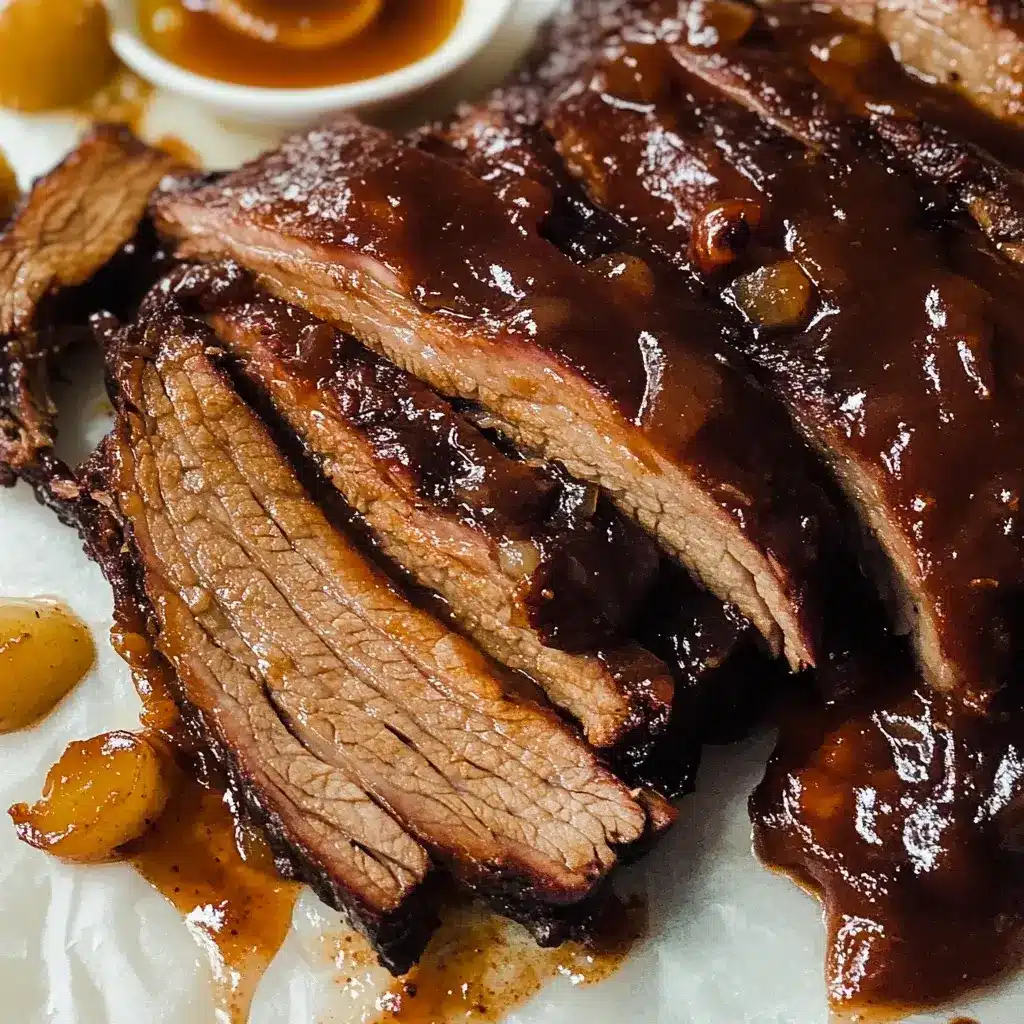

There are few things more comforting and satisfying than truly tender, melt-in-your-mouth BBQ beef brisket. For years, I associated brisket with long hours tending a smoker, something reserved for weekend warriors with serious equipment. Then, I discovered the absolute magic of using a slow cooker. The first time I made BBQ brisket this way, I was honestly skeptical. Could a countertop appliance really replicate that deep flavour and fall-apart texture? The aroma filling my house after hours of slow cooking was the first clue – rich, beefy, and smoky-sweet. When I finally lifted the lid and gently prodded the meat with a fork, it practically disintegrated. Shredding it was effortless, and coating it in that tangy, slightly sweet BBQ sauce made from the cooking liquids? Pure bliss. We piled it high on soft buns with crisp coleslaw, and my family devoured it, declaring it the best brisket they’d ever had. It felt like I’d unlocked a cheat code for incredible BBQ, transforming a potentially intimidating cut of meat into an easy, mostly hands-off meal that tastes like it took way more effort. This Slow Cooker BBQ Beef Brisket recipe has become a go-to for gatherings, game days, or just when we crave serious comfort food without the fuss.
What is Beef Brisket and Why is the Slow Cooker its Best Friend?
Before we dive into the recipe, let’s talk about the star: beef brisket. Brisket comes from the lower chest or breast section of the cow. It’s a muscle that gets a lot of work, which means it’s naturally tough and full of connective tissue (primarily collagen). This might sound unappealing, but it’s precisely this characteristic that makes brisket perfect for low-and-slow cooking methods.
Cooking brisket quickly at high temperatures results in tough, chewy meat. However, when cooked slowly at a low temperature for an extended period, magical things happen:
- Collagen Breakdown: The abundant collagen, which makes the raw meat tough, slowly melts down into rich, unctuous gelatin. This gelatin coats the muscle fibers, creating an incredibly moist, tender, and flavourful result.
- Fat Rendering: Brisket typically has a generous fat cap. During slow cooking, this fat slowly renders (melts), basting the meat from the outside and adding immense flavour and moisture.
- Muscle Fiber Tenderizing: The long cooking time gently breaks down the tough muscle fibers, leading to that desirable “fall-apart” or “melt-in-your-mouth” texture.
Why the Slow Cooker is Ideal:
The slow cooker provides the perfect environment for brisket transformation:
- Consistent Low Heat: It maintains a steady, low temperature over many hours, ideal for breaking down collagen and tenderizing the meat without drying it out.
- Moist Cooking Environment: The covered pot traps steam and moisture, preventing the brisket from drying out during the long cook time – crucial for a cut like brisket.
- Convenience: It’s largely hands-off. Once prepped and in the cooker, you can essentially “set it and forget it” for several hours, freeing up your time.
- Flavour Infusion: Cooking the brisket directly in broth, aromatics, and its own juices allows it to absorb incredible flavour throughout the process.
While smokers impart a distinct smoky flavour, the slow cooker offers unparalleled ease and consistency for achieving incredibly tender BBQ beef brisket right in your kitchen.
Choosing Your Weapon: Selecting the Right Brisket Cut
Navigating the butcher counter for brisket can be confusing. Brisket is typically sold as a whole packer (containing two main muscles) or as separate cuts:
- Whole Packer Brisket: This is the entire brisket, usually weighing 10-18 pounds or more. It consists of two distinct muscles separated by a layer of fat: the “flat” and the “point.” This is often preferred for smoking but is usually too large for most standard slow cookers.
- Brisket Flat (First Cut): This is the leaner, thinner, more uniformly shaped part of the brisket. It’s easier to slice evenly and is what you’ll most commonly find packaged as “beef brisket” in grocery stores, typically weighing 3-7 pounds. This is generally the best choice for slow cookers due to its manageable size and shape. Because it’s leaner, the moist heat of the slow cooker is particularly beneficial.
- Brisket Point (Second Cut/Deckle): This is the thicker, fattier, more marbled end of the brisket. It has more connective tissue and fat, making it incredibly flavourful and often preferred for shredding (like burnt ends). It can be harder to find sold separately.
What to Look For:
- Size: Choose a flat cut that fits comfortably in your slow cooker, typically between 3-5 pounds.
- Fat Cap: Look for a cut with a decent fat cap (about 1/4 to 1/2 inch thick) on one side. Don’t shy away from the fat – it equals flavour and moisture! You can trim excess, but leave a good layer.
- Grade: If possible, opt for USDA Choice or Prime grades. These have better marbling (intramuscular fat), which contributes to tenderness and flavour. Select grade will work but might be slightly less tender.
- Color: Look for fresh, bright red meat.
For this slow cooker recipe, a 3-5 pound brisket flat is the ideal choice.
The Flavor Foundation: Ingredients for Melt-in-Your-Mouth Slow Cooker BBQ Beef Brisket
This recipe focuses on building layers of flavour – a savoury rub, aromatic base, and tangy BBQ finish.
- Beef Brisket: 1 flat cut beef brisket (approx. 3-4 lbs / 1.4-1.8 kg), trimmed of excess fat, leaving about 1/4-inch fat cap.
- For the Rub:
- 2 tablespoons smoked paprika (provides colour and smoky flavour)
- 1 tablespoon packed brown sugar (light or dark)
- 1 tablespoon kosher salt (or 2 teaspoons table salt)
- 1 tablespoon garlic powder
- 1 tablespoon onion powder
- 2 teaspoons black pepper (freshly ground preferred)
- 1 teaspoon chili powder (optional, for a slight kick)
- 1/2 teaspoon cayenne pepper (optional, for more heat)
- For the Slow Cooker Base:
- 1 large yellow onion, thickly sliced
- 4-6 cloves garlic, smashed
- 1 cup beef broth (low sodium preferred)
- 2 tablespoons Worcestershire sauce
- 1 tablespoon liquid smoke (optional, but highly recommended for smoky flavour without a smoker)
- 1 tablespoon apple cider vinegar (helps tenderize and adds tang)
- For the BBQ Sauce Finish:
- 1.5 – 2 cups your favourite BBQ sauce (store-bought or homemade)
- Optional for Searing: 1-2 tablespoons vegetable or canola oil
Step-by-Step Guide: Cooking Brisket to Perfection in the Slow Cooker
Follow these steps meticulously for tender, flavourful results:
- Prepare the Brisket: Pat the brisket completely dry with paper towels. This helps the rub adhere better and promotes a better sear if you choose to do so. Trim any excessive hard fat patches, but leave a consistent 1/4-inch layer of the fat cap intact.
- Apply the Rub: In a small bowl, combine all the rub ingredients (smoked paprika, brown sugar, salt, garlic powder, onion powder, black pepper, chili powder, cayenne). Mix well. Generously rub the mixture all over the brisket, pressing it into the meat on all sides.
- Sear the Brisket (Highly Recommended): While optional, searing creates a flavourful crust (Maillard reaction) that adds depth. Heat the oil in a large heavy-bottomed skillet or Dutch oven over medium-high heat until shimmering. Carefully place the brisket in the hot pan (fat-cap side down first if applicable). Sear for 3-5 minutes per side until nicely browned. You may need to sear ends as well. Remove the brisket and set aside. If your slow cooker has a searing function, you can do this directly in the insert.
- Prepare the Slow Cooker: Scatter the thickly sliced onions and smashed garlic cloves across the bottom of your slow cooker insert. This creates a flavourful bed for the brisket and prevents it from sticking.
- Add Liquids: Pour the beef broth, Worcestershire sauce, liquid smoke (if using), and apple cider vinegar over the onions and garlic in the slow cooker.
- Place Brisket in Slow Cooker: Place the seared (or unseared) brisket into the slow cooker on top of the onions and garlic. Position it fat-side up. As the fat renders during cooking, it will baste the meat below, adding moisture and flavour.
- Cook Low and Slow: Secure the lid on the slow cooker. Cook on the LOW setting for 8 to 10 hours. Resist the urge to lift the lid frequently, as this releases heat and moisture, increasing cooking time. Cooking time will vary based on the size and thickness of your brisket and your specific slow cooker model. The goal is “fork-tender.”
- Check for Tenderness: After 8 hours, check the brisket’s tenderness. It should be easily pierced with a fork with little resistance, and potentially starting to fall apart when you try to lift it. If it still feels firm, continue cooking on LOW for another 1-2 hours, checking every 30-60 minutes. The target internal temperature for tender brisket is typically around 200-205°F (93-96°C), but tenderness (tested with a fork) is the ultimate indicator.
- Rest the Brisket: Once fork-tender, carefully remove the brisket from the slow cooker using large tongs or spatulas (it might be delicate) and transfer it to a large cutting board or rimmed baking sheet. Tent loosely with foil and let it rest for 15-20 minutes. Resting is crucial – it allows the juices to redistribute throughout the meat, ensuring it stays moist when sliced or shredded. Do not skip this step!
- Prepare the BBQ Sauce Base (Optional but Recommended): While the brisket rests, strain the cooking liquids from the slow cooker through a fine-mesh sieve into a saucepan or fat separator. Discard the solids (onions/garlic). Skim off as much fat as possible from the surface of the liquid (a fat separator works great here). You should have about 1-2 cups of flavourful cooking liquid (jus).
- Make the BBQ Sauce: Place the saucepan with the skimmed cooking liquid over medium heat. Bring it to a simmer. Whisk in your favourite BBQ sauce (1.5-2 cups, or to taste). Let it simmer gently for 5-10 minutes, allowing the flavours to meld and the sauce to thicken slightly. Taste and adjust seasoning if needed (maybe more BBQ sauce, a pinch of salt, or a dash of hot sauce).
- Slice or Shred the Brisket: After resting, decide how you want to serve the brisket.
- For Slicing: Identify the direction of the muscle fibers (the grain). Slice the brisket against the grain into 1/4 to 1/2-inch thick slices. Slicing against the grain shortens the muscle fibers, making the meat much more tender to chew.
- For Shredding: Use two forks to pull the meat apart into shreds. It should shred very easily if cooked properly. Discard any large remaining pieces of fat as you shred.
- Combine and Serve: Place the sliced or shredded brisket back into the slow cooker insert (emptied of liquids) or into a large bowl. Pour about half of the warm BBQ sauce mixture over the meat and toss gently to coat. Add more sauce as desired. Serve immediately.
The Soul of BBQ: The Essential BBQ Sauce Component
While the slow-cooked brisket itself is delicious, the BBQ sauce truly elevates it to classic BBQ status. You have options here:
- Store-Bought Convenience: Using your favourite bottled BBQ sauce is perfectly acceptable and saves time. Choose a flavour profile you enjoy – smoky, sweet, tangy, or spicy. Using 1.5-2 cups is a good starting point.
- Enhanced Store-Bought: Elevate a store-bought sauce by mixing it with the skimmed cooking liquids (jus) from the slow cooker, as described in the instructions (Step 11). This adds incredible beefy depth to the sauce. You can further customize it with a splash of vinegar, a pinch of spice, or a touch of molasses or honey.
- Homemade Sauce: If you’re feeling ambitious, you can make your own BBQ sauce from scratch. Many recipes start with a base of tomato paste or ketchup, vinegar (apple cider or white), sweeteners (brown sugar, molasses, honey), Worcestershire sauce, and various spices (mustard powder, paprika, garlic powder, onion powder, cayenne). Simmering the skimmed cooking liquids with these base ingredients can create a truly unique and flavourful sauce tailored perfectly to the brisket.
No matter which route you choose, incorporating those rich cooking liquids is highly recommended for the most flavourful outcome.
Nutritional Snapshot: Understanding Your Meal
Nutritional information for slow cooker brisket can vary significantly based on the brisket’s fat content, trimming, the amount and type of BBQ sauce used, and the serving size. These are estimates:
- Servings: This recipe typically yields 6-8 servings.
- Calories Per Serving (Estimated – 4-6 oz meat + sauce): Approximately 400-600 calories per serving. This can fluctuate widely. Leaner cuts and less sugary sauces will be on the lower end, while fattier cuts (especially point) and sweeter, thicker sauces will be higher.
Disclaimer: This is a rough estimate. For precise nutritional information, use an online calculator and input the exact ingredients, quantities, and brands you used. Brisket is rich in protein and iron but also contains saturated fat, primarily from the fat cap and marbling.
Time Investment: Planning Your Brisket Cook
While mostly hands-off, slow cooker brisket requires planning due to the long cooking time.
- Preparation Time: 20-30 minutes (Trimming, rubbing, searing (if done), preparing slow cooker base)
- Cook Time: 8-10 hours (on LOW)
- Rest Time: 15-20 minutes
- Total Time: Approximately 9 hours to 11 hours (mostly unattended)
This makes it perfect for starting in the morning for an evening meal or even cooking overnight for a lunchtime event.
The Grand Finale: Serving Suggestions for Your BBQ Brisket
Your tender, saucy brisket is ready! Here are some fantastic ways to serve it:
Classic Presentations:
- BBQ Brisket Sandwiches: Pile sliced or shredded brisket high on soft brioche buns, potato rolls, or sturdy white buns. Top with:
- Creamy Coleslaw (provides crunch and tang)
- Pickle Chips (dill or bread & butter)
- Thinly Sliced Red Onions or Pickled Onions
- Extra BBQ Sauce
- BBQ Brisket Plate: Serve generous portions of sliced or shredded brisket alongside classic BBQ sides:
- Macaroni and Cheese
- Cornbread or Corn Muffins
- Baked Beans
- Potato Salad
- Collard Greens or Green Beans
Creative Uses:
- Brisket Tacos: Serve shredded brisket in warm tortillas with pico de gallo, avocado or guacamole, cilantro, and a squeeze of lime.
- Brisket Nachos: Layer tortilla chips with shredded brisket, cheese sauce or shredded cheese, jalapeños, sour cream, and guacamole.
- Loaded Baked Potatoes: Top fluffy baked potatoes or sweet potatoes with shredded brisket, butter, sour cream, cheese, and chives.
- Brisket Quesadillas: Fill tortillas with shredded brisket and plenty of melted cheese (cheddar, Monterey Jack).
- Brisket Sliders: Use smaller buns for appetizer-sized portions, perfect for parties.
Pro Tips for Slow Cooker Brisket Success: Beyond the Basics
Achieve brisket perfection every time with these additional tips:
- Embrace the Fat Cap: Don’t trim all the fat off the brisket flat. Leaving a 1/4-inch layer adds immense flavour and moisture as it renders. Always place the brisket fat-side UP in the slow cooker.
- Don’t Skip the Sear (If Possible): Searing the brisket before slow cooking develops complex flavours (Maillard reaction) and a better texture on the crust. It’s an extra step, but worth it.
- Low and Slow is Non-Negotiable: Resist the temptation to cook brisket on the HIGH setting to save time. Brisket needs the long, slow cooking process on LOW to properly break down connective tissues and become tender. High heat will result in tougher meat.
- Rest is Best: Allowing the brisket to rest for 15-20 minutes after cooking is crucial. This lets the muscle fibers relax and reabsorb juices, preventing them from running out when you slice or shred, ensuring a moister final product.
- Slice Against the Grain: If slicing (rather than shredding), always identify the direction of the muscle fibers and slice perpendicular (across) them. This makes even perfectly cooked brisket much more tender to eat.
- Liquid Smoke Savvy: Use liquid smoke sparingly if you choose to include it. A little goes a long way in mimicking smoker flavour; too much can taste artificial.
- Deglaze for Depth: If you sear the brisket in a pan, don’t waste the browned bits (fond) left behind! After removing the brisket, pour a splash of the beef broth into the hot pan and scrape up the bits. Add this flavourful liquid to the slow cooker.
Frequently Asked Questions (FAQ) about Slow Cooker Brisket
Here are answers to common queries about making brisket in a slow cooker:
- Q: Should I use the brisket flat or point cut in the slow cooker?
- A: The flat cut is generally recommended for slow cookers as it’s leaner, more uniformly shaped, and fits better. Its leanness benefits greatly from the moist cooking environment. The point cut is much fattier and while delicious, can sometimes yield excessive fat in the confined space of a slow cooker, though it’s excellent for shredding.
- Q: Do I really need to cook it for 8-10 hours on Low? Can I use High?
- A: Yes, the long cooking time on LOW is essential for brisket’s toughness to break down into tenderness. Cooking on High (typically 4-5 hours) is generally not recommended for brisket as it doesn’t allow enough time for the collagen to fully render, often resulting in tougher, less satisfying meat compared to the low-and-slow method.
- Q: How do I know for sure when the brisket is done?
- A: The best indicator is tenderness. It should be “fork-tender,” meaning a fork can be easily inserted and twisted with little resistance. The meat might start to fall apart when prodded. While an internal temperature of around 200-205°F (93-96°C) is a good guideline, always trust the tenderness test over temperature alone for brisket.
- Q: My brisket came out dry. What did I do wrong?
- A: Dryness can result from several factors: using an extremely lean cut with insufficient fat, cooking it too long past the point of tenderness (though this is less common in a moist slow cooker environment than overcooking), not letting it rest properly before slicing/shredding, or potentially cooking on too high a heat setting. Ensure you have a decent fat cap, cook on low, test for fork-tenderness, and always rest the meat.
- Q: Can I prepare the brisket the night before?
- A: Absolutely! You can trim the brisket, apply the rub, and wrap it tightly in plastic wrap or place it in an airtight container in the refrigerator overnight. In the morning, you can proceed with searing (if desired) and placing it in the slow cooker. This allows the rub flavours to penetrate more deeply.
Troubleshooting Common Slow Cooker Brisket Issues
Sometimes things don’t go exactly as planned. Here’s how to tackle potential problems:
- Problem: Brisket is Tough
- Solution: It’s almost certainly undercooked. Toughness in brisket means the collagen hasn’t fully broken down. Continue cooking on LOW for another 1-2 hours, checking tenderness periodically until it yields easily to a fork. Don’t rush it! (Less likely, but possible: it was cooked too fast on High).
- Problem: Brisket Seems Dry (Despite Slow Cooking)
- Solution: Ensure you started with a cut with adequate fat cap (leave 1/4 inch). Double-check you rested the meat properly before cutting. If it’s already sliced/shredded and seems dry, toss it generously with the warm BBQ sauce mixture made from the cooking liquids – this will add significant moisture back.
- Problem: The Sauce/Juices are Too Greasy
- Solution: This happens, especially with fattier cuts. After removing the brisket, let the cooking liquids settle for a few minutes, then carefully skim off as much fat as possible from the surface using a spoon or a fat separator before making your BBQ sauce. Chilling the liquid briefly will cause the fat to solidify on top, making it very easy to remove.
- Problem: Bland Flavour
- Solution: Be generous with the rub! Ensure good coverage. Don’t skip the searing step, as it adds significant depth. Make sure your beef broth isn’t too weak. Taste the final BBQ sauce and adjust seasonings – it might need more salt, tang (vinegar), sweetness (brown sugar), or spice. Using the flavourful cooking liquids in the final sauce is key.
Life After Deliciousness: Storing and Reheating Leftover Brisket
Leftover BBQ brisket is fantastic! Store it properly to enjoy later:
- Refrigeration: Allow the brisket (preferably stored with some of its sauce/juices to keep it moist) to cool down slightly, then transfer it to an airtight container. Store in the refrigerator for up to 3-4 days.
- Freezing: For longer storage, place the cooled brisket (again, ideally with some sauce) in freezer-safe airtight containers or heavy-duty freezer bags, removing as much air as possible. Freeze for up to 2-3 months for best quality. Thaw overnight in the refrigerator before reheating.
Reheating Methods:
The goal is to reheat gently without drying out the meat:
- Oven (Recommended): Place brisket and sauce in an oven-safe dish, add a splash of beef broth or water if it looks dry, cover tightly with foil, and heat in a preheated 300°F (150°C) oven until warmed through (usually 20-30 minutes, depending on amount).
- Stovetop: Place brisket and sauce in a saucepan with a splash of broth or water. Cover and heat over low heat, stirring occasionally, until warmed through.
- Microwave: Reheat in short intervals on medium power, covered, stirring occasionally. Be cautious as microwaves can sometimes make meat rubbery if overheated. Add a splash of liquid if needed.
(Conclusion – No Heading)
Making truly exceptional BBQ beef brisket doesn’t require specialized equipment or expert-level skills, thanks to the humble slow cooker. This recipe transforms a tough cut of meat into something incredibly tender, juicy, and packed with flavour through the simple magic of low heat and time. From the savoury rub and aromatic cooking base to the final coating of tangy BBQ sauce made rich with the brisket’s own juices, every step builds towards a deeply satisfying meal. Whether piled onto sandwiches, served alongside classic sides, or used creatively in tacos and nachos, this Slow Cooker BBQ Beef Brisket is a guaranteed crowd-pleaser. It’s proof that incredible comfort food can be achieved with minimal fuss, filling your home with an irresistible aroma and your table with a dish that tastes like it took all day (even though you barely lifted a finger for most of it!). Give it a try – you might just find your new favourite way to enjoy brisket.
Print
Slow Cooker BBQ Beef Brisket recipe
Ingredients
-
- Beef Brisket: 1 flat cut beef brisket (approx. 3-4 lbs / 1.4-1.8 kg), trimmed of excess fat, leaving about 1/4-inch fat cap.
-
- For the Rub:
-
- 2 tablespoons smoked paprika (provides colour and smoky flavour)
-
- 1 tablespoon packed brown sugar (light or dark)
-
- 1 tablespoon kosher salt (or 2 teaspoons table salt)
-
- 1 tablespoon garlic powder
-
- 1 tablespoon onion powder
-
- 2 teaspoons black pepper (freshly ground preferred)
-
- 1 teaspoon chili powder (optional, for a slight kick)
-
- 1/2 teaspoon cayenne pepper (optional, for more heat)
-
- For the Rub:
-
- For the Slow Cooker Base:
-
- 1 large yellow onion, thickly sliced
-
- 4–6 cloves garlic, smashed
-
- 1 cup beef broth (low sodium preferred)
-
- 2 tablespoons Worcestershire sauce
-
- 1 tablespoon liquid smoke (optional, but highly recommended for smoky flavour without a smoker)
-
- 1 tablespoon apple cider vinegar (helps tenderize and adds tang)
-
- For the Slow Cooker Base:
-
- For the BBQ Sauce Finish:
-
- 1.5 – 2 cups your favourite BBQ sauce (store-bought or homemade)
-
- For the BBQ Sauce Finish:
-
- Optional for Searing: 1-2 tablespoons vegetable or canola oil
Instructions
-
- Prepare the Brisket: Pat the brisket completely dry with paper towels. This helps the rub adhere better and promotes a better sear if you choose to do so. Trim any excessive hard fat patches, but leave a consistent 1/4-inch layer of the fat cap intact.
-
- Apply the Rub: In a small bowl, combine all the rub ingredients (smoked paprika, brown sugar, salt, garlic powder, onion powder, black pepper, chili powder, cayenne). Mix well. Generously rub the mixture all over the brisket, pressing it into the meat on all sides.
-
- Sear the Brisket (Highly Recommended): While optional, searing creates a flavourful crust (Maillard reaction) that adds depth. Heat the oil in a large heavy-bottomed skillet or Dutch oven over medium-high heat until shimmering. Carefully place the brisket in the hot pan (fat-cap side down first if applicable). Sear for 3-5 minutes per side until nicely browned. You may need to sear ends as well. Remove the brisket and set aside. If your slow cooker has a searing function, you can do this directly in the insert.
-
- Prepare the Slow Cooker: Scatter the thickly sliced onions and smashed garlic cloves across the bottom of your slow cooker insert. This creates a flavourful bed for the brisket and prevents it from sticking.
-
- Add Liquids: Pour the beef broth, Worcestershire sauce, liquid smoke (if using), and apple cider vinegar over the onions and garlic in the slow cooker.
-
- Place Brisket in Slow Cooker: Place the seared (or unseared) brisket into the slow cooker on top of the onions and garlic. Position it fat-side up. As the fat renders during cooking, it will baste the meat below, adding moisture and flavour.
-
- Cook Low and Slow: Secure the lid on the slow cooker. Cook on the LOW setting for 8 to 10 hours. Resist the urge to lift the lid frequently, as this releases heat and moisture, increasing cooking time. Cooking time will vary based on the size and thickness of your brisket and your specific slow cooker model. The goal is “fork-tender.”
-
- Check for Tenderness: After 8 hours, check the brisket’s tenderness. It should be easily pierced with a fork with little resistance, and potentially starting to fall apart when you try to lift it. If it still feels firm, continue cooking on LOW for another 1-2 hours, checking every 30-60 minutes. The target internal temperature for tender brisket is typically around 200-205°F (93-96°C), but tenderness (tested with a fork) is the ultimate indicator.
-
- Rest the Brisket: Once fork-tender, carefully remove the brisket from the slow cooker using large tongs or spatulas (it might be delicate) and transfer it to a large cutting board or rimmed baking sheet. Tent loosely with foil and let it rest for 15-20 minutes. Resting is crucial – it allows the juices to redistribute throughout the meat, ensuring it stays moist when sliced or shredded. Do not skip this step!
-
- Prepare the BBQ Sauce Base (Optional but Recommended): While the brisket rests, strain the cooking liquids from the slow cooker through a fine-mesh sieve into a saucepan or fat separator. Discard the solids (onions/garlic). Skim off as much fat as possible from the surface of the liquid (a fat separator works great here). You should have about 1-2 cups of flavourful cooking liquid (jus).
-
- Make the BBQ Sauce: Place the saucepan with the skimmed cooking liquid over medium heat. Bring it to a simmer. Whisk in your favourite BBQ sauce (1.5-2 cups, or to taste). Let it simmer gently for 5-10 minutes, allowing the flavours to meld and the sauce to thicken slightly. Taste and adjust seasoning if needed (maybe more BBQ sauce, a pinch of salt, or a dash of hot sauce).
-
- Slice or Shred the Brisket: After resting, decide how you want to serve the brisket.
-
- For Slicing: Identify the direction of the muscle fibers (the grain). Slice the brisket against the grain into 1/4 to 1/2-inch thick slices. Slicing against the grain shortens the muscle fibers, making the meat much more tender to chew.
-
- For Shredding: Use two forks to pull the meat apart into shreds. It should shred very easily if cooked properly. Discard any large remaining pieces of fat as you shred.
-
- Slice or Shred the Brisket: After resting, decide how you want to serve the brisket.
-
- Combine and Serve: Place the sliced or shredded brisket back into the slow cooker insert (emptied of liquids) or into a large bowl. Pour about half of the warm BBQ sauce mixture over the meat and toss gently to coat. Add more sauce as desired. Serve immediately.
Nutrition
- Serving Size: one normal portion
- Calories: 400-600