


There are some dishes that just sing of freshness and vitality, and this Salmon and Beets with Yogurt Sauce over Watercress is definitely one of them. I first made this recipe on a whim, needing a quick yet impressive lunch for a friend who was stopping by. Honestly, I was a little skeptical about the beet and salmon combination at first, but the moment I tasted it, all doubts vanished. The earthy sweetness of the beets, the richness of the salmon, the peppery bite of watercress, and the cool tang of the yogurt sauce – it was a revelation! My friend was equally blown away, declaring it “restaurant-quality” and immediately asking for the recipe. Since then, it’s become a staple in my kitchen, perfect for a light lunch, a vibrant dinner starter, or even a healthy and satisfying main course. It’s a dish that’s both visually stunning and incredibly good for you, packed with nutrients and bursting with flavor. If you’re looking for a recipe that’s easy to make, incredibly delicious, and guaranteed to impress, look no further than this delightful combination of salmon, beets, yogurt, and watercress.
Ingredients: Freshness and Quality at the Heart of the Dish
The beauty of this Salmon and Beets with Yogurt Sauce over Watercress recipe lies in the simplicity and quality of its ingredients. Each element plays a crucial role in creating the final harmonious flavor profile. Let’s break down what you’ll need to bring this vibrant dish to life:
- For the Salmon:
- Salmon Fillets (4 x 6-ounce portions, skin on or off): The star of the show! Choose fresh, high-quality salmon fillets. Skin-on fillets will give you crispy skin if pan-frying or grilling, adding another textural dimension. Skinless fillets are equally delicious and slightly easier to manage. Look for wild-caught salmon for a richer flavor and often a more sustainable choice, but farmed salmon is also perfectly acceptable and readily available. Consider varieties like Sockeye, King, or Coho for their distinct flavors and textures. If using frozen salmon, ensure it’s fully thawed before cooking.
- Olive Oil (2 tablespoons): Essential for cooking the salmon and adding healthy fats. Extra virgin olive oil is preferred for its flavor and health benefits.
- Lemon (1, half for juice, half for wedges): Brightens the salmon and complements the earthy beets. Fresh lemon juice is key for the marinade and yogurt sauce, and lemon wedges add a final burst of acidity when serving.
- Fresh Dill (2 tablespoons, chopped): Pairs beautifully with both salmon and beets, adding a fresh, herbaceous note. Fresh dill is highly recommended for its delicate flavor, but in a pinch, you can use dried dill (about 1 teaspoon), though the flavor will be less pronounced.
- Salt and Black Pepper (to taste): Essential seasonings to enhance the natural flavors of the salmon. Use sea salt or kosher salt for best results. Freshly ground black pepper is always preferable for its bolder aroma and flavor.
- For the Beets:
- Beets (2 medium, about 1 pound, preferably red or golden): Beets provide earthy sweetness and vibrant color. You can use red beets for classic beet flavor and a deep ruby hue, or golden beets for a milder, sweeter taste and a beautiful golden color contrast. You can purchase beets raw (and roast or boil them yourself) or buy pre-cooked beets for convenience. Pre-cooked beets are a great time-saver for weeknight meals. If using raw beets, choose firm, unblemished beets.
- Olive Oil (1 tablespoon, if roasting raw beets): If roasting raw beets, olive oil is needed for roasting and enhancing their flavor.
- Balsamic Vinegar (1 tablespoon, optional for roasted beets): A drizzle of balsamic vinegar after roasting beets adds a touch of sweetness and acidity that complements their earthy flavor.
- For the Yogurt Sauce:
- Plain Greek Yogurt (1 cup): The base of the creamy and tangy sauce. Greek yogurt is preferred for its thicker texture and higher protein content compared to regular yogurt. Full-fat or low-fat Greek yogurt can be used depending on your preference. Full-fat will result in a richer sauce, while low-fat will be lighter.
- Lemon Juice (1 tablespoon): Adds brightness and tang to the yogurt sauce, balancing the richness of the salmon and beets. Freshly squeezed lemon juice is essential for the best flavor.
- Garlic (1 clove, minced): Provides a subtle savory note to the yogurt sauce. Use fresh garlic for the most pungent flavor. Mince it finely or use a garlic press.
- Fresh Dill (1 tablespoon, chopped): Enhances the herbaceousness of the sauce and complements the dill used with the salmon.
- Salt and Black Pepper (to taste): Seasons the yogurt sauce and balances the flavors.
- For the Watercress Base:
- Watercress (4 ounces, about 4 cups packed): Provides a peppery, slightly bitter base that contrasts beautifully with the sweet beets and rich salmon. Watercress is packed with nutrients and adds a refreshing element to the dish. Look for fresh, vibrant green watercress. If watercress is unavailable, you can substitute with baby arugula or baby spinach, though the flavor profile will be slightly different.
Instructions: Step-by-Step Guide to Culinary Delight
Creating this Salmon and Beets with Yogurt Sauce over Watercress is surprisingly straightforward. The recipe involves preparing each component separately and then artfully assembling them into a stunning and flavorful dish. Follow these step-by-step instructions for guaranteed success:
Step 1: Prepare the Beets (if using raw beets)
- Preheat Oven (if roasting): Preheat your oven to 400°F (200°C).
- Prepare Raw Beets: Wash and scrub the raw beets thoroughly. Trim the beet greens, leaving about an inch of stem attached to prevent color bleeding during cooking.
- Roast Beets (optional, for deeper flavor): Toss the raw beets with 1 tablespoon of olive oil, salt, and pepper. Wrap each beet individually in aluminum foil or place them in a roasting pan with a lid and a splash of water. Roast for 45-60 minutes, or until tender when pierced with a fork. Roasting brings out the natural sweetness of the beets.
- Boil Beets (alternative to roasting, quicker): Alternatively, you can boil the beets. Place the raw beets in a pot of cold water, bring to a boil, and simmer for 30-45 minutes, or until tender.
- Cool and Peel Beets: Once cooked (roasted or boiled), let the beets cool slightly until you can handle them. Peel the beets. The skin should slip off easily, you can use gloves to avoid staining your hands.
- Slice or Cube Beets: Slice the cooked and peeled beets into rounds, wedges, or cubes, depending on your preference. Set aside. If using pre-cooked beets, simply slice or cube them and proceed to the next step.
Step 2: Cook the Salmon
- Pat Salmon Dry: Pat the salmon fillets dry with paper towels. This helps achieve a better sear if pan-frying or grilling.
- Season Salmon: In a small bowl, whisk together 1 tablespoon of olive oil, the juice of half a lemon, half of the chopped fresh dill, salt, and pepper. Pour this marinade over the salmon fillets and let them marinate for at least 10 minutes, or up to 30 minutes in the refrigerator (for more intense flavor).
- Choose Your Cooking Method: You can pan-fry, grill, or bake the salmon. Pan-frying and grilling achieve a nice crispy skin (if using skin-on fillets), while baking is a hands-off and healthy option.
- Pan-Fry Salmon: Heat 1 tablespoon of olive oil in a large skillet over medium-high heat. Place the salmon fillets skin-side down (if using skin-on) in the hot skillet. Cook for 4-6 minutes per side, depending on the thickness of the fillets, until cooked through and flaky. The salmon is done when it flakes easily with a fork and is no longer translucent in the center.
- Grill Salmon: Preheat your grill to medium-high heat. Lightly oil the grill grates. Place the salmon fillets skin-side down (if using skin-on) on the grill. Grill for 4-6 minutes per side, or until cooked through.
- Bake Salmon: Preheat your oven to 400°F (200°C). Place the marinated salmon fillets on a baking sheet lined with parchment paper. Bake for 12-15 minutes, or until cooked through and flaky.
- Rest Salmon: Once cooked, let the salmon rest for a few minutes before serving.
Step 3: Prepare the Yogurt Sauce
- Combine Yogurt Sauce Ingredients: In a small bowl, combine the plain Greek yogurt, lemon juice, minced garlic, remaining chopped fresh dill, salt, and pepper.
- Mix Well: Stir all the ingredients together until well combined and smooth.
- Adjust Seasoning: Taste the yogurt sauce and adjust seasoning with more lemon juice, salt, or pepper to your liking. You can also add a pinch of sugar or honey if you prefer a slightly sweeter sauce.
- Chill (optional): For a cooler sauce, you can chill it in the refrigerator while you prepare the other components.
Step 4: Assemble the Dish
- Prepare Watercress Base: Wash and dry the watercress thoroughly. You can trim any thick stems if desired.
- Arrange Watercress: Divide the watercress evenly among four plates, creating a bed of greens on each plate.
- Top with Beets: Arrange the sliced or cubed beets over the watercress on each plate.
- Place Salmon on Top: Place a cooked salmon fillet on top of the beets on each plate.
- Drizzle with Yogurt Sauce: Generously drizzle the prepared yogurt sauce over the salmon and beets.
- Garnish (optional): Garnish with fresh dill sprigs, lemon wedges, or a sprinkle of extra black pepper for visual appeal and added flavor.
Step 5: Serve Immediately
Serve the Salmon and Beets with Yogurt Sauce over Watercress immediately for the best flavor and texture. The warm salmon and beets contrast beautifully with the cool yogurt sauce and peppery watercress.
Nutrition Facts: A Healthy and Delicious Choice
This Salmon and Beets with Yogurt Sauce over Watercress recipe is not only incredibly delicious but also packed with nutrients, making it a healthy and wholesome meal option. Here’s an approximate nutritional breakdown per serving (based on 4 servings):
- Servings: 4
- Serving Size: 1 plate
Approximate Calories per serving: 450-550 calories (This is an estimate and can vary depending on the size of the salmon fillets, type of yogurt used, and amount of olive oil.)
Approximate Macronutrient Breakdown per serving:
- Protein: 40-50g (Excellent source of high-quality protein from salmon and Greek yogurt)
- Fat: 25-35g (Primarily healthy fats from salmon and olive oil, including Omega-3 fatty acids)
- Saturated Fat: 5-8g (Varies with type of yogurt and salmon)
- Cholesterol: 120-150mg
- Sodium: 300-400mg (Varies depending on salt added)
- Carbohydrates: 15-20g (Primarily from beets and yogurt)
- Fiber: 4-6g (Good source of fiber from beets and watercress)
- Sugar: 8-12g (Naturally occurring sugars in beets and yogurt)
Key Nutritional Benefits:
- Rich in Omega-3 Fatty Acids: Salmon is an excellent source of Omega-3 fatty acids, which are essential for heart health, brain function, and reducing inflammation.
- High in Protein: Salmon and Greek yogurt provide a significant amount of protein, crucial for muscle building, satiety, and overall health.
- Good Source of Fiber: Beets and watercress contribute to dietary fiber intake, promoting digestive health and helping to regulate blood sugar levels.
- Packed with Vitamins and Minerals: Beets are rich in folate, potassium, and manganese. Watercress is a nutritional powerhouse, loaded with vitamins A, C, and K, as well as antioxidants. Greek yogurt is a good source of calcium and probiotics.
- Antioxidant-Rich: Beets and watercress are rich in antioxidants, which help protect cells from damage and may reduce the risk of chronic diseases.
- Relatively Low in Carbohydrates: This dish is relatively lower in carbohydrates compared to many other main course options, making it suitable for those watching their carb intake.
Important Note: These are approximate nutritional values and should be used as a general guide. For precise nutritional information, you can use online nutrition calculators and input the specific brands and quantities of ingredients you use. This dish is a fantastic choice for a healthy, balanced, and flavorful meal.
Preparation Time: Quick and Efficient Cooking
One of the great advantages of this Salmon and Beets with Yogurt Sauce over Watercress recipe is its relatively quick preparation time, especially if you use pre-cooked beets. Here’s a breakdown of the approximate time commitment:
- Prep Time (if using pre-cooked beets): 15-20 minutes (This includes preparing the yogurt sauce, marinating the salmon, and washing watercress.)
- Prep Time (if roasting raw beets): 25-30 minutes (Includes preparing raw beets for roasting in addition to the above.)
- Cooking Time (Salmon): 8-12 minutes (depending on cooking method and thickness of fillets)
- Cooking Time (Beets, if roasting raw): 45-60 minutes (This is largely hands-off oven time)
- Total Time (using pre-cooked beets): Approximately 25-35 minutes
- Total Time (roasting raw beets): Approximately 1 hour 15 minutes – 1 hour 45 minutes (including roasting time)
Tips to Shorten Preparation Time:
- Use Pre-Cooked Beets: This is the biggest time-saver. Pre-cooked beets are readily available in most grocery stores (vacuum-packed or canned). They are a convenient and healthy option for busy weeknights.
- Quick Cooking Methods for Salmon: Pan-frying or grilling salmon are faster cooking methods compared to baking.
- Prepare Yogurt Sauce Ahead: The yogurt sauce can be made ahead of time (up to a day in advance) and stored in the refrigerator. This allows you to focus on cooking the salmon and assembling the dish when you’re ready to serve.
- Efficient Beet Cooking (if choosing to cook raw beets): Boiling beets is generally faster than roasting. If roasting, you can roast them while you are prepping other ingredients or doing other tasks.
Whether you opt for pre-cooked beets or roast your own, this Salmon and Beets with Yogurt Sauce over Watercress recipe is achievable even on a busy weeknight, providing a healthy and delicious meal without spending hours in the kitchen.
How to Serve Salmon and Beets with Yogurt Sauce: Versatile and Elegant
This Salmon and Beets with Yogurt Sauce over Watercress is incredibly versatile and can be served in various ways, making it suitable for different occasions and meals. Here are some serving suggestions:
- As a Light Lunch or Dinner:
- Serve as a complete and satisfying light meal for lunch or a healthy dinner. The protein from the salmon and yogurt, combined with the fiber from beets and watercress, makes it a well-balanced and fulfilling option.
- Adjust the portion size of salmon based on appetite and dietary needs.
- As an Elegant Appetizer or Starter:
- Present smaller portions as an appetizer or starter course for a dinner party.
- Consider arranging the components artfully on individual plates or a platter for a visually appealing presentation.
- Serve chilled or at room temperature as an appetizer, especially during warmer months.
- As Part of a Salad Meal:
- Treat it as a main course salad by adding other salad components.
- Consider adding:
- Cooked quinoa or farro: For added grains and fiber.
- Avocado slices: For creamy texture and healthy fats.
- Cucumber ribbons or diced cucumber: For added freshness and crunch.
- Feta cheese crumbles: For a salty and tangy element (optional).
- Toasted nuts or seeds (like walnuts or pumpkin seeds): For added texture and healthy fats.
- Temperature Considerations:
- Warm Salmon, Cool Sauce, Room Temperature Beets and Watercress: This is the classic and most delightful way to serve it. The contrast in temperature enhances the flavors and textures.
- Chilled Salmon (Cooked and Cooled), Cool Sauce, Chilled Beets and Watercress: Perfect for a refreshing summer meal or make-ahead dish. Cook the salmon and beets ahead of time and chill them separately. Assemble just before serving.
- Room Temperature for all components: If you prefer, you can serve all components at room temperature, especially if making it ahead of time for a picnic or potluck.
- Wine Pairing Suggestions:
- Dry Rosé: A crisp dry rosé wine pairs beautifully with the salmon, beets, and yogurt sauce, complementing the freshness and acidity of the dish.
- Pinot Grigio or Sauvignon Blanc: These light-bodied white wines with citrusy notes also pair well with the salmon and the lemon in the yogurt sauce.
- Light-bodied Red Wine (like Pinot Noir): If you prefer red wine, a light-bodied Pinot Noir can work, especially if the beets are roasted, as its earthy notes will complement the beets.
No matter how you choose to serve it, Salmon and Beets with Yogurt Sauce over Watercress is a sophisticated and flavorful dish that is sure to impress.
Additional Tips for Salmon and Beets with Yogurt Sauce Success: Elevating Your Dish
To ensure your Salmon and Beets with Yogurt Sauce over Watercress is truly exceptional, here are five additional tips based on culinary experience and recipe refinement:
- Beet Cooking Variations for Flavor Depth: While pre-cooked beets are convenient, cooking raw beets yourself offers opportunities to enhance their flavor.
- Roasting with Herbs: When roasting raw beets, add sprigs of thyme or rosemary to the roasting pan for an aromatic infusion.
- Balsamic Glaze for Roasting: After roasting beets, toss them with a balsamic glaze (reduced balsamic vinegar) for a sweet and tangy depth of flavor, instead of just balsamic vinegar drizzle.
- Pickled Beets (Homemade or High-Quality): For a tangier twist, consider using pickled beets (homemade or high-quality store-bought). The acidity of pickled beets can add a vibrant contrast to the richness of the salmon and yogurt sauce.
- Salmon Cooking Perfection: Crispy Skin and Moist Flesh: Mastering salmon cooking techniques will elevate this dish.
- Crispy Skin Technique (Pan-Fry or Grill): To achieve truly crispy skin, ensure the salmon skin is very dry before cooking. Start cooking skin-side down in hot oil or on a hot grill and press down gently with a spatula for the first minute to ensure even contact. Cook skin-side down until crispy before flipping.
- Doneness Check for Moist Salmon: Avoid overcooking salmon, which can make it dry. Salmon is perfectly cooked when it flakes easily with a fork and is no longer translucent in the very center. It should still be slightly moist inside. Use a food thermometer to check for an internal temperature of 145°F (63°C).
- Resting Salmon After Cooking: Always let salmon rest for a few minutes after cooking. This allows the juices to redistribute, resulting in more tender and flavorful salmon.
- Yogurt Sauce Customization: Herb and Spice Infusions: The yogurt sauce is a blank canvas for flavor experimentation.
- Herb Variations: Experiment with different fresh herbs in the yogurt sauce. Try mint, chives, or parsley instead of or in addition to dill.
- Spice Boost: Add a pinch of red pepper flakes for a subtle heat, or a dash of smoked paprika for a smoky note.
- Lemon Zest for Aroma: Incorporate lemon zest into the yogurt sauce along with lemon juice to enhance the citrus aroma and flavor.
- Garlic Intensity Control: For a milder garlic flavor, use roasted garlic instead of raw minced garlic in the yogurt sauce.
- Watercress Alternatives and Enhancements: While watercress is ideal, consider these alternatives and ways to enhance the green base.
- Arugula or Baby Spinach Blend: If watercress is unavailable or you want a milder flavor, use a blend of arugula and baby spinach. Arugula provides a peppery note similar to watercress, while spinach adds a milder sweetness.
- Lightly Dress the Greens: Toss the watercress (or alternative greens) with a very light vinaigrette (lemon juice and olive oil) before plating to add a touch of extra flavor and moisture.
- Add Shaved Fennel: Thinly shaved fennel bulb can be mixed with watercress for added crunch and a subtle anise flavor that complements salmon and beets.
- Plating and Presentation: Visual Appeal Matters: Elevate the dining experience with thoughtful plating.
- Layered Presentation: Layer the components for visual appeal: watercress base, then beets, then salmon, then yogurt sauce drizzle.
- Garnish Artfully: Use fresh dill sprigs, lemon wedges, edible flowers, or a sprinkle of finely chopped herbs for garnish.
- Sauce Swirls: Instead of just drizzling, use a spoon to create elegant swirls of yogurt sauce on the plate.
- Color Contrast: Appreciate and enhance the natural color contrast of the ruby beets, pink salmon, green watercress, and white yogurt sauce.
By incorporating these tips, you can take your Salmon and Beets with Yogurt Sauce over Watercress from delicious to truly exceptional, impressing yourself and anyone you serve it to with both flavor and presentation.
FAQ: Your Salmon and Beets Recipe Questions Answered
Do you have questions about making Salmon and Beets with Yogurt Sauce over Watercress? Here are answers to some frequently asked questions to help you prepare this dish with confidence:
Q1: Can I use canned beets instead of fresh or pre-cooked beets?
A: While fresh or pre-cooked beets are preferred for optimal flavor and texture, you can use canned beets in a pinch. Opt for plain canned beets (not pickled or flavored). Drain and rinse them thoroughly before using. Canned beets will be softer and may have a slightly less intense flavor compared to fresh or pre-cooked beets. Adjust seasoning accordingly, and be mindful of their softer texture when slicing or cubing.
Q2: Can I substitute Greek yogurt in the yogurt sauce?
A: Yes, you can substitute Greek yogurt with other types of yogurt, but the texture and tanginess may vary.
* Plain Yogurt (regular): Regular plain yogurt will work, but the sauce will be thinner. You can strain regular yogurt through cheesecloth for a while to thicken it slightly before using.
* Skyr or Icelandic Yogurt: Skyr is a thick, creamy yogurt similar to Greek yogurt and can be used as a direct substitute.
* Sour Cream or Crème Fraîche (for richer sauce): If you want a richer, less tangy sauce, you can use sour cream or crème fraîche instead of yogurt. However, this will change the nutritional profile and make the sauce higher in fat.
* Dairy-Free Alternatives (for vegan option): For a dairy-free/vegan version, use plain unsweetened coconut yogurt, cashew yogurt, or soy yogurt as a substitute. Ensure it is unsweetened and plain for a savory sauce.
Q3: Can I make this recipe vegetarian or vegan?
A: Yes, you can easily adapt this recipe to be vegetarian or vegan.
* Vegetarian: Simply omit the salmon. To make it more substantial, you can add grilled halloumi cheese or roasted chickpeas in place of the salmon.
* Vegan: Omit the salmon and substitute the Greek yogurt with a plant-based yogurt alternative (as mentioned in Q2). Consider adding roasted or grilled tofu or tempeh in place of the salmon for protein and texture. Ensure all other ingredients are vegan-friendly.
Q4: Can I prepare this dish ahead of time?
A: Parts of this dish can be prepared ahead of time, but it’s best assembled fresh for optimal quality.
* Beets: Cooked beets (roasted or boiled) can be prepared 1-2 days in advance and stored in the refrigerator.
* Yogurt Sauce: The yogurt sauce can be made up to a day in advance and stored in the refrigerator.
* Salmon: Salmon is best cooked fresh just before serving. However, you can marinate the salmon fillets ahead of time (up to a few hours) and store them in the refrigerator. Cook the salmon right before assembling the dish.
* Watercress: Watercress is best kept fresh and washed just before serving.
* Assembly: Assemble the dish just before serving to prevent the watercress from wilting and the salmon from drying out.
Q5: How should I store leftovers of Salmon and Beets with Yogurt Sauce?
A: Leftovers are best stored separately to maintain quality.
* Salmon: Store leftover cooked salmon in an airtight container in the refrigerator for up to 2 days.
* Beets: Store leftover cooked beets in an airtight container in the refrigerator for up to 3 days.
* Yogurt Sauce: Store leftover yogurt sauce in an airtight container in the refrigerator for up to 2 days.
* Watercress: Watercress is best consumed fresh. Leftover watercress may wilt and is not recommended for long storage.
When reheating leftover salmon, do so gently in a low oven or microwave to prevent it from drying out. It’s generally best to enjoy the dish fresh for the best texture and flavor, but leftovers can be a convenient option for a quick meal the next day.
Print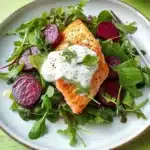
Salmon and Beets with Yogurt Sauce over Watercress recipe
Ingredients
- For the Salmon:
- Salmon Fillets (4 x 6-ounce portions, skin on or off): The star of the show! Choose fresh, high-quality salmon fillets. Skin-on fillets will give you crispy skin if pan-frying or grilling, adding another textural dimension. Skinless fillets are equally delicious and slightly easier to manage. Look for wild-caught salmon for a richer flavor and often a more sustainable choice, but farmed salmon is also perfectly acceptable and readily available. Consider varieties like Sockeye, King, or Coho for their distinct flavors and textures. If using frozen salmon, ensure it’s fully thawed before cooking.
- Olive Oil (2 tablespoons): Essential for cooking the salmon and adding healthy fats. Extra virgin olive oil is preferred for its flavor and health benefits.
- Lemon (1, half for juice, half for wedges): Brightens the salmon and complements the earthy beets. Fresh lemon juice is key for the marinade and yogurt sauce, and lemon wedges add a final burst of acidity when serving.
- Fresh Dill (2 tablespoons, chopped): Pairs beautifully with both salmon and beets, adding a fresh, herbaceous note. Fresh dill is highly recommended for its delicate flavor, but in a pinch, you can use dried dill (about 1 teaspoon), though the flavor will be less pronounced.
- Salt and Black Pepper (to taste): Essential seasonings to enhance the natural flavors of the salmon. Use sea salt or kosher salt for best results. Freshly ground black pepper is always preferable for its bolder aroma and flavor.
- For the Beets:
- Beets (2 medium, about 1 pound, preferably red or golden): Beets provide earthy sweetness and vibrant color. You can use red beets for classic beet flavor and a deep ruby hue, or golden beets for a milder, sweeter taste and a beautiful golden color contrast. You can purchase beets raw (and roast or boil them yourself) or buy pre-cooked beets for convenience. Pre-cooked beets are a great time-saver for weeknight meals. If using raw beets, choose firm, unblemished beets.
- Olive Oil (1 tablespoon, if roasting raw beets): If roasting raw beets, olive oil is needed for roasting and enhancing their flavor.
- Balsamic Vinegar (1 tablespoon, optional for roasted beets): A drizzle of balsamic vinegar after roasting beets adds a touch of sweetness and acidity that complements their earthy flavor.
- For the Yogurt Sauce:
- Plain Greek Yogurt (1 cup): The base of the creamy and tangy sauce. Greek yogurt is preferred for its thicker texture and higher protein content compared to regular yogurt. Full-fat or low-fat Greek yogurt can be used depending on your preference. Full-fat will result in a richer sauce, while low-fat will be lighter.
- Lemon Juice (1 tablespoon): Adds brightness and tang to the yogurt sauce, balancing the richness of the salmon and beets. Freshly squeezed lemon juice is essential for the best flavor.
- Garlic (1 clove, minced): Provides a subtle savory note to the yogurt sauce. Use fresh garlic for the most pungent flavor. Mince it finely or use a garlic press.
- Fresh Dill (1 tablespoon, chopped): Enhances the herbaceousness of the sauce and complements the dill used with the salmon.
- Salt and Black Pepper (to taste): Seasons the yogurt sauce and balances the flavors.
- For the Watercress Base:
- Watercress (4 ounces, about 4 cups packed): Provides a peppery, slightly bitter base that contrasts beautifully with the sweet beets and rich salmon. Watercress is packed with nutrients and adds a refreshing element to the dish. Look for fresh, vibrant green watercress. If watercress is unavailable, you can substitute with baby arugula or baby spinach, though the flavor profile will be slightly different.
Instructions
Step 1: Prepare the Beets (if using raw beets)
- Preheat Oven (if roasting): Preheat your oven to 400°F (200°C).
- Prepare Raw Beets: Wash and scrub the raw beets thoroughly. Trim the beet greens, leaving about an inch of stem attached to prevent color bleeding during cooking.
- Roast Beets (optional, for deeper flavor): Toss the raw beets with 1 tablespoon of olive oil, salt, and pepper. Wrap each beet individually in aluminum foil or place them in a roasting pan with a lid and a splash of water. Roast for 45-60 minutes, or until tender when pierced with a fork. Roasting brings out the natural sweetness of the beets.
- Boil Beets (alternative to roasting, quicker): Alternatively, you can boil the beets. Place the raw beets in a pot of cold water, bring to a boil, and simmer for 30-45 minutes, or until tender.
- Cool and Peel Beets: Once cooked (roasted or boiled), let the beets cool slightly until you can handle them. Peel the beets. The skin should slip off easily, you can use gloves to avoid staining your hands.
- Slice or Cube Beets: Slice the cooked and peeled beets into rounds, wedges, or cubes, depending on your preference. Set aside. If using pre-cooked beets, simply slice or cube them and proceed to the next step.
Step 2: Cook the Salmon
- Pat Salmon Dry: Pat the salmon fillets dry with paper towels. This helps achieve a better sear if pan-frying or grilling.
- Season Salmon: In a small bowl, whisk together 1 tablespoon of olive oil, the juice of half a lemon, half of the chopped fresh dill, salt, and pepper. Pour this marinade over the salmon fillets and let them marinate for at least 10 minutes, or up to 30 minutes in the refrigerator (for more intense flavor).
- Choose Your Cooking Method: You can pan-fry, grill, or bake the salmon. Pan-frying and grilling achieve a nice crispy skin (if using skin-on fillets), while baking is a hands-off and healthy option.
- Pan-Fry Salmon: Heat 1 tablespoon of olive oil in a large skillet over medium-high heat. Place the salmon fillets skin-side down (if using skin-on) in the hot skillet. Cook for 4-6 minutes per side, depending on the thickness of the fillets, until cooked through and flaky. The salmon is done when it flakes easily with a fork and is no longer translucent in the center.
- Grill Salmon: Preheat your grill to medium-high heat. Lightly oil the grill grates. Place the salmon fillets skin-side down (if using skin-on) on the grill. Grill for 4-6 minutes per side, or until cooked through.
- Bake Salmon: Preheat your oven to 400°F (200°C). Place the marinated salmon fillets on a baking sheet lined with parchment paper. Bake for 12-15 minutes, or until cooked through and flaky.
- Rest Salmon: Once cooked, let the salmon rest for a few minutes before serving.
Step 3: Prepare the Yogurt Sauce
- Combine Yogurt Sauce Ingredients: In a small bowl, combine the plain Greek yogurt, lemon juice, minced garlic, remaining chopped fresh dill, salt, and pepper.
- Mix Well: Stir all the ingredients together until well combined and smooth.
- Adjust Seasoning: Taste the yogurt sauce and adjust seasoning with more lemon juice, salt, or pepper to your liking. You can also add a pinch of sugar or honey if you prefer a slightly sweeter sauce.
- Chill (optional): For a cooler sauce, you can chill it in the refrigerator while you prepare the other components.
Step 4: Assemble the Dish
- Prepare Watercress Base: Wash and dry the watercress thoroughly. You can trim any thick stems if desired.
- Arrange Watercress: Divide the watercress evenly among four plates, creating a bed of greens on each plate.
- Top with Beets: Arrange the sliced or cubed beets over the watercress on each plate.
- Place Salmon on Top: Place a cooked salmon fillet on top of the beets on each plate.
- Drizzle with Yogurt Sauce: Generously drizzle the prepared yogurt sauce over the salmon and beets.
- Garnish (optional): Garnish with fresh dill sprigs, lemon wedges, or a sprinkle of extra black pepper for visual appeal and added flavor.
Step 5: Serve Immediately
Serve the Salmon and Beets with Yogurt Sauce over Watercress imm
Nutrition
- Serving Size: one normal portion
- Calories: 450-550
- Sugar: 8-12g
- Sodium: 300-400mg
- Fat: 25-35g
- Saturated Fat: 5-8g
- Carbohydrates: 15-20g
- Fiber: 4-6g
- Protein: 40-50g
- Cholesterol: 120-150mg