
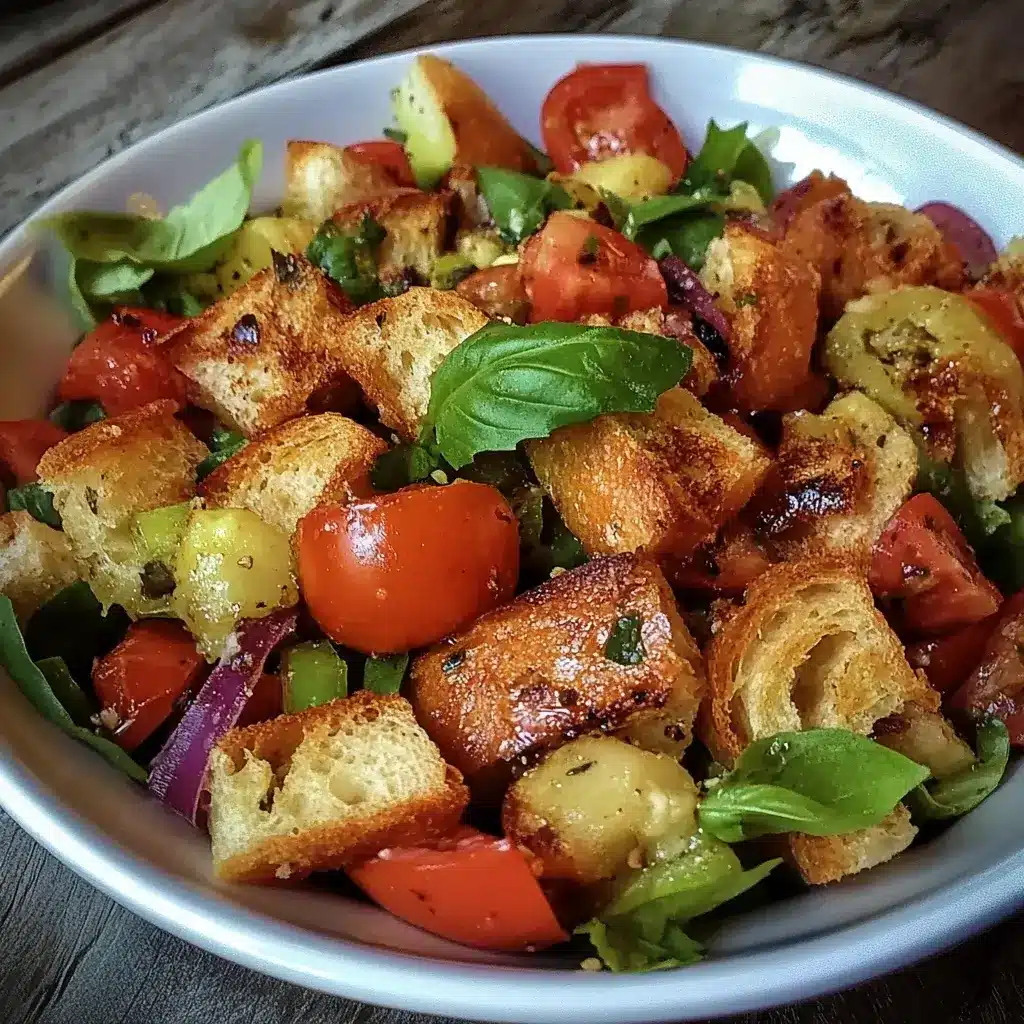
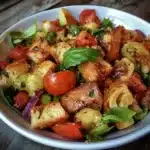
There’s a certain magic in transforming simple, humble ingredients into something utterly spectacular, and for me, no dish embodies this more perfectly than a Rustic Bread Salad, or as the Italians call it, Panzanella. I first encountered it not in Italy, but recreated from a recipe book on a sweltering summer afternoon when I had a loaf of country bread just past its prime and a glut of ripe garden tomatoes threatening to take over my kitchen counter. The idea of a ‘bread salad’ sounded slightly odd initially – wouldn’t it just be soggy? But the recipe promised otherwise. Trusting the process, I cubed and toasted the bread, chopped the vibrant tomatoes, fragrant basil, crisp cucumber, and pungent red onion, then tossed it all with a simple vinaigrette. After letting it sit for that crucial half hour, the transformation was astonishing. The bread wasn’t soggy; it was beautifully infused with the tomato juices and vinaigrette, still retaining some chew and texture. The flavours had melded into a harmonious blend of tangy, sweet, savoury, and fresh. It was summer in a bowl – bright, satisfying, and incredibly flavourful. Since then, Panzanella has become a staple in our house, especially during peak tomato season. It’s the dish my family requests for barbecues, picnics, or just a simple, delicious lunch. It’s proof that leftovers (like stale bread) can be reborn into something truly extraordinary, celebrating the best of seasonal produce with minimal fuss.
Ingredients for Classic Rustic Bread Salad (Panzanella)
The beauty of Panzanella lies in its simplicity and reliance on high-quality, seasonal ingredients. Precision isn’t always key; it’s more about balance and using what’s best. Here’s a guide to what you’ll need:
- Crusty Bread: About 1/2 pound (225g) of good quality, sturdy, day-old (or slightly stale) bread. Ciabatta, sourdough, Italian country loaf, or a rustic French boule work best. Avoid soft sandwich bread, as it will disintegrate. The staleness helps it absorb the dressing without becoming mush. You want cubes roughly 1-inch (2.5 cm) in size.
- Ripe Tomatoes: 1.5 – 2 lbs (about 700g – 900g) of the best ripe, flavourful tomatoes you can find. A mix of varieties and colours (heirloom, beefsteak, vine-ripened cherry tomatoes halved) adds visual appeal and flavour complexity. The quality of the tomatoes is paramount as their juice forms a core part of the dressing.
- Cucumber: 1 large cucumber (or 2 smaller Kirby/Persian cucumbers), peeled (or partially peeled for texture), seeded if the seeds are large, and diced or sliced into half-moons. Adds coolness and crunch.
- Red Onion: 1/2 medium red onion, very thinly sliced. Soaking the sliced onion in cold water for 10 minutes can mellow its sharp bite if preferred. Shallots can also be used for a milder flavour.
- Fresh Basil: 1 large handful of fresh basil leaves, roughly chopped or torn. This provides the essential aromatic, summery fragrance. Don’t substitute dried basil.
- Extra Virgin Olive Oil: 1/2 cup (120ml) of good quality extra virgin olive oil. Since it’s used raw in the dressing, a flavourful oil makes a difference.
- Red Wine Vinegar: 3-4 tablespoons. Adds the necessary tang and acidity to balance the oil and sweetness of the tomatoes. Apple cider vinegar or white wine vinegar can be substituted.
- Garlic: 1 small clove, finely minced or grated (optional, but adds depth). Can be rubbed on the toast or added to the vinaigrette.
- Salt: 1 – 1.5 teaspoons coarse sea salt or kosher salt, divided, plus more to taste. Essential for drawing out tomato juices and seasoning the salad.
- Black Pepper: 1/2 teaspoon freshly ground black pepper, or to taste.
Optional Additions for Variation:
- Bell Pepper: 1/2 red or yellow bell pepper, thinly sliced or diced (adds sweetness and crunch).
- Capers: 1-2 tablespoons, rinsed (adds a salty, briny kick).
- Olives: 1/4 cup Kalamata or other flavourful olives, pitted and halved.
- Anchovy: 1-2 anchovy fillets, minced into a paste and whisked into the vinaigrette (adds umami depth, traditional in some regions).
- Cheese: Cubes of fresh mozzarella or shavings of Parmesan can be added just before serving (less traditional but delicious).
Gathering these components, focusing on freshness and quality, sets the stage for an exceptional Panzanella.
Step-by-Step Instructions for Perfect Panzanella
Creating a delicious Rustic Bread Salad involves a few key steps, focusing on preparing the components correctly and allowing time for the flavours to meld.
Stage 1: Prepare the Bread
- Cube the Bread: Cut your day-old, crusty bread into bite-sized cubes, roughly 1 inch (2.5 cm). Aim for uniformity so they toast evenly and absorb dressing consistently. Include the crusts for texture.
- Toast the Bread (Crucial Step): You need the bread to be dry and crisp so it can stand up to the dressing. Choose one of these methods:
- Oven Toasting (Recommended): Preheat your oven to 375°F (190°C). Spread the bread cubes in a single layer on a baking sheet. Drizzle lightly with 1-2 tablespoons of olive oil and toss to coat (optional, but adds flavour). Toast for 10-15 minutes, tossing halfway through, until golden brown, crisp, and dry to the touch. Let cool completely.
- Stovetop Toasting: Heat a large, dry skillet over medium heat. Add the bread cubes in a single layer (work in batches if necessary). Toast, tossing frequently, for 5-10 minutes until golden and crisp. You can add a drizzle of olive oil here too. Let cool.
- Air Drying (Traditional): If your bread is truly stale (left uncovered for a day or two), it might already be dry enough. If it’s just slightly stale, you can leave the cubes spread out on a baking sheet at room temperature for several hours or overnight until properly dried out. Toasting generally yields better flavour and texture.
- Garlic Rub (Optional): For a subtle garlic flavour, take a whole peeled garlic clove and rub it vigorously over the surfaces of the warm, toasted bread cubes.
Stage 2: Prepare the Vegetables and Dressing
- Prepare Tomatoes: Wash the tomatoes. Core them and cut them into bite-sized chunks or wedges (about the same size as the bread cubes). If using cherry tomatoes, simply halve or quarter them. Place the chopped tomatoes in a large serving bowl.
- Salt the Tomatoes: Sprinkle the tomatoes generously with about 1 teaspoon of coarse salt. Toss gently and set aside for 15-30 minutes. This step is vital: the salt draws out the delicious tomato juices, which will form the base of the salad’s flavour and help soften the bread perfectly.
- Prepare Other Vegetables: While the tomatoes are releasing their juices, prepare the rest of the vegetables. Peel (or partially peel) and seed the cucumber, then dice it. Thinly slice the red onion (soak in cold water for 10 minutes if desired, then drain well). Wash and roughly chop or tear the fresh basil leaves. Finely mince the garlic clove if using it in the dressing.
- Make the Vinaigrette: In a small bowl or jar, whisk together the 1/2 cup (120ml) of extra virgin olive oil, 3-4 tablespoons of red wine vinegar, the minced garlic (if using), 1/2 teaspoon of salt, and 1/2 teaspoon of freshly ground black pepper. Whisk until the dressing emulsifies slightly. Alternatively, combine ingredients in a jar with a tight-fitting lid and shake vigorously. Taste and adjust seasoning (more salt, pepper, or vinegar?).
Stage 3: Assemble and Rest the Salad
- Combine Ingredients: Check the bowl with the tomatoes – you should see a good amount of accumulated juice at the bottom. Do not drain this liquid gold! Add the toasted and cooled bread cubes directly to the bowl with the tomatoes and their juices. Toss gently to start coating the bread.
- Add Remaining Vegetables: Add the prepared cucumber, sliced red onion, and most of the fresh basil (reserve some for garnish) to the bowl. If using optional additions like bell peppers, capers, or olives, add them now.
- Dress the Salad: Pour the prepared vinaigrette over the salad ingredients.
- Toss Gently: Using large spoons or your hands, gently toss everything together until the bread, tomatoes, and vegetables are well combined and evenly coated with the dressing and tomato juices. Be thorough but gentle to avoid crushing the tomatoes or breaking the bread down too much.
- Rest the Salad (Essential!): This is where the magic happens. Cover the bowl and let the Panzanella rest at room temperature for at least 30 minutes, or up to an hour (but generally not much longer at room temp for food safety and texture). This allows the bread time to absorb the flavorful liquids without becoming completely mushy, and for all the flavours to meld and marry beautifully. The bread should be softened but retain some chew.
- Final Taste and Adjustment: Before serving, give the salad one last gentle toss. Taste a piece of bread and tomato together. Adjust seasoning if necessary – does it need more salt, pepper, a splash more vinegar, or even a drizzle more olive oil?
- Garnish and Serve: Transfer the Panzanella to a serving platter or serve directly from the bowl. Garnish with the reserved fresh basil leaves. A final drizzle of high-quality olive oil or a sprinkle of flaky sea salt can be nice touches. Serve at room temperature.
Following these steps, particularly the toasting of the bread and the crucial resting period, will ensure your Rustic Bread Salad has the perfect texture and deeply melded flavours.
Nutritional Information (Approximate)
Nutritional values for Panzanella can vary significantly based on the type and amount of bread, the quantity of olive oil used, and any optional additions like cheese. These figures are estimates for a standard serving.
- Servings: This recipe typically yields 4 main course servings or 6-8 side dish servings.
- Calories per Serving (Approximate): Approximately 300-450 calories per serving (assuming 6 servings).
- The main calorie contributors are the bread and the olive oil. Using less oil or leaner bread will reduce the calorie count, while adding cheese will increase it.
Key Nutritional Contributions:
- Carbohydrates: Primarily from the bread, providing energy.
- Fat: Largely from the extra virgin olive oil, contributing healthy monounsaturated fats.
- Vitamins & Minerals: Rich in vitamins from the fresh vegetables, especially Vitamin C and Lycopene (an antioxidant) from the tomatoes, Vitamin K from basil and cucumber, and various minerals.
- Fiber: Good source of dietary fiber from the vegetables and whole-grain bread (if used).
- Sodium: Primarily from added salt and potentially from optional ingredients like olives, capers, or cheese. Can be controlled by adjusting added salt.
This salad is inherently vegetarian. To make it vegan, simply ensure no cheese is added and that the bread used is vegan (most rustic loaves are). It is not typically gluten-free due to the bread, but can be adapted using good-quality gluten-free bread (see FAQ). Panzanella is a relatively balanced dish, offering carbohydrates, healthy fats, and plenty of vitamins from the fresh produce, making it a satisfying and nourishing meal, especially during summer.
Preparation and Resting Time
Understanding the time involved helps plan when to make and serve your Panzanella for optimal results.
- Active Preparation Time: 20-25 minutes
- Cubing the bread.
- Chopping tomatoes, cucumber, onion, and basil.
- Whisking the vinaigrette.
- (Does not include optional onion soaking time).
- Cooking Time (Bread Toasting): 10-15 minutes (if using oven/stovetop method)
- Resting Time (Crucial): 30 minutes (minimum) – 1 hour
- This inactive time is essential for the flavours to meld and the bread to soften correctly.
- Total Time: Approximately 1 hour to 1 hour 40 minutes (from starting prep to being ready to serve).
While it requires about an hour from start to finish, much of that time is inactive resting or toasting time, making Panzanella a relatively low-effort dish with a high flavour payoff, perfect for relaxed summer meals.
How to Serve Your Rustic Bread Salad
Panzanella is versatile and fits beautifully into various meal settings. Here are some ideas for serving it:
- As a Standalone Light Lunch or Dinner: On a warm day, a generous bowl of Panzanella makes a perfectly satisfying and refreshing meal on its own. Its combination of bread, vegetables, and healthy fats is quite balanced.
- As a Vibrant Side Dish: Panzanella is an excellent companion to grilled or roasted proteins. Serve it alongside:
- Grilled Chicken or Fish (like salmon, swordfish, or sea bass)
- Grilled Steak or Lamb Chops
- Italian Sausages
- Simple Roasted Pork Loin
- Grilled Halloumi or other grilled cheeses for a vegetarian pairing.
- Part of an Antipasto Platter or Buffet: Its bright colours and bold flavours make it a fantastic addition to a spread of Italian appetizers, charcuterie, cheeses, and other salads.
- For Potlucks and Picnics: Panzanella travels relatively well (though assemble closer to serving time if possible for best texture). It’s often a crowd-pleaser at gatherings.
Presentation Tips:
- Serve at Room Temperature: Panzanella’s flavours are best when not chilled. If you’ve refrigerated leftovers, let them sit out for 20-30 minutes before serving.
- Use a Wide, Shallow Bowl or Platter: This allows the colours and textures of the ingredients to be easily seen and makes serving easier.
- Generous Basil Garnish: Sprinkle plenty of fresh, torn basil leaves over the top just before serving for a final burst of aroma and colour.
- Final Drizzle of Olive Oil: A swirl of your best extra virgin olive oil over the finished salad adds a luxurious sheen and flavour boost.
- Flaky Sea Salt: A tiny sprinkle of flaky sea salt (like Maldon) just before serving adds visual appeal and textural pop.
- Accompany with Wine: A crisp Italian white wine like Pinot Grigio or Vermentino, or a light rosé, pairs beautifully.
Serving Panzanella thoughtfully enhances the experience of enjoying this classic, rustic Italian salad.
Top Tips for Unforgettable Panzanella
Mastering Panzanella is about respecting the ingredients and technique. Here are five key tips to ensure yours is memorable:
- Bread Matters: Use Sturdy, Properly Staled/Toasted Bread: This is the foundation. Soft, fresh bread will turn to mush. Use a rustic loaf (ciabatta, sourdough, country bread) that’s at least a day old. Crucially, ensure the bread cubes are properly dried out – either by leaving them out to stale completely or, more reliably, by toasting them in the oven or skillet until crisp and golden. This dryness allows them to absorb the dressing and tomato juices without disintegrating, achieving that signature chewy-tender texture.
- Tomato Power: Prioritize Ripe, Flavourful Tomatoes: Panzanella is a celebration of tomatoes. Use the best quality, ripest, most flavourful tomatoes you can find, ideally in season. Heirloom varieties offer complex flavours, while deep red vine-ripened tomatoes provide sweetness and acidity. Salting the tomatoes and letting them rest is not optional – it draws out their essential juices, which mingle with the vinaigrette to create the salad’s soul.
- Don’t Skip the Rest! Allow Time for Melding: The mandatory 30-minute (or longer) rest at room temperature after tossing the salad is critical. This is when the bread absorbs the flavours, the ingredients mingle, and the salad transforms from a collection of components into a cohesive dish. Rushing this step will result in drier bread and less integrated flavours.
- Balance the Dressing: Quality Oil, Vinegar & Seasoning: Use a good quality extra virgin olive oil and a decent red wine vinegar (or similar acidity). Taste your vinaigrette before adding it – is it tangy enough? Salty enough? Whisk it well. Remember that the salty tomato juices will also season the salad, so don’t oversalt the initial vinaigrette. Add about two-thirds of the dressing initially, toss, and see how much the bread absorbs during the rest, adding more later only if needed.
- Season Thoughtfully and Taste Before Serving: Seasoning happens at multiple stages: salting the tomatoes, seasoning the vinaigrette, and a final taste-and-adjust before serving. Coarse sea salt or kosher salt is often preferred. Freshly ground black pepper adds essential warmth. Always taste the finished salad after it has rested. Often, a final pinch of salt or a tiny splash more vinegar can elevate it from good to great.
By focusing on these key aspects – the bread, the tomatoes, the resting period, the dressing, and the seasoning – you’ll consistently create a Rustic Bread Salad that is truly delicious and authentic.
Frequently Asked Questions (FAQ) about Panzanella
Here are answers to some common questions regarding Rustic Bread Salad (Panzanella):
- Q: What is the absolute best type of bread for Panzanella?
- A: The ideal bread is a sturdy, rustic Italian or country-style loaf with a chewy crust and an open crumb structure. Ciabatta is a classic choice. Sourdough also works wonderfully, adding a slight tang. A good French boule or Pugliese bread are also excellent options. The key is that it should be at least a day old, or properly toasted until dry and crisp, so it can absorb the dressing without falling apart. Avoid soft sandwich breads, baguettes (often too light unless very stale), or overly enriched breads.
- Q: Can I make Panzanella ahead of time?
- A: Panzanella is best enjoyed within a few hours of being made, after its mandatory resting period (30-60 minutes). You can make it slightly ahead (e.g., morning for evening), but the bread will continue to soften over time. If making further ahead:
- Option 1 (Recommended): Prepare components separately. Toast the bread cubes and store them in an airtight container at room temperature. Chop the vegetables (except basil) and make the vinaigrette, storing them separately in the refrigerator. Combine everything, add fresh basil, and let it rest for 30 minutes before serving.
- Option 2 (Texture Changes): Assemble the entire salad and refrigerate. The bread will become significantly softer, more like a savoury bread pudding texture. While still tasty to some, it loses the classic chewy-tender bread texture. Let it come towards room temperature before serving.
- A: Panzanella is best enjoyed within a few hours of being made, after its mandatory resting period (30-60 minutes). You can make it slightly ahead (e.g., morning for evening), but the bread will continue to soften over time. If making further ahead:
- Q: My Panzanella always seems too soggy. How do I prevent that?
- A: Soggy Panzanella usually results from a few key issues:
- Using Fresh/Soft Bread: Ensure your bread is properly day-old and, crucially, toasted until very dry and crisp.
- Not Enough Resting Time: Paradoxically, not resting it long enough can mean the bread hasn’t properly absorbed the liquid in a controlled way.
- Too Much Dressing: Don’t drown the salad. Add dressing gradually. Remember the tomato juices contribute significant moisture.
- Letting it Sit Too Long: While resting is essential, letting fully assembled Panzanella sit for many hours or overnight will inevitably lead to softer bread.
- A: Soggy Panzanella usually results from a few key issues:
- Q: What are some popular variations or additions to Panzanella?
- A: Panzanella is wonderfully adaptable! Common variations include:
- Vegetables: Adding sliced fennel, celery, bell peppers (red or yellow), or radishes.
- Protein: Adding canned tuna (packed in oil, drained), grilled shrimp, or shredded cooked chicken.
- Cheese: Cubes of fresh mozzarella (especially bocconcini), feta, or shavings of Parmesan or Pecorino Romano (added just before serving).
- Flavour Boosters: Capers, olives (Kalamata, Gaeta), anchovy paste in the dressing, or different herbs like parsley or oregano alongside basil.
- Greens: Some modern versions incorporate arugula or other sturdy greens, tossed in at the last minute.
- A: Panzanella is wonderfully adaptable! Common variations include:
- Q: Can I make Panzanella gluten-free?
- A: Yes, you can make a gluten-free version, but the quality of the gluten-free bread is critical. Choose a sturdy, rustic-style gluten-free loaf. GF breads often behave differently; they might need more thorough toasting to ensure they hold up to the dressing. Toast the cubes well until they are very dry and crisp. Taste a piece after the resting period to gauge the texture. Some GF breads might absorb liquid faster or become mushier, so adjust resting time or dressing amount accordingly. The rest of the traditional ingredients are naturally gluten-free.
Rustic Bread Salad Recipe
Ingredients
- Crusty Bread: About 1/2 pound (225g) of good quality, sturdy, day-old (or slightly stale) bread. Ciabatta, sourdough, Italian country loaf, or a rustic French boule work best. Avoid soft sandwich bread, as it will disintegrate. The staleness helps it absorb the dressing without becoming mush. You want cubes roughly 1-inch (2.5 cm) in size.
- Ripe Tomatoes: 1.5 – 2 lbs (about 700g – 900g) of the best ripe, flavourful tomatoes you can find. A mix of varieties and colours (heirloom, beefsteak, vine-ripened cherry tomatoes halved) adds visual appeal and flavour complexity. The quality of the tomatoes is paramount as their juice forms a core part of the dressing.
- Cucumber: 1 large cucumber (or 2 smaller Kirby/Persian cucumbers), peeled (or partially peeled for texture), seeded if the seeds are large, and diced or sliced into half-moons. Adds coolness and crunch.
- Red Onion: 1/2 medium red onion, very thinly sliced. Soaking the sliced onion in cold water for 10 minutes can mellow its sharp bite if preferred. Shallots can also be used for a milder flavour.
- Fresh Basil: 1 large handful of fresh basil leaves, roughly chopped or torn. This provides the essential aromatic, summery fragrance. Don’t substitute dried basil.
- Extra Virgin Olive Oil: 1/2 cup (120ml) of good quality extra virgin olive oil. Since it’s used raw in the dressing, a flavourful oil makes a difference.
- Red Wine Vinegar: 3-4 tablespoons. Adds the necessary tang and acidity to balance the oil and sweetness of the tomatoes. Apple cider vinegar or white wine vinegar can be substituted.
- Garlic: 1 small clove, finely minced or grated (optional, but adds depth). Can be rubbed on the toast or added to the vinaigrette.
- Salt: 1 – 1.5 teaspoons coarse sea salt or kosher salt, divided, plus more to taste. Essential for drawing out tomato juices and seasoning the salad.
- Black Pepper: 1/2 teaspoon freshly ground black pepper, or to taste.
Instructions
Stage 1: Prepare the Bread
- Cube the Bread: Cut your day-old, crusty bread into bite-sized cubes, roughly 1 inch (2.5 cm). Aim for uniformity so they toast evenly and absorb dressing consistently. Include the crusts for texture.
- Toast the Bread (Crucial Step): You need the bread to be dry and crisp so it can stand up to the dressing. Choose one of these methods:
- Oven Toasting (Recommended): Preheat your oven to 375°F (190°C). Spread the bread cubes in a single layer on a baking sheet. Drizzle lightly with 1-2 tablespoons of olive oil and toss to coat (optional, but adds flavour). Toast for 10-15 minutes, tossing halfway through, until golden brown, crisp, and dry to the touch. Let cool completely.
- Stovetop Toasting: Heat a large, dry skillet over medium heat. Add the bread cubes in a single layer (work in batches if necessary). Toast, tossing frequently, for 5-10 minutes until golden and crisp. You can add a drizzle of olive oil here too. Let cool.
- Air Drying (Traditional): If your bread is truly stale (left uncovered for a day or two), it might already be dry enough. If it’s just slightly stale, you can leave the cubes spread out on a baking sheet at room temperature for several hours or overnight until properly dried out. Toasting generally yields better flavour and texture.
- Garlic Rub (Optional): For a subtle garlic flavour, take a whole peeled garlic clove and rub it vigorously over the surfaces of the warm, toasted bread cubes.
Stage 2: Prepare the Vegetables and Dressing
- Prepare Tomatoes: Wash the tomatoes. Core them and cut them into bite-sized chunks or wedges (about the same size as the bread cubes). If using cherry tomatoes, simply halve or quarter them. Place the chopped tomatoes in a large serving bowl.
- Salt the Tomatoes: Sprinkle the tomatoes generously with about 1 teaspoon of coarse salt. Toss gently and set aside for 15-30 minutes. This step is vital: the salt draws out the delicious tomato juices, which will form the base of the salad’s flavour and help soften the bread perfectly.
- Prepare Other Vegetables: While the tomatoes are releasing their juices, prepare the rest of the vegetables. Peel (or partially peel) and seed the cucumber, then dice it. Thinly slice the red onion (soak in cold water for 10 minutes if desired, then drain well). Wash and roughly chop or tear the fresh basil leaves. Finely mince the garlic clove if using it in the dressing.
- Make the Vinaigrette: In a small bowl or jar, whisk together the 1/2 cup (120ml) of extra virgin olive oil, 3-4 tablespoons of red wine vinegar, the minced garlic (if using), 1/2 teaspoon of salt, and 1/2 teaspoon of freshly ground black pepper. Whisk until the dressing emulsifies slightly. Alternatively, combine ingredients in a jar with a tight-fitting lid and shake vigorously. Taste and adjust seasoning (more salt, pepper, or vinegar?).
Stage 3: Assemble and Rest the Salad
- Combine Ingredients: Check the bowl with the tomatoes – you should see a good amount of accumulated juice at the bottom. Do not drain this liquid gold! Add the toasted and cooled bread cubes directly to the bowl with the tomatoes and their juices. Toss gently to start coating the bread.
- Add Remaining Vegetables: Add the prepared cucumber, sliced red onion, and most of the fresh basil (reserve some for garnish) to the bowl. If using optional additions like bell peppers, capers, or olives, add them now.
- Dress the Salad: Pour the prepared vinaigrette over the salad ingredients.
- Toss Gently: Using large spoons or your hands, gently toss everything together until the bread, tomatoes, and vegetables are well combined and evenly coated with the dressing and tomato juices. Be thorough but gentle to avoid crushing the tomatoes or breaking the bread down too much.
- Rest the Salad (Essential!): This is where the magic happens. Cover the bowl and let the Panzanella rest at room temperature for at least 30 minutes, or up to an hour (but generally not much longer at room temp for food safety and texture). This allows the bread time to absorb the flavorful liquids without becoming completely mushy, and for all the flavours to meld and marry beautifully. The bread should be softened but retain some chew.
- Final Taste and Adjustment: Before serving, give the salad one last gentle toss. Taste a piece of bread and tomato together. Adjust seasoning if necessary – does it need more salt, pepper, a splash more vinegar, or even a drizzle more olive oil?
- Garnish and Serve: Transfer the Panzanella to a serving platter or serve directly from the bowl. Garnish with the reserved fresh basil leaves. A final drizzle of high-quality olive oil or a sprinkle of flaky sea salt can be nice touches. Serve at room temperature.
Nutrition
- Serving Size: one normal portion
- Calories: 300-450