
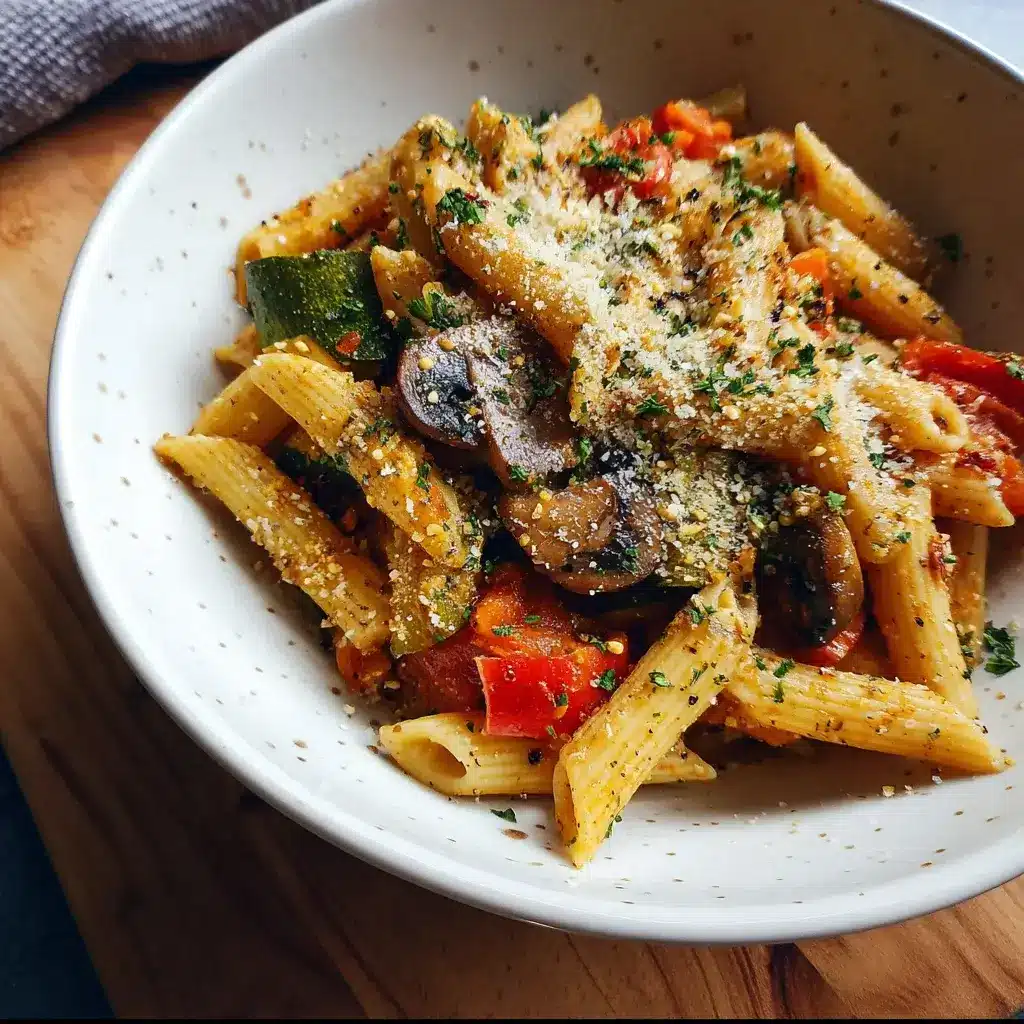
There’s a certain kind of weeknight chaos that I’ve come to know well. It’s the end of the week, the fridge is a mosaic of random vegetables—half a zucchini here, a lone bell pepper there, a handful of cherry tomatoes threatening to wrinkle—and the last thing I want to do is figure out a complicated meal. This Roasted Vegetable Penne was born from that exact chaos. Years ago, on a whim, I decided to chop up every stray vegetable I could find, toss them with olive oil and herbs, and roast them until they were sweet and caramelized. While they were in the oven, I boiled some pasta. What happened next was pure, unplanned magic. I tossed the hot pasta with the roasted vegetables, a splash of the starchy pasta water, and a generous shower of Parmesan. The result was so much more than the sum of its parts. It wasn’t just a pasta dish; it was a vibrant, deeply flavorful, and unbelievably satisfying meal that tasted like it came from a rustic Italian kitchen, not a desperate “clean out the fridge” experiment. It has since become one of the most requested dinners in my house, a testament to the fact that sometimes, the simplest ideas, executed with a little technique, are the most brilliant.
The Ultimate Roasted Vegetable Penne Recipe
This recipe is a celebration of simplicity and flavor. It’s a testament to the transformative power of roasting, a technique that coaxes out the natural sweetness of vegetables and gives them a tender, caramelized texture that is simply irresistible. This dish isn’t about a heavy, overpowering sauce; instead, it creates its own light, luscious “sauce” from the roasted vegetable juices, starchy pasta water, a touch of bright lemon, and good olive oil. It’s a healthy, hearty, and incredibly versatile meal that is perfect for a busy weeknight yet sophisticated enough to serve to guests.
Why This Recipe is a Weeknight Game-Changer
Before you start chopping, let’s explore why this roasted vegetable penne will become a permanent fixture in your dinner rotation. It’s more than just a recipe; it’s a method you can adapt and use forever.
- Maximum Flavor from Minimal Ingredients: The secret is all in the roasting. High heat caramelizes the natural sugars in the vegetables, creating a deep, sweet, and slightly smoky flavor that you can’t achieve by simply sautéing or steaming. This process makes the vegetables the undisputed star of the dish.
- The Perfect “Clean Out the Fridge” Meal: This recipe is endlessly adaptable. While we provide a perfect combination of vegetables, you can substitute virtually any roasting-friendly vegetable you have on hand. Bell peppers, zucchini, broccoli, cauliflower, asparagus, red onion, cherry tomatoes, eggplant—they all work beautifully. It’s the most delicious way to combat food waste.
- Healthy, Hearty, and Satisfying: Packed with fiber, vitamins, and nutrients from the colorful array of vegetables, this is a meal you can feel good about eating. The combination of hearty vegetables and pasta provides a perfect balance of complex carbohydrates and nutrients that will leave you feeling full and satisfied without feeling weighed down.
- A Light, Luscious Sauce (Without the Cream): Many pasta dishes rely on heavy cream or copious amounts of cheese for their sauce. This recipe creates a stunningly simple and silky sauce by emulsifying the starchy water from the cooked pasta with olive oil and the juices from the roasted vegetables. A final squeeze of lemon juice brightens everything up, creating a sauce that is both light and incredibly flavorful.
- Incredibly Easy and Largely Hands-Off: Once the vegetables are chopped, the oven does most of the work. The 30-40 minutes of roasting time is your opportunity to cook the pasta, set the table, or simply relax. It’s an ideal recipe for multi-tasking on a busy evening.
Gather Your Ingredients: A Rainbow of Flavor
The beauty of this dish is its flexibility. Use this list as your guide, but feel free to substitute with your favorite vegetables or whatever you have available.
For the Roasted Vegetables (The Heart of the Dish):
- Penne Pasta: 1 pound (450g). Penne is ideal because the roasted vegetable pieces can get trapped inside the tubes, but other short pasta shapes like rigatoni, fusilli, or rotini work wonderfully too.
- Broccoli: 1 medium head, cut into bite-sized florets.
- Red Bell Pepper: 1 large, seeded and chopped into 1-inch pieces.
- Zucchini: 1 medium, chopped into 1-inch pieces.
- Red Onion: 1 medium, chopped into 1-inch wedges.
- Cherry or Grape Tomatoes: 1 pint (about 2 cups).
- Garlic: 5-6 cloves, left whole and peeled.
- Extra Virgin Olive Oil: ¼ cup (60ml), plus more for finishing.
- Dried Oregano: 1 ½ teaspoons.
- Dried Basil: 1 ½ teaspoons.
- Salt: 1 teaspoon.
- Freshly Ground Black Pepper: ½ teaspoon.
For Assembling the Pasta:
- Reserved Pasta Water: About 1 cup. This is a non-negotiable, key ingredient!
- Fresh Lemon Juice: From ½ a lemon (about 1-2 tablespoons).
- Grated Parmesan Cheese: ½ cup, plus more for serving.
- Fresh Parsley or Basil: ¼ cup, freshly chopped for garnish.
- Red Pepper Flakes: A pinch, for a hint of warmth (optional).
Step-by-Step Instructions for Pasta Perfection
Follow these detailed steps to create a vibrant, flavorful, and perfectly cooked roasted vegetable pasta dish every time.
Step 1: Prepare and Season the Vegetables
- Preheat the Oven: Position a rack in the center of your oven and preheat to 425°F (220°C). High heat is essential for good caramelization, not just steaming.
- Prep the Veggies: In a large mixing bowl, combine the chopped broccoli florets, red bell pepper, zucchini, red onion, whole cherry tomatoes, and whole peeled garlic cloves.
- Season Generously: Drizzle the vegetables with the ¼ cup of olive oil. Sprinkle over the dried oregano, dried basil, salt, and black pepper. Use your hands or a large spoon to toss everything together until the vegetables are evenly and thoroughly coated in the oil and seasonings.
Step 2: Roast to Sweet, Caramelized Perfection
- Spread on Baking Sheets: This is a crucial step for success. Spread the seasoned vegetables in a single, even layer on two large, rimmed baking sheets. Do not overcrowd the pans. If the vegetables are piled on top of each other, they will steam instead of roast, leading to a soggy, bland result. Giving them space allows the hot air to circulate, which is what creates the delicious browning and caramelization.
- Roast: Place the baking sheets in the preheated oven and roast for 30-40 minutes. About halfway through the cooking time (at the 15-20 minute mark), toss the vegetables with a spatula to ensure even cooking.
- Check for Doneness: The vegetables are done when they are tender-crisp and have developed deep golden-brown, caramelized edges. The cherry tomatoes should be blistered and burst, and the whole garlic cloves should be soft and sweet.
Step 3: Cook the Pasta and Create the “Sauce”
- Boil the Pasta: While the vegetables are roasting, bring a large pot of generously salted water to a rolling boil. Add the penne and cook according to the package directions until it is al dente (cooked through, but still with a firm bite).
- The Golden Rule: Reserve Pasta Water! Before you drain the pasta, use a mug or a ladle to scoop out and reserve at least 1 ½ cups of the starchy pasta water. This cloudy, starchy liquid is the secret ingredient that will bring your entire dish together, creating a silky sauce.
- Drain the Pasta: Drain the cooked pasta in a colander.
Step 4: Combine and Finish the Dish
- Combine Ingredients: Return the drained pasta to the large, now empty, pot. Add the roasted vegetables directly from the baking sheets, scraping in all the delicious caramelized bits and any juices.
- Create the Sauce: Add ½ cup of the reserved pasta water, the fresh lemon juice, and a good drizzle of extra virgin olive oil to the pot. Stir everything together vigorously over low heat for about a minute. The starchy pasta water will emulsify with the olive oil and vegetable juices to create a light, glossy sauce that clings to every piece of pasta. If the pasta seems too dry, add more of the reserved pasta water, a splash at a time, until it reaches your desired consistency.
- Stir in the Cheese: Turn off the heat and stir in the ½ cup of grated Parmesan cheese. The residual heat will melt the cheese into the sauce.
- Final Seasoning: Taste the pasta and adjust the seasoning as needed. It may need another pinch of salt, a squeeze of lemon juice, or a crack of black pepper.
- Garnish and Serve: Stir in the fresh chopped parsley or basil. Serve the pasta immediately in warm bowls, topped with a generous sprinkle of extra Parmesan cheese and a pinch of red pepper flakes, if desired.
Nutrition Facts: A Wholesome Overview
- Servings: 4-6 generous main course servings.
- Calories per serving (estimated): Approximately 500-650 calories per serving (based on 6 servings).
Disclaimer: This nutritional information is an approximation and will vary based on the specific vegetables, type of pasta, and amount of cheese and oil used.
Preparation Time Breakdown
- Active Prep Time: 15-20 minutes (for chopping vegetables)
- Cook Time: 30-40 minutes (roasting and pasta cooking happen concurrently)
- Total Time: Approximately 45-55 minutes
How to Serve Your Roasted Vegetable Penne
This dish is a complete meal on its own, but it’s also a fantastic canvas for additions and variations.
- Classic and Simple: Serve it hot and fresh, just as the recipe directs, with a side of crusty garlic bread to soak up any leftover sauce.
- With Added Plant-Based Protein:
- White Beans or Chickpeas: Toss in a can of drained and rinsed cannellini beans or chickpeas with the pasta for an extra boost of protein and fiber.
- Toasted Pine Nuts: Sprinkle toasted pine nuts over the top just before serving for a buttery, nutty crunch.
- For the Non-Vegetarians:
- Grilled Chicken or Shrimp: This pasta pairs beautifully with sliced grilled chicken breast or sautéed shrimp.
- Italian Sausage: Add some cooked, crumbled Italian sausage for a rich, savory kick.
- With a Creamy Twist:
- Goat Cheese or Feta: Crumble some tangy goat cheese or salty feta over the top of individual servings. The warmth of the pasta will soften the cheese into creamy pockets of flavor.
- Ricotta: A dollop of fresh, whole-milk ricotta on top adds a wonderful creamy richness.
- As a Cold Pasta Salad: This dish makes an excellent pasta salad for picnics or lunches. Simply let it cool to room temperature and toss with a simple vinaigrette. You may want to add a bit more lemon juice or a splash of red wine vinegar to brighten it up.
5 Additional Tips for Pasta Perfection
Master these five essential tips to take your roasted vegetable penne from great to absolutely unforgettable.
- Don’t Crowd the Pan: The Golden Rule of Roasting. I’m repeating this because it is the single most important factor for achieving perfectly roasted vegetables. When vegetables are crowded onto a single pan, they trap steam and boil in their own juices, resulting in a pale, soft, and soggy texture. By spreading them out on two pans, you ensure that hot, dry air can circulate around each piece, promoting the Maillard reaction and caramelization that creates deep, rich flavor.
- The Magic of Pasta Water is Real. Never, ever dump all your pasta water down the drain without saving some first. The cloudy water is full of starches that have leached out of the pasta. This starch acts as a natural emulsifier and thickener. When you toss it with the pasta, oil, and vegetable juices, it helps to create a cohesive, glossy sauce that clings beautifully to the pasta, rather than leaving a greasy puddle at the bottom of your bowl.
- Cut Vegetables to a Uniform Size. While it may seem fussy, taking a moment to chop your vegetables into roughly the same 1-inch size is crucial for even cooking. This ensures that the dense broccoli florets will be tender-crisp in the same amount of time it takes for the softer zucchini to become caramelized, preventing you from having some undercooked and some overcooked vegetables in your final dish.
- High Heat is Your Friend. Don’t be afraid to crank up your oven to 425°F (220°C). This high heat is what allows the vegetables to develop a beautiful brown crust on the outside before they have a chance to get overly soft and mushy on the inside. It’s the key to that perfect roasted texture and flavor.
- Season at Every Stage of the Process. Great flavor is built in layers. You season the vegetables before they go into the oven. You generously salt the pasta water, which seasons the pasta from the inside out. And finally, you taste and adjust the seasoning of the finished dish before serving. Each layer of seasoning contributes to a final product that is well-balanced and deeply flavorful.
Frequently Asked Questions (FAQ)
Here are answers to some of the most common questions about making this versatile and delicious pasta dish.
1. Can I use different vegetables? What about frozen vegetables?
Yes! This recipe is incredibly versatile. Good substitutes or additions include cauliflower, asparagus, eggplant, butternut squash, or mushrooms. Just be mindful of cooking times—denser vegetables like squash may need a little longer, while tender vegetables like asparagus will need less time. I would not recommend using frozen vegetables for this recipe, as their high water content will prevent them from roasting and caramelizing properly, leading to a soggy result.
2. How do I make this recipe vegan?
It’s very simple to make this dish fully vegan. The only ingredient you need to swap out is the Parmesan cheese. You can either omit it entirely or use a good quality store-bought vegan Parmesan alternative. Be sure to check that your brand of pasta does not contain eggs (most dried pasta does not).
3. How do I make this recipe gluten-free?
This is also a very easy switch. Simply substitute the regular penne with your favorite brand of gluten-free short pasta. Cook the gluten-free pasta according to its specific package directions, as cooking times can vary widely between brands. Remember to still reserve the starchy pasta water!
4. How do I store and reheat leftovers?
Store leftovers in an airtight container in the refrigerator for up to 4 days. To reheat, you can microwave it, but for the best texture, I recommend reheating it in a skillet over medium-low heat. Add a splash of water or vegetable broth to the pan to help rehydrate the sauce and prevent the pasta from drying out.
5. Can I make parts of this dish ahead of time?
Yes, this is a great recipe for meal prep. You can chop all the vegetables and store them in an airtight container in the fridge for up to 2 days. You can also roast the vegetables ahead of time and store them in the fridge. When you’re ready to eat, just cook the pasta and toss everything together as directed in the recipe, reheating the vegetables with the hot pasta.
Print
Roasted Vegetarian Penne recipe
Ingredients
For the Roasted Vegetables (The Heart of the Dish):
-
Penne Pasta: 1 pound (450g). Penne is ideal because the roasted vegetable pieces can get trapped inside the tubes, but other short pasta shapes like rigatoni, fusilli, or rotini work wonderfully too.
-
Broccoli: 1 medium head, cut into bite-sized florets.
-
Red Bell Pepper: 1 large, seeded and chopped into 1-inch pieces.
-
Zucchini: 1 medium, chopped into 1-inch pieces.
-
Red Onion: 1 medium, chopped into 1-inch wedges.
-
Cherry or Grape Tomatoes: 1 pint (about 2 cups).
-
Garlic: 5-6 cloves, left whole and peeled.
-
Extra Virgin Olive Oil: ¼ cup (60ml), plus more for finishing.
-
Dried Oregano: 1 ½ teaspoons.
-
Dried Basil: 1 ½ teaspoons.
-
Salt: 1 teaspoon.
-
Freshly Ground Black Pepper: ½ teaspoon.
For Assembling the Pasta:
-
Reserved Pasta Water: About 1 cup. This is a non-negotiable, key ingredient!
-
Fresh Lemon Juice: From ½ a lemon (about 1-2 tablespoons).
-
Grated Parmesan Cheese: ½ cup, plus more for serving.
-
Fresh Parsley or Basil: ¼ cup, freshly chopped for garnish.
-
Red Pepper Flakes: A pinch, for a hint of warmth (optional).
Instructions
Step 1: Prepare and Season the Vegetables
-
Preheat the Oven: Position a rack in the center of your oven and preheat to 425°F (220°C). High heat is essential for good caramelization, not just steaming.
-
Prep the Veggies: In a large mixing bowl, combine the chopped broccoli florets, red bell pepper, zucchini, red onion, whole cherry tomatoes, and whole peeled garlic cloves.
-
Season Generously: Drizzle the vegetables with the ¼ cup of olive oil. Sprinkle over the dried oregano, dried basil, salt, and black pepper. Use your hands or a large spoon to toss everything together until the vegetables are evenly and thoroughly coated in the oil and seasonings.
Step 2: Roast to Sweet, Caramelized Perfection
-
Spread on Baking Sheets: This is a crucial step for success. Spread the seasoned vegetables in a single, even layer on two large, rimmed baking sheets. Do not overcrowd the pans. If the vegetables are piled on top of each other, they will steam instead of roast, leading to a soggy, bland result. Giving them space allows the hot air to circulate, which is what creates the delicious browning and caramelization.
-
Roast: Place the baking sheets in the preheated oven and roast for 30-40 minutes. About halfway through the cooking time (at the 15-20 minute mark), toss the vegetables with a spatula to ensure even cooking.
-
Check for Doneness: The vegetables are done when they are tender-crisp and have developed deep golden-brown, caramelized edges. The cherry tomatoes should be blistered and burst, and the whole garlic cloves should be soft and sweet.
Step 3: Cook the Pasta and Create the “Sauce”
-
Boil the Pasta: While the vegetables are roasting, bring a large pot of generously salted water to a rolling boil. Add the penne and cook according to the package directions until it is al dente (cooked through, but still with a firm bite).
-
The Golden Rule: Reserve Pasta Water! Before you drain the pasta, use a mug or a ladle to scoop out and reserve at least 1 ½ cups of the starchy pasta water. This cloudy, starchy liquid is the secret ingredient that will bring your entire dish together, creating a silky sauce.
-
Drain the Pasta: Drain the cooked pasta in a colander.
Step 4: Combine and Finish the Dish
-
Combine Ingredients: Return the drained pasta to the large, now empty, pot. Add the roasted vegetables directly from the baking sheets, scraping in all the delicious caramelized bits and any juices.
-
Create the Sauce: Add ½ cup of the reserved pasta water, the fresh lemon juice, and a good drizzle of extra virgin olive oil to the pot. Stir everything together vigorously over low heat for about a minute. The starchy pasta water will emulsify with the olive oil and vegetable juices to create a light, glossy sauce that clings to every piece of pasta. If the pasta seems too dry, add more of the reserved pasta water, a splash at a time, until it reaches your desired consistency.
-
Stir in the Cheese: Turn off the heat and stir in the ½ cup of grated Parmesan cheese. The residual heat will melt the cheese into the sauce.
-
Final Seasoning: Taste the pasta and adjust the seasoning as needed. It may need another pinch of salt, a squeeze of lemon juice, or a crack of black pepper.
-
Garnish and Serve: Stir in the fresh chopped parsley or basil. Serve the pasta immediately in warm bowls, topped with a generous sprinkle of extra Parmesan cheese and a pinch of red pepper flakes, if desired.
Nutrition
- Serving Size: one normal portion
- Calories: 500-650