
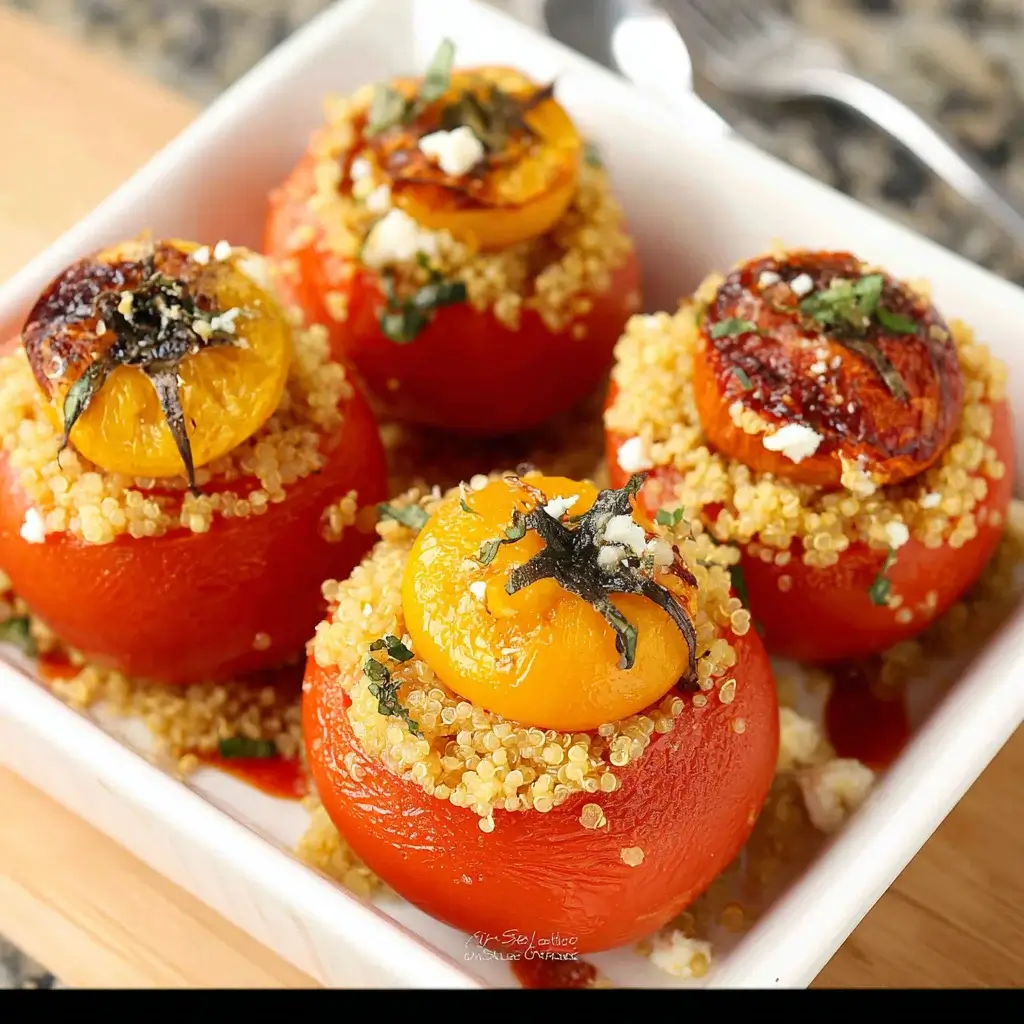
There are meals that feed the body, and then there are meals that feed the soul, weaving themselves into the fabric of your culinary memories. This Quinoa Stuffed Tomatoes recipe, for me, falls firmly into the latter category. I first stumbled upon the concept of stuffing vegetables years ago, but it was during a particularly vibrant farmers’ market visit last summer that the idea took root and blossomed into a personal creation. I was holding the most perfect, plump, ruby-red tomatoes I had ever seen—heavy for their size, fragrant with the smell of sunshine and earth. I knew they couldn’t be relegated to a simple salad; they deserved to be the star. I wanted to create something that was not only beautiful to look at but also packed with wholesome, satisfying ingredients that celebrated the end-of-summer harvest.
The process of preparing them felt almost meditative, a slow and intentional act in a fast-paced world. Scooping out the delicate pulp felt like carving a little vessel, preparing it for a precious cargo. As I mixed the fluffy, nutty quinoa with a rainbow of finely diced zucchini and bell pepper, fragrant herbs from my garden, and a bright kick of lemon, the kitchen filled with an aroma that was both earthy and invigorating. The moment they emerged from the oven was pure magic. Their skins, once taut and glossy, were now slightly softened and wrinkled, glistening under the kitchen lights. The quinoa filling had puffed up proudly, its top edges toasted to a beautiful golden brown where I’d sprinkled a little Parmesan. My family was equally captivated. They loved the vibrant presentation, the tender tomato wall yielding effortlessly to the flavorful filling, and the sheer wholesomeness of the dish. It’s since become a cherished recipe, the perfect answer for a light yet filling lunch, a stunning vegetarian main course for guests, or a colorful side dish that always feels like a special occasion.
The Soul of the Dish: A Culinary Tradition Reimagined
Stuffing vegetables is a culinary tradition as old as civilization itself, a testament to human ingenuity and the desire to make the most of nature’s bounty. This practice, found in nearly every corner of the globe, reaches its zenith in the sun-drenched cuisines of the Mediterranean and the Middle East. There, under names like Gemista in Greece (meaning “filled”) or Dolma in Turkey and the Levant (meaning “stuffed”), this art form transforms humble produce like tomatoes, peppers, zucchini, and eggplant into complete, satisfying meals.
This Quinoa Stuffed Tomatoes recipe is a modern, health-conscious nod to that rich history. It takes the core philosophy of Gemista—using a fresh vegetable as a natural, edible cooking vessel—and updates the filling for the contemporary palate. Where traditional fillings often rely on rice and ground meat, we substitute with a nutritional powerhouse: quinoa. This ancient grain, once a staple of the Inca Empire, brings a host of benefits. It’s a complete protein, containing all nine essential amino acids, making this dish exceptionally satisfying for a plant-based meal. Its delightful, slightly nutty flavor and fluffy, distinct texture provide a wonderful contrast to the soft, yielding tomato.
The spirit of the Mediterranean is woven throughout the rest of the filling. We build layers of flavor starting with a base of sautéed onion and garlic, the aromatic foundation of countless classic dishes. We incorporate finely diced seasonal vegetables for texture, color, and added nutrients. We lean on the quintessential herbs of the region—oregano, parsley, and a surprising hint of mint—to lend an authentic, herbaceous fragrance. Finally, everything is tied together with high-quality extra virgin olive oil and brightened with fresh lemon juice, two pillars of Mediterranean cooking. The result is a dish that feels both timeless and perfectly suited for today: nourishing, vibrant, and bursting with life.
The Anatomy of a Perfect Stuffed Tomato: An Ingredient Deep Dive
For a dish with such humble components, the final result is extraordinarily dependent on the quality and preparation of each ingredient. Let’s break down the key players and why they matter.
The Tomato Vessel: Choosing Your Canvas
The tomato is not just a container; it’s an active ingredient that flavors the entire dish. Selecting the right one is crucial.
- Variety: Look for large, round, and uniformly shaped tomatoes. Beefsteak varieties are a classic choice due to their size and sturdy walls. Heirloom tomatoes, like the Brandywine or Mortgage Lifter, offer incredible flavor and beautiful color, though their irregular shapes can sometimes make them trickier to stuff. On-the-vine tomatoes are also excellent, as they tend to have a more concentrated flavor.
- Ripeness and Firmness: The ideal tomato is perfectly ripe but still very firm to the touch. It should feel heavy for its size, indicating juiciness, but the skin should be taut and unyielding when gently pressed. An overripe, soft tomato will collapse and turn to mush in the oven, while an underripe tomato will be flavorless and hard.
- Flavor Profile: The oven works wonders on a tomato. The high heat intensifies its natural sugars through caramelization, while its inherent acidity provides a beautiful contrast to the savory quinoa filling. The juices released from the tomato walls during baking will also gently steam and flavor the quinoa from the inside out.
The Quinoa Heart: A Nutritional Powerhouse
Quinoa is the soul of our filling, providing substance, texture, and a wealth of nutrients.
- What is it? Though we cook it like a grain, quinoa is technically a seed. It’s naturally gluten-free and celebrated for its remarkable nutritional profile.
- Types of Quinoa: You’ll most commonly find white (or ivory), red, and black quinoa. White quinoa has the mildest flavor and cooks up the fluffiest, making it a great choice for this recipe. Red and black quinoa have a slightly chewier texture and a nuttier flavor, which also work beautifully and can add visual interest. A tri-color blend is a fantastic option for both texture and appearance.
- The Importance of Rinsing: Quinoa seeds are naturally coated in a substance called saponin, which acts as a natural pest repellent. While harmless, saponin has a bitter, soapy taste. A thorough rinse in a fine-mesh sieve under cold running water is absolutely essential to remove this coating and ensure a clean, nutty flavor.
The Flavor Components: Building Complexity
- Aromatics and Vegetables: Finely dicing the onion, garlic, zucchini, and bell pepper is key. A small dice ensures they cook evenly and integrate seamlessly into the quinoa filling, providing little bursts of flavor and texture in every bite rather than large, distracting chunks.
- Herbs and Seasonings: The combination of dried oregano with fresh parsley and mint creates a dynamic herb profile. The dried oregano releases its earthy, robust flavor during the bake, while the fresh herbs, added at the end, provide a vibrant, fresh lift.
- Olive Oil and Lemon: Do not underestimate these two ingredients. Use a good quality extra virgin olive oil, as its fruity, peppery notes will shine through. The fresh lemon juice and zest are not just for flavor; their acidity cuts through the richness and brightens the entire dish, making all the other flavors pop.
Complete with the Ingredients Amount
This recipe is designed to be a blueprint. Feel free to adapt the filling vegetables based on what is in season or what you have on hand.
For the Stuffed Tomatoes:
- Large Tomatoes: 6-8 large, firm, ripe tomatoes (Beefsteak or similar are ideal)
- Quinoa: 1 cup uncooked quinoa (white, red, or tri-color), rinsed thoroughly in a fine-mesh sieve
- Vegetable Broth or Water: 2 cups, for cooking the quinoa
- Extra Virgin Olive Oil: 3 tablespoons, divided
- Onion: 1 medium onion, finely diced
- Garlic: 3-4 cloves, minced
- Zucchini: 1 medium, finely diced
- Bell Pepper: 1 small bell pepper (red, yellow, or orange for sweetness), finely diced
- Fresh Parsley: ¼ cup, finely chopped, plus more for garnish
- Fresh Mint: 2 tablespoons, finely chopped (optional, but adds a wonderful freshness)
- Lemon: 1, for 1 teaspoon of zest and 1 tablespoon of juice
- Dried Oregano: 1 teaspoon
- Kosher Salt: ¾ teaspoon, plus more for seasoning tomatoes
- Freshly Cracked Black Pepper: ½ teaspoon
- Optional Toppings: ¼ cup crumbled feta cheese, grated Parmesan cheese, or toasted pine nuts
Instructions: A Step-by-Step Guide to Flavorful Stuffed Tomatoes
This process is a joyful assembly of fresh ingredients. Take your time and enjoy each step.
Part 1: Mastering the Quinoa
- Rinse Thoroughly: Place the 1 cup of uncooked quinoa into a fine-mesh sieve. Hold it under cold, running water and rinse for at least 30-60 seconds, using your fingers to move the grains around to ensure they are all washed. This is the most crucial step for delicious, non-bitter quinoa.
- Cook the Quinoa: Combine the rinsed quinoa and 2 cups of vegetable broth (for more flavor) or water in a medium saucepan. Add a pinch of salt. Bring the mixture to a rolling boil over high heat.
- Simmer and Steam: Once boiling, immediately reduce the heat to the lowest possible setting, cover the pot with a tight-fitting lid, and let it simmer for 15 minutes. After 15 minutes, check to see if the liquid has been absorbed. If not, cover and cook for another 2-5 minutes.
- Rest and Fluff: Remove the saucepan from the heat and let it stand, still covered, for 5-10 minutes. This resting period allows the quinoa to finish steaming and absorb any remaining moisture, resulting in a perfectly fluffy texture. Uncover the pot and gently fluff the quinoa with a fork to separate the grains. Set aside.
Part 2: Preparing the Tomato Canvas and Savory Filling
- Prepare the Tomatoes: Using a sharp serrated knife, slice about ½ inch off the top (stem end) of each tomato. Set these “lids” aside if you wish to use them for presentation.
- The Art of Hollowing: With a grapefruit spoon or a small, sharp-edged teaspoon, carefully scoop out the seeds and pulp from inside each tomato. Work your way around the inner walls, leaving a sturdy shell about ¼- to ½-inch thick. Be gentle to avoid piercing the bottom or sides.
- Season the Shells: Lightly sprinkle the inside of each hollowed-out tomato with a pinch of kosher salt. Turn them upside down on a plate lined with paper towels and let them rest for 10-15 minutes. This step draws out excess moisture, which both seasons the tomato itself and prevents the final dish from being watery.
- Utilize the Pulp: Finely chop the scooped-out tomato pulp, discarding any tough core pieces. You will use about ½ to ¾ cup of this pulp to add moisture and concentrated tomato flavor back into your filling.
- Sauté the Base: Heat 2 tablespoons of olive oil in a large skillet over medium heat. Add the finely diced onion and a pinch of salt. Cook, stirring occasionally, until the onion is soft and translucent, about 5-7 minutes. Add the minced garlic and cook for another minute until fragrant.
- Cook the Vegetables: Add the diced zucchini and bell pepper to the skillet. Continue to cook for another 5-7 minutes, until the vegetables are tender-crisp. You want them to retain a slight bite, as they will continue to soften in the oven. Stir in the chopped tomato pulp and the dried oregano, and cook for 2 minutes more to allow the flavors to meld.
- Combine the Filling: In a large mixing bowl, combine the cooked and fluffed quinoa with the sautéed vegetable mixture from the skillet. Add the chopped fresh parsley, fresh mint, lemon zest, and lemon juice. Season with ¾ teaspoon of salt and ½ teaspoon of black pepper. Stir everything together gently until well combined. Taste the filling at this stage—it should be vibrant and well-seasoned. Adjust salt, pepper, or lemon juice as needed.
Part 3: The Final Assembly and Bake
- Preheat and Prepare: Preheat your oven to 375°F (190°C). Select a baking dish that will hold the tomatoes snugly upright without being too crowded. Drizzle the bottom of the dish with the remaining 1 tablespoon of olive oil.
- Stuff the Tomatoes: Gently pat the inside of the tomato shells with a paper towel to remove any collected moisture. Spoon the quinoa filling into each tomato, packing it in gently but generously. The filling can be mounded slightly over the top.
- Arrange for Baking: Place the stuffed tomatoes in the prepared baking dish. If they are a bit unstable, you can slice a tiny bit off the bottom to create a flat surface. Pour about ½ cup of vegetable broth or water into the bottom of the baking dish around the tomatoes. This creates steam as they bake, preventing the bottoms from scorching and keeping the dish moist.
- Bake to Perfection: Place the dish in the preheated oven. Bake for 40-50 minutes. The tomatoes should be very tender (a knife should slide in easily) and their skins should be wrinkled. The filling should be hot throughout and the top should be lightly golden. If you are adding cheese, sprinkle it on during the last 10-15 minutes of baking.
- Rest Before Serving: Carefully remove the baking dish from the oven. Let the tomatoes rest for at least 10 minutes before serving. This allows the filling to set up slightly and the tomatoes to cool just enough to be handled and enjoyed without being scorching hot.
Nutrition Facts: A Deeper Look
These figures are approximate and can vary based on the size of your tomatoes and specific add-ins.
- Servings: 6-8 stuffed tomatoes
- Calories per serving (per tomato): Approximately 150-200 kcal (without cheese)
This dish is a nutritional powerhouse. The tomatoes are rich in antioxidants like lycopene and vitamins A and C. Quinoa provides high-quality plant-based protein, fiber, iron, and magnesium. The olive oil contributes heart-healthy monounsaturated fats. It’s a well-rounded, nutrient-dense meal that is naturally gluten-free and easily made vegan.
Preparation Time
- Active Prep Time: 30 minutes (chopping, sautéing, stuffing)
- Cook Time: 40-50 minutes (baking)
- Total Time: Approximately 1 hour 15 minutes
The Art of Serving, Pairing, and Presentation
These beautiful tomatoes deserve a presentation that honors them.
- Plating: Serve one or two tomatoes per person on a plate. Spoon some of the delicious, concentrated pan juices from the bottom of the baking dish over the top. Garnish with a generous sprinkle of fresh parsley and a final drizzle of high-quality extra virgin olive oil.
- Accompaniments:
- Simple Salad: A crisp arugula or mixed greens salad with a simple lemon vinaigrette is the perfect fresh, peppery counterpoint.
- Yogurt or Sauce: A dollop of thick Greek yogurt or tangy tzatziki sauce provides a cool, creamy contrast.
- Crusty Bread: A slice of rustic sourdough or focaccia is non-negotiable for sopping up the incredible juices left in the baking dish.
- Wine Pairings:
- White Wine: A crisp, dry white wine with good acidity pairs beautifully. Think Sauvignon Blanc from the Loire Valley, a Greek Assyrtiko, or an Italian Pinot Grigio.
- Rosé: A dry rosé from Provence, with its notes of red berries and herbs, is another excellent choice that complements the Mediterranean flavors.
Extensive Customizations and Flavor Variations
This recipe is a fantastic template. Here are some ways to make it your own:
- Grain Swaps:
- Bulgur Wheat: For a more traditional Middle Eastern Tabbouleh-style filling.
- Farro: Offers a delightful chew and nutty flavor.
- Pearl Couscous: These small pasta pearls create a lovely texture.
- Protein Boosts:
- Vegan: Add a cup of rinsed chickpeas or white beans to the quinoa mixture for extra protein and fiber.
- Non-Vegan: For a heartier dish, brown ½ lb of ground lamb, chicken, or Italian sausage with the onions and incorporate it into the filling.
- Flavor Profiles:
- Spicy Southwest: Swap oregano for cumin and chili powder, add a can of black beans and corn to the filling, and top with Pepper Jack cheese and cilantro.
- Italian Herb: Use a mix of basil, oregano, and thyme. Add finely chopped sun-dried tomatoes and top with mozzarella or Parmesan.
- Middle Eastern Spice: Add a pinch of cinnamon, allspice, and a handful of toasted pine nuts and currants to the filling.
Troubleshooting and Pro-Tips
- Problem: My tomatoes collapsed into mush.
- Cause: The tomatoes were likely overripe, or they were overbaked.
- Solution: Choose firm tomatoes. Check for doneness by piercing with a knife; you want it to be tender, not falling apart.
- Problem: My filling is watery.
- Cause: The tomato shells were not salted and drained, or too much wet pulp was added.
- Solution: Don’t skip the step of salting and inverting the tomatoes. Be mindful of how much of the watery seed pulp you add back into the filling.
- Problem: My filling is bland.
- Cause: Under-seasoning. Quinoa and vegetables need a generous hand with salt, pepper, and acid.
- Solution: Taste your filling before you stuff the tomatoes. It should taste delicious and fully seasoned on its own. Be bold with your herbs and lemon juice.
- Make-Ahead Tip: You can fully prepare the quinoa filling up to 2 days in advance and store it in the fridge. You can also hollow out the tomatoes a day ahead. When ready to eat, simply stuff and bake as directed, perhaps adding 5-10 minutes to the baking time.
In the end, this Quinoa Stuffed Tomatoes recipe is more than just a set of instructions; it’s an invitation. It’s an invitation to slow down, to connect with fresh ingredients, and to create a meal that is as beautiful and nourishing as it is delicious. It’s a taste of summer, a nod to tradition, and a celebration of healthy, vibrant food.
Print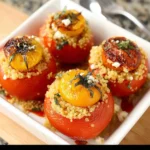
Quinoa Stuffed Tomatoes Recipe
Ingredients
For the Stuffed Tomatoes:
-
Large Tomatoes: 6-8 large, firm, ripe tomatoes (Beefsteak or similar are ideal)
-
Quinoa: 1 cup uncooked quinoa (white, red, or tri-color), rinsed thoroughly in a fine-mesh sieve
-
Vegetable Broth or Water: 2 cups, for cooking the quinoa
-
Extra Virgin Olive Oil: 3 tablespoons, divided
-
Onion: 1 medium onion, finely diced
-
Garlic: 3-4 cloves, minced
-
Zucchini: 1 medium, finely diced
-
Bell Pepper: 1 small bell pepper (red, yellow, or orange for sweetness), finely diced
-
Fresh Parsley: ¼ cup, finely chopped, plus more for garnish
-
Fresh Mint: 2 tablespoons, finely chopped (optional, but adds a wonderful freshness)
-
Lemon: 1, for 1 teaspoon of zest and 1 tablespoon of juice
-
Dried Oregano: 1 teaspoon
-
Kosher Salt: ¾ teaspoon, plus more for seasoning tomatoes
-
Freshly Cracked Black Pepper: ½ teaspoon
-
Optional Toppings: ¼ cup crumbled feta cheese, grated Parmesan cheese, or toasted pine nuts
Instructions
Part 1: Mastering the Quinoa
-
Rinse Thoroughly: Place the 1 cup of uncooked quinoa into a fine-mesh sieve. Hold it under cold, running water and rinse for at least 30-60 seconds, using your fingers to move the grains around to ensure they are all washed. This is the most crucial step for delicious, non-bitter quinoa.
-
Cook the Quinoa: Combine the rinsed quinoa and 2 cups of vegetable broth (for more flavor) or water in a medium saucepan. Add a pinch of salt. Bring the mixture to a rolling boil over high heat.
-
Simmer and Steam: Once boiling, immediately reduce the heat to the lowest possible setting, cover the pot with a tight-fitting lid, and let it simmer for 15 minutes. After 15 minutes, check to see if the liquid has been absorbed. If not, cover and cook for another 2-5 minutes.
-
Rest and Fluff: Remove the saucepan from the heat and let it stand, still covered, for 5-10 minutes. This resting period allows the quinoa to finish steaming and absorb any remaining moisture, resulting in a perfectly fluffy texture. Uncover the pot and gently fluff the quinoa with a fork to separate the grains. Set aside.
Part 2: Preparing the Tomato Canvas and Savory Filling
-
Prepare the Tomatoes: Using a sharp serrated knife, slice about ½ inch off the top (stem end) of each tomato. Set these “lids” aside if you wish to use them for presentation.
-
The Art of Hollowing: With a grapefruit spoon or a small, sharp-edged teaspoon, carefully scoop out the seeds and pulp from inside each tomato. Work your way around the inner walls, leaving a sturdy shell about ¼- to ½-inch thick. Be gentle to avoid piercing the bottom or sides.
-
Season the Shells: Lightly sprinkle the inside of each hollowed-out tomato with a pinch of kosher salt. Turn them upside down on a plate lined with paper towels and let them rest for 10-15 minutes. This step draws out excess moisture, which both seasons the tomato itself and prevents the final dish from being watery.
-
Utilize the Pulp: Finely chop the scooped-out tomato pulp, discarding any tough core pieces. You will use about ½ to ¾ cup of this pulp to add moisture and concentrated tomato flavor back into your filling.
-
Sauté the Base: Heat 2 tablespoons of olive oil in a large skillet over medium heat. Add the finely diced onion and a pinch of salt. Cook, stirring occasionally, until the onion is soft and translucent, about 5-7 minutes. Add the minced garlic and cook for another minute until fragrant.
-
Cook the Vegetables: Add the diced zucchini and bell pepper to the skillet. Continue to cook for another 5-7 minutes, until the vegetables are tender-crisp. You want them to retain a slight bite, as they will continue to soften in the oven. Stir in the chopped tomato pulp and the dried oregano, and cook for 2 minutes more to allow the flavors to meld.
-
Combine the Filling: In a large mixing bowl, combine the cooked and fluffed quinoa with the sautéed vegetable mixture from the skillet. Add the chopped fresh parsley, fresh mint, lemon zest, and lemon juice. Season with ¾ teaspoon of salt and ½ teaspoon of black pepper. Stir everything together gently until well combined. Taste the filling at this stage—it should be vibrant and well-seasoned. Adjust salt, pepper, or lemon juice as needed.
Part 3: The Final Assembly and Bake
-
Preheat and Prepare: Preheat your oven to 375°F (190°C). Select a baking dish that will hold the tomatoes snugly upright without being too crowded. Drizzle the bottom of the dish with the remaining 1 tablespoon of olive oil.
-
Stuff the Tomatoes: Gently pat the inside of the tomato shells with a paper towel to remove any collected moisture. Spoon the quinoa filling into each tomato, packing it in gently but generously. The filling can be mounded slightly over the top.
-
Arrange for Baking: Place the stuffed tomatoes in the prepared baking dish. If they are a bit unstable, you can slice a tiny bit off the bottom to create a flat surface. Pour about ½ cup of vegetable broth or water into the bottom of the baking dish around the tomatoes. This creates steam as they bake, preventing the bottoms from scorching and keeping the dish moist.
-
Bake to Perfection: Place the dish in the preheated oven. Bake for 40-50 minutes. The tomatoes should be very tender (a knife should slide in easily) and their skins should be wrinkled. The filling should be hot throughout and the top should be lightly golden. If you are adding cheese, sprinkle it on during the last 10-15 minutes of baking.
-
Rest Before Serving: Carefully remove the baking dish from the oven. Let the tomatoes rest for at least 10 minutes before serving. This allows the filling to set up slightly and the tomatoes to cool just enough to be handled and enjoyed without being scorching hot.
Nutrition
- Serving Size: one normal portion
- Calories: 150-200 kcal