

Fall in our house means one thing: squash season! And while I love a good butternut soup or roasted pumpkin, my absolute favorite way to enjoy autumn’s bounty is with Quinoa Stuffed Acorn Squash. This recipe has become a family tradition, evolving slightly each year as I experiment with different fillings and spices. What started as a simple vegetarian side dish has morphed into a hearty and satisfying main course that even the meat-lovers in my family devour. The beauty of this recipe lies in its versatility and the incredible depth of flavor it offers. The slightly sweet and nutty acorn squash, roasted to tender perfection, cradles a savory and wholesome quinoa stuffing. It’s a symphony of textures and tastes – the creamy squash, the fluffy quinoa, the crunch of toasted nuts, and the burst of sweetness from dried cranberries. Plus, it’s naturally gluten-free and easily adaptable to vegan diets. Whether you’re looking for a stunning vegetarian centerpiece for Thanksgiving, a cozy weeknight dinner, or a healthy and flavorful side, this Quinoa Stuffed Acorn Squash is guaranteed to impress. Trust me, the aroma alone filling your kitchen as it bakes is enough to make you fall in love with fall all over again.
Ingredients for Delicious Quinoa Stuffed Acorn Squash
Crafting the perfect Quinoa Stuffed Acorn Squash begins with selecting the freshest, highest-quality ingredients. Each component plays a crucial role in creating a dish that is both flavorful and texturally satisfying. Let’s explore each ingredient and understand why they are essential for this autumnal delight:
- 2 Acorn Squash (medium-sized, about 1.5-2 lbs each): The star of our dish! Acorn squash is chosen for its perfect bowl shape and subtly sweet, nutty flavor that intensifies upon roasting. Select squash that are firm, heavy for their size, and free of blemishes or soft spots. The skin should be dull and not overly shiny, indicating ripeness. Medium-sized squash are ideal for individual servings, but you can adjust the size based on your needs. Acorn squash provides a beautiful vessel for our stuffing and contributes a creamy, tender texture to the final dish. Look for squash with a deep green color and a patch of orange where it rested on the ground – this is a sign of good ripeness and flavor development.
- 1 cup Quinoa (uncooked, any color): The heart of our stuffing, quinoa is a nutritional powerhouse and provides a wonderful fluffy texture. You can use white, red, black, or a tri-color blend of quinoa – each offers slightly different visual appeal and subtle flavor nuances. Rinse the quinoa thoroughly under cold water using a fine-mesh sieve before cooking to remove any saponins, which can impart a bitter taste. Quinoa is a complete protein, packed with fiber, and adds a wholesome, nutty flavor that complements the squash and other stuffing ingredients beautifully. It provides a hearty base that makes this dish satisfying and substantial.
- 2 cups Vegetable Broth (low-sodium): Used to cook the quinoa and infuse it with flavor. Low-sodium vegetable broth allows you to control the overall saltiness of the dish. You can also use chicken broth if you are not making a vegetarian or vegan version. Using broth instead of water adds depth and richness to the quinoa. For a richer flavor, consider using homemade vegetable broth or a high-quality store-bought brand.
- 1 tablespoon Olive Oil: Essential for roasting the squash and sautéing the vegetables for the stuffing. Olive oil adds healthy fats and enhances the flavors of the ingredients. Use extra virgin olive oil for the best flavor and nutritional benefits. It helps the squash caramelize beautifully in the oven and prevents the stuffing from drying out during cooking.
- 1 Yellow Onion (medium, diced): Forms the aromatic base of our stuffing. Yellow onion provides a mild, savory flavor that builds depth and complexity. Dice the onion finely so it cooks evenly and blends seamlessly into the stuffing. Onion is a foundational ingredient that adds sweetness and umami to the stuffing.
- 2 cloves Garlic (minced): Garlic is a flavor booster that adds pungent aroma and savory notes to the stuffing. Freshly minced garlic is always preferred for its robust flavor. Garlic complements the onion and other vegetables, creating a rich and savory flavor profile. You can adjust the amount of garlic to your preference – some may prefer a milder garlic flavor, while others enjoy a more pronounced garlic kick.
- 2 cups Mushrooms (cremini or button, sliced): Mushrooms add an earthy, umami flavor and a meaty texture to the stuffing, making it more satisfying and substantial, especially in a vegetarian dish. Cremini (baby bella) or button mushrooms work well. Slice the mushrooms thinly so they cook down and integrate well into the stuffing. Mushrooms absorb flavors beautifully and contribute a savory depth to the overall dish.
- 1 cup Baby Spinach (packed): Adds a boost of nutrients and a touch of green color to the stuffing. Spinach wilts down quickly and provides a subtle earthy flavor and tenderness. Packed spinach ensures you have a good amount even after it cooks down. Spinach is a great way to sneak in extra greens and vitamins without overpowering the other flavors.
- 1/2 cup Dried Cranberries (or chopped dried apricots/raisins): Dried cranberries offer a burst of sweetness and a chewy texture that contrasts beautifully with the savory elements of the stuffing. They provide a delightful counterpoint to the earthy mushrooms and nutty quinoa. You can substitute with other dried fruits like chopped dried apricots or raisins if preferred. The sweetness and slight tartness of dried cranberries add complexity and balance to the stuffing.
- 1/2 cup Toasted Pecans or Walnuts (roughly chopped): Toasted nuts provide a delightful crunch and nutty flavor that elevates the texture and taste of the stuffing. Pecans or walnuts are excellent choices, but you can use other nuts like almonds or hazelnuts as well. Toasting the nuts enhances their flavor and crispness. Nuts add healthy fats, protein, and a satisfying textural contrast to the soft quinoa and squash.
- 2 tablespoons Fresh Parsley (chopped): Fresh parsley adds a bright, herbaceous note and a touch of freshness to the stuffing. It provides a final flourish of flavor and visual appeal. Italian flat-leaf parsley is preferred for its robust flavor. Parsley balances the richness of the other ingredients and contributes a clean, fresh finish.
- 1 teaspoon Dried Thyme: Thyme is a classic herb that adds a warm, earthy, and slightly lemony flavor that complements squash and mushrooms beautifully. Dried thyme is convenient and provides a concentrated flavor. Thyme is a quintessential autumnal herb that enhances the savory and comforting flavors of the dish.
- 1/2 teaspoon Ground Nutmeg: Nutmeg adds a warm, subtly sweet, and slightly spicy aroma that is characteristic of fall flavors and pairs wonderfully with squash and warm spices. A little nutmeg goes a long way, adding depth and complexity to the stuffing. Nutmeg complements the thyme and other spices, creating a harmonious blend of warm autumnal flavors.
- Salt and Freshly Ground Black Pepper to taste: Essential for seasoning and enhancing all the flavors. Sea salt and freshly ground black pepper are preferred for their superior taste. Season generously at each stage of cooking – the squash, the quinoa, and the stuffing – to ensure all the flavors are well-balanced and vibrant.
By gathering these thoughtfully selected ingredients, you are setting the stage for a truly exceptional Quinoa Stuffed Acorn Squash. The combination of textures and flavors, from the creamy squash to the fluffy quinoa and the sweet and savory stuffing, will create a memorable and satisfying dish.
Instructions: How to Make Quinoa Stuffed Acorn Squash
Creating this impressive and flavorful Quinoa Stuffed Acorn Squash is easier than you might think! Follow these step-by-step instructions to bake up a batch of autumnal deliciousness:
Step 1: Prepare the Acorn Squash
- Preheat oven to 400°F (200°C). Preheating ensures the oven is at the correct temperature for even roasting.
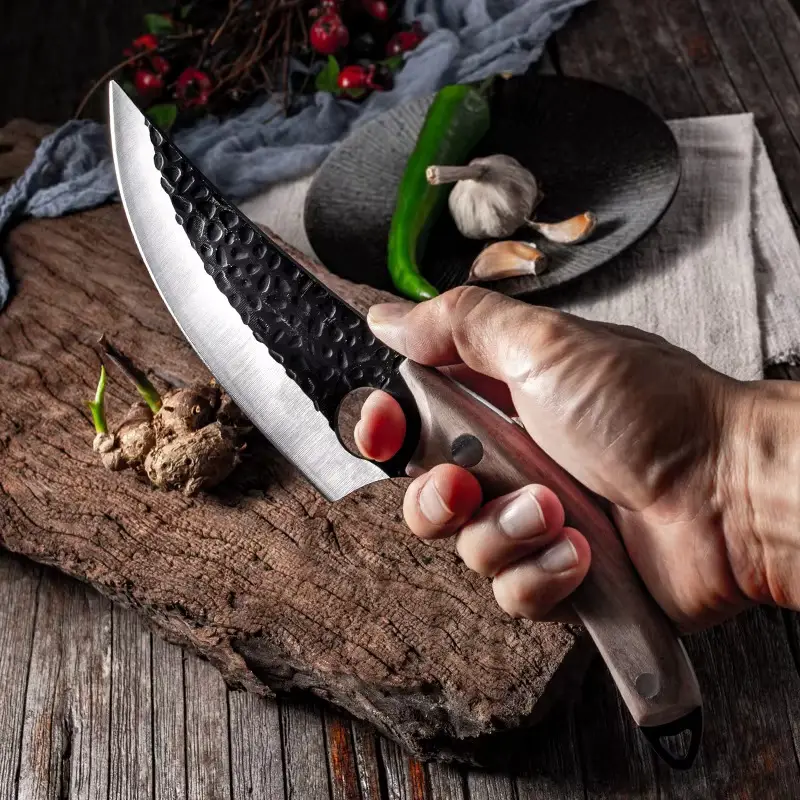
- Wash and halve the acorn squash: Rinse the acorn squash thoroughly under cold water. Using a sharp, sturdy knife, carefully cut each squash in half lengthwise from stem to blossom end. Acorn squash can be hard to cut, so be cautious and use a stable cutting board.
- Scoop out the seeds: Use a spoon to scoop out the seeds and stringy fibers from the cavity of each squash half. Discard the seeds and fibers, or save the seeds to roast later if desired. Ensure the cavities are clean and smooth to hold the stuffing.
- Brush with olive oil and season: Brush the cut surfaces and cavities of the squash halves with olive oil. Season generously with salt and freshly ground black pepper. Olive oil helps the squash roast and caramelize, while seasoning enhances its natural flavor.
- Roast the squash: Place the squash halves cut-side down on a baking sheet lined with parchment paper for easier cleanup. Roast in the preheated oven for 35-45 minutes, or until the squash is tender when pierced with a fork. Roasting cut-side down allows the squash to steam and become tender. The roasting time may vary depending on the size of your squash and your oven. You want the flesh to be easily pierced with a fork but still hold its shape.
Step 2: Cook the Quinoa
- Rinse the quinoa: While the squash is roasting, rinse the quinoa thoroughly in a fine-mesh sieve under cold running water for about 1-2 minutes. This removes saponins and ensures a better flavor.
- Combine quinoa and broth: In a medium saucepan, combine the rinsed quinoa and vegetable broth. Bring to a boil over high heat.
- Simmer and cook: Once boiling, reduce the heat to low, cover the saucepan, and simmer for 15-20 minutes, or until all the liquid is absorbed and the quinoa is cooked through and fluffy. The quinoa should be tender and the small germ ring should be visible.
- Fluff with a fork: Remove the saucepan from the heat and let it stand, covered, for 5 minutes. Then, fluff the quinoa with a fork. Letting it stand allows the quinoa to fully absorb any remaining moisture and become perfectly fluffy.
Step 3: Prepare the Stuffing
- Sauté onion and garlic: While the quinoa is cooking, heat olive oil in a large skillet over medium heat. Add the diced onion and cook until softened and translucent, about 5-7 minutes. Add the minced garlic and cook for another minute until fragrant, being careful not to burn the garlic. Sautéing the onion and garlic first builds a flavorful base for the stuffing.
- Add mushrooms and thyme: Add the sliced mushrooms and dried thyme to the skillet. Cook, stirring occasionally, until the mushrooms are softened and have released their moisture, about 8-10 minutes. Cooking the mushrooms until they release their moisture intensifies their flavor and prevents the stuffing from being watery.
- Stir in spinach: Add the packed spinach to the skillet and cook until it wilts down completely, about 2-3 minutes. Spinach wilts quickly and adds a boost of nutrients and color.
- Combine stuffing ingredients: Remove the skillet from the heat. In a large bowl, combine the cooked quinoa, sautéed vegetable mixture (onion, garlic, mushrooms, spinach), dried cranberries, toasted pecans or walnuts, fresh parsley, and ground nutmeg. Season generously with salt and freshly ground black pepper to taste. Taste the stuffing and adjust seasoning as needed. You want a well-balanced and flavorful stuffing.
Step 4: Stuff and Bake the Squash
- Fill the squash cavities: Once the roasted acorn squash is tender enough to handle, carefully remove it from the oven and let it cool slightly. Turn the squash halves cut-side up. Spoon the quinoa stuffing evenly into the cavities of each squash half, mounding it slightly. Pack the stuffing firmly but gently into the cavities.
- Bake again (optional): If you want the stuffing to be heated through and slightly browned on top, return the stuffed squash to the oven and bake for another 10-15 minutes, or until heated through and lightly golden on top. This step is optional, as the squash and stuffing are already cooked, but it can enhance the flavors and textures.
Step 5: Serve and Enjoy!
- Garnish (optional): Garnish the Quinoa Stuffed Acorn Squash with extra chopped fresh parsley or toasted pecans before serving, if desired, for added visual appeal and flavor.
- Serve warm: Serve the Quinoa Stuffed Acorn Squash warm as a main course or a hearty side dish. It’s delicious served immediately after baking, but can also be enjoyed slightly cooled.
Following these detailed instructions will guide you to create a beautifully roasted and flavorful Quinoa Stuffed Acorn Squash. The combination of tender squash, savory quinoa stuffing, and sweet and nutty accents will make this dish a fall favorite. Enjoy!
Nutrition Facts: Quinoa Stuffed Acorn Squash
Understanding the nutritional profile of your meals helps you make informed choices for a balanced and healthy diet. Here’s a breakdown of the approximate nutrition facts for one serving of Quinoa Stuffed Acorn Squash. Please remember that these are estimates and can vary based on specific ingredients and portion sizes.
Servings: This recipe is typically designed to make 4 servings, with each serving being one stuffed acorn squash half.
Approximate Nutritional Values per Serving (1 stuffed squash half):
- Calories: Approximately 400-500 calories per serving. This can vary depending on the size of the acorn squash and the amount of stuffing.
- Protein: 10-15 grams of protein. Quinoa is a good source of plant-based protein, and nuts also contribute to this value.
- Fat: 15-20 grams of fat. A significant portion of this fat comes from healthy unsaturated fats in olive oil and nuts.
- Saturated Fat: Approximately 2-3 grams of saturated fat, primarily from olive oil and nuts.
- Cholesterol: 0 mg of cholesterol, as this is a plant-based dish.
- Carbohydrates: 60-70 grams of carbohydrates. This comes mainly from the acorn squash, quinoa, and dried cranberries. Acorn squash is naturally higher in carbohydrates.
- Fiber: 10-12 grams of fiber. Acorn squash, quinoa, vegetables, and nuts are all excellent sources of dietary fiber, which is beneficial for digestion, satiety, and blood sugar control.
- Sugar: Approximately 15-20 grams of sugar. This comes primarily from the natural sugars in acorn squash and dried cranberries.
- Sodium: 200-300 mg of sodium. This will depend on the type of vegetable broth used and the amount of salt added. Using low-sodium broth and controlling added salt helps keep sodium levels lower.
- Vitamins and Minerals: This dish is a good source of various vitamins and minerals, including:
- Vitamin A: From acorn squash and spinach, important for vision and immune function.
- Vitamin C: From acorn squash and spinach, an antioxidant and immune booster.
- Vitamin K: From spinach, essential for blood clotting and bone health.
- Potassium: From acorn squash, important for blood pressure regulation.
- Magnesium: From quinoa, spinach, and nuts, involved in many bodily functions.
- Iron: From quinoa and spinach, crucial for oxygen transport.
- Manganese: From quinoa and nuts, an antioxidant and enzyme cofactor.
Important Notes:
- Portion Control: While this dish is nutritious, be mindful of portion sizes, especially if you are watching your calorie or carbohydrate intake. Sticking to one stuffed squash half per serving is generally a good guideline.
- Ingredient Variations: Using different types of nuts, dried fruits, or adding more olive oil will slightly alter the nutritional values.
- Dietary Needs: This recipe is naturally vegetarian and can easily be made vegan by ensuring your vegetable broth is vegan-friendly. It is also gluten-free as quinoa is gluten-free. It’s a great option for those with various dietary restrictions.
- Nutrient Density: Quinoa Stuffed Acorn Squash is a nutrient-dense dish, meaning it provides a high amount of nutrients relative to its calorie content. It’s a good source of complex carbohydrates, fiber, protein, healthy fats, vitamins, and minerals.
Quinoa Stuffed Acorn Squash is not only delicious but also a healthy and wholesome meal choice. It’s packed with nutrients and provides a satisfying and balanced combination of macronutrients and micronutrients. Enjoy it as part of a healthy and varied diet!
Preparation Time: Plan Ahead for Deliciousness
While Quinoa Stuffed Acorn Squash is not a super quick weeknight meal, it’s definitely manageable and worth the effort, especially for a special occasion or a cozy weekend dinner. Planning ahead and breaking down the steps can make the process smoother.
Total Preparation Time: Approximately 1 hour 30 minutes to 1 hour 45 minutes.
Here’s a breakdown of the time involved:
- Prep Time (Squash & Ingredients): 20-25 minutes.
- Washing, halving, and seeding acorn squash (10-12 minutes).
- Dicing onion, mincing garlic, slicing mushrooms, chopping parsley and nuts (10-13 minutes).
- Rinsing quinoa (2 minutes).
- Cook Time (Roasting Squash): 35-45 minutes.
- Roasting acorn squash in the oven. This is mostly hands-off time, allowing you to work on other steps.
- Cook Time (Quinoa): 20 minutes.
- Cooking quinoa on the stovetop (simmering time). Mostly hands-off time.
- Cook Time (Stuffing): 15-20 minutes.
- Sautéing vegetables for stuffing (onion, garlic, mushrooms, spinach).
- Assembly and Final Bake (Optional): 10-15 minutes.
- Stuffing the roasted squash and optional final bake in the oven.
Time-Saving Tips:
- Prep Vegetables in Advance: Dice the onion, mince the garlic, and slice the mushrooms earlier in the day or even the day before and store them in airtight containers in the refrigerator.
- Cook Quinoa Ahead: Cook the quinoa a day ahead of time and store it in the refrigerator. Reheat it briefly before adding it to the stuffing.
- Toast Nuts in Advance: Toast the pecans or walnuts ahead of time and store them in an airtight container at room temperature.
- Use Pre-Washed Spinach: Using pre-washed baby spinach saves a few minutes of washing and prepping.
Perfect For:
- Weekend Dinners: Ideal for a relaxed weekend dinner when you have a little more time to spend in the kitchen.
- Holiday Meals: A stunning and flavorful vegetarian centerpiece for Thanksgiving, Christmas, or other holiday gatherings.
- Special Occasions: Impress guests with this elegant and delicious dish for birthdays, anniversaries, or dinner parties.
- Meal Prep: While the assembled stuffed squash is best served fresh, you can prepare the roasted squash and the quinoa stuffing separately ahead of time and assemble and bake them just before serving. This can break down the preparation into more manageable chunks.
- Autumnal Celebrations: Embrace the flavors of fall with this comforting and seasonal dish that’s perfect for chilly evenings.
While Quinoa Stuffed Acorn Squash requires a bit more time than a quick weeknight meal, the delicious and satisfying results are well worth the effort. With a little planning and these time-saving tips, you can easily enjoy this flavorful and healthy dish.
How to Serve Quinoa Stuffed Acorn Squash
Quinoa Stuffed Acorn Squash is a versatile and visually appealing dish that can be served in various ways, making it suitable for different meals and occasions. Here are some serving suggestions to showcase this autumnal delight:
As a Main Course (Vegetarian/Vegan Centerpiece):
- Elegant Plating: Serve each stuffed acorn squash half on individual plates. Garnish with a sprig of fresh parsley or thyme, or a sprinkle of toasted pecans for an elegant presentation.
- Family Style: Place the stuffed squash halves on a large serving platter for a family-style meal. Allow guests to serve themselves.
- Alongside a Simple Salad: Pair with a fresh green salad dressed with a light vinaigrette to balance the richness of the squash and stuffing. Arugula salad with lemon vinaigrette or a mixed greens salad with balsamic dressing works well.
- Roasted Vegetables: Serve alongside other roasted vegetables like Brussels sprouts, carrots, or sweet potatoes for a complete and hearty vegetarian meal.
- Creamy Sauce Drizzle (Optional): For added richness, drizzle a creamy sauce over the stuffed squash just before serving. Consider a vegan cashew cream sauce, a tahini dressing, or a balsamic glaze.
As a Side Dish (Vegetarian/Vegan Option):
- Alongside Roasted Meats: Serve as a flavorful and healthy side dish with roasted chicken, turkey, pork, or beef. The sweetness of the squash and the savory stuffing complement roasted meats beautifully.
- With Grilled Fish or Seafood: Pair with grilled salmon, cod, or shrimp for a balanced and nutritious meal.
- Part of a Holiday Feast: Include as a vegetarian or vegan option in your Thanksgiving, Christmas, or Easter holiday spread. It’s a beautiful and satisfying alternative to traditional meat-centric dishes.
- Buffet Style: Include in a buffet or potluck spread as a vegetarian and gluten-free option that is both visually appealing and delicious.
Creative Garnishes and Toppings (beyond the basics):
- Pomegranate Seeds: Sprinkle pomegranate seeds over the stuffed squash for a burst of color, sweetness, and tartness.
- Crumbled Feta Cheese (for vegetarian, not vegan): Add crumbled feta cheese over the hot stuffed squash for a salty, tangy, and creamy element.
- Toasted Pumpkin Seeds (Pepitas): Garnish with toasted pumpkin seeds for extra crunch and autumnal flavor.
- Maple Syrup Drizzle: A light drizzle of maple syrup over the roasted squash can enhance its natural sweetness.
- Fresh Sage Leaves: Crispy fried sage leaves or fresh sage sprigs add an aromatic and earthy garnish.
- Caramelized Onions: Top with caramelized onions for an extra layer of sweetness and savory depth.
- Spicy Roasted Chickpeas: Add spicy roasted chickpeas for extra protein and a crunchy texture.
Beverage Pairings:
- Dry White Wine: A crisp dry white wine like Pinot Grigio, Sauvignon Blanc, or unoaked Chardonnay pairs well with the flavors of squash and quinoa.
- Light-Bodied Red Wine: A light-bodied red wine like Pinot Noir or Beaujolais can also complement the dish.
- Apple Cider: Serve with warm or chilled apple cider for a classic autumnal pairing.
- Herbal Tea: A warm cup of herbal tea, like chamomile or ginger tea, is a comforting accompaniment.
- Sparkling Cider or Non-Alcoholic Sparkling Wine: For a festive touch, serve with sparkling cider or non-alcoholic sparkling wine.
No matter how you choose to serve it, Quinoa Stuffed Acorn Squash is sure to be a delicious and impressive addition to your meal. Its versatility and beautiful presentation make it a perfect choice for both casual and special occasions.
Additional Tips for Perfect Quinoa Stuffed Acorn Squash
To ensure your Quinoa Stuffed Acorn Squash is a resounding success every time, here are five essential tips to keep in mind:
- Roast the Squash Until Perfectly Tender: The key to delicious stuffed acorn squash is roasting the squash until it is perfectly tender but still holds its shape. Overcooked squash will become mushy and lose its structural integrity, while undercooked squash will be too firm and difficult to eat. Test for doneness by piercing the squash flesh with a fork. It should go in easily with little resistance. Don’t be afraid to roast it a little longer if needed, checking every few minutes after the initial roasting time. Properly roasted squash is creamy, sweet, and provides the perfect vessel for the savory stuffing.
- Don’t Overcook the Quinoa: Perfectly cooked quinoa is fluffy and tender, not mushy or gummy. Follow the cooking instructions carefully and use the correct quinoa-to-broth ratio (usually 1 cup quinoa to 2 cups liquid). Simmer the quinoa gently and resist the urge to stir it too much while it cooks. Overcooked quinoa can become sticky and unpleasant. If you find your quinoa is cooking too quickly and the liquid is absorbing before it’s tender, reduce the heat further. Well-cooked quinoa will be light and fluffy, providing a pleasant texture in the stuffing.
- Toast the Nuts for Enhanced Flavor: Toasting pecans or walnuts (or any nuts you choose to use) before adding them to the stuffing is crucial for enhancing their flavor and adding a delightful crunch. Toasting nuts brings out their natural oils and nutty aroma, making them significantly more flavorful. You can toast nuts in a dry skillet over medium heat, stirring frequently until fragrant and lightly browned, or bake them in the oven at 350°F (175°C) for 5-7 minutes. Be sure to watch them closely as nuts can burn quickly. Toasted nuts add a layer of complexity and texture that elevates the entire dish.
- Season Generously at Each Stage: Seasoning is paramount for bringing out the best flavors in Quinoa Stuffed Acorn Squash. Don’t just season at the end; season at each stage of the cooking process. Season the squash halves with salt and pepper before roasting. Season the sautéed vegetables for the stuffing. And season the quinoa itself with salt in the cooking liquid. Taste the stuffing before filling the squash and adjust seasoning as needed. Generous seasoning ensures that every element of the dish is flavorful and well-balanced, and that the overall dish is not bland.
- Customize the Stuffing to Your Taste: The quinoa stuffing is incredibly versatile, so feel free to customize it to your liking. Don’t be afraid to experiment with different vegetables, herbs, spices, and dried fruits. Add roasted root vegetables like carrots or parsnips, use different types of mushrooms, incorporate other dried fruits like apricots or cherries, or add different herbs like sage or rosemary. You can also add protein sources like lentils or chickpeas for a heartier stuffing. Tailoring the stuffing to your personal preferences and dietary needs will make this recipe even more enjoyable and unique to you.
By following these tips, you’ll be well on your way to creating a truly delicious and impressive Quinoa Stuffed Acorn Squash that will delight your family and guests. Enjoy the process and the flavorful results!
Frequently Asked Questions (FAQ) about Quinoa Stuffed Acorn Squash
Here are some common questions people ask about making Quinoa Stuffed Acorn Squash:
Q1: Can I make Quinoa Stuffed Acorn Squash ahead of time?
A: Yes, you can prepare components of Quinoa Stuffed Acorn Squash ahead of time to make the final assembly easier. You can roast the acorn squash halves a day in advance and store them in the refrigerator. You can also cook the quinoa and prepare the stuffing a day ahead and store them separately in airtight containers in the refrigerator. When ready to serve, simply reheat the stuffing and roasted squash, fill the cavities, and bake for a short time to heat through, if desired. Assembling and baking just before serving will yield the best texture, but prepping ahead is a great time-saver.
Q2: Can I freeze Quinoa Stuffed Acorn Squash?
A: While you can freeze Quinoa Stuffed Acorn Squash, the texture of the squash may become slightly softer after thawing. For best results, freeze leftover stuffed squash halves individually. Wrap each stuffed half tightly in plastic wrap and then in foil, or place in freezer-safe containers. Freeze for up to 2-3 months. To reheat, thaw overnight in the refrigerator and then bake in a 350°F (175°C) oven until heated through, about 20-30 minutes. You can also reheat in the microwave, but the texture may be less ideal.
Q3: Can I make this recipe vegan?
A: Yes, this recipe is easily made vegan! It is already vegetarian. To ensure it is vegan, simply use vegetable broth (which is typically vegan) and double-check that any other ingredients you use are plant-based. The recipe as written is naturally dairy-free and egg-free, making it suitable for vegan diets.
Q4: What are some variations I can make to the stuffing?
A: The quinoa stuffing is highly adaptable! Here are some variation ideas:
- Add Roasted Vegetables: Incorporate roasted root vegetables like carrots, parsnips, sweet potatoes, or butternut squash for added sweetness and flavor.
- Use Different Mushrooms: Experiment with different types of mushrooms like shiitake, oyster, or portobello for varied flavor profiles.
- Add Legumes: Add cooked lentils, chickpeas, or white beans to the stuffing for extra protein and fiber.
- Spice it Up: Add a pinch of red pepper flakes or a dash of hot sauce to the stuffing for a touch of heat.
- Use Different Dried Fruits and Nuts: Substitute dried cranberries with chopped dried apricots, raisins, cherries, or figs. Use almonds, hazelnuts, walnuts, or pine nuts instead of pecans.
- Add Cheese (for vegetarian, not vegan): For a vegetarian version, stir in some grated Parmesan cheese or crumbled feta cheese into the stuffing for added richness and flavor.
Q5: Can I use a different type of squash?
A: While acorn squash is ideal for stuffing due to its shape and size, you can use other types of squash, although you may need to adjust the preparation slightly. Butternut squash, delicata squash, or even small pumpkins can be used. Butternut squash may need to be cut into rounds or halves, and delicata squash halves can be stuffed similarly to acorn squash. Cooking times may vary depending on the type of squash. Acorn squash is favored for its bowl shape and slightly sweet flavor that pairs perfectly with savory stuffings.
We hope these FAQs are helpful as you prepare your own delicious Quinoa Stuffed Acorn Squash! Enjoy the warmth and flavors of this wonderful autumnal dish!
Print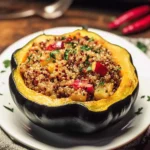
Quinoa Stuffed Acorn Squash recipe
Ingredients
- 2 Acorn Squash (medium-sized, about 1.5–2 lbs each): The star of our dish! Acorn squash is chosen for its perfect bowl shape and subtly sweet, nutty flavor that intensifies upon roasting. Select squash that are firm, heavy for their size, and free of blemishes or soft spots. The skin should be dull and not overly shiny, indicating ripeness. Medium-sized squash are ideal for individual servings, but you can adjust the size based on your needs. Acorn squash provides a beautiful vessel for our stuffing and contributes a creamy, tender texture to the final dish. Look for squash with a deep green color and a patch of orange where it rested on the ground – this is a sign of good ripeness and flavor development.
- 1 cup Quinoa (uncooked, any color): The heart of our stuffing, quinoa is a nutritional powerhouse and provides a wonderful fluffy texture. You can use white, red, black, or a tri-color blend of quinoa – each offers slightly different visual appeal and subtle flavor nuances. Rinse the quinoa thoroughly under cold water using a fine-mesh sieve before cooking to remove any saponins, which can impart a bitter taste. Quinoa is a complete protein, packed with fiber, and adds a wholesome, nutty flavor that complements the squash and other stuffing ingredients beautifully. It provides a hearty base that makes this dish satisfying and substantial.
- 2 cups Vegetable Broth (low-sodium): Used to cook the quinoa and infuse it with flavor. Low-sodium vegetable broth allows you to control the overall saltiness of the dish. You can also use chicken broth if you are not making a vegetarian or vegan version. Using broth instead of water adds depth and richness to the quinoa. For a richer flavor, consider using homemade vegetable broth or a high-quality store-bought brand.
- 1 tablespoon Olive Oil: Essential for roasting the squash and sautéing the vegetables for the stuffing. Olive oil adds healthy fats and enhances the flavors of the ingredients. Use extra virgin olive oil for the best flavor and nutritional benefits. It helps the squash caramelize beautifully in the oven and prevents the stuffing from drying out during cooking.
- 1 Yellow Onion (medium, diced): Forms the aromatic base of our stuffing. Yellow onion provides a mild, savory flavor that builds depth and complexity. Dice the onion finely so it cooks evenly and blends seamlessly into the stuffing. Onion is a foundational ingredient that adds sweetness and umami to the stuffing.
- 2 cloves Garlic (minced): Garlic is a flavor booster that adds pungent aroma and savory notes to the stuffing. Freshly minced garlic is always preferred for its robust flavor. Garlic complements the onion and other vegetables, creating a rich and savory flavor profile. You can adjust the amount of garlic to your preference – some may prefer a milder garlic flavor, while others enjoy a more pronounced garlic kick.
- 2 cups Mushrooms (cremini or button, sliced): Mushrooms add an earthy, umami flavor and a meaty texture to the stuffing, making it more satisfying and substantial, especially in a vegetarian dish. Cremini (baby bella) or button mushrooms work well. Slice the mushrooms thinly so they cook down and integrate well into the stuffing. Mushrooms absorb flavors beautifully and contribute a savory depth to the overall dish.
- 1 cup Baby Spinach (packed): Adds a boost of nutrients and a touch of green color to the stuffing. Spinach wilts down quickly and provides a subtle earthy flavor and tenderness. Packed spinach ensures you have a good amount even after it cooks down. Spinach is a great way to sneak in extra greens and vitamins without overpowering the other flavors.
- 1/2 cup Dried Cranberries (or chopped dried apricots/raisins): Dried cranberries offer a burst of sweetness and a chewy texture that contrasts beautifully with the savory elements of the stuffing. They provide a delightful counterpoint to the earthy mushrooms and nutty quinoa. You can substitute with other dried fruits like chopped dried apricots or raisins if preferred. The sweetness and slight tartness of dried cranberries add complexity and balance to the stuffing.
- 1/2 cup Toasted Pecans or Walnuts (roughly chopped): Toasted nuts provide a delightful crunch and nutty flavor that elevates the texture and taste of the stuffing. Pecans or walnuts are excellent choices, but you can use other nuts like almonds or hazelnuts as well. Toasting the nuts enhances their flavor and crispness. Nuts add healthy fats, protein, and a satisfying textural contrast to the soft quinoa and squash.
- 2 tablespoons Fresh Parsley (chopped): Fresh parsley adds a bright, herbaceous note and a touch of freshness to the stuffing. It provides a final flourish of flavor and visual appeal. Italian flat-leaf parsley is preferred for its robust flavor. Parsley balances the richness of the other ingredients and contributes a clean, fresh finish.
- 1 teaspoon Dried Thyme: Thyme is a classic herb that adds a warm, earthy, and slightly lemony flavor that complements squash and mushrooms beautifully. Dried thyme is convenient and provides a concentrated flavor. Thyme is a quintessential autumnal herb that enhances the savory and comforting flavors of the dish.
- 1/2 teaspoon Ground Nutmeg: Nutmeg adds a warm, subtly sweet, and slightly spicy aroma that is characteristic of fall flavors and pairs wonderfully with squash and warm spices. A little nutmeg goes a long way, adding depth and complexity to the stuffing. Nutmeg complements the thyme and other spices, creating a harmonious blend of warm autumnal flavors.
- Salt and Freshly Ground Black Pepper to taste: Essential for seasoning and enhancing all the flavors. Sea salt and freshly ground black pepper are preferred for their superior taste. Season generously at each stage of cooking – the squash, the quinoa, and the stuffing – to ensure all the flavors are well-balanced and vibrant.
Instructions
Step 1: Prepare the Acorn Squash
- Preheat oven to 400°F (200°C). Preheating ensures the oven is at the correct temperature for even roasting.
- Wash and halve the acorn squash: Rinse the acorn squash thoroughly under cold water. Using a sharp, sturdy knife, carefully cut each squash in half lengthwise from stem to blossom end. Acorn squash can be hard to cut, so be cautious and use a stable cutting board.
- Scoop out the seeds: Use a spoon to scoop out the seeds and stringy fibers from the cavity of each squash half. Discard the seeds and fibers, or save the seeds to roast later if desired. Ensure the cavities are clean and smooth to hold the stuffing.
- Brush with olive oil and season: Brush the cut surfaces and cavities of the squash halves with olive oil. Season generously with salt and freshly ground black pepper. Olive oil helps the squash roast and caramelize, while seasoning enhances its natural flavor.
- Roast the squash: Place the squash halves cut-side down on a baking sheet lined with parchment paper for easier cleanup. Roast in the preheated oven for 35-45 minutes, or until the squash is tender when pierced with a fork. Roasting cut-side down allows the squash to steam and become tender. The roasting time may vary depending on the size of your squash and your oven. You want the flesh to be easily pierced with a fork but still hold its shape.
Step 2: Cook the Quinoa
- Rinse the quinoa: While the squash is roasting, rinse the quinoa thoroughly in a fine-mesh sieve under cold running water for about 1-2 minutes. This removes saponins and ensures a better flavor.
- Combine quinoa and broth: In a medium saucepan, combine the rinsed quinoa and vegetable broth. Bring to a boil over high heat.
- Simmer and cook: Once boiling, reduce the heat to low, cover the saucepan, and simmer for 15-20 minutes, or until all the liquid is absorbed and the quinoa is cooked through and fluffy. The quinoa should be tender and the small germ ring should be visible.
- Fluff with a fork: Remove the saucepan from the heat and let it stand, covered, for 5 minutes. Then, fluff the quinoa with a fork. Letting it stand allows the quinoa to fully absorb any remaining moisture and become perfectly fluffy.
Step 3: Prepare the Stuffing
- Sauté onion and garlic: While the quinoa is cooking, heat olive oil in a large skillet over medium heat. Add the diced onion and cook until softened and translucent, about 5-7 minutes. Add the minced garlic and cook for another minute until fragrant, being careful not to burn the garlic. Sautéing the onion and garlic first builds a flavorful base for the stuffing.
- Add mushrooms and thyme: Add the sliced mushrooms and dried thyme to the skillet. Cook, stirring occasionally, until the mushrooms are softened and have released their moisture, about 8-10 minutes. Cooking the mushrooms until they release their moisture intensifies their flavor and prevents the stuffing from being watery.
- Stir in spinach: Add the packed spinach to the skillet and cook until it wilts down completely, about 2-3 minutes. Spinach wilts quickly and adds a boost of nutrients and color.
- Combine stuffing ingredients: Remove the skillet from the heat. In a large bowl, combine the cooked quinoa, sautéed vegetable mixture (onion, garlic, mushrooms, spinach), dried cranberries, toasted pecans or walnuts, fresh parsley, and ground nutmeg. Season generously with salt and freshly ground black pepper to taste. Taste the stuffing and adjust seasoning as needed. You want a well-balanced and flavorful stuffing.
Step 4: Stuff and Bake the Squash
- Fill the squash cavities: Once the roasted acorn squash is tender enough to handle, carefully remove it from the oven and let it cool slightly. Turn the squash halves cut-side up. Spoon the quinoa stuffing evenly into the cavities of each squash half, mounding it slightly. Pack the stuffing firmly but gently into the cavities.
- Bake again (optional): If you want the stuffing to be heated through and slightly browned on top, return the stuffed squash to the oven and bake for another 10-15 minutes, or until heated through and lightly golden on top. This step is optional, as the squash and stuffing are already cooked, but it can enhance the flavors and textures.
Step 5: Serve and Enjoy!
- Garnish (optional): Garnish the Quinoa Stuffed Acorn Squash with extra chopped fresh parsley or toasted pecans before serving, if desired, for added visual appeal and flavor.
- Serve warm: Serve the Quinoa Stuffed Acorn Squash warm as a main course or a hearty side dish. It’s delicious served immediately after baking, but can also be enjoyed slightly cooled.
Nutrition
- Serving Size: one normal portion
- Calories: 400-500
- Sugar: 15-20 grams
- Sodium: 200-300 mg
- Fat: 15-20 grams
- Saturated Fat: 2-3 grams
- Carbohydrates: 60-70 grams
- Fiber: 10-12 grams
- Protein: 10-15 grams