
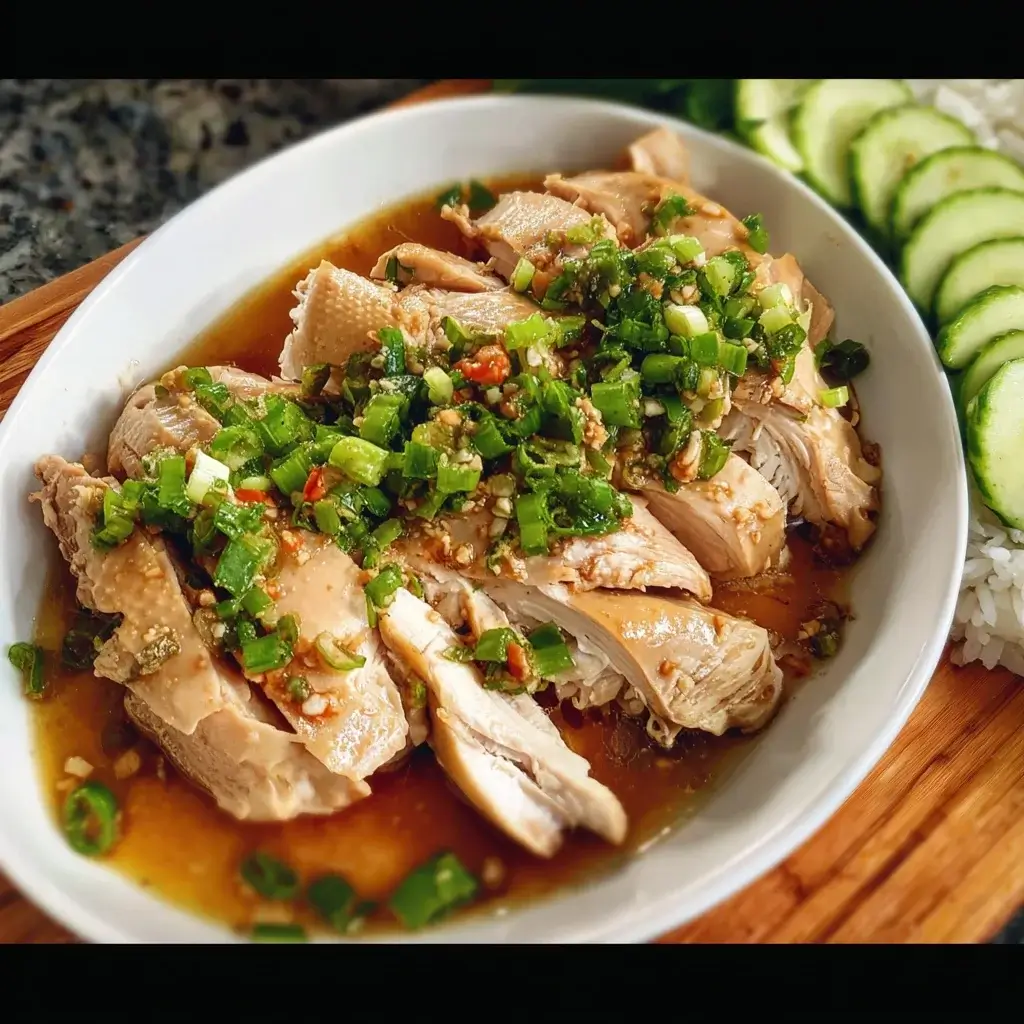
Of all the dishes in my culinary repertoire, the ones I return to most often are those that champion simplicity. There’s a quiet confidence in a recipe that doesn’t hide behind a dozen complex spices or elaborate techniques. This Poached Chinese Chicken, known in Mandarin as “Bai Qie Ji” (白切鸡), is the epitome of that philosophy. The first time I made it for my family, there was a moment of skepticism. It looked… plain. A pale, glistening chicken on a platter. But then came the sauce. The moment that vibrant, aromatic Ginger Scallion Sauce was drizzled over a slice of the impossibly tender, juicy chicken, the entire kitchen filled with its fragrance. The first bite was a revelation. The clean, pure flavor of the chicken, perfectly cooked and succulent, was electrified by the pungent, salty, and savory punch of the sauce. It wasn’t just a meal; it became an experience, a new family favorite that proves the most profound flavors often come from the most humble ingredients. It’s a dish that teaches you the art of subtlety and the magic that happens when you treat simple ingredients with respect.
The Soul of Simplicity: What is Poached Chinese Chicken?
Poached Chinese Chicken is a classic dish found across China and Southeast Asia, with famous regional variations like the iconic Hainanese Chicken Rice. At its core, it is a whole chicken, gently simmered in an aromatic broth with ginger, scallions, and sometimes star anise or Shaoxing wine. The name “Bai Qie Ji” literally translates to “white cut chicken,” a nod to its clean, simple presentation and the method of cutting it into pieces before serving.
The true genius of this dish lies in its cooking method. The chicken is not boiled aggressively. Instead, it is gently poached in water that is kept just below a simmer. This slow, gentle cooking process ensures that the chicken meat remains incredibly moist, tender, and succulent, while the skin becomes smooth and gelatinous. The process is often finished with an ice bath, which shocks the chicken, immediately stopping the cooking process and tightening the skin, giving it that signature delightful texture.
While the chicken is the foundation, the Ginger Scallion Sauce is its soulmate. This uncooked sauce, or more accurately, an aromatic oil, is what elevates the dish from simple to sublime. It’s a potent mixture of finely minced fresh ginger and scallions, which are then “bloomed” with sizzling hot neutral oil. The heat from the oil instantly releases the aromatics, creating a fragrant, pungent, and utterly addictive condiment. Seasoned with salt and sometimes a touch of sesame oil, it provides the perfect savory and zesty counterpoint to the mild, delicate flavor of the poached chicken. This dish is a celebration of texture and pure flavor, a testament to the idea that you don’t need complexity to achieve perfection.
Gathering Your Ingredients for Poached Chinese Chicken
Success in this recipe begins with high-quality, fresh ingredients. Since the flavors are so pure, each component has a chance to shine. Sourcing the best possible chicken and the freshest aromatics will make a world of difference in the final product.
For the Perfectly Poached Chicken:
- Whole Chicken (1): Approximately 3 to 3.5 lbs (about 1.5 kg). A high-quality free-range or organic chicken will yield the most flavor. Ensure it’s fresh, with the giblets removed. The chicken should be at room temperature for about 30-45 minutes before cooking for a more even result.
- Water: Enough to completely submerge the chicken in a large stockpot.
- Ginger (1): A 3-inch piece, washed and smashed or thickly sliced. This infuses the poaching liquid with a foundational aromatic warmth.
- Scallions (4-5): The white and light green parts, washed and lightly bruised or tied into a knot. This adds a subtle, sweet oniony flavor to the broth.
- Kosher Salt (2 tablespoons): For seasoning the poaching water.
- Shaoxing Wine (Optional, 2 tablespoons): This traditional Chinese cooking wine adds a layer of depth and fragrance to the broth, helping to mellow any “gamey” flavor from the chicken. Dry sherry is a suitable substitute.
For the Legendary Ginger Scallion Sauce:
- Fresh Ginger (1): A 3-inch piece (about 1/3 cup), peeled and very finely minced or grated. The finer the mince, the better the texture and flavor release.
- Scallions (1 bunch, about 6-8 stalks): Using both the white and green parts, very finely chopped. This provides both a sharp bite and fresh, grassy notes.
- Neutral Oil (1/2 cup): Such as canola, grapeseed, or avocado oil. You need an oil with a high smoke point that won’t impart its own strong flavor.
- Kosher Salt (1 ½ teaspoons, or to taste): This is crucial for bringing all the flavors together.
- Toasted Sesame Oil (1 teaspoon): Adds a nutty, aromatic finish to the sauce.
- White Pepper (Optional, ¼ teaspoon): For a touch of gentle, earthy heat.
Step-by-Step Guide to Perfectly Poached Chicken
Patience is the key virtue when poaching chicken. The goal is not to cook it quickly, but to cook it gently and evenly. Follow these steps meticulously for a flawless result.
Part 1: Preparing and Poaching the Chicken
- Prepare the Chicken: Remove the chicken from its packaging. Remove any giblets from the cavity (save them for making stock!). Rinse the chicken thoroughly, inside and out, under cold running water. Pat it completely dry with paper towels. A dry chicken results in better skin texture. Rub about one tablespoon of kosher salt all over the skin and inside the cavity. This acts as a dry brine, seasoning the meat and helping to create succulent results. Let it sit at room temperature for at least 30 minutes.
- Ready the Poaching Broth: Select a large stockpot or Dutch oven that is deep enough for the chicken to be fully submerged in water. Place the smashed ginger and knotted scallions inside the pot. If using, add the Shaoxing wine.
- The Poaching Process: Place the chicken, breast-side up, into the pot. Add enough cold water to cover the chicken by at least one inch. Turn the heat to high and bring the water to a rolling boil. As soon as it reaches a boil, immediately reduce the heat to low, so the water is at a “smiling simmer”—where only a few gentle bubbles break the surface. Skim off any scum or impurities that rise to the top with a fine-mesh sieve.
- The Gentle Cook: Cover the pot and let the chicken poach gently for 15 minutes. After 15 minutes, turn off the heat completely. Do not open the lid. Let the chicken sit in the hot water, with the heat off, for 45-50 minutes (for a 3-3.5 lb chicken). This residual heat cooking method is the secret to incredibly tender and juicy meat, as it prevents the muscle fibers from seizing up and becoming tough.
- Check for Doneness: The safest way to check for doneness is with an instant-read meat thermometer. Carefully remove the chicken from the pot and insert the thermometer into the thickest part of thethigh, being careful not to touch the bone. It should register 165°F (74°C). If it’s not quite there, return it to the hot broth for another 5-10 minutes. Another traditional method is to pierce the thigh with a skewer; if the juices run clear, it’s done.
- The Crucial Ice Bath: While the chicken is poaching, prepare a large bowl with ice and cold water. As soon as the chicken is cooked, use tongs to carefully transfer it from the hot broth directly into the ice bath. This step is critical for two reasons: it immediately stops the cooking process, preventing the chicken from becoming overcooked and dry, and it shocks the skin, making it firm, smooth, and delightfully gelatinous. Let the chicken cool completely in the ice bath for about 15-20 minutes.
- Rest and Carve: Remove the chicken from the ice bath and place it on a cutting board. Pat it dry one last time. Let it rest for at least 10 minutes before carving. This allows the juices to redistribute throughout the meat. You can rub a thin layer of sesame oil over the skin at this point for extra gloss and flavor. Carve the chicken into serving pieces as desired.
Do not discard the poaching liquid! This is now a flavorful chicken broth. Strain it and save it for cooking the rice, making soups, or as a base for noodle dishes.
Crafting the Legendary Ginger Scallion Sauce
This sauce comes together in minutes but packs an incredible flavor punch. Prepare it while the chicken is resting.
- Combine Aromatics: In a heatproof bowl (glass or ceramic is ideal), combine the very finely minced ginger, finely chopped scallions, and the kosher salt. If using, add the white pepper. Mix them together well.
- Heat the Oil: Pour the neutral oil into a small saucepan. Heat it over medium-high heat until it is very hot and shimmering. You can test if it’s ready by dropping in a tiny piece of scallion; it should sizzle vigorously immediately upon contact. Be careful, as the oil is extremely hot.
- Bloom the Flavors: Once the oil is hot, carefully and slowly pour it directly over the ginger and scallion mixture in the bowl. It will sizzle and pop loudly as the hot oil hits the aromatics, instantly cooking them slightly and releasing their incredible fragrance. This “blooming” process is what defines the sauce’s flavor.
- Finish and Season: Stir the mixture well with a spoon to ensure everything is coated in the hot oil. Stir in the toasted sesame oil. Taste the sauce and add more salt if needed. The sauce should be pungent, aromatic, and well-seasoned. It can be served immediately while warm or at room temperature.
The Vitals: Nutrition and Timing
Understanding the time commitment and nutritional profile can help you plan your meal perfectly.
Preparation Time Breakdown
- Active Preparation Time: 25 minutes (prepping the chicken, aromatics, and sauce)
- Cooking Time: 15 minutes active poaching + 45 minutes resting in hot water
- Resting Time: 20 minutes in ice bath + 10 minutes before carving
- Total Time: Approximately 1 hour 55 minutes
Nutrition Facts
- Servings: 6-8
- Calories per serving (approximate): 350-450 kcal
This approximation includes a portion of the chicken meat and skin along with a tablespoon of the ginger scallion sauce. The calorie count can vary based on the size of the chicken and the exact serving size. This dish is naturally low-carb, gluten-free (if using tamari or gluten-free soy sauce for serving), and high in protein. The ginger scallion sauce is primarily fat from the oil, but it is used as a condiment in small quantities.
How to Serve Your Poached Chinese Chicken: A Complete Meal
The beauty of this dish is its versatility. It can be the star of a simple weeknight dinner or part of an elaborate banquet-style meal.
- The Classic Hainanese-Style Platter:
- Arrange the carved chicken pieces neatly on a large platter.
- Serve with a bowl of fluffy white rice, ideally cooked using the strained poaching broth instead of water for an incredibly flavorful “chicken rice.”
- Place a small dipping bowl of the Ginger Scallion Sauce for each person.
- Add a side of fresh, crisp cucumber slices and tomato wedges to provide a refreshing contrast.
- A small bowl of the hot, strained poaching broth can be served as a simple soup to accompany the meal.
- As a Noodle Dish:
- Toss the poached chicken meat (shredded or sliced) with cooked egg noodles or rice noodles.
- Drizzle generously with the ginger scallion sauce and a splash of light soy sauce.
- Add blanched greens like bok choy or gai lan (Chinese broccoli) for a complete one-bowl meal.
- In a Salad or Summer Roll:
- Shred the cold poached chicken meat.
- Toss it with mixed greens, shredded carrots, cilantro, and mint. Use the ginger scallion sauce as a base for a vinaigrette by adding a little rice vinegar and honey.
- Alternatively, use the shredded chicken as a filling for fresh Vietnamese-style summer rolls.
- With Steamed Greens:
- For a healthy, low-carb option, serve the poached chicken alongside a platter of steamed or blanched vegetables like asparagus, broccoli, or bok choy. Drizzle the ginger scallion sauce over both the chicken and the vegetables.
Additional Pro-Tips for Unforgettable Poached Chicken
- Start with Room Temperature Chicken: Never poach a chicken straight from the refrigerator. Letting it sit on the counter for 30-45 minutes allows it to cook more evenly. A cold chicken will cause the exterior to overcook before the interior is done.
- Master the “Smiling Simmer”: Avoid a rolling boil at all costs. A vigorous boil will agitate the chicken, causing the skin to break and the meat to become tough and stringy. The ideal temperature is just below simmering, around 180-190°F (82-88°C), where the water is hot enough to cook but gentle enough to preserve texture.
- Don’t Skip the Ice Bath: This step might seem fussy, but it is non-negotiable for achieving the classic texture of Bai Qie Ji. It creates that firm, slightly gelatinous skin and ensures the meat doesn’t carry overcook from residual heat, guaranteeing its succulence.
- Liquid Gold: Save That Broth!: The poaching liquid is a treasure. After straining out the aromatics, you are left with a light, flavorful chicken broth. Use it to cook rice, as a base for wonton soup or egg drop soup, or for braising vegetables. You can even freeze it in portions for later use.
- Let It Rest Before Carving: Just like a roasted chicken or a grilled steak, poached chicken needs to rest after cooking (and after the ice bath). This 10-minute rest allows the juices, which have moved to the center during cooking, to redistribute throughout the meat. Carving it too early will result in a flood of juices on your cutting board and drier meat.
Frequently Asked Questions (FAQ)
1. Can I use chicken parts instead of a whole chicken?
Absolutely. Bone-in, skin-on chicken thighs or breasts are excellent choices. Thighs will take approximately 25-30 minutes of residual heat cooking, while breasts will take about 20-25 minutes. Always use a meat thermometer to confirm they have reached an internal temperature of 165°F (74°C).
2. How do I know for sure the chicken is cooked through without a thermometer?
While a thermometer is the most reliable method, you can use a skewer or a thin knife to pierce the thickest part of the thigh. The juices should run completely clear, with no pink or reddish tinge. If there is any color, it needs more time in the hot broth.
3. My ginger scallion sauce tastes a little bitter. What did I do wrong?
Bitterness in the sauce is almost always caused by overheated oil or burnt ginger/scallions. The oil should be very hot but not smoking excessively. If it starts to smoke heavily, it’s too hot and can scorch the delicate aromatics. Also, ensure your ginger and scallions are fresh; old aromatics can sometimes impart a bitter taste.
4. How long can I store the leftovers?
Store the carved chicken and the ginger scallion sauce in separate airtight containers in the refrigerator. The chicken will last for 3-4 days, and the sauce will last for up to a week. The chicken is delicious served cold from the fridge, especially in salads or sandwiches. The sauce’s flavor will deepen as it sits.
5. Can I make the ginger scallion sauce ahead of time?
Yes, you can. The sauce can be made a day or two in advance and stored in the fridge. The flavors will meld and become even more intense. It may solidify slightly in the cold due to the oil; simply let it sit at room temperature for 20-30 minutes or gently warm it before serving.
Conclusion: More Than a Recipe, It’s a Tradition
This Poached Chinese Chicken with Ginger Scallion Sauce is more than just a set of instructions; it’s a lesson in culinary restraint and an homage to pure flavor. It demonstrates that with the right technique, the simplest ingredients can be transformed into something truly extraordinary. The tender, clean-tasting chicken provides the perfect canvas for the explosive, aromatic character of the ginger scallion sauce. It is a dish that nourishes the body and comforts the soul, perfect for a celebratory meal or a quiet weeknight dinner. Embrace the process, trust in the simplicity, and prepare to be amazed by the incredible flavor you can unlock.
Print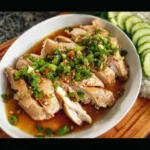
Poached Chinese Chicken with Ginger Scallion Sauce recipe
Ingredients
For the Perfectly Poached Chicken:
-
Whole Chicken (1): Approximately 3 to 3.5 lbs (about 1.5 kg). A high-quality free-range or organic chicken will yield the most flavor. Ensure it’s fresh, with the giblets removed. The chicken should be at room temperature for about 30-45 minutes before cooking for a more even result.
-
Water: Enough to completely submerge the chicken in a large stockpot.
-
Ginger (1): A 3-inch piece, washed and smashed or thickly sliced. This infuses the poaching liquid with a foundational aromatic warmth.
-
Scallions (4-5): The white and light green parts, washed and lightly bruised or tied into a knot. This adds a subtle, sweet oniony flavor to the broth.
-
Kosher Salt (2 tablespoons): For seasoning the poaching water.
-
Shaoxing Wine (Optional, 2 tablespoons): This traditional Chinese cooking wine adds a layer of depth and fragrance to the broth, helping to mellow any “gamey” flavor from the chicken. Dry sherry is a suitable substitute.
For the Legendary Ginger Scallion Sauce:
-
Fresh Ginger (1): A 3-inch piece (about 1/3 cup), peeled and very finely minced or grated. The finer the mince, the better the texture and flavor release.
-
Scallions (1 bunch, about 6-8 stalks): Using both the white and green parts, very finely chopped. This provides both a sharp bite and fresh, grassy notes.
-
Neutral Oil (1/2 cup): Such as canola, grapeseed, or avocado oil. You need an oil with a high smoke point that won’t impart its own strong flavor.
-
Kosher Salt (1 ½ teaspoons, or to taste): This is crucial for bringing all the flavors together.
-
Toasted Sesame Oil (1 teaspoon): Adds a nutty, aromatic finish to the sauce.
-
White Pepper (Optional, ¼ teaspoon): For a touch of gentle, earthy heat.
Instructions
Part 1: Preparing and Poaching the Chicken
-
Prepare the Chicken: Remove the chicken from its packaging. Remove any giblets from the cavity (save them for making stock!). Rinse the chicken thoroughly, inside and out, under cold running water. Pat it completely dry with paper towels. A dry chicken results in better skin texture. Rub about one tablespoon of kosher salt all over the skin and inside the cavity. This acts as a dry brine, seasoning the meat and helping to create succulent results. Let it sit at room temperature for at least 30 minutes.
-
Ready the Poaching Broth: Select a large stockpot or Dutch oven that is deep enough for the chicken to be fully submerged in water. Place the smashed ginger and knotted scallions inside the pot. If using, add the Shaoxing wine.
-
The Poaching Process: Place the chicken, breast-side up, into the pot. Add enough cold water to cover the chicken by at least one inch. Turn the heat to high and bring the water to a rolling boil. As soon as it reaches a boil, immediately reduce the heat to low, so the water is at a “smiling simmer”—where only a few gentle bubbles break the surface. Skim off any scum or impurities that rise to the top with a fine-mesh sieve.
-
The Gentle Cook: Cover the pot and let the chicken poach gently for 15 minutes. After 15 minutes, turn off the heat completely. Do not open the lid. Let the chicken sit in the hot water, with the heat off, for 45-50 minutes (for a 3-3.5 lb chicken). This residual heat cooking method is the secret to incredibly tender and juicy meat, as it prevents the muscle fibers from seizing up and becoming tough.
-
Check for Doneness: The safest way to check for doneness is with an instant-read meat thermometer. Carefully remove the chicken from the pot and insert the thermometer into the thickest part of thethigh, being careful not to touch the bone. It should register 165°F (74°C). If it’s not quite there, return it to the hot broth for another 5-10 minutes. Another traditional method is to pierce the thigh with a skewer; if the juices run clear, it’s done.
-
The Crucial Ice Bath: While the chicken is poaching, prepare a large bowl with ice and cold water. As soon as the chicken is cooked, use tongs to carefully transfer it from the hot broth directly into the ice bath. This step is critical for two reasons: it immediately stops the cooking process, preventing the chicken from becoming overcooked and dry, and it shocks the skin, making it firm, smooth, and delightfully gelatinous. Let the chicken cool completely in the ice bath for about 15-20 minutes.
-
Rest and Carve: Remove the chicken from the ice bath and place it on a cutting board. Pat it dry one last time. Let it rest for at least 10 minutes before carving. This allows the juices to redistribute throughout the meat. You can rub a thin layer of sesame oil over the skin at this point for extra gloss and flavor. Carve the chicken into serving pieces as desired.
Nutrition
- Serving Size: one normal portion
- Calories: 350-450 kcal