
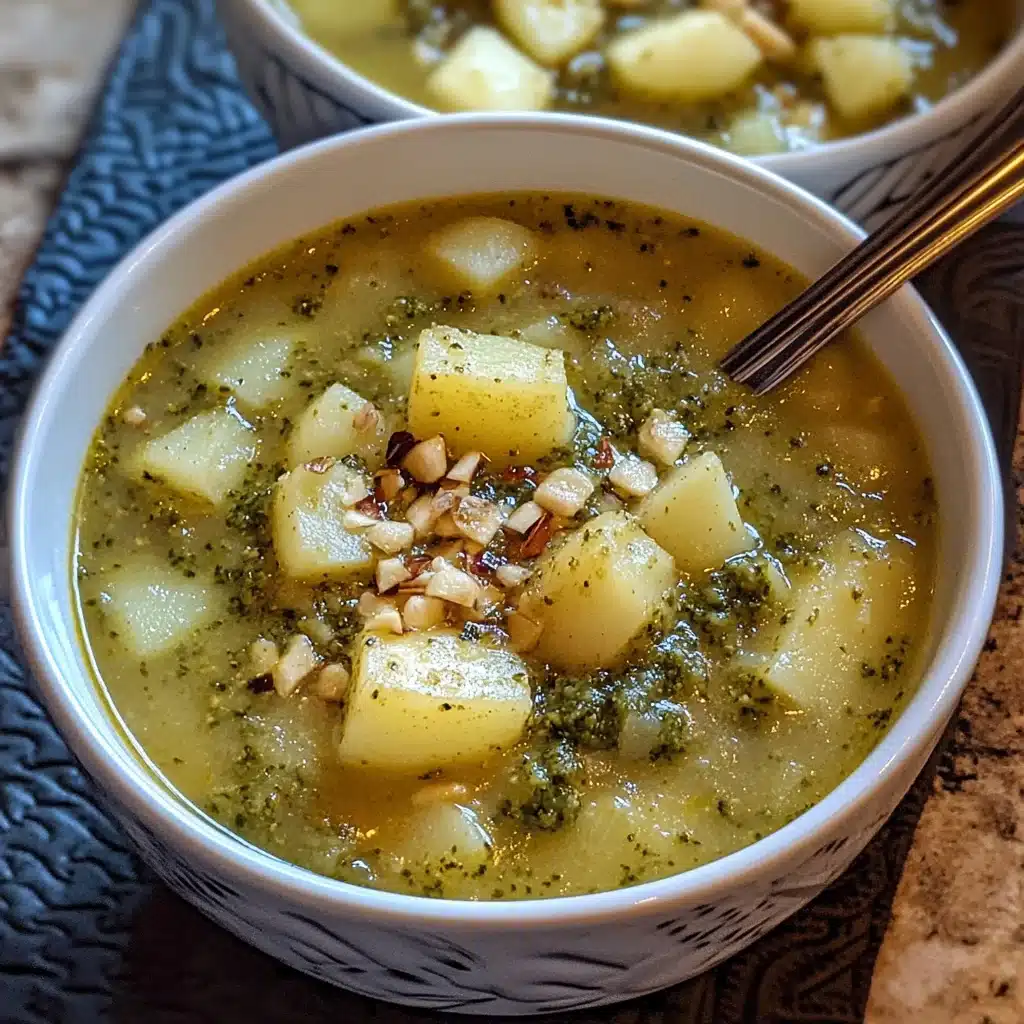

There’s something undeniably comforting about a warm bowl of soup, especially when the days get shorter and the evenings cooler. Recently, I was craving something hearty yet vibrant, and my usual rotation of soups just wasn’t cutting it. That’s when I stumbled upon the idea of Pesto Potato Soup, and let me tell you, it was a revelation! The creamy richness of the potatoes, infused with the bright, herbaceous flavors of pesto, created a symphony of tastes that was both comforting and invigorating. My family, initially skeptical about pesto in soup (they are traditionalists at heart!), were completely won over after the first spoonful. The kids loved the creamy texture and subtle cheesy notes, while my husband and I appreciated the depth of flavor and the surprising lightness despite its creamy nature. It’s become a regular on our menu now, perfect for a cozy weeknight dinner or a comforting lunch on a chilly afternoon. This Pesto Potato Soup is not just delicious; it’s also incredibly easy to make, customizable to your liking, and a wonderful way to enjoy the vibrant flavors of pesto in a warm, comforting bowl. If you’re looking for a soup that’s both satisfying and bursting with flavor, you absolutely have to try this recipe. Prepare to be amazed by how simple ingredients can come together to create such a delightful and memorable dish.
Ingredients for Delicious Pesto Potato Soup
The beauty of Pesto Potato Soup lies in its simplicity and the quality of its ingredients. Each component plays a crucial role in building the flavor profile and texture of this comforting dish. Let’s delve into each ingredient and understand why it’s essential for creating the perfect Pesto Potato Soup:
- Potatoes (2 lbs, about 4-5 medium): Potatoes are the heart and soul of this soup, providing its creamy base and hearty texture. The type of potato you choose can slightly alter the soup’s final texture.
- Yukon Gold Potatoes: These are highly recommended for potato soup. Yukon Golds have a naturally buttery flavor and a creamy, slightly waxy texture. They hold their shape well during cooking but also break down slightly to thicken the soup beautifully without becoming gluey.
- Russet Potatoes (Idaho Potatoes): Russets are another good option, especially if you prefer a very creamy and slightly thicker soup. They are starchier than Yukon Golds and will break down more readily during cooking, resulting in a smoother, thicker consistency. If using Russets, you might need to add a bit more liquid or less potato to achieve your desired creaminess.
- Red Potatoes: While technically usable, red potatoes are less ideal for creamy soups as they are waxier and hold their shape very well. They won’t break down as much to thicken the soup naturally. If using red potatoes, you may need to blend a portion of the soup to achieve a creamier texture.
- Onion (1 medium, chopped): Onion forms the aromatic base of the soup, adding depth and savory notes. Yellow or white onions work best. Dice the onion finely so it cooks down easily and blends seamlessly into the soup. Sautéing the onion at the beginning releases its sweetness and mellows its sharpness, contributing to a richer flavor in the final soup.
- Garlic (2-3 cloves, minced): Garlic is essential for adding a pungent, aromatic kick that enhances the overall flavor profile. Fresh garlic cloves are always preferred for their superior flavor compared to pre-minced garlic. Mince the garlic finely to distribute its flavor evenly throughout the soup. Add the garlic towards the end of sautéing the onion to prevent it from burning, as burnt garlic can become bitter.
- Vegetable Broth (6 cups): Vegetable broth provides the liquid base for the soup and adds a layer of savory flavor.
- Low Sodium Vegetable Broth: Opt for low-sodium broth to control the salt level in your soup. You can always add more salt to taste later, but it’s harder to remove it if the broth is already very salty.
- Homemade Vegetable Broth: If you have the time, homemade vegetable broth will elevate the flavor of your soup even further.
- Chicken Broth (Non-Vegetarian Option): For a non-vegetarian version, you can substitute chicken broth for vegetable broth. This will add a slightly richer, meatier flavor.
- Heavy Cream (½ cup): Heavy cream is what gives this soup its luxurious creaminess and richness. It balances the earthiness of the potatoes and complements the vibrant pesto.
- Half-and-Half (Lighter Option): For a slightly lighter soup, you can use half-and-half instead of heavy cream. The soup will still be creamy but with a slightly lower fat content.
- Coconut Cream (Dairy-Free/Vegan Option): For a dairy-free and vegan version, you can use full-fat coconut cream. Use only the thick, solid part of the coconut cream from a refrigerated can. This will provide a similar richness to heavy cream while keeping the soup vegan. Be aware that coconut cream may impart a subtle coconut flavor, which can be delicious but will slightly alter the traditional pesto potato soup taste.
- Basil Pesto (½ cup, store-bought or homemade): Pesto is the star ingredient that infuses the soup with its signature vibrant, herbaceous, and slightly cheesy flavor.
- Homemade Pesto: Homemade pesto is always the freshest and most flavorful option. Making pesto from scratch allows you to control the ingredients and adjust the flavors to your preference. Classic basil pesto typically includes fresh basil, pine nuts, garlic, Parmesan cheese, olive oil, and salt.
- Store-Bought Pesto: High-quality store-bought pesto is a convenient and perfectly acceptable option, especially for busy weeknights. Look for pesto that is refrigerated rather than shelf-stable, as refrigerated pesto generally has a fresher flavor. Check the ingredient list and choose brands that use good quality olive oil and fresh basil.
- Vegan Pesto: For a vegan version, use vegan pesto, which typically substitutes nutritional yeast or other plant-based alternatives for Parmesan cheese. You can also easily make vegan pesto at home using nutritional yeast, walnuts or almonds instead of pine nuts, and omitting Parmesan cheese.
- Parmesan Cheese (¼ cup, grated, plus extra for garnish): Parmesan cheese adds a salty, savory, and umami-rich flavor that enhances the pesto and complements the creamy potatoes. Use freshly grated Parmesan cheese for the best flavor and melting quality. Pre-grated Parmesan often contains cellulose and doesn’t melt as smoothly.
- Olive Oil (2 tablespoons): Olive oil is used for sautéing the onion and garlic, adding a subtle fruity flavor and healthy fats. Extra virgin olive oil is preferred for its richer flavor and nutritional benefits.
- Salt and Black Pepper: Salt and black pepper are essential for seasoning and enhancing all the flavors in the soup. Adjust the amount to your taste. Remember that pesto and Parmesan cheese are already salty, so start with less salt and add more as needed at the end. Freshly ground black pepper is recommended for its more vibrant flavor.
- Optional Garnishes: Fresh basil leaves, croutons (homemade or store-bought), a swirl of extra pesto, a drizzle of olive oil, red pepper flakes for a touch of heat. Garnishes add visual appeal, texture, and extra flavor to the finished soup.
Instructions: Making Creamy Pesto Potato Soup
Now that we have all our ingredients ready, let’s walk through the step-by-step instructions to create this comforting and flavorful Pesto Potato Soup. Following these instructions carefully will ensure a delicious and creamy result:
Step 1: Sauté the Aromatics
- Heat Olive Oil: In a large pot or Dutch oven, heat the olive oil over medium heat. Allow the oil to heat up until it shimmers, but avoid letting it smoke.
- Sauté Onion: Add the diced onion to the pot and sauté for 5-7 minutes, stirring occasionally, until softened and translucent. Sautéing the onion softens its harshness and brings out its natural sweetness, building a flavorful base for the soup. Don’t let the onion brown too much.
- Add Garlic: Add the minced garlic to the pot and sauté for another 1-2 minutes, until fragrant. Be careful not to burn the garlic, as it can become bitter quickly. The aroma of sautéing garlic should be noticeable and pleasant.
Step 2: Add Potatoes and Broth
- Add Potatoes: Add the cubed potatoes to the pot with the sautéed onion and garlic. Stir to coat the potatoes with the oil and aromatics.
- Pour in Vegetable Broth: Pour the vegetable broth into the pot, ensuring the potatoes are fully submerged. If needed, add a little more broth or water to just cover the potatoes.
- Season (Lightly): Add a pinch of salt and a few grinds of black pepper. Remember that pesto and Parmesan are salty, so season lightly at this stage and adjust later.
Step 3: Simmer Until Potatoes are Tender
- Bring to a Boil, then Simmer: Bring the soup to a boil over medium-high heat. Once boiling, reduce the heat to low, cover the pot, and simmer gently for 15-20 minutes, or until the potatoes are fork-tender. To check for doneness, insert a fork or knife into a potato cube; it should go in easily without resistance.
- Check Potato Texture: The potatoes should be soft enough to mash easily with a spoon against the side of the pot. This indicates they are fully cooked and ready to be blended.
Step 4: Blend the Soup (Partially or Fully)
- Option 1: Immersion Blender (Partial Blend for Chunky Soup): For a slightly chunky soup with some potato texture remaining, use an immersion blender to partially blend the soup directly in the pot. Blend until the soup reaches your desired level of creaminess, leaving some chunks of potato for texture. Be careful when using an immersion blender in a hot pot of soup; avoid splashing.
- Option 2: Regular Blender (Full Blend for Smooth Soup): For a completely smooth and creamy soup, carefully ladle the hot soup in batches into a regular blender. Important Safety Note: When blending hot liquids, remove the center piece of the blender lid to allow steam to escape and prevent pressure buildup, which can cause the lid to pop off and splatter hot soup. Cover the lid with a kitchen towel and hold it down firmly while blending. Blend each batch until completely smooth. Pour the blended soup into a separate clean pot or back into the original pot.
- Option 3: Potato Masher (Rustic Chunky Soup): For a rustic, chunky soup with a more textured consistency, you can use a potato masher to partially mash the potatoes directly in the pot. This method will create a thicker soup with visible potato pieces.
Step 5: Stir in Cream, Pesto, and Parmesan
- Reduce Heat to Low: Return the pot of blended soup to low heat.
- Stir in Heavy Cream: Gradually stir in the heavy cream until it is fully incorporated and the soup is creamy and smooth.
- Stir in Pesto: Add the basil pesto to the soup and stir well to distribute it evenly throughout. The pesto will infuse the soup with its vibrant green color and herbaceous flavor.
- Stir in Parmesan Cheese: Stir in the grated Parmesan cheese until it is melted and fully incorporated into the soup. The Parmesan will add a salty, savory, and cheesy depth to the flavor.
Step 6: Season to Taste and Serve
- Taste and Adjust Seasoning: Taste the soup and adjust the seasoning as needed. Add more salt and black pepper to taste. You may also want to add a squeeze of lemon juice for brightness or a pinch of red pepper flakes for a touch of heat, depending on your preference.
- Heat Through (Do Not Boil): Heat the soup through gently over low heat for a few more minutes, ensuring all ingredients are well combined and heated. Do not boil the soup after adding the cream and pesto, as boiling can cause the cream to curdle and the pesto to lose some of its fresh flavor.
- Serve Hot: Ladle the Pesto Potato Soup into bowls and serve immediately while hot.
Step 7: Garnish (Optional but Recommended)
- Garnish and Serve: Garnish each bowl of soup with your desired toppings. Suggested garnishes include:
- Fresh basil leaves (chiffonade or whole leaves)
- Extra grated Parmesan cheese
- A swirl of pesto
- Croutons (homemade or store-bought)
- A drizzle of olive oil
- A sprinkle of red pepper flakes
Nutrition Facts for Pesto Potato Soup
(Note: Nutritional information is an estimate and can vary based on specific ingredients and portion sizes, especially pesto and cream amounts).
- Serving Size: Approximately 1.5 cups (350-400ml)
- Servings per Recipe: Approximately 6-8 servings
Approximate Nutritional Value per Serving (Estimated):
- Calories: 300-350 kcal
- Protein: 8-10g
- Fat: 20-25g (primarily from olive oil, heavy cream, pesto, and Parmesan)
- Saturated Fat: 10-15g
- Cholesterol: 50-70mg
- Sodium: 400-500mg (can vary greatly depending on broth and pesto salt content)
- Carbohydrates: 25-30g
- Fiber: 3-4g
- Sugar: 5-7g (naturally occurring from potatoes and onions)
Key Nutritional Highlights:
- Good Source of Carbohydrates: Potatoes provide energy-sustaining carbohydrates.
- Moderate Protein: Parmesan cheese and pesto contribute to the protein content.
- Rich in Flavor and Comfort: While not necessarily a “low-fat” soup due to the cream and pesto, it provides healthy fats from olive oil and is packed with flavor from fresh ingredients.
- Vitamins and Minerals: Potatoes and vegetables contribute vitamins and minerals like Vitamin C, potassium, and B vitamins.
Preparation Time for Pesto Potato Soup
- Prep Time: 20-25 minutes (chopping vegetables, grating cheese, measuring ingredients)
- Cook Time: 20-25 minutes (sautéing, simmering potatoes)
- Blending and Finishing: 10-15 minutes (blending, adding cream, pesto, Parmesan, seasoning)
- Total Time: Approximately 50-65 minutes
How to Serve Pesto Potato Soup
Pesto Potato Soup is incredibly versatile and can be served in various ways, making it perfect for different occasions and meals. Here are some serving suggestions:
- Classic Bowl of Soup:
- Simply ladle hot Pesto Potato Soup into bowls.
- Garnish generously with fresh basil, Parmesan cheese, and croutons.
- Serve as a comforting starter, lunch, or light dinner.
- Soup and Salad Combo:
- Pair a smaller bowl of Pesto Potato Soup with a fresh side salad.
- A simple green salad with a lemon vinaigrette or a Caprese salad would complement the richness of the soup beautifully.
- This combination makes a balanced and satisfying lunch or light dinner.
- Soup with Bread or Sandwiches:
- Serve Pesto Potato Soup with crusty bread for dipping. Sourdough, baguette, or focaccia are excellent choices.
- Pair it with grilled cheese sandwiches, panini, or Italian-style sandwiches for a heartier meal.
- Elegant Starter for Dinner Parties:
- Serve smaller portions of Pesto Potato Soup in elegant bowls or cups as a sophisticated starter for dinner parties.
- Garnish artfully with a swirl of pesto and a sprig of fresh basil.
- Consider serving it in shot glasses as an amuse-bouche for a more formal event.
- Topping Bar for Customization:
- Set up a topping bar for guests to customize their soup bowls.
- Offer a variety of toppings such as:
- Different types of croutons (herb, garlic, cheese)
- Various cheeses (Parmesan, mozzarella, crumbled goat cheese)
- Fresh herbs (basil, parsley, chives)
- Red pepper flakes
- Drizzle of olive oil or pesto
- Roasted vegetables (small cubes of roasted zucchini, bell peppers)
- Crispy bacon bits (for non-vegetarian option)
- Alongside Italian Main Courses:
- Serve Pesto Potato Soup as a side dish alongside Italian main courses like lasagna, pasta dishes (especially those with tomato-based sauces), or roasted chicken.
- The creamy soup provides a nice contrast to richer main courses.
Additional Tips for Perfect Pesto Potato Soup
To elevate your Pesto Potato Soup from good to exceptional, consider these helpful tips:
- Roast the Potatoes for Deeper Flavor: For an even richer and more complex flavor, try roasting the potatoes before adding them to the soup. Toss cubed potatoes with olive oil, salt, pepper, and herbs like thyme or rosemary. Roast at 400°F (200°C) until tender and slightly caramelized. Roasted potatoes will add a depth of flavor and sweetness to the soup that is truly delicious.
- Make Homemade Croutons: Homemade croutons are incredibly easy to make and add a wonderful crunch and flavor to the soup. Cube day-old bread, toss with olive oil, garlic powder, Italian herbs, salt, and pepper. Bake or air fry until golden brown and crispy. Store-bought croutons are convenient, but homemade ones are far superior in taste and texture.
- Infuse Olive Oil with Garlic for Extra Aroma: Before sautéing the onion, gently heat the olive oil with a smashed garlic clove or two over low heat for a few minutes. Remove the garlic before adding the onion. This infuses the oil with garlic flavor, adding an extra layer of aroma to the soup base. Be careful not to burn the garlic while infusing the oil.
- Adjust Pesto Amount to Taste: The amount of pesto called for in the recipe is a guideline. Start with ½ cup and taste the soup after adding it. If you prefer a stronger pesto flavor, add a bit more, a tablespoon at a time, until you reach your desired taste. Remember that pesto flavors can vary in intensity, so tasting and adjusting is key.
- Make it Vegan or Dairy-Free Effortlessly: As mentioned earlier, substituting heavy cream with full-fat coconut cream and using vegan pesto makes this soup completely vegan and dairy-free without sacrificing creaminess or flavor. Ensure your vegetable broth is also vegan-friendly. This makes the soup accessible to a wider range of dietary needs.
Frequently Asked Questions (FAQ) About Pesto Potato Soup
Here are some common questions people ask when making Pesto Potato Soup:
Q1: Can I make Pesto Potato Soup ahead of time?
A: Yes, Pesto Potato Soup is a great make-ahead dish. You can prepare the entire soup, including blending and adding cream, pesto, and Parmesan, up to 2-3 days in advance. Store it in an airtight container in the refrigerator. Reheat gently on the stovetop over low heat, stirring occasionally, until heated through. Do not boil when reheating to maintain the creamy texture. The flavors often meld and deepen even further overnight, making it even more delicious the next day.
Q2: Can I freeze Pesto Potato Soup?
A: Freezing cream-based soups can sometimes alter their texture, as the cream can separate slightly upon thawing. However, you can freeze Pesto Potato Soup with some considerations. For best results, freeze the soup before adding the heavy cream, pesto, and Parmesan cheese. Prepare the soup up to the point of blending the potatoes and broth. Let it cool completely, then freeze in freezer-safe containers or bags. When ready to serve, thaw the soup completely in the refrigerator overnight. Reheat on the stovetop, and then stir in the heavy cream, pesto, and Parmesan cheese as per the recipe instructions. If you freeze the soup with cream, pesto, and Parmesan already added, it may still be enjoyable, but the texture might be slightly less smooth.
Q3: I don’t have pesto. Can I still make potato soup?
A: Yes, you can still make a delicious creamy potato soup without pesto, but it will be a different dish. Without pesto, it will be a classic Creamy Potato Soup. You can enhance the flavor by adding other herbs like thyme, rosemary, or chives during cooking and as garnishes. You can also add a swirl of cream cheese or sour cream at the end for extra richness if you aren’t using pesto. However, to make Pesto Potato Soup, pesto is a key ingredient and what gives it its distinctive flavor. If you don’t have store-bought pesto, consider quickly making a small batch of homemade pesto if you have basil, pine nuts (or walnuts), garlic, Parmesan, and olive oil on hand.
Q4: Can I make this soup spicier?
A: Yes, you can easily add a touch of spice to Pesto Potato Soup. Here are a few ways to do it:
- Red Pepper Flakes: Add a pinch or two of red pepper flakes while sautéing the onion and garlic, or sprinkle them on top as a garnish when serving.
- Cayenne Pepper: Add a pinch of cayenne pepper to the soup while it’s simmering.
- Spicy Pesto: Use a spicy pesto variety, if available, or add a pinch of red pepper flakes or a dash of hot sauce to your pesto before adding it to the soup.
- Chili Oil Drizzle: Drizzle a bit of chili oil over each bowl of soup when serving for a touch of heat and flavor.
Q5: What kind of croutons are best with Pesto Potato Soup?
A: Many types of croutons work well with Pesto Potato Soup. Here are some excellent options:
- Garlic Croutons: Classic garlic croutons complement the savory flavors of the soup.
- Herb Croutons: Croutons seasoned with Italian herbs or herbes de Provence enhance the herbaceous notes of the pesto.
- Parmesan Croutons: Croutons tossed with Parmesan cheese before baking add a cheesy crunch that pairs perfectly with the Parmesan in the soup.
- Basil Croutons: Croutons infused with basil flavor (by adding dried basil or basil oil) further emphasize the basil notes of the pesto.
- Plain Croutons: Even simple, plain croutons provide a satisfying textural contrast to the creamy soup.
Pesto Potato Soup is a delightful and flavorful twist on classic potato soup. It’s a comforting, creamy, and vibrant dish that’s surprisingly easy to make and perfect for any occasion. With its simple ingredients and customizable nature, this soup is sure to become a new favorite in your kitchen. Enjoy the warmth and deliciousness of this Pesto Potato Soup on a cozy evening, and savor every flavorful spoonful
Print
Pesto Potato Soup Recipe
Ingredients
- Potatoes (2 lbs, about 4-5 medium): Potatoes are the heart and soul of this soup, providing its creamy base and hearty texture. The type of potato you choose can slightly alter the soup’s final texture.
- Yukon Gold Potatoes: These are highly recommended for potato soup. Yukon Golds have a naturally buttery flavor and a creamy, slightly waxy texture. They hold their shape well during cooking but also break down slightly to thicken the soup beautifully without becoming gluey.Russet Potatoes (Idaho Potatoes): Russets are another good option, especially if you prefer a very creamy and slightly thicker soup. They are starchier than Yukon Golds and will break down more readily during cooking, resulting in a smoother, thicker consistency. If using Russets, you might need to add a bit more liquid or less potato to achieve your desired creaminess.Red Potatoes: While technically usable, red potatoes are less ideal for creamy soups as they are waxier and hold their shape very well. They won’t break down as much to thicken the soup naturally. If using red potatoes, you may need to blend a portion of the soup to achieve a creamier texture.
For this recipe, Yukon Gold potatoes are the top choice for their balanced flavor and creamy texture. Peel the potatoes and cut them into roughly 1-inch cubes to ensure even cooking.
- Onion (1 medium, chopped): Onion forms the aromatic base of the soup, adding depth and savory notes. Yellow or white onions work best. Dice the onion finely so it cooks down easily and blends seamlessly into the soup. Sautéing the onion at the beginning releases its sweetness and mellows its sharpness, contributing to a richer flavor in the final soup.
- Garlic (2-3 cloves, minced): Garlic is essential for adding a pungent, aromatic kick that enhances the overall flavor profile. Fresh garlic cloves are always preferred for their superior flavor compared to pre-minced garlic. Mince the garlic finely to distribute its flavor evenly throughout the soup. Add the garlic towards the end of sautéing the onion to prevent it from burning, as burnt garlic can become bitter.
- Vegetable Broth (6 cups): Vegetable broth provides the liquid base for the soup and adds a layer of savory flavor.
- Low Sodium Vegetable Broth: Opt for low-sodium broth to control the salt level in your soup. You can always add more salt to taste later, but it’s harder to remove it if the broth is already very salty.
- Homemade Vegetable Broth: If you have the time, homemade vegetable broth will elevate the flavor of your soup even further.
- Chicken Broth (Non-Vegetarian Option): For a non-vegetarian version, you can substitute chicken broth for vegetable broth. This will add a slightly richer, meatier flavor.
- Heavy Cream (½ cup): Heavy cream is what gives this soup its luxurious creaminess and richness. It balances the earthiness of the potatoes and complements the vibrant pesto.
- Half-and-Half (Lighter Option): For a slightly lighter soup, you can use half-and-half instead of heavy cream. The soup will still be creamy but with a slightly lower fat content.
- Coconut Cream (Dairy-Free/Vegan Option): For a dairy-free and vegan version, you can use full-fat coconut cream. Use only the thick, solid part of the coconut cream from a refrigerated can. This will provide a similar richness to heavy cream while keeping the soup vegan. Be aware that coconut cream may impart a subtle coconut flavor, which can be delicious but will slightly alter the traditional pesto potato soup taste.
- Basil Pesto (½ cup, store-bought or homemade): Pesto is the star ingredient that infuses the soup with its signature vibrant, herbaceous, and slightly cheesy flavor.
- Homemade Pesto: Homemade pesto is always the freshest and most flavorful option. Making pesto from scratch allows you to control the ingredients and adjust the flavors to your preference. Classic basil pesto typically includes fresh basil, pine nuts, garlic, Parmesan cheese, olive oil, and salt.
- Store-Bought Pesto: High-quality store-bought pesto is a convenient and perfectly acceptable option, especially for busy weeknights. Look for pesto that is refrigerated rather than shelf-stable, as refrigerated pesto generally has a fresher flavor. Check the ingredient list and choose brands that use good quality olive oil and fresh basil.
- Vegan Pesto: For a vegan version, use vegan pesto, which typically substitutes nutritional yeast or other plant-based alternatives for Parmesan cheese. You can also easily make vegan pesto at home using nutritional yeast, walnuts or almonds instead of pine nuts, and omitting Parmesan cheese.
- Parmesan Cheese (¼ cup, grated, plus extra for garnish): Parmesan cheese adds a salty, savory, and umami-rich flavor that enhances the pesto and complements the creamy potatoes. Use freshly grated Parmesan cheese for the best flavor and melting quality. Pre-grated Parmesan often contains cellulose and doesn’t melt as smoothly.
- Olive Oil (2 tablespoons): Olive oil is used for sautéing the onion and garlic, adding a subtle fruity flavor and healthy fats. Extra virgin olive oil is preferred for its richer flavor and nutritional benefits.
- Salt and Black Pepper: Salt and black pepper are essential for seasoning and enhancing all the flavors in the soup. Adjust the amount to your taste. Remember that pesto and Parmesan cheese are already salty, so start with less salt and add more as needed at the end. Freshly ground black pepper is recommended for its more vibrant flavor.
- Optional Garnishes: Fresh basil leaves, croutons (homemade or store-bought), a swirl of extra pesto, a drizzle of olive oil, red pepper flakes for a touch of heat. Garnishes add visual appeal, texture, and extra flavor to the finished soup.
Instructions
Step 1: Sauté the Aromatics
- Heat Olive Oil: In a large pot or Dutch oven, heat the olive oil over medium heat. Allow the oil to heat up until it shimmers, but avoid letting it smoke.
- Sauté Onion: Add the diced onion to the pot and sauté for 5-7 minutes, stirring occasionally, until softened and translucent. Sautéing the onion softens its harshness and brings out its natural sweetness, building a flavorful base for the soup. Don’t let the onion brown too much.
- Add Garlic: Add the minced garlic to the pot and sauté for another 1-2 minutes, until fragrant. Be careful not to burn the garlic, as it can become bitter quickly. The aroma of sautéing garlic should be noticeable and pleasant.
Step 2: Add Potatoes and Broth
- Add Potatoes: Add the cubed potatoes to the pot with the sautéed onion and garlic. Stir to coat the potatoes with the oil and aromatics.
- Pour in Vegetable Broth: Pour the vegetable broth into the pot, ensuring the potatoes are fully submerged. If needed, add a little more broth or water to just cover the potatoes.
- Season (Lightly): Add a pinch of salt and a few grinds of black pepper. Remember that pesto and Parmesan are salty, so season lightly at this stage and adjust later.
Step 3: Simmer Until Potatoes are Tender
- Bring to a Boil, then Simmer: Bring the soup to a boil over medium-high heat. Once boiling, reduce the heat to low, cover the pot, and simmer gently for 15-20 minutes, or until the potatoes are fork-tender. To check for doneness, insert a fork or knife into a potato cube; it should go in easily without resistance.
- Check Potato Texture: The potatoes should be soft enough to mash easily with a spoon against the side of the pot. This indicates they are fully cooked and ready to be blended.
Step 4: Blend the Soup (Partially or Fully)
- Option 1: Immersion Blender (Partial Blend for Chunky Soup): For a slightly chunky soup with some potato texture remaining, use an immersion blender to partially blend the soup directly in the pot. Blend until the soup reaches your desired level of creaminess, leaving some chunks of potato for texture. Be careful when using an immersion blender in a hot pot of soup; avoid splashing.
- Option 2: Regular Blender (Full Blend for Smooth Soup): For a completely smooth and creamy soup, carefully ladle the hot soup in batches into a regular blender. Important Safety Note: When blending hot liquids, remove the center piece of the blender lid to allow steam to escape and prevent pressure buildup, which can cause the lid to pop off and splatter hot soup. Cover the lid with a kitchen towel and hold it down firmly while blending. Blend each batch until completely smooth. Pour the blended soup into a separate clean pot or back into the original pot.
- Option 3: Potato Masher (Rustic Chunky Soup): For a rustic, chunky soup with a more textured consistency, you can use a potato masher to partially mash the potatoes directly in the pot. This method will create a thicker soup with visible potato pieces.
Step 5: Stir in Cream, Pesto, and Parmesan
- Reduce Heat to Low: Return the pot of blended soup to low heat.
- Stir in Heavy Cream: Gradually stir in the heavy cream until it is fully incorporated and the soup is creamy and smooth.
- Stir in Pesto: Add the basil pesto to the soup and stir well to distribute it evenly throughout. The pesto will infuse the soup with its vibrant green color and herbaceous flavor.
- Stir in Parmesan Cheese: Stir in the grated Parmesan cheese until it is melted and fully incorporated into the soup. The Parmesan will add a salty, savory, and cheesy depth to the flavor.
Step 6: Season to Taste and Serve
- Taste and Adjust Seasoning: Taste the soup and adjust the seasoning as needed. Add more salt and black pepper to taste. You may also want to add a squeeze of lemon juice for brightness or a pinch of red pepper flakes for a touch of heat, depending on your preference.
- Heat Through (Do Not Boil): Heat the soup through gently over low heat for a few more minutes, ensuring all ingredients are well combined and heated. Do not boil the soup after adding the cream and pesto, as boiling can cause the cream to curdle and the pesto to lose some of its fresh flavor.
- Serve Hot: Ladle the Pesto Potato Soup into bowls and serve immediately while hot.
Step 7: Garnish (Optional but Recommended)
- Garnish and Serve: Garnish each bowl of soup with your desired toppings. Suggested garnishes include:
- Fresh basil leaves (chiffonade or whole leaves)
- Extra grated Parmesan cheese
- A swirl of pesto
- Croutons (homemade or store-bought)
- A drizzle of olive oil
- A sprinkle of red pepper flakes
Nutrition
- Serving Size: one normal portion
- Calories: 300-350 kcal
- Sugar: 5-7g
- Sodium: 400-500mg
- Fat: 20-25g
- Saturated Fat: 10-15g
- Carbohydrates: 25-30g
- Fiber: 3-4g
- Protein: 8-10g
- Cholesterol: 50-70mg