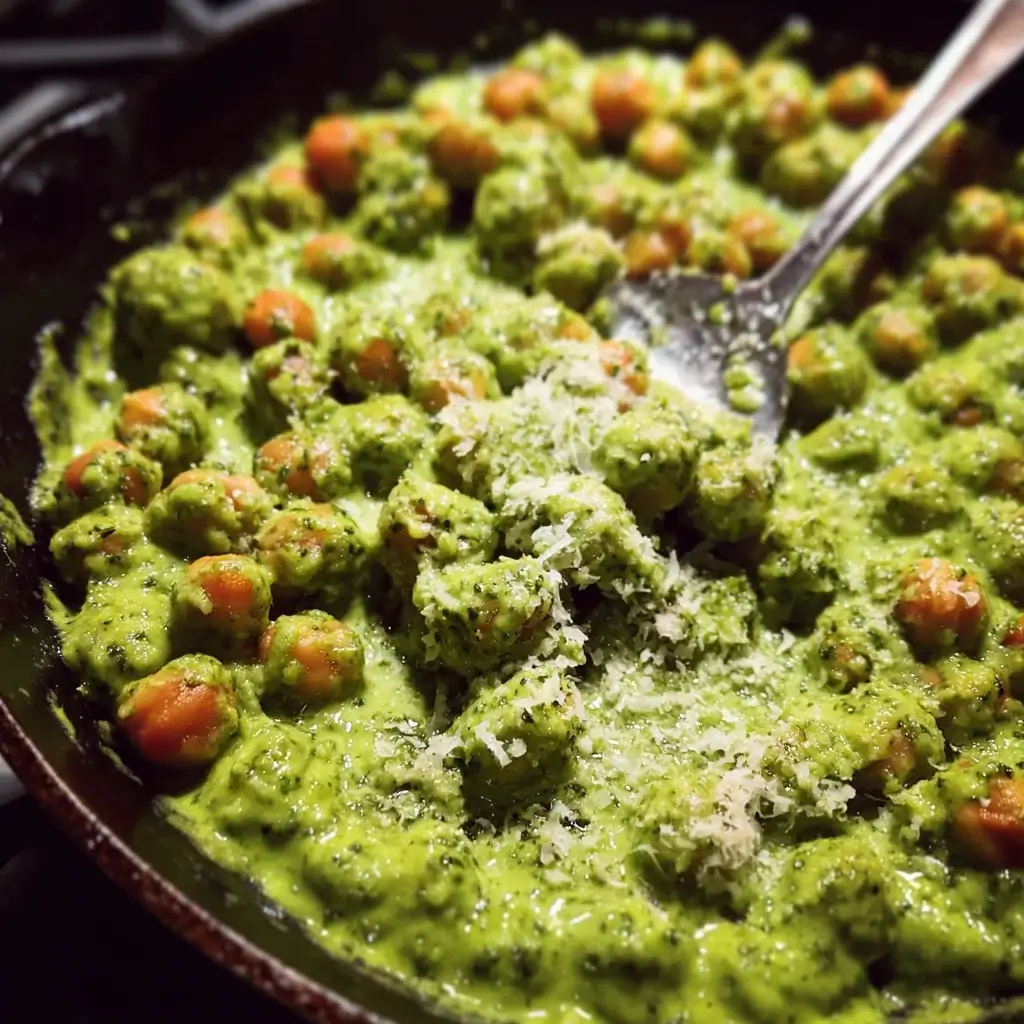
In the constant, ever-present search for the perfect weeknight meal, my kitchen has seen its share of triumphs and failures. I’ve tried elaborate recipes that promised the world but delivered a sink full of dishes, and I’ve succumbed to bland, repetitive meals out of sheer exhaustion. But then, one evening, on a whim born from a jar of pesto, a can of chickpeas, and a pint of cherry tomatoes, this Pesto Chickpea Skillet was born. It wasn’t planned or researched; it was a simple act of culinary improvisation. But as the garlic and onions sizzled, filling the air with their comforting aroma, and the cherry tomatoes burst, creating a jammy, rustic sauce right in the pan, I knew I was onto something special. The final swirl of vibrant green pesto transformed the humble ingredients into something that felt impossibly elegant. My family, initially skeptical of a meatless skillet, was won over from the first bite. It was hearty, bursting with the fresh flavors of basil and lemon, and incredibly satisfying. Now, it has become our official “we-need-something-delicious-in-20-minutes” meal, a testament to the fact that the most memorable dishes are often the simplest.
The Ultimate 20-Minute Pesto Chickpea Skillet
This recipe is a masterclass in efficiency and flavor. It’s a one-pan wonder that leverages pantry staples to create a meal that is both weeknight-practical and weekend-worthy. We’ll walk through each component, explaining its role in creating this vibrant, healthy, and incredibly versatile dish.
A Symphony of Simple Ingredients: The Complete List
The magic of this skillet lies in how a few well-chosen, high-quality ingredients can come together to create something far greater than the sum of their parts.
The Foundational Base:
- Extra Virgin Olive Oil (2 tablespoons): This is for sautéing and building the initial layer of flavor. A good quality olive oil will impart a fruity, peppery note.
- Yellow Onion (1 medium): Finely chopped, the onion provides a sweet, aromatic foundation that is essential in almost any savory dish.
- Garlic (4 cloves): Minced or thinly sliced, garlic adds that pungent, irresistible aroma and flavor that pairs so perfectly with Italian-inspired ingredients.
The Heart of the Skillet:
- Canned Chickpeas (2 cans, 15-ounce each): Also known as garbanzo beans, these are our protein-packed powerhouse. Be sure to rinse and drain them well, and pat them dry for the best texture.
- Cherry Tomatoes (1 pint / 2 cups): These little jewels are the secret to the skillet’s “sauce.” As they cook, they burst, releasing their sweet, juicy insides, which mingle with the other ingredients.
- Baby Spinach (5 ounces / a large double-handful): Provides a boost of nutrients, color, and bulk. It wilts down beautifully into the skillet.
The Flavor Powerhouses:
- Basil Pesto (1/2 cup): This is the star of the show. You can use a high-quality store-bought pesto for convenience or use homemade for the absolute best flavor.
- Vegetable Broth or Water (1/4 cup): This is used to deglaze the pan and help the tomatoes break down, creating more of a sauce.
- Fresh Lemon (1): We will use both the zest and the juice of one lemon. The zest provides an aromatic citrus essence, while the juice adds a bright, acidic finish that cuts through the richness of the pesto.
- Salt and Freshly Ground Black Pepper (to taste): To season and enhance all the other flavors.
- Red Pepper Flakes (1/4 teaspoon, optional): For a subtle background warmth.
The Finishing Touches (Optional but Recommended):
- Crumbled Feta or Shaved Parmesan Cheese (1/4 cup): Adds a salty, creamy, or nutty finish that takes the dish to the next level.
- Toasted Pine Nuts or Walnuts (2 tablespoons): For a welcome textural crunch.
From Pan to Plate: Step-by-Step Instructions
This one-pan meal comes together in a flash. Follow these steps for a foolproof and delicious result.
Step 1: Build the Aromatic Base
Heat the 2 tablespoons of extra virgin olive oil in a large skillet or cast-iron pan over medium heat. Once the oil is shimmering, add the finely chopped yellow onion. Sauté for 4-5 minutes, stirring occasionally, until the onion has softened and become translucent. Add the minced garlic and the optional red pepper flakes, and cook for another minute until fragrant.
- Why this matters: This initial step is called building a soffritto. It creates a deep, aromatic layer of flavor that will permeate the entire dish. Cooking the garlic for only a minute prevents it from burning and turning bitter.
Step 2: Toast the Chickpeas
Add the rinsed, drained, and thoroughly patted-dry chickpeas to the skillet. Season with a pinch of salt and pepper. Increase the heat slightly to medium-high and cook for 5-7 minutes, stirring only occasionally. You want the chickpeas to get a little bit of color and become slightly firm on the outside.
- Why this matters: Patting the chickpeas dry is crucial. It allows them to sauté and lightly toast in the pan rather than just steaming. This step significantly improves their texture, preventing them from being mushy.
Step 3: Burst the Tomatoes to Create a Sauce
Add the pint of cherry tomatoes to the skillet along with the 1/4 cup of vegetable broth or water. Stir everything together. Allow the mixture to simmer for about 5-6 minutes. As the tomatoes heat up, they will begin to soften and burst. You can gently encourage this process by pressing on them with the back of your spoon.
- Why this matters: This is the genius of this recipe. The tomatoes and broth work together to deglaze the pan (lifting up all the flavorful browned bits from the bottom) and create a rustic, fresh, and light pan sauce without any extra effort.
Step 4: Wilt the Spinach
Turn the heat down to low. Add the baby spinach to the skillet. It may look like a mountain, but don’t worry! It will wilt down significantly. You can add it in a couple of batches if needed. Gently stir the spinach into the chickpea and tomato mixture until it is fully wilted, which should only take 1-2 minutes.
- Why this matters: Adding the spinach at the end ensures it doesn’t overcook. It should be just wilted, retaining its vibrant green color and some of its texture.
Step 5: The Pesto and Lemon Finish
Remove the skillet from the heat completely. Add the 1/2 cup of basil pesto and the zest and juice of one lemon. Stir gently until the pesto is fully incorporated, coating every chickpea and tomato in its vibrant, herby sauce.
- Why this matters: This is the most important technique for working with pesto. Adding it off the heat preserves its bright, fresh basil flavor and beautiful green color. High heat can cook the fresh herbs, making the pesto taste dull and look muddy. The lemon juice and zest, added at the end, brighten all the flavors.
Step 6: Garnish and Serve
Taste the skillet and add any additional salt and pepper as needed. To serve, spoon the Pesto Chickpea Skillet into bowls and top with crumbled feta or shaved Parmesan cheese and a sprinkle of toasted pine nuts. Serve immediately.
A Bowl of Wellness: Nutrition Facts
This skillet isn’t just fast and delicious; it’s a shining example of a balanced, nutrient-dense meal. The following is an estimate for the recipe as written.
- Servings: 4
- Calories per serving (approximate): 450-550 kcal (This can vary based on the type of pesto and optional toppings used).
This meal is a fantastic source of plant-based protein and dietary fiber from the chickpeas, which promotes satiety (keeping you full longer) and supports healthy digestion. The tomatoes are rich in Vitamin C and lycopene, a powerful antioxidant. The spinach provides iron, calcium, and Vitamin K. The olive oil and pesto contribute healthy monounsaturated fats, which are essential for brain and heart health.
Fast Food, Real Food: Preparation Time
- Preparation Time: 5-7 minutes (chopping onion and garlic)
- Cooking Time: 15-20 minutes
- Total Time: Approximately 20-25 minutes
This is the very definition of a quick and easy weeknight dinner, proving that you don’t have to sacrifice flavor or health for convenience.
How to Serve Your Pesto Chickpea Skillet
This dish is incredibly versatile. While it’s a perfect meal on its own, it can also serve as a component for a variety of other delicious presentations.
- As a Hearty Standalone Meal:
- Serve it hot from the skillet in a shallow bowl.
- Pair with a thick slice of crusty sourdough or focaccia bread, perfect for sopping up every last bit of the delicious pesto-tomato sauce.
- Top with a dollop of creamy plain yogurt or ricotta cheese for a cool contrast.
- Served Over a Base:
- Grains: Spoon the skillet over a bed of fluffy quinoa, nutty farro, or quick-cooking couscous for a more substantial meal.
- Pasta: Toss with your favorite short pasta, like penne, fusilli, or orecchiette, for a vibrant and healthy pasta dish.
- Rice: Serve over a bed of brown rice or creamy polenta. The polenta pairing is particularly comforting and delicious.
- As a Component in Other Dishes:
- Power Bowls: Use it as the main component in a “build-your-own” bowl. Add roasted sweet potatoes, fresh avocado slices, and a drizzle of tahini.
- Wraps and Pitas: Let it cool slightly and stuff it into warm pita bread or a large tortilla wrap with some fresh greens for a fantastic lunch.
- Brunch Feature: Top with a perfectly poached or fried egg for a savory, protein-packed brunch. The runny yolk acts as a second, even richer sauce.
Additional Tips for Skillet Success (5 Pro-Tips)
These five tips will help you perfect and personalize this already fantastic recipe.
1. The Homemade Pesto Advantage
While store-bought pesto is great for convenience, making your own takes this dish to an entirely new level. It’s surprisingly easy: simply blend fresh basil, toasted pine nuts (or walnuts), grated Parmesan cheese, garlic, salt, and good quality extra virgin olive oil. Homemade pesto has a brighter, fresher, and more intense flavor that is unparalleled.
2. Maximize Flavor by Getting a Good Sear
Don’t be afraid to let your chickpeas sit undisturbed in the hot pan for a couple of minutes at a time (Step 2). This allows them to develop a slight golden-brown crust, which adds a wonderful layer of nutty flavor and a more pleasing, firm texture to the final dish.
3. It’s a Template, Not a Commandment: Customize Your Veggies
Think of this recipe as a base for whatever vegetables you have in your fridge. This skillet is incredibly forgiving and adaptable.
- In Summer: Add diced zucchini or yellow squash along with the onions.
- In Fall: Add cubed butternut squash (pre-roasted for best results) or mushrooms.
- Anytime: Sliced bell peppers, asparagus tips, or kale (added with the spinach, but it will need an extra minute or two to soften) are all fantastic additions.
4. Master Your Meal Prep
This recipe is a meal-prep dream. You can make a double batch over the weekend for easy lunches throughout the week. Store it in an airtight container in the refrigerator for up to 4 days. The flavors actually meld and become even more delicious overnight. It can be enjoyed cold, like a salad, or gently reheated in a pan or the microwave.
5. Balance Your Pesto
Not all pestos are created equal. Some are saltier, more garlicky, or richer than others. Always taste your skillet after adding the pesto and before adding more salt. The lemon juice is your tool for balance; if the pesto makes the dish feel too heavy or oily, a little extra squeeze of lemon juice will cut through the richness and brighten everything up beautifully.
Frequently Asked Questions (FAQ)
Here are answers to some of the most common questions about this versatile skillet recipe.
1. Can I make this Pesto Chickpea Skillet vegan?
Yes, absolutely! It’s very easy to make this dish 100% vegan. Traditional basil pesto contains Parmesan cheese. Simply use a store-bought vegan pesto (many brands are now available) or make your own using nutritional yeast in place of the Parmesan. Then, either omit the final cheese topping or use a store-bought vegan feta or Parmesan alternative.
2. Can I use dried chickpeas instead of canned?
You certainly can, but it requires planning ahead. You will need to soak the dried chickpeas overnight and then cook them until tender according to package directions before you can use them in this recipe. While potentially more economical, using canned chickpeas is what makes this a true 20-minute meal. If using home-cooked chickpeas, you’ll need about 3 cups to equal two 15-ounce cans.
3. What if I don’t have fresh tomatoes?
While fresh cherry tomatoes are ideal for creating that burst-in-the-pan sauce, you can substitute them in a pinch. A 15-ounce can of diced or crushed tomatoes (drained well) can work. The flavor will be slightly different—more of a cooked tomato sauce flavor than a fresh one—but still delicious.
4. My skillet seems a little dry. What should I do?
This can sometimes happen depending on how much juice your tomatoes release. It’s an easy fix! Simply add another splash of vegetable broth or water to the pan until it reaches your desired sauciness. You could also add an extra tablespoon of pesto or olive oil to enrich it.
5. Can I add other proteins to this dish?
Of course. This recipe is a fantastic base for adding other proteins if you’re not aiming for a vegetarian meal.
- Chicken: Add bite-sized pieces of chicken breast and cook them through after the onions, before adding the chickpeas.
- Shrimp: Add raw shrimp in the last 3-4 minutes of cooking, right before the spinach, and cook until they are pink and opaque.
- Sausage: Add sliced, pre-cooked Italian sausage along with the chickpeas to heat through.
Pesto Chickpea Skillet recipe
Ingredients
The Foundational Base:
-
Extra Virgin Olive Oil (2 tablespoons): This is for sautéing and building the initial layer of flavor. A good quality olive oil will impart a fruity, peppery note.
-
Yellow Onion (1 medium): Finely chopped, the onion provides a sweet, aromatic foundation that is essential in almost any savory dish.
-
Garlic (4 cloves): Minced or thinly sliced, garlic adds that pungent, irresistible aroma and flavor that pairs so perfectly with Italian-inspired ingredients.
The Heart of the Skillet:
-
Canned Chickpeas (2 cans, 15-ounce each): Also known as garbanzo beans, these are our protein-packed powerhouse. Be sure to rinse and drain them well, and pat them dry for the best texture.
-
Cherry Tomatoes (1 pint / 2 cups): These little jewels are the secret to the skillet’s “sauce.” As they cook, they burst, releasing their sweet, juicy insides, which mingle with the other ingredients.
-
Baby Spinach (5 ounces / a large double-handful): Provides a boost of nutrients, color, and bulk. It wilts down beautifully into the skillet.
The Flavor Powerhouses:
-
Basil Pesto (1/2 cup): This is the star of the show. You can use a high-quality store-bought pesto for convenience or use homemade for the absolute best flavor.
-
Vegetable Broth or Water (1/4 cup): This is used to deglaze the pan and help the tomatoes break down, creating more of a sauce.
-
Fresh Lemon (1): We will use both the zest and the juice of one lemon. The zest provides an aromatic citrus essence, while the juice adds a bright, acidic finish that cuts through the richness of the pesto.
-
Salt and Freshly Ground Black Pepper (to taste): To season and enhance all the other flavors.
-
Red Pepper Flakes (1/4 teaspoon, optional): For a subtle background warmth.
The Finishing Touches (Optional but Recommended):
-
Crumbled Feta or Shaved Parmesan Cheese (1/4 cup): Adds a salty, creamy, or nutty finish that takes the dish to the next level.
-
Toasted Pine Nuts or Walnuts (2 tablespoons): For a welcome textural crunch.
Instructions
Step 1: Build the Aromatic Base
Heat the 2 tablespoons of extra virgin olive oil in a large skillet or cast-iron pan over medium heat. Once the oil is shimmering, add the finely chopped yellow onion. Sauté for 4-5 minutes, stirring occasionally, until the onion has softened and become translucent. Add the minced garlic and the optional red pepper flakes, and cook for another minute until fragrant.
-
Why this matters: This initial step is called building a soffritto. It creates a deep, aromatic layer of flavor that will permeate the entire dish. Cooking the garlic for only a minute prevents it from burning and turning bitter.
Step 2: Toast the Chickpeas
Add the rinsed, drained, and thoroughly patted-dry chickpeas to the skillet. Season with a pinch of salt and pepper. Increase the heat slightly to medium-high and cook for 5-7 minutes, stirring only occasionally. You want the chickpeas to get a little bit of color and become slightly firm on the outside.
-
Why this matters: Patting the chickpeas dry is crucial. It allows them to sauté and lightly toast in the pan rather than just steaming. This step significantly improves their texture, preventing them from being mushy.
Step 3: Burst the Tomatoes to Create a Sauce
Add the pint of cherry tomatoes to the skillet along with the 1/4 cup of vegetable broth or water. Stir everything together. Allow the mixture to simmer for about 5-6 minutes. As the tomatoes heat up, they will begin to soften and burst. You can gently encourage this process by pressing on them with the back of your spoon.
-
Why this matters: This is the genius of this recipe. The tomatoes and broth work together to deglaze the pan (lifting up all the flavorful browned bits from the bottom) and create a rustic, fresh, and light pan sauce without any extra effort.
Step 4: Wilt the Spinach
Turn the heat down to low. Add the baby spinach to the skillet. It may look like a mountain, but don’t worry! It will wilt down significantly. You can add it in a couple of batches if needed. Gently stir the spinach into the chickpea and tomato mixture until it is fully wilted, which should only take 1-2 minutes.
-
Why this matters: Adding the spinach at the end ensures it doesn’t overcook. It should be just wilted, retaining its vibrant green color and some of its texture.
Step 5: The Pesto and Lemon Finish
Remove the skillet from the heat completely. Add the 1/2 cup of basil pesto and the zest and juice of one lemon. Stir gently until the pesto is fully incorporated, coating every chickpea and tomato in its vibrant, herby sauce.
-
Why this matters: This is the most important technique for working with pesto. Adding it off the heat preserves its bright, fresh basil flavor and beautiful green color. High heat can cook the fresh herbs, making the pesto taste dull and look muddy. The lemon juice and zest, added at the end, brighten all the flavors.
Step 6: Garnish and Serve
Taste the skillet and add any additional salt and pepper as needed. To serve, spoon the Pesto Chickpea Skillet into bowls and top with crumbled feta or shaved Parmesan cheese and a sprinkle of toasted pine nuts. Serve immediately.
Nutrition
- Serving Size: one normal portion
- Calories: 450-550