

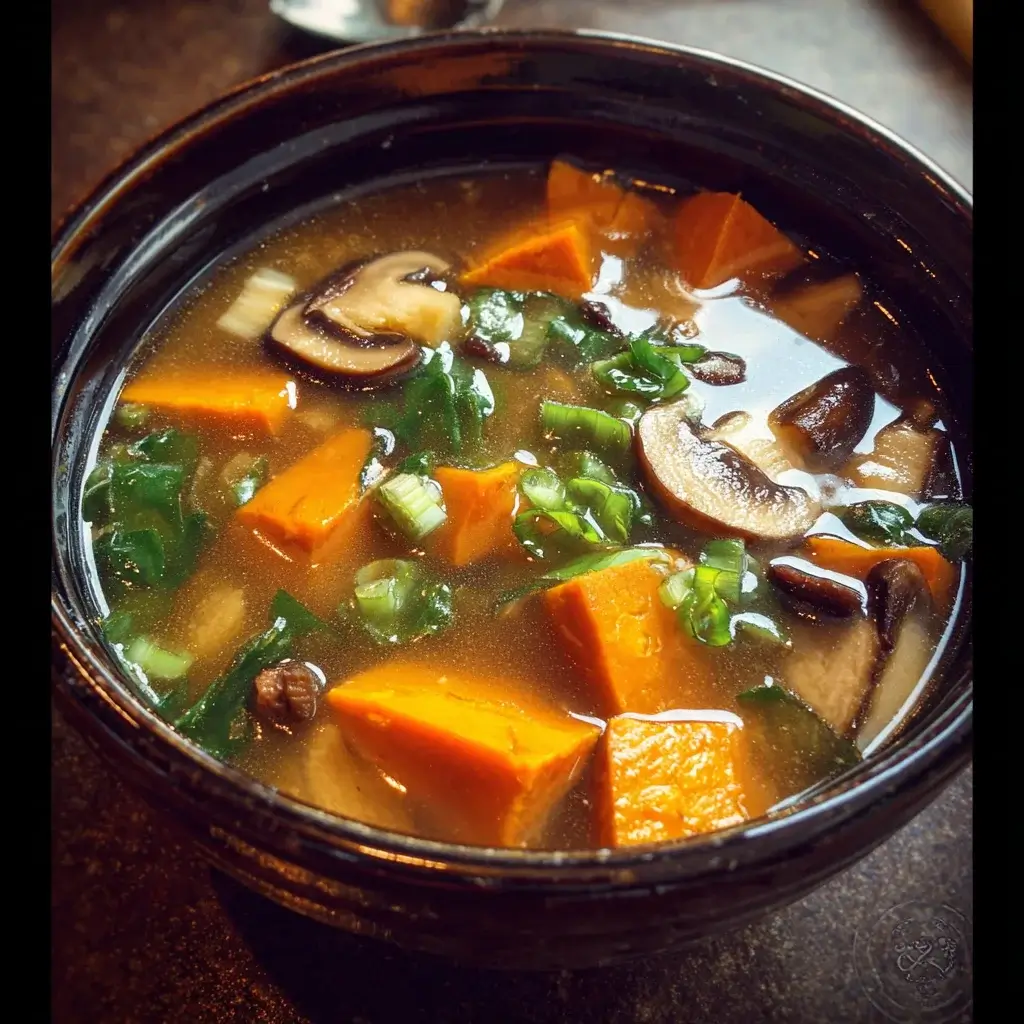

There are certain dishes that feel less like a meal and more like a hug in a bowl. For me, this Miso Soup with Shiitakes and Sweet Potatoes is the ultimate culinary embrace. I first created it on a chilly, rain-soaked afternoon when I was feeling a bit under the weather and craving something deeply nourishing yet simple. I wanted more than just the classic tofu and seaweed combination; I wanted something with substance, a gentle sweetness to play against the savory, salty broth. The sweet potatoes, which I had originally planned for roasting, seemed like an odd but intriguing choice. The result was nothing short of a revelation. The earthy, meaty shiitakes, the tender cubes of sweet potato melting on the tongue, and the profound, savory depth of the miso broth created a harmony of flavors that was both grounding and uplifting. My husband, initially skeptical of “sweet potatoes in soup,” became an instant convert. Now, it’s our go-to recipe for a healthy reset, a quick weeknight dinner, or whenever we need a bowl of pure, unadulterated comfort.
A Symphony of Umami: The Ultimate Miso Soup with Shiitakes & Sweet Potatoes Recipe
This recipe elevates the humble miso soup into a hearty, satisfying meal. The magic lies in the balance of flavors: the deep umami from the miso and shiitakes, the natural sweetness from the sweet potatoes, and the fresh bite from the scallions. It’s a vegan, nutrient-packed dish that is both incredibly flavorful and surprisingly easy to make.
Gathering Your Ingredients: The Building Blocks of Flavor
The quality of your ingredients will directly impact the final dish. While the list is simple, each component plays a vital role in creating the soup’s signature taste profile.
For the Dashi (Japanese Soup Stock):
- Water: 8 cups, cold
- Kombu: 1 large piece (about 4×4 inches)
- Dried Shiitake Mushrooms: 4-5 large mushrooms (This is optional but highly recommended for an extra layer of umami)
A Note on Dashi: Dashi is the foundational stock for much of Japanese cuisine, and making it from scratch is incredibly simple and rewarding. The kombu (dried kelp) and dried shiitakes impart a subtle, oceanic, and earthy flavor that you can’t get from water alone. If you’re short on time, you can use a high-quality instant dashi powder or granules, preparing 8 cups according to package directions. However, the 15-minute process of making it from scratch is well worth the minimal effort.
For the Soup’s Core:
- Sweet Potato: 1 large (about 12 oz / 340g), peeled and diced into ½-inch cubes
- Fresh Shiitake Mushrooms: 8 oz (about 225g), stems removed and caps thinly sliced
- Firm or Extra-Firm Tofu: 1 (14-ounce / 400g) block, pressed and cut into ½-inch cubes
- White or Yellow Miso Paste: 4-5 tablespoons
- Tamari or Soy Sauce: 1 tablespoon (use tamari for a gluten-free option)
- Sesame Oil: 1 teaspoon, toasted
Ingredient Deep Dive:
- Miso Paste: This is the soul of the soup. Miso is a fermented soybean paste, and it’s a living food packed with probiotics.
- White Miso (Shiro Miso): Fermented for a shorter period, it’s light, mellow, and slightly sweet. It’s the best choice for this recipe as it won’t overpower the delicate sweet potato.
- Yellow Miso (Shinshu Miso): A good middle ground, slightly stronger and earthier than white miso. Also an excellent choice.
- Red Miso (Aka Miso): Fermented the longest, it’s very pungent, salty, and bold. It can be a bit too assertive for this particular combination of ingredients.
- Tofu: Use firm or extra-firm tofu. It holds its shape well in the hot broth. Pressing the tofu for at least 15 minutes before cubing it will remove excess water, resulting in a firmer, less spongy texture.
- Shiitakes: Fresh shiitakes are preferred for their meaty texture and robust flavor. If you can only find dried, rehydrate them in hot water for 30 minutes, then slice them (you can use the flavorful soaking liquid as part of your dashi).
For Garnish and Topping:
- Scallions (Green Onions): 4-5, thinly sliced (both white and green parts)
- Baby Spinach or Bok Choy (Optional): 2 large handfuls
- Toasted Sesame Seeds: For sprinkling
The Art of Assembly: Step-by-Step Instructions
Follow these steps for a perfectly balanced and flavorful soup every time. The key is to build the flavors in layers and to treat the miso paste with care.
Step 1: Make the Dashi (The Flavor Foundation)
If making dashi from scratch, begin here. In a large pot, combine the 8 cups of cold water, the piece of kombu, and the optional dried shiitake mushrooms. Let it steep for at least 15-30 minutes off the heat (or even overnight in the fridge for a deeper flavor). Then, place the pot over medium heat. Watch it carefully and remove the kombu and dried shiitakes just before the water comes to a boil. Boiling kombu can make the stock bitter. Your dashi is now ready. If using instant dashi, prepare it now.
Step 2: Cook the Sweet Potatoes
Bring your dashi to a gentle simmer over medium heat. Add the diced sweet potatoes to the pot. Cook for 10-12 minutes, or until the sweet potatoes are tender when pierced with a fork. You want them soft, but not so mushy that they disintegrate.
Step 3: Add the Mushrooms and Tofu
Once the sweet potatoes are tender, add the sliced fresh shiitake mushrooms and the cubed tofu to the pot. Let them simmer gently in the dashi for about 5 minutes. The shiitakes will become tender and release their earthy flavor into the broth, and the tofu will warm through.
Step 4: Incorporate the Greens (Optional)
If you are using baby spinach or chopped bok choy, add it to the pot now. It only needs a minute or two to wilt into the hot broth.
Step 5: The Crucial Miso Step
This is the most important step for preserving the flavor and nutritional benefits of the miso. Turn the heat down to the lowest possible setting, or turn it off completely. The soup should be hot, but not boiling. Boiling miso can destroy its delicate probiotics and alter its flavor.
In a small bowl, ladle about a cup of the hot broth from the pot. Add the 4-5 tablespoons of miso paste to this small bowl. Whisk vigorously until the miso paste is completely dissolved and you have a smooth, creamy slurry. This prevents clumps of miso in your soup. Pour this miso slurry back into the main pot.
Step 6: Final Seasoning and Serving
Stir the 1 tablespoon of tamari (or soy sauce) and the 1 teaspoon of toasted sesame oil into the soup. Taste and adjust if necessary. You may want a little more miso for saltiness or a splash more tamari for depth.
Ladle the hot soup into bowls, making sure each serving gets a generous amount of sweet potato, shiitakes, and tofu. Garnish lavishly with the thinly sliced scallions and a sprinkle of toasted sesame seeds. Serve immediately.
A Bowl of Wellness: Nutrition Facts
This soup isn’t just comforting; it’s a powerhouse of nutrition, making it a truly functional food that supports overall well-being.
- Servings: This recipe makes 4 large, meal-sized servings or 6-8 smaller appetizer-sized servings.
- Calories per Serving: Approximately 250-300 kcal per large serving.
A Deeper Look at the Health Benefits:
- Miso: As a fermented food, miso is a fantastic source of probiotics, the beneficial bacteria that support a healthy gut microbiome. A healthy gut is linked to improved digestion, a stronger immune system, and even better mental health. It’s also a complete protein and rich in minerals.
- Shiitake Mushrooms: These aren’t just for flavor. Shiitakes are renowned for their immune-boosting properties. They contain lentinan, a compound that helps strengthen the immune system, and are one of the few plant-based sources of Vitamin D when exposed to UV light.
- Sweet Potatoes: The vibrant orange flesh is a clear indicator of its high beta-carotene content, a powerful antioxidant that the body converts to Vitamin A. Vitamin A is crucial for vision, immune function, and skin health. They are also an excellent source of fiber, which aids in digestion and helps regulate blood sugar.
- Tofu: A staple of plant-based diets, tofu provides a fantastic source of lean protein, containing all nine essential amino acids. It’s also rich in iron and calcium, particularly if calcium-set.
- Kombu: The seaweed used for the dashi is a treasure trove of minerals, most notably iodine, which is essential for thyroid function.
Planning Your Prep: A Time Breakdown
This recipe is wonderfully efficient, making it a perfect candidate for a healthy weeknight meal.
- Preparation Time: 20 minutes
- This includes steeping the dashi, peeling and chopping the sweet potato, pressing and cubing the tofu, and slicing the mushrooms and scallions. Getting all your ingredients prepped before you start cooking (mise en place) will make the process seamless.
- Cooking Time: 25 minutes
- This covers the time to simmer the sweet potatoes, cook the mushrooms and tofu, and finish the soup.
- Total Time: 45 minutes
- From start to finish, you can have this beautiful, nourishing soup on the table in under an hour.
Serving Suggestions: How to Present Your Miso Soup
Serving this soup is about creating a complete, comforting experience. Go beyond just a bowl and spoon.
- Choose the Right Bowls: Use traditional Japanese-style lacquer bowls or simple, wide ceramic bowls that showcase the colorful ingredients.
- Garnish Generously: Garnishes add texture, flavor, and visual appeal. Don’t be shy!
- Scallions and Sesame Seeds: These are essential for a reason. They provide a fresh, oniony bite and a nutty crunch.
- Nori: Cut a sheet of roasted nori (seaweed) into thin strips (a technique called “kizami nori”) and sprinkle over the top just before serving. It adds a wonderful savory, oceanic flavor.
- Chili Crisp or Oil: For those who like a bit of heat, a small drizzle of chili oil or a spoonful of chili crisp adds a welcome kick and a layer of complexity.
- Shichimi Togarashi: This common Japanese seven-spice blend contains chili flakes, sesame seeds, orange peel, and nori. A light dusting is a perfect way to finish the soup.
- Make It a Complete Meal: While this soup is hearty enough to be a light meal on its own, you can easily build upon it.
- Serve with Rice: A small bowl of short-grain steamed rice on the side is a classic pairing. You can take a bite of rice and then a sip of soup, or even add a scoop of rice directly into your bowl near the end.
- Add Noodles: Turn this into a fantastic noodle soup by adding cooked soba (buckwheat) or udon noodles to the bowls before ladling the hot soup over them.
- Pair with Japanese Side Dishes (Okazu): Create a traditional Japanese meal set (ichiju sansai – “one soup, three sides”) by serving the soup with sides like a simple cucumber salad (sunomono), blanched spinach with sesame dressing (gomae), and some pan-fried gyoza.
Pro-Tips for Miso Mastery
Take your soup from good to great with these five insider tips.
- Never Boil the Miso: This is the golden rule of miso soup and bears repeating. Boiling the miso paste will not only diminish its complex, delicate flavor, making it taste one-note and salty, but it will also kill the beneficial live probiotic cultures. Always add the miso slurry at the very end, with the heat turned off.
- Press Your Tofu: For the best texture, don’t skip pressing your tofu. Wrap the block of tofu in several layers of paper towels or a clean kitchen towel. Place it on a plate and put something heavy on top, like a cast-iron skillet or a few cookbooks. Let it press for at least 15-30 minutes. This process expels excess water, allowing the tofu to have a firmer, meatier bite and absorb the flavors of the broth more effectively.
- Sear the Shiitakes: For an even deeper, more intensely savory mushroom flavor, give the sliced shiitakes a quick sear before adding them to the soup. Heat a small amount of neutral oil in a skillet over medium-high heat. Add the shiitakes in a single layer and cook for 2-3 minutes per side, until golden brown and slightly crispy at the edges. Then, add them to the soup as directed in Step 3.
- Create a Dashi “Tea Bag”: To make cleanup even easier when preparing your dashi, you can place the kombu and dried shiitakes into a disposable soup sock or a large, reusable tea infuser. This allows you to easily remove them from the pot without having to fish around for them.
- Customize Your Vegetables: This recipe is a fantastic template. Feel free to swap or add other vegetables based on what’s in season or what you have on hand. Thinly sliced carrots can be added with the sweet potatoes. Cubed daikon radish adds a lovely peppery note. Hardy greens like kale or collards can be added a few minutes before the spinach. It’s a very forgiving and adaptable soup.
Miso Soup Mysteries Solved: Frequently Asked Questions (FAQ)
Here are answers to some of the most common questions about making this delicious soup.
1. Is this miso soup recipe gluten-free?
It can be, but you must check your ingredients. While most of the core ingredients are naturally gluten-free, the two potential sources of gluten are the miso paste and the soy sauce. Some cheaper miso pastes use barley (a gluten-containing grain) in the fermentation process. Look for a miso that is explicitly labeled “gluten-free.” Additionally, traditional soy sauce contains wheat. To ensure the dish is 100% gluten-free, use tamari, which is a Japanese sauce made from fermented soybeans that is typically wheat-free (though always double-check the label).
2. How do I store and reheat leftovers?
You can store leftover soup in an airtight container in the refrigerator for up to 3 days. The flavor will actually deepen overnight. To reheat, gently warm the soup in a pot on the stovetop over low-medium heat until it’s hot. Avoid boiling it to protect the miso’s flavor and probiotics. The sweet potatoes may soften a bit more upon reheating, but it will still be delicious.
3. I find miso soup to be too salty. How can I control the saltiness?
The saltiness comes almost entirely from the miso paste. The best way to control it is to start with less and add more to taste. Begin with 3 tablespoons of miso, dissolve it and stir it in, then taste the broth. If it needs more savory depth, dissolve another tablespoon and add it. Also, be sure to use low-sodium tamari or soy sauce. If you’ve already made the soup and it’s too salty, you can dilute it by adding a bit more plain hot water or unsalted dashi until it reaches your desired taste.
4. Can I use other types of mushrooms?
Yes, you can. While shiitakes provide a classic, earthy umami flavor, this soup is also wonderful with other mushrooms. Cremini (baby bella) mushrooms would be a great substitute. For a more gourmet touch, a mix of wild mushrooms like maitake (hen-of-the-woods) or oyster mushrooms would be fantastic. You can even use simple white button mushrooms if that’s all you have.
5. Can I make a big batch of the dashi stock ahead of time?
Absolutely! Making a large batch of dashi is a great time-saving strategy. You can prepare the dashi and store it in an airtight container or jar in the refrigerator for up to 5 days, or freeze it in portions for up to 3 months. Having homemade dashi on hand makes whipping up a quick bowl of this miso soup (or other Japanese dishes) incredibly fast and easy.

Miso Soup with Shiitakes & Sweet Potatoes recipe
Ingredients
For the Soup’s Core:
-
Sweet Potato: 1 large (about 12 oz / 340g), peeled and diced into ½-inch cubes
-
Fresh Shiitake Mushrooms: 8 oz (about 225g), stems removed and caps thinly sliced
-
Firm or Extra-Firm Tofu: 1 (14-ounce / 400g) block, pressed and cut into ½-inch cubes
-
White or Yellow Miso Paste: 4-5 tablespoons
-
Tamari or Soy Sauce: 1 tablespoon (use tamari for a gluten-free option)
-
Sesame Oil: 1 teaspoon, toasted
Ingredient Deep Dive:
-
Miso Paste: This is the soul of the soup. Miso is a fermented soybean paste, and it’s a living food packed with probiotics.
-
White Miso (Shiro Miso): Fermented for a shorter period, it’s light, mellow, and slightly sweet. It’s the best choice for this recipe as it won’t overpower the delicate sweet potato.
-
Yellow Miso (Shinshu Miso): A good middle ground, slightly stronger and earthier than white miso. Also an excellent choice.
-
Red Miso (Aka Miso): Fermented the longest, it’s very pungent, salty, and bold. It can be a bit too assertive for this particular combination of ingredients.
-
-
Tofu: Use firm or extra-firm tofu. It holds its shape well in the hot broth. Pressing the tofu for at least 15 minutes before cubing it will remove excess water, resulting in a firmer, less spongy texture.
-
Shiitakes: Fresh shiitakes are preferred for their meaty texture and robust flavor. If you can only find dried, rehydrate them in hot water for 30 minutes, then slice them (you can use the flavorful soaking liquid as part of your dashi).
For Garnish and Topping:
-
Scallions (Green Onions): 4-5, thinly sliced (both white and green parts)
-
Baby Spinach or Bok Choy (Optional): 2 large handfuls
-
Toasted Sesame Seeds: For sprinkling
Instructions
Step 1: Make the Dashi (The Flavor Foundation)
If making dashi from scratch, begin here. In a large pot, combine the 8 cups of cold water, the piece of kombu, and the optional dried shiitake mushrooms. Let it steep for at least 15-30 minutes off the heat (or even overnight in the fridge for a deeper flavor). Then, place the pot over medium heat. Watch it carefully and remove the kombu and dried shiitakes just before the water comes to a boil. Boiling kombu can make the stock bitter. Your dashi is now ready. If using instant dashi, prepare it now.
Step 2: Cook the Sweet Potatoes
Bring your dashi to a gentle simmer over medium heat. Add the diced sweet potatoes to the pot. Cook for 10-12 minutes, or until the sweet potatoes are tender when pierced with a fork. You want them soft, but not so mushy that they disintegrate.
Step 3: Add the Mushrooms and Tofu
Once the sweet potatoes are tender, add the sliced fresh shiitake mushrooms and the cubed tofu to the pot. Let them simmer gently in the dashi for about 5 minutes. The shiitakes will become tender and release their earthy flavor into the broth, and the tofu will warm through.
Step 4: Incorporate the Greens (Optional)
If you are using baby spinach or chopped bok choy, add it to the pot now. It only needs a minute or two to wilt into the hot broth.
Step 5: The Crucial Miso Step
This is the most important step for preserving the flavor and nutritional benefits of the miso. Turn the heat down to the lowest possible setting, or turn it off completely. The soup should be hot, but not boiling. Boiling miso can destroy its delicate probiotics and alter its flavor.
In a small bowl, ladle about a cup of the hot broth from the pot. Add the 4-5 tablespoons of miso paste to this small bowl. Whisk vigorously until the miso paste is completely dissolved and you have a smooth, creamy slurry. This prevents clumps of miso in your soup. Pour this miso slurry back into the main pot.
Step 6: Final Seasoning and Serving
Stir the 1 tablespoon of tamari (or soy sauce) and the 1 teaspoon of toasted sesame oil into the soup. Taste and adjust if necessary. You may want a little more miso for saltiness or a splash more tamari for depth.
Nutrition
- Serving Size: one normal portion
- Calories: 250-300 kcal