
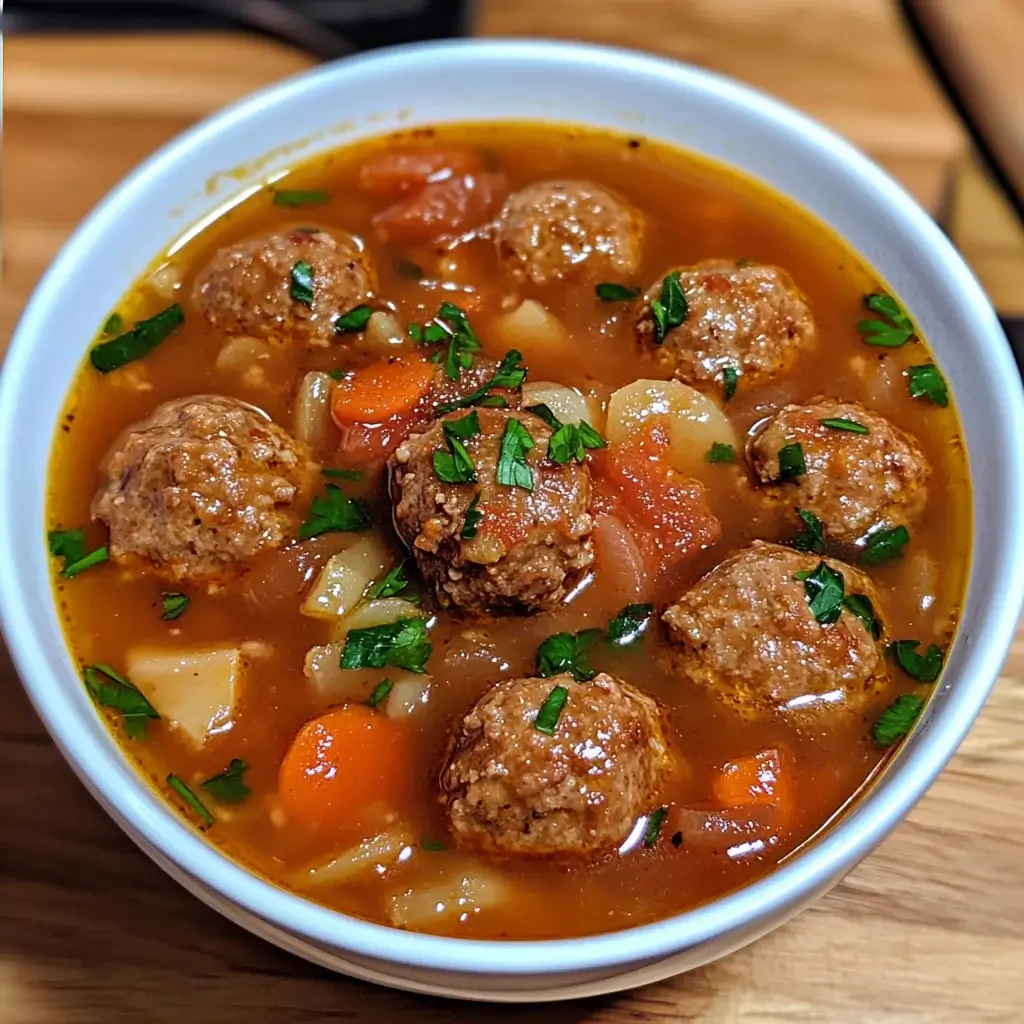

There are certain dishes that just feel like home, no matter where you are. For me, Meatball Soup is one of those culinary anchors. It’s more than just a meal; it’s a warm hug in a bowl, a taste of childhood, and a guaranteed way to bring smiles to everyone around the table. I grew up with my grandmother’s version – a simple, hearty broth brimming with tender meatballs and soft vegetables. The aroma alone, simmering away on the stove, was enough to chase away any gloom. Over the years, I’ve tweaked her recipe, adding my own touches, experimenting with different herbs and vegetables, and always striving to create that perfect balance of flavor and comfort. My family, from the pickiest toddler to my soup-connoisseur husband, absolutely devours it. It’s requested on chilly evenings, celebrated on holidays, and even makes a regular appearance when someone needs a little extra TLC. What I love most about Meatball Soup is its incredible versatility. It’s equally satisfying as a light lunch or a substantial dinner. It’s endlessly adaptable to whatever vegetables you have on hand, and you can customize the meatballs to your heart’s content. This isn’t just any soup; it’s a dish that nourishes body and soul. And I’m so excited to share my version with you, hoping it brings the same warmth and joy to your family’s table as it does to mine. Get ready to ladle up a bowl of pure comfort – you won’t regret it!
Ingredients
Crafting a truly exceptional Meatball Soup hinges on the quality and balance of its ingredients. From the savory meatballs to the flavorful broth and vibrant vegetables, each component plays a crucial role in creating a harmonious and deeply satisfying dish. Let’s break down the essential ingredients you’ll need to make a Meatball Soup that will warm you from the inside out:
For the Meatballs:
- 1 pound Ground Meat (Beef, Pork, or a Blend): The foundation of our meatballs, the choice of ground meat significantly impacts flavor and texture.
- Ground Beef: Offers a rich, beefy flavor, especially when using a blend with some fat (like 80/20). Look for ground chuck for a good balance of flavor and tenderness.
- Ground Pork: Adds a sweetness and moistness to the meatballs. It pairs beautifully with beef in a blend.
- Ground Beef and Pork Blend (50/50): This classic combination is often considered ideal for meatballs. The beef provides robust flavor, while the pork contributes moisture and tenderness, resulting in perfectly balanced meatballs.
- Ground Turkey or Chicken (Leaner Options): For a lighter and leaner meatball soup, ground turkey or chicken are excellent alternatives. They will be less rich in flavor than beef or pork, but still delicious, especially when well-seasoned. Consider adding a tablespoon of olive oil or grated zucchini to turkey/chicken meatballs to maintain moisture.
- ½ cup Breadcrumbs (Panko or Italian Style): Breadcrumbs act as a binder, helping to hold the meatballs together and contribute to a tender texture.
- Panko Breadcrumbs: Japanese-style breadcrumbs that are coarser and lighter than traditional breadcrumbs. They create meatballs with a slightly looser, more delicate texture.
- Italian Style Breadcrumbs: Finely ground breadcrumbs, often seasoned with Italian herbs. They create a denser, more compact meatball.
- Fresh Breadcrumbs (Homemade): For the ultimate in texture and flavor, consider making fresh breadcrumbs from day-old bread. Simply pulse bread slices in a food processor until you achieve the desired crumb consistency.
- Gluten-Free Breadcrumbs: For a gluten-free version, use gluten-free breadcrumbs made from rice flour, almond flour, or other gluten-free grains.
- ¼ cup Grated Parmesan Cheese (Optional but Recommended): Parmesan cheese adds a salty, umami-rich flavor to the meatballs and contributes to their tenderness. Freshly grated Parmesan is always best for flavor. Pecorino Romano can be used as a substitute for a sharper, saltier cheese note. For a dairy-free version, nutritional yeast can provide a cheesy, savory flavor.
- 1 Large Egg: The egg acts as a binder, helping to hold the meatballs together and adding moisture.
- ¼ cup Milk (or Water): Milk or water helps to moisten the breadcrumbs and create a more tender meatball. Milk adds a touch of richness, while water is a lighter option.
- 2 cloves Garlic, minced: Garlic is essential for adding savory depth and aromatic complexity to the meatballs. Freshly minced garlic is highly recommended for the best flavor. Garlic powder can be used in a pinch (about ½ teaspoon), but fresh garlic offers a brighter, more pungent flavor.
- 1 tablespoon Fresh Parsley, chopped: Fresh parsley adds a bright, herbaceous note and a touch of freshness to the meatballs. Italian flat-leaf parsley is preferred for its robust flavor. Dried parsley can be used (about 1 teaspoon), but fresh parsley provides a more vibrant taste.
- 1 teaspoon Dried Italian Seasoning: Italian seasoning is a blend of dried herbs (typically oregano, basil, rosemary, thyme, and marjoram) that adds a classic Italian flavor profile to the meatballs. You can also create your own blend using individual dried herbs.
- Salt and Freshly Ground Black Pepper, to taste: Seasoning is crucial for bringing out the flavors of all the ingredients. Start with about 1 teaspoon of salt and ½ teaspoon of black pepper and adjust to your preference. Remember to taste the meatball mixture before cooking and adjust seasoning as needed.
For the Soup:
- 2 tablespoons Olive Oil: Olive oil is used to sauté the vegetables and build a flavorful base for the soup. Extra virgin olive oil is preferred for its richer flavor, but regular olive oil works well too.
- 1 large Onion, chopped: Onion forms the aromatic foundation of the soup. Yellow or white onions are good choices for their balanced flavor.
- 2 Carrots, chopped: Carrots add sweetness, color, and nutritional value to the soup.
- 2 Celery stalks, chopped: Celery contributes a subtle savory note and aromatic depth to the soup base.
- 4 cloves Garlic, minced: Garlic is used again in the soup base to amplify the savory flavors and create a rich, aromatic broth.
- 8 cups Chicken Broth (or Vegetable Broth for vegetarian option): Chicken broth provides the liquid base of the soup and adds rich, savory flavor. Low-sodium chicken broth is recommended to control the salt level. Vegetable broth is an excellent vegetarian alternative, offering a lighter, but still flavorful base. Homemade broth will always elevate the soup’s flavor.
- 1 (14.5 ounce) can Diced Tomatoes, undrained: Diced tomatoes add acidity, sweetness, and body to the soup. Undrained tomatoes contribute more liquid and flavor. Fire-roasted diced tomatoes can add a subtle smoky depth.
- 1 teaspoon Dried Oregano: Oregano adds a classic Mediterranean herb flavor that complements the meatballs and vegetables beautifully. Fresh oregano can be used (about 1 tablespoon chopped) for a brighter flavor.
- 1 teaspoon Dried Basil: Basil adds a sweet, aromatic, and slightly peppery note to the soup. Fresh basil can be used (about 1 tablespoon chopped) and added towards the end of cooking for the freshest flavor.
- 1 Bay Leaf: Bay leaf adds a subtle, earthy, and slightly minty flavor that deepens the complexity of the broth. Remember to remove the bay leaf before serving.
- 1 pound Small Potatoes, quartered (Yukon Gold or Red Potatoes recommended): Potatoes add heartiness and substance to the soup. Yukon Gold potatoes are creamy and hold their shape well. Red potatoes are also a good option, offering a slightly firmer texture. Avoid russet potatoes, which can become too starchy and fall apart in the soup.
- 1 cup Frozen Peas (or other vegetables like spinach, zucchini, green beans): Frozen peas add a pop of sweetness, color, and freshness towards the end of cooking. Other vegetables can be added depending on your preference and seasonality. Spinach wilts beautifully into the soup and adds nutrients. Diced zucchini or green beans can also be added for variety.
- Fresh Parsley, chopped (for garnish): Fresh parsley is used again as a garnish to add a final touch of freshness and visual appeal.
- Salt and Freshly Ground Black Pepper, to taste: Seasoning is crucial for the soup base as well. Taste the soup throughout the cooking process and adjust salt and pepper as needed.
With these carefully selected ingredients, you’re ready to embark on creating a Meatball Soup that is bursting with flavor, comforting, and satisfying. Prioritize fresh, high-quality ingredients for the best possible results!
Instructions
Creating a delicious and comforting Meatball Soup is a rewarding process, and with these step-by-step instructions, you’ll find it’s easier than you might think. We’ll break down the process into making the meatballs and then building the flavorful soup base:
Part 1: Making the Meatballs
- Combine Meatball Ingredients: In a large mixing bowl, gently combine the ground meat, breadcrumbs, Parmesan cheese (if using), egg, milk (or water), minced garlic, chopped parsley, Italian seasoning, salt, and pepper.
- Gentle Mixing is Key: Avoid overmixing the meatball mixture, as this can result in tough meatballs. Use your hands or a spatula to gently combine the ingredients until just incorporated.
- Shape the Meatballs: Using your hands, roll the meat mixture into small, 1-inch meatballs. You should get approximately 24-30 meatballs from this recipe.
- Uniform Size for Even Cooking: Aim for meatballs that are roughly the same size so they cook evenly in the soup. You can use a small cookie scoop or a tablespoon to help portion them consistently.
- Moisten Hands if Needed: If the meat mixture is sticking to your hands, lightly moisten your hands with water to make shaping easier.
- Brown the Meatballs (Optional but Recommended for Flavor): Heat 1 tablespoon of olive oil in a large pot or Dutch oven over medium-high heat. Working in batches, brown the meatballs on all sides until nicely browned but not fully cooked through. Remove the browned meatballs from the pot and set aside.
- Browning Enhances Flavor: Browning the meatballs before adding them to the soup adds a layer of rich, savory flavor and helps to create a more appealing texture. This step is optional if you are short on time, but highly recommended for the best flavor.
- Don’t Overcrowd the Pot: Brown the meatballs in batches to avoid overcrowding the pot, which can steam them instead of browning.
Part 2: Building the Soup Base and Cooking
- Sauté Vegetables: In the same pot (no need to wash it after browning meatballs, as the browned bits add flavor!), add the remaining 1 tablespoon of olive oil over medium heat. Add the chopped onion, carrots, and celery. Sauté for about 5-7 minutes, or until the vegetables are softened and the onion is translucent.
- Building Flavor Foundation: Sautéing the vegetables softens them and releases their flavors, creating an aromatic base for the soup.
- Add Garlic and Spices: Add the minced garlic, dried oregano, and dried basil to the pot and sauté for another minute until fragrant. Be careful not to burn the garlic.
- Deglaze the Pot (Optional but Adds Depth): If there are browned bits stuck to the bottom of the pot from browning the meatballs (this is called “fond”), pour in a splash of chicken broth (about ¼ cup) and scrape the bottom of the pot with a wooden spoon to loosen the browned bits. This “deglazing” step adds extra flavor to the soup.
- Add Broth and Tomatoes: Pour in the chicken broth and diced tomatoes (undrained). Add the bay leaf. Bring the soup to a simmer.
- Add Potatoes and Meatballs: Gently add the quartered potatoes and the browned meatballs to the simmering soup.
- Simmer and Cook: Reduce the heat to low, cover the pot, and simmer for about 20-25 minutes, or until the potatoes are tender and the meatballs are cooked through.
- Gentle Simmering for Tender Meatballs: Simmering the soup gently ensures that the meatballs cook through without becoming tough.
- Add Frozen Peas (and other vegetables, if using): Stir in the frozen peas (and any other vegetables like spinach or zucchini you are using) during the last 5 minutes of cooking. Cook until the peas are heated through and the spinach is wilted, or other vegetables are tender-crisp.
- Season and Serve: Remove the bay leaf. Taste the soup and season with additional salt and freshly ground black pepper to taste. Garnish with fresh chopped parsley before serving.
- Serve Hot: Ladle the Meatball Soup into bowls and serve hot. Enjoy!
Following these instructions will guide you to a comforting and flavorful Meatball Soup that is perfect for a cozy meal. The combination of tender meatballs, flavorful broth, and hearty vegetables is sure to be a hit with everyone!
Nutrition Facts
Meatball Soup is not only a comforting and delicious meal but can also be a surprisingly nutritious choice, packed with protein, vegetables, and essential vitamins and minerals. Here’s an approximate nutritional breakdown per serving:
(Please note: Nutritional values are estimates and can vary based on specific ingredients used, particularly the type of ground meat, vegetables, and broth. These values are based on using a 50/50 beef and pork meatball blend, chicken broth, and the vegetable quantities listed in the ingredient list, assuming the recipe yields approximately 8 servings.)
- Servings: Approximately 8 servings
- Calories per Serving: Approximately 350-450 calories
- Macronutrients per Serving (Approximate):
- Protein: 25-35 grams (from meatballs and broth)
- Fat: 15-25 grams (depending on meat blend, primarily from meatballs and olive oil)
- Carbohydrates: 25-35 grams (from potatoes, vegetables, and breadcrumbs)
- Key Nutritional Highlights:
- High in Protein: Meatball Soup is an excellent source of protein, thanks to the meatballs and chicken broth. Protein is essential for building and repairing tissues, supporting muscle mass, and promoting satiety.
- Good Source of Vegetables: The soup is loaded with vegetables like onions, carrots, celery, potatoes, and peas, providing a good source of vitamins, minerals, and fiber. Vegetables contribute to overall health and well-being.
- Rich in Vitamins and Minerals: Depending on the vegetables included, Meatball Soup can be a good source of vitamins A, C, K, B vitamins, potassium, and iron.
- Source of Fiber: Vegetables and potatoes contribute dietary fiber, which is important for digestive health, regulating blood sugar levels, and promoting feelings of fullness.
- Hydrating: Soup is inherently hydrating due to its high liquid content, contributing to daily fluid intake.
- Healthier Choices and Modifications:
- Leaner Meatballs: Use ground turkey or chicken for leaner meatballs to reduce fat content.
- Low-Sodium Broth: Opt for low-sodium chicken broth to control sodium intake.
- Increase Vegetables: Add more vegetables like spinach, zucchini, green beans, or kale to boost nutrient content and fiber.
- Whole Wheat Breadcrumbs: Use whole wheat breadcrumbs for slightly increased fiber.
- Portion Control: Be mindful of portion sizes to manage calorie intake. Soup can be very satisfying, but calories can add up if you have large servings.
- Comparison to Less Healthy Options:
- Compared to creamy soups or fast food meals, Meatball Soup, especially when made with leaner meats and plenty of vegetables, is a much healthier choice. It provides a balanced meal with protein, carbohydrates, and healthy fats, along with essential nutrients.
Disclaimer: These nutritional facts are estimates. For precise nutritional information, you can use online recipe analyzers or nutrition calculators, inputting the specific brands and quantities of ingredients you use in the recipe. However, even as estimates, these figures highlight the nutritional benefits of Meatball Soup as a wholesome and nourishing meal option.
Preparation Time
Meatball Soup is a rewarding dish to make, and while it involves a few steps, the preparation time is manageable, especially considering the delicious and comforting result. Here’s a breakdown of the preparation time:
- Active Preparation Time: Approximately 30-40 minutes. This includes:
- Preparing the meatball mixture and shaping meatballs (15-20 minutes)
- Chopping vegetables (10-15 minutes)
- Browning meatballs (optional, 5-10 minutes per batch)
- Sautéing vegetables and building the soup base (5-7 minutes)
- Cooking Time: Approximately 25-30 minutes. This is the simmering time for the soup to cook the potatoes and meatballs thoroughly.
- Total Time (from start to serving):
- Approximately 55-70 minutes
Time-Saving Tips:
- Make Meatballs Ahead: You can prepare the meatball mixture and shape the meatballs ahead of time. Store the uncooked meatballs covered in the refrigerator for up to 24 hours. You can also freeze uncooked meatballs for longer storage (see FAQ section).
- Pre-Chopped Vegetables (Convenience vs. Freshness): Using pre-chopped vegetables from the grocery store can save you some time on chopping. However, freshly chopped vegetables generally offer better flavor and texture.
- Skip Browning (for quicker cooking): If you are short on time, you can skip the browning step for the meatballs and add them directly to the simmering soup. The flavor will be slightly less complex, but it will still be delicious.
- One-Pot Meal Efficiency: Meatball Soup is essentially a one-pot meal, which minimizes cleanup and simplifies the cooking process.
Planning Ahead:
- Weeknight Meal: Meatball Soup is a great option for a weeknight dinner as it can be prepared in about an hour.
- Make-Ahead Meal: As mentioned, you can prepare components like meatballs ahead of time, or even make the entire soup in advance and reheat it. Soup often tastes even better the next day as the flavors have had time to meld.
- Batch Cooking: Meatball Soup is excellent for batch cooking. Make a larger batch and enjoy leftovers for lunches or freeze portions for future meals.
In summary, while Meatball Soup isn’t the quickest 15-minute meal, the active preparation is still manageable, and the total time is well worth the effort for a hearty, flavorful, and satisfying soup that the whole family will love.
How to Serve Meatball Soup
Meatball Soup is a complete meal in a bowl, but there are many ways to enhance the serving experience and customize it to your preferences. Here are some ideas for how to serve and enjoy your Meatball Soup:
- Classic Serving Suggestions:
- In Bowls: Ladle generous portions of hot Meatball Soup into bowls. This is the most straightforward and comforting way to serve it.
- With Crusty Bread: Serve with slices of crusty bread, Italian bread, or garlic bread for dipping and soaking up the delicious broth. A simple side of bread elevates the meal and makes it even more satisfying.
- Garnishes: Fresh garnishes add flavor and visual appeal.
- Fresh Parsley: Chopped fresh parsley is a classic garnish that adds freshness and color.
- Grated Parmesan Cheese: Offer grated Parmesan cheese on the side for those who want to add extra cheesy flavor.
- Red Pepper Flakes: For those who like a little spice, provide red pepper flakes for sprinkling on top.
- Lemon Wedges: A squeeze of fresh lemon juice brightens the flavors of the soup and adds a touch of acidity.
- Side Dishes to Complement Meatball Soup:
- Simple Salad: A light and refreshing side salad with a vinaigrette dressing provides a nice contrast to the richness of the soup. A green salad, Caesar salad, or caprese salad would all pair well.
- Garlic Bread or Breadsticks: If you want to go beyond crusty bread, garlic bread or breadsticks are always a welcome addition.
- Roasted Vegetables: Roasted vegetables like broccoli, asparagus, or Brussels sprouts can add another healthy and flavorful element to the meal.
- Antipasto Platter: For a more Italian-inspired meal, serve an antipasto platter with olives, cured meats, cheeses, and marinated vegetables as a starter before the soup.
- Make it a Heartier Meal:
- Add Pasta or Rice: For a more substantial meal, you can add cooked pasta (like ditalini, orzo, or small shells) or cooked rice (white or brown rice) to the soup during the last few minutes of cooking. This transforms it into a heartier pasta or rice-based soup.
- Serve over Polenta or Mashed Potatoes: For a different texture and presentation, serve Meatball Soup over creamy polenta or mashed potatoes. This creates a comforting and satisfying base for the soup.
- Serving Occasions:
- Weeknight Dinner: Meatball Soup is perfect for a cozy and satisfying weeknight dinner.
- Weekend Lunch: It’s a great option for a relaxed weekend lunch, especially on a chilly day.
- Family Gatherings: Meatball Soup is a crowd-pleasing dish that is perfect for family gatherings or potlucks. It’s easy to make in a large batch and is always a hit.
- Comfort Food Meal: When you’re craving comfort food, Meatball Soup is an excellent choice. It’s warm, nourishing, and evokes feelings of home and coziness.
- Sick Day Meal: The warm broth and nutritious ingredients make Meatball Soup a comforting and restorative meal when you’re feeling under the weather.
Serving Tips:
- Serve Hot: Meatball Soup is best served hot. Reheat leftovers thoroughly before serving.
- Warm Bowls: Warming the bowls before serving helps to keep the soup hot for longer.
- Presentation: Garnish with fresh parsley and offer toppings like Parmesan cheese and red pepper flakes on the side for guests to customize their bowls.
- Ladle Generously: Don’t be shy with the portions! Meatball Soup is meant to be hearty and satisfying.
With these serving suggestions, you can make your Meatball Soup meal even more enjoyable and cater to different preferences and occasions.
Additional Tips for the Best Meatball Soup
To take your Meatball Soup from delicious to exceptional, consider these helpful tips and tricks:
- Don’t Overmix the Meatball Mixture: As mentioned in the instructions, gentle mixing is key for tender meatballs. Overmixing the meatball mixture develops the gluten in the breadcrumbs and proteins in the meat, resulting in tough, dense meatballs. Mix just until the ingredients are combined.
- Test Meatball Seasoning: Before shaping all the meatballs, cook a small spoonful of the meatball mixture in a skillet or microwave it briefly to taste and check the seasoning. Adjust salt, pepper, or Italian seasoning as needed before shaping the rest of the meatballs. This ensures perfectly seasoned meatballs throughout the soup.
- Brown Meatballs for Deeper Flavor (Even if Briefly): While optional, browning the meatballs, even for just a few minutes per side, significantly enhances the flavor of the soup. Browning creates a Maillard reaction, which develops complex savory and nutty notes that add depth to the broth. If you’re short on time, even a quick browning will make a difference.
- Build Layers of Flavor in the Soup Base: Don’t rush the sautéing of the vegetables. Sautéing the onions, carrots, and celery until softened and translucent is crucial for building a flavorful foundation for the soup. Sautéing the garlic and spices after the vegetables are softened releases their aromas and enhances their flavors. Deglazing the pot after browning meatballs further enriches the broth.
- Simmer Gently for Tender Meatballs and Flavorful Broth: Avoid boiling the soup vigorously, especially after adding the meatballs. Gentle simmering allows the meatballs to cook through without becoming tough and allows the flavors in the broth to meld and deepen over time. Low and slow simmering is key to a flavorful and tender Meatball Soup.
By incorporating these additional tips, you’ll be well on your way to creating a Meatball Soup that is not only comforting and satisfying but also bursting with flavor and cooked to perfection.
FAQ Section: Meatball Soup
Have questions about making the perfect Meatball Soup? You’re in the right place! Here are answers to some frequently asked questions to help you succeed:
Q1: Can I freeze Meatball Soup?
A: Yes, Meatball Soup freezes exceptionally well, making it a great make-ahead meal. To freeze Meatball Soup:
* Cool Completely: Allow the soup to cool completely before freezing.
* Portion into Freezer-Safe Containers: Ladle the soup into freezer-safe containers or freezer bags, leaving some headspace for expansion.
* Freeze Flat (for bags): If using freezer bags, lay them flat in the freezer to freeze, which makes them easier to store and stack.
* Freeze for up to 3-4 Months: Frozen Meatball Soup will maintain its quality for up to 3-4 months in the freezer.
* Thaw and Reheat: Thaw frozen soup in the refrigerator overnight or use the defrost setting on your microwave. Reheat thoroughly on the stovetop or in the microwave until heated through.
Q2: Can I make Meatball Soup in a slow cooker or Instant Pot?
A: Yes, Meatball Soup can be adapted for both slow cookers and Instant Pots, although some steps may need adjustment for optimal results.
* Slow Cooker: Brown meatballs in a skillet first (optional but recommended for flavor). Sauté vegetables in a skillet as well. Transfer browned meatballs, sautéed vegetables, broth, tomatoes, spices, potatoes, and bay leaf to the slow cooker. Cook on low for 6-8 hours or on high for 3-4 hours, or until potatoes are tender and meatballs are cooked through. Add frozen peas during the last 30 minutes of cooking.
* Instant Pot: Use the sauté function to brown meatballs (in batches) and sauté vegetables. Add broth, tomatoes, spices, potatoes, bay leaf, and browned meatballs to the Instant Pot. Seal the lid and cook on manual/pressure cook mode for 8-10 minutes, followed by a natural pressure release for 10 minutes, then a quick release. Stir in frozen peas after pressure release.
Q3: Can I use different vegetables in Meatball Soup?
A: Absolutely! Meatball Soup is very versatile, and you can easily customize the vegetables based on your preferences and what you have on hand. Good vegetable additions include:
* Leafy Greens: Spinach, kale, escarole, or chard wilt beautifully into the soup. Add them during the last few minutes of cooking.
* Root Vegetables: Turnips, parsnips, or sweet potatoes can be added along with the carrots and potatoes.
* Beans and Legumes: White beans (cannellini or Great Northern), kidney beans, or lentils can be added for extra protein and fiber. Add canned beans towards the end of cooking to heat through. Lentils can be added earlier to cook in the broth.
* Zucchini or Summer Squash: Diced zucchini or summer squash can be added during the last 10-15 minutes of cooking.
* Green Beans: Cut green beans into 1-inch pieces and add them during the last 10-15 minutes of cooking.
Q4: Can I make Meatball Soup gluten-free?
A: Yes, you can easily make Meatball Soup gluten-free with a few simple substitutions:
* Gluten-Free Breadcrumbs: Use gluten-free breadcrumbs made from rice flour, almond flour, or other gluten-free grains in the meatballs.
* Check Broth Label: Ensure your chicken broth (or vegetable broth) is certified gluten-free, as some broths may contain gluten-based thickeners.
* Naturally Gluten-Free Soup: All other ingredients in the recipe (meat, vegetables, spices, tomatoes) are naturally gluten-free.
Q5: What can I substitute for Parmesan cheese in the meatballs?
A: If you want to make the meatballs dairy-free or don’t have Parmesan cheese on hand, you can use these substitutes:
* Nutritional Yeast: Nutritional yeast provides a cheesy, savory flavor and is a vegan alternative to Parmesan cheese. Use about ¼ cup in place of the Parmesan.
* Pecorino Romano Cheese: For a stronger, saltier cheese flavor, Pecorino Romano can be used as a substitute for Parmesan.
* Omit Cheese: You can simply omit the Parmesan cheese altogether. The meatballs will still be delicious, but may be slightly less umami-rich. You might consider adding a pinch more salt or Italian seasoning to compensate for the flavor.
Hopefully, these FAQs have addressed your questions and provided you with the confidence to make a fantastic Meatball Soup that is just right for you and your family! Enjoy the warmth and comfort of this classic dish!
Print
Meatball Soup recipe
Ingredients
- 1 pound Ground Meat (Beef, Pork, or a Blend): The foundation of our meatballs, the choice of ground meat significantly impacts flavor and texture.
- Ground Beef: Offers a rich, beefy flavor, especially when using a blend with some fat (like 80/20). Look for ground chuck for a good balance of flavor and tenderness.
- Ground Pork: Adds a sweetness and moistness to the meatballs. It pairs beautifully with beef in a blend.
- Ground Beef and Pork Blend (50/50): This classic combination is often considered ideal for meatballs. The beef provides robust flavor, while the pork contributes moisture and tenderness, resulting in perfectly balanced meatballs.
- Ground Turkey or Chicken (Leaner Options): For a lighter and leaner meatball soup, ground turkey or chicken are excellent alternatives. They will be less rich in flavor than beef or pork, but still delicious, especially when well-seasoned. Consider adding a tablespoon of olive oil or grated zucchini to turkey/chicken meatballs to maintain moisture.
- ½ cup Breadcrumbs (Panko or Italian Style): Breadcrumbs act as a binder, helping to hold the meatballs together and contribute to a tender texture.
- Panko Breadcrumbs: Japanese-style breadcrumbs that are coarser and lighter than traditional breadcrumbs. They create meatballs with a slightly looser, more delicate texture.
- Italian Style Breadcrumbs: Finely ground breadcrumbs, often seasoned with Italian herbs. They create a denser, more compact meatball.
- Fresh Breadcrumbs (Homemade): For the ultimate in texture and flavor, consider making fresh breadcrumbs from day-old bread. Simply pulse bread slices in a food processor until you achieve the desired crumb consistency.
- Gluten-Free Breadcrumbs: For a gluten-free version, use gluten-free breadcrumbs made from rice flour, almond flour, or other gluten-free grains.
- ¼ cup Grated Parmesan Cheese (Optional but Recommended): Parmesan cheese adds a salty, umami-rich flavor to the meatballs and contributes to their tenderness. Freshly grated Parmesan is always best for flavor. Pecorino Romano can be used as a substitute for a sharper, saltier cheese note. For a dairy-free version, nutritional yeast can provide a cheesy, savory flavor.
- 1 Large Egg: The egg acts as a binder, helping to hold the meatballs together and adding moisture.
- ¼ cup Milk (or Water): Milk or water helps to moisten the breadcrumbs and create a more tender meatball. Milk adds a touch of richness, while water is a lighter option.
- 2 cloves Garlic, minced: Garlic is essential for adding savory depth and aromatic complexity to the meatballs. Freshly minced garlic is highly recommended for the best flavor. Garlic powder can be used in a pinch (about ½ teaspoon), but fresh garlic offers a brighter, more pungent flavor.
- 1 tablespoon Fresh Parsley, chopped: Fresh parsley adds a bright, herbaceous note and a touch of freshness to the meatballs. Italian flat-leaf parsley is preferred for its robust flavor. Dried parsley can be used (about 1 teaspoon), but fresh parsley provides a more vibrant taste.
- 1 teaspoon Dried Italian Seasoning: Italian seasoning is a blend of dried herbs (typically oregano, basil, rosemary, thyme, and marjoram) that adds a classic Italian flavor profile to the meatballs. You can also create your own blend using individual dried herbs.
- Salt and Freshly Ground Black Pepper, to taste: Seasoning is crucial for bringing out the flavors of all the ingredients. Start with about 1 teaspoon of salt and ½ teaspoon of black pepper and adjust to your preference. Remember to taste the meatball mixture before cooking and adjust seasoning as needed.
For the Soup:
- 2 tablespoons Olive Oil: Olive oil is used to sauté the vegetables and build a flavorful base for the soup. Extra virgin olive oil is preferred for its richer flavor, but regular olive oil works well too.
- 1 large Onion, chopped: Onion forms the aromatic foundation of the soup. Yellow or white onions are good choices for their balanced flavor.
- 2 Carrots, chopped: Carrots add sweetness, color, and nutritional value to the soup.
- 2 Celery stalks, chopped: Celery contributes a subtle savory note and aromatic depth to the soup base.
- 4 cloves Garlic, minced: Garlic is used again in the soup base to amplify the savory flavors and create a rich, aromatic broth.
- 8 cups Chicken Broth (or Vegetable Broth for vegetarian option): Chicken broth provides the liquid base of the soup and adds rich, savory flavor. Low-sodium chicken broth is recommended to control the salt level. Vegetable broth is an excellent vegetarian alternative, offering a lighter, but still flavorful base. Homemade broth will always elevate the soup’s flavor.
- 1 (14.5 ounce) can Diced Tomatoes, undrained: Diced tomatoes add acidity, sweetness, and body to the soup. Undrained tomatoes contribute more liquid and flavor. Fire-roasted diced tomatoes can add a subtle smoky depth.
- 1 teaspoon Dried Oregano: Oregano adds a classic Mediterranean herb flavor that complements the meatballs and vegetables beautifully. Fresh oregano can be used (about 1 tablespoon chopped) for a brighter flavor.
- 1 teaspoon Dried Basil: Basil adds a sweet, aromatic, and slightly peppery note to the soup. Fresh basil can be used (about 1 tablespoon chopped) and added towards the end of cooking for the freshest flavor.
- 1 Bay Leaf: Bay leaf adds a subtle, earthy, and slightly minty flavor that deepens the complexity of the broth. Remember to remove the bay leaf before serving.
- 1 pound Small Potatoes, quartered (Yukon Gold or Red Potatoes recommended): Potatoes add heartiness and substance to the soup. Yukon Gold potatoes are creamy and hold their shape well. Red potatoes are also a good option, offering a slightly firmer texture. Avoid russet potatoes, which can become too starchy and fall apart in the soup.
- 1 cup Frozen Peas (or other vegetables like spinach, zucchini, green beans): Frozen peas add a pop of sweetness, color, and freshness towards the end of cooking. Other vegetables can be added depending on your preference and seasonality. Spinach wilts beautifully into the soup and adds nutrients. Diced zucchini or green beans can also be added for variety.
- Fresh Parsley, chopped (for garnish): Fresh parsley is used again as a garnish to add a final touch of freshness and visual appeal.
- Salt and Freshly Ground Black Pepper, to taste: Seasoning is crucial for the soup base as well. Taste the soup throughout the cooking process and adjust salt and pepper as needed.
With these carefully selected ingredients, you’re ready to embark on creating a Meatball Soup that is bursting with flavor, comforting, and satisfying. Prioritize fresh, high-quality ingredients for the best possible results!
Instructions
Part 1: Making the Meatballs
- Combine Meatball Ingredients: In a large mixing bowl, gently combine the ground meat, breadcrumbs, Parmesan cheese (if using), egg, milk (or water), minced garlic, chopped parsley, Italian seasoning, salt, and pepper.
- Gentle Mixing is Key: Avoid overmixing the meatball mixture, as this can result in tough meatballs. Use your hands or a spatula to gently combine the ingredients until just incorporated.
- Shape the Meatballs: Using your hands, roll the meat mixture into small, 1-inch meatballs. You should get approximately 24-30 meatballs from this recipe.
- Uniform Size for Even Cooking: Aim for meatballs that are roughly the same size so they cook evenly in the soup. You can use a small cookie scoop or a tablespoon to help portion them consistently.
- Moisten Hands if Needed: If the meat mixture is sticking to your hands, lightly moisten your hands with water to make shaping easier.
- Brown the Meatballs (Optional but Recommended for Flavor): Heat 1 tablespoon of olive oil in a large pot or Dutch oven over medium-high heat. Working in batches, brown the meatballs on all sides until nicely browned but not fully cooked through. Remove the browned meatballs from the pot and set aside.
- Browning Enhances Flavor: Browning the meatballs before adding them to the soup adds a layer of rich, savory flavor and helps to create a more appealing texture. This step is optional if you are short on time, but highly recommended for the best flavor.
- Don’t Overcrowd the Pot: Brown the meatballs in batches to avoid overcrowding the pot, which can steam them instead of browning.
Part 2: Building the Soup Base and Cooking
- Sauté Vegetables: In the same pot (no need to wash it after browning meatballs, as the browned bits add flavor!), add the remaining 1 tablespoon of olive oil over medium heat. Add the chopped onion, carrots, and celery. Sauté for about 5-7 minutes, or until the vegetables are softened and the onion is translucent.
- Building Flavor Foundation: Sautéing the vegetables softens them and releases their flavors, creating an aromatic base for the soup.
- Add Garlic and Spices: Add the minced garlic, dried oregano, and dried basil to the pot and sauté for another minute until fragrant. Be careful not to burn the garlic.
- Deglaze the Pot (Optional but Adds Depth): If there are browned bits stuck to the bottom of the pot from browning the meatballs (this is called “fond”), pour in a splash of chicken broth (about ¼ cup) and scrape the bottom of the pot with a wooden spoon to loosen the browned bits. This “deglazing” step adds extra flavor to the soup.
- Add Broth and Tomatoes: Pour in the chicken broth and diced tomatoes (undrained). Add the bay leaf. Bring the soup to a simmer.
- Add Potatoes and Meatballs: Gently add the quartered potatoes and the browned meatballs to the simmering soup.
- Simmer and Cook: Reduce the heat to low, cover the pot, and simmer for about 20-25 minutes, or until the potatoes are tender and the meatballs are cooked through.
- Gentle Simmering for Tender Meatballs: Simmering the soup gently ensures that the meatballs cook through without becoming tough.
- Add Frozen Peas (and other vegetables, if using): Stir in the frozen peas (and any other vegetables like spinach or zucchini you are using) during the last 5 minutes of cooking. Cook until the peas are heated through and the spinach is wilted, or other vegetables are tender-crisp.
- Season and Serve: Remove the bay leaf. Taste the soup and season with additional salt and freshly ground black pepper to taste. Garnish with fresh chopped parsley before serving.
- Serve Hot: Ladle the Meatball Soup into bowls and serve hot. Enjoy!
Following these instructions will guide you to a comforting
Nutrition
- Serving Size: one normal portion
- Calories: 350-450 calories
- Carbohydrates: 25-35 grams (
- Fiber: 15-25 grams
- Protein: 25-35 grams (