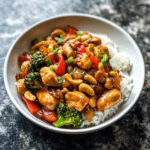
Ingredients
-
- Chicken Breast: 1.5 lbs, boneless, skinless chicken breasts. Chicken is the protein powerhouse of this stir-fry, and chicken breast is a lean and versatile choice. When selecting chicken breasts, opt for those that are plump, firm, and have a healthy pink color. Avoid chicken that looks pale or feels slimy. For even cooking in a stir-fry, it’s crucial to cut the chicken into uniform bite-sized pieces, about 1-inch cubes. This ensures quick cooking and even browning. You can also use chicken thighs for a richer flavor and slightly more tender texture, but chicken breast remains a leaner option. For a vegetarian or vegan twist, consider substituting firm tofu, tempeh, or even chickpeas for the chicken. Tofu should be pressed to remove excess water and then cubed before stir-frying.
-
- Cashews: 1 cup, roasted, unsalted cashews. Cashews are the signature nut in this stir-fry, providing a delightful buttery flavor and satisfying crunch. Roasted cashews are preferred as they have a deeper flavor and crispier texture compared to raw cashews. Unsalted cashews allow you to control the overall saltiness of the dish, especially considering the soy sauce in the sauce. If you only have salted cashews, use them sparingly and adjust the amount of soy sauce in the recipe to avoid excessive saltiness. For those with nut allergies or preferences, you can substitute other nuts like peanuts, almonds, or even sunflower seeds for a different textural and flavor profile. Adding the cashews towards the end of the cooking process is essential to maintain their crunch and prevent them from becoming soggy in the sauce.
-
- Vegetables: A colorful medley, about 4 cups total, chopped into bite-sized pieces. The beauty of stir-fries is their versatility in vegetable selection. Feel free to mix and match based on your preferences and what’s in season. Here are some excellent vegetable options for this maple ginger cashew chicken stir-fry:
-
- Broccoli Florets: 2 cups. Broccoli adds a wonderful cruciferous crunch and absorbs the sauce beautifully. Choose firm, green broccoli florets and cut them into bite-sized pieces, ensuring they are roughly the same size for even cooking.
-
- Bell Peppers: 1 large or 2 medium, any color (red, yellow, orange, green), sliced. Bell peppers contribute sweetness, color, and a slight crispness. Red, yellow, and orange bell peppers are sweeter than green bell peppers. Remove the seeds and membranes before slicing into strips or bite-sized pieces.
-
- Snap Peas or Snow Peas: 1 cup. Snap peas and snow peas offer a delicate sweetness and a satisfying snap when cooked. Trim the ends and remove any strings before adding them to the stir-fry.
-
- Carrots: 2 medium, thinly sliced or julienned. Carrots add sweetness, color, and a slight sweetness. Peel and thinly slice or julienne carrots for quick cooking in the stir-fry.
-
- Onions: 1 medium, sliced or diced. Onions provide a savory base flavor. Yellow or white onions work well. Slice or dice them depending on your preference.
-
- Mushrooms: 1 cup, sliced (cremini, shiitake, or button mushrooms). Mushrooms add an earthy umami flavor and a meaty texture. Cremini, shiitake, or button mushrooms all work wonderfully. Slice them to a uniform thickness for even cooking.
-
- Baby Corn: 1 cup, halved or quartered. Baby corn adds a sweet and slightly crunchy texture. Drain and rinse canned baby corn before adding it to the stir-fry.
-
- Edamame: 1 cup, shelled edamame (fresh or frozen). Edamame adds protein, fiber, and a vibrant green color. If using frozen edamame, thaw it slightly before adding to the stir-fry.
-
- Vegetables: A colorful medley, about 4 cups total, chopped into bite-sized pieces. The beauty of stir-fries is their versatility in vegetable selection. Feel free to mix and match based on your preferences and what’s in season. Here are some excellent vegetable options for this maple ginger cashew chicken stir-fry:
-
- Maple Ginger Sauce Ingredients: This is the heart and soul of the stir-fry, a symphony of sweet, savory, and spicy flavors.
-
- Maple Syrup: 1/4 cup, pure maple syrup. Pure maple syrup is essential for the signature sweetness and depth of flavor in this sauce. Avoid using pancake syrup or imitation maple syrup, as they lack the complex flavor of real maple syrup. The maple syrup provides a natural sweetness that balances the savory soy sauce and spicy ginger.
-
- Soy Sauce: 1/4 cup, low-sodium soy sauce. Low-sodium soy sauce is recommended to control the overall saltiness of the dish. Soy sauce provides the savory umami base of the sauce. If using regular soy sauce, you may want to reduce the amount slightly to avoid excessive saltiness. Tamari (gluten-free soy sauce) or coconut aminos can be used as gluten-free alternatives.
-
- Fresh Ginger: 2 tablespoons, grated or minced. Fresh ginger is crucial for the zesty, warming spice that defines this sauce. Peel the ginger root and grate or mince it finely. Fresh ginger provides a much brighter and more pungent flavor than dried ginger powder.
-
- Garlic: 2 cloves, minced. Garlic adds a savory aromatic depth that complements the ginger and other sauce ingredients. Freshly minced garlic is always best for flavor. You can use a garlic press or finely mince the garlic with a knife.
-
- Sesame Oil: 1 tablespoon, toasted sesame oil. Toasted sesame oil adds a nutty, aromatic richness that is characteristic of Asian cuisine. A little goes a long way, so use it in moderation. Toasted sesame oil is different from regular sesame oil and has a much more intense flavor.
-
- Rice Vinegar: 2 tablespoons, unseasoned rice vinegar. Rice vinegar provides a mild acidity that balances the sweetness and saviness of the sauce. Unseasoned rice vinegar is preferred; avoid using seasoned rice vinegar which has added sugar and salt. Apple cider vinegar or white wine vinegar can be used as substitutes in a pinch, but rice vinegar offers the most authentic flavor profile.
-
- Cornstarch: 1 tablespoon. Cornstarch is used as a thickening agent to create a glossy, slightly thickened sauce that coats the chicken and vegetables beautifully. Mix the cornstarch with a tablespoon of cold water to create a slurry before adding it to the sauce to prevent lumps.
-
- Red Pepper Flakes: 1/2 teaspoon, or to taste (optional, for a touch of heat). Red pepper flakes add a subtle kick of heat that balances the sweetness and savory notes. Adjust the amount to your spice preference or omit it entirely if you prefer a milder stir-fry.
-
- Maple Ginger Sauce Ingredients: This is the heart and soul of the stir-fry, a symphony of sweet, savory, and spicy flavors.
-
- Oil for Stir-Frying: 2-3 tablespoons, vegetable oil, canola oil, or peanut oil. You need an oil with a high smoke point for stir-frying, as it involves cooking at high heat. Vegetable oil, canola oil, and peanut oil are all excellent choices. Peanut oil imparts a subtle nutty flavor that complements Asian dishes, while vegetable and canola oil are neutral in flavor. Avoid using olive oil for stir-frying, as it has a lower smoke point and can become bitter at high temperatures.
-
- Optional Garnishes:
-
- Sesame Seeds: Toasted sesame seeds for visual appeal and nutty flavor.
-
- Green Onions: Chopped green onions for freshness and a mild oniony bite.
-
- Fresh Cilantro: Chopped fresh cilantro for a bright, herbaceous finish (optional, for those who enjoy cilantro).
-
- Optional Garnishes:
Instructions
-
- Prepare Your Ingredients (Mise en Place): This is crucial for successful stir-frying. Chop the chicken into bite-sized pieces. Chop all your chosen vegetables into uniform, bite-sized pieces. Mince the garlic and ginger. In a small bowl, whisk together all the sauce ingredients: maple syrup, soy sauce, grated ginger, minced garlic, sesame oil, rice vinegar, cornstarch slurry (cornstarch mixed with 1 tbsp cold water), and red pepper flakes (if using). Having all your ingredients prepped and measured out before you start cooking will make the stir-frying process much smoother and faster.
-
- Stir-Fry the Chicken: Heat a large wok or large skillet over high heat. Add 1 tablespoon of oil and swirl to coat the bottom of the wok/skillet. Once the oil is hot and shimmering (almost smoking), add the cubed chicken in a single layer, being careful not to overcrowd the pan. If necessary, cook the chicken in batches to ensure proper searing and browning. Stir-fry the chicken for 2-3 minutes per side, or until it is cooked through and lightly browned. Remove the cooked chicken from the wok/skillet and set aside. Do not overcook the chicken at this stage, as it will continue to cook later with the vegetables and sauce.
-
- Stir-Fry the Vegetables: Add another 1-2 tablespoons of oil to the wok/skillet. Add the onions and carrots (if using) and stir-fry for 2-3 minutes until they begin to soften. Then, add the broccoli florets, bell peppers, snap peas (or snow peas), mushrooms, and baby corn (if using). Stir-fry the vegetables for 5-7 minutes, or until they are tender-crisp. Stir-fry frequently to ensure even cooking and prevent burning. You want the vegetables to be cooked through but still retain a slight crispness – avoid overcooking them until they become mushy.
-
- Add Chicken and Sauce: Return the cooked chicken to the wok/skillet with the vegetables. Pour the maple ginger sauce over the chicken and vegetables. Stir-fry everything together to combine and coat the chicken and vegetables evenly with the sauce.
-
- Simmer and Thicken the Sauce: Bring the sauce to a simmer and cook for 1-2 minutes, or until the sauce thickens slightly and becomes glossy. The cornstarch slurry in the sauce will activate and thicken the sauce as it heats. Stir constantly while the sauce thickens to prevent sticking and ensure even consistency.
-
- Stir in Cashews: Remove the wok/skillet from the heat and stir in the roasted cashews. Adding the cashews at the very end prevents them from becoming soggy in the sauce and ensures they retain their delightful crunch.
-
- Garnish and Serve: Garnish the maple ginger cashew chicken stir-fry with toasted sesame seeds, chopped green onions, and fresh cilantro (if using). Serve immediately over hot cooked rice, noodles, or quinoa. Enjoy the flavorful combination of tender chicken, crisp vegetables, crunchy cashews, and the luscious maple ginger sauce!
Nutrition
- Serving Size: one normal portion
- Calories: 450-550
- Sugar: 20-30 grams
- Fat: 20-30 grams
- Saturated Fat: 3-5 grams
- Unsaturated Fat: 15-25 grams
- Carbohydrates: 40-50 grams
- Fiber: 5-7 grams
- Protein: 35-45 grams
- Cholesterol: 90-120 mg