

Maple ginger cashew chicken stir-fry has become a weeknight wonder in our kitchen, a recipe that effortlessly bridges the gap between healthy eating and craveable comfort food. Honestly, stir-fries were never really my forte – I always felt they were either bland or overly saucy and greasy. But this recipe? It’s a game-changer. The vibrant dance of sweet maple syrup, zesty ginger, and savory soy sauce creates a sauce that’s just… addictive. Even better, it’s incredibly quick to whip up, perfect for those evenings when time is short but the desire for a delicious, home-cooked meal is strong. The chicken comes out tender and juicy, coated in this luscious glaze, and the cashews add this wonderful crunch that elevates the whole dish. My kids, who can be notoriously picky, gobble this down without complaint, often asking for seconds (a true victory!). Served over fluffy rice or noodles, it’s a complete and satisfying meal that feels both wholesome and indulgent. If you’re searching for a flavorful, family-friendly stir-fry that’s sure to become a regular in your rotation, you’ve found it. Let’s unlock the secrets to making this maple ginger cashew chicken stir-fry a star in your kitchen too!
Ingredients
The magic of this maple ginger cashew chicken stir-fry truly lies in the harmonious blend of fresh, high-quality ingredients. Each component contributes its unique flavor and texture, creating a dish that’s both complex and incredibly satisfying. Let’s dive into each ingredient and explore how to select the best for your culinary creation:
- Chicken Breast: 1.5 lbs, boneless, skinless chicken breasts. Chicken is the protein powerhouse of this stir-fry, and chicken breast is a lean and versatile choice. When selecting chicken breasts, opt for those that are plump, firm, and have a healthy pink color. Avoid chicken that looks pale or feels slimy. For even cooking in a stir-fry, it’s crucial to cut the chicken into uniform bite-sized pieces, about 1-inch cubes. This ensures quick cooking and even browning. You can also use chicken thighs for a richer flavor and slightly more tender texture, but chicken breast remains a leaner option. For a vegetarian or vegan twist, consider substituting firm tofu, tempeh, or even chickpeas for the chicken. Tofu should be pressed to remove excess water and then cubed before stir-frying.
- Cashews: 1 cup, roasted, unsalted cashews. Cashews are the signature nut in this stir-fry, providing a delightful buttery flavor and satisfying crunch. Roasted cashews are preferred as they have a deeper flavor and crispier texture compared to raw cashews. Unsalted cashews allow you to control the overall saltiness of the dish, especially considering the soy sauce in the sauce. If you only have salted cashews, use them sparingly and adjust the amount of soy sauce in the recipe to avoid excessive saltiness. For those with nut allergies or preferences, you can substitute other nuts like peanuts, almonds, or even sunflower seeds for a different textural and flavor profile. Adding the cashews towards the end of the cooking process is essential to maintain their crunch and prevent them from becoming soggy in the sauce.
- Vegetables: A colorful medley, about 4 cups total, chopped into bite-sized pieces. The beauty of stir-fries is their versatility in vegetable selection. Feel free to mix and match based on your preferences and what’s in season. Here are some excellent vegetable options for this maple ginger cashew chicken stir-fry:
- Broccoli Florets: 2 cups. Broccoli adds a wonderful cruciferous crunch and absorbs the sauce beautifully. Choose firm, green broccoli florets and cut them into bite-sized pieces, ensuring they are roughly the same size for even cooking.
- Bell Peppers: 1 large or 2 medium, any color (red, yellow, orange, green), sliced. Bell peppers contribute sweetness, color, and a slight crispness. Red, yellow, and orange bell peppers are sweeter than green bell peppers. Remove the seeds and membranes before slicing into strips or bite-sized pieces.
- Snap Peas or Snow Peas: 1 cup. Snap peas and snow peas offer a delicate sweetness and a satisfying snap when cooked. Trim the ends and remove any strings before adding them to the stir-fry.
- Carrots: 2 medium, thinly sliced or julienned. Carrots add sweetness, color, and a slight sweetness. Peel and thinly slice or julienne carrots for quick cooking in the stir-fry.
- Onions: 1 medium, sliced or diced. Onions provide a savory base flavor. Yellow or white onions work well. Slice or dice them depending on your preference.
- Mushrooms: 1 cup, sliced (cremini, shiitake, or button mushrooms). Mushrooms add an earthy umami flavor and a meaty texture. Cremini, shiitake, or button mushrooms all work wonderfully. Slice them to a uniform thickness for even cooking.
- Baby Corn: 1 cup, halved or quartered. Baby corn adds a sweet and slightly crunchy texture. Drain and rinse canned baby corn before adding it to the stir-fry.
- Edamame: 1 cup, shelled edamame (fresh or frozen). Edamame adds protein, fiber, and a vibrant green color. If using frozen edamame, thaw it slightly before adding to the stir-fry.
- Maple Ginger Sauce Ingredients: This is the heart and soul of the stir-fry, a symphony of sweet, savory, and spicy flavors.
- Maple Syrup: 1/4 cup, pure maple syrup. Pure maple syrup is essential for the signature sweetness and depth of flavor in this sauce. Avoid using pancake syrup or imitation maple syrup, as they lack the complex flavor of real maple syrup. The maple syrup provides a natural sweetness that balances the savory soy sauce and spicy ginger.
- Soy Sauce: 1/4 cup, low-sodium soy sauce. Low-sodium soy sauce is recommended to control the overall saltiness of the dish. Soy sauce provides the savory umami base of the sauce. If using regular soy sauce, you may want to reduce the amount slightly to avoid excessive saltiness. Tamari (gluten-free soy sauce) or coconut aminos can be used as gluten-free alternatives.
- Fresh Ginger: 2 tablespoons, grated or minced. Fresh ginger is crucial for the zesty, warming spice that defines this sauce. Peel the ginger root and grate or mince it finely. Fresh ginger provides a much brighter and more pungent flavor than dried ginger powder.
- Garlic: 2 cloves, minced. Garlic adds a savory aromatic depth that complements the ginger and other sauce ingredients. Freshly minced garlic is always best for flavor. You can use a garlic press or finely mince the garlic with a knife.
- Sesame Oil: 1 tablespoon, toasted sesame oil. Toasted sesame oil adds a nutty, aromatic richness that is characteristic of Asian cuisine. A little goes a long way, so use it in moderation. Toasted sesame oil is different from regular sesame oil and has a much more intense flavor.
- Rice Vinegar: 2 tablespoons, unseasoned rice vinegar. Rice vinegar provides a mild acidity that balances the sweetness and saviness of the sauce. Unseasoned rice vinegar is preferred; avoid using seasoned rice vinegar which has added sugar and salt. Apple cider vinegar or white wine vinegar can be used as substitutes in a pinch, but rice vinegar offers the most authentic flavor profile.
- Cornstarch: 1 tablespoon. Cornstarch is used as a thickening agent to create a glossy, slightly thickened sauce that coats the chicken and vegetables beautifully. Mix the cornstarch with a tablespoon of cold water to create a slurry before adding it to the sauce to prevent lumps.
- Red Pepper Flakes: 1/2 teaspoon, or to taste (optional, for a touch of heat). Red pepper flakes add a subtle kick of heat that balances the sweetness and savory notes. Adjust the amount to your spice preference or omit it entirely if you prefer a milder stir-fry.
- Oil for Stir-Frying: 2-3 tablespoons, vegetable oil, canola oil, or peanut oil. You need an oil with a high smoke point for stir-frying, as it involves cooking at high heat. Vegetable oil, canola oil, and peanut oil are all excellent choices. Peanut oil imparts a subtle nutty flavor that complements Asian dishes, while vegetable and canola oil are neutral in flavor. Avoid using olive oil for stir-frying, as it has a lower smoke point and can become bitter at high temperatures.
- Optional Garnishes:
- Sesame Seeds: Toasted sesame seeds for visual appeal and nutty flavor.
- Green Onions: Chopped green onions for freshness and a mild oniony bite.
- Fresh Cilantro: Chopped fresh cilantro for a bright, herbaceous finish (optional, for those who enjoy cilantro).
Instructions
Creating this flavorful maple ginger cashew chicken stir-fry is surprisingly quick and easy, especially once you have all your ingredients prepped and ready. Stir-frying is all about speed and efficiency, so follow these step-by-step instructions to ensure a delicious and perfectly cooked meal.
- Prepare Your Ingredients (Mise en Place): This is crucial for successful stir-frying. Chop the chicken into bite-sized pieces. Chop all your chosen vegetables into uniform, bite-sized pieces. Mince the garlic and ginger. In a small bowl, whisk together all the sauce ingredients: maple syrup, soy sauce, grated ginger, minced garlic, sesame oil, rice vinegar, cornstarch slurry (cornstarch mixed with 1 tbsp cold water), and red pepper flakes (if using). Having all your ingredients prepped and measured out before you start cooking will make the stir-frying process much smoother and faster.
- Stir-Fry the Chicken: Heat a large wok or large skillet over high heat. Add 1 tablespoon of oil and swirl to coat the bottom of the wok/skillet. Once the oil is hot and shimmering (almost smoking), add the cubed chicken in a single layer, being careful not to overcrowd the pan. If necessary, cook the chicken in batches to ensure proper searing and browning. Stir-fry the chicken for 2-3 minutes per side, or until it is cooked through and lightly browned. Remove the cooked chicken from the wok/skillet and set aside. Do not overcook the chicken at this stage, as it will continue to cook later with the vegetables and sauce.
- Stir-Fry the Vegetables: Add another 1-2 tablespoons of oil to the wok/skillet. Add the onions and carrots (if using) and stir-fry for 2-3 minutes until they begin to soften. Then, add the broccoli florets, bell peppers, snap peas (or snow peas), mushrooms, and baby corn (if using). Stir-fry the vegetables for 5-7 minutes, or until they are tender-crisp. Stir-fry frequently to ensure even cooking and prevent burning. You want the vegetables to be cooked through but still retain a slight crispness – avoid overcooking them until they become mushy.
- Add Chicken and Sauce: Return the cooked chicken to the wok/skillet with the vegetables. Pour the maple ginger sauce over the chicken and vegetables. Stir-fry everything together to combine and coat the chicken and vegetables evenly with the sauce.
- Simmer and Thicken the Sauce: Bring the sauce to a simmer and cook for 1-2 minutes, or until the sauce thickens slightly and becomes glossy. The cornstarch slurry in the sauce will activate and thicken the sauce as it heats. Stir constantly while the sauce thickens to prevent sticking and ensure even consistency.
- Stir in Cashews: Remove the wok/skillet from the heat and stir in the roasted cashews. Adding the cashews at the very end prevents them from becoming soggy in the sauce and ensures they retain their delightful crunch.
- Garnish and Serve: Garnish the maple ginger cashew chicken stir-fry with toasted sesame seeds, chopped green onions, and fresh cilantro (if using). Serve immediately over hot cooked rice, noodles, or quinoa. Enjoy the flavorful combination of tender chicken, crisp vegetables, crunchy cashews, and the luscious maple ginger sauce!
Nutrition Facts
This Maple Ginger Cashew Chicken Stir-Fry is not only incredibly delicious but also offers a balanced and nutritious meal. It’s packed with lean protein, a rainbow of vegetables, and healthy fats from cashews, making it a wholesome choice for a weeknight dinner. Here’s a general breakdown of the nutritional information per serving. Please note that these are estimates and can vary slightly depending on the specific ingredients used, portion sizes, and vegetable variations.
- Servings: 4 servings
This recipe is designed to serve four people, making it perfect for a family dinner or a small gathering. You can easily adjust the recipe to serve more or fewer people by increasing or decreasing the ingredient quantities proportionally. - Calories per Serving (estimated): 450-550 calories
This is an estimated range. The exact calorie count will depend on the specific types and amounts of vegetables used, the type of oil, and the serving size. However, within this range, it’s a relatively moderate calorie meal, especially considering its nutrient density.Approximate Nutritional Breakdown per Serving (estimated):- Protein: 35-45 grams
Chicken breast is an excellent source of lean protein, essential for muscle building, repair, and satiety. This stir-fry provides a generous amount of protein per serving. - Fat: 20-30 grams
The fat content comes primarily from the cashews and the cooking oil. Cashews are a source of healthy unsaturated fats, including monounsaturated and polyunsaturated fats, which are beneficial for heart health.- Saturated Fat: 3-5 grams (relatively low)
- Unsaturated Fat: 15-25 grams (mostly healthy fats)
- Cholesterol: 90-120 mg
- Sodium: 500-700 mg (depending on soy sauce and optional salt added)
Using low-sodium soy sauce helps to keep the sodium content within a reasonable range. - Carbohydrates: 40-50 grams
Carbohydrates come from the vegetables, maple syrup in the sauce, and any rice or noodles served alongside.- Fiber: 5-7 grams (from vegetables)
- Sugar: 20-30 grams (naturally occurring sugars in vegetables and maple syrup)
- Vitamins and Minerals: This stir-fry is rich in various vitamins and minerals, primarily from the diverse array of vegetables. The specific vitamins and minerals will vary depending on the vegetables used, but common nutrients include:
- Vitamin C: Excellent source, especially from bell peppers and broccoli, crucial for immune function and antioxidant protection.
- Vitamin A: Good source, especially from carrots and bell peppers, important for vision, immune function, and cell growth.
- Vitamin K: Good source, especially from broccoli and leafy green vegetables, essential for blood clotting and bone health.
- Potassium: Good source, important for blood pressure regulation and muscle function.
- Folate (Vitamin B9): Good source, important for cell growth and development.
- Manganese: Good source, an antioxidant and cofactor for enzymes.
- Protein: 35-45 grams
Health Benefits:
- Lean Protein Source: Chicken breast provides high-quality lean protein, supporting muscle health and satiety.
- Rich in Vegetables: The abundance of vegetables provides a wide range of vitamins, minerals, and fiber, contributing to overall health and well-being.
- Healthy Fats: Cashews offer beneficial unsaturated fats that support heart health.
- Relatively Low in Saturated Fat: Compared to many other takeout or restaurant stir-fry options, this homemade version is lower in saturated fat and sodium, especially when using low-sodium soy sauce and lean chicken breast.
- Customizable: You can easily adjust the vegetable content, protein source, and level of spice to suit your dietary needs and preferences.
This Maple Ginger Cashew Chicken Stir-Fry is a nutritious and delicious meal choice that fits well into a balanced diet, offering a good source of protein, healthy fats, and essential vitamins and minerals from a variety of colorful vegetables.
Preparation Time
One of the greatest advantages of this Maple Ginger Cashew Chicken Stir-Fry is its speed and efficiency. It’s designed for busy weeknights when you want a healthy and flavorful meal without spending hours in the kitchen. Here’s a breakdown of the preparation time:
- Prep Time: 20-25 minutes
This includes chopping the chicken, chopping all the vegetables, mincing the garlic and ginger, and whisking together the sauce ingredients. Chopping vegetables is typically the most time-consuming part of the prep. Efficient knife skills and having a well-organized kitchen setup (mise en place) can help streamline the prep process. - Cook Time: 15-20 minutes
The actual stir-frying and cooking time is relatively quick. Stir-frying the chicken takes about 5-7 minutes (including batch cooking if needed). Stir-frying the vegetables takes another 5-7 minutes. Simmering the sauce and combining everything takes only a few minutes more. Stir-frying is a high-heat, fast-cooking method, so the cooking process itself is quite rapid. - Total Time: 35-45 minutes
Combining the prep time and cook time, the total time to make this Maple Ginger Cashew Chicken Stir-Fry from start to finish is approximately 35-45 minutes. This quick turnaround makes it an ideal option for a healthy and flavorful weeknight meal.
Time-Saving Tips:
- Pre-Cut Vegetables: Purchase pre-cut vegetables from the grocery store (like broccoli florets, sliced bell peppers, or baby carrots) to significantly reduce prep time. Many grocery stores offer pre-cut stir-fry vegetable blends, which can be a real time-saver.
- Pre-Mince Garlic and Ginger (or Use Jarred): Using pre-minced garlic and ginger from jars can save a few minutes of prep time. While fresh is always best for flavor, jarred options are convenient for busy weeknights.
- Prepare Sauce in Advance: The maple ginger sauce can be made ahead of time, even a day or two in advance. Store it in an airtight container in the refrigerator. This step can save you valuable minutes during the final cooking process.
- Quick-Cooking Vegetables: Choose vegetables that cook quickly in a stir-fry, such as broccoli florets, bell peppers, snap peas, snow peas, and sliced mushrooms. Avoid vegetables that require longer cooking times in stir-fries, unless you pre-cook them slightly (e.g., parboil carrots for a few minutes).
- Efficient Knife Skills: Practice and improve your knife skills to chop vegetables more quickly and efficiently. Uniformly sized pieces will also cook more evenly and quickly.
With its minimal prep time and short cooking duration, this Maple Ginger Cashew Chicken Stir-Fry is a winner for anyone seeking a fast, healthy, and delicious meal that doesn’t compromise on flavor, making it perfect for busy weeknights.
How to Serve
Maple Ginger Cashew Chicken Stir-Fry is incredibly versatile and can be served in various ways to create a complete and satisfying meal. The key is to pair it with complementary sides that enhance the flavors and textures of the stir-fry itself. Here are some delicious serving suggestions:
Base Options (Serving Underneath):
- Steamed Rice: Classic and always a winner. White rice, brown rice, jasmine rice, or basmati rice all work beautifully. Fluffy steamed rice provides a neutral base that soaks up the delicious maple ginger sauce. Consider adding a drizzle of sesame oil or a sprinkle of chopped green onions to the rice for extra flavor.
- Noodles: Noodles are another fantastic option for serving stir-fry.
- Egg Noodles: Wide or thin egg noodles, cooked according to package directions, are a hearty and satisfying choice.
- Rice Noodles: Thin rice noodles (like vermicelli) or wide rice noodles (like pad see ew noodles) are gluten-free options that pair well with Asian flavors. Soak rice noodles in hot water until softened, then drain before serving.
- Lo Mein Noodles: Pre-cooked lo mein noodles can be quickly tossed into the stir-fry for a convenient and flavorful noodle dish.
- Grains: For a healthier and more nutritious base, consider serving over grains:
- Quinoa: Quinoa is a protein-rich grain that makes a healthy and satisfying base. Cook quinoa according to package directions and fluff with a fork before serving.
- Farro: Farro is a chewy and nutty grain that adds texture and fiber to the meal. Cook farro according to package directions until tender but slightly firm.
- Brown Rice: Brown rice is a whole grain option that is more nutritious than white rice and provides a slightly nutty flavor.
- Vegetable “Rice” or Noodles (Low-Carb Options):
- Cauliflower Rice: For a low-carb and vegetable-rich option, serve the stir-fry over cauliflower rice. Sauté riced cauliflower until tender-crisp before serving.
- Zucchini Noodles (Zoodles): Zucchini noodles or other vegetable noodles (like carrot noodles or sweet potato noodles) are a very low-carb and healthy alternative to traditional noodles or rice. Lightly sauté zoodles until just tender-crisp, being careful not to overcook them.
Side Dish Suggestions (Serving Alongside):
- Steamed Vegetables: To further boost your vegetable intake, serve steamed vegetables on the side.
- Steamed Broccoli: Steamed broccoli florets provide a simple and healthy side dish that complements the stir-fry.
- Steamed Bok Choy: Steamed bok choy or other leafy greens offer a nutritious and slightly bitter counterpoint.
- Edamame (Steamed or Boiled): Steamed or boiled edamame pods make a fun and interactive side dish, adding extra protein and fiber.
- Salad: A light and refreshing salad can balance the richness of the stir-fry.
- Asian-Inspired Salad: A salad with mixed greens, shredded carrots, cucumbers, edamame, and a light sesame ginger vinaigrette would be a perfect complement.
- Cucumber Salad: A simple cucumber salad with rice vinegar and sesame oil offers a refreshing and palate-cleansing side.
- Spring Rolls or Egg Rolls: Crispy spring rolls or egg rolls (either homemade or store-bought) can add a delicious appetizer or side element to your meal.
Toppings and Garnishes (Serving On Top):
- Toasted Sesame Seeds: Essential for visual appeal, nutty flavor, and a slight crunch.
- Chopped Green Onions: Add freshness, mild oniony flavor, and vibrant green color.
- Fresh Cilantro: For a bright, herbaceous finish (optional, for cilantro lovers).
- Sriracha or Chili Garlic Sauce: For those who like extra heat, offer sriracha or chili garlic sauce on the side for drizzling over the stir-fry.
- Lime Wedges: A squeeze of fresh lime juice at the end can brighten the flavors and add a touch of acidity.
Presentation Tips:
- Serve the stir-fry hot immediately after cooking for the best flavor and texture.
- Arrange the stir-fry attractively over your chosen base (rice, noodles, etc.) in bowls or plates.
- Garnish generously with sesame seeds, green onions, and cilantro for visual appeal.
- Offer dipping sauces (like soy sauce, sriracha, or chili garlic sauce) on the side in small bowls.
- Use chopsticks for an authentic Asian dining experience (optional).
By thoughtfully choosing your base, side dishes, and garnishes, you can create a complete and satisfying Maple Ginger Cashew Chicken Stir-Fry meal that is both delicious and visually appealing.
Additional Tips
To consistently create restaurant-quality Maple Ginger Cashew Chicken Stir-Fry in your own kitchen, here are five additional tips that will elevate your stir-fry game and ensure delicious results every time:
- High Heat is Key for Stir-Frying: Stir-frying is a high-heat cooking method, and achieving that wok hei (smoky, slightly charred flavor) and crisp-tender texture requires cooking over high heat. Ensure your wok or skillet is thoroughly heated before adding oil and ingredients. Use medium-high to high heat throughout the stir-frying process. The high heat sears the ingredients quickly, locking in moisture and preventing them from becoming soggy. If your stovetop doesn’t get very hot, you may need to cook in even smaller batches to maintain the heat in the pan.
- Prepare All Ingredients in Advance (Mise en Place is Crucial): As emphasized throughout this article, having all your ingredients prepped, chopped, measured, and sauces mixed before you even turn on the heat is absolutely essential for successful stir-frying. Stir-frying happens very quickly, and you won’t have time to chop vegetables or measure sauces while you are actively cooking. Mise en place (French for “everything in its place”) is the secret to efficient and stress-free stir-frying. Organize all your prepped ingredients within easy reach of your cooking station.
- Don’t Overcrowd the Wok/Skillet (Cook in Batches if Necessary): Overcrowding the wok or skillet is a common mistake that leads to steamed, soggy ingredients instead of stir-fried perfection. When the pan is overcrowded, the temperature drops, and the ingredients release moisture rather than searing and browning properly. Cook the chicken and vegetables in batches if necessary to avoid overcrowding. This ensures that each ingredient cooks quickly and evenly and achieves that desirable stir-fried texture. It’s better to cook in multiple smaller batches than to cram everything into the pan at once.
- Taste and Adjust the Sauce to Your Preference: The maple ginger sauce recipe provided is a guideline, but taste preferences vary. Once you’ve whisked together the sauce, taste it and adjust the ingredients to your liking. If you prefer a sweeter sauce, add a touch more maple syrup. For a saltier sauce, add a little more soy sauce (start with a teaspoon at a time). If you want more acidity, add a touch more rice vinegar. For more heat, add more red pepper flakes or a dash of sriracha. Personalizing the sauce to your taste is key to making a stir-fry you truly love.
- Fresh, High-Quality Ingredients Make a Difference: While stir-fries are quick and forgiving, using fresh, high-quality ingredients will significantly elevate the flavor of your Maple Ginger Cashew Chicken Stir-Fry. Fresh ginger, garlic, and vegetables will have a much brighter and more vibrant flavor compared to older or less fresh ingredients. Use pure maple syrup for the best sweetness and depth of flavor in the sauce. Invest in good quality soy sauce and sesame oil for authentic Asian flavors. Starting with excellent ingredients will always result in a better-tasting final dish.
By incorporating these additional tips into your stir-fry technique, you will consistently create delicious and impressive Maple Ginger Cashew Chicken Stir-Fry that rivals your favorite takeout, but is healthier and made right in your own kitchen.
FAQ
Here are five frequently asked questions about making Maple Ginger Cashew Chicken Stir-Fry, along with detailed answers to address common queries and ensure a successful and enjoyable cooking experience:
Q1: Can I use other proteins besides chicken in this stir-fry?
A: Yes, absolutely! This maple ginger cashew sauce is incredibly versatile and pairs well with various proteins. Here are some excellent protein substitutions you can try:
- Shrimp: Shrimp cooks quickly and is a classic stir-fry protein. Use about 1 pound of peeled and deveined shrimp. Add the shrimp to the wok/skillet after stir-frying the vegetables, and cook for 2-3 minutes per side, or until pink and cooked through.
- Beef: Thinly sliced beef (like flank steak or sirloin) works beautifully in this stir-fry. Use about 1 pound of beef, sliced against the grain. Stir-fry the beef in batches until browned and cooked to your desired doneness before adding the vegetables.
- Pork: Pork tenderloin or pork chops, cut into bite-sized pieces, are another delicious option. Use about 1 pound of pork, cubed. Stir-fry the pork until cooked through and lightly browned before adding the vegetables.
- Tofu (for Vegetarian/Vegan): Firm or extra-firm tofu, pressed to remove excess water and cubed, is a fantastic vegetarian and vegan protein source. Use about 1 block (14-16 ounces) of tofu. Stir-fry the tofu until golden brown and slightly crispy before adding the vegetables. You can also toss the tofu with a little cornstarch before stir-frying to help it crisp up even more.
- Tempeh (for Vegetarian/Vegan): Tempeh, a fermented soybean cake, is another excellent vegetarian and vegan option. Crumble or cube the tempeh and stir-fry until heated through and lightly browned before adding the vegetables.
Adjust cooking times as needed depending on the protein you choose to ensure it is cooked through properly.
Q2: Can I use different vegetables in my stir-fry based on what I have available or prefer?
A: Definitely! One of the great things about stir-fries is their flexibility. Feel free to customize the vegetable medley based on your preferences, seasonal availability, or what you have on hand in your refrigerator. Here are some other delicious vegetable options you can include or substitute:
- Asparagus: Cut asparagus spears into 1-inch pieces and stir-fry until tender-crisp.
- Green Beans: Trimmed green beans stir-fry beautifully and add a nice snap.
- Sugar Snap Peas: Similar to snap peas, sugar snap peas offer sweetness and crunch.
- Cauliflower Florets: Cauliflower florets add a cruciferous crunch and absorb the sauce well.
- Celery: Sliced celery adds a subtle crunch and refreshing flavor.
- Water Chestnuts: Canned water chestnuts (drained and sliced) add a unique crunch and subtle sweetness.
- Shiitake Mushrooms (or other mushrooms): Experiment with different types of mushrooms for varied flavors and textures.
- Spinach or Bok Choy (Leafy Greens): Add spinach or bok choy towards the very end of cooking, stir-frying just until wilted.
Aim for a total of about 4 cups of chopped vegetables. Consider cooking times of different vegetables – harder vegetables like carrots and broccoli may need to be added earlier than softer vegetables like spinach or bell peppers.
Q3: Can I make this Maple Ginger Cashew Chicken Stir-Fry vegetarian or vegan?
A: Yes, absolutely! It’s very easy to adapt this recipe to be vegetarian or vegan. Here’s how:
- Protein Substitution: Replace the chicken with firm tofu, tempeh, or chickpeas as suggested in FAQ #1. Tofu and tempeh are excellent vegetarian and vegan protein sources that work wonderfully in stir-fries. Chickpeas can also add protein and a hearty texture.
- Vegan Maple Ginger Sauce: The maple ginger sauce as written is already vegan-friendly as long as you use tamari or coconut aminos instead of soy sauce if you need to avoid gluten. Double-check the ingredients of your soy sauce or tamari to ensure they are fully plant-based if you are strictly vegan.
- Vegetable Variety: Load up on a wide variety of vegetables to make the stir-fry hearty and satisfying without meat. Include protein-rich vegetables like edamame and broccoli.
- Garnish: Ensure your garnishes (sesame seeds, green onions, cilantro) are also plant-based.
By making these simple substitutions, you can easily enjoy a delicious and flavorful vegetarian or vegan Maple Ginger Cashew Stir-Fry.
Q4: Can I prepare this stir-fry ahead of time and reheat it later?
A: While stir-fries are generally best enjoyed fresh and hot right after cooking for optimal texture, you can prepare components of this Maple Ginger Cashew Chicken Stir-Fry ahead of time to streamline the cooking process for a later meal.
- Prepare Sauce in Advance: As mentioned in the “Preparation Time” section, the maple ginger sauce can be made up to 2 days in advance and stored in the refrigerator.
- Chop Vegetables Ahead: You can chop the vegetables a day ahead of time and store them in airtight containers in the refrigerator.
- Cook Chicken Ahead (Less Recommended): While you can cook the chicken ahead of time and reheat it, it might become slightly drier upon reheating. If you choose to cook chicken ahead, store it separately from the vegetables and sauce in the refrigerator and reheat gently before adding it back to the stir-fry.
For the best texture and flavor, it’s generally recommended to stir-fry the chicken and vegetables fresh just before serving. Reheating a fully assembled stir-fry can sometimes make the vegetables a bit softer and the sauce less vibrant. However, if you are short on time, preparing the sauce and chopping vegetables in advance can significantly speed up the final cooking process.
Q5: How should I store leftovers and reheat them to maintain some texture?
A: Leftover Maple Ginger Cashew Chicken Stir-Fry can be stored in an airtight container in the refrigerator for up to 3-4 days. While it won’t be quite as crispy as freshly made stir-fry, you can reheat it effectively using these methods to maintain some texture:
- Skillet or Wok Reheating: The best way to reheat stir-fry and retain some texture is to reheat it in a skillet or wok over medium heat. Add a tablespoon of oil to the pan, then add the leftover stir-fry. Stir-fry for 5-7 minutes, or until heated through. Stir-frying helps to evaporate excess moisture and crisp up the vegetables and chicken slightly.
- Microwave Reheating (Less Ideal for Texture): You can reheat stir-fry in the microwave, but it will likely result in a softer texture. Microwave in intervals of 1-2 minutes, stirring in between, until heated through. Microwaving is quick but can make the vegetables and chicken slightly softer and less crispy.
- Oven Reheating (Not Recommended): Oven reheating is generally not recommended for stir-fries as it can dry them out.
When reheating, avoid overheating, as this can make the vegetables mushy and the chicken dry. Reheat gently until just heated through. Adding a fresh sprinkle of sesame seeds and chopped green onions after reheating can help freshen up the dish and add some textural contrast.
Print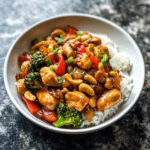
Maple Ginger Cashew Chicken Stir-Fry recipe
Ingredients
-
- Chicken Breast: 1.5 lbs, boneless, skinless chicken breasts. Chicken is the protein powerhouse of this stir-fry, and chicken breast is a lean and versatile choice. When selecting chicken breasts, opt for those that are plump, firm, and have a healthy pink color. Avoid chicken that looks pale or feels slimy. For even cooking in a stir-fry, it’s crucial to cut the chicken into uniform bite-sized pieces, about 1-inch cubes. This ensures quick cooking and even browning. You can also use chicken thighs for a richer flavor and slightly more tender texture, but chicken breast remains a leaner option. For a vegetarian or vegan twist, consider substituting firm tofu, tempeh, or even chickpeas for the chicken. Tofu should be pressed to remove excess water and then cubed before stir-frying.
-
- Cashews: 1 cup, roasted, unsalted cashews. Cashews are the signature nut in this stir-fry, providing a delightful buttery flavor and satisfying crunch. Roasted cashews are preferred as they have a deeper flavor and crispier texture compared to raw cashews. Unsalted cashews allow you to control the overall saltiness of the dish, especially considering the soy sauce in the sauce. If you only have salted cashews, use them sparingly and adjust the amount of soy sauce in the recipe to avoid excessive saltiness. For those with nut allergies or preferences, you can substitute other nuts like peanuts, almonds, or even sunflower seeds for a different textural and flavor profile. Adding the cashews towards the end of the cooking process is essential to maintain their crunch and prevent them from becoming soggy in the sauce.
-
- Vegetables: A colorful medley, about 4 cups total, chopped into bite-sized pieces. The beauty of stir-fries is their versatility in vegetable selection. Feel free to mix and match based on your preferences and what’s in season. Here are some excellent vegetable options for this maple ginger cashew chicken stir-fry:
-
- Broccoli Florets: 2 cups. Broccoli adds a wonderful cruciferous crunch and absorbs the sauce beautifully. Choose firm, green broccoli florets and cut them into bite-sized pieces, ensuring they are roughly the same size for even cooking.
-
- Bell Peppers: 1 large or 2 medium, any color (red, yellow, orange, green), sliced. Bell peppers contribute sweetness, color, and a slight crispness. Red, yellow, and orange bell peppers are sweeter than green bell peppers. Remove the seeds and membranes before slicing into strips or bite-sized pieces.
-
- Snap Peas or Snow Peas: 1 cup. Snap peas and snow peas offer a delicate sweetness and a satisfying snap when cooked. Trim the ends and remove any strings before adding them to the stir-fry.
-
- Carrots: 2 medium, thinly sliced or julienned. Carrots add sweetness, color, and a slight sweetness. Peel and thinly slice or julienne carrots for quick cooking in the stir-fry.
-
- Onions: 1 medium, sliced or diced. Onions provide a savory base flavor. Yellow or white onions work well. Slice or dice them depending on your preference.
-
- Mushrooms: 1 cup, sliced (cremini, shiitake, or button mushrooms). Mushrooms add an earthy umami flavor and a meaty texture. Cremini, shiitake, or button mushrooms all work wonderfully. Slice them to a uniform thickness for even cooking.
-
- Baby Corn: 1 cup, halved or quartered. Baby corn adds a sweet and slightly crunchy texture. Drain and rinse canned baby corn before adding it to the stir-fry.
-
- Edamame: 1 cup, shelled edamame (fresh or frozen). Edamame adds protein, fiber, and a vibrant green color. If using frozen edamame, thaw it slightly before adding to the stir-fry.
-
- Vegetables: A colorful medley, about 4 cups total, chopped into bite-sized pieces. The beauty of stir-fries is their versatility in vegetable selection. Feel free to mix and match based on your preferences and what’s in season. Here are some excellent vegetable options for this maple ginger cashew chicken stir-fry:
-
- Maple Ginger Sauce Ingredients: This is the heart and soul of the stir-fry, a symphony of sweet, savory, and spicy flavors.
-
- Maple Syrup: 1/4 cup, pure maple syrup. Pure maple syrup is essential for the signature sweetness and depth of flavor in this sauce. Avoid using pancake syrup or imitation maple syrup, as they lack the complex flavor of real maple syrup. The maple syrup provides a natural sweetness that balances the savory soy sauce and spicy ginger.
-
- Soy Sauce: 1/4 cup, low-sodium soy sauce. Low-sodium soy sauce is recommended to control the overall saltiness of the dish. Soy sauce provides the savory umami base of the sauce. If using regular soy sauce, you may want to reduce the amount slightly to avoid excessive saltiness. Tamari (gluten-free soy sauce) or coconut aminos can be used as gluten-free alternatives.
-
- Fresh Ginger: 2 tablespoons, grated or minced. Fresh ginger is crucial for the zesty, warming spice that defines this sauce. Peel the ginger root and grate or mince it finely. Fresh ginger provides a much brighter and more pungent flavor than dried ginger powder.
-
- Garlic: 2 cloves, minced. Garlic adds a savory aromatic depth that complements the ginger and other sauce ingredients. Freshly minced garlic is always best for flavor. You can use a garlic press or finely mince the garlic with a knife.
-
- Sesame Oil: 1 tablespoon, toasted sesame oil. Toasted sesame oil adds a nutty, aromatic richness that is characteristic of Asian cuisine. A little goes a long way, so use it in moderation. Toasted sesame oil is different from regular sesame oil and has a much more intense flavor.
-
- Rice Vinegar: 2 tablespoons, unseasoned rice vinegar. Rice vinegar provides a mild acidity that balances the sweetness and saviness of the sauce. Unseasoned rice vinegar is preferred; avoid using seasoned rice vinegar which has added sugar and salt. Apple cider vinegar or white wine vinegar can be used as substitutes in a pinch, but rice vinegar offers the most authentic flavor profile.
-
- Cornstarch: 1 tablespoon. Cornstarch is used as a thickening agent to create a glossy, slightly thickened sauce that coats the chicken and vegetables beautifully. Mix the cornstarch with a tablespoon of cold water to create a slurry before adding it to the sauce to prevent lumps.
-
- Red Pepper Flakes: 1/2 teaspoon, or to taste (optional, for a touch of heat). Red pepper flakes add a subtle kick of heat that balances the sweetness and savory notes. Adjust the amount to your spice preference or omit it entirely if you prefer a milder stir-fry.
-
- Maple Ginger Sauce Ingredients: This is the heart and soul of the stir-fry, a symphony of sweet, savory, and spicy flavors.
-
- Oil for Stir-Frying: 2-3 tablespoons, vegetable oil, canola oil, or peanut oil. You need an oil with a high smoke point for stir-frying, as it involves cooking at high heat. Vegetable oil, canola oil, and peanut oil are all excellent choices. Peanut oil imparts a subtle nutty flavor that complements Asian dishes, while vegetable and canola oil are neutral in flavor. Avoid using olive oil for stir-frying, as it has a lower smoke point and can become bitter at high temperatures.
-
- Optional Garnishes:
-
- Sesame Seeds: Toasted sesame seeds for visual appeal and nutty flavor.
-
- Green Onions: Chopped green onions for freshness and a mild oniony bite.
-
- Fresh Cilantro: Chopped fresh cilantro for a bright, herbaceous finish (optional, for those who enjoy cilantro).
-
- Optional Garnishes:
Instructions
-
- Prepare Your Ingredients (Mise en Place): This is crucial for successful stir-frying. Chop the chicken into bite-sized pieces. Chop all your chosen vegetables into uniform, bite-sized pieces. Mince the garlic and ginger. In a small bowl, whisk together all the sauce ingredients: maple syrup, soy sauce, grated ginger, minced garlic, sesame oil, rice vinegar, cornstarch slurry (cornstarch mixed with 1 tbsp cold water), and red pepper flakes (if using). Having all your ingredients prepped and measured out before you start cooking will make the stir-frying process much smoother and faster.
-
- Stir-Fry the Chicken: Heat a large wok or large skillet over high heat. Add 1 tablespoon of oil and swirl to coat the bottom of the wok/skillet. Once the oil is hot and shimmering (almost smoking), add the cubed chicken in a single layer, being careful not to overcrowd the pan. If necessary, cook the chicken in batches to ensure proper searing and browning. Stir-fry the chicken for 2-3 minutes per side, or until it is cooked through and lightly browned. Remove the cooked chicken from the wok/skillet and set aside. Do not overcook the chicken at this stage, as it will continue to cook later with the vegetables and sauce.
-
- Stir-Fry the Vegetables: Add another 1-2 tablespoons of oil to the wok/skillet. Add the onions and carrots (if using) and stir-fry for 2-3 minutes until they begin to soften. Then, add the broccoli florets, bell peppers, snap peas (or snow peas), mushrooms, and baby corn (if using). Stir-fry the vegetables for 5-7 minutes, or until they are tender-crisp. Stir-fry frequently to ensure even cooking and prevent burning. You want the vegetables to be cooked through but still retain a slight crispness – avoid overcooking them until they become mushy.
-
- Add Chicken and Sauce: Return the cooked chicken to the wok/skillet with the vegetables. Pour the maple ginger sauce over the chicken and vegetables. Stir-fry everything together to combine and coat the chicken and vegetables evenly with the sauce.
-
- Simmer and Thicken the Sauce: Bring the sauce to a simmer and cook for 1-2 minutes, or until the sauce thickens slightly and becomes glossy. The cornstarch slurry in the sauce will activate and thicken the sauce as it heats. Stir constantly while the sauce thickens to prevent sticking and ensure even consistency.
-
- Stir in Cashews: Remove the wok/skillet from the heat and stir in the roasted cashews. Adding the cashews at the very end prevents them from becoming soggy in the sauce and ensures they retain their delightful crunch.
-
- Garnish and Serve: Garnish the maple ginger cashew chicken stir-fry with toasted sesame seeds, chopped green onions, and fresh cilantro (if using). Serve immediately over hot cooked rice, noodles, or quinoa. Enjoy the flavorful combination of tender chicken, crisp vegetables, crunchy cashews, and the luscious maple ginger sauce!
Nutrition
- Serving Size: one normal portion
- Calories: 450-550
- Sugar: 20-30 grams
- Fat: 20-30 grams
- Saturated Fat: 3-5 grams
- Unsaturated Fat: 15-25 grams
- Carbohydrates: 40-50 grams
- Fiber: 5-7 grams
- Protein: 35-45 grams
- Cholesterol: 90-120 mg