
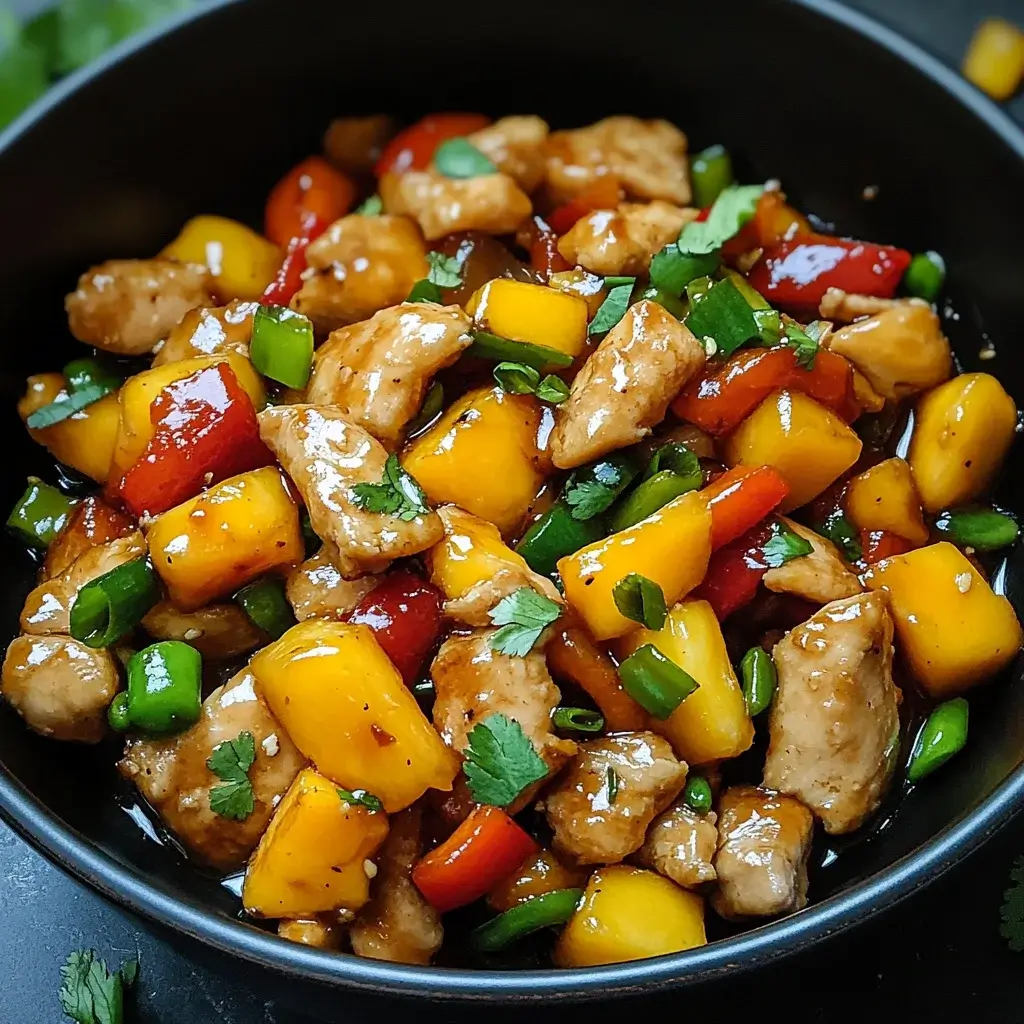

This Mango Chicken Stir Fry recipe is a vibrant, flavor-packed dish that has become an absolute sensation in our household. The first time I experimented with combining sweet, juicy mangoes with savory chicken in a stir-fry, I wasn’t sure what to expect. But oh, the magic that happened in that wok! The tender chicken, coated in a glistening, beautifully balanced sauce that’s both sweet and tangy with a hint of spice, mingling with crisp-tender bell peppers and the star of the show – those luscious chunks of fresh mango – it was a revelation. My family, usually a tough crowd for new fruit-in-savory-dish experiments, devoured it. My partner raved about the “tropical explosion” of flavor, and even my kids, who can be picky about textures, loved the soft mango contrasted with the crisp vegetables. It’s now a requested favorite, especially during mango season. It’s the kind of meal that brightens up a weeknight, feels restaurant-quality, yet is surprisingly quick and easy to assemble once you have your ingredients prepped. It’s a delicious escape to a sunnier place, all from the comfort of your kitchen.
Complete with the ingredients amount
This Mango Chicken Stir Fry is designed for a delightful balance of sweet, savory, and tangy flavors. The key is fresh, ripe mangoes and properly prepared chicken.
For the Chicken & Marinade:
- Boneless, Skinless Chicken Breasts or Thighs: 1.5 pounds, cut into 1-inch pieces
- Soy Sauce: 2 tablespoons (low sodium recommended)
- Cornstarch: 1 tablespoon
- Rice Vinegar: 1 tablespoon
- Sesame Oil: 1 teaspoon
For the Stir-Fry Sauce:
- Soy Sauce: 1/4 cup (low sodium recommended)
- Fresh Mango Puree: 1/4 cup (from about 1/2 ripe mango, blended until smooth) OR Mango Nectar/Juice
- Honey or Brown Sugar: 2 tablespoons (adjust to mango sweetness)
- Rice Vinegar: 2 tablespoons
- Fresh Lime Juice: 1 tablespoon (from about 1/2 lime)
- Cornstarch: 1 tablespoon
- Ginger: 1 tablespoon, freshly grated or minced
- Garlic: 2-3 cloves, minced (about 1 tablespoon)
- Chili Garlic Sauce or Sriracha: 1-2 teaspoons (optional, adjust to heat preference)
- Water or Chicken Broth: 2 tablespoons (if needed to thin sauce)
For the Stir-Fry Vegetables & Mango:
- Cooking Oil: 2 tablespoons (high smoke point, like avocado, canola, or peanut oil), divided
- Red Bell Pepper: 1 large, cored, seeded, and sliced into strips or 1-inch pieces
- Green Bell Pepper: 1 large, cored, seeded, and sliced into strips or 1-inch pieces (or use yellow/orange for more color)
- Onion: 1 medium, sliced or cut into 1-inch chunks
- Fresh Mangoes: 2 medium ripe but firm, peeled, pitted, and cut into 1-inch chunks (about 2 cups)
For Garnish (Optional):
- Fresh Cilantro: 1/4 cup, chopped
- Sesame Seeds: 1 tablespoon, toasted
- Green Onions (Scallions): 2-3, thinly sliced
Instructions
Follow these step-by-step instructions to create a delicious and aromatic Mango Chicken Stir Fry. Preparation (mise en place) is key to a successful stir-fry.
- Marinate the Chicken:
- In a medium bowl, combine the chicken pieces with 2 tablespoons soy sauce, 1 tablespoon cornstarch, 1 tablespoon rice vinegar, and 1 teaspoon sesame oil.
- Toss well to ensure the chicken is evenly coated.
- Let the chicken marinate at room temperature for at least 15-20 minutes (or cover and refrigerate for up to 1 hour). The cornstarch helps create a tender, slightly crisp exterior on the chicken.
- Prepare the Stir-Fry Sauce:
- In a small bowl or liquid measuring cup, whisk together all the stir-fry sauce ingredients: 1/4 cup soy sauce, mango puree/nectar, honey/brown sugar, 2 tablespoons rice vinegar, lime juice, 1 tablespoon cornstarch, grated ginger, minced garlic, and chili garlic sauce/Sriracha (if using).
- Whisk until the cornstarch is fully dissolved and the sauce is smooth. Set aside.
- Prepare Vegetables and Mango:
- Ensure all your vegetables (bell peppers, onion) are sliced/chopped and ready.
- Peel, pit, and chop the fresh mangoes into 1-inch chunks. Set aside separately as they will be added at the end to retain their texture and freshness.
- Cook the Chicken:
- Heat 1 tablespoon of cooking oil in a large skillet or wok over medium-high to high heat until the oil is shimmering.
- Carefully add the marinated chicken to the hot wok in a single layer. Do not overcrowd the pan; cook in two batches if necessary to ensure the chicken sears rather than steams.
- Let the chicken cook undisturbed for 2-3 minutes to get a nice brown sear on one side. Then, stir-fry for another 3-5 minutes, or until the chicken is golden brown and cooked through (internal temperature of 165°F / 74°C).
- Remove the cooked chicken from the wok and set aside on a clean plate.
- Stir-Fry the Vegetables:
- Add the remaining 1 tablespoon of cooking oil to the wok, if needed. Heat over medium-high heat.
- Add the sliced onion and bell peppers to the hot wok.
- Stir-fry for 4-6 minutes, or until the vegetables are crisp-tender (softened but still with a slight bite). Avoid overcooking; they should retain some crunch and vibrant color.
- Combine and Sauce:
- Return the cooked chicken to the wok with the vegetables.
- Give the prepared stir-fry sauce a quick whisk (as the cornstarch may have settled) and pour it over the chicken and vegetables.
- Stir and toss everything together continuously for 1-2 minutes, until the sauce thickens and coats all the ingredients evenly. The sauce should become glossy. If it gets too thick, add a tablespoon or two of water or chicken broth to reach desired consistency.
- Add Mango and Finish:
- Gently fold in the fresh mango chunks. Cook for just 30 seconds to 1 minute more, just enough to warm the mango through without it becoming mushy. You want the mango to retain its shape and fresh flavor.
- Remove from heat.
- Serve:
- Serve the Mango Chicken Stir Fry immediately over steamed jasmine rice, brown rice, quinoa, or noodles.
- Garnish with fresh chopped cilantro, toasted sesame seeds, and sliced green onions, if desired.
Nutrition Facts (Servings and calories per serving)
Please note that these nutritional values are approximate and can vary based on specific ingredient brands, exact portion sizes, the ripeness of the mango, and whether you serve it with rice or other accompaniments. This calculation is for the stir-fry itself, based on 4 servings.
- Servings: 4 hearty servings
- Calories per serving (approximate): 450-550 calories (stir-fry only)
Approximate Breakdown (per serving, stir-fry only):
- Protein: 35-45g (Primarily from chicken)
- Fat: 15-20g (From cooking oil, sesame oil, and chicken if using thighs)
- Saturated Fat: 2-4g
- Carbohydrates: 40-50g (Mainly from mango, honey/sugar, vegetables, and cornstarch)
- Fiber: 4-6g (From mango and vegetables)
- Sugar: 25-35g (Primarily from mango and honey/sugar; natural and added)
For a more precise calculation, you can use an online recipe nutrition calculator and input your exact ingredients and quantities. This dish offers a good balance of lean protein, healthy fats, and carbohydrates, along with vitamins and minerals from the fruits and vegetables.
Preparation time
This Mango Chicken Stir Fry comes together quickly once all the components are prepped, making it an excellent choice for a weeknight meal.
- Prep Time (Mise en Place): 20-25 minutes
- This includes:
- Cutting chicken and marinating: 5 minutes + 15-20 minutes marinating time (can be done concurrently with other prep)
- Chopping vegetables (peppers, onion): 5-7 minutes
- Peeling, pitting, and chopping mangoes: 5-7 minutes
- Mincing garlic, grating ginger: 3-5 minutes
- Whisking together the stir-fry sauce: 2-3 minutes
- This includes:
- Cook Time: 12-15 minutes
- Cooking chicken: 5-8 minutes (in batches if needed)
- Stir-frying vegetables: 4-6 minutes
- Combining with sauce and mango: 2-3 minutes
- Total Time (excluding marinating overlap): Approximately 35-45 minutes from starting prep to serving.
If you include the dedicated marinating time separately, it would be closer to 50-60 minutes, but much of that marinating time is hands-off.
Efficiency in prepping all ingredients before you start cooking (mise en place) is crucial for any stir-fry.
How to Serve
This vibrant Mango Chicken Stir Fry is a star on its own, but here are some delightful ways to serve it to create a complete and satisfying meal:
- Over Rice:
- Jasmine Rice: The fragrant aroma and slightly sticky texture of jasmine rice is a classic pairing for stir-fries and complements the tropical flavors beautifully.
- Brown Rice: For a healthier, whole-grain option with a nuttier flavor and chewier texture.
- Coconut Rice: Cooking jasmine rice with coconut milk instead of water can further enhance the tropical theme and add a creamy richness.
- With Noodles:
- Rice Noodles: Thin vermicelli or wider pad thai style rice noodles are excellent gluten-free options that absorb the sauce well.
- Egg Noodles: Chinese egg noodles or even linguine or fettuccine can work well.
- Over Quinoa:
- A protein-packed, gluten-free grain that offers a slightly different texture and nutty flavor.
- In Lettuce Wraps:
- For a lighter, low-carb option, serve the Mango Chicken Stir Fry in large, crisp lettuce cups (like butter lettuce, romaine hearts, or iceberg).
- Garnishes for Extra Flair:
- Fresh Cilantro: A generous sprinkle adds a bright, herbaceous note.
- Toasted Sesame Seeds: Adds a nutty crunch and visual appeal.
- Sliced Green Onions (Scallions): Provides a mild, fresh onion flavor.
- Lime Wedges: A squeeze of fresh lime juice at the table can brighten all the flavors.
- Chopped Peanuts or Cashews: For added crunch and nutty flavor.
- Side Dishes (Optional):
- Steamed Edamame: Lightly salted, a simple and healthy side.
- Simple Cucumber Salad: A refreshing, lightly dressed cucumber salad can offer a cool contrast.
- Spring Rolls or Potstickers: If you want to create a more extensive Asian-inspired meal.
No matter how you serve it, ensure it’s hot from the wok to enjoy the best textures and flavors.
Additional tips (5 tips)
To ensure your Mango Chicken Stir Fry is truly exceptional every time, consider these five additional tips:
- Choosing and Prepping the Perfect Mango:
- Ripeness is Key: Use ripe but firm mangoes. They should yield slightly to gentle pressure, similar to a peach or avocado. Overly ripe mangoes will turn mushy in the stir-fry, while underripe ones will be hard and tart.
- Best Varieties: Ataulfo (also known as Honey or Champagne) mangoes are excellent as they are less fibrous and have a sweet, creamy flesh. Kent or Keitt mangoes also work well. Tommy Atkins, while common, can sometimes be more fibrous.
- Cutting Technique: To easily cube a mango, slice off the “cheeks” on either side of the flat pit. Score the flesh of each cheek in a crisscross pattern down to the skin (but not through it). Then, gently push the skin from the back to invert the cheek, making the cubes pop out. Slice them off with a knife.
- Add Mango Last: Add the mango chunks at the very end of cooking, just to warm them through (30 seconds to 1 minute). This preserves their texture and fresh, sweet flavor.
- Mastering Stir-Fry Chicken:
- Slice Against the Grain: For chicken breasts, slicing against the grain helps to ensure maximum tenderness.
- Don’t Skip the Marinade: Even a short 15-20 minute marinade with soy sauce and cornstarch makes a big difference. The cornstarch creates a light coating that helps the chicken brown, stay moist, and allows the sauce to cling better.
- Pat Dry (If not marinating with cornstarch): If you weren’t using a cornstarch-based marinade, patting the chicken very dry before adding it to the hot oil is crucial for achieving a good sear rather than steaming it.
- High Heat & No Overcrowding: Get your wok or skillet screaming hot before adding the chicken. Cook in batches if necessary to maintain high heat and ensure each piece makes contact with the pan for browning.
- Sauce Consistency and Flavor Balance:
- Cornstarch Slurry Savvy: The cornstarch in the sauce is the thickener. Always mix cornstarch with a cool liquid (like some of the soy sauce or water from the sauce ingredients) before adding it to hot liquids to prevent lumps.
- Taste and Adjust: Before adding the sauce to the stir-fry, taste it. Mango sweetness varies greatly. You might need more honey/sugar if your mango isn’t very sweet, more lime juice/vinegar for tang, or more chili garlic sauce for spice.
- Desired Thickness: The sauce should be thick enough to coat the ingredients nicely and become glossy, but not overly thick or gloopy. If it’s too thick, add a tablespoon or two of water or chicken broth. If too thin, let it simmer a moment longer (but be careful not to overcook veggies/mango).
- Vegetable Variety and Prep:
- Color and Crunch: While red and green bell peppers are classic, feel free to add other quick-cooking vegetables like snap peas, snow peas, broccoli florets (blanch them briefly first), carrots (thinly sliced or julienned), or bok choy (add tougher stems first, then leaves).
- Uniform Size: Cut all your vegetables into roughly uniform sizes to ensure they cook evenly.
- Crisp-Tender is the Goal: Stir-fry vegetables until they are bright in color and tender but still have a pleasant crunch. Mushy vegetables are a stir-fry no-no!
- Wok Wisdom (or Large Skillet Smarts):
- High Heat is Your Friend: The essence of stir-frying is quick cooking over high heat. Ensure your wok or skillet is properly preheated before adding ingredients. The oil should shimmer or even have faint wisps of smoke.
- Mise en Place is Non-Negotiable: Stir-frying happens fast. Have ALL your ingredients (chopped chicken, vegetables, mango, pre-mixed sauce) prepped and within arm’s reach before you even turn on the stove. There’s no time to chop once you start.
- Keep it Moving: Once ingredients are in the hot wok, keep them moving by tossing or stirring frequently to ensure even cooking and prevent burning.
FAQ section (5 Q/A)
Here are some frequently asked questions about making Mango Chicken Stir Fry, with helpful answers:
Q1: Can I use frozen mango for this stir-fry?
A1: Yes, you can use frozen mango chunks, but fresh is generally preferred for the best texture.
* Thawing: It’s best to thaw frozen mango slightly before using. You can add it directly from frozen, but it will release more water and cool down the stir-fry, potentially making the sauce a bit thinner and the mango softer.
* Texture: Frozen mango, once thawed, tends to be softer and more delicate than fresh. Add it at the very last moment and stir very gently, just enough to warm it through, to prevent it from breaking down completely.
* Drain Excess Liquid: If you thaw it completely, gently pat away any excess liquid before adding it to the stir-fry.
Q2: What’s the best way to make this Mango Chicken Stir Fry spicier or milder?
A2: It’s easy to customize the heat level:
* To Make it Spicier:
* Increase the amount of chili garlic sauce or Sriracha in the sauce.
* Add a pinch of red pepper flakes along with the garlic and ginger.
* Include thinly sliced fresh chili peppers (like Thai bird chilies or jalapeños, seeds removed for less intense heat) when stir-frying the vegetables.
* To Make it Milder:
* Reduce or omit the chili garlic sauce/Sriracha entirely.
* Ensure your bell peppers are sweet varieties and not spicy ones.
* If you’re very sensitive to spice, double-check that your ginger isn’t adding too much “zing” for your palate (though it’s usually a warming spice, not a “hot” one).
Q3: Can I substitute another fruit for mango?
A3: Yes, while mango is the star, you could experiment with other fruits that hold up reasonably well to gentle heat and offer a sweet-tart balance.
* Pineapple: Fresh pineapple chunks are a great substitute and provide a similar tropical vibe. Add them at the same stage as you would mango.
* Peaches or Nectarines: Ripe but firm peaches or nectarines, cut into chunks, could also work. They are more delicate, so add them very gently at the end.
* Papaya: Firm, slightly underripe papaya can also be used, offering a milder tropical sweetness.
Keep in mind the flavor profile will change, but these fruits can create delicious variations.
Q4: How do I prevent the chicken from becoming tough or dry?
A4: Tender, juicy chicken is key to a great stir-fry:
* Don’t Overcook: Chicken breast cooks quickly. Use a meat thermometer to ensure it reaches 165°F (74°C) but isn’t cooked much beyond that.
* Marinate with Cornstarch: The cornstarch in the marinade creates a protective coating that helps seal in moisture.
* Slice Against the Grain: This shortens the muscle fibers, making the chicken feel more tender.
* High Heat, Quick Sear: Cooking quickly over high heat helps to brown the outside while keeping the inside juicy.
* Cook in Batches: Avoid overcrowding the pan, which lowers the temperature and causes the chicken to steam and toughen.
* Chicken Thighs: Consider using boneless, skinless chicken thighs, which are more forgiving and tend to stay juicier than breasts due to their higher fat content.
Q5: What’s the best way to store and reheat leftovers?
A5: Mango Chicken Stir Fry is best enjoyed fresh, but leftovers can still be tasty:
* Storage: Allow the stir-fry to cool completely, then transfer it to an airtight container. Store in the refrigerator for up to 2-3 days. The mango may soften further upon storage and reheating.
* Reheating:
* Skillet/Wok (Preferred): Reheat gently in a skillet or wok over medium heat. Add a tablespoon or two of water or chicken broth if it seems dry. Stir frequently until warmed through. This method helps to refresh the textures better than a microwave.
* Microwave: Reheat in a microwave-safe dish, covered, in 30-60 second intervals, stirring in between, until heated through. Be careful not to overcook, as this can make the chicken tough and the mango mushy.
Freezing is generally not recommended for this stir-fry, as the texture of the mango and vegetables can become quite soft and watery upon thawing.
Mango Chicken Stir Fry recipe
Ingredients
- For the Slaw:
- 2 ripe but firm mangoes, peeled, pitted, and julienned or diced (about 2 cups)
- 1 large English cucumber or 2-3 Persian cucumbers, julienned or thinly sliced (about 2 cups)
- 1 medium red bell pepper, cored, seeded, and thinly julienned
- ½ medium red onion, very thinly sliced (soak in cold water for 10 minutes to mellow flavor, if desired, then drain well)
- ½ cup fresh cilantro, roughly chopped
- ¼ cup fresh mint leaves, thinly sliced (chiffonade) or roughly chopped (optional, but adds a lovely freshness)
- 1 jalapeño or serrano pepper, finely minced (optional, for a touch of heat – remove seeds and membranes for less spice)
- For the Zesty Lime Dressing:
- ¼ cup fresh lime juice (from about 2–3 limes)
- 2 tablespoons extra virgin olive oil
- 1 tablespoon honey or maple syrup (adjust to taste, use maple syrup for vegan)
- 1 teaspoon grated fresh ginger (optional, but highly recommended)
- ½ teaspoon sea salt, or to taste
- ¼ teaspoon freshly ground black pepper, or to taste
- Pinch of red pepper flakes (optional, for extra warmth)
Instructions
- Prepare the Mangoes: Peel the mangoes carefully. Slice the flesh away from the pit. Cut the mango flesh into thin matchsticks (julienne) or small, neat dice, depending on your preference. Place in a large mixing bowl. (See tips section for help on cutting mangoes).
- Prepare the Cucumbers: If using an English cucumber, you generally don’t need to peel or seed it. Simply wash it well and julienne it or slice it thinly (a mandoline works great for uniform thin slices). If using regular cucumbers with tougher skin or larger seeds, you may want to peel them and scoop out the seeds before slicing or julienning. Add to the bowl with the mango.
- Prepare Bell Pepper and Red Onion: Thinly julienne the red bell pepper. Very thinly slice the red onion. If you find raw red onion too pungent, soak the slices in a bowl of ice water for 10-15 minutes, then drain thoroughly and pat dry before adding to the slaw. This mellows its flavor. Add both to the bowl.
- Prepare Herbs and Chili (if using): Roughly chop the fresh cilantro. Chiffonade (stack leaves, roll tightly, and slice thinly) or roughly chop the fresh mint leaves. Finely mince the jalapeño or serrano pepper, removing seeds and membranes if you prefer less heat. Add these to the bowl.
Phase 2: Whisking Together the Zesty Lime Dressing
- Combine Dressing Ingredients: In a small bowl or a jar with a tight-fitting lid, combine the fresh lime juice, extra virgin olive oil, honey or maple syrup, grated fresh ginger (if using), sea salt, black pepper, and red pepper flakes (if using).
- Whisk or Shake Well: Whisk the ingredients thoroughly until the sweetener is dissolved and the dressing is well emulsified (combined). If using a jar, simply secure the lid and shake vigorously.
- Taste and Adjust: Taste the dressing. Does it need more sweetness? A bit more salt? Another squeeze of lime? Adjust the seasonings to perfectly suit your palate. Remember, the flavors will meld with the slaw ingredients.
Phase 3: Combining and Chilling the Slaw
- Dress the Slaw: Pour the prepared dressing over the mango, cucumber, and other ingredients in the large mixing bowl.
- Toss Gently: Using two large spoons or salad tongs, gently toss everything together until all the ingredients are evenly coated with the dressing. Be careful not to overmix or mash the mango.
- Chill (Recommended): For the best flavor, cover the bowl and refrigerate the slaw for at least 15-30 minutes before serving. This allows the flavors to meld and marry beautifully. The slaw can be chilled for up to 2 hours for optimal freshness and crunch.
- Serve: Give the slaw a gentle toss again just before serving. Garnish with a little extra fresh cilantro or mint if desired.
Nutrition
- Serving Size: one normal portion
- Calories: 80-120