
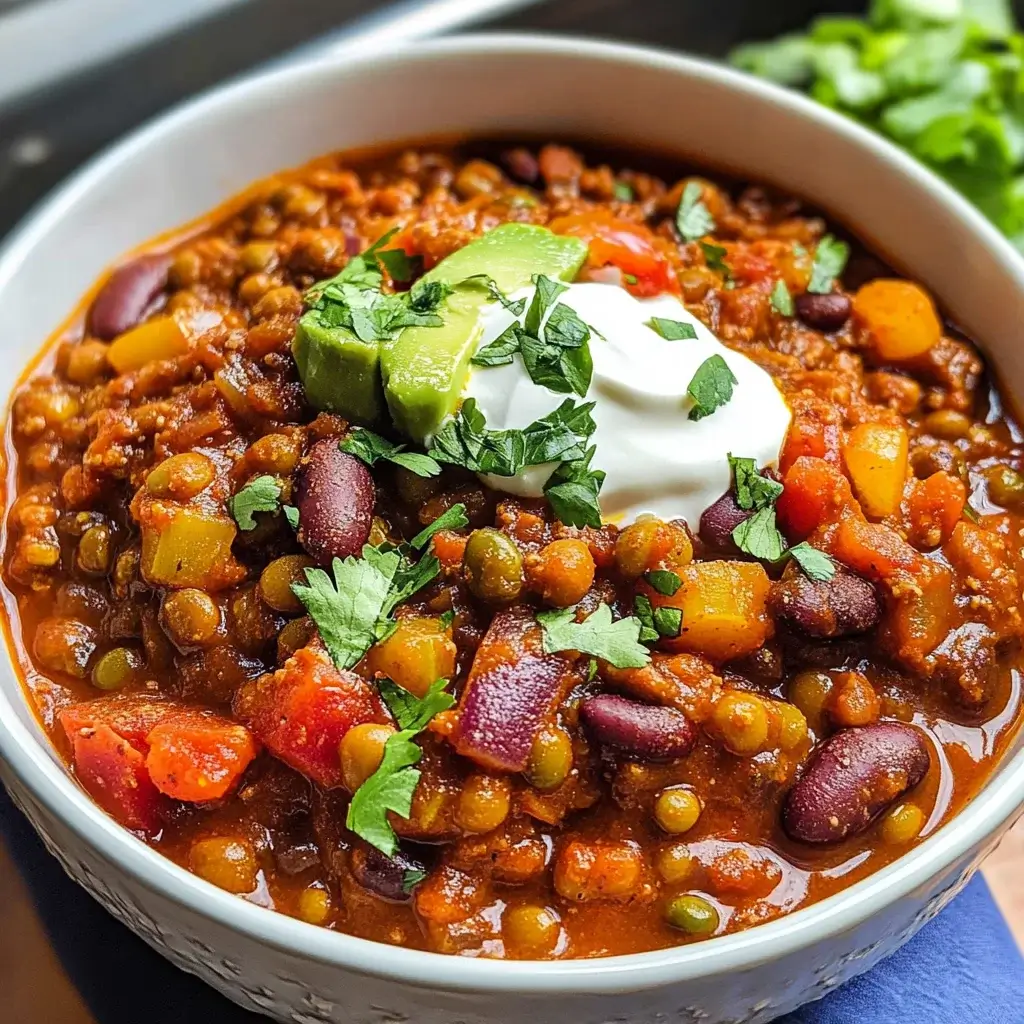

It’s funny how some dishes become more than just meals; they become experiences, memories. For me, Lentil Chili is one of those dishes. It’s not just about the hearty, savory flavors that warm you from the inside out, but also the ease of making it and the sheer versatility it offers. I remember the first time I made lentil chili. I was trying to incorporate more plant-based meals into our diet, and honestly, I was a little skeptical if my family, particularly my meat-loving husband, would embrace a chili without meat. Boy, was I wrong! The aroma alone, simmering on the stove, was intoxicating – the earthy lentils, the smoky spices, the sweetness of tomatoes and peppers. And the taste? Absolutely incredible. It was rich, deeply flavorful, and so satisfying that no one even missed the meat. In fact, my husband declared it “the best chili you’ve ever made!” Since then, Lentil Chili has become a regular in our rotation. It’s perfect for chilly evenings, game days, or just a cozy weeknight dinner. It’s also incredibly adaptable – you can adjust the spice level, add different vegetables, and top it with your favorite fixings. If you’re looking for a delicious, healthy, and budget-friendly meal that’s guaranteed to please, you’ve come to the right place. Get ready to discover the magic of Lentil Chili!
Ingredients for a Hearty and Flavorful Lentil Chili
Creating a truly exceptional Lentil Chili starts with selecting the right ingredients and understanding how they contribute to the final dish. Each component plays a crucial role in building layers of flavor, texture, and nutritional value. Here’s a comprehensive list of what you’ll need to gather to make a truly outstanding Lentil Chili:
- Lentils: 1 cup of brown or green lentils. Lentils are the star of this chili, providing a hearty, earthy base and a fantastic source of protein and fiber. Brown or green lentils are ideal because they hold their shape well during cooking, preventing the chili from becoming mushy. Red lentils, while nutritious, tend to break down more and are better suited for soups or stews where a smoother texture is desired. Ensure you rinse the lentils thoroughly under cold water before cooking to remove any debris or dust.
- Vegetable Broth: 6 cups of vegetable broth. Vegetable broth forms the liquid base of the chili and adds a layer of savory flavor. Opt for low-sodium vegetable broth to control the salt content of your chili. You can also use homemade vegetable broth for an even richer flavor. If you’re not strictly vegetarian or vegan, you can use chicken broth or beef broth for a different flavor profile, but vegetable broth keeps this dish plant-based and versatile.
- Diced Tomatoes: 2 (14.5-ounce) cans of diced tomatoes, undrained. Diced tomatoes provide the essential tomato base for the chili, adding acidity, sweetness, and body. Use undrained diced tomatoes to retain their juices, which contribute to the overall liquid and flavor. You can choose fire-roasted diced tomatoes for a smoky depth, or diced tomatoes with green chilies for a subtle kick.
- Tomato Paste: 2 tablespoons of tomato paste. Tomato paste is a concentrated form of tomatoes that adds richness, depth of flavor, and umami to the chili. It intensifies the tomato flavor and helps to thicken the chili. A little tomato paste goes a long way in building a complex flavor profile.
- Onion: 1 large yellow onion, diced. Onion is a foundational aromatic vegetable that adds sweetness and savory depth to the chili. Yellow onions are a versatile choice for chili, providing a balanced flavor. Dice the onion into small, uniform pieces so it cooks evenly and blends seamlessly into the chili.
- Bell Peppers: 2 bell peppers (any color), diced. Bell peppers contribute sweetness, color, and a slight crunch to the chili. You can use any color bell pepper – green, red, yellow, or orange – or a mix for visual appeal and varied flavor notes. Diced bell peppers add a fresh, vibrant element to the hearty lentils and tomatoes.
- Garlic: 4-6 cloves of garlic, minced. Garlic is another essential aromatic that provides pungent, savory flavor. Freshly minced garlic is crucial for the best flavor. Use 4 cloves for a milder garlic flavor, or up to 6 for a more pronounced garlic punch. Minced garlic infuses the chili with its characteristic aroma and taste.
- Spices: A blend of chili spices is what truly defines the flavor of chili. You’ll need:
- Chili Powder: 2 tablespoons of chili powder. Chili powder is a blend of dried chilies and spices that forms the backbone of chili flavor. It provides warmth, depth, and a mild to moderate heat depending on the brand and blend.
- Cumin: 2 teaspoons of ground cumin. Cumin adds an earthy, warm, and slightly smoky flavor that is characteristic of chili. It complements the other spices and lentils beautifully.
- Smoked Paprika: 1 teaspoon of smoked paprika. Smoked paprika brings a distinct smoky flavor that enhances the depth and complexity of the chili, mimicking the taste of slow-cooked, smoky chili.
- Oregano: 1 teaspoon of dried oregano. Oregano adds a slightly pungent, herbaceous note that balances the richness of the other spices and tomatoes.
- Optional Spices for Heat: If you like a spicier chili, you can add:
- Cayenne Pepper: 1/4 – 1/2 teaspoon of cayenne pepper (or to taste). Cayenne pepper adds a significant kick of heat. Start with a small amount and adjust to your spice preference.
- Red Pepper Flakes: 1/2 – 1 teaspoon of red pepper flakes (or to taste). Red pepper flakes offer a visible and textural heat element.
- Chopped Jalapeño or Serrano Peppers: Freshly chopped jalapeño or serrano peppers (seeds and membranes removed for less heat, or left in for more) can be added along with the onions and bell peppers for fresh pepper heat.
- Olive Oil: 2 tablespoons of olive oil. Olive oil is used for sautéing the vegetables at the beginning, adding flavor and preventing sticking. You can use extra virgin olive oil for its richer flavor, or regular olive oil.
- Salt and Black Pepper: To taste. Salt and black pepper are essential for seasoning and enhancing all the flavors in the chili. Season generously throughout the cooking process, tasting and adjusting as needed. Freshly ground black pepper is preferred for its brighter flavor.
- Optional Ingredients for Extra Flavor and Texture:
- Corn: 1 cup of frozen or canned corn (drained). Corn adds sweetness and a pleasant chewy texture.
- Black Beans or Kidney Beans: 1 (15-ounce) can of black beans or kidney beans, rinsed and drained. Beans add extra heartiness, protein, and fiber to the chili. You can use one type or a mix.
- Sweet Potato or Butternut Squash: 1 cup of diced sweet potato or butternut squash. These root vegetables add sweetness, creaminess, and nutritional value.
- Cocoa Powder or Dark Chocolate (Unsweetened): 1 teaspoon of unsweetened cocoa powder or a small square of dark chocolate (70% cocoa or higher). These unexpected ingredients add depth and richness to the chili, enhancing the savory flavors without making it taste like chocolate.
- Apple Cider Vinegar or Lime Juice: 1-2 tablespoons of apple cider vinegar or lime juice. A splash of acidity at the end brightens the flavors and balances the richness of the chili.
Choosing Your Lentils:
As mentioned, brown or green lentils are the best choices for chili. Let’s explore why:
- Brown Lentils: These are the most common type of lentil and are readily available. They have a mild, earthy flavor and hold their shape well during cooking, making them perfect for chili. They become tender but not mushy.
- Green Lentils (French Green Lentils or Puy Lentils): Green lentils have a slightly peppery flavor and are known for holding their shape even better than brown lentils. They have a firmer texture and are a great option if you prefer lentils that remain more distinct in the chili.
- Red Lentils (Avoid for Chili): Red lentils are best for soups and purees because they cook quickly and break down easily, becoming quite soft and almost creamy. While nutritious, they are not ideal for chili where you want to maintain some texture.
By carefully selecting these high-quality ingredients and understanding their roles, you are setting the stage for a truly delicious and satisfying Lentil Chili that will impress everyone who tastes it!
Instructions: Making Delicious Lentil Chili Step-by-Step
Now that you’ve gathered all your ingredients, let’s walk through the step-by-step instructions for making a flavorful and hearty Lentil Chili. Follow these detailed steps for a foolproof recipe:
Step 1: Sauté Aromatics
- Heat Olive Oil: In a large pot or Dutch oven, heat the olive oil over medium heat.
- Add Onion and Bell Peppers: Add the diced onion and bell peppers to the pot. Sauté for about 5-7 minutes, or until the onions become translucent and the peppers are slightly softened. Stir occasionally to prevent sticking and ensure even cooking. Sautéing these vegetables first develops their flavors and creates a flavorful base for the chili.
- Add Garlic and Spices: Add the minced garlic, chili powder, cumin, smoked paprika, and oregano (and cayenne pepper or red pepper flakes if using). Sauté for another minute, stirring constantly, until the spices become fragrant. Be careful not to burn the garlic or spices, as this can make them taste bitter. Sautéing the spices in oil helps to “bloom” them, releasing their aromatic oils and enhancing their flavor.
Step 2: Add Lentils, Tomatoes, and Broth
- Rinse Lentils: While the vegetables are sautéing, rinse the lentils thoroughly under cold water in a fine-mesh sieve or colander. This removes any dust or debris.
- Add Lentils to Pot: Add the rinsed lentils to the pot with the sautéed vegetables and spices.
- Add Tomato Paste: Stir in the tomato paste, ensuring it’s well incorporated with the vegetables and spices. Cook for about a minute, stirring constantly, to slightly caramelize the tomato paste, which further enhances its flavor.
- Add Diced Tomatoes and Broth: Pour in the undrained diced tomatoes and vegetable broth. Stir well to combine all ingredients.
Step 3: Simmer the Chili
- Bring to a Boil: Increase the heat to high and bring the chili to a boil.
- Reduce Heat and Simmer: Once boiling, reduce the heat to low, cover the pot, and let the chili simmer for 30-45 minutes, or until the lentils are tender but still slightly firm, and the chili has thickened to your desired consistency. Stir occasionally during simmering to prevent sticking to the bottom of the pot. The simmering time will depend on the type of lentils used and your desired texture. Brown lentils typically take about 30-40 minutes, while green lentils may take slightly longer.
- Check for Doneness: To check if the lentils are done, taste a few. They should be tender but not mushy. If they are still too firm, continue to simmer for another 10-15 minutes.
Step 4: Add Optional Ingredients (if using)
- Add Corn, Beans, Sweet Potato, etc. (Optional): If you are using any of the optional ingredients like corn, black beans, kidney beans, sweet potato, or butternut squash, add them to the chili during the last 15-20 minutes of simmering. This allows them to heat through and cook slightly without becoming overcooked.
- Stir in Cocoa Powder or Dark Chocolate (Optional): If using cocoa powder or dark chocolate, stir it in during the last 10 minutes of simmering. It will melt into the chili and add a subtle depth of flavor.
Step 5: Season and Finish
- Season with Salt and Pepper: Season the chili generously with salt and freshly ground black pepper to taste. Start with about 1 teaspoon of salt and ½ teaspoon of black pepper and adjust to your liking. Remember to taste and season gradually, as salt enhances all the other flavors.
- Add Acidity (Optional): Stir in apple cider vinegar or lime juice for a touch of acidity to brighten the flavors. Start with 1 tablespoon and add more to taste.
- Simmer Uncovered (Optional for Thicker Chili): If you prefer a thicker chili, simmer it uncovered for the last 10-15 minutes, stirring occasionally, to allow some of the liquid to evaporate and the chili to reduce.
- Taste and Adjust: Give the chili a final taste and adjust seasoning as needed. You might want to add more salt, pepper, spices, or acidity to achieve the perfect flavor balance.
Step 6: Serve and Enjoy!
- Ladle into Bowls: Ladle the hot Lentil Chili into bowls.
- Add Toppings (Optional): Offer a variety of toppings for serving, such as:
- Shredded cheese (cheddar, Monterey Jack, pepper jack)
- Sour cream or Greek yogurt (or vegan alternatives)
- Chopped fresh cilantro or parsley
- Diced red onion or green onions
- Avocado or guacamole
- Tortilla chips or corn chips
- Hot sauce or pickled jalapeños
- Serve Hot: Serve the Lentil Chili hot and enjoy!
Tips for Perfect Lentil Chili:
- Don’t Overcook Lentils: Keep an eye on the lentils while simmering and avoid overcooking them, as they can become mushy. They should be tender but still have a slight bite.
- Taste and Season Throughout: Seasoning is crucial for flavorful chili. Taste and adjust salt, pepper, and spices at various stages of cooking to ensure a well-balanced flavor.
- Simmer Low and Slow: Simmering the chili low and slow allows the flavors to meld together beautifully and develop depth.
- Customize Spices: Adjust the amount of spices to your preference. If you like it spicier, add more cayenne pepper or red pepper flakes. If you prefer a milder chili, reduce the chili powder or omit the cayenne.
- Add Vegetables Based on Cooking Time: If adding vegetables like sweet potatoes or butternut squash, add them earlier as they take longer to cook. Softer vegetables like corn or beans can be added closer to the end.
By following these detailed instructions and tips, you’ll be able to create a truly delicious and satisfying Lentil Chili that’s perfect for any occasion!
Nutrition Facts for Lentil Chili
Understanding the nutritional profile of Lentil Chili can highlight its health benefits and help you make informed dietary choices. Here’s a general overview of the nutrition facts for a serving of Lentil Chili. Please note that these values are estimates and can vary based on specific ingredients used, portion sizes, and variations in recipes.
Serving Size: Approximately 1.5 cups (about 350 grams)
Approximate Nutritional Information per Serving:
- Calories: 300-400 calories. The calorie count can vary depending on the amount of olive oil, optional additions like beans, corn, and toppings.
- Fat: 8-12 grams of fat. This includes healthy fats primarily from olive oil. The fat content can be influenced by the amount of oil used and toppings like avocado or cheese.
- Saturated Fat: 1-2 grams of saturated fat. Lentil Chili is generally low in saturated fat, especially when made with olive oil and plant-based ingredients.
- Cholesterol: 0 mg of cholesterol. As a plant-based dish, Lentil Chili is naturally cholesterol-free.
- Sodium: 500-800 mg of sodium. Sodium content can vary depending on the type of broth and canned tomatoes used, as well as added salt. Using low-sodium broth and no-salt-added tomatoes can significantly reduce sodium levels.
- Carbohydrates: 40-50 grams of carbohydrates. Lentils, vegetables, and tomatoes contribute to the carbohydrate content. Lentil Chili provides complex carbohydrates, which are a good source of energy.
- Fiber: 15-20 grams of fiber. Lentils are an excellent source of dietary fiber, and vegetables also contribute to the fiber content. High fiber intake is beneficial for digestion, satiety, and blood sugar control.
- Sugar: 8-12 grams of sugar. Sugars are naturally occurring in tomatoes, onions, and bell peppers. There is typically no added sugar in Lentil Chili.
- Protein: 18-25 grams of protein. Lentils are a fantastic source of plant-based protein. This high protein content makes Lentil Chili a very satisfying and filling meal.
- Vitamins and Minerals: Lentil Chili is packed with essential vitamins and minerals, including:
- Iron: Lentils are rich in iron, an essential mineral for red blood cell production and energy levels.
- Folate (Vitamin B9): Lentils are a good source of folate, important for cell growth and development.
- Potassium: Tomatoes and lentils contribute potassium, an electrolyte important for heart health and blood pressure regulation.
- Vitamin C: Bell peppers and tomatoes provide Vitamin C, an antioxidant that supports the immune system.
- Vitamin A: Bell peppers and tomatoes are sources of Vitamin A, important for vision, immune function, and skin health.
- Manganese: Lentils and vegetables provide manganese, a trace mineral involved in bone health and antioxidant defense.
Health Benefits of Lentil Chili:
- High in Fiber: The high fiber content promotes digestive health, helps regulate blood sugar levels, and contributes to feelings of fullness, aiding in weight management.
- Excellent Source of Plant-Based Protein: Lentils provide a significant amount of protein, making this chili a great option for vegetarians, vegans, and anyone looking to increase their plant-based protein intake.
- Rich in Nutrients: Lentil Chili is nutrient-dense, providing a wide array of vitamins and minerals essential for overall health and well-being.
- Low in Fat and Cholesterol-Free: When made with olive oil and plant-based ingredients, Lentil Chili is naturally low in fat and cholesterol-free, making it a heart-healthy choice.
- Budget-Friendly: Lentils are an affordable protein source, and the other ingredients in chili are also generally budget-friendly, making it a cost-effective and nutritious meal option.
Important Considerations:
- Sodium Content: Be mindful of the sodium content, especially if using canned tomatoes and broth. Opt for low-sodium or no-salt-added versions when possible.
- Portion Control: While healthy, Lentil Chili is still calorie-containing. Be mindful of portion sizes, especially if you are watching your calorie intake.
- Customize for Dietary Needs: Lentil Chili is easily customizable to meet various dietary needs, including vegetarian, vegan, gluten-free (ensure broth and spices are gluten-free), and low-sodium diets.
Disclaimer: These nutrition facts are estimates and should be used as a general guide. For precise nutritional information, you can use online nutrition calculators or consult with a registered dietitian, especially if you have specific dietary needs or health concerns.
Preparation Time for Lentil Chili
Lentil Chili is a fantastic meal because it’s not only delicious and healthy but also relatively quick to prepare, making it suitable for both weeknight dinners and meal prepping. Here’s a breakdown of the estimated preparation and cooking times:
Total Preparation Time: Approximately 1 hour to 1 hour 15 minutes
- Prep Time: 20-25 minutes. This includes:
- Rinsing lentils: 2-3 minutes
- Chopping onion, bell peppers, and garlic: 10-15 minutes
- Measuring out spices and other ingredients: 5-7 minutes
- Cook Time: 40-50 minutes. This includes:
- Sautéing vegetables and spices: 7-10 minutes
- Simmering chili: 30-40 minutes (or longer for desired tenderness and thickness)
Time Breakdown:
- Vegetable Prep (20-25 minutes): Chopping the onion, bell peppers, and garlic is the most time-consuming part of the prep. Rinsing the lentils and gathering the spices is quick.
- Sautéing and Simmering (40-50 minutes): Sautéing the vegetables and spices takes about 7-10 minutes. Simmering the chili typically takes 30-40 minutes, depending on the desired tenderness of the lentils and thickness of the chili.
Tips to Speed Up Preparation:
- Pre-Chopped Vegetables: Purchase pre-chopped onions and bell peppers from the grocery store to save time on chopping.
- Garlic Press: Use a garlic press to quickly mince garlic cloves.
- Multi-task: While the vegetables are sautéing, you can measure out spices and rinse lentils. While the chili is simmering, you can prepare toppings, set the table, or clean up your cooking area.
- Canned Beans and Corn: Using canned beans and corn (if including) eliminates the need for soaking and cooking dried beans or thawing frozen corn, saving time.
Make-Ahead Options:
Lentil Chili is an excellent make-ahead meal! In fact, the flavors often deepen and improve after it sits for a day or two in the refrigerator.
- Make Chili in Advance: You can prepare Lentil Chili completely and store it in an airtight container in the refrigerator for up to 3-4 days. Reheat it gently on the stovetop or in the microwave until heated through.
- Meal Prep for the Week: Lentil Chili is perfect for meal prepping. Portion it out into individual containers for easy lunches or dinners throughout the week.
- Freeze Chili: Lentil Chili freezes exceptionally well. Allow it to cool completely, then transfer it to freezer-safe containers or freezer bags. Freeze for up to 2-3 months. Thaw overnight in the refrigerator or reheat directly from frozen on the stovetop over low heat.
By understanding the preparation time and utilizing these time-saving tips and make-ahead options, you can easily incorporate Lentil Chili into your meal planning, even on busy days. It’s a convenient and delicious meal solution that’s ready when you are!
How to Serve Lentil Chili
Lentil Chili is incredibly versatile and can be served in numerous ways, making it a crowd-pleasing dish for any occasion. Its hearty texture and rich flavors make it a satisfying meal on its own, but it’s also fantastic with a variety of accompaniments and toppings. Here are some delicious ways to serve Lentil Chili:
Classic Serving Suggestions:
- In Bowls as a Main Dish: The most common and satisfying way to serve Lentil Chili is simply in bowls as a hearty main course. Its substantial texture and rich flavors make it a complete meal on its own, especially when topped with your favorite fixings.
- With Toppings: Toppings elevate Lentil Chili to another level, adding flavor, texture, and visual appeal. Popular toppings include:
- Dairy Toppings: Shredded cheddar cheese, Monterey Jack cheese, pepper jack cheese, sour cream, Greek yogurt, crema fresca. For vegan options, use vegan shredded cheese or vegan sour cream.
- Fresh Produce: Diced red onion, chopped green onions, fresh cilantro, fresh parsley, diced avocado, guacamole, diced tomatoes.
- Crunchy Toppings: Tortilla chips, corn chips, oyster crackers, crispy fried onions, croutons.
- Spicy Toppings: Hot sauce, pickled jalapeños, sliced fresh jalapeños.
- With Bread or Grains: Serve Lentil Chili alongside:
- Cornbread: A classic pairing! Cornbread’s slightly sweet and crumbly texture is perfect for soaking up the chili.
- Crusty Bread: Slices of crusty bread, like sourdough or baguette, are great for dipping and scooping up chili.
- Rice or Quinoa: Serve Lentil Chili over cooked white rice, brown rice, or quinoa for a heartier meal.
Creative Serving Ideas:
- Chili Cheese Fries or Tots: Top French fries or tater tots with Lentil Chili and shredded cheese for a fun and indulgent treat.
- Chili Dogs or Brats: Use Lentil Chili as a topping for hot dogs or bratwursts in buns for chili dogs or chili brats.
- Baked Potatoes or Sweet Potatoes: Spoon Lentil Chili over baked potatoes or baked sweet potatoes for a filling and flavorful meal.
- Nachos: Spread tortilla chips on a platter, top with Lentil Chili, shredded cheese, and other nacho toppings, then bake or broil until cheese is melted and bubbly for Lentil Chili nachos.
- Tacos or Burritos: Use Lentil Chili as a filling for tacos or burritos. Combine it with other taco or burrito fillings like rice, beans, salsa, and guacamole.
- Stuffed Bell Peppers: Fill bell peppers with Lentil Chili and bake until peppers are tender and chili is heated through for stuffed bell peppers.
- Soup and Salad Combo: Serve a smaller bowl of Lentil Chili alongside a fresh side salad for a balanced and lighter meal.
Serving Suggestions for Different Occasions:
- Casual Weeknight Dinner: Serve Lentil Chili in bowls with simple toppings like shredded cheese and sour cream, alongside cornbread or crusty bread for a cozy weeknight meal.
- Game Day Gathering: Set up a chili bar with a large pot of Lentil Chili and a variety of toppings like shredded cheese, sour cream, onions, cilantro, jalapeños, tortilla chips, and cornbread for a fun and interactive game day spread.
- Potluck or Party: Bring a large slow cooker or Dutch oven of Lentil Chili to a potluck or party. It’s easy to transport and serve, and it’s always a crowd-pleaser.
- Meal Prep Lunches: Portion Lentil Chili into containers for easy and healthy make-ahead lunches throughout the week.
Garnish Ideas:
- Fresh Herbs: Chopped fresh cilantro, parsley, or green onions add freshness and color.
- Lime Wedges: Serve with lime wedges for squeezing fresh lime juice over the chili for a bright, acidic finish.
- Drizzle of Olive Oil or Hot Sauce: A drizzle of extra virgin olive oil or hot sauce can add extra flavor and richness.
- Colorful Toppings: Use a variety of colorful toppings like red onion, green bell peppers, and orange cheddar cheese for visual appeal.
No matter how you choose to serve it, Lentil Chili is a versatile and satisfying dish that’s sure to be a hit. Its hearty texture, rich flavors, and endless serving possibilities make it a go-to meal for any occasion!
Additional Tips for the Best Lentil Chili
To take your Lentil Chili from delicious to truly exceptional, here are five additional tips that will enhance its flavor, texture, and overall appeal:
- Toast Your Spices for Enhanced Flavor: Before adding your spices to the pot, take a few extra minutes to toast them. Heat a dry skillet over medium heat. Add your chili powder, cumin, smoked paprika, and oregano (and any other dry spices you’re using). Toast them for 1-2 minutes, stirring constantly, until they become fragrant and slightly darker in color. Be careful not to burn them. Toasting the spices releases their essential oils, intensifying their aroma and flavor, and adding a deeper, more complex dimension to your chili.
- Use Fire-Roasted Tomatoes for Smoky Depth: For an extra layer of smoky flavor that complements the smoked paprika beautifully, use fire-roasted diced tomatoes instead of regular diced tomatoes. Fire-roasted tomatoes are roasted over an open flame, which gives them a slightly charred and smoky flavor that enhances the overall depth of the chili. You can find fire-roasted diced tomatoes in most grocery stores. This simple substitution adds a noticeable richness and complexity to the flavor profile.
- Add a Touch of Sweetness to Balance Flavors: While tomatoes and onions provide some natural sweetness, adding a touch of extra sweetness can balance the savory and spicy elements in the chili and create a more harmonious flavor profile. You can add a teaspoon of brown sugar, maple syrup, or even a tablespoon of molasses to the chili during simmering. Start with a small amount and adjust to your taste. The sweetness doesn’t make the chili taste sweet, but rather enhances and rounds out the other flavors, preventing it from being too acidic or one-dimensional.
- Slow Cook or Pressure Cook for Deeper Flavors (Optional): While the stovetop simmering method is excellent, slow cooking or pressure cooking Lentil Chili can further deepen the flavors and create an even more tender texture.
- Slow Cooker: To slow cook, follow steps 1 and 2 of the stovetop instructions (sautéing vegetables and spices). Then, transfer all ingredients to a slow cooker, stir well, cover, and cook on low for 6-8 hours or on high for 3-4 hours. Slow cooking allows the flavors to meld together over a longer period, resulting in a richer and more complex chili.
- Pressure Cooker (Instant Pot): To pressure cook, use the sauté function to sauté vegetables and spices in the Instant Pot. Then, add remaining ingredients, stir well, seal the lid, and cook on high pressure for 15 minutes, followed by a natural pressure release of 10-15 minutes. Pressure cooking significantly reduces the cooking time while still achieving tender lentils and well-developed flavors.
- Let the Chili Rest and Reheat for Better Flavor: Like many stews and soups, Lentil Chili tastes even better the next day. After cooking, allow the chili to cool slightly, then refrigerate it overnight. Reheating the chili the next day allows the flavors to meld and deepen even further. The resting period gives the spices time to fully infuse the chili, and the texture often improves as well. Reheat gently on the stovetop or in the microwave until heated through. This make-ahead tip is perfect for meal prepping and ensuring maximum flavor in your Lentil Chili.
By incorporating these additional tips into your Lentil Chili recipe, you’ll be well on your way to creating a chili that is not only hearty and healthy but also incredibly flavorful and satisfying. Experiment and find what works best for your taste preferences to make this dish truly your own signature chili!
FAQ About Lentil Chili
Here are some frequently asked questions about making Lentil Chili, along with helpful answers to guide you through the process:
Q1: Can I use different types of lentils for chili?
A: Yes, you can use different types of lentils, but brown or green lentils are generally recommended for chili. Brown lentils are the most common and hold their shape well during cooking, becoming tender but not mushy. Green lentils (like French green lentils or Puy lentils) also hold their shape well and have a slightly firmer texture. Red lentils, on the other hand, cook very quickly and tend to break down, making them less suitable for chili where you want to maintain some texture. If you only have red lentils, you can use them, but be aware that the chili will be smoother and less chunky.
Q2: How do I make Lentil Chili spicier?
A: There are several ways to increase the spiciness of your Lentil Chili:
- Add Cayenne Pepper or Red Pepper Flakes: Start with ¼ teaspoon of cayenne pepper or ½ teaspoon of red pepper flakes and adjust to your taste. These add direct heat to the chili.
- Use Hot Chili Powder: Some chili powders are spicier than others. Look for chili powders labeled as “hot” or “spicy blend.”
- Add Fresh Jalapeños or Serrano Peppers: Finely chop jalapeño or serrano peppers (with seeds and membranes for more heat, or removed for less) and add them when sautéing the onions and bell peppers.
- Use Hot Sauce: Serve hot sauce on the side for those who want to add extra heat to their individual bowls.
- Add Chipotle Peppers in Adobo Sauce: Finely chop chipotle peppers in adobo sauce and add them to the chili during simmering for smoky heat. Start with one pepper and add more to taste, as they can be quite spicy.
Q3: Can I add meat to Lentil Chili?
A: Yes, while Lentil Chili is traditionally vegetarian or vegan, you can certainly add meat if you prefer. Ground beef, ground turkey, or chorizo sausage are popular additions. To add meat:
- Brown the Meat First: Brown the ground meat or chorizo in the pot before adding the onions and bell peppers. Drain off any excess grease.
- Adjust Cooking Time: Meat may require slightly longer simmering time to become tender. Ensure the meat is fully cooked before serving.
Adding meat will change the nutritional profile of the chili, making it higher in fat and cholesterol and no longer vegetarian or vegan.
Q4: How do I thicken Lentil Chili if it’s too thin?
A: If your Lentil Chili is too thin, there are a few ways to thicken it:
- Simmer Uncovered: Simmer the chili uncovered for 10-15 minutes, or longer, stirring occasionally, to allow some of the liquid to evaporate and the chili to reduce and thicken.
- Mash Some Lentils: Use a potato masher or the back of a spoon to mash some of the lentils against the side of the pot. This releases starch and helps thicken the chili.
- Cornstarch Slurry: In a small bowl, whisk together 1-2 tablespoons of cornstarch with 2-3 tablespoons of cold water to make a slurry. Gradually stir the slurry into the simmering chili and cook for a few minutes until thickened.
- Tomato Paste: Add another tablespoon or two of tomato paste and stir it in well. Tomato paste not only adds flavor but also helps thicken the chili.
Q5: Can I freeze Lentil Chili?
A: Yes, Lentil Chili freezes exceptionally well. To freeze Lentil Chili:
- Cool Completely: Allow the chili to cool completely after cooking before freezing.
- Portion into Freezer-Safe Containers or Bags: Portion the chili into freezer-safe containers or freezer bags. Leave some headspace in containers as liquids expand when frozen. For bags, lay them flat to freeze for easier storage.
- Freeze for Up to 2-3 Months: Properly frozen Lentil Chili can be stored in the freezer for 2-3 months without significant loss of quality.
- Thaw and Reheat: Thaw the frozen chili overnight in the refrigerator or reheat directly from frozen. To reheat from frozen, place the chili in a pot on the stovetop over low heat, adding a little water or broth if needed to prevent sticking. Reheat until heated through, stirring occasionally. You can also reheat in the microwave, stirring at intervals.
These FAQs should address common questions and concerns about making Lentil Chili. With these tips and answers, you’ll be well-prepared to create a delicious and satisfying lentil chili every time!
Print
Lentil Chili recipe
Ingredients
- Lentils: 1 cup of brown or green lentils. Lentils are the star of this chili, providing a hearty, earthy base and a fantastic source of protein and fiber. Brown or green lentils are ideal because they hold their shape well during cooking, preventing the chili from becoming mushy. Red lentils, while nutritious, tend to break down more and are better suited for soups or stews where a smoother texture is desired. Ensure you rinse the lentils thoroughly under cold water before cooking to remove any debris or dust.
- Vegetable Broth: 6 cups of vegetable broth. Vegetable broth forms the liquid base of the chili and adds a layer of savory flavor. Opt for low-sodium vegetable broth to control the salt content of your chili. You can also use homemade vegetable broth for an even richer flavor. If you’re not strictly vegetarian or vegan, you can use chicken broth or beef broth for a different flavor profile, but vegetable broth keeps this dish plant-based and versatile.
- Diced Tomatoes: 2 (14.5-ounce) cans of diced tomatoes, undrained. Diced tomatoes provide the essential tomato base for the chili, adding acidity, sweetness, and body. Use undrained diced tomatoes to retain their juices, which contribute to the overall liquid and flavor. You can choose fire-roasted diced tomatoes for a smoky depth, or diced tomatoes with green chilies for a subtle kick.
- Tomato Paste: 2 tablespoons of tomato paste. Tomato paste is a concentrated form of tomatoes that adds richness, depth of flavor, and umami to the chili. It intensifies the tomato flavor and helps to thicken the chili. A little tomato paste goes a long way in building a complex flavor profile.
- Onion: 1 large yellow onion, diced. Onion is a foundational aromatic vegetable that adds sweetness and savory depth to the chili. Yellow onions are a versatile choice for chili, providing a balanced flavor. Dice the onion into small, uniform pieces so it cooks evenly and blends seamlessly into the chili.
- Bell Peppers: 2 bell peppers (any color), diced. Bell peppers contribute sweetness, color, and a slight crunch to the chili. You can use any color bell pepper – green, red, yellow, or orange – or a mix for visual appeal and varied flavor notes. Diced bell peppers add a fresh, vibrant element to the hearty lentils and tomatoes.
- Garlic: 4-6 cloves of garlic, minced. Garlic is another essential aromatic that provides pungent, savory flavor. Freshly minced garlic is crucial for the best flavor. Use 4 cloves for a milder garlic flavor, or up to 6 for a more pronounced garlic punch. Minced garlic infuses the chili with its characteristic aroma and taste.
- Spices: A blend of chili spices is what truly defines the flavor of chili. You’ll need:
- Chili Powder: 2 tablespoons of chili powder. Chili powder is a blend of dried chilies and spices that forms the backbone of chili flavor. It provides warmth, depth, and a mild to moderate heat depending on the brand and blend.
- Cumin: 2 teaspoons of ground cumin. Cumin adds an earthy, warm, and slightly smoky flavor that is characteristic of chili. It complements the other spices and lentils beautifully.
- Smoked Paprika: 1 teaspoon of smoked paprika. Smoked paprika brings a distinct smoky flavor that enhances the depth and complexity of the chili, mimicking the taste of slow-cooked, smoky chili.
- Oregano: 1 teaspoon of dried oregano. Oregano adds a slightly pungent, herbaceous note that balances the richness of the other spices and tomatoes.
- Optional Spices for Heat: If you like a spicier chili, you can add:
- Cayenne Pepper: 1/4 – 1/2 teaspoon of cayenne pepper (or to taste). Cayenne pepper adds a significant kick of heat. Start with a small amount and adjust to your spice preference.
- Red Pepper Flakes: 1/2 – 1 teaspoon of red pepper flakes (or to taste). Red pepper flakes offer a visible and textural heat element.
- Chopped Jalapeño or Serrano Peppers: Freshly chopped jalapeño or serrano peppers (seeds and membranes removed for less heat, or left in for more) can be added along with the onions and bell peppers for fresh pepper heat.
- Olive Oil: 2 tablespoons of olive oil. Olive oil is used for sautéing the vegetables at the beginning, adding flavor and preventing sticking. You can use extra virgin olive oil for its richer flavor, or regular olive oil.
- Salt and Black Pepper: To taste. Salt and black pepper are essential for seasoning and enhancing all the flavors in the chili. Season generously throughout the cooking process, tasting and adjusting as needed. Freshly ground black pepper is preferred for its brighter flavor.
- Optional Ingredients for Extra Flavor and Texture:
- Corn: 1 cup of frozen or canned corn (drained). Corn adds sweetness and a pleasant chewy texture.
- Black Beans or Kidney Beans: 1 (15-ounce) can of black beans or kidney beans, rinsed and drained. Beans add extra heartiness, protein, and fiber to the chili. You can use one type or a mix.
- Sweet Potato or Butternut Squash: 1 cup of diced sweet potato or butternut squash. These root vegetables add sweetness, creaminess, and nutritional value.
- Cocoa Powder or Dark Chocolate (Unsweetened): 1 teaspoon of unsweetened cocoa powder or a small square of dark chocolate (70% cocoa or higher). These unexpected ingredients add depth and richness to the chili, enhancing the savory flavors without making it taste like chocolate.
- Apple Cider Vinegar or Lime Juice: 1-2 tablespoons of apple cider vinegar or lime juice. A splash of acidity at the end brightens the flavors and balances the richness of the chili.
Instructions
Step 1: Sauté Aromatics
- Heat Olive Oil: In a large pot or Dutch oven, heat the olive oil over medium heat.
- Add Onion and Bell Peppers: Add the diced onion and bell peppers to the pot. Sauté for about 5-7 minutes, or until the onions become translucent and the peppers are slightly softened. Stir occasionally to prevent sticking and ensure even cooking. Sautéing these vegetables first develops their flavors and creates a flavorful base for the chili.
- Add Garlic and Spices: Add the minced garlic, chili powder, cumin, smoked paprika, and oregano (and cayenne pepper or red pepper flakes if using). Sauté for another minute, stirring constantly, until the spices become fragrant. Be careful not to burn the garlic or spices, as this can make them taste bitter. Sautéing the spices in oil helps to “bloom” them, releasing their aromatic oils and enhancing their flavor.
Step 2: Add Lentils, Tomatoes, and Broth
- Rinse Lentils: While the vegetables are sautéing, rinse the lentils thoroughly under cold water in a fine-mesh sieve or colander. This removes any dust or debris.
- Add Lentils to Pot: Add the rinsed lentils to the pot with the sautéed vegetables and spices.
- Add Tomato Paste: Stir in the tomato paste, ensuring it’s well incorporated with the vegetables and spices. Cook for about a minute, stirring constantly, to slightly caramelize the tomato paste, which further enhances its flavor.
- Add Diced Tomatoes and Broth: Pour in the undrained diced tomatoes and vegetable broth. Stir well to combine all ingredients.
Step 3: Simmer the Chili
- Bring to a Boil: Increase the heat to high and bring the chili to a boil.
- Reduce Heat and Simmer: Once boiling, reduce the heat to low, cover the pot, and let the chili simmer for 30-45 minutes, or until the lentils are tender but still slightly firm, and the chili has thickened to your desired consistency. Stir occasionally during simmering to prevent sticking to the bottom of the pot. The simmering time will depend on the type of lentils used and your desired texture. Brown lentils typically take about 30-40 minutes, while green lentils may take slightly longer.
- Check for Doneness: To check if the lentils are done, taste a few. They should be tender but not mushy. If they are still too firm, continue to simmer for another 10-15 minutes.
Step 4: Add Optional Ingredients (if using)
- Add Corn, Beans, Sweet Potato, etc. (Optional): If you are using any of the optional ingredients like corn, black beans, kidney beans, sweet potato, or butternut squash, add them to the chili during the last 15-20 minutes of simmering. This allows them to heat through and cook slightly without becoming overcooked.
- Stir in Cocoa Powder or Dark Chocolate (Optional): If using cocoa powder or dark chocolate, stir it in during the last 10 minutes of simmering. It will melt into the chili and add a subtle depth of flavor.
Step 5: Season and Finish
- Season with Salt and Pepper: Season the chili generously with salt and freshly ground black pepper to taste. Start with about 1 teaspoon of salt and ½ teaspoon of black pepper and adjust to your liking. Remember to taste and season gradually, as salt enhances all the other flavors.
- Add Acidity (Optional): Stir in apple cider vinegar or lime juice for a touch of acidity to brighten the flavors. Start with 1 tablespoon and add more to taste.
- Simmer Uncovered (Optional for Thicker Chili): If you prefer a thicker chili, simmer it uncovered for the last 10-15 minutes, stirring occasionally, to allow some of the liquid to evaporate and the chili to reduce.
- Taste and Adjust: Give the chili a final taste and adjust seasoning as needed. You might want to add more salt, pepper, spices, or acidity to achieve the perfect flavor balance.
Step 6: Serve and Enjoy!
- Ladle into Bowls: Ladle the hot Lentil Chili into bowls.
- Add Toppings (Optional): Offer a variety of toppings for serving, such as:
- Shredded cheese (cheddar, Monterey Jack, pepper jack)
- Sour cream or Greek yogurt (or vegan alternatives)
- Chopped fresh cilantro or parsley
- Diced red onion or green onions
- Avocado or guacamole
- Tortilla chips or corn chips
- Hot sauce or pickled jalapeños
- Serve Hot: Serve the Lentil Chili hot and enjoy!
Nutrition
- Serving Size: one normal portion
- Calories: 300-400
- Sugar: 8-12 grams
- Sodium: 500-800 mg
- Fat: 8-12 grams
- Saturated Fat: 1-2 grams
- Carbohydrates: 40-50 grams
- Fiber: 15-20 grams
- Protein: 18-25 grams