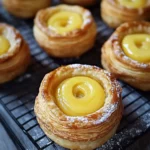
Ingredients
- Puff Pastry: 1 sheet (about 14 ounces), store-bought, all-butter puff pastry, thawed. High-quality, all-butter puff pastry is the key to those incredibly flaky and buttery tart shells. While homemade puff pastry is a labor of love, store-bought all-butter puff pastry is a fantastic shortcut that delivers excellent results. Make sure it’s fully thawed according to package directions but still cold when you begin working with it. Brands like Dufour or Pepperidge Farm (all-butter version if available) are good choices. Avoid using puff pastry that is not all-butter, as it will lack the rich flavor and delicate texture.
- For the Lemon Curd:
- Fresh Lemon Juice: ½ cup (from about 3-4 large lemons). Freshly squeezed lemon juice is absolutely crucial for the vibrant, tangy flavor of lemon curd. Bottled lemon juice lacks the brightness and complexity of fresh juice. Choose lemons that are heavy for their size and have thin skins, as these tend to be juicier. Meyer lemons, if available, will provide a slightly sweeter and less acidic curd, while regular lemons will give you a classic tangy flavor.
- Granulated Sugar: ¾ cup. Sugar not only sweetens the curd but also helps to thicken it and balance the acidity of the lemon juice. Regular granulated sugar works perfectly. The amount of sugar can be slightly adjusted to your preference – reduce it by a tablespoon or two if you prefer a tangier curd, or increase it slightly if you like it sweeter.
- Lemon Zest: 2 tablespoons (from about 2-3 lemons). Lemon zest is the finely grated outer rind of the lemon (avoid the white pith, which is bitter). It’s packed with lemon oil and provides a concentrated burst of lemon flavor that is essential for a truly flavorful curd. Use a microplane or fine grater to zest the lemons, ensuring you only get the yellow part of the peel. Zest the lemons before juicing them, as it’s much easier to zest a whole lemon.
- Eggs: 3 large, plus 2 large egg yolks. Whole eggs and extra yolks contribute richness, body, and a beautiful golden color to the lemon curd. Use large, fresh eggs. The egg yolks are particularly important for creating that smooth, velvety texture and rich flavor.
- Unsalted Butter: 8 tablespoons (1 stick), cold, cut into small cubes. Cold unsalted butter is incorporated at the end of the curd-making process to add richness, shine, and a smooth, luxurious texture. Using unsalted butter allows you to control the saltiness of the curd. Cut the butter into small cubes so it melts quickly and evenly into the hot curd.
- Egg Wash (Optional, for puff pastry): 1 large egg yolk + 1 tablespoon milk or water. An egg wash brushed over the puff pastry before baking gives it a beautiful golden-brown color and a glossy finish. It’s optional, but recommended for enhancing the visual appeal of the tarts.
- Powdered Sugar (Optional, for dusting): For garnish. A light dusting of powdered sugar adds a touch of sweetness and elegance to the finished tarts. It also provides a nice visual contrast to the golden pastry and yellow curd.
- Fresh Berries (Optional, for garnish): Raspberries, blueberries, or strawberries, for garnish. Fresh berries add a pop of color, freshness, and a contrasting flavor that complements the lemon curd beautifully. They also elevate the presentation of the tarts.
Instructions
Part 1: Making the Lemon Curd
- Combine Ingredients (except butter): In a medium, heavy-bottomed saucepan, whisk together the fresh lemon juice, granulated sugar, lemon zest, whole eggs, and egg yolks. Whisk until the mixture is smooth and well combined.
- Cook Over Medium-Low Heat: Place the saucepan over medium-low heat. Cook, stirring constantly with a whisk or a heatproof spatula, until the curd thickens enough to coat the back of a spoon and reaches a temperature of 170-175°F (77-80°C). This usually takes about 8-12 minutes. It’s crucial to stir constantly to prevent the eggs from scrambling and to ensure even cooking. Keep the heat medium-low; high heat can cause the eggs to curdle. The curd will initially be thin and liquidy, but it will gradually thicken as it heats.
- Incorporate Cold Butter: Once the curd has thickened, remove the saucepan from the heat. Immediately add the cold, cubed butter to the hot curd. Whisk continuously until the butter is completely melted and incorporated into the curd, creating a smooth and glossy mixture. The cold butter helps to cool down the curd slightly and adds richness and shine.
- Strain the Curd (Optional but Recommended): For an extra smooth and silky curd, strain it through a fine-mesh sieve into a clean bowl. This will remove any tiny bits of cooked egg or zest, resulting in a perfectly smooth texture. Press the curd gently through the sieve with a spatula; discard any solids left in the sieve.
- Cool the Curd: Cover the surface of the lemon curd directly with plastic wrap to prevent a skin from forming. Refrigerate for at least 2 hours, or preferably overnight, to allow the curd to fully chill and thicken to its final consistency. Chilling is essential for the curd to set properly and become thick enough to fill the tart shells.
Part 2: Preparing and Baking the Puff Pastry Tarts
- Preheat Oven and Prepare Baking Sheet: Preheat oven to 400°F (200°C). Line a baking sheet with parchment paper.
- Roll Out Puff Pastry (Slightly): Lightly dust a clean work surface with flour. Gently unfold the thawed puff pastry sheet. If it’s very thick, you can lightly roll it out to slightly thin it, but be careful not to overwork it. You want to maintain its layers for flakiness.
- Cut Out Tart Rounds: Using a 3-inch round cookie cutter or a knife, cut out rounds from the puff pastry sheet. You should get about 12-16 rounds, depending on the size of your cutter and how efficiently you cut. Reroll scraps once to get a few more rounds, but avoid overworking the dough.
- Shape Tart Shells (Two Options):
- Option 1: Tart Rings/Muffin Tin: If using tart rings or a muffin tin, gently press each puff pastry round into the tart rings or muffin cups, pressing it against the bottom and sides to create a shell. Prick the bottom of each shell a few times with a fork to prevent puffing up too much during baking.
- Option 2: Freeform Tarts (Rustic): For a more rustic, freeform look, leave the rounds as they are on the parchment-lined baking sheet. You can gently score a smaller circle inside each round with a knife, leaving a border around the edge that will puff up. Prick the center area inside the scored circle with a fork.
- Egg Wash (Optional): In a small bowl, whisk together the egg yolk and milk or water to make an egg wash. Brush the edges of the puff pastry tart shells (or the entire surface of the freeform rounds) with the egg wash for a golden-brown finish.
- Bake Blind (Optional, for crispier base – recommended for deeper tart shells): For extra crispy tart shells, you can “bake blind” for a few minutes. Place parchment paper inside each tart shell and fill with pie weights or dried beans. Bake for 8 minutes. Remove parchment and weights and bake for another 2-3 minutes until lightly golden. This step is more crucial for deeper tart shells to ensure the bottom is fully cooked and crisp. For shallower freeform tarts, it may not be necessary.
- Bake Until Golden Brown: Bake the puff pastry tart shells (with or without blind baking) for 12-15 minutes, or until they are puffed up and golden brown. Keep a close eye on them, as puff pastry can brown quickly.
- Cool Completely: Remove the baked tart shells from the oven and let them cool completely on the baking sheet or a wire rack. They need to be fully cooled before filling with lemon curd.
Part 3: Filling and Garnishing the Tarts
- Fill with Lemon Curd: Once the puff pastry tart shells are completely cooled and the lemon curd is chilled and thickened, spoon the lemon curd into each tart shell. Fill them generously, but not overflowing.
- Garnish (Optional): Dust the filled tarts lightly with powdered sugar, if desired. Arrange fresh berries (raspberries, blueberries, or sliced strawberries) on top of the lemon curd for garnish and added flavor.
- Serve and Enjoy: Lemon Curd Puff Pastry Tarts are best served soon after filling, but can be made ahead and stored (see FAQ for storage instructions). Enjoy these sunshine-filled treats!
Nutrition
- Serving Size: one normal portion
- Calories: 200-250
- Sugar: 15-20 grams
- Sodium: 100-150 mg
- Fat: 12-15 grams
- Saturated Fat: 7-9 grams
- Carbohydrates: 20-25 grams
- Fiber: 1 gram
- Protein: 3-4 grams
- Cholesterol: 80-100 mg