
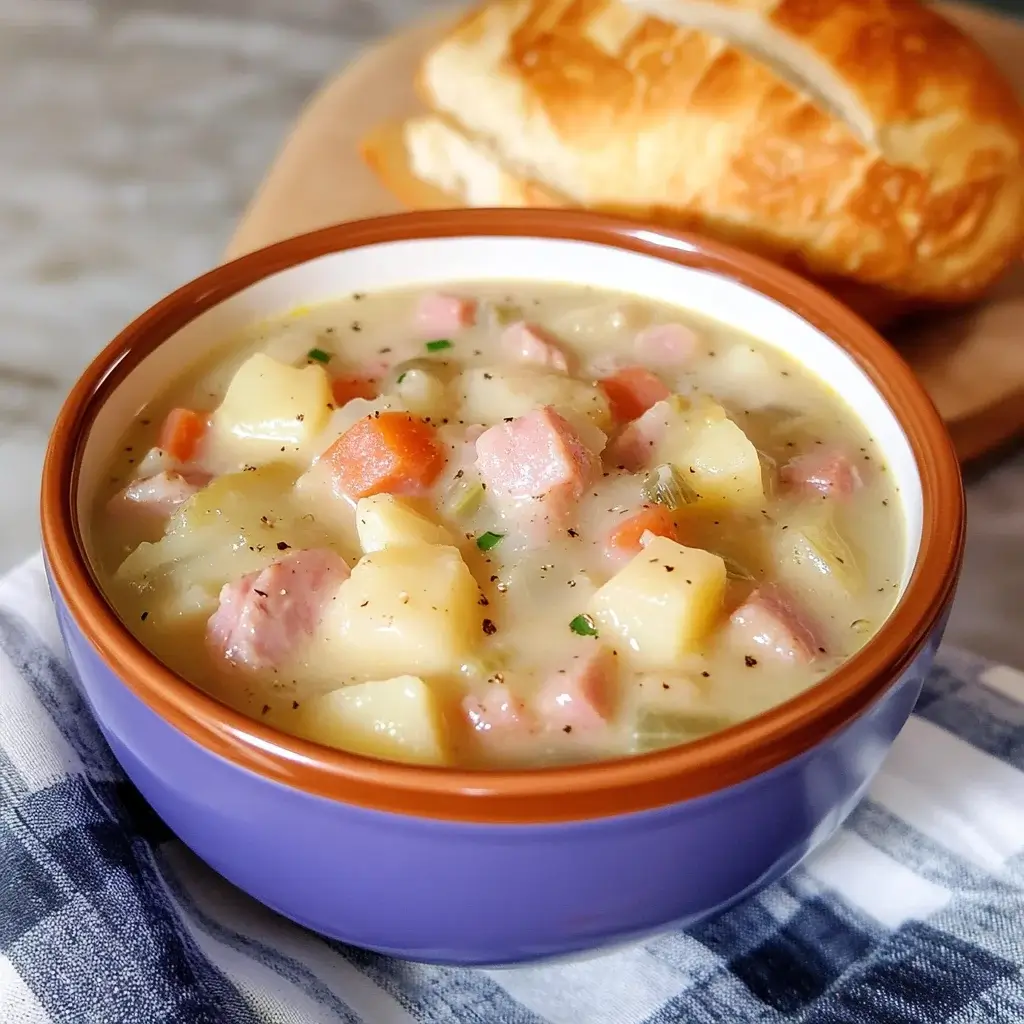

There’s a certain magic that happens after a big holiday ham dinner. The centerpiece is devoured, the family is content, but there’s always… the ham. A glorious, flavorful, and often substantial amount of ham. For years, I’d find myself staring into the refrigerator, wondering what delicious destiny awaited those hammy remnants beyond the usual sandwiches. Then, one chilly January evening, inspiration struck: Leftover Ham and Potato Soup. It was born out of a desire to minimize waste, maximize flavor, and create a comforting meal that could warm us from the inside out. And let me tell you, it was a revelation.
This isn’t just any soup; it’s a culinary hug in a bowl. The smoky depth of the leftover ham infuses every spoonful, mingling perfectly with the creamy, melt-in-your-mouth potatoes. It’s the kind of soup that fills your kitchen with an irresistible aroma, drawing everyone in like moths to a flame. My kids, who can be notoriously picky, slurp down bowls of this soup with gusto, often asking for seconds (and sometimes thirds!). Even my husband, a self-proclaimed chili aficionado, admits that this ham and potato soup is a top contender in our family’s comfort food repertoire.
What I appreciate most about this recipe, besides its incredible flavor, is its sheer practicality. It transforms what might otherwise become a fridge-lurking leftover into a brand-new, exciting meal. It’s budget-friendly, incredibly easy to make, and endlessly adaptable to whatever vegetables you have on hand. Whether you’re using ham from Thanksgiving, Christmas, Easter, or just a Sunday roast, this Leftover Ham and Potato Soup is the perfect way to extend the deliciousness and create a heartwarming meal that will be cherished by everyone at the table. If you’re looking for a recipe that’s both comforting and resourceful, look no further. This soup is guaranteed to become a post-holiday favorite in your home too.
Ingredients: Simple Staples for Soul-Satisfying Soup
The beauty of Leftover Ham and Potato Soup lies in its simplicity. It utilizes pantry staples and, of course, that star ingredient – leftover ham! Here’s a detailed list of what you’ll need to create this comforting classic:
- Leftover Ham (About 2-3 cups, diced or cubed): The star of the show! Use cooked ham – bone-in or boneless, smoked, baked, or spiral-cut all work wonderfully. The amount can be adjusted based on your preference and how much ham you have leftover. Don’t discard the ham bone if you have it, as it can be used to make an even richer broth (instructions below).
- Potatoes (About 2 pounds, peeled and diced): Russet potatoes are classic for potato soup due to their high starch content, which contributes to a creamy texture. However, Yukon Gold or red potatoes can also be used. Yukon Golds will result in a slightly creamier soup with a buttery flavor, while red potatoes will hold their shape better and provide a slightly less creamy texture. Dice the potatoes into roughly ½-inch cubes for even cooking.
- Onion (1 large, chopped): Yellow or white onion works best as a foundational flavor base for the soup. Chopping it finely ensures it cooks down nicely and blends into the soup.
- Celery (2-3 stalks, chopped): Celery adds a subtle savory depth and aromatic complexity to the soup. Like the onion, chop it finely.
- Carrots (2-3 medium, chopped): Carrots contribute sweetness and a touch of color to the soup. Chopping them into small dice ensures they cook through evenly.
- Garlic (2-3 cloves, minced): Garlic provides a pungent and savory note that enhances the overall flavor profile of the soup. Mince it finely or use a garlic press for best results.
- Chicken Broth (6-8 cups): Chicken broth forms the liquid base of the soup. Low-sodium chicken broth is recommended to control the saltiness, as ham can already be quite salty. You can also use vegetable broth for a slightly different flavor profile. If you have a ham bone, you can use water and the ham bone to make a flavorful ham broth (see instructions below).
- Milk or Cream (1-2 cups): Milk or cream adds richness and creaminess to the soup. Whole milk, half-and-half, or heavy cream can be used depending on your desired level of richness. For a lighter option, you can use skim milk or even evaporated milk. For a dairy-free version, consider using unsweetened plant-based milk like oat milk or cashew milk, which have a naturally creamy texture.
- Butter or Olive Oil (2 tablespoons): Used for sautéing the vegetables at the beginning, adding flavor and helping to soften them. Butter adds richness, while olive oil is a lighter option.
- All-Purpose Flour (2-3 tablespoons, optional for thickening): Flour can be used to create a roux and thicken the soup if you prefer a thicker consistency. This is optional, as the potatoes themselves will release starch and naturally thicken the soup as they cook. For a gluten-free option, you can use cornstarch or arrowroot starch (mix with a little cold water to create a slurry before adding to the soup).
- Dried Thyme (1 teaspoon): Thyme adds a warm, earthy, and slightly lemony herb flavor that complements ham and potatoes beautifully.
- Dried Bay Leaf (1): A bay leaf infuses a subtle herbaceous and slightly minty flavor into the soup during cooking. Remember to remove it before serving.
- Salt and Black Pepper: To taste. Be mindful of the saltiness of your ham and broth when seasoning. Taste as you go and adjust accordingly.
- Fresh Parsley (Chopped, for garnish, optional): Fresh parsley adds a pop of color and fresh, herbaceous flavor when sprinkled on top of the soup before serving.
- Shredded Cheese (Cheddar, Monterey Jack, or your favorite, for garnish, optional): Shredded cheese adds extra richness and flavor. Cheddar and Monterey Jack are classic choices for potato soup.
Optional Ingredients:
- Ham Bone (if available): For making a richer broth.
- Leeks (instead of or in addition to onion): For a milder, slightly sweeter onion flavor.
- Bacon (cooked and crumbled, for garnish or added flavor): Adds smoky, salty crunch.
- Green Onions (sliced, for garnish): For a mild oniony bite and fresh flavor.
- Sour Cream or Greek Yogurt (for garnish or stirring in for extra creaminess): Adds tanginess and richness.
- Hot Sauce (for a touch of heat): Add a dash of your favorite hot sauce to the soup or serve it on the side for those who like a little spice.
Instructions: Crafting Your Cozy Bowl of Soup
Follow these simple step-by-step instructions to create your delicious Leftover Ham and Potato Soup:
Step 1: Sauté the Aromatics
- Melt Butter or Heat Olive Oil: In a large pot or Dutch oven, melt butter or heat olive oil over medium heat.
- Sauté Onion, Celery, and Carrots: Add the chopped onion, celery, and carrots to the pot. Sauté, stirring occasionally, for about 5-7 minutes, or until the vegetables are softened and the onion is translucent. This step is crucial for building flavor in the soup.
- Add Garlic: Add the minced garlic to the pot and sauté for another minute until fragrant. Be careful not to burn the garlic.
Step 2: Build the Soup Base
- Optional: Add Flour (for thicker soup): If you want a thicker soup, sprinkle the flour over the sautéed vegetables. Cook, stirring constantly, for 1-2 minutes to cook out the raw flour taste. This creates a roux that will thicken the soup.
- Add Broth (and Ham Bone, if using): Gradually pour in the chicken broth (or vegetable broth). If using a ham bone, add it to the pot now.
- Add Potatoes, Thyme, and Bay Leaf: Add the diced potatoes, dried thyme, and bay leaf to the pot.
- Bring to a Simmer: Bring the soup to a simmer over medium-high heat. Once simmering, reduce the heat to low, cover the pot, and let it simmer gently for about 15-20 minutes, or until the potatoes are tender and easily pierced with a fork.
Step 3: Add Ham and Creaminess
- Remove Bay Leaf and Ham Bone (if used): Once the potatoes are tender, remove the bay leaf and ham bone (if used) from the pot and discard them.
- Optional: Mash Some Potatoes (for creamier texture): For a creamier soup, use an immersion blender to partially blend a portion of the soup directly in the pot. Alternatively, you can carefully ladle out a couple of cups of soup, blend it in a regular blender until smooth (be cautious when blending hot liquids), and then return it to the pot. Leaving some potatoes unblended will provide a nice chunky texture. If you prefer a completely chunky soup, skip this step.
- Add Ham and Milk/Cream: Stir in the diced or cubed leftover ham and milk or cream. Heat through gently, being careful not to boil the soup after adding dairy, as it can sometimes curdle. Simmer for another 5-10 minutes to allow the flavors to meld and the ham to warm through.
Step 4: Season and Serve
- Season to Taste: Season the soup with salt and black pepper to taste. Remember to taste before adding salt, as the ham and broth may already be salty.
- Garnish and Serve: Ladle the hot soup into bowls. Garnish with fresh chopped parsley, shredded cheese, crumbled bacon, green onions, a dollop of sour cream or Greek yogurt, or a drizzle of hot sauce, if desired. Serve immediately and enjoy!
Instructions for Making Ham Broth with Ham Bone (Optional):
If you have a ham bone leftover, you can make a richer and more flavorful broth:
- Rinse Ham Bone: Rinse the ham bone under cold water.
- Simmer Ham Bone: Place the ham bone in a large pot or stockpot. Cover with about 8-10 cups of water. Bring to a simmer over medium-high heat.
- Simmer for Broth: Reduce heat to low, cover, and simmer gently for at least 1 hour, or up to 2-3 hours, to extract maximum flavor from the bone. Skim off any foam or impurities that rise to the surface during simmering.
- Strain Broth: Carefully remove the ham bone from the pot and strain the broth through a fine-mesh sieve or cheesecloth-lined colander to remove any bone fragments or solids. Discard the solids.
- Use Ham Broth in Soup: Use this homemade ham broth in place of chicken broth in the soup recipe for a deeper ham flavor. You may need to adjust the salt seasoning as ham broth can be quite salty.
Nutrition Facts: A Nourishing and Satisfying Meal
(Please note: Nutritional information is an estimate and will vary based on specific ingredients, ham type, and serving sizes.)
Serving Size: Approximately 1.5 – 2 cups of soup
Approximate Calories per Serving: 300-450 calories (depending on ham type, creaminess, and garnishes)
Approximate Macronutrients per Serving (using whole milk, moderate ham, no added cheese):
- Protein: 20-25 grams
- Fat: 15-25 grams (can vary based on ham and dairy used)
- Carbohydrates: 30-40 grams
- Fiber: 4-6 grams
Key Nutrients:
- Protein: Excellent source of protein from ham and milk/dairy.
- Vitamins: Good source of Vitamin C (from potatoes and vegetables), Vitamin B vitamins, and Vitamin A (from carrots).
- Minerals: Provides potassium, iron, and other essential minerals.
- Carbohydrates: Provides energy from potatoes and vegetables.
Health Considerations:
- Sodium: Ham and broth can be high in sodium. Using low-sodium broth and being mindful of added salt can help manage sodium intake.
- Fat Content: Fat content can vary based on the type of ham and dairy used. Choosing leaner ham and lower-fat milk options can reduce fat content.
- Balanced Meal: This soup provides a good balance of protein, carbohydrates, and some fat, making it a satisfying and relatively nutritious meal, especially when incorporating vegetables.
Preparation Time: Quick Comfort from Leftovers
- Prep Time: 20-25 minutes (chopping vegetables, dicing ham, mincing garlic)
- Cook Time: 30-40 minutes (sautéing vegetables, simmering soup until potatoes are tender)
- Total Time: Approximately 50-65 minutes
Make-Ahead Time and Storage:
- Make-Ahead: Leftover Ham and Potato Soup is a great make-ahead meal. The flavors actually develop and deepen even further after sitting in the refrigerator overnight. You can make the soup 1-2 days in advance and store it in an airtight container in the refrigerator.
- Storage: Store leftover soup in an airtight container in the refrigerator for up to 3-4 days.
- Freezing: Leftover Ham and Potato Soup can be frozen, although the texture of the potatoes may change slightly upon thawing, becoming a bit softer. To freeze, let the soup cool completely. Ladle into freezer-safe containers, leaving some headspace for expansion. Freeze for up to 2-3 months. Thaw overnight in the refrigerator before reheating.
How to Serve Your Leftover Ham and Potato Soup: Warmth and Versatility
Leftover Ham and Potato Soup is a comforting and versatile dish that can be served in various ways:
- Classic Bowl of Soup: Serve hot in bowls as a satisfying main course for lunch or dinner.
- With Crusty Bread or Rolls: Pair with a side of crusty bread, dinner rolls, or biscuits for dipping and soaking up the delicious soup.
- Grilled Cheese Sandwich: A classic pairing! Serve alongside a warm grilled cheese sandwich for a comforting and nostalgic meal.
- Side Salad: For a lighter meal, serve with a simple side salad, such as a green salad with vinaigrette, or a Caesar salad.
- Toasted Croutons: Top with homemade or store-bought toasted croutons for added crunch and texture.
- Crackers: Serve with crackers, such as oyster crackers or saltines, for a simple and classic accompaniment.
- Baked Potato Topping: Use Leftover Ham and Potato Soup as a hearty and flavorful topping for baked potatoes.
- Soup and Salad Combo: Offer a soup and salad combo for a lighter yet satisfying lunch option.
- Garnished Platter: Create a garnished platter with bowls of soup and various toppings like shredded cheese, bacon bits, green onions, sour cream, and hot sauce, allowing everyone to customize their soup.
Additional Tips for Ham and Potato Soup Perfection: Elevate Your Soup Game
Here are five additional tips to take your Leftover Ham and Potato Soup to the next level:
- Don’t Overcook the Potatoes: Cook the potatoes until they are just tender. Overcooked potatoes can become mushy and make the soup overly thick and starchy. Test for doneness by piercing with a fork – they should be easily pierced but not falling apart.
- Adjust Creaminess to Your Liking: Control the creaminess of your soup by adjusting the amount of milk or cream you add. Start with less and add more until you reach your desired consistency. For a richer soup, use heavy cream or half-and-half. For a lighter soup, use whole milk, skim milk, or even evaporated milk.
- Layer the Flavors: Sautéing the vegetables at the beginning and using herbs like thyme and bay leaf are crucial for building layers of flavor in the soup. Don’t skip these steps! Taste and adjust seasonings throughout the cooking process.
- Use High-Quality Ham: The flavor of your ham will significantly impact the flavor of the soup. Use good quality leftover ham for the best results. Smoked ham adds a particularly delicious smoky depth.
- Garnish Generously: Garnishes not only add visual appeal but also enhance the flavor and texture of the soup. Don’t be shy with your garnishes! Fresh herbs, shredded cheese, crumbled bacon, green onions, and a dollop of sour cream or Greek yogurt all complement Ham and Potato Soup beautifully.
Frequently Asked Questions (FAQ) About Leftover Ham and Potato Soup
Here are five frequently asked questions about making and enjoying Leftover Ham and Potato Soup:
Q1: Can I make this soup vegetarian or vegan?
A: To make this soup vegetarian, simply omit the ham and use vegetable broth. For a vegan version, omit the ham and use vegetable broth, and substitute the milk or cream with a plant-based milk like oat milk or cashew milk. You can also add a tablespoon of nutritional yeast for a cheesy flavor note.
Q2: My soup is too thick. How can I thin it out?
A: If your soup is too thick, you can easily thin it out by adding more broth, milk, or water. Add liquid gradually, stirring well, until you reach your desired consistency.
Q3: Can I add other vegetables to this soup?
A: Absolutely! Feel free to add other vegetables to your Leftover Ham and Potato Soup. Some great additions include corn kernels (fresh or frozen), peas, green beans, spinach, or even diced sweet potatoes for a touch of sweetness. Add heartier vegetables like green beans or sweet potatoes along with the potatoes, and add quicker-cooking vegetables like spinach or peas towards the end of cooking.
Q4: I don’t have leftover ham. Can I still make this soup?
A: Yes, you can still make a delicious potato soup without leftover ham. You can use cubed cooked ham from the deli or grocery store. You could also substitute with cooked bacon or diced smoked sausage for a similar smoky flavor profile. Or, for a vegetarian version, simply omit the ham altogether and focus on enhancing the vegetable flavors.
Q5: Can I use an immersion blender to make the soup completely smooth?
A: Yes, you can use an immersion blender to blend the soup until completely smooth if you prefer a creamy, smooth texture. Blend directly in the pot until desired consistency is reached. Alternatively, you can use a regular blender, but be cautious when blending hot liquids and vent the lid to prevent pressure buildup.
Leftover Ham and Potato Soup is a testament to the magic of resourceful cooking. It transforms humble leftovers into a soul-warming, family-pleasing meal that is perfect for chilly days or any time you crave comfort in a bowl. Enjoy the process of creating this cozy classic and savor every delicious spoonful!
Print
Leftover Ham and Potato Soup recipe
Ingredients
-
- Leftover Ham (About 2-3 cups, diced or cubed): The star of the show! Use cooked ham – bone-in or boneless, smoked, baked, or spiral-cut all work wonderfully. The amount can be adjusted based on your preference and how much ham you have leftover. Don’t discard the ham bone if you have it, as it can be used to make an even richer broth (instructions below).
-
- Potatoes (About 2 pounds, peeled and diced): Russet potatoes are classic for potato soup due to their high starch content, which contributes to a creamy texture. However, Yukon Gold or red potatoes can also be used. Yukon Golds will result in a slightly creamier soup with a buttery flavor, while red potatoes will hold their shape better and provide a slightly less creamy texture. Dice the potatoes into roughly ½-inch cubes for even cooking.
-
- Onion (1 large, chopped): Yellow or white onion works best as a foundational flavor base for the soup. Chopping it finely ensures it cooks down nicely and blends into the soup.
-
- Celery (2-3 stalks, chopped): Celery adds a subtle savory depth and aromatic complexity to the soup. Like the onion, chop it finely.
-
- Carrots (2-3 medium, chopped): Carrots contribute sweetness and a touch of color to the soup. Chopping them into small dice ensures they cook through evenly.
-
- Garlic (2-3 cloves, minced): Garlic provides a pungent and savory note that enhances the overall flavor profile of the soup. Mince it finely or use a garlic press for best results.
-
- Chicken Broth (6-8 cups): Chicken broth forms the liquid base of the soup. Low-sodium chicken broth is recommended to control the saltiness, as ham can already be quite salty. You can also use vegetable broth for a slightly different flavor profile. If you have a ham bone, you can use water and the ham bone to make a flavorful ham broth (see instructions below).
-
- Milk or Cream (1-2 cups): Milk or cream adds richness and creaminess to the soup. Whole milk, half-and-half, or heavy cream can be used depending on your desired level of richness. For a lighter option, you can use skim milk or even evaporated milk. For a dairy-free version, consider using unsweetened plant-based milk like oat milk or cashew milk, which have a naturally creamy texture.
-
- Butter or Olive Oil (2 tablespoons): Used for sautéing the vegetables at the beginning, adding flavor and helping to soften them. Butter adds richness, while olive oil is a lighter option.
-
- All-Purpose Flour (2-3 tablespoons, optional for thickening): Flour can be used to create a roux and thicken the soup if you prefer a thicker consistency. This is optional, as the potatoes themselves will release starch and naturally thicken the soup as they cook. For a gluten-free option, you can use cornstarch or arrowroot starch (mix with a little cold water to create a slurry before adding to the soup).
-
- Dried Thyme (1 teaspoon): Thyme adds a warm, earthy, and slightly lemony herb flavor that complements ham and potatoes beautifully.
-
- Dried Bay Leaf (1): A bay leaf infuses a subtle herbaceous and slightly minty flavor into the soup during cooking. Remember to remove it before serving.
-
- Salt and Black Pepper: To taste. Be mindful of the saltiness of your ham and broth when seasoning. Taste as you go and adjust accordingly.
-
- Fresh Parsley (Chopped, for garnish, optional): Fresh parsley adds a pop of color and fresh, herbaceous flavor when sprinkled on top of the soup before serving.
-
- Shredded Cheese (Cheddar, Monterey Jack, or your favorite, for garnish, optional): Shredded cheese adds extra richness and flavor. Cheddar and Monterey Jack are classic choices for potato soup.
Optional Ingredients:
-
- Ham Bone (if available): For making a richer broth.
-
- Leeks (instead of or in addition to onion): For a milder, slightly sweeter onion flavor.
-
- Bacon (cooked and crumbled, for garnish or added flavor): Adds smoky, salty crunch.
-
- Green Onions (sliced, for garnish): For a mild oniony bite and fresh flavor.
-
- Sour Cream or Greek Yogurt (for garnish or stirring in for extra creaminess): Adds tanginess and richness.
-
- Hot Sauce (for a touch of heat): Add a dash of your favorite hot sauce to the soup or serve it on the side for those who like a little spice.
Instructions
-
- Melt Butter or Heat Olive Oil: In a large pot or Dutch oven, melt butter or heat olive oil over medium heat.
-
- Sauté Onion, Celery, and Carrots: Add the chopped onion, celery, and carrots to the pot. Sauté, stirring occasionally, for about 5-7 minutes, or until the vegetables are softened and the onion is translucent. This step is crucial for building flavor in the soup.
-
- Add Garlic: Add the minced garlic to the pot and sauté for another minute until fragrant. Be careful not to burn the garlic.
Step 2: Build the Soup Base
-
- Optional: Add Flour (for thicker soup): If you want a thicker soup, sprinkle the flour over the sautéed vegetables. Cook, stirring constantly, for 1-2 minutes to cook out the raw flour taste. This creates a roux that will thicken the soup.
-
- Add Broth (and Ham Bone, if using): Gradually pour in the chicken broth (or vegetable broth). If using a ham bone, add it to the pot now.
-
- Add Potatoes, Thyme, and Bay Leaf: Add the diced potatoes, dried thyme, and bay leaf to the pot.
-
- Bring to a Simmer: Bring the soup to a simmer over medium-high heat. Once simmering, reduce the heat to low, cover the pot, and let it simmer gently for about 15-20 minutes, or until the potatoes are tender and easily pierced with a fork.
Step 3: Add Ham and Creaminess
-
- Remove Bay Leaf and Ham Bone (if used): Once the potatoes are tender, remove the bay leaf and ham bone (if used) from the pot and discard them.
-
- Optional: Mash Some Potatoes (for creamier texture): For a creamier soup, use an immersion blender to partially blend a portion of the soup directly in the pot. Alternatively, you can carefully ladle out a couple of cups of soup, blend it in a regular blender until smooth (be cautious when blending hot liquids), and then return it to the pot. Leaving some potatoes unblended will provide a nice chunky texture. If you prefer a completely chunky soup, skip this step.
-
- Add Ham and Milk/Cream: Stir in the diced or cubed leftover ham and milk or cream. Heat through gently, being careful not to boil the soup after adding dairy, as it can sometimes curdle. Simmer for another 5-10 minutes to allow the flavors to meld and the ham to warm through.
Step 4: Season and Serve
-
- Season to Taste: Season the soup with salt and black pepper to taste. Remember to taste before adding salt, as the ham and broth may already be salty.
-
- Garnish and Serve: Ladle the hot soup into bowls. Garnish with fresh chopped parsley, shredded cheese, crumbled bacon, green onions, a dollop of sour cream or Greek yogurt, or a drizzle of hot sauce, if desired. Serve immediately and enjoy!
Instructions for Making Ham Broth with Ham Bone (Optional):
If you have a ham bone leftover, you can make a richer and more flavorful broth:
-
- Rinse Ham Bone: Rinse the ham bone under cold water.
-
- Simmer Ham Bone: Place the ham bone in a large pot or stockpot. Cover with about 8-10 cups of water. Bring to a simmer over medium-high heat.
-
- Simmer for Broth: Reduce heat to low, cover, and simmer gently for at least 1 hour, or up to 2-3 hours, to extract maximum flavor from the bone. Skim off any foam or impurities that rise to the surface during simmering.
-
- Strain Broth: Carefully remove the ham bone from the pot and strain the broth through a fine-mesh sieve or cheesecloth-lined colander to remove any bone fragments or solids. Discard the solids.
-
- Use Ham Broth in Soup: Use this homemade ham broth in place of chicken broth in the soup recipe for a deeper ham flavor. You may need to adjust the salt seasoning as ham broth can be quite salty.
Nutrition
- Serving Size: one normal portion
- Calories: 300-450 calories
- Fat: 15-25 grams
- Carbohydrates: 30-40 grams
- Fiber: 4-6 grams
- Protein: 20-25 grams