
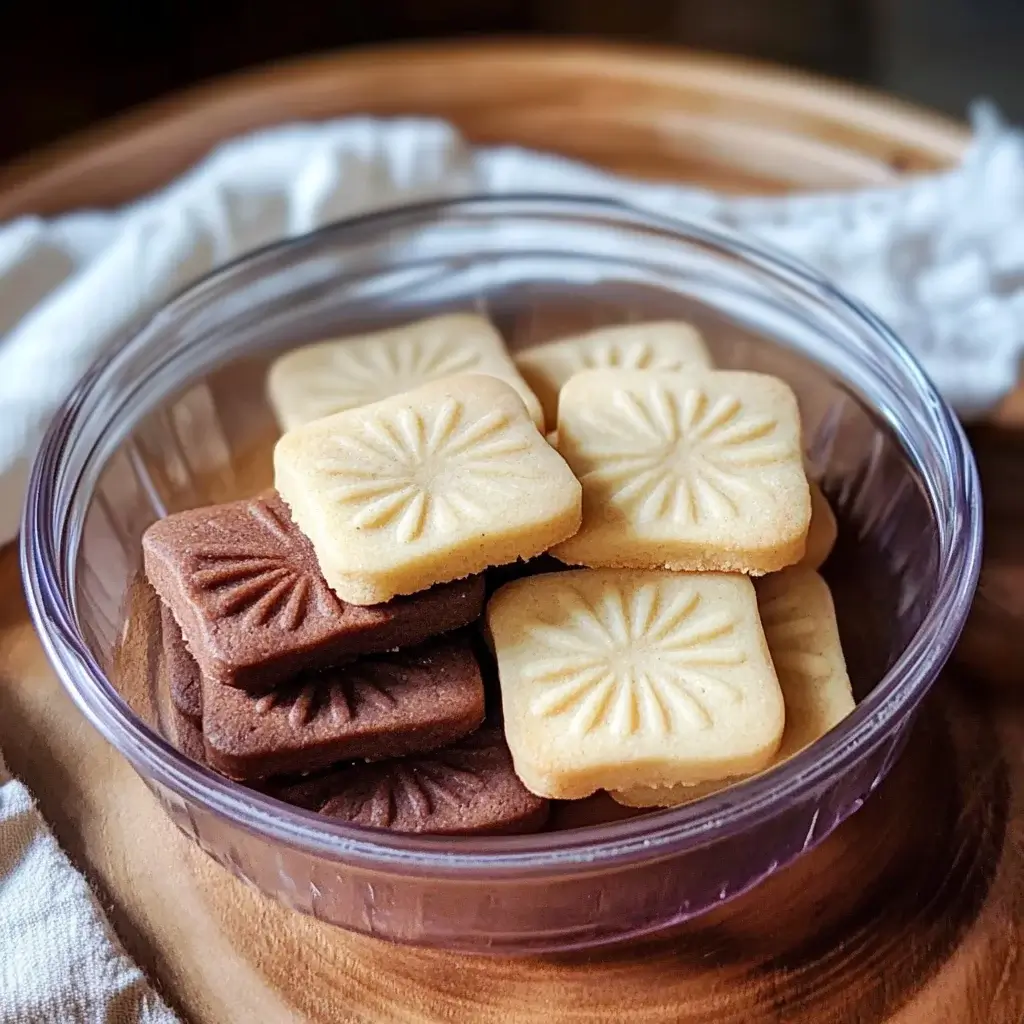

The first time I made Korean Tea Cookies, or Dasik as they’re traditionally known, it was a quiet afternoon, and I was seeking a baking project that was both delicate and subtly flavorful. I’d been captivated by images of these intricately patterned cookies, often served alongside traditional Korean teas, and the idea of creating something so visually beautiful and culturally rich in my own kitchen was incredibly appealing. Following a recipe passed down from a Korean friend’s grandmother, I carefully mixed the finely ground powders, added the touch of honey, and gently pressed the mixture into the wooden molds. The aroma as they baked was subtle yet intriguing – a whisper of roasted grains and a hint of sweetness. When they emerged from the oven, pale and delicate, imprinted with those classic Korean designs, I was instantly charmed. My family, accustomed to more overtly sweet treats, were initially curious. But one taste was all it took. The cookies were surprisingly satisfying – subtly sweet, with a delicate, melt-in-your-mouth texture and a unique nutty, roasted flavor that lingered pleasantly. They were the perfect accompaniment to a cup of green tea, and quickly became a favorite for quiet moments of indulgence and sharing with friends. These aren’t your typical sugary cookies; they are a refined and elegant treat, a testament to the beauty of simplicity and the art of subtle flavor. Prepare to be enchanted by the delicate charm of Korean Tea Cookies – a delightful journey into the heart of Korean confectionery.
Ingredients
To create these exquisite Korean Tea Cookies, Dasik (다식), you’ll need a selection of finely ground, often roasted, ingredients. The beauty of Dasik lies in the simplicity and purity of its components, allowing the natural flavors of the main ingredients to shine through. Authenticity is key here, so sourcing high-quality, finely ground powders is essential. Here’s a detailed breakdown of the ingredients you’ll need:
For the Korean Tea Cookies (Dasik):
- 1 cup Black Sesame Seed Powder (Heugimja Garu, 흑임자 가루), finely ground: This is a cornerstone ingredient for many Dasik variations, lending a deep, nutty, and slightly earthy flavor along with a beautiful black hue. Black sesame seeds are traditionally roasted before grinding to enhance their flavor and aroma. Ensure the powder is very finely ground for a smooth cookie texture. You can purchase pre-ground black sesame seed powder, or grind your own using roasted black sesame seeds and a spice grinder or high-powered blender.
- 1 cup Soybean Powder (Kong Garu, 콩가루), finely ground, roasted (optional): Soybean powder, often made from roasted soybeans, provides a subtly sweet, nutty, and slightly savory flavor profile. Roasting the soybean powder further enhances its nutty aroma and depth of flavor. Look for finely ground soybean powder, which is readily available in Korean grocery stores or online. If you are using unroasted soybean powder, you can lightly toast it in a dry pan over medium-low heat for a few minutes, stirring constantly, until fragrant and slightly golden, being careful not to burn it. Allow to cool completely before using.
- 1/2 cup Rice Flour (Bapsal Garu, 멥쌀가루), finely ground: Rice flour acts as a binder and adds a delicate, slightly chewy texture to the cookies. Korean rice flour, often made from short-grain rice, is traditionally used. Ensure the rice flour is very finely ground for a smooth cookie texture. You can find rice flour in most supermarkets or Asian grocery stores. Glutinous rice flour (Chapssal Garu, 찹쌀가루) is not typically used for Dasik as it can make the cookies too chewy and sticky.
- 1/4 cup Honey (or Korean Honey, Yut, 엿): Honey serves as the primary sweetener and binder in Dasik, lending a delicate sweetness and helping to hold the cookie mixture together. Korean honey, known as Yut (엿), is a traditional thick, sweet syrup made from grains and is often used in Korean confectionery for a more authentic flavor. If you cannot find Yut, good quality honey will work perfectly well. You can also use maple syrup or agave nectar as alternative sweeteners, but honey provides a classic flavor and texture.
- 1-2 tablespoons Hot Water (adjust as needed): Hot water is added gradually to help bring the dry ingredients together into a cohesive, moldable dough. The amount of water needed will depend on the dryness of your powders and the consistency of your honey. Add water a tablespoon at a time, mixing well after each addition, until the dough just comes together and can be easily pressed into molds.
Optional Ingredients for Flavor Variations:
- Green Tea Powder (Matcha, 녹차 가루): For Green Tea Dasik, substitute a portion of the soybean powder or rice flour with finely ground green tea powder (matcha). Start with 1-2 tablespoons and adjust to taste. Matcha will impart a slightly bitter, earthy, and vibrant green tea flavor and a beautiful green color.
- Five-Grain Powder (Okgara Garu, 오곡가루): For a more complex and nutritious Dasik, you can incorporate a five-grain powder blend, often available in Korean grocery stores. This blend typically includes rice, barley, black beans, sesame seeds, and millet, providing a variety of flavors and textures. Substitute a portion of the soybean powder or rice flour with five-grain powder.
- Pine Pollen Powder (Songhwa Garu, 송화 가루): For a very traditional and subtly floral flavor, you can add a small amount of pine pollen powder (Songhwa Garu). Pine pollen powder has a delicate, slightly sweet, and unique flavor. It is often used in very traditional Dasik recipes and is considered a prized ingredient. Use sparingly, as its flavor can be subtle.
- Cinnamon Powder (Gyesu Garu, 계수 가루): For a warm and aromatic variation, add a pinch of cinnamon powder (Gyesu Garu) to the dough. Cinnamon pairs well with the nutty flavors of sesame and soybean and adds a comforting spice note.
- Ground Nuts (Walnuts, Almonds, Pine Nuts), finely ground: For added texture and richness, you can incorporate finely ground nuts, such as walnuts, almonds, or pine nuts, into the Dasik dough. Substitute a portion of the soybean powder or rice flour with finely ground nuts.
Equipment:
- Dasik Molds (Dasikpan, 다식판): Traditional wooden molds with intricate patterns are essential for creating authentic Dasik. These molds are available in various designs and materials (wood, plastic, silicone) and are often found in Korean grocery stores or online. Using Dasik molds is what gives these cookies their signature decorative appearance. If you don’t have Dasik molds, you can use cookie cutters or simply shape the cookies by hand, although they won’t have the traditional imprinted designs.
- Mixing Bowls: For mixing the dry and wet ingredients.
- Measuring Cups and Spoons: For accurate ingredient measurement.
- Parchment Paper or Baking Sheet: For baking the Dasik.
Instructions
Creating Korean Tea Cookies, Dasik, is a delicate and rewarding process. The method is simple, but attention to detail, especially in achieving the right dough consistency and pressing technique, is key to beautiful and authentic results. Follow these step-by-step instructions carefully:
Step 1: Prepare the Dry Ingredients – Combining the Powders
This step involves combining the finely ground powders to create the base for your Dasik dough.
- Combine Dry Powders: In a medium mixing bowl, combine the black sesame seed powder, soybean powder, and rice flour. If you are using optional flavor additions like green tea powder, five-grain powder, or ground nuts, add them to the bowl at this stage and adjust the proportions of the base powders accordingly to maintain a total of approximately 2 cups of dry ingredients.
- Whisk to Combine: Whisk the dry ingredients together thoroughly to ensure they are evenly mixed and any clumps are broken up. This step ensures a consistent texture and flavor in your Dasik.
Step 2: Incorporate Honey and Water – Forming the Dough
This step involves gradually adding the honey and hot water to the dry ingredients to create a moldable dough.
- Add Honey: Pour the honey into the bowl with the dry ingredients.
- Mix Initially: Use a spoon or spatula to initially mix the honey into the dry powders. The mixture will initially be crumbly and dry.
- Gradually Add Hot Water: Start adding hot water, one tablespoon at a time. After each tablespoon of hot water, mix the dough thoroughly with your hands. Use your fingers to gently rub the mixture together and assess the consistency.
- Knead Gently: Continue adding hot water, one teaspoon at a time, and kneading gently until the dough just comes together into a cohesive ball. The dough should be moldable and slightly pliable, similar to playdough. It should not be sticky or too wet. The exact amount of hot water needed will vary depending on the dryness of your powders and the humidity. Be careful not to add too much water, as this can make the dough sticky and difficult to work with.
- Test Dough Consistency: To test the dough consistency, take a small pinch of dough and press it into a Dasik mold (or simply shape it with your fingers). If the dough holds its shape well and releases cleanly from the mold (or holds its shape when shaped by hand), the consistency is correct. If the dough is too crumbly, add a tiny bit more hot water (a few drops at a time). If the dough is too sticky, add a little more rice flour or soybean powder.
Step 3: Press into Molds – Creating Decorative Shapes
This is the fun and artistic step where you use Dasik molds to create the signature decorative shapes of Korean Tea Cookies.
- Prepare Molds: Ensure your Dasik molds are clean and dry. Lightly dust the inside of the molds with a little rice flour or soybean powder to prevent the dough from sticking, although this is often not necessary with traditional wooden molds if the dough consistency is correct.
- Take Small Portions of Dough: Take a small portion of the Dasik dough, about the size of a small marble or slightly larger, depending on the size of your molds.
- Press Dough into Molds: Place the dough portion into a Dasik mold and press it firmly and evenly into the mold cavity with your thumb or fingers. Ensure the dough fills all the details of the mold design.
- Invert and Release: Invert the mold over a parchment-lined baking sheet or plate. Gently tap the back of the mold to release the Dasik cookie. The cookie should release cleanly from the mold, retaining the imprinted design. If the cookie sticks, gently loosen it with a toothpick or small spatula.
- Repeat: Repeat steps 2-4 until all the dough is used up. Arrange the molded Dasik cookies on the parchment-lined baking sheet, leaving a little space between them.
Step 4: Air Dry or Bake – Setting the Cookies
Dasik are traditionally air-dried, but a very low temperature baking method can also be used to speed up the setting process and create a slightly firmer texture.
Option 1: Air Drying (Traditional Method):
- Air Dry at Room Temperature: Leave the molded Dasik cookies on the parchment-lined baking sheet at room temperature, uncovered, to air dry.
- Drying Time: Air dry for several hours, or preferably overnight (6-12 hours), until the cookies are firm to the touch and feel dry. The drying time will depend on the humidity and temperature of your environment. Air drying allows the cookies to set naturally and develop a slightly more delicate texture.
Option 2: Low Temperature Baking (Faster Method):
- Preheat Oven to Very Low Temperature: Preheat your oven to the lowest possible temperature setting, typically around 150-175°F (65-80°C). The oven should be just warm enough to gently dry the cookies, not bake them.
- Bake at Low Temperature: Place the baking sheet with the molded Dasik cookies in the preheated oven.
- Baking Time: Bake for 30-45 minutes, or until the cookies are firm to the touch and feel dry. Check the cookies periodically to ensure they are not browning or cracking. The goal is to gently dry them out, not bake them like regular cookies.
- Cool Completely: Remove the baking sheet from the oven and let the Dasik cookies cool completely on the baking sheet. They will firm up further as they cool.
Step 5: Store and Serve – Preserving Delicate Flavors
Proper storage is important to maintain the texture and flavor of your Dasik.
- Store in Airtight Container: Once the Dasik cookies are completely cooled and firm, store them in an airtight container at room temperature.
- Storage Duration: Dasik cookies will keep well at room temperature for several days, up to a week, depending on storage conditions and humidity.
- Serve with Tea: Serve Korean Tea Cookies, Dasik, as a delicate and elegant accompaniment to Korean teas, such as green tea (Nokcha, 녹차), barley tea (Boricha, 보리차), or roasted corn tea (Oksusu cha, 옥수수차). They are also wonderful enjoyed on their own as a light and subtly sweet treat.
Nutrition Facts
Korean Tea Cookies, Dasik, are a relatively light and subtly sweet treat compared to many Western cookies. Their nutritional profile is primarily derived from the main ingredients: sesame seeds, soybeans, and rice flour. Keep in mind that these are estimations, and actual nutritional values can vary slightly based on specific ingredient proportions and honey quantity.
Servings:
This recipe typically yields approximately 20-35 Dasik cookies, depending on the size of your molds and the portion size.
Calories per Serving (Estimated):
Per cookie (estimated, based on 30 cookies per batch):
- Calories: Approximately 30-50 calories
- Protein: Around 1-2 grams
- Fat: Around 1.5-3 grams (primarily from sesame seeds and soybean powder)
- Carbohydrates: Approximately 5-8 grams (primarily from rice flour and honey)
- Fiber: Approximately 0.5-1 gram
Important Note: These are estimations. For precise nutritional information, you can use online nutrition calculators and input the specific ingredients and quantities you use. Dasik cookies are relatively low in sugar compared to many Western cookies, with sweetness primarily coming from honey. They provide some protein and healthy fats from sesame seeds and soybeans, as well as some fiber. However, they are still a treat and should be enjoyed in moderation as part of a balanced diet.
Preparation Time
While the cooking time for Korean Tea Cookies, Dasik, is minimal (or non-existent if air-drying), the preparation and molding process takes some time and care. Here’s a breakdown:
Prep Time:
- Active Prep: Approximately 30-45 minutes (includes measuring ingredients, grinding sesame seeds if using whole seeds, mixing dough, preparing molds).
- Molding Time: Approximately 30-60 minutes (depending on the number of cookies and your speed at molding).
Cook Time:
- Air Drying: 6-12 hours (mostly hands-off time).
- Low Temperature Baking (Optional): 30-45 minutes (mostly hands-off time).
Total Time:
- Total Time (Air Dried): Approximately 7-13 hours (including air drying time).
- Total Time (Baked): Approximately 1 hour 30 minutes to 2 hours 30 minutes (including baking time).
Time-Saving Tip: While the molding process can be time-consuming, it is also a meditative and enjoyable part of making Dasik. You can break up the process by preparing the dough ahead of time and storing it in an airtight container at room temperature for a few hours before molding. You can also involve family members or friends in the molding process to make it a collaborative and fun activity.
How to Serve
Korean Tea Cookies, Dasik, are traditionally served as a delicate and elegant accompaniment to tea, but they can also be enjoyed in various other ways. Here are some serving suggestions to enhance your Dasik experience:
Traditional Tea Service:
- With Korean Teas: Serve Dasik alongside traditional Korean teas such as:
- Green Tea (Nokcha, 녹차): The classic pairing. The subtle bitterness of green tea complements the delicate sweetness and nutty flavors of Dasik.
- Barley Tea (Boricha, 보리차): A roasted and nutty tea that pairs well with sesame and soybean Dasik.
- Roasted Corn Tea (Oksusu cha, 옥수수차): A slightly sweet and comforting tea that complements the gentle sweetness of Dasik.
- Chrysanthemum Tea (Gukhwacha, 국화차): A floral and aromatic tea that provides a delicate contrast to the nutty flavors of Dasik.
- Elegant Presentation: Arrange Dasik cookies on a small, decorative serving plate or tray alongside teacups and teapots for an elegant tea service. Use traditional Korean teaware if available.
Modern Serving Ideas:
- Dessert Platter: Include Dasik as part of a dessert platter featuring other Korean sweets and treats, such as Yakgwa (약과, honey cookies), Jeonggwa (정과, candied fruits and roots), or fresh fruits.
- Gift Giving: Dasik cookies make beautiful and thoughtful homemade gifts. Package them in small boxes or decorative bags tied with ribbons. Their intricate designs and unique flavors make them a special and appreciated gift.
- Party Favors: Offer Dasik cookies as unique and elegant party favors for special occasions.
- Light Dessert: Enjoy Dasik as a light and subtly sweet dessert after a meal. They are perfect for those who prefer less sugary treats.
- Snack with Coffee or Milk: While traditionally served with tea, Dasik can also be enjoyed as a snack with coffee, milk, or other beverages.
Garnishing (Optional):
- Edible Gold Leaf or Silver Leaf (optional): For an extra touch of elegance, you can add tiny pieces of edible gold leaf or silver leaf to the Dasik cookies. This is traditionally done for very special occasions and adds a luxurious visual element.
- Sprinkle of Sesame Seeds (optional): Lightly sprinkle a few toasted sesame seeds around the Dasik cookies on the serving plate for added visual appeal and to reinforce the sesame flavor.
Additional Tips for Perfect Korean Tea Cookies (Dasik)
To ensure your Korean Tea Cookies, Dasik, are beautifully crafted and delightfully flavored, consider these additional tips:
Tip 1: Use Finely Ground Powders – Achieve Smooth Texture
The texture of Dasik is key to their delicate appeal. Ensure all your dry ingredients – black sesame seed powder, soybean powder, and rice flour – are very finely ground. If you are grinding your own sesame seeds or soybeans, use a spice grinder or high-powered blender and grind them as finely as possible. Sifting the powders after grinding can help remove any coarser particles and ensure a smooth dough and cookie texture. Finely ground powders result in Dasik that are melt-in-your-mouth tender.
Tip 2: Roast Powders for Deeper Flavor – Enhance Nutty Notes
Roasting the sesame seeds and soybean powder before grinding (or lightly toasting pre-ground powders) significantly enhances their nutty aroma and depth of flavor. Roasting brings out the natural oils and flavors in the seeds and beans, creating a more complex and richer taste in the Dasik. For sesame seeds, toast them in a dry pan over medium-low heat until fragrant and slightly popping. For soybean powder, lightly toast it in a dry pan until fragrant and slightly golden, being careful not to burn. Allow the roasted powders to cool completely before using them in the dough.
Tip 3: Add Hot Water Gradually – Control Dough Consistency
Adding hot water gradually and carefully is crucial for achieving the correct Dasik dough consistency. Add hot water one tablespoon at a time, and then in smaller increments (teaspoons or even drops) as the dough starts to come together. Mix and knead gently after each addition to assess the consistency. The dough should be moldable and pliable, but not sticky or too wet. Over-hydrating the dough will make it difficult to mold and result in cookies that spread or lose their shape. Err on the side of slightly drier dough and add more water sparingly if needed.
Tip 4: Press Firmly and Evenly – Capture Mold Details
When pressing the Dasik dough into the molds, ensure you press firmly and evenly to capture all the intricate details of the mold design. Use your thumb or fingers to press the dough into every nook and cranny of the mold cavity. Uneven pressure can result in cookies with incomplete or distorted designs. Firm and even pressing ensures sharp and clear imprints on your Dasik.
Tip 5: Air Drying for Delicate Texture – Traditional Method
While low-temperature baking is a faster option, air drying Dasik is the traditional method and often results in a more delicate and melt-in-your-mouth texture. Air drying allows the cookies to set slowly and naturally, without becoming overly dry or hard. If you have the time, air drying is recommended for the most authentic texture. Ensure the cookies are placed in a well-ventilated area at room temperature for optimal air drying.
Frequently Asked Questions (FAQ) About Korean Tea Cookies (Dasik)
Got questions about making Korean Tea Cookies, Dasik? You’re not alone! Here are answers to some frequently asked questions to help you master this elegant Korean confection:
Q1: Where can I buy Dasik molds?
A: Dasik molds (Dasikpan, 다식판) can be purchased at Korean grocery stores, Asian kitchenware stores, and online retailers that specialize in Korean or Asian cooking supplies. You can find both traditional wooden molds and more modern plastic or silicone molds in various designs and sizes. Online marketplaces like Etsy and Amazon also often have a selection of Dasik molds. Search for “Korean Dasik molds” or “Korean tea cookie molds” online to find various options.
Q2: Can I make Dasik without Dasik molds?
A: Yes, you can make Dasik even if you don’t have traditional Dasik molds. While the molds give Dasik their signature decorative appearance, you can still enjoy the flavor and texture without them. You can use cookie cutters to create different shapes, or simply shape the cookies by hand into small rounds, squares, or rectangles. You can also use the back of a fork to gently press simple patterns onto the surface of hand-shaped cookies if desired.
Q3: Can I substitute other types of flour for rice flour in Dasik?
A: While rice flour is traditionally used in Dasik for its delicate texture and binding properties, you can experiment with other types of gluten-free flours if needed. Potato starch or tapioca starch might work as substitutes for a portion of the rice flour to maintain a light texture. However, using wheat flour or other gluten-containing flours is not recommended as it will significantly alter the texture and make the Dasik chewier and less authentic. Rice flour is the preferred choice for traditional Dasik.
Q4: How long do Korean Tea Cookies (Dasik) last?
A: Korean Tea Cookies, Dasik, will last for several days at room temperature if stored properly in an airtight container. When stored correctly, they can maintain their texture and flavor for up to a week. However, it’s best to consume them within 3-5 days for optimal freshness and flavor. Avoid storing Dasik in the refrigerator, as this can make them become slightly sticky or alter their texture.
Q5: Can I make Dasik vegan?
A: Yes, you can easily make Dasik vegan by substituting the honey with a vegan sweetener such as maple syrup, agave nectar, or rice syrup. These vegan sweeteners will provide sweetness and binding properties similar to honey. Ensure that all other ingredients are also vegan-friendly (e.g., using plant-based milk powder if a recipe variation calls for it, although this basic recipe is naturally vegan-friendly with the honey substitution).
With these detailed instructions, tips, and answers to frequently asked questions, you are now fully equipped to create beautiful and delicious Korean Tea Cookies, Dasik, and share this elegant and subtly flavorful Korean treat with family and friends. Enjoy the delicate art of Dasik making!
Print
Korean Tea Cookies recipe
Ingredients
For the Korean Tea Cookies (Dasik):
-
- 1 cup Black Sesame Seed Powder (Heugimja Garu, 흑임자 가루), finely ground: This is a cornerstone ingredient for many Dasik variations, lending a deep, nutty, and slightly earthy flavor along with a beautiful black hue. Black sesame seeds are traditionally roasted before grinding to enhance their flavor and aroma. Ensure the powder is very finely ground for a smooth cookie texture. You can purchase pre-ground black sesame seed powder, or grind your own using roasted black sesame seeds and a spice grinder or high-powered blender.
-
- 1 cup Soybean Powder (Kong Garu, 콩가루), finely ground, roasted (optional): Soybean powder, often made from roasted soybeans, provides a subtly sweet, nutty, and slightly savory flavor profile. Roasting the soybean powder further enhances its nutty aroma and depth of flavor. Look for finely ground soybean powder, which is readily available in Korean grocery stores or online. If you are using unroasted soybean powder, you can lightly toast it in a dry pan over medium-low heat for a few minutes, stirring constantly, until fragrant and slightly golden, being careful not to burn it. Allow to cool completely before using.
-
- 1/2 cup Rice Flour (Bapsal Garu, 멥쌀가루), finely ground: Rice flour acts as a binder and adds a delicate, slightly chewy texture to the cookies. Korean rice flour, often made from short-grain rice, is traditionally used. Ensure the rice flour is very finely ground for a smooth cookie texture. You can find rice flour in most supermarkets or Asian grocery stores. Glutinous rice flour (Chapssal Garu, 찹쌀가루) is not typically used for Dasik as it can make the cookies too chewy and sticky.
-
- 1/4 cup Honey (or Korean Honey, Yut, 엿): Honey serves as the primary sweetener and binder in Dasik, lending a delicate sweetness and helping to hold the cookie mixture together. Korean honey, known as Yut (엿), is a traditional thick, sweet syrup made from grains and is often used in Korean confectionery for a more authentic flavor. If you cannot find Yut, good quality honey will work perfectly well. You can also use maple syrup or agave nectar as alternative sweeteners, but honey provides a classic flavor and texture.
-
- 1–2 tablespoons Hot Water (adjust as needed): Hot water is added gradually to help bring the dry ingredients together into a cohesive, moldable dough. The amount of water needed will depend on the dryness of your powders and the consistency of your honey. Add water a tablespoon at a time, mixing well after each addition, until the dough just comes together and can be easily pressed into molds.
Optional Ingredients for Flavor Variations:
-
- Green Tea Powder (Matcha, 녹차 가루): For Green Tea Dasik, substitute a portion of the soybean powder or rice flour with finely ground green tea powder (matcha). Start with 1-2 tablespoons and adjust to taste. Matcha will impart a slightly bitter, earthy, and vibrant green tea flavor and a beautiful green color.
-
- Five-Grain Powder (Okgara Garu, 오곡가루): For a more complex and nutritious Dasik, you can incorporate a five-grain powder blend, often available in Korean grocery stores. This blend typically includes rice, barley, black beans, sesame seeds, and millet, providing a variety of flavors and textures. Substitute a portion of the soybean powder or rice flour with five-grain powder.
-
- Pine Pollen Powder (Songhwa Garu, 송화 가루): For a very traditional and subtly floral flavor, you can add a small amount of pine pollen powder (Songhwa Garu). Pine pollen powder has a delicate, slightly sweet, and unique flavor. It is often used in very traditional Dasik recipes and is considered a prized ingredient. Use sparingly, as its flavor can be subtle.
-
- Cinnamon Powder (Gyesu Garu, 계수 가루): For a warm and aromatic variation, add a pinch of cinnamon powder (Gyesu Garu) to the dough. Cinnamon pairs well with the nutty flavors of sesame and soybean and adds a comforting spice note.
-
- Ground Nuts (Walnuts, Almonds, Pine Nuts), finely ground: For added texture and richness, you can incorporate finely ground nuts, such as walnuts, almonds, or pine nuts, into the Dasik dough. Substitute a portion of the soybean powder or rice flour with finely ground nuts.
Instructions
Step 1: Prepare the Dry Ingredients – Combining the Powders
This step involves combining the finely ground powders to create the base for your Dasik dough.
-
- Combine Dry Powders: In a medium mixing bowl, combine the black sesame seed powder, soybean powder, and rice flour. If you are using optional flavor additions like green tea powder, five-grain powder, or ground nuts, add them to the bowl at this stage and adjust the proportions of the base powders accordingly to maintain a total of approximately 2 cups of dry ingredients.
-
- Whisk to Combine: Whisk the dry ingredients together thoroughly to ensure they are evenly mixed and any clumps are broken up. This step ensures a consistent texture and flavor in your Dasik.
Step 2: Incorporate Honey and Water – Forming the Dough
This step involves gradually adding the honey and hot water to the dry ingredients to create a moldable dough.
-
- Add Honey: Pour the honey into the bowl with the dry ingredients.
-
- Mix Initially: Use a spoon or spatula to initially mix the honey into the dry powders. The mixture will initially be crumbly and dry.
-
- Gradually Add Hot Water: Start adding hot water, one tablespoon at a time. After each tablespoon of hot water, mix the dough thoroughly with your hands. Use your fingers to gently rub the mixture together and assess the consistency.
-
- Knead Gently: Continue adding hot water, one teaspoon at a time, and kneading gently until the dough just comes together into a cohesive ball. The dough should be moldable and slightly pliable, similar to playdough. It should not be sticky or too wet. The exact amount of hot water needed will vary depending on the dryness of your powders and the humidity. Be careful not to add too much water, as this can make the dough sticky and difficult to work with.
-
- Test Dough Consistency: To test the dough consistency, take a small pinch of dough and press it into a Dasik mold (or simply shape it with your fingers). If the dough holds its shape well and releases cleanly from the mold (or holds its shape when shaped by hand), the consistency is correct. If the dough is too crumbly, add a tiny bit more hot water (a few drops at a time). If the dough is too sticky, add a little more rice flour or soybean powder.
Step 3: Press into Molds – Creating Decorative Shapes
This is the fun and artistic step where you use Dasik molds to create the signature decorative shapes of Korean Tea Cookies.
-
- Prepare Molds: Ensure your Dasik molds are clean and dry. Lightly dust the inside of the molds with a little rice flour or soybean powder to prevent the dough from sticking, although this is often not necessary with traditional wooden molds if the dough consistency is correct.
-
- Take Small Portions of Dough: Take a small portion of the Dasik dough, about the size of a small marble or slightly larger, depending on the size of your molds.
-
- Press Dough into Molds: Place the dough portion into a Dasik mold and press it firmly and evenly into the mold cavity with your thumb or fingers. Ensure the dough fills all the details of the mold design.
-
- Invert and Release: Invert the mold over a parchment-lined baking sheet or plate. Gently tap the back of the mold to release the Dasik cookie. The cookie should release cleanly from the mold, retaining the imprinted design. If the cookie sticks, gently loosen it with a toothpick or small spatula.
-
- Repeat: Repeat steps 2-4 until all the dough is used up. Arrange the molded Dasik cookies on the parchment-lined baking sheet, leaving a little space between them.
Step 4: Air Dry or Bake – Setting the Cookies
Dasik are traditionally air-dried, but a very low temperature baking method can also be used to speed up the setting process and create a slightly firmer texture.
Option 1: Air Drying (Traditional Method):
-
- Air Dry at Room Temperature: Leave the molded Dasik cookies on the parchment-lined baking sheet at room temperature, uncovered, to air dry.
-
- Drying Time: Air dry for several hours, or preferably overnight (6-12 hours), until the cookies are firm to the touch and feel dry. The drying time will depend on the humidity and temperature of your environment. Air drying allows the cookies to set naturally and develop a slightly more delicate texture.
Option 2: Low Temperature Baking (Faster Method):
-
- Preheat Oven to Very Low Temperature: Preheat your oven to the lowest possible temperature setting, typically around 150-175°F (65-80°C). The oven should be just warm enough to gently dry the cookies, not bake them.
-
- Bake at Low Temperature: Place the baking sheet with the molded Dasik cookies in the preheated oven.
-
- Baking Time: Bake for 30-45 minutes, or until the cookies are firm to the touch and feel dry. Check the cookies periodically to ensure they are not browning or cracking. The goal is to gently dry them out, not bake them like regular cookies.
-
- Cool Completely: Remove the baking sheet from the oven and let the Dasik cookies cool completely on the baking sheet. They will firm up further as they cool.
Step 5: Store and Serve – Preserving Delicate Flavors
Proper storage is important to maintain the texture and flavor of your Dasik.
-
- Store in Airtight Container: Once the Dasik cookies are completely cooled and firm, store them in an airtight container at room temperature.
-
- Storage Duration: Dasik cookies will keep well at room temperature for several days, up to a week, depending on storage conditions and humidity.
-
- Serve with Tea: Serve Korean Tea Cookies, Dasik, as a delicate and elegant accompaniment to Korean teas, such as green tea (Nokcha, 녹차), barley tea (Boricha, 보리차), or roasted corn tea (Oksusu cha, 옥수수차). They are also wonderful enjoyed on their own as a light and subtly sweet treat.
Nutrition
- Serving Size: one normal portion
- Calories: 30-50
- Fat: 1.5-3 grams
- Carbohydrates: 5-8 grams
- Fiber: 0.5-1 gram
- Protein: 1-2 grams