


Introduction
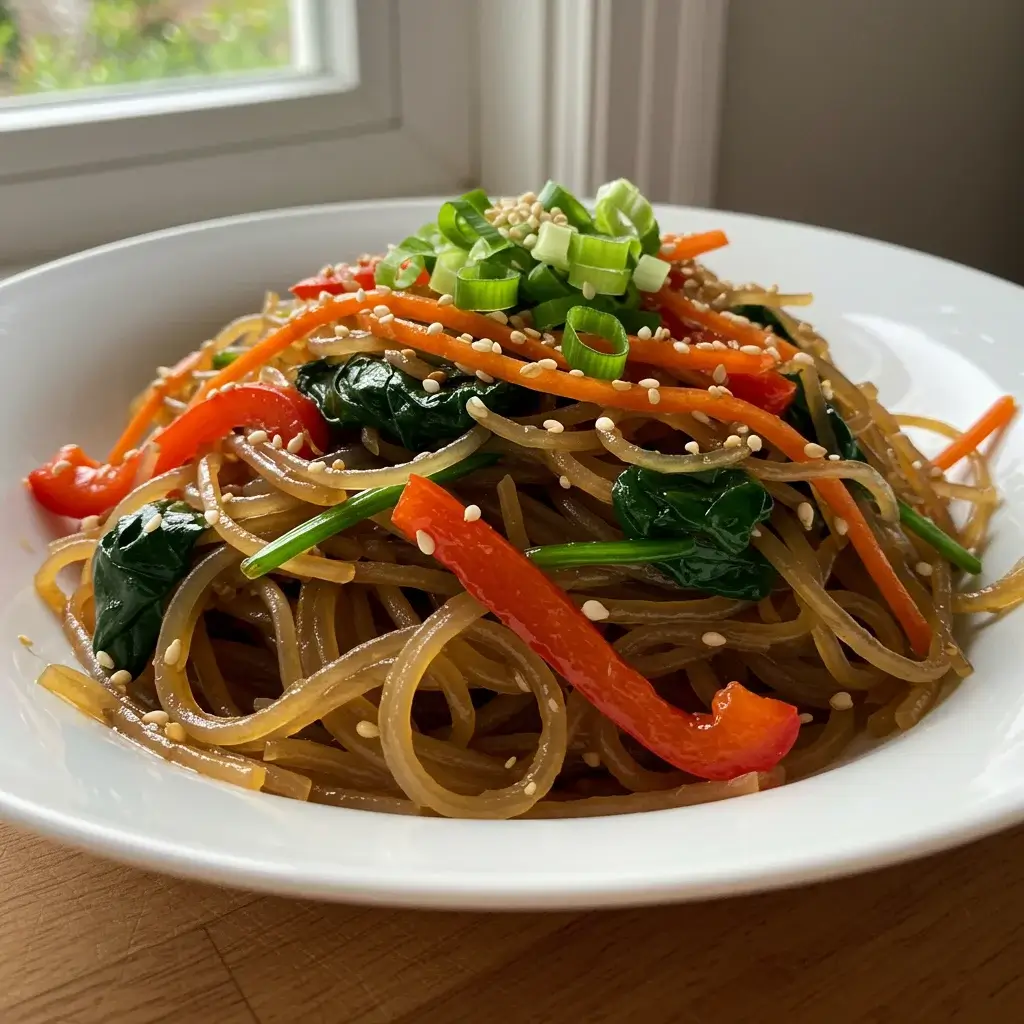
Japchae, a beloved Korean dish, is a delightful combination of sweet potato noodles, vibrant vegetables, and a savory sauce that tantalizes the taste buds. This popular Korean noodle dish is celebrated for its unique texture, vibrant colors, and delectable taste. Whether you’re a seasoned cook or a beginner, this Japchae recipe is straightforward, quick, and perfect for any occasion. In this article, we’ll guide you through a step-by-step process of making authentic Japchae, providing you with all the tips and tricks to make it perfect. Let’s dive into this culinary adventure and bring a taste of Korea to your kitchen!
Ingredients
To create this delicious Japchae, you’ll need the following ingredients:
- 100g sweet potato noodles
- 1 cup spinach
- 1 carrot, julienned
- 1 bell pepper, thinly sliced
- 3 green onions, chopped
- 2 cloves garlic, minced
- 2 tbsp soy sauce
- 1 tbsp sesame oil
- 1 tbsp vegetable oil
- 1 tsp sugar
- Toasted sesame seeds (for garnish)
These ingredients are readily available at most grocery stores. Sweet potato noodles, also known as glass noodles, are the star of this dish, providing a unique chewy texture that complements the crunchy vegetables and savory sauce.
Instructions
Creating Japchae at home is a simple process that can be done in just a few steps. Follow this numbered list to ensure each component is cooked perfectly:
- Cook the Noodles
Begin by cooking the sweet potato noodles according to the package instructions. Once cooked, drain the noodles and set them aside. This step ensures the noodles are ready to absorb the flavors of the dish. - Sauté the Garlic
Heat the vegetable oil in a pan over medium heat. Add the minced garlic and sauté until it becomes fragrant. This releases the garlic’s aroma and infuses the oil with flavor. - Add Vegetables
Introduce the julienned carrots and thinly sliced bell peppers to the pan. Cook them for about 3-4 minutes, stirring occasionally. The goal is to achieve a tender-crisp texture, where the vegetables are cooked but still maintain a slight crunch. - Cook the Spinach
Stir in the spinach and cook until it wilts. This should take just a couple of minutes. The spinach adds a beautiful green color and a subtle earthy flavor to the dish. - Combine Noodles and Sauce
Add the cooked noodles to the pan, followed by the soy sauce, sesame oil, and sugar. Mix everything well to ensure the noodles are evenly coated with the sauce. Cook for another 2-3 minutes, allowing the flavors to meld together. - Garnish and Serve
Top the dish with chopped green onions and a sprinkle of toasted sesame seeds. This adds a pop of color and a nutty aroma to the dish. Serve immediately and enjoy your homemade Japchae!
Nutrition Facts
Understanding the nutritional content of your meal is essential, especially if you’re mindful of your diet. Here are the nutrition facts per serving of this Japchae recipe:
- Calories: 180
- Protein: 4g
- Carbs: 36g
- Fat: 4g
- Fiber: 2g
This Japchae recipe is not only delicious but also a relatively healthy option, packed with vegetables and low in calories.
How to Serve
Japchae, a beloved Korean dish made from stir-fried sweet potato noodles, vegetables, and often meat or tofu, is incredibly versatile in its presentation and consumption. Here are several delightful ways to serve this dish, each enhancing its unique flavors and textures while catering to varied dining occasions and personal preferences.
As a Main Dish
Serving Japchae as a main dish is one of the most popular options, especially when you want a satisfying and hearty meal. To do this, prepare the dish warm and allow it to shine as the centerpiece of your dining experience. The sweet potato noodles, known as dangmyeon, have a chewy texture that complements the colorful medley of sautéed vegetables such as spinach, carrots, onions, and bell peppers.
To elevate the dish, consider adding protein sources such as marinated beef, chicken, or shrimp. Tofu is an excellent vegetarian alternative, providing a rich source of protein while absorbing the savory flavors of the sauce. When serving as a main course, a side of miso soup or a light salad can help balance the meal without overwhelming the palate.
As a Side Dish
Japchae also shines as a side dish, particularly in traditional Korean meals. Its subtle sweetness and umami flavor make it a perfect complement to heartier dishes. You can serve it alongside classic Korean fare such as:
- Kimchi: The spicy and tangy notes of kimchi create a delightful contrast to the sweetness of Japchae.
- Grilled Meats: Whether it’s bulgogi (marinated beef) or galbi (short ribs), the rich flavors of grilled meats are beautifully balanced by the light, savory noodles.
- Tofu Dishes: Pairing Japchae with various tofu preparations, such as pan-fried or braised tofu, enhances the protein content of your meal while providing a satisfying textural contrast.
This combination not only offers a breadth of flavors but also creates a colorful and visually appealing spread.
At Room Temperature
Another delightful way to enjoy Japchae is at room temperature. This characteristic makes it an ideal choice for gatherings such as picnics, potlucks, or family-style dinners. The flavors of Japchae deepen as it rests, allowing the ingredients to meld together, which can make it even more delicious when served later.
To prepare Japchae for serving at room temperature, cook it as usual, allowing it to cool slightly before placing it in a serving bowl. You can garnish it with fresh herbs, sliced green onions, or additional sesame seeds for a touch of freshness and crunch. This method of serving not only simplifies meal prep but also makes it easy for guests to help themselves, fostering a relaxed and communal dining atmosphere.
Enhancing Flavor
When serving Japchae, consider adding a flourish to enhance its flavor profile. A sprinkle of toasted sesame seeds adds a delightful crunch and nutty aroma, while a drizzle of high-quality sesame oil can intensify its overall taste. For an additional burst of flavor, you might garnish the dish with thinly sliced scallions or even a few sprigs of cilantro.
Moreover, you can customize the dish with a dash of gochujang (Korean chili paste) or a sprinkle of crushed red pepper flakes for those who enjoy a bit of heat. These additions can bring a new dimension to the dish, catering to diverse taste preferences and making each serving unique.
In summary, Japchae is a versatile dish that can be enjoyed in various ways, whether as a main course, a side dish, or at room temperature. By experimenting with different serving styles and garnishes, you can create a memorable dining experience that showcases the rich flavors of this traditional Korean delicacy.
Additional Tips
To elevate your Japchae experience and ensure it bursts with flavor, texture, and nutritional value, consider the following comprehensive tips:
1. Protein Addition
Incorporating protein not only enhances the flavor profile of your Japchae but also transforms it into a more balanced meal. Here are some protein options to consider:
- Beef: Use thinly sliced beef, like sirloin or ribeye. Marinate it briefly in soy sauce, garlic, and sesame oil for added depth of flavor before cooking. Stir-fry the beef until it’s just browned and tender, then mix it into the dish at the end to retain its juiciness.
- Chicken: Boneless, skinless chicken thighs or breasts work well. Cut them into bite-sized pieces and marinate similarly to beef. Cook until golden brown, ensuring it’s fully cooked before adding it to the pan with the noodles and vegetables.
- Tofu: For a vegetarian option, use firm or extra-firm tofu. Press the tofu to remove excess moisture, then cut it into cubes and pan-fry until crispy. This adds texture and absorbs the flavors of the sauce beautifully.
- Seafood: Shrimp or scallops can add a delightful twist to your Japchae. Sauté them quickly until they turn opaque and tender, and then fold them into the dish just before serving.
2. Vegetable Variations
Japchae is versatile and can be customized based on seasonal availability or personal preference. Here are some vegetable ideas to consider:
- Mushrooms: Shiitake, enoki, or oyster mushrooms add an umami flavor and a chewy texture. Sauté them until they release their moisture and become golden brown before adding them to the dish.
- Zucchini: Thinly sliced or julienned zucchini adds a refreshing crunch. Sauté it lightly to keep some of its crispness, and add it towards the end of your cooking process to prevent it from becoming too soft.
- Bell Peppers: Add vibrant colors by including sliced bell peppers—red, yellow, or green. They bring sweetness and a slight crunch that complements the other ingredients.
- Onions: Both yellow and green onions can enhance the flavor of Japchae. Use yellow onions for sweetness and depth, or sprinkle in some chopped green onions just before serving for a fresh, sharp flavor.
- Carrots & Spinach: Traditional additions like julienned carrots and blanched spinach are not only classic but also nutritious. Carrots add sweetness and color, while spinach provides a nutrient boost.
3. Noodle Texture
The texture of the sweet potato noodles (dangmyeon) is crucial for a satisfying Japchae dish. To achieve your desired chewiness:
- Cooking Time: If you enjoy a firmer, chewier noodle, reduce the cooking time slightly—about 1 to 2 minutes less than the package instructions. Always taste a strand to ensure they reach your preferred consistency.
- Rinsing: After cooking, rinse the noodles under cold water to stop the cooking process and remove excess starch, which can make the noodles gummy. This step is especially important if you’re preparing the dish in advance.
4. Flavor Adjustment
Tailoring the flavors of your Japchae to suit your taste buds is key to making it truly enjoyable. Here are ways to adjust the seasoning:
- Soy Sauce: Use low-sodium soy sauce if you’re monitoring salt intake, or try tamari for a gluten-free option. Start with a smaller amount, and gradually add more until you reach your desired level of saltiness.
- Sugar: The sweetness of the dish can be adjusted by varying the sugar content. For a sweeter Japchae, consider using brown sugar or honey for a richer flavor, and add it gradually, tasting as you go.
- Sesame Oil: A splash of toasted sesame oil at the end of cooking can enhance the dish’s aroma and flavor. This oil is potent, so a little goes a long way.
- Spice It Up: If you enjoy a bit of heat, consider adding a pinch of red pepper flakes or a drizzle of gochujang (Korean chili paste) to spice things up. Adjust according to your heat tolerance.
By implementing these additional tips, you can create a personalized and delectable Japchae that is sure to impress your family and friends. Whether you’re enhancing the nutritional value with proteins, experimenting with seasonal vegetables, perfecting noodle texture, or adjusting flavors, these suggestions will help you craft a memorable dish that celebrates the essence of this beloved Korean classic.
FAQs
1. Can I make Japchae gluten-free?
Yes, ensure that the soy sauce used is gluten-free, as sweet potato noodles are naturally gluten-free.
2. How long can I store Japchae?
Japchae can be stored in an airtight container in the refrigerator for up to 3 days. Reheat gently before serving.
3. Can Japchae be frozen?
While Japchae is best enjoyed fresh, you can freeze it. However, the texture of the noodles may change slightly upon thawing.
4. Is it necessary to use sweet potato noodles?
Sweet potato noodles are traditional, but you can substitute them with other noodles like rice noodles or vermicelli if needed.
Conclusion
Japchae is a delightful Korean dish that brings together a harmonious blend of flavors and textures. With its chewy sweet potato noodles, vibrant vegetables, and savory sauce, it’s no wonder this dish is a favorite in Korean cuisine. Whether you’re preparing it for a quick meal or a special occasion, Japchae is sure to impress with its taste and simplicity. By following this guide, you’ll be able to create a delicious and authentic Japchae at home, savoring a taste of Korea in every bite. Enjoy your meal and happy cooking!
Print
Japchae- Korean Noodles recipe
Ingredients
- 100g sweet potato noodles
- 1 cup spinach
- 1 carrot, julienned
- 1 bell pepper, thinly sliced
- 3 green onions, chopped
- 2 cloves garlic, minced
- 2 tbsp soy sauce
- 1 tbsp sesame oil
- 1 tbsp vegetable oil
- 1 tsp sugar
- Toasted sesame seeds (for garnish)
Instructions
- Cook the Noodles
Begin by cooking the sweet potato noodles according to the package instructions. Once cooked, drain the noodles and set them aside. This step ensures the noodles are ready to absorb the flavors of the dish. - Sauté the Garlic
Heat the vegetable oil in a pan over medium heat. Add the minced garlic and sauté until it becomes fragrant. This releases the garlic’s aroma and infuses the oil with flavor. - Add Vegetables
Introduce the julienned carrots and thinly sliced bell peppers to the pan. Cook them for about 3-4 minutes, stirring occasionally. The goal is to achieve a tender-crisp texture, where the vegetables are cooked but still maintain a slight crunch. - Cook the Spinach
Stir in the spinach and cook until it wilts. This should take just a couple of minutes. The spinach adds a beautiful green color and a subtle earthy flavor to the dish. - Combine Noodles and Sauce
Add the cooked noodles to the pan, followed by the soy sauce, sesame oil, and sugar. Mix everything well to ensure the noodles are evenly coated with the sauce. Cook for another 2-3 minutes, allowing the flavors to meld together. - Garnish and Serve
Top the dish with chopped green onions and a sprinkle of toasted sesame seeds. This adds a pop of color and a nutty aroma to the dish. Serve immediately and enjoy your homemade Japchae!
Nutrition
- Serving Size: one normal portion
- Calories: 180
- Fat: 4g
- Carbohydrates: 36g
- Fiber: 2g
- Protein: 4g