
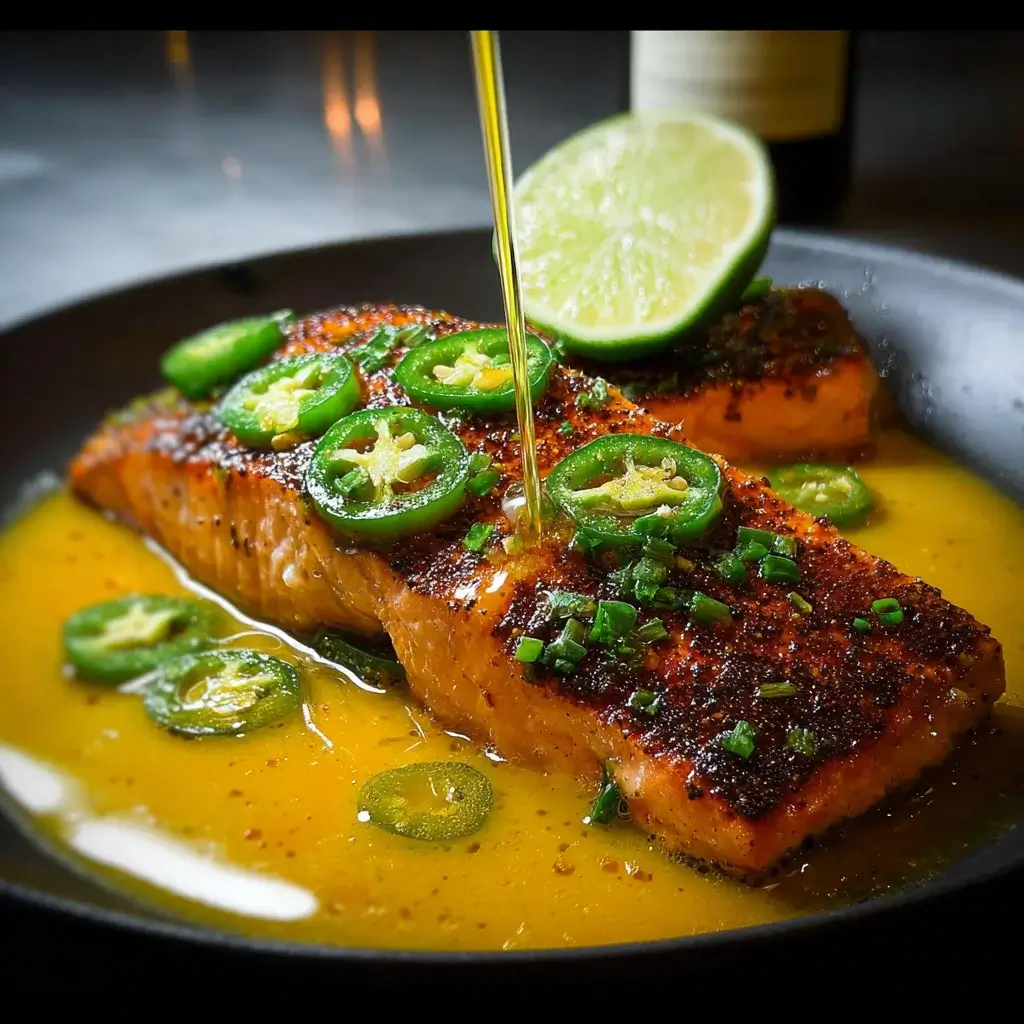

I’ve always believed that salmon is the king of weeknight dinners. It’s elegant, cooks incredibly fast, and is packed with all those good-for-you omega-3s. For a long time, however, I was stuck in a culinary rut with it. My go-to was always the same: a sprinkle of salt, a squeeze of lemon, a sprig of dill. It was fine, but it was… safe. It lacked excitement. I wanted a salmon recipe that would wake up my taste buds, something that would make a regular Tuesday feel like a special occasion. That’s when I started playing with the dynamic trio of sweet, spicy, and citrus. After a few near-misses (one was too syrupy, another just tasted like lime), I landed on this exact combination. The first time I served this Jalapeño Citrus Salmon, my family was silent for the first few bites—always a good sign. The glaze caramelizes under the broiler into this beautiful, sticky, lacquer-like coating. You get the bright sweetness from the orange, the zesty punch from the lime, and then, a moment later, a warm, blossoming heat from the jalapeño that’s exciting but not overwhelming. It was a revelation. This recipe single-handedly elevated our entire dinner rotation. It’s now the dish I make when I want to impress guests with minimal effort, and the one my kids specifically request when they want “the good salmon.” It’s proof that a healthy dinner doesn’t have to be boring; it can be vibrant, bold, and utterly delicious.
The Ultimate Jalapeño Citrus Salmon: A Perfect Balance of Sweet & Heat
This recipe is all about creating a spectacular glaze that does all the heavy lifting. The combination of fresh citrus juice, honey, garlic, and finely minced jalapeño creates a marinade that infuses the fish with flavor and then transforms into a sticky, caramelized crust during the final moments of cooking. It’s a restaurant-quality dish that is deceptively simple to make at home.
The Building Blocks of Flavor: A Deep Dive into the Ingredients
Understanding the role of each component is key to perfecting this dish and making it your own.
- 1 large salmon fillet (approx. 2 lbs), skin-on or skinless: The star of the show. A large, center-cut fillet works beautifully for serving a family. If you prefer, four to six individual 6-ounce fillets will also work perfectly; just watch the cooking time as they may cook a bit faster. Using skin-on salmon provides a fantastic safety net against overcooking, as the skin acts as an insulating layer, keeping the flesh incredibly moist.
- 2-3 Jalapeños: This is your heat source. For a moderate, crowd-pleasing heat, use two jalapeños and be sure to remove all the seeds and the white inner membranes, as this is where most of the capsaicin (the compound that creates heat) resides. For a more significant kick, leave some of the membranes in or add a third pepper. Finely mincing them ensures the heat is distributed evenly throughout the glaze.
- 1 Large Orange: You will use both the zest and the juice. The zest provides intense, aromatic citrus oil, while the juice provides a sweet, tangy liquid base for the glaze. A navel orange is a great choice.
- 2 Limes: You will also use both the zest and the juice of the limes. The lime juice provides a sharp, acidic counterpoint to the sweet orange and honey, creating a perfectly balanced flavor profile.
- ⅓ cup Honey or Maple Syrup: This is the key to creating a true “glaze.” The sugars in the honey will caramelize under the heat, especially the broiler, creating that sticky, irresistible crust. Maple syrup is a fantastic alternative that adds a slightly deeper, earthier sweetness.
- 4 Cloves Garlic, finely minced: Garlic adds a foundational savory, aromatic depth that bridges the gap between the spicy peppers and the sweet citrus. Don’t substitute with garlic powder here; fresh garlic is essential for the best flavor.
- ¼ cup Fresh Cilantro, chopped: Cilantro adds a final burst of bright, herbaceous, and slightly peppery flavor that cuts through the richness of the salmon and the sweetness of the glaze. It’s the perfect fresh finish.
- 2 Tablespoons Olive Oil: Helps to bind the marinade together, adds a touch of richness, and promotes even browning.
- 1 Teaspoon Ground Cumin: Adds a warm, earthy note that complements the smokiness of the paprika and the heat of the jalapeño.
- 1 Teaspoon Smoked Paprika: This adds a beautiful, subtle smokiness and a rich, deep red color to the glaze. It’s a game-changer for adding complexity.
- 1 Teaspoon Sea Salt: To enhance all the other flavors.
- ½ Teaspoon Black Pepper: For a touch of mild, woody spice.
From Kitchen to Table: Step-by-Step Instructions
Follow these detailed instructions for perfectly cooked, beautifully glazed salmon every time.
Step 1: Prepare the Salmon
Remove the salmon from its packaging and pat it completely dry with paper towels. This step is crucial. A dry surface allows the marinade to adhere better and helps the salmon sear and glaze properly rather than steam. Place the salmon fillet, skin-side down (if using), on a large baking sheet lined with aluminum foil or parchment paper for easy cleanup.
Step 2: Create the Jalapeño Citrus Glaze
In a medium-sized bowl, combine all the glaze ingredients: the finely minced jalapeños, the zest and juice of the orange and limes, the honey (or maple syrup), minced garlic, chopped cilantro, olive oil, cumin, smoked paprika, salt, and black pepper. Whisk everything together until it is well-combined and the salt has dissolved.
Step 3: Marinate the Salmon
Pour about two-thirds of the prepared glaze mixture evenly over the top of the salmon fillet. Use the back of a spoon or a pastry brush to spread it out, ensuring the entire surface is coated. Reserve the remaining one-third of the glaze in the bowl for later. Let the salmon marinate at room temperature for 20-30 minutes. Do not marinate for longer than 30 minutes, as the acid from the citrus juice can begin to “cook” the outside of the fish (like in ceviche), which can alter its texture.
Step 4: Bake the Salmon
Preheat your oven to 400°F (200°C). Place the baking sheet with the marinated salmon into the preheated oven. Bake for 12-15 minutes. The cooking time will depend on the thickness of your fillet. The salmon is done when it is mostly opaque and flakes easily when gently prodded with a fork at its thickest part. For perfect results, use an instant-read thermometer; aim for an internal temperature of 130-135°F (54-57°C) for a moist, medium finish, or up to 145°F (63°C) for well-done.
Step 5: The Final Glaze and Broil (The Secret to a Perfect Crust)
Remove the salmon from the oven. Turn your oven’s broiler on to high. Brush the reserved one-third of the glaze mixture all over the top of the cooked salmon. Place the baking sheet back in the oven on a rack positioned about 6-8 inches from the broiler element. Broil for 1-3 minutes. You must watch it like a hawk during this step. The honey in the glaze can go from perfectly caramelized to burnt in a matter of seconds. You’re looking for the glaze to bubble and develop some beautiful dark, caramelized spots.
Step 6: Rest and Serve
Carefully remove the salmon from the oven. Let it rest on the baking sheet for 5 minutes. This allows the juices to redistribute throughout the fillet, ensuring a moist final product. Garnish with a little extra fresh cilantro, if desired. Serve immediately.
Nutrition Facts
This information is an estimate based on a 2 lb fillet and can vary based on the exact size and type of salmon used.
- Servings: This recipe serves 4-6 people.
- Serving Size: Approximately a 6-ounce portion.
- Calories per serving: Approximately 450-550 kcal
This dish is a powerhouse of nutrition, rich in high-quality protein, heart-healthy omega-3 fatty acids, and vitamins.
Preparation and Cooking Time
- Prep Time: 15 minutes
- Marinating Time: 20-30 minutes
- Cook Time: 15-18 minutes
- Total Time: Approximately 50-60 minutes
How to Serve Your Jalapeño Citrus Salmon
This versatile salmon pairs beautifully with a wide variety of sides, allowing you to tailor the meal to any occasion, from a light, healthy lunch to a hearty dinner.
Healthy and Light Pairings
- Cilantro-Lime Rice or Quinoa: The bright, zesty flavors of the grain complement the salmon perfectly.
- Roasted Vegetables: A medley of roasted asparagus, broccoli, or bell peppers adds color and nutrients.
- Simple Arugula Salad: A peppery arugula salad with a light vinaigrette provides a fresh, clean contrast to the rich, glazed salmon.
- Avocado Salad: A simple salad of diced avocado, red onion, corn, and a squeeze of lime juice.
Hearty and Comforting Sides
- Coconut Rice: The creamy, subtle sweetness of coconut-infused rice is a heavenly match for the spicy-sweet glaze.
- Black Beans: A simple side of seasoned black beans makes the meal more substantial.
- Roasted Sweet Potato Wedges: The natural sweetness of the potatoes harmonizes with the honey in the glaze.
- Warm Corn Tortillas: For a fun, interactive meal, serve the flaked salmon with warm tortillas, a simple cabbage slaw, and a dollop of sour cream or avocado crema for build-your-own salmon tacos.
Garnishes and Toppings
- A dollop of cool sour cream or plain Greek yogurt.
- Extra lime wedges for squeezing.
- Thinly sliced red onions or quick-pickled onions.
- Crumbled cotija or feta cheese.
5 Additional Tips for Salmon Perfection
- Don’t Overcook the Salmon: This is the number one rule of cooking fish. An overcooked piece of salmon is dry and chalky. It’s always better to err on the side of slightly undercooked when you pull it from the oven, as it will continue to cook from residual heat as it rests (this is called carryover cooking). An instant-read thermometer is your best friend for guaranteed perfect results every time.
- Get Crispy Skin (If You Want It): If you are a fan of crispy salmon skin, there’s an easy trick. After patting the fillet dry, place it skin-side down in a very hot, lightly oiled, oven-safe skillet (like cast iron) for 2-3 minutes before applying the glaze and transferring the whole skillet to the oven. This initial high-heat sear will render some of the fat and give you that delicious, crispy texture.
- Control the Spice Level Intelligently: The heat of jalapeños can vary significantly from pepper to pepper. Always taste a tiny piece of your jalapeño before deciding how much to use. To guarantee mild heat, meticulously remove every seed and all of the white, rib-like membrane. For more fire, leave some of the membrane intact.
- Make it on the Grill: This recipe is fantastic for grilling! To grill the salmon, preheat your grill to medium-high heat. Place the marinated salmon on a large piece of heavy-duty foil that has been lightly oiled. Crimp the edges of the foil up to create a shallow “boat” to hold the glaze. Grill for 10-15 minutes with the lid closed, until cooked through. You can skip the broiling step, as the direct heat of the grill will provide some nice char and caramelization.
- Don’t Waste the Leftovers: Leftover glazed salmon is a fantastic ingredient. Flake it and use it to top a big salad for a delicious lunch. Mix it with a little mayo and Greek yogurt to make a spicy salmon salad for sandwiches or crackers. Or, gently reheat it and fold it into scrambled eggs or an omelet for a luxurious, high-protein breakfast.
Frequently Asked Questions (FAQ)
Q1: Can I use frozen salmon for this recipe?
A: Absolutely. Frozen salmon is a convenient and high-quality option. The key is to thaw it properly. The best method is to let it thaw overnight in the refrigerator. Before using, ensure it is completely thawed, and then pat it extremely dry with paper towels to remove any excess moisture, which is critical for getting a good glaze.
Q2: I don’t like cilantro, it tastes like soap to me! What can I use instead?
A: You are not alone! For about 10% of the population, cilantro has a soapy taste due to a genetic trait. A perfect substitute in this recipe is fresh flat-leaf (Italian) parsley. It will provide a similar bright, fresh, and herbaceous quality without the polarizing flavor. You could also use fresh chives or even a small amount of fresh mint.
Q3: My glaze is runny and didn’t get thick and caramelized. What did I do wrong?
A: This usually happens for one of two reasons. First, you may have skipped the final, crucial broiling step. The intense, direct heat from the broiler is what really caramelizes the sugars in the honey and thickens the glaze. Second, your broiler might not have been hot enough, or the salmon was too far away from it. If you don’t have a broiler or are nervous about using it, you can pour the marinade into a small saucepan and simmer it over medium heat for 5-7 minutes until it has thickened into a syrup, then brush it on the salmon after it comes out of the oven.
Q4: Can I use other types of fish with this glaze?
A: Yes, this glaze is very versatile. It would be delicious on other firm, oily fish like halibut, swordfish, or mahi-mahi. It’s also fantastic on chicken breasts or thighs, and even pork tenderloin. You will need to adjust the cooking time and temperature according to the protein you are using.
Q5: Is it possible to prepare this dish ahead of time?
A: You can do some prep ahead, but the salmon should be cooked just before serving for the best texture. You can prepare the entire glaze mixture up to 2 days in advance and store it in an airtight container in the refrigerator. This turns the recipe into a super-fast, 20-minute meal on a busy night. Just remember not to marinate the fish for more than 30 minutes right before you plan to cook it.

Jalapeño Citrus Salmon recipe
Ingredients
-
1 large salmon fillet (approx. 2 lbs), skin-on or skinless: The star of the show. A large, center-cut fillet works beautifully for serving a family. If you prefer, four to six individual 6-ounce fillets will also work perfectly; just watch the cooking time as they may cook a bit faster. Using skin-on salmon provides a fantastic safety net against overcooking, as the skin acts as an insulating layer, keeping the flesh incredibly moist.
-
2-3 Jalapeños: This is your heat source. For a moderate, crowd-pleasing heat, use two jalapeños and be sure to remove all the seeds and the white inner membranes, as this is where most of the capsaicin (the compound that creates heat) resides. For a more significant kick, leave some of the membranes in or add a third pepper. Finely mincing them ensures the heat is distributed evenly throughout the glaze.
-
1 Large Orange: You will use both the zest and the juice. The zest provides intense, aromatic citrus oil, while the juice provides a sweet, tangy liquid base for the glaze. A navel orange is a great choice.
-
2 Limes: You will also use both the zest and the juice of the limes. The lime juice provides a sharp, acidic counterpoint to the sweet orange and honey, creating a perfectly balanced flavor profile.
-
⅓ cup Honey or Maple Syrup: This is the key to creating a true “glaze.” The sugars in the honey will caramelize under the heat, especially the broiler, creating that sticky, irresistible crust. Maple syrup is a fantastic alternative that adds a slightly deeper, earthier sweetness.
-
4 Cloves Garlic, finely minced: Garlic adds a foundational savory, aromatic depth that bridges the gap between the spicy peppers and the sweet citrus. Don’t substitute with garlic powder here; fresh garlic is essential for the best flavor.
-
¼ cup Fresh Cilantro, chopped: Cilantro adds a final burst of bright, herbaceous, and slightly peppery flavor that cuts through the richness of the salmon and the sweetness of the glaze. It’s the perfect fresh finish.
-
2 Tablespoons Olive Oil: Helps to bind the marinade together, adds a touch of richness, and promotes even browning.
-
1 Teaspoon Ground Cumin: Adds a warm, earthy note that complements the smokiness of the paprika and the heat of the jalapeño.
-
1 Teaspoon Smoked Paprika: This adds a beautiful, subtle smokiness and a rich, deep red color to the glaze. It’s a game-changer for adding complexity.
-
1 Teaspoon Sea Salt: To enhance all the other flavors.
-
½ Teaspoon Black Pepper: For a touch of mild, woody spice.
Instructions
Step 1: Prepare the Salmon
Remove the salmon from its packaging and pat it completely dry with paper towels. This step is crucial. A dry surface allows the marinade to adhere better and helps the salmon sear and glaze properly rather than steam. Place the salmon fillet, skin-side down (if using), on a large baking sheet lined with aluminum foil or parchment paper for easy cleanup.
Step 2: Create the Jalapeño Citrus Glaze
In a medium-sized bowl, combine all the glaze ingredients: the finely minced jalapeños, the zest and juice of the orange and limes, the honey (or maple syrup), minced garlic, chopped cilantro, olive oil, cumin, smoked paprika, salt, and black pepper. Whisk everything together until it is well-combined and the salt has dissolved.
Step 3: Marinate the Salmon
Pour about two-thirds of the prepared glaze mixture evenly over the top of the salmon fillet. Use the back of a spoon or a pastry brush to spread it out, ensuring the entire surface is coated. Reserve the remaining one-third of the glaze in the bowl for later. Let the salmon marinate at room temperature for 20-30 minutes. Do not marinate for longer than 30 minutes, as the acid from the citrus juice can begin to “cook” the outside of the fish (like in ceviche), which can alter its texture.
Step 4: Bake the Salmon
Preheat your oven to 400°F (200°C). Place the baking sheet with the marinated salmon into the preheated oven. Bake for 12-15 minutes. The cooking time will depend on the thickness of your fillet. The salmon is done when it is mostly opaque and flakes easily when gently prodded with a fork at its thickest part. For perfect results, use an instant-read thermometer; aim for an internal temperature of 130-135°F (54-57°C) for a moist, medium finish, or up to 145°F (63°C) for well-done.
Step 5: The Final Glaze and Broil (The Secret to a Perfect Crust)
Remove the salmon from the oven. Turn your oven’s broiler on to high. Brush the reserved one-third of the glaze mixture all over the top of the cooked salmon. Place the baking sheet back in the oven on a rack positioned about 6-8 inches from the broiler element. Broil for 1-3 minutes. You must watch it like a hawk during this step. The honey in the glaze can go from perfectly caramelized to burnt in a matter of seconds. You’re looking for the glaze to bubble and develop some beautiful dark, caramelized spots.
Step 6: Rest and Serve
Carefully remove the salmon from the oven. Let it rest on the baking sheet for 5 minutes. This allows the juices to redistribute throughout the fillet, ensuring a moist final product. Garnish with a little extra fresh cilantro, if desired. Serve immediately.
Nutrition
- Serving Size: one normal portion
- Calories: 450-550 kcal