

There’s something truly comforting about the warm, earthy aroma of chestnuts roasting alongside fragrant sage—that cozy scent instantly transports me to holiday gatherings filled with laughter and good food. When I first tried making Chestnut and Sage Stuffing at home, I was amazed at how simple ingredients transformed into something so rich and flavorful. This isn’t your average stuffing; it’s a perfect balance of savory herbs and nutty depth that complements everything from roasted turkey to a hearty winter vegetable roast. Whether you’re craving a twist on a classic side or looking to impress at your next dinner party, this recipe is as versatile as it is delicious. Let me show you how easy it is to create that irresistible, soul-warming dish that will have everyone asking for seconds.
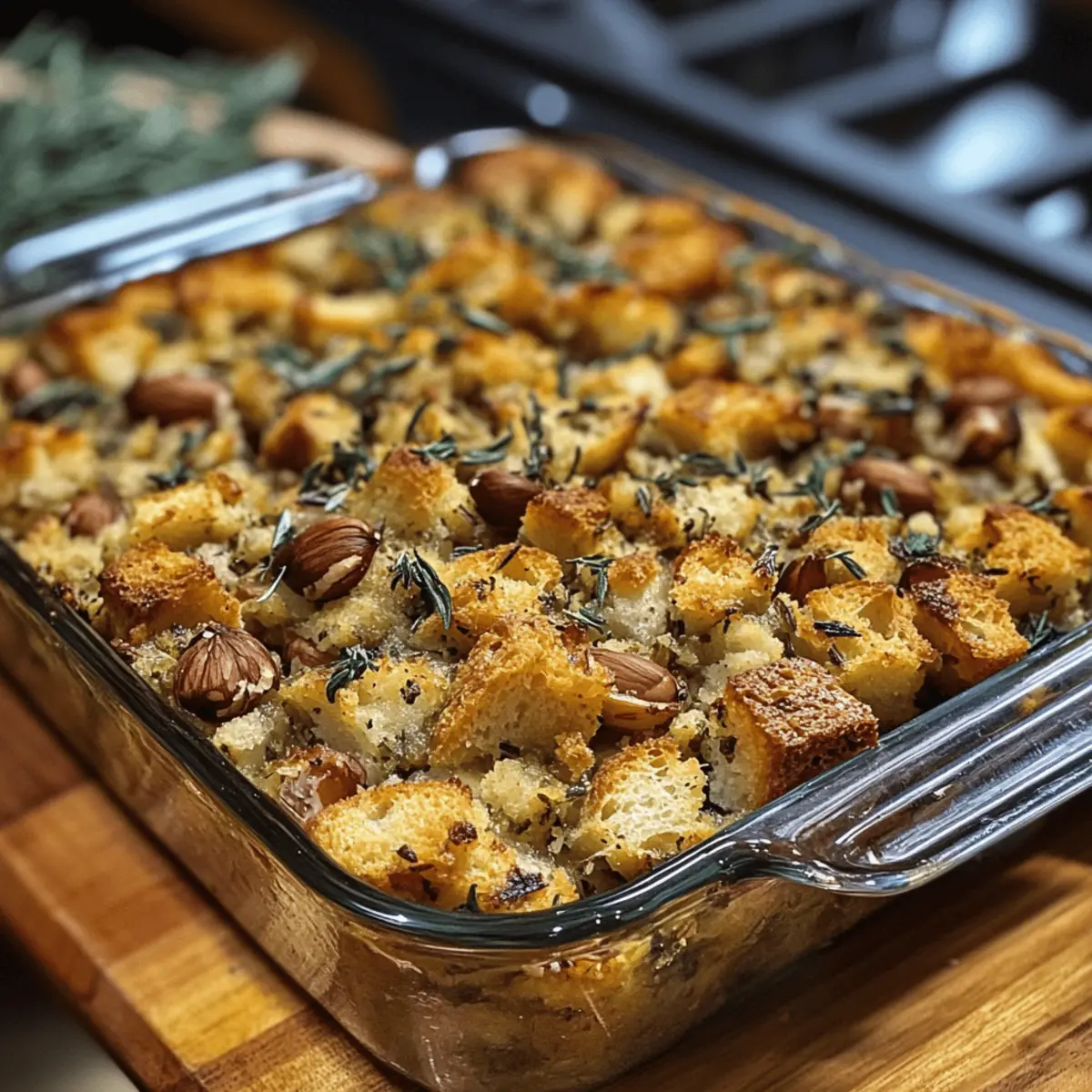
Why choose Chestnut and Sage Stuffing?
Unforgettable Flavor: The nutty sweetness of chestnuts pairs perfectly with the earthy warmth of sage, creating a stuffing that’s anything but ordinary. Simple preparation: With straightforward steps, even beginners can confidently craft this cozy dish. Versatile pairing: Whether alongside turkey or a vegetarian main, it elevates any meal. Comfort food at its finest: It brings that heartwarming, festive vibe to every bite. Crowd-pleaser: Expect compliments and requests for seconds at every gathering.
Chestnut and Sage Stuffing Ingredients
For the Chestnut Base
- Cooked Chestnuts – peeled and chopped, they bring that signature nutty sweetness essential to Chestnut and Sage Stuffing.
- Butter – adds rich creaminess and helps toast the chestnuts to golden perfection.
For the Herb and Vegetable Mix
- Fresh Sage Leaves – finely chopped to release their aromatic, earthy flavor that defines this stuffing.
- Onion – diced small for a subtle sweetness that balances the chestnuts beautifully.
- Celery – chopped for crunchy texture and classic stuffing freshness.
- Garlic – minced, to add a gentle depth of savory warmth.
For the Bread
- Stale Bread Cubes – day-old bread works best to soak up all the flavors without turning mushy.
For Seasoning and Moisture
- Vegetable or Chicken Broth – poured in just enough to moisten the stuffing, keeping every bite tender.
- Salt and Black Pepper – to taste, enhancing all the wonderful flavors.
Optional Enhancements
- Fresh Thyme – a lovely complement to sage for an herbal duo.
- Chopped Parsley – for a fresh pop of color and lightness before serving.
How to Make Chestnut and Sage Stuffing
- Preheat: Set your oven to 350°F (175°C) and butter a 9×13-inch baking dish, ensuring even heat distribution for golden-brown edges.
- Toast: Melt butter in a skillet over medium heat, then add chestnuts and cook until lightly golden (about 3 minutes), stirring to coat each piece.
- Sauté: Add diced onion, celery, minced garlic, and chopped sage to the skillet; cook 5 minutes until vegetables are soft and fragrant.
- Mix: In a large bowl, toss stale bread cubes with the chestnut–vegetable mixture, fresh thyme (if using), chopped parsley, salt, and pepper.
- Add: Pour just enough warm broth (about 1½ cups) to moisten the bread lightly, stirring gently until the stuffing holds together without being soggy.
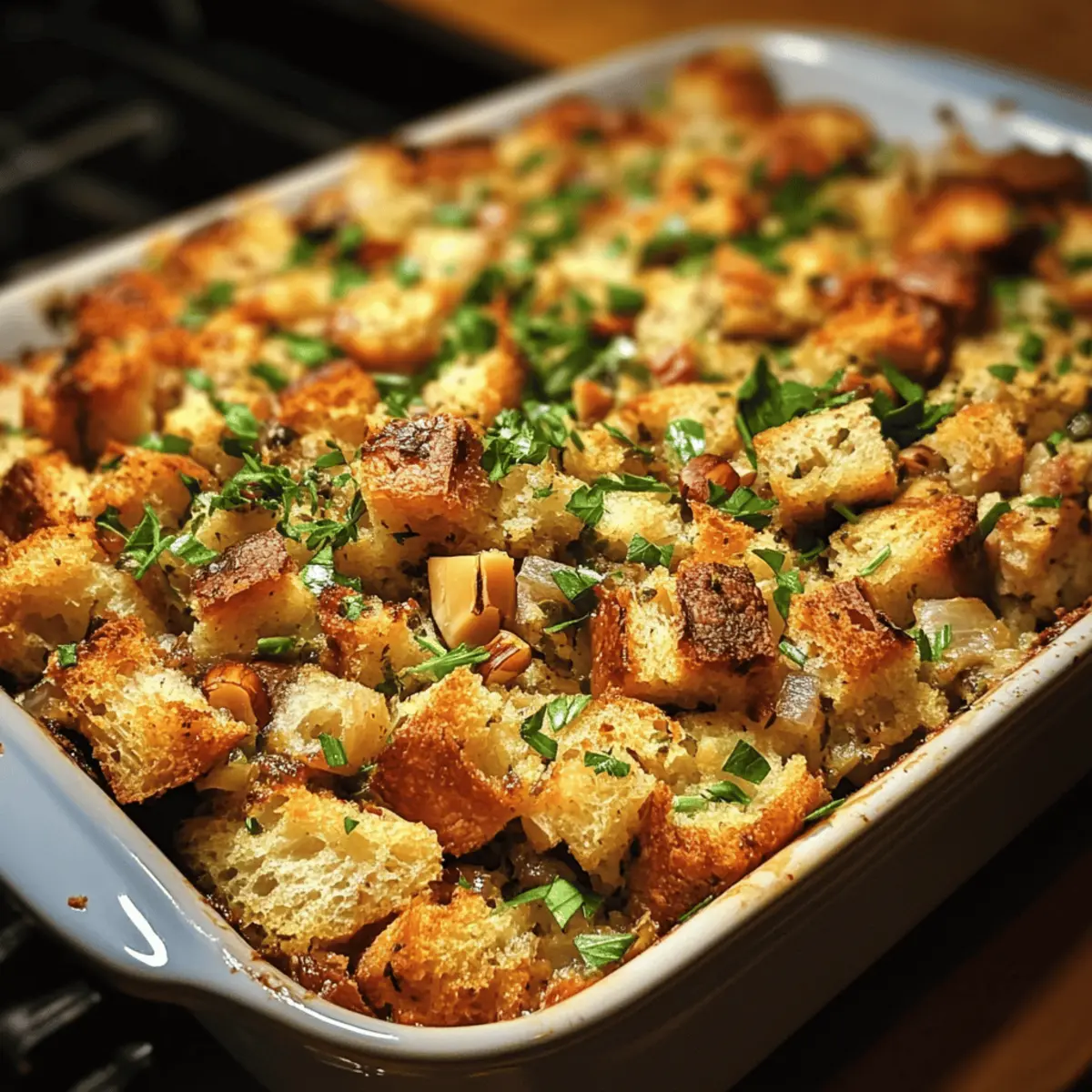
- Bake: Transfer mixture into the prepared dish, press down gently, and bake at 350°F for 25–30 minutes until the top is golden brown and crisp.
Optional: Sprinkle extra chopped parsley before serving for a fresh, vibrant finish.
Exact quantities are listed in the recipe card below.
How to Store and Freeze Chestnut and Sage Stuffing
Fridge: Store your leftover Chestnut and Sage Stuffing in an airtight container for up to 3 days, keeping it fresh and ready for reheating.
Freezer: For longer storage, freeze the stuffing in a well-sealed freezer bag or container for up to 3 months. Thaw in the fridge before reheating.
Reheating: To reheat, add a splash of broth to the stuffing, cover, and warm in the oven at 350°F (175°C) for about 20 minutes until heated through.
Room Temperature: Avoid leaving cooked stuffing at room temperature for more than 2 hours to prevent bacterial growth.
Expert Tips for Chestnut and Sage Stuffing
- Use Day-Old Bread: Stale bread soaks up broth perfectly without turning mushy, giving your stuffing the ideal texture and moisture balance.
- Toast Chestnuts Gently: Cook chestnuts over medium heat just until golden to bring out their nutty flavor without burning or drying them.
- Don’t Overwet: Add broth gradually to keep the stuffing moist but avoid sogginess—aim for a lightly clinging mixture that bakes into fluffy bites.
- Fresh Sage Matters: Use fresh sage leaves finely chopped for the best aroma; dried sage can overpower and taste bitter in this delicate stuffing.
- Even Baking: Press the stuffing evenly in the dish to ensure consistent browning and a deliciously crisp top every time.
What to Serve with Chestnut and Sage Stuffing?
Creating the perfect meal is all about balance and harmony, and this delightful stuffing is a wonderful centerpiece to build around.
- Roasted Turkey: Nothing says holiday like a juicy turkey; the meat’s savory goodness pairs beautifully with the stuffing’s nutty flavors.
- Maple-Glazed Carrots: Sweet with a hint of crunch, these carrots bring a bright contrast to the rich stuffing while enhancing the cozy vibes.
- Cranberry Sauce: The tangy sweetness of cranberry sauce cuts through the richness, creating a refreshing balance on your plate.
- Creamy Mashed Potatoes: Silky and buttery, these potatoes lend a comforting texture that complements the stuffing’s hearty qualities, making each bite a delight.
- Savory Green Bean Almondine: With a crisp bite and nutty flavor from toasted almonds, this dish adds freshness and crunch, elevating your meal’s overall appeal.
- Homemade Gravy: Drizzling gravy over both the turkey and stuffing creates a luscious, flavorful experience; it’s all about that umami joy!
- Pumpkin Pie: Finish off your meal with classic pumpkin pie for a sweet, spiced contrast that embraces the seasonal flavors we all crave.
- Spiced Apple Cider: A warm glass of spiced apple cider rounds out the meal with its sweet and spicy notes, perfect for cozy gatherings.
Make Ahead Options
These Chestnut and Sage Stuffing preparations are a lifesaver for busy cooks looking to streamline holiday meals! You can chop the vegetables (onion, celery, garlic) and herbs (sage, thyme) up to 3 days in advance, refrigerating them in an airtight container to lock in freshness. You can also mix the stale bread cubes and chestnuts ahead of time, storing them separately until you’re ready to combine. When you’re ready to serve, simply blend everything, add warmed broth, and bake for 25-30 minutes until golden. This way, your stuffing will taste just as delicious as if made fresh, and it makes assembling your holiday feast a breeze!
Chestnut and Sage Stuffing Variations
Get ready to elevate your Chestnut and Sage Stuffing with these fun twists that are sure to please any palate!
- Gluten-Free: Substitute stale bread with gluten-free bread cubes for a deliciously inclusive dish that everyone can enjoy.
- Nutty Touch: Add chopped walnuts or pecans to the mix for extra crunch and a toasted flavor that beautifully complements the chestnuts.
- Veggie Delight: Mix in sautéed mushrooms or roasted carrots for a delightful burst of color and earthy flavor. These additions can transform your stuffing into a comforting vegetable medley.
- Cranberry Sweetness: Toss in dried cranberries for a sweet and tangy surprise, balancing the savory components with vibrant flavor.
- Apple Twist: Incorporate diced apples for a hint of sweetness and a crunchy texture that pairs wonderfully with sage. The apples will soften a bit while baking, offering a delightful contrast.
- Herb Infusion: Experiment with fresh rosemary or a hint of dill for an aromatic boost, adding layered complexity to the dish.
- Spice it Up: Add a pinch of red pepper flakes for a gentle kick, igniting the flavors and bringing warmth to every bite.
- Cheesy Finish: Sprinkle shredded Gruyère or fontina cheese on top before baking for a gooey, melty crust that takes your stuffing to new heights.
Feel free to mix and match these ideas, adapting the dish to suit your family’s tastes while keeping the heart of this warming recipe alive!
Chestnut and Sage Stuffing Recipe FAQs
How do I know if my chestnuts are fresh and good to use?
Fresh chestnuts should feel heavy for their size with a glossy, smooth shell. Avoid any with dark spots all over or a moldy smell. If peeled chestnuts are soft or shriveled, they’ve probably gone stale and won’t give that rich, sweet flavor.
What’s the best way to store leftover Chestnut and Sage Stuffing?
Absolutely keep leftovers in an airtight container in the fridge, where they stay fresh for 3 to 4 days. Make sure to cool the stuffing completely before refrigerating to avoid condensation that can make it soggy.
Can I freeze Chestnut and Sage Stuffing, and how do I do it properly?
Very much so! Freeze your stuffing in a freezer-safe container or zip-top bag. Here’s a step-by-step: First, cool it completely after baking. Then, portion it or keep it whole, seal tightly to prevent freezer burn, and label with the date. It keeps beautifully up to 3 months. When ready to enjoy, thaw overnight in the fridge and reheat in a 350°F oven with a splash of broth for about 20 minutes until warmed through.
What if my stuffing turns out soggy—how can I fix that?
This happens when there’s too much broth or the bread is too fresh and absorbs too much moisture. Next time, use stale bread and add broth gradually, just enough to lightly moisten. If soggy now, try baking it uncovered for 10–15 extra minutes to help evaporate excess moisture and crisp up the top.
Is Chestnut and Sage Stuffing safe for pets if I want to share?
I don’t recommend feeding this stuffing to pets since it contains onions and garlic, which can be toxic to dogs and cats. Also, herbs like sage might upset their tummy. Always best to keep this delicious dish just for us humans to enjoy!
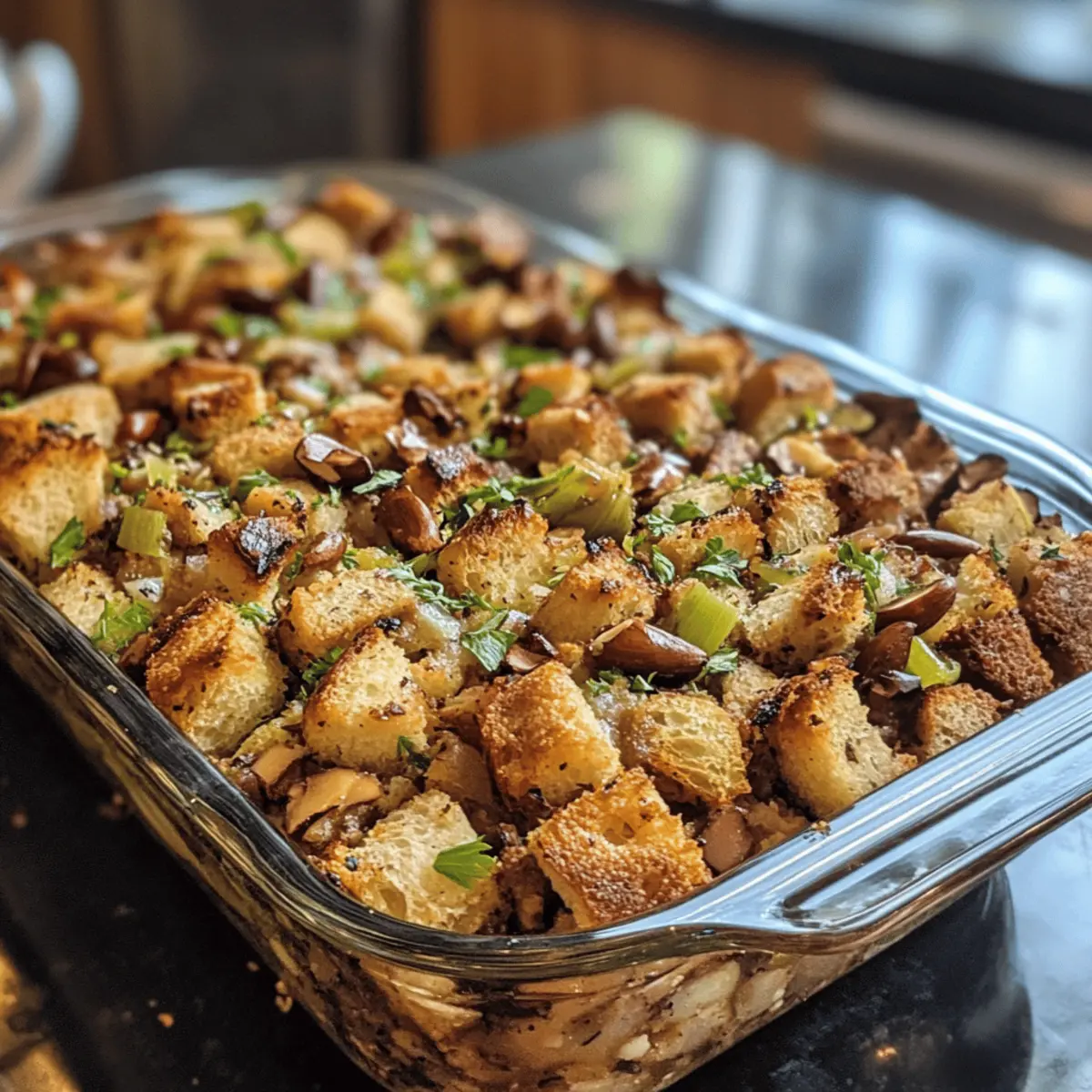
Irresistible Chestnut and Sage Stuffing Recipe for Cozy Feasts
Ingredients
Equipment
Method
- Preheat your oven to 350°F (175°C) and butter a 9×13-inch baking dish.
- Melt butter in a skillet over medium heat, then add chestnuts and cook until lightly golden (about 3 minutes).
- Add diced onion, celery, minced garlic, and chopped sage; cook for 5 minutes until soft.
- In a large bowl, toss stale bread cubes with the chestnut-vegetable mixture, thyme, parsley, salt, and pepper.
- Pour warm broth to moisten the bread lightly, stirring gently until it holds together without being soggy.
- Transfer mixture into the prepared dish, press down gently, and bake for 25–30 minutes until golden brown.