
For years, my relationship with hummus was strictly transactional. I’d grab a plastic tub from the refrigerated section of the grocery store, pick up a bag of pita chips from the snack aisle, and call it a day. It was fine. It was a decent snack. But it never felt special. It wasn’t until I was at a small, family-run Mediterranean restaurant that I understood what I was missing. The hummus they served wasn’t the pasty, gritty dip I was used to; it was ethereal. It was unbelievably smooth, almost like a whipped savory mousse, with a deep, nutty flavor from tahini and a bright, zesty kick from fresh lemon. It was served warm, with a generous pool of golden olive oil and a sprinkle of paprika, alongside pita bread that was puffy, warm, and straight from the oven. It was a revelation. I went home that night on a mission: I was going to recreate that experience. My first few attempts were failures, resulting in the same grainy texture I was trying to escape. Then I discovered the secret—the one simple, slightly tedious, but absolutely game-changing step that separates good hummus from transcendent hummus. The first time I served my perfected version to my family, alongside a batch of still-warm, crispy homemade pita chips, the reaction was immediate. The bowl was scraped clean, and my kids, who were previously “hummus-indifferent,” were asking when I could make it again. That’s the power of this recipe. It transforms a simple dip into a culinary centerpiece, a dish that brings people together and proves, once and for all, that homemade is in a league of its own.
The Quest for Creamy Hummus: Why This Recipe is The One
Before we get to the ingredients and instructions, let’s talk about what makes this hummus recipe different from the thousands of others you can find online. Achieving that signature, ultra-creamy, restaurant-quality texture isn’t about expensive equipment or exotic ingredients; it’s about technique. This recipe is built around a few key principles that guarantee a silky-smooth result every single time.
The Non-Negotiable Step: Peeling the Chickpeas
This is it. This is the secret. Every canned chickpea has a thin, translucent skin. While it’s perfectly edible, this skin is the primary culprit behind grainy hummus. Taking the time to remove these skins will have the single biggest impact on the final texture of your dip. It might seem tedious, but the process is surprisingly simple and almost meditative. The reward—the smoothest hummus you have ever made in your own kitchen—is more than worth the extra 10-15 minutes of effort.
The Power of Quality Tahini
Hummus is not just chickpea paste; it is a beautiful emulsion where tahini (sesame seed paste) is an equal, if not more important, star. The quality of your tahini will define the flavor of your hummus. Look for a brand that is smooth, runny, and not overly bitter. Good tahini should taste nutty and rich, not chalky or astringent. Brands from Lebanon, Palestine, or Israel are often excellent choices. Before using, stir it very well, as the oil tends to separate.
The Magic of Emulsification: Tahini, Lemon, and Ice Water
This recipe employs a classic technique where you whip the tahini and fresh lemon juice together first, before adding the chickpeas. This step begins to create a thick, creamy base. Then, while the food processor is running, we stream in ice-cold water. The cold water reacts with the tahini, helping to create a light, airy, almost whipped texture, making the final product incredibly fluffy and smooth.
The Superiority of Homemade Pita Chips
Just as homemade hummus surpasses store-bought, homemade pita chips are on another level entirely. They are incredibly easy to make, allowing you to control the thickness, the crispiness, and the seasoning. Baking them in the oven with a light coating of olive oil results in chips that are sturdy enough for a substantial scoop of hummus but wonderfully light and crispy, without the greasy heaviness of their deep-fried, bagged counterparts. They are the perfect vessel for your perfect hummus.
The Ultimate Creamy Hummus Recipe
This recipe will yield a generous bowl of hummus, perfect for a party appetizer or for snacking on throughout the week.
Ingredients
- 1 (15-ounce / 425g) can of chickpeas (garbanzo beans): Choose a quality brand. You’ll reserve the liquid from the can (aquafaba).
- ½ cup good-quality tahini, well-stirred
- ¼ cup freshly squeezed lemon juice (from 1-2 large lemons, do not use bottled!)
- 1 large clove of garlic, peeled and roughly chopped (use 2 cloves if you love a strong garlic flavor)
- ½ teaspoon kosher salt, plus more to taste
- ¼ teaspoon ground cumin
- 3 to 5 tablespoons of ice-cold water
- 2 tablespoons of extra virgin olive oil, for blending
- For Garnish: Extra virgin olive oil, smoked paprika or sumac, fresh parsley (chopped)
Step-by-Step Instructions for Creamy Hummus
Follow these steps with care to achieve a flawless, velvety smooth hummus.
Step 1: The Secret to Smoothness – Peel the Chickpeas
Drain the chickpeas, making sure to reserve the liquid from the can (this liquid is called aquafaba) in a separate bowl. Rinse the chickpeas under cool water.
Now for the crucial step. Place the rinsed chickpeas in a large bowl and cover them with warm water. Gently rub the chickpeas between your hands. You’ll see the thin, papery skins start to float to the surface. Skim these skins off and discard them. Alternatively, you can pinch each chickpea individually, and the skin will slip right off. This will take about 10-15 minutes and is the single most important step for a creamy texture.
Step 2: Prepare the Base
In the bowl of a food processor, combine the well-stirred tahini and the freshly squeezed lemon juice. Process for 1 minute. Scrape down the sides and bottom of the bowl, then process for another minute. The mixture will thicken and become lighter in color. This “whipping” step is key for a fluffy texture.
Step 3: Add the Flavor
Add the peeled chickpeas, chopped garlic, kosher salt, and ground cumin to the tahini mixture in the food processor. Process for a full 2-3 minutes, stopping to scrape down the sides of the bowl a couple of times. The mixture will be very thick and likely still a bit grainy at this point.
Step 4: Stream in the Liquids for Silkiness
With the food processor running, slowly stream in the 2 tablespoons of extra virgin olive oil.
Next, while the machine is still running, stream in the ice-cold water, one tablespoon at a time. Watch as the hummus transforms. It will become lighter, smoother, and creamier. Add water until you reach your desired consistency. For a super-smooth dip, you might need up to 5 tablespoons. Let the processor run for another minute to get it as airy as possible.
Step 5: Taste and Adjust
Stop the processor and taste the hummus. This is your chance to perfect it. Does it need more salt? A little more lemon juice for brightness? Now is the time to add it. Blend for another 30 seconds to incorporate any additions.
Step 6: Plate and Garnish
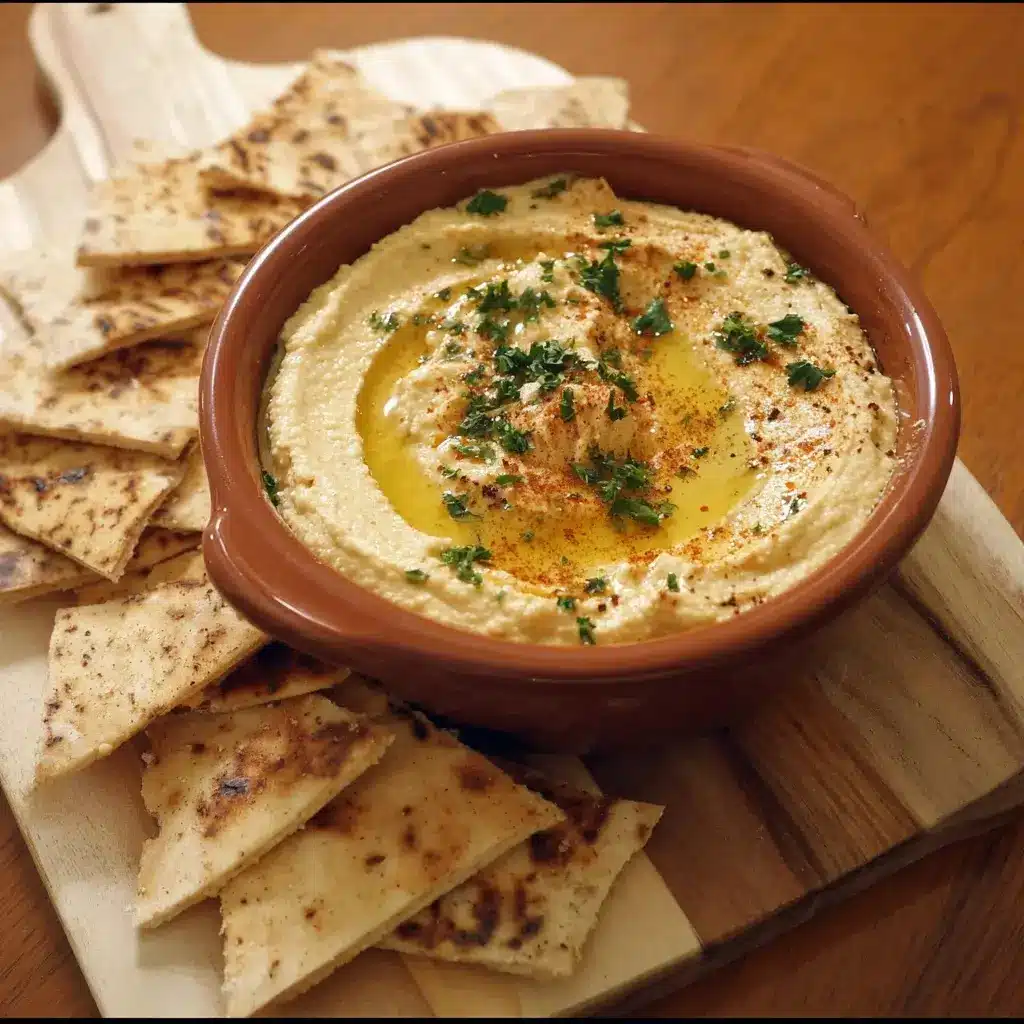
Spoon the hummus into a shallow bowl. Use the back of a spoon to create a decorative “swoosh” or well in the center. Drizzle generously with high-quality extra virgin olive oil. Sprinkle with paprika or sumac for color and a touch of flavor, and finish with a scattering of fresh, chopped parsley.
Perfectly Crispy Homemade Pita Chips
Ingredients
- 4-6 rounds of pita bread (white or whole wheat)
- 3 tablespoons of extra virgin olive oil
- ½ teaspoon kosher salt
- ¼ teaspoon black pepper
- ½ teaspoon of your favorite dried herbs or spices (e.g., oregano, garlic powder, smoked paprika, or a za’atar blend)
Instructions
- Preheat and Prep: Preheat your oven to 400°F (200°C).
- Cut the Pitas: Use a knife or pizza cutter to cut each round of pita bread into 8 wedges, like a pizza.
- Season: In a large bowl, toss the pita wedges with the olive oil, salt, pepper, and your chosen seasonings. Make sure each wedge is lightly and evenly coated.
- Bake: Spread the seasoned pita wedges in a single, even layer on a large baking sheet. Do not overcrowd the pan; use two sheets if necessary. A single layer is essential for crispiness.
- Crisp to Perfection: Bake for 8-12 minutes, flipping the chips halfway through, until they are golden brown and crispy. Keep a close eye on them during the last few minutes, as they can go from golden to burnt quickly.
- Cool: Let the pita chips cool on the baking sheet. They will continue to crisp up as they cool down.
Nutrition Facts
- Servings: Makes about 2.5 cups of hummus (10 appetizer servings)
- Calories per serving (approximate): 150-180 calories (for a ¼ cup serving of hummus with 4-5 pita chips)
Disclaimer: The nutritional information provided is an estimate and can vary based on the specific ingredients used, such as the brand of tahini and pita bread.
Preparation Time
- Prep Time: 25 minutes (includes 15 minutes for peeling chickpeas)
- Cook Time: 12 minutes (for pita chips)
- Total Time: Approximately 40 minutes
How to Serve Hummus
Serving hummus can be a simple affair or the centerpiece of an elaborate spread. Here’s how to do it right.
The Classic Presentation
This is the simple, beautiful way to serve your freshly made dip.
- The Bowl: Choose a shallow, wide bowl to maximize the surface area for garnishes.
- The Swoosh: Spoon the hummus into the bowl and use the back of a spoon to create a deep swirl in the center.
- The Pool of Oil: Drizzle your best extra virgin olive oil generously into the swirl.
- The Garnish: A bright sprinkle of smoked paprika or tart sumac and a scattering of fresh green parsley are essential.
- The Dippers: Arrange your warm, homemade pita chips and an array of fresh, crunchy vegetables around the bowl.
Building a Beautiful Mezze Platter
Turn your hummus into the star of a Mediterranean-inspired grazing board.
- Vegetable Dippers:
- Carrot sticks
- Cucumber slices or spears
- Bell pepper strips (red, yellow, and orange for color)
- Celery sticks
- Cherry tomatoes
- Radishes
- Blanched broccoli or cauliflower florets
- Other Accompaniments:
- Olives: A mix of Kalamata and Castelvetrano olives.
- Cheese: Cubes or crumbles of feta cheese.
- Other Dips: A bowl of tzatziki or baba ghanoush.
- Pickled Vegetables: Such as pickled red onions or peppers.
- Protein: Add falafel or grilled chicken skewers to make it a more substantial meal.
Beyond a Dip: Other Ways to Use Hummus
- As a Sandwich or Wrap Spread: Use it in place of mayonnaise for a healthier, more flavorful spread. It’s fantastic with turkey, grilled chicken, or roasted vegetables.
- As a Salad Dressing: Whisk a few tablespoons of hummus with a little extra lemon juice and water to create a creamy, delicious dressing for salads.
- In a Grain Bowl: Use a large dollop of hummus as the base for a Mediterranean grain bowl with quinoa, roasted veggies, feta, and a protein of your choice.
Additional Tips for Hummus Perfection
- Start with Dried Chickpeas for Superior Flavor: While canned chickpeas are convenient, cooking your own from dried will result in a hummus with a deeper, nuttier flavor. To do this, soak 1 cup of dried chickpeas overnight. Drain, then simmer in a pot of water with ½ teaspoon of baking soda for 1-1.5 hours, or until they are very tender and falling apart. The baking soda helps break them down and makes the skins even easier to remove.
- Infuse Your Garlic Flavor: For a smoother, less aggressive garlic flavor, try this trick. Mince your garlic clove and let it sit in the fresh lemon juice for 10-15 minutes while you peel the chickpeas. The acid in the lemon juice will mellow the harsh bite of the raw garlic, resulting in a more rounded flavor.
- Taste and Adjust Like a Chef: This recipe is a fantastic starting point, but the best hummus is tailored to your personal taste. Don’t be afraid to adjust the core components. Want it tangier? Add more lemon. Want it richer and nuttier? Add another tablespoon of tahini. Not salty enough? Add salt in small increments.
- Experiment with Flavor Variations: Once you’ve mastered the classic recipe, the possibilities are endless.
- Roasted Red Pepper Hummus: Add ½ cup of jarred, drained roasted red peppers to the food processor along with the chickpeas.
- Roasted Garlic Hummus: Roast a whole head of garlic until soft and caramelized. Squeeze the cloves into the food processor instead of the raw garlic.
- Spicy Hummus: Add 1-2 teaspoons of harissa paste, a chopped jalapeño (seeds removed for less heat), or a pinch of cayenne pepper.
- Pesto Hummus: Swirl a tablespoon of basil pesto into the finished hummus before serving.
- Serve It Warm: Most restaurants serve their best hummus slightly warm, which enhances its creamy texture and rich flavor. You can gently warm it in a saucepan over low heat or in the microwave for 30-60 seconds before garnishing and serving.
Frequently Asked Questions (FAQ)
1. Do I absolutely have to peel the chickpeas?
You don’t have to, but if you’re aiming for that incredibly smooth, restaurant-quality texture, then yes, it’s highly recommended. If you’re short on time, you can skip this step, but your hummus will have a slightly more rustic, grainy texture. It will still be delicious, just not as silky.
2. Why is my hummus bitter?
The most common cause of bitter hummus is old or low-quality tahini. Tahini can go rancid, and when it does, it develops a distinctly bitter or “off” taste. Always taste your tahini before adding it. It should be nutty and smooth. If it’s bitter, it’s best to discard it and get a fresh jar.
3. Can I make this hummus recipe without a food processor?
Yes, you can use a high-powered blender (like a Vitamix or Blendtec). You may need to use the blender’s tamper to keep the mixture moving and might need to add a touch more liquid to get it blending smoothly. The result will be exceptionally creamy. A regular blender may struggle with the thick mixture.
4. How long does homemade hummus last in the refrigerator?
Homemade hummus can be stored in an airtight container in the refrigerator for up to 5-7 days. The flavor can actually improve after a day as the ingredients meld. It may thicken up when chilled; you can stir in a teaspoon of water or lemon juice to loosen it before serving.
5. My hummus is too thick/thin. How can I fix it?
This is an easy fix! If your hummus is too thick, simply stream in more ice-cold water, one teaspoon at a time, with the processor running until you reach your desired consistency. If your hummus is too thin, you can add a few more chickpeas or another tablespoon of tahini to help thicken it up.

Hummus with Pita Chips recipe
Ingredients
-
4-6 rounds of pita bread (white or whole wheat)
-
3 tablespoons of extra virgin olive oil
-
½ teaspoon kosher salt
-
¼ teaspoon black pepper
-
½ teaspoon of your favorite dried herbs or spices (e.g., oregano, garlic powder, smoked paprika, or a za’atar blend)
Instructions
-
Preheat and Prep: Preheat your oven to 400°F (200°C).
-
Cut the Pitas: Use a knife or pizza cutter to cut each round of pita bread into 8 wedges, like a pizza.
-
Season: In a large bowl, toss the pita wedges with the olive oil, salt, pepper, and your chosen seasonings. Make sure each wedge is lightly and evenly coated.
-
Bake: Spread the seasoned pita wedges in a single, even layer on a large baking sheet. Do not overcrowd the pan; use two sheets if necessary. A single layer is essential for crispiness.
-
Crisp to Perfection: Bake for 8-12 minutes, flipping the chips halfway through, until they are golden brown and crispy. Keep a close eye on them during the last few minutes, as they can go from golden to burnt quickly.
-
Cool: Let the pita chips cool on the baking sheet. They will continue to crisp up as they cool down.
Nutrition
- Serving Size: one normal portion
- Calories: 150-180 calories