
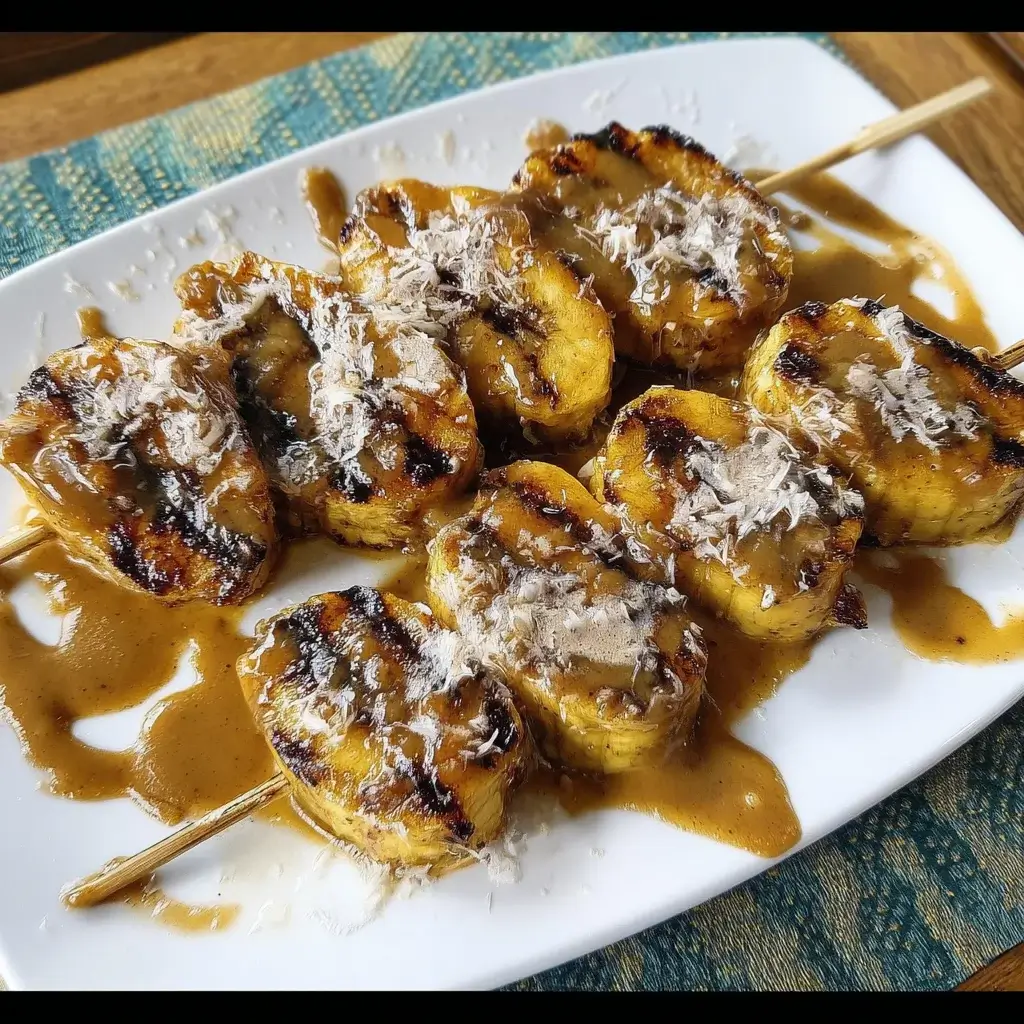

There’s a particular aroma that instantly transports me back to bustling street markets, a sweet, smoky scent that promises something truly special. It’s the smell of bananas, not just any bananas, but ones kissed by the gentle heat of a grill, their sugars caramelizing into a confectionary delight. I first encountered this incredible treat during a trip through Thailand, a country whose vibrant culinary landscape is a symphony of flavors, colors, and textures. I was wandering through a night market in Chiang Mai, a labyrinth of sensory overload. The air was thick with the sizzle of satay, the pungent allure of durian, the fresh zing of lemongrass, and the chatter of a hundred conversations blending into a melodic hum. It was amidst this beautiful chaos that I stumbled upon a woman with a kind, weathered smile and a small, unassuming pushcart. On her cart, a simple charcoal grill glowed with embers, and lined up perfectly were rows of what looked like ordinary bananas.
She was making “kluay ping,” a classic Thai street food dessert. With practiced ease, she would deftly turn the bananas over the hot coals, their peels slowly charring and blackening, releasing a perfume that was irresistibly sweet and slightly smoky. After grilling, she would peel them, lay them on a small piece of banana leaf, and gently press them flat with a wooden paddle. The final touch was a generous drizzle of a creamy, fragrant coconut sauce she kept warm in a small pot. It was a revelation – so profoundly simple in its components, yet so complex and deeply satisfying in its taste. That first bite is a memory etched permanently in my culinary scrapbook: the warm, almost custardy banana melting in my mouth, its natural sweetness intensified by the heat, perfectly balanced by the rich, slightly salty, and fragrant coconut sauce. It was comfort, nostalgia, and exotic adventure all in one bite.
When I returned home, I was possessed by a culinary mission: to recreate that magical experience. The memory of that flavor combination haunted my daydreams. It became a bit of an obsession, a quest to capture the essence of that street-side delicacy in my own kitchen. My family, initially intrigued by the concept of grilling fruit, quickly became enthusiastic supporters of my weekend experiments. My first few attempts were, admittedly, a learning curve. I used bananas that were too ripe, and they turned into a hopelessly mushy mess on the grill grates. I burned the coconut sauce by letting it boil too vigorously, causing it to separate into an oily slick. But with each attempt, I got closer.
I learned the critical importance of selecting the right banana—firm and just ripe. I mastered the gentle simmer required for a perfect coconut sauce. The true sign of success came when my son, who was a toddler at the time, developed a particular fondness for what he called “candy bananas.” Seeing his face light up as he devoured a skewer of grilled banana, the coconut sauce dripping from his chin, brought me an unparalleled sense of joy. This recipe for Grilled Bananas with Coconut Sauce is the culmination of those efforts, a tribute to that memorable street vendor and a dish that has become a cherished dessert in our home. It’s a dish that’s perfect for a summer barbecue, a cozy evening treat, or even a special brunch. It’s a taste of the exotic, made wonderfully accessible in your own backyard, and a guaranteed way to create your own sweet, smoky, and unforgettable memories.
Complete with the ingredients amount
This recipe for Grilled Bananas with Coconut Sauce relies on a handful of simple, yet powerfully flavorful ingredients to create a dessert that is both elegant and deeply comforting. The true magic of this dish lies in the quality of its components and the balance between them.
For the Grilled Bananas:
- Bananas: 4 to 6 semi-ripe bananas are ideal. The type of banana you choose will have a significant impact on the final result. While standard Cavendish bananas (the long, yellow ones found in most supermarkets) will work, for a more authentic experience, seek out Thai bananas, often called ‘Nam Wa’. They are shorter, firmer, and have a slightly tangy flavor that holds up beautifully to grilling. Look for bananas that are yellow with a hint of green at the stem. They should be firm to the touch, as overly ripe bananas with brown spots contain more sugar and less starch, causing them to become mushy and fall apart on the grill.
- Bamboo Skewers: If you plan on grilling banana pieces rather than whole bananas, you will need about 8-12 bamboo skewers. It is crucial to soak them in water for at least 30 minutes before grilling. This prevents the wood from burning over the hot coals or flames, ensuring your dessert doesn’t taste like a campfire.
For the Coconut Sauce:
- Coconut Milk: 1 cup of full-fat, unsweetened coconut milk is absolutely essential for a rich, luscious, and creamy sauce. Do not substitute with light coconut milk, as it lacks the fat content needed to create the desired consistency and mouthfeel. Look for brands that have a high percentage of coconut extract and minimal additives.
- Palm Sugar: ½ cup of palm sugar, finely chopped or grated. This is the traditional sweetener and provides a deep, complex, caramel-like sweetness with smoky undertones that brown sugar simply cannot replicate. If you cannot find palm sugar, light brown sugar is the next best substitute.
- White Sugar: ¼ cup of granulated white sugar. This is added to provide a cleaner, more straightforward sweetness that balances the complexity of the palm sugar.
- Butter: 2 tablespoons of unsalted butter. This adds a wonderful silky texture, richness, and glossiness to the sauce, helping it to emulsify and cling beautifully to the bananas.
- Salt: A generous pinch of salt, about ¼ teaspoon. Salt is the secret weapon in many desserts. In this sauce, it doesn’t make it taste salty, but rather it heightens the sweetness of the sugars and the richness of the coconut milk, creating a more balanced and dynamic flavor profile.
- Pandan Leaves (optional but highly recommended): 2 pandan leaves, tied in a simple knot. Pandan is often called the “vanilla of Southeast Asia.” The leaves impart a unique, wonderfully fragrant aroma that is nutty, botanical, and slightly sweet. Tying them in a knot helps release their flavor and makes them easy to remove before serving. You can often find them in the frozen section of Asian markets.
- Cornstarch (optional, for thickening): 1 teaspoon of cornstarch mixed with 1 tablespoon of cold water to form a slurry. This can be used if you prefer a thicker, more glaze-like sauce.
Instructions
This dessert comes together relatively quickly, so it’s best to have all your ingredients prepped and ready to go. The process is straightforward, but attention to detail, especially with the sauce, will yield the best results.
Step 1: Make the Coconut Sauce
In a small, heavy-bottomed saucepan, combine the full-fat coconut milk, the chopped palm sugar, the granulated white sugar, and the pinch of salt. If you are using pandan leaves, add the knotted leaves to the pot as well.
Place the saucepan over medium-low heat. It is very important to use a gentle heat here. If the coconut milk boils, it can separate and become oily. Stir the mixture continuously and patiently with a whisk or spoon until the sugars have completely dissolved. You should not feel any gritty sugar crystals on the bottom of the pan.
Once the sugar has fully dissolved, add the two tablespoons of unsalted butter. Continue to stir gently until the butter has melted completely and is fully incorporated into the sauce. The sauce should now look smooth and slightly glossy.
Allow the sauce to come to a very gentle simmer. You should see just a few lazy bubbles breaking the surface. Let it simmer for about 5 to 7 minutes, stirring occasionally, until it has thickened slightly. Remember that the sauce will continue to thicken significantly as it cools. If, after simmering, you prefer a much thicker sauce, this is the time to add the cornstarch slurry. Whisk the slurry once more to ensure it’s smooth, then slowly drizzle it into the simmering sauce while stirring constantly. The sauce will thicken almost immediately.
Once the sauce has reached your desired consistency, remove it from the heat. Remove and discard the pandan leaves. Set the sauce aside to cool slightly while you prepare and grill the bananas.
Step 2: Prepare the Bananas for Grilling
While the sauce is cooling, it’s time to prepare your bananas. You have a couple of options for how to grill them, each offering a slightly different result.
- For whole bananas (in peel): This is the simplest method. Simply leave the bananas whole and unpeeled. The peel will protect the banana from the direct heat, steaming it from the inside and making it incredibly soft.
- For sliced bananas (on skewers): This method is great for presentation and allows for more caramelization on the surface of the banana. Peel the bananas and cut them crosswise into thick, substantial pieces, about 1 to 1.5 inches thick. Gently thread the banana pieces onto your pre-soaked bamboo skewers, leaving a little space between each piece.
Step 3: Grill the Bananas
Preheat your grill to a medium, indirect heat, around 350-400°F (175-200°C). A heat that is too high will scorch the bananas on the outside before the inside becomes soft and warm.
- On a Gas Grill: Turn one side of the grill to medium and leave the other side off. You will be grilling on the side that is off, using the indirect heat from the lit side.
- On a Charcoal Grill: Once the coals are hot and covered in a thin layer of gray ash, push them all to one side of the grill. You will cook the bananas on the cooler side, away from the direct heat of the coals.
Once the grill is preheated, lightly oil the grill grates with a neutral oil (like canola or vegetable oil) to prevent the bananas from sticking.
Place the bananas (either whole in their peels or on skewers) on the hot grill. Grill for approximately 3 to 5 minutes per side. You are looking for beautiful, dark grill marks and for the bananas to become soft to the touch. If you are grilling whole bananas, the peels will turn a deep, dark brown, almost black, and that’s perfectly fine. Turn them occasionally to ensure they cook evenly.
Step 4: Serve and Enjoy
Once the bananas are grilled to perfection, carefully remove them from the grill. It’s time to assemble your dessert.
If you grilled the bananas whole, let them cool for a minute before carefully slitting the peels and removing the soft, steaming banana inside. For a traditional Thai street food experience, you can gently press the peeled, grilled bananas with the back of a spatula to flatten them slightly. This creates more surface area for the delicious sauce to cling to.
Arrange the warm grilled bananas on a plate. Give the coconut sauce a good stir, and then generously drizzle it over the bananas. You can also serve the sauce in a small bowl on the side for dipping, allowing your guests to control their own sauce-to-banana ratio. This dessert is at its absolute best when served immediately, while the bananas are warm and fragrant and the sauce is rich and creamy.
Nutrition Facts
The nutritional content of this Grilled Bananas with Coconut Sauce can vary based on portion size, the type of banana used, and the exact amount of sugar in the sauce. However, here is a general overview:
- Servings: This recipe typically makes 4 generous servings.
- Calories per serving: On average, a serving of grilled bananas with coconut sauce contains approximately 300-400 calories. While this is a dessert, it is made from whole-food ingredients. The majority of the calories come from the healthy fats in the coconut milk and the natural and added sugars.
Bananas are a fantastic source of essential nutrients, most notably potassium, which is vital for heart health and blood pressure regulation. They also provide a good amount of vitamin B6, vitamin C, and dietary fiber, which aids in digestion. Coconut milk contains medium-chain triglycerides (MCTs), a type of fat that is metabolized differently than other saturated fats. The sugars, while providing quick energy, make this a dish to be enjoyed in moderation as a special treat.
Preparation time
One of the greatest attributes of this tropical dessert is how quickly and easily it comes together, making it an ideal treat for both planned gatherings and spontaneous sweet cravings.
- Preparation Time: 10-15 minutes. This includes gathering your ingredients, making the coconut sauce, and preparing the bananas for the grill.
- Cooking Time: 10-15 minutes. The grilling process itself is very quick.
- Total Time: 20-30 minutes. From start to finish, you can have this delightful, restaurant-quality dessert on the table in under half an hour.
How to Serve
There are many wonderful ways to serve and elevate your Grilled Bananas with Coconut Sauce. Here are a few ideas to inspire you:
- The Classic Drizzle: The most traditional and straightforward way to serve this dish is to arrange the warm grilled bananas on a plate and generously drizzle the luscious coconut sauce over the top.
- Interactive Dipping: For a more fun and interactive experience, especially with kids, serve the coconut sauce in a small, communal bowl on the side for dipping.
- A La Mode Extravaganza: Take this dessert to the next level of indulgence by adding a scoop of ice cream alongside the warm grilled bananas. The contrast of the hot, smoky bananas and the cold, creamy ice cream is simply divine.
- Classic Pairing: High-quality vanilla bean ice cream.
- Tropical Pairing: Coconut gelato or mango sorbet.
- A Symphony of Toppings: Add layers of texture and complementary flavors with a variety of toppings. Set up a small “toppings bar” for guests to customize their own dessert.
- Toasted Nuts: Sprinkle with chopped, toasted peanuts, cashews, or pecans for a delightful crunch and nutty flavor.
- Toasted Coconut Flakes: Enhance the coconut flavor and add a delicate crispness by garnishing with toasted, unsweetened shredded coconut.
- Chocolate Indulgence: A drizzle of melted dark chocolate or a rich chocolate sauce beautifully complements the banana and coconut flavors.
- Fresh Fruit: Serve with a side of fresh, diced mango, pineapple, or sliced strawberries for a burst of acidity and freshness that cuts through the richness.
- A Cloud of Cream: A dollop of freshly whipped cream adds a light and airy touch.
Additional tips
Here are some extra tips and tricks to ensure your Grilled Bananas with Coconut Sauce are a spectacular success every single time.
- Choose the Right Bananas: This cannot be overstated. The ripeness of your bananas is the single most important factor. Use bananas that are semi-ripe, with a firm texture and a peel that is mostly yellow with a touch of green. They should feel firm when you gently squeeze them.
- Soak Your Skewers Properly: If you are using bamboo skewers, don’t skimp on the soaking time. Give them a good 30-minute bath in water. This ensures they won’t catch fire and impart a burnt taste to your beautiful dessert.
- Don’t Overcrowd the Grill: Give the bananas plenty of space on the grill. This allows the hot air to circulate around them, ensuring they cook evenly and develop those coveted, beautiful grill marks.
- Master the Heat: Grill the bananas over a medium, indirect heat. This gentle heat prevents the sugars from burning on the outside before the inside has a chance to soften and warm through. Patience is key.
- Customize Your Sauce: The coconut sauce is a fantastic canvas for customization. Feel free to adjust the sweetness by adding more or less sugar. If you like a thinner sauce, simmer it for a shorter amount of time. For a thicker sauce, let it simmer a little longer or use the cornstarch slurry.
- Make the Sauce Ahead: The coconut sauce can be made up to three days in advance and stored in an airtight container in the refrigerator. Simply reheat it gently on the stovetop over low heat, stirring until smooth, before serving.
- Oil the Grates, Not the Food: To prevent sticking, it’s more effective to oil the hot grill grates just before you place the bananas on them. Use a paper towel dipped in neutral oil and, holding it with tongs, wipe it over the grates.
- Spice it Up: For a warm, spiced variation, try lightly dusting the banana pieces with a pinch of cinnamon or cardamom before grilling.
- The Power of the Press: Don’t skip the step of gently pressing the peeled, grilled bananas. It may seem odd, but it slightly changes the texture and creates a wider, flatter surface that holds more of the delicious sauce.
- Batch Grilling for a Crowd: If you’re making this for a party, you can grill all the bananas at once and keep them warm on a tray in a low oven (around 200°F or 95°C) until you’re ready to serve.
FAQ section
Q1: Can I make this recipe without a grill?
A1: Absolutely! If you don’t have an outdoor grill, you have several excellent indoor options. You can use a cast-iron grill pan on the stovetop over medium heat to get similar grill marks. Alternatively, you can broil the bananas in the oven. Place them on a baking sheet and broil for 2-3 minutes per side, watching them very closely as they can burn quickly. An air fryer also works well; cook them at around 375°F (190°C) for 6-8 minutes, flipping halfway through.
Q2: My coconut sauce separated and looks oily. What did I do wrong and can I fix it?
A2: This almost always happens when the sauce is heated too quickly or boiled too vigorously. The high heat causes the emulsion of fat and water in the coconut milk to break. To prevent this, always use gentle, low heat. If it has already separated, you can sometimes fix it by removing it from the heat and whisking it vigorously. Sometimes, adding a tablespoon of hot water while whisking can help bring it back together.
Q3: Can I use plantains instead of bananas for this recipe?
A3: Yes, you can, but the result will be different. Plantains are starchier and less sweet than bananas. You will need to use ripe plantains (with black peels) for a sweeter flavor. They will also require a longer grilling time to become soft. The final dish will be less sweet and have a denser, starchier texture, which can also be delicious.
Q4: Is this dessert kid-friendly?
A4: This dessert is extremely kid-friendly! The natural sweetness of the bananas and the creamy, sweet sauce are a big hit with children. Serving the sauce on the side for dipping can make it a fun, interactive treat. For younger children, ensure the bananas are cut into appropriately sized pieces.
Q5: How do I store and reheat leftovers?
A5: It’s best to store the grilled bananas and the coconut sauce in separate airtight containers in the refrigerator. The sauce will keep well for up to a week. The bananas are best eaten within a day or two as they can become mushy. To reheat, you can warm the bananas and sauce gently in the microwave or, for better results, reheat the sauce on the stovetop and briefly warm the bananas in a pan or back on the grill.
Q6: What is palm sugar, and where can I find it?
A6: Palm sugar is a natural sweetener derived from the sap of palm trees, most commonly the coconut palm. It has a rich, deep flavor reminiscent of caramel and butterscotch. It is sold in compressed cakes or jars in most Asian supermarkets and can also be found online. It adds an authentic depth of flavor that is highly recommended for this recipe.
Q7: Can I make the coconut sauce dairy-free?
A7: Yes, the coconut sauce can easily be made completely dairy-free and vegan. Simply substitute the unsalted butter with a high-quality plant-based butter substitute or an equal amount of coconut oil. The result will be just as rich and delicious.
Q8: What drinks would pair well with this dessert?
A8: To complement the tropical flavors, a cup of strong black coffee or a fragrant jasmine tea would be wonderful. For a truly authentic experience, serve it with Thai iced tea. If you’re considering an alcoholic pairing, a dark rum or a sweet dessert wine like a late-harvest Riesling would be an excellent choice.
Print
Grilled Bananas with Coconut Sauce recipe
Ingredients
For the Grilled Bananas:
-
Bananas: 4 to 6 semi-ripe bananas are ideal. The type of banana you choose will have a significant impact on the final result. While standard Cavendish bananas (the long, yellow ones found in most supermarkets) will work, for a more authentic experience, seek out Thai bananas, often called ‘Nam Wa’. They are shorter, firmer, and have a slightly tangy flavor that holds up beautifully to grilling. Look for bananas that are yellow with a hint of green at the stem. They should be firm to the touch, as overly ripe bananas with brown spots contain more sugar and less starch, causing them to become mushy and fall apart on the grill.
-
Bamboo Skewers: If you plan on grilling banana pieces rather than whole bananas, you will need about 8-12 bamboo skewers. It is crucial to soak them in water for at least 30 minutes before grilling. This prevents the wood from burning over the hot coals or flames, ensuring your dessert doesn’t taste like a campfire.
For the Coconut Sauce:
-
Coconut Milk: 1 cup of full-fat, unsweetened coconut milk is absolutely essential for a rich, luscious, and creamy sauce. Do not substitute with light coconut milk, as it lacks the fat content needed to create the desired consistency and mouthfeel. Look for brands that have a high percentage of coconut extract and minimal additives.
-
Palm Sugar: ½ cup of palm sugar, finely chopped or grated. This is the traditional sweetener and provides a deep, complex, caramel-like sweetness with smoky undertones that brown sugar simply cannot replicate. If you cannot find palm sugar, light brown sugar is the next best substitute.
-
White Sugar: ¼ cup of granulated white sugar. This is added to provide a cleaner, more straightforward sweetness that balances the complexity of the palm sugar.
-
Butter: 2 tablespoons of unsalted butter. This adds a wonderful silky texture, richness, and glossiness to the sauce, helping it to emulsify and cling beautifully to the bananas.
-
Salt: A generous pinch of salt, about ¼ teaspoon. Salt is the secret weapon in many desserts. In this sauce, it doesn’t make it taste salty, but rather it heightens the sweetness of the sugars and the richness of the coconut milk, creating a more balanced and dynamic flavor profile.
-
Pandan Leaves (optional but highly recommended): 2 pandan leaves, tied in a simple knot. Pandan is often called the “vanilla of Southeast Asia.” The leaves impart a unique, wonderfully fragrant aroma that is nutty, botanical, and slightly sweet. Tying them in a knot helps release their flavor and makes them easy to remove before serving. You can often find them in the frozen section of Asian markets.
-
Cornstarch (optional, for thickening): 1 teaspoon of cornstarch mixed with 1 tablespoon of cold water to form a slurry. This can be used if you prefer a thicker, more glaze-like sauce.
Instructions
Step 1: Make the Coconut Sauce
In a small, heavy-bottomed saucepan, combine the full-fat coconut milk, the chopped palm sugar, the granulated white sugar, and the pinch of salt. If you are using pandan leaves, add the knotted leaves to the pot as well.
Place the saucepan over medium-low heat. It is very important to use a gentle heat here. If the coconut milk boils, it can separate and become oily. Stir the mixture continuously and patiently with a whisk or spoon until the sugars have completely dissolved. You should not feel any gritty sugar crystals on the bottom of the pan.
Once the sugar has fully dissolved, add the two tablespoons of unsalted butter. Continue to stir gently until the butter has melted completely and is fully incorporated into the sauce. The sauce should now look smooth and slightly glossy.
Allow the sauce to come to a very gentle simmer. You should see just a few lazy bubbles breaking the surface. Let it simmer for about 5 to 7 minutes, stirring occasionally, until it has thickened slightly. Remember that the sauce will continue to thicken significantly as it cools. If, after simmering, you prefer a much thicker sauce, this is the time to add the cornstarch slurry. Whisk the slurry once more to ensure it’s smooth, then slowly drizzle it into the simmering sauce while stirring constantly. The sauce will thicken almost immediately.
Once the sauce has reached your desired consistency, remove it from the heat. Remove and discard the pandan leaves. Set the sauce aside to cool slightly while you prepare and grill the bananas.
Step 2: Prepare the Bananas for Grilling
While the sauce is cooling, it’s time to prepare your bananas. You have a couple of options for how to grill them, each offering a slightly different result.
-
For whole bananas (in peel): This is the simplest method. Simply leave the bananas whole and unpeeled. The peel will protect the banana from the direct heat, steaming it from the inside and making it incredibly soft.
-
For sliced bananas (on skewers): This method is great for presentation and allows for more caramelization on the surface of the banana. Peel the bananas and cut them crosswise into thick, substantial pieces, about 1 to 1.5 inches thick. Gently thread the banana pieces onto your pre-soaked bamboo skewers, leaving a little space between each piece.
Step 3: Grill the Bananas
Preheat your grill to a medium, indirect heat, around 350-400°F (175-200°C). A heat that is too high will scorch the bananas on the outside before the inside becomes soft and warm.
-
On a Gas Grill: Turn one side of the grill to medium and leave the other side off. You will be grilling on the side that is off, using the indirect heat from the lit side.
-
On a Charcoal Grill: Once the coals are hot and covered in a thin layer of gray ash, push them all to one side of the grill. You will cook the bananas on the cooler side, away from the direct heat of the coals.
Once the grill is preheated, lightly oil the grill grates with a neutral oil (like canola or vegetable oil) to prevent the bananas from sticking.
Place the bananas (either whole in their peels or on skewers) on the hot grill. Grill for approximately 3 to 5 minutes per side. You are looking for beautiful, dark grill marks and for the bananas to become soft to the touch. If you are grilling whole bananas, the peels will turn a deep, dark brown, almost black, and that’s perfectly fine. Turn them occasionally to ensure they cook evenly.
Step 4: Serve and Enjoy
Once the bananas are grilled to perfection, carefully remove them from the grill. It’s time to assemble your dessert.
Nutrition
- Serving Size: one normal portion
- Calories: 300-400