
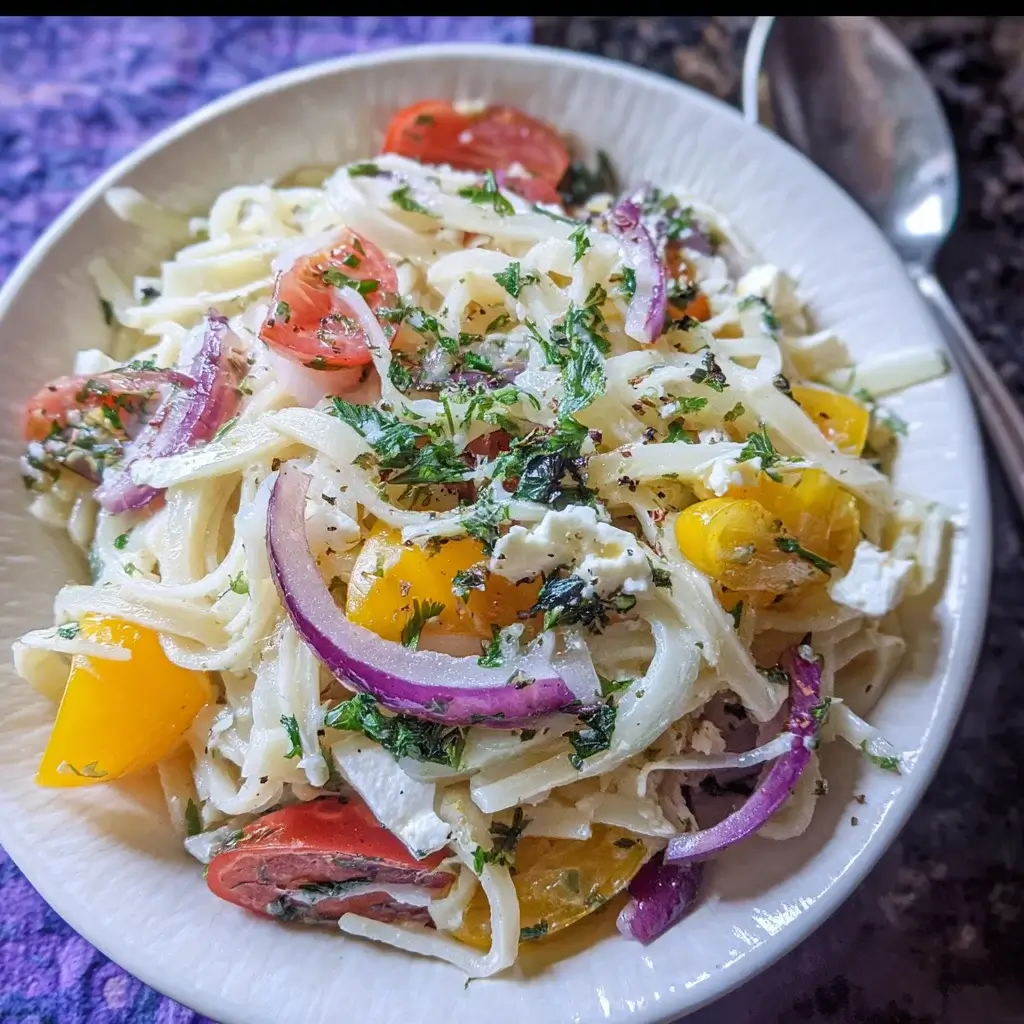
I remember the first time I brought a container of this vibrant, colorful salad to a family barbecue. My brother, a self-proclaimed pasta purist, eyed the translucent, noodle-like strands with deep suspicion. “What is that?” he asked, pointing a skeptical fork in its direction. I simply smiled and said, “It’s a new Greek pasta salad. Just try it.” He took a hesitant bite, his eyes widening in surprise. The crunch, the burst of salty feta, the tangy lemon-dill vinaigrette—it was a symphony of textures and flavors he wasn’t expecting. By the end of the evening, the bowl was scraped clean, and he was asking me for the recipe. That’s the magic of this Greek Pasta Salad with Kohlrabi Noodles. It takes a beloved classic and gives it a brilliantly modern, healthy, and unbelievably delicious twist. It’s not just a substitute for pasta; it’s an upgrade. The kohlrabi noodles don’t get soggy or heavy. Instead, they stay refreshingly crisp, perfectly absorbing the zesty dressing and providing the ideal crunchy backdrop for the creamy feta, briny olives, and fresh vegetables. It has since become our go-to for potlucks, light summer dinners, and healthy meal-prepped lunches that we actually look forward to eating.
Why This Kohlrabi Greek Salad Will Become Your New Obsession
Before we dive into the nuts and bolts of the recipe, let’s talk about why this dish is more than just a salad; it’s a culinary game-changer for your healthy eating repertoire. It masterfully blends tradition with innovation, delivering on flavor, nutrition, and pure satisfaction.
The Perfect Low-Carb and Gluten-Free Pasta Alternative
The star of this show is undoubtedly the kohlrabi. If you’re unfamiliar with this Sputnik-shaped vegetable, you’re in for a treat. Kohlrabi, a member of the cabbage family, has a mild, subtly sweet flavor and a texture reminiscent of a crisp apple or broccoli stem. When spiralized, it creates magnificent “noodles” that are the perfect vehicle for any sauce or dressing.
Unlike traditional pasta, kohlrabi noodles are:
- Naturally Low-Carb and Keto-Friendly: This makes the salad an excellent choice for anyone following a low-carbohydrate or ketogenic lifestyle.
- Gluten-Free: It’s a fantastic and worry-free option for those with celiac disease or gluten sensitivities.
- Incredibly Hydrating and Crisp: Kohlrabi noodles don’t become mushy or heavy. They maintain their delightful crunch, even after being dressed, providing a refreshing textural contrast that is often missing in traditional pasta salads.
A Symphony of Authentic Mediterranean Flavors
This recipe isn’t just about swapping pasta for a vegetable; it’s about celebrating the timeless, sun-drenched flavors of the Mediterranean. Every single ingredient is chosen to create a harmonious balance. The salty, tangy punch of good quality feta cheese, the rich and fruity brine of Kalamata olives, the cool crunch of cucumber, the sweet burst of cherry tomatoes, and the sharp bite of red onion all come together. The dressing—a simple but potent mix of extra virgin olive oil, fresh lemon juice, red wine vinegar, and a generous amount of dill and oregano—ties everything together, coating each kohlrabi noodle in a blanket of herbaceous, zesty goodness.
Unbelievably Versatile and Meal-Prep Friendly
One of the greatest attributes of this salad is its versatility. It’s a chameleon in the kitchen, ready to adapt to your needs.
- Perfect for Potlucks and Picnics: It travels exceptionally well and won’t wilt or become soggy like lettuce-based salads. Its vibrant colors make it a stunning centerpiece on any buffet table.
- The Ultimate Meal-Prep Lunch: Prepare a large batch on Sunday, and you have healthy, satisfying lunches for days. The flavors actually meld and become even more delicious overnight. (We’ll cover tips on how to pack it for maximum freshness later!)
- A Customizable Base: Feel free to add your favorite protein like grilled chicken, chickpeas, or shrimp to turn it into a complete, hearty meal.
A Nutrient-Packed Powerhouse
This isn’t just a “diet” recipe; it’s a genuinely nourishing one. Kohlrabi is an excellent source of Vitamin C (more than an orange, by weight!) and Vitamin B6, as well as potassium and fiber. Combined with the healthy fats from the olive oil and olives, the lycopene from the tomatoes, and the calcium from the feta cheese, this salad is a delicious way to fuel your body with essential vitamins and minerals.
Complete Recipe: Greek Pasta Salad with Kohlrabi Noodles
Here is everything you need to create this masterpiece in your own kitchen. For the best results, use the freshest ingredients you can find.
For the Kohlrabi Noodle Salad:
- Kohlrabi: 2 medium kohlrabi (about 2 lbs total), peeled
- English Cucumber: 1 large, partially peeled and diced
- Cherry or Grape Tomatoes: 1 pint (about 2 cups), halved
- Red Onion: ½ medium, thinly sliced
- Kalamata Olives: 1 cup, pitted and halved
- Feta Cheese: 1 cup (about 6 oz), crumbled from a block
- Fresh Dill: ¼ cup, finely chopped
- Salt: 1 teaspoon (for treating the kohlrabi)
For the Lemony Greek Vinaigrette:
- Extra Virgin Olive Oil: ½ cup
- Fresh Lemon Juice: ¼ cup (from about 1-2 lemons)
- Red Wine Vinegar: 2 tablespoons
- Garlic: 2 cloves, minced
- Dried Oregano: 2 teaspoons
- Dijon Mustard: 1 teaspoon
- Fine Sea Salt: ½ teaspoon, or to taste
- Freshly Ground Black Pepper: ¼ teaspoon, or to taste
Step-by-Step Instructions to Create the Perfect Salad
Follow these instructions carefully to ensure your salad has the perfect texture and flavor profile. The key is in how you prepare the kohlrabi noodles.
Step 1: Prepare the Kohlrabi Noodles
First, prepare your kohlrabi. Using a sharp vegetable peeler, remove the tough outer skin from both kohlrabi bulbs. Make sure to peel deeply enough to get past the fibrous layer just beneath the skin. Trim off the top and bottom to create flat, stable surfaces. Using a spiralizer fitted with a medium-sized blade (similar to a spaghetti or fettuccine blade), process both kohlrabi bulbs into noodles. If your noodles are excessively long, use kitchen shears to snip them into more manageable, fork-friendly lengths (about 6-8 inches).
Step 2: “Sweat” the Kohlrabi (The Crucial Step!)
Place the spiralized kohlrabi noodles into a large colander set inside a bowl or in the sink. Sprinkle them evenly with 1 teaspoon of salt and toss gently with your hands to distribute. Let the kohlrabi sit for 20-30 minutes. During this time, the salt will draw out a significant amount of excess water from the kohlrabi. This is the secret to preventing a watery salad and ensuring the noodles stay crisp. You’ll see the water collecting in the bowl beneath the colander.
Step 3: Prepare the Vinaigrette
While the kohlrabi is sweating, prepare the dressing. In a medium bowl or a glass jar with a tight-fitting lid, combine the extra virgin olive oil, fresh lemon juice, red wine vinegar, minced garlic, dried oregano, Dijon mustard, ½ teaspoon of salt, and black pepper. Whisk vigorously (or shake the jar) until the dressing is well-emulsified and slightly thickened. Set it aside to allow the flavors to meld.
Step 4: Prepare the Remaining Salad Ingredients
While the kohlrabi and dressing are sitting, you can chop and prepare the rest of your vegetables. Dice the cucumber, halve the cherry tomatoes, thinly slice the red onion, and halve the pitted Kalamata olives. Finely chop the fresh dill. Having everything prepped makes the final assembly quick and easy.
Step 5: Rinse and Dry the Kohlrabi Noodles
After 20-30 minutes, you’ll notice the kohlrabi has become more pliable and released a good amount of liquid. Rinse the noodles thoroughly under cold running water to remove the excess salt. It’s very important to dry the noodles as much as possible. You can do this by gently squeezing them in a clean kitchen towel or by running them through a salad spinner in batches. The drier the noodles, the better the dressing will adhere.
Step 6: Assemble the Salad
In a very large mixing bowl, combine the dried kohlrabi noodles, diced cucumber, halved cherry tomatoes, sliced red onion, Kalamata olives, and chopped fresh dill.
Step 7: Dress and Toss
Give your vinaigrette one more good whisk or shake. Pour about two-thirds of the dressing over the salad ingredients. Toss gently but thoroughly, ensuring every noodle and vegetable is lightly coated.
Step 8: Add the Feta and Serve or Chill
Gently fold in the crumbled feta cheese. You add it last to prevent it from breaking down too much during tossing. At this point, you can serve the salad immediately, or for best results, cover the bowl and refrigerate it for at least 30 minutes. This chilling time allows the flavors to marinate and deepen, making the salad even more delicious. Just before serving, give it one final toss and add the remaining dressing if you feel it needs it.
Nutrition Facts
- Servings: 8 side-dish servings or 4-6 main-course servings
- Calories per serving (approximate for 8 servings): 285 kcal
Please note that these nutritional values are an estimate and can vary based on the exact size and brands of your ingredients, especially the amount of olive oil and feta cheese used. This salad is rich in healthy fats, low in carbohydrates, and packed with vitamins.
Preparation Time
- Prep Time: 25 minutes
- Inactive Time (for salting kohlrabi): 30 minutes
- Chill Time (Recommended): 30 minutes
- Total Time: Approximately 1 hour 25 minutes (with only 25 minutes of active work)
How to Serve Your Greek Kohlrabi Noodle Salad
This salad is a showstopper on its own, but it also plays well with others. Here are some of our favorite ways to serve it:
- As a Light and Refreshing Main Course:
- Serve it in a large bowl on its own for a satisfying, low-carb lunch or dinner.
- To make it a more substantial meal, top it with a protein source. Excellent additions include:
- Grilled chicken breast, sliced
- Pan-seared shrimp or salmon
- A can of drained and rinsed chickpeas (for a vegetarian/vegan option, omit feta)
- Grilled halloumi cheese
- As the Perfect Side Dish:
- This salad is a fantastic accompaniment to any grilled meats. It pairs beautifully with lamb chops, steak, pork souvlaki, or simple grilled chicken kebabs.
- Serve it alongside a piece of flaky white fish like cod or halibut, baked with lemon and herbs.
- It’s a wonderful, healthy alternative to traditional potato salad or pasta salad at barbecues, picnics, and potlucks.
- For Smart and Delicious Meal Prep:
- This salad is a meal-prepper’s dream. To keep it at its absolute freshest for 3-4 days, try layering it in a mason jar.
- Mason Jar Layering Method:
- Bottom Layer: Add a few tablespoons of the vinaigrette.
- Second Layer: Add the hardiest ingredients that won’t get soggy, like the red onions and halved tomatoes.
- Third Layer: Add the Kalamata olives and cucumbers.
- Fourth Layer: Pack in the dried kohlrabi noodles.
- Top Layer: Finish with the crumbled feta cheese and fresh dill.
- Seal the jar tightly and store it in the refrigerator. When you’re ready to eat, just shake the jar vigorously to distribute the dressing and pour it into a bowl.
Additional Tips for Salad Success
Here are five expert tips to take your Greek Kohlrabi Noodle Salad from great to absolutely unforgettable.
- Don’t Skip the Salting Step: I cannot stress this enough. It might seem like an extra, fussy step, but it is the single most important technique for achieving the perfect texture. Kohlrabi has high water content, and salting it (a process called disgorging) draws out this moisture. This prevents a watery dressing and ensures your noodles remain snappy and crisp, even a day later.
- Use Block Feta, Not Pre-Crumbled: Always buy feta cheese in a block, preferably one packed in brine. It has a far superior creamy texture and a more robust, tangy flavor than the pre-crumbled varieties, which are often coated in anti-caking agents that can make them dry and less flavorful. Crumble it yourself just before adding it to the salad.
- Choose Your Kohlrabi Wisely: Look for kohlrabi bulbs that are firm and heavy for their size, with smooth, unblemished skin. Smaller to medium-sized bulbs (about the size of a tennis ball or slightly larger) are generally more tender and less woody than very large ones. If they still have their leaves attached, they should look fresh and green, which is a good sign of freshness.
- No Spiralizer? No Problem! If you don’t own a spiralizer, you can still make this delicious salad. You have a few options for creating “noodles”:
- Julienne Peeler: This is an inexpensive and effective tool for creating thin, noodle-like strands.
- Mandoline Slicer: Use the julienne blade attachment on your mandoline for uniform matchsticks. Always use the handguard for safety.
- By Hand: Use a sharp chef’s knife to slice the kohlrabi into very thin planks, then stack the planks and slice them into thin matchsticks. They won’t be curly, but they will be just as delicious.
- Let It Marinate for Maximum Flavor: While the salad is delicious served immediately, it truly shines after it’s had some time to sit. A 30-minute to one-hour chill in the refrigerator allows the kohlrabi noodles to absorb the vibrant flavors of the lemon-dill vinaigrette, and all the individual components get a chance to meld together into a cohesive, flavorful dish. If you’re making it ahead, it’s often at its peak flavor a few hours after it’s made.
Frequently Asked Questions (FAQ)
Here are answers to some common questions about this unique and delicious salad.
1. What does kohlrabi actually taste like? Will my picky eaters like it?
This is the most common question for those new to kohlrabi! Raw kohlrabi has a very mild, pleasant flavor and a wonderfully crisp, juicy texture. Think of it as a cross between a crisp apple, a broccoli stem, and a very mild radish. It’s subtly sweet and not at all overpowering. Because its flavor is so neutral, it’s an excellent canvas for bold dressings like the Greek vinaigrette in this recipe. Most people, including children and picky eaters, are pleasantly surprised by how much they enjoy its crunch and freshness.
2. Can I make this salad ahead of time for a party?
Absolutely! This is one of the best salads for making ahead. You can prepare and assemble the entire salad (including the dressing and feta) up to 24 hours in advance. Store it in a tightly covered container in the refrigerator. The flavors will actually become even better as they marinate. The kohlrabi noodles will soften slightly but will still retain a pleasant crunch, unlike regular pasta which can become mushy. Just give it a good toss before serving to redistribute the dressing.
3. Is this recipe keto-friendly and/or vegan?
As written, this recipe is naturally gluten-free and very low-carb, making it an excellent choice for a ketogenic diet. Kohlrabi is a keto-approved vegetable. To make this recipe vegan, simply omit the feta cheese. To add back some of that salty, briny flavor, you could increase the amount of Kalamata olives or consider adding a tablespoon of capers to the salad.
4. What are some other good protein additions to make this a full meal?
This salad is a fantastic base for protein. To turn it into a complete and hearty meal, consider adding:
- Grilled Chicken or Shrimp: The smoky flavor of grilled protein is a perfect match.
- Canned Tuna or Salmon: Drain a can of high-quality, oil-packed tuna or salmon and flake it into the salad.
- Chickpeas or White Beans: For a plant-based protein boost, add a can of rinsed and drained chickpeas or cannellini beans.
- Hard-Boiled Eggs: Chopped hard-boiled eggs add creaminess and a significant protein punch.
5. My kohlrabi noodles seem watery, what did I do wrong?
If your final salad seems watery, the most likely culprit is skipping or rushing the salting and drying step (Step 2 and Step 5). It is absolutely essential to let the salted kohlrabi sit for a full 20-30 minutes to draw out its excess water. It’s equally important to rinse the salt off and then dry the noodles as thoroughly as possible. Squeezing them gently in a clean kitchen towel is the most effective method. A well-dried noodle will cling to the dressing, while a wet noodle will repel it and water down your beautiful vinaigrette.
Greek Pasta Salad with Kohlrabi Noodles
Ingredients
-
Kohlrabi: 2 medium kohlrabi (about 2 lbs total), peeled
-
English Cucumber: 1 large, partially peeled and diced
-
Cherry or Grape Tomatoes: 1 pint (about 2 cups), halved
-
Red Onion: ½ medium, thinly sliced
-
Kalamata Olives: 1 cup, pitted and halved
-
Feta Cheese: 1 cup (about 6 oz), crumbled from a block
-
Fresh Dill: ¼ cup, finely chopped
-
Salt: 1 teaspoon (for treating the kohlrabi)
For the Lemony Greek Vinaigrette:
-
Extra Virgin Olive Oil: ½ cup
-
Fresh Lemon Juice: ¼ cup (from about 1-2 lemons)
-
Red Wine Vinegar: 2 tablespoons
-
Garlic: 2 cloves, minced
-
Dried Oregano: 2 teaspoons
-
Dijon Mustard: 1 teaspoon
-
Fine Sea Salt: ½ teaspoon, or to taste
-
Freshly Ground Black Pepper: ¼ teaspoon, or to taste
Instructions
Step 1: Prepare the Kohlrabi Noodles
First, prepare your kohlrabi. Using a sharp vegetable peeler, remove the tough outer skin from both kohlrabi bulbs. Make sure to peel deeply enough to get past the fibrous layer just beneath the skin. Trim off the top and bottom to create flat, stable surfaces. Using a spiralizer fitted with a medium-sized blade (similar to a spaghetti or fettuccine blade), process both kohlrabi bulbs into noodles. If your noodles are excessively long, use kitchen shears to snip them into more manageable, fork-friendly lengths (about 6-8 inches).
Step 2: “Sweat” the Kohlrabi (The Crucial Step!)
Place the spiralized kohlrabi noodles into a large colander set inside a bowl or in the sink. Sprinkle them evenly with 1 teaspoon of salt and toss gently with your hands to distribute. Let the kohlrabi sit for 20-30 minutes. During this time, the salt will draw out a significant amount of excess water from the kohlrabi. This is the secret to preventing a watery salad and ensuring the noodles stay crisp. You’ll see the water collecting in the bowl beneath the colander.
Step 3: Prepare the Vinaigrette
While the kohlrabi is sweating, prepare the dressing. In a medium bowl or a glass jar with a tight-fitting lid, combine the extra virgin olive oil, fresh lemon juice, red wine vinegar, minced garlic, dried oregano, Dijon mustard, ½ teaspoon of salt, and black pepper. Whisk vigorously (or shake the jar) until the dressing is well-emulsified and slightly thickened. Set it aside to allow the flavors to meld.
Step 4: Prepare the Remaining Salad Ingredients
While the kohlrabi and dressing are sitting, you can chop and prepare the rest of your vegetables. Dice the cucumber, halve the cherry tomatoes, thinly slice the red onion, and halve the pitted Kalamata olives. Finely chop the fresh dill. Having everything prepped makes the final assembly quick and easy.
Step 5: Rinse and Dry the Kohlrabi Noodles
After 20-30 minutes, you’ll notice the kohlrabi has become more pliable and released a good amount of liquid. Rinse the noodles thoroughly under cold running water to remove the excess salt. It’s very important to dry the noodles as much as possible. You can do this by gently squeezing them in a clean kitchen towel or by running them through a salad spinner in batches. The drier the noodles, the better the dressing will adhere.
Step 6: Assemble the Salad
In a very large mixing bowl, combine the dried kohlrabi noodles, diced cucumber, halved cherry tomatoes, sliced red onion, Kalamata olives, and chopped fresh dill.
Step 7: Dress and Toss
Give your vinaigrette one more good whisk or shake. Pour about two-thirds of the dressing over the salad ingredients. Toss gently but thoroughly, ensuring every noodle and vegetable is lightly coated.
Step 8: Add the Feta and Serve or Chill
Gently fold in the crumbled feta cheese. You add it last to prevent it from breaking down too much during tossing. At this point, you can serve the salad immediately, or for best results, cover the bowl and refrigerate it for at least 30 minutes. This chilling time allows the flavors to marinate and deepen, making the salad even more delicious. Just before serving, give it one final toss and add the remaining dressing if you feel it needs it.
Nutrition
- Serving Size: one normal portion
- Calories: 285 kcal