
Some foods are more than just sustenance; they are edible memories, vessels of tradition and comfort. For me, these Glutinous Rice Balls with Crushed Peanuts fall firmly into that category. I was first introduced to them not in a fancy restaurant, but in the warm, bustling kitchen of my friend’s grandmother during the Lantern Festival. The air was thick with the sweet steam of ginger syrup and the nutty aroma of roasting peanuts. I watched, mesmerized, as her deft, wrinkled hands transformed a simple white dough and a humble peanut filling into perfect, pearly spheres. The first bite was a revelation. A soft, delightfully chewy, and slightly sticky outer layer gave way to a fragrant, sweet, and crunchy peanut center. It was a symphony of textures and flavors that was both incredibly simple and profoundly comforting. Now, making these Tang Yuan in my own kitchen has become a cherished ritual, a way to connect with that beautiful memory and create new ones with my own family.
Why This Glutinous Rice Ball Recipe is an Absolute Treasure
This recipe for what is known in Chinese as Tang Yuan (汤圆) is a classic for a reason. It’s a beloved dessert across Asia, especially during festivals, symbolizing reunion and togetherness. Here’s why this particular version will become a treasured part of your recipe collection.
- An Irresistible Textural Experience: The hallmark of this dessert is its unique “QQ” texture—a term used in Taiwan and China to describe food that is perfectly soft, bouncy, and chewy. The combination of the pliable, mochi-like wrapper and the slightly coarse, crunchy peanut filling is an incredibly satisfying sensory experience that is unlike any Western dessert.
- Perfectly Balanced Sweet and Savory Filling: This isn’t a one-note, sugary dessert. The filling is a masterful blend of deeply nutty, roasted peanuts, just enough sugar for sweetness, and a hint of salt to bring out the flavors. The addition of a binder like butter or coconut oil makes it rich and cohesive, preventing it from being dry and crumbly.
- A Fun and Mindful Cooking Process: While they might look intricate, making these rice balls is a surprisingly simple and enjoyable hands-on activity. The process of making the filling, kneading the soft dough, and carefully wrapping each ball is a relaxing, almost meditative, process. It’s a wonderful recipe to make with family or friends.
- Naturally Gluten-Free: Made entirely with glutinous rice flour, this dessert is a fantastic and delicious option for those with celiac disease or gluten sensitivities. It’s a treat that everyone at the table can enjoy without worry.
- Versatile and Adaptable: While the peanut filling is a classic, this recipe serves as a perfect blueprint for other variations. You can serve them in a traditional ginger syrup, roll them in a dry peanut coating, or even create different fillings like black sesame or red bean paste.
Complete Ingredients for Peanut Tang Yuan
For the most authentic and delicious results, pay close attention to the specific types of ingredients listed. Each one plays a crucial role in the final texture and flavor.
For the Crunchy Peanut Filling:
- 1.5 cups Raw, Unsalted Peanuts, with skins on or off
- 1/2 cup Granulated Sugar (or Brown Sugar for a deeper flavor)
- 1/4 teaspoon Salt
- 3 Tablespoons Unsalted Butter or Solid Coconut Oil, melted: This acts as a binder to hold the filling together.
For the Chewy Glutinous Rice Dough:
- 2 cups Glutinous Rice Flour (also called Sweet Rice Flour): Be sure to use flour made from glutinous rice (like the Thai Erawan brand with the green lettering). This is not the same as regular rice flour and is essential for the chewy, mochi-like texture.
- 1 cup Warm Water, approximately (around 110°F / 43°C): You may need slightly more or less depending on the humidity and brand of flour.
For the Optional Sweet Ginger Syrup:
- 4 cups Water
- 4-5 thick slices of Fresh Ginger (about 1/4 inch thick)
- 1/2 cup Rock Sugar or Brown Sugar, or to taste
Step-by-Step Instructions: A Guide to Perfect Rice Balls
This process is broken down into manageable steps. The secret to easy assembly is making and freezing the filling first.
Part 1: Crafting the Fragrant Peanut Filling
- Roast the Peanuts: Preheat your oven to 350°F (175°C). Spread the raw peanuts in a single layer on a baking sheet. Roast for 10-15 minutes, shaking the pan halfway through, until they are lightly golden and fragrant. Be careful not to burn them, as this will make the filling bitter. Let the peanuts cool completely. If using skin-on peanuts, you can remove the skins after roasting by rubbing them between your hands or in a clean kitchen towel.
- Grind the Peanuts: Place the cooled, roasted peanuts, sugar, and salt into a food processor. Pulse in short bursts until the peanuts are coarsely ground. You are looking for a texture similar to coarse sand with some small, crunchy pieces remaining for texture. Do not over-process into a fine powder or you will end up with peanut butter.
- Bind the Filling: Transfer the ground peanut mixture to a bowl. Pour in the melted butter or coconut oil and stir until the mixture is well combined and resembles wet sand. It should hold its shape when squeezed.
- Portion and Freeze (The Secret to Easy Wrapping!): Line a small tray or plate with parchment paper. Using a small cookie scoop or a teaspoon, portion the filling into small balls, about 1/2 to 3/4 inch in diameter. Roll them between your palms to make them smooth and compact. Place the filling balls on the prepared tray and freeze for at least 30-60 minutes, or until firm. This step is a game-changer; firm, frozen filling is incredibly easy to wrap with the soft dough.
Part 2: Making the Pliable, Chewy Dough
This recipe uses a simple but effective technique of making a small “starter dough” to ensure the final dough is smooth, stretchy, and won’t crack.
- Make the Starter Dough (Tangzhong Method): Place the 2 cups of glutinous rice flour in a large mixing bowl and make a well in the center. Take out about 2 tablespoons of the flour and place it in a small, separate bowl. Add about 2-3 tablespoons of water to this small amount of flour and mix to form a small, rough piece of dough.
- Cook the Starter Dough: Bring a small pot of water to a boil. Drop the small piece of dough into the boiling water. Cook until it floats to the surface and is translucent, about 1-2 minutes.
- Combine with Main Dough: Remove the cooked starter dough with a slotted spoon (shaking off excess water) and place it back into the well in the large bowl of glutinous rice flour.
- Knead the Final Dough: Gradually pour the warm water into the flour while mixing with a spatula or chopsticks. Once a shaggy dough forms, use your hands to knead the dough in the bowl, incorporating the cooked starter dough. Knead for 5-7 minutes, until the dough is smooth, soft, and pliable, with a texture often compared to a soft earlobe. It should not be sticky or dry. If it’s too dry and crumbly, add water one teaspoon at a time. If it’s too sticky, add a bit more glutinous rice flour.
- Rest the Dough: Cover the bowl with a damp cloth or plastic wrap and let the dough rest for 15-20 minutes.
Part 3: Assembling and Cooking the Tang Yuan
- Portion the Dough: Roll the rested dough into a long log and divide it into equal pieces, slightly larger than your frozen filling balls (about 1 to 1.5 inches in diameter). Keep the dough you’re not working with covered to prevent it from drying out.
- Wrap the Rice Balls: Take one piece of dough and roll it into a smooth ball. Use your thumb to create a deep indentation in the center, then pinch the sides to form a small cup or bowl shape. Place one frozen peanut filling ball inside.
- Seal Carefully: Gently push the dough up and around the filling to enclose it completely. Pinch the top to seal it shut. Roll the ball gently between your palms to make it perfectly smooth and round, ensuring there are no cracks or seams. Repeat with the remaining dough and filling.
- Cook the Rice Balls: Bring a large pot of water to a rolling boil. Gently drop the assembled rice balls into the water, one by one. Nudge them gently with a spoon to prevent them from sticking to the bottom.
- Wait for the Float: Reduce the heat to a medium simmer. The rice balls will sink at first. Cook until they all float to the surface, which should take about 5-8 minutes.
- Finish Cooking: Once they are all floating, continue to cook for another 2-3 minutes to ensure the dough is cooked through and the filling is warm.
- Remove and Serve: Use a slotted spoon to carefully remove the cooked Tang Yuan from the pot. Serve immediately.
Part 4: Preparing the Sweet Ginger Syrup (Optional)
While the Tang Yuan are cooking, you can prepare the simple and warming syrup.
- Simmer Ingredients: In a saucepan, combine the 4 cups of water and the ginger slices. Bring to a boil, then reduce the heat and simmer for 10-15 minutes to infuse the water with the ginger flavor.
- Add Sugar: Stir in the rock sugar or brown sugar until it is completely dissolved. Taste and add more sugar if desired.
- Serve: Ladle the hot ginger syrup into serving bowls and add the freshly cooked Tang Yuan.
Nutrition Facts
Please note that these values are an approximation and can vary based on the exact ingredients used, especially the type of sugar and binder in the filling.
- Servings: This recipe makes approximately 20-24 rice balls. A typical serving is 4-5 balls.
- Calories Per Serving (4 balls): Approximately 350-400 kcal.
Preparation and Cooking Time
- Prep Time: 45 minutes (includes roasting peanuts and making dough)
- Chilling/Freezing Time for Filling: 30 minutes
- Cook Time: 10 minutes
- Total Time: Approximately 1 hour 25 minutes
How to Serve Your Glutinous Rice Balls
These delicious chewy dumplings can be enjoyed in several wonderful ways, each offering a unique experience.
- In a Classic Ginger Syrup:
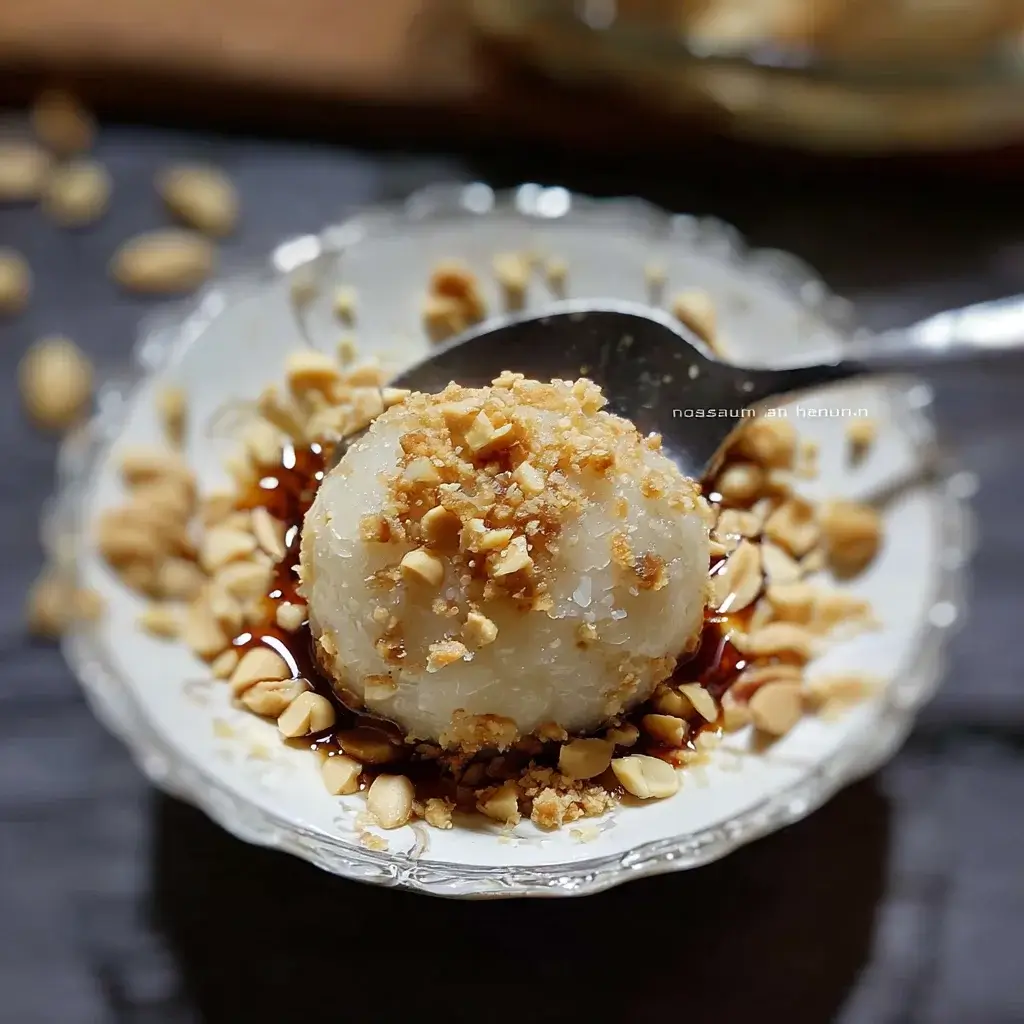
- This is the most traditional and comforting way to serve them. The warm, spicy-sweet syrup perfectly complements the nutty filling and chewy wrapper. It’s especially wonderful on a cold day.
- “Dry Style” with Peanut Coating:
- Boil the Tang Yuan as instructed. While they are still hot and slightly wet, roll them in a coating mixture made of finely crushed roasted peanuts and sugar. This version emphasizes the peanut flavor and is a fantastic treat.
- In a Sweet Soup (Tong Sui):
- Serve the boiled rice balls in other traditional Chinese sweet soups, such as:
- Sweet Red Bean Soup (Hong Dou Tang)
- Sweet Black Sesame Soup (Zhi Ma Hu)
- Sweet Fermented Rice Soup (Jiu Niang Tang)
- With a Modern Twist:
- Serve the warm Tang Yuan alongside a scoop of high-quality ice cream. Vanilla bean, black sesame, or green tea ice cream are all fantastic pairings that play on the contrast of hot and cold.
5 Essential Tips for Perfect Tang Yuan
Follow these pro tips to troubleshoot common issues and guarantee delicious, perfectly formed rice balls every time.
- Embrace the “Starter Dough” (Tangzhong) Method: Don’t skip the step of cooking a small piece of dough and kneading it back into the flour. This gelatinizes some of the starch, making the final dough significantly more pliable, stretchy, and far less likely to crack when you are wrapping the filling. It’s a simple trick that ensures success for beginners.
- Freeze the Filling Solid: This is the most important tip for stress-free assembly. Trying to wrap a soft, oily peanut filling with a soft dough can be a messy and frustrating experience. By freezing the filling into firm little balls, you create a stable center that is incredibly easy to seal the dough around.
- Use Warm Water for the Dough: The temperature of the water is important. Warm water (around 110°F / 43°C) helps the glutinous rice flour absorb moisture evenly and activates its sticky properties, resulting in a smoother, more elastic dough. Water that is too cold can result in a crumbly dough, while water that is too hot can pre-cook the flour and make it gummy.
- Master the Cooking Simmer: After dropping the rice balls into boiling water, immediately reduce the heat to a strong simmer. A violent, rolling boil can be too rough, causing the delicate rice balls to tear or burst open before they are fully cooked.
- Don’t Grind the Peanuts to Dust: For the best filling, aim for a texture that is mostly fine but still has some small, distinct pieces of peanut. This provides a wonderful textural contrast to the soft, chewy wrapper. A few short pulses in a food processor are all you need.
Frequently Asked Questions (FAQ)
1. Why did my dough crack while I was trying to wrap the filling?
Cracking dough is almost always a sign that the dough is too dry. This can happen if you don’t add enough water or if the dough sits uncovered for too long. Try kneading in a teaspoon of warm water at a time until it’s pliable again. Using the “starter dough” method described in the recipe is the best way to prevent this problem from the start.
2. Can I use peanut butter for the filling to save time?
You can, but the texture and flavor will be different. For the best result, use a natural, slightly gritty peanut butter. Mix it with some powdered sugar (which dissolves better than granulated) and a little bit of coconut oil or butter to make it firmer. You will still need to freeze the filling into balls for it to be firm enough to wrap easily.
3. What is the difference between glutinous rice flour and regular rice flour?
They are not interchangeable! Glutinous rice flour (or sweet rice flour) is made from a specific type of short-grain rice that is very high in amylopectin starch. When mixed with water and cooked, this starch gives it its signature sticky, chewy, mochi-like quality. Regular rice flour is made from long-grain rice and will not produce a chewy texture; it will result in a gritty, crumbly dough that falls apart.
4. How do I store leftovers or make these in advance?
Uncooked: The best way to store them is to freeze them. Assemble the rice balls completely, place them in a single layer on a parchment-lined tray, and freeze until solid. Then, transfer them to a freezer bag. They can be cooked directly from frozen; just add a few extra minutes to the boiling time.
Cooked: Leftover cooked Tang Yuan can be stored in their syrup in the refrigerator for 1-2 days. The dough will firm up when cold, so reheat them gently in the microwave or on the stovetop before enjoying.
5. My rice balls fell apart while boiling. What went wrong?
This can happen for a couple of reasons. First, you may not have sealed the dough securely around the filling, allowing water to get in. Make sure to pinch the seams tightly and roll the ball until it’s perfectly smooth. Second, boiling them too vigorously can cause them to break. Once you drop them in, reduce the heat to a healthy simmer instead of a hard, rolling boil.
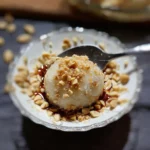
Glutinous Rice Ball with Crushed Peanuts recipe
Ingredients
For the Crunchy Peanut Filling:
-
1.5 cups Raw, Unsalted Peanuts, with skins on or off
-
1/2 cup Granulated Sugar (or Brown Sugar for a deeper flavor)
-
1/4 teaspoon Salt
-
3 Tablespoons Unsalted Butter or Solid Coconut Oil, melted: This acts as a binder to hold the filling together.
For the Chewy Glutinous Rice Dough:
-
2 cups Glutinous Rice Flour (also called Sweet Rice Flour): Be sure to use flour made from glutinous rice (like the Thai Erawan brand with the green lettering). This is not the same as regular rice flour and is essential for the chewy, mochi-like texture.
-
1 cup Warm Water, approximately (around 110°F / 43°C): You may need slightly more or less depending on the humidity and brand of flour.
For the Optional Sweet Ginger Syrup:
-
4 cups Water
-
4-5 thick slices of Fresh Ginger (about 1/4 inch thick)
-
1/2 cup Rock Sugar or Brown Sugar, or to taste
Instructions
Part 1: Crafting the Fragrant Peanut Filling
-
Roast the Peanuts: Preheat your oven to 350°F (175°C). Spread the raw peanuts in a single layer on a baking sheet. Roast for 10-15 minutes, shaking the pan halfway through, until they are lightly golden and fragrant. Be careful not to burn them, as this will make the filling bitter. Let the peanuts cool completely. If using skin-on peanuts, you can remove the skins after roasting by rubbing them between your hands or in a clean kitchen towel.
-
Grind the Peanuts: Place the cooled, roasted peanuts, sugar, and salt into a food processor. Pulse in short bursts until the peanuts are coarsely ground. You are looking for a texture similar to coarse sand with some small, crunchy pieces remaining for texture. Do not over-process into a fine powder or you will end up with peanut butter.
-
Bind the Filling: Transfer the ground peanut mixture to a bowl. Pour in the melted butter or coconut oil and stir until the mixture is well combined and resembles wet sand. It should hold its shape when squeezed.
-
Portion and Freeze (The Secret to Easy Wrapping!): Line a small tray or plate with parchment paper. Using a small cookie scoop or a teaspoon, portion the filling into small balls, about 1/2 to 3/4 inch in diameter. Roll them between your palms to make them smooth and compact. Place the filling balls on the prepared tray and freeze for at least 30-60 minutes, or until firm. This step is a game-changer; firm, frozen filling is incredibly easy to wrap with the soft dough.
Part 2: Making the Pliable, Chewy Dough
This recipe uses a simple but effective technique of making a small “starter dough” to ensure the final dough is smooth, stretchy, and won’t crack.
-
Make the Starter Dough (Tangzhong Method): Place the 2 cups of glutinous rice flour in a large mixing bowl and make a well in the center. Take out about 2 tablespoons of the flour and place it in a small, separate bowl. Add about 2-3 tablespoons of water to this small amount of flour and mix to form a small, rough piece of dough.
-
Cook the Starter Dough: Bring a small pot of water to a boil. Drop the small piece of dough into the boiling water. Cook until it floats to the surface and is translucent, about 1-2 minutes.
-
Combine with Main Dough: Remove the cooked starter dough with a slotted spoon (shaking off excess water) and place it back into the well in the large bowl of glutinous rice flour.
-
Knead the Final Dough: Gradually pour the warm water into the flour while mixing with a spatula or chopsticks. Once a shaggy dough forms, use your hands to knead the dough in the bowl, incorporating the cooked starter dough. Knead for 5-7 minutes, until the dough is smooth, soft, and pliable, with a texture often compared to a soft earlobe. It should not be sticky or dry. If it’s too dry and crumbly, add water one teaspoon at a time. If it’s too sticky, add a bit more glutinous rice flour.
-
Rest the Dough: Cover the bowl with a damp cloth or plastic wrap and let the dough rest for 15-20 minutes.
Part 3: Assembling and Cooking the Tang Yuan
-
Portion the Dough: Roll the rested dough into a long log and divide it into equal pieces, slightly larger than your frozen filling balls (about 1 to 1.5 inches in diameter). Keep the dough you’re not working with covered to prevent it from drying out.
-
Wrap the Rice Balls: Take one piece of dough and roll it into a smooth ball. Use your thumb to create a deep indentation in the center, then pinch the sides to form a small cup or bowl shape. Place one frozen peanut filling ball inside.
-
Seal Carefully: Gently push the dough up and around the filling to enclose it completely. Pinch the top to seal it shut. Roll the ball gently between your palms to make it perfectly smooth and round, ensuring there are no cracks or seams. Repeat with the remaining dough and filling.
-
Cook the Rice Balls: Bring a large pot of water to a rolling boil. Gently drop the assembled rice balls into the water, one by one. Nudge them gently with a spoon to prevent them from sticking to the bottom.
-
Wait for the Float: Reduce the heat to a medium simmer. The rice balls will sink at first. Cook until they all float to the surface, which should take about 5-8 minutes.
-
Finish Cooking: Once they are all floating, continue to cook for another 2-3 minutes to ensure the dough is cooked through and the filling is warm.
-
Remove and Serve: Use a slotted spoon to carefully remove the cooked Tang Yuan from the pot. Serve immediately.
Part 4: Preparing the Sweet Ginger Syrup (Optional)
While the Tang Yuan are cooking, you can prepare the simple and warming syrup.
-
Simmer Ingredients: In a saucepan, combine the 4 cups of water and the ginger slices. Bring to a boil, then reduce the heat and simmer for 10-15 minutes to infuse the water with the ginger flavor.
-
Add Sugar: Stir in the rock sugar or brown sugar until it is completely dissolved. Taste and add more sugar if desired.
-
Serve: Ladle the hot ginger syrup into serving bowls and add the freshly cooked Tang Yuan.
Nutrition
- Serving Size: one normal portion
- Calories: 350-400 kcal