
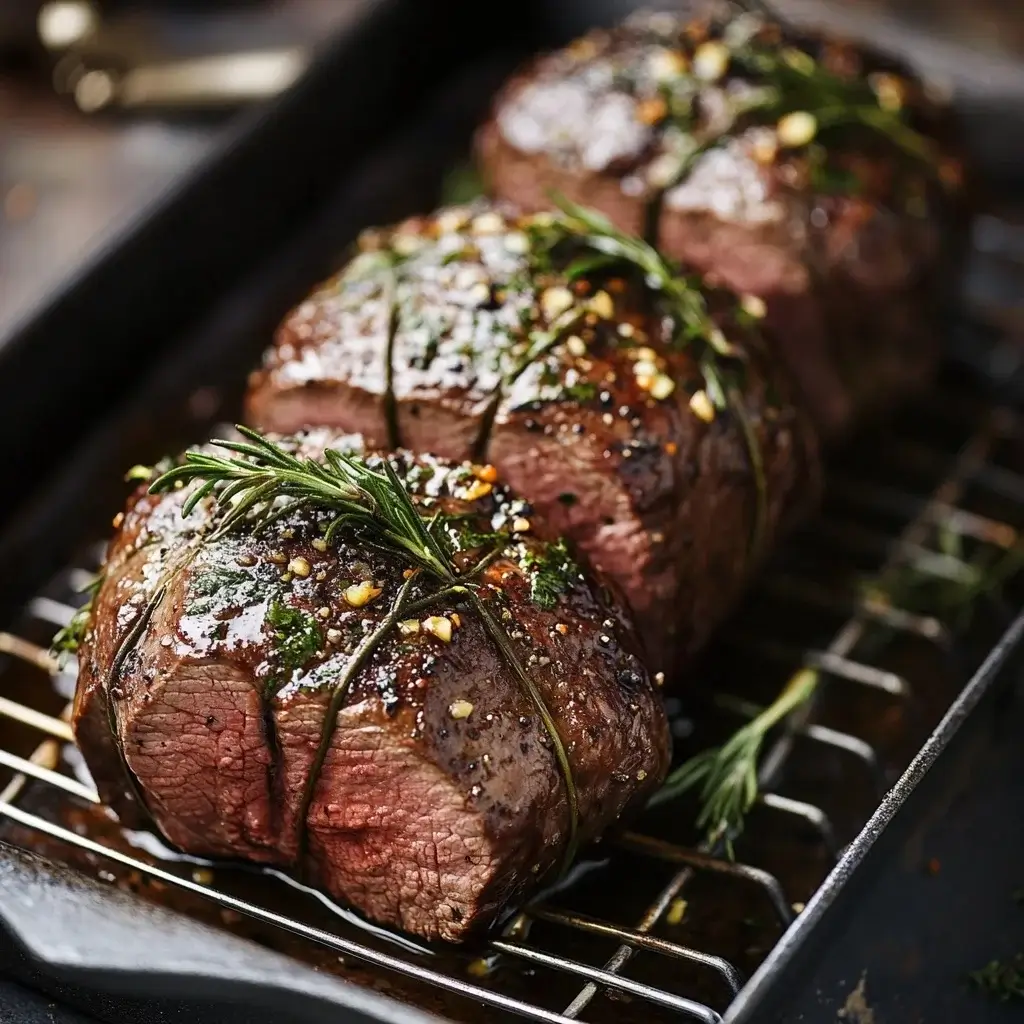

Garlic Herbed Beef Tenderloin is a show-stopping centerpiece perfect for any special occasion or holiday feast. This tender and juicy roast, infused with the flavors of garlic and herbs, promises to impress your family and friends. In this detailed guide, we’ll walk you through everything you need to know to prepare this exquisite dish, from the list of ingredients to serving suggestions, nutrition facts, and additional tips for perfecting your cooking technique.
Ingredients
To create this mouthwatering Garlic Herbed Beef Tenderloin, you’ll need the following ingredients:
- 1 beef tenderloin roast (3 pounds)
- 2 teaspoons cooking oil
- 2 garlic cloves, minced
- 1 teaspoon salt
- 1 teaspoon pepper
- 1 teaspoon dried basil
- 3/4 teaspoon dried rosemary, crushed
These simple yet flavorful ingredients combine to enhance the natural taste of the beef, making it a memorable dish for any gathering.
Instructions
Cooking the perfect Garlic Herbed Beef Tenderloin is straightforward if you follow these step-by-step instructions:
- Preheat your oven to 425°F (220°C).
Begin by preheating your oven to ensure it reaches the desired temperature before the beef is placed inside. - Tie the tenderloin with kitchen twine at 2-inch intervals.
This step is crucial for ensuring the roast maintains its shape and cooks evenly throughout. - Mix the oil and minced garlic; brush over the meat.
Combine the cooking oil with the minced garlic and thoroughly brush the mixture over the entire surface of the beef tenderloin. - Combine salt, pepper, basil, and rosemary; sprinkle over the meat.
In a small bowl, mix the salt, pepper, basil, and crushed rosemary. Evenly sprinkle this herb mixture over the meat to add depth of flavor. - Place the tenderloin on a rack in a shallow roasting pan.
Position the tenderloin on a rack within a shallow roasting pan to allow air circulation and even cooking. - Bake uncovered for 40-50 minutes, or until it reaches your desired doneness (135°F for medium-rare, 140°F for medium, 145°F for medium-well).
Insert a meat thermometer into the thickest part of the tenderloin to check for doneness and ensure the beef is cooked to your preference. - Let it rest for 10 minutes before slicing.
Allow the meat to rest, which helps the juices redistribute throughout the roast, ensuring a moist and flavorful result.
Nutrition Facts
Understanding the nutritional content of your meal is essential, especially if you are mindful of your dietary intake. Here’s a breakdown of the nutrition facts per 3 oz of cooked beef:
- 198 calories
- 10g fat (4g saturated fat)
- 78mg cholesterol
- 249mg sodium
- 1g carbohydrate (0g sugars, 0g fiber)
- 25g protein
This dish is a great source of protein and provides a moderate amount of fat, making it a hearty and satisfying option.
How to Serve
When it comes to serving Garlic Herbed Beef Tenderloin, the options are nearly limitless for creating a memorable dining experience that highlights the dish’s rich flavors and tender texture. Here are several comprehensive ideas to elevate your meal and ensure that each element complements the savory profile of the beef:
Classic Sides
- Garlic Mashed Potatoes:
- Preparation: Creamy, buttery mashed potatoes infused with roasted garlic create a decadent pairing with the tenderloin. Use Yukon Gold potatoes for their buttery flavor and smooth texture. Boil until fork-tender, then blend with heavy cream, unsalted butter, and roasted garlic cloves to taste.
- Garnish: Top with chives or parsley for a fresh touch, adding color and a mild onion flavor.
- Roasted Vegetables:
- Selection: A colorful medley of seasonal vegetables such as carrots, asparagus, Brussels sprouts, and bell peppers can add both nutrition and visual appeal to your plate.
- Preparation: Toss the vegetables with olive oil, salt, pepper, and herbs like rosemary or thyme. Roast at high heat (around 425°F) until golden brown and caramelized, which enhances their natural sweetness and adds depth to the meal.
- Fresh Green Salad:
- Ingredients: A salad made with mixed greens, cherry tomatoes, thinly sliced red onions, and cucumber provides a refreshing contrast to the richness of the beef.
- Dressing: A zesty vinaigrette made from balsamic vinegar, Dijon mustard, olive oil, and a touch of honey can elevate the salad, balancing the savory flavors of the main dish.
Sauces
- Red Wine Reduction:
- Preparation: A luscious red wine reduction can be made by simmering red wine, beef stock, shallots, and herbs until it thickens. This sauce adds a sophisticated touch and a burst of flavor that enhances the beef.
- Serving: Drizzle the reduction over the sliced tenderloin for an elegant presentation.
- Creamy Horseradish Sauce:
- Ingredients: Combine prepared horseradish, sour cream, mayonnaise, lemon juice, and a pinch of salt for a tangy, spicy sauce that cuts through the richness of the beef.
- Serving: Serve alongside the tenderloin in a small bowl for guests to add as desired.
- Au Jus:
- Preparation: A simple au jus can be made by deglazing the roasting pan with beef stock and simmering until flavors meld. This light sauce allows the natural juices of the beef to shine through.
- Serving: Serve in a gravy boat for easy pouring over the beef, enhancing its flavor without overpowering it.
Wine Pairing
- Cabernet Sauvignon:
- Characteristics: Known for its bold structure and rich tannins, Cabernet Sauvignon complements the savory and herbaceous notes of the Garlic Herbed Beef Tenderloin beautifully. Look for a bottle with dark fruit flavors like blackcurrant, plum, and hints of oak.
- Serving: Decant the wine for at least 30 minutes before serving to allow it to breathe, enhancing its complexity and making every sip enjoyable.
- Merlot:
- Characteristics: Merlot tends to be softer and fruitier than Cabernet Sauvignon, with flavors of cherry, chocolate, and vanilla. This wine provides a smoother contrast to the beef, making it an excellent pairing for those who prefer a less tannic option.
- Serving: Serve at a slightly cooler temperature than Cabernet, around 60-65°F, to preserve its fruity profile.
- Alternative Pairings:
- For a unique twist, consider a Malbec or a Syrah, both of which offer rich fruitiness and spice that can beautifully complement the flavors of the tenderloin.
By thoughtfully selecting sides, sauces, and wine pairings, you can create an exceptional dining experience that showcases the Garlic Herbed Beef Tenderloin while catering to a variety of palates. Whether it’s a casual family dinner or a formal gathering, these suggestions will help make the meal memorable for everyone at the table.
Additional Tips
To ensure your Garlic Herbed Beef Tenderloin turns out perfectly, consider these additional tips:
Choosing the Beef
Selecting the right cut of beef is crucial for achieving a tender and flavorful dish. When choosing your beef tenderloin, look for the following characteristics:
- Quality Grade: Aim for USDA Prime or Choice grades, which indicate higher marbling and better flavor. Prime cuts are typically more expensive but offer superior taste and tenderness.
- Color and Texture: Fresh beef should have a bright, cherry-red color. Avoid any cuts that are brown or have a dull appearance, as this may indicate aging or lack of freshness. The texture should be firm to the touch without any excessive moisture, which can suggest spoilage.
- Trimmed and Prepared: When purchasing, don’t hesitate to ask your butcher to trim the tenderloin for you. A well-trimmed tenderloin will have minimal fat and silverskin, which can be tough and chewy if left on. A butcher can also tie the roast for even cooking, ensuring that it retains its shape during the cooking process.
- Age of the Meat: Consider asking your butcher if the beef has been dry-aged. This process can enhance flavor and tenderness significantly, making for a more luxurious dining experience.
Resting Time
Resting your beef tenderloin after cooking is a critical step that should not be overlooked. Here’s why and how to properly rest your meat:
- Why Rest?: During cooking, the juices within the meat are pushed towards the surface due to the heat. If you slice into the tenderloin immediately after removing it from the oven or grill, these juices will escape, resulting in a dry and less flavorful cut of meat.
- How Long to Rest: Allow your beef tenderloin to rest for at least 15-20 minutes. This gives the juices time to redistribute throughout the meat, ensuring that each slice is succulent and moist.
- Covering the Meat: Loosely tent the tenderloin with aluminum foil while it rests. This helps retain heat without causing the meat to steam, which could lead to unwanted moisture loss.
- Temperature Considerations: Keep in mind that the internal temperature of the meat will continue to rise slightly during the resting period (known as carryover cooking). If you’re aiming for a medium-rare finish (about 135°F), consider removing the tenderloin from heat when it reaches around 130°F.
Herb Variations
While the original recipe may call for specific herbs, don’t be afraid to get creative with your seasoning. Here are some herb variations and combinations that can elevate your Garlic Herbed Beef Tenderloin:
- Thyme and Rosemary: These two herbs complement beef exceptionally well. Thyme adds a subtle earthiness, while rosemary provides a fragrant, woodsy flavor. Combine them for a classic pairing that enhances the natural flavors of the meat.
- Oregano and Basil: For a Mediterranean twist, consider using a blend of oregano and fresh basil. Oregano adds a robust flavor, while basil gives a sweet, aromatic note that works beautifully with garlic.
- Parsley and Chives: A combination of parsley and chives can add freshness and brightness to your tenderloin. This is especially delightful if you’re looking for a lighter flavor profile.
- Sage and Marjoram: Sage has a warm, slightly peppery flavor that pairs well with beef, while marjoram brings a hint of sweetness. This combination is particularly lovely for autumnal dishes.
- Experiment with Dried Herbs: If fresh herbs are not available, dried herbs can also be used. Just remember that dried herbs are more concentrated, so use about one-third of the amount you would use for fresh herbs.
- Infused Oils: Consider infusing olive oil with garlic and herbs before applying it to your tenderloin. This not only enhances the flavor but also helps create a beautiful crust during cooking.
By following these tips, you can ensure that your Garlic Herbed Beef Tenderloin is not only delicious but also visually appealing and impressively tender. Enjoy the process of cooking and feel free to customize the recipe to match your personal preferences!
FAQs
1. Can I prepare the beef tenderloin in advance?
Yes, you can season the beef and wrap it tightly in plastic wrap up to 24 hours in advance. Store it in the refrigerator and bring it to room temperature before cooking.
2. How do I know when the beef tenderloin is done?
Use a meat thermometer to check the internal temperature. For medium-rare, aim for 135°F; for medium, 140°F; and for medium-well, 145°F.
3. Can I use fresh herbs instead of dried?
Certainly! Substitute fresh herbs for dried ones in a 3:1 ratio (e.g., 1 tablespoon of fresh basil for 1 teaspoon of dried).
4. What if I don’t have a roasting pan?
If you don’t have a roasting pan, use a baking sheet with a wire rack placed inside to elevate the beef.
5. How should leftovers be stored?
Store leftovers in an airtight container in the refrigerator for up to 3 days. Reheat gently to maintain the meat’s tenderness.
Conclusion
Garlic Herbed Beef Tenderloin is not just a dish; it’s an experience that elevates any dining occasion with its rich flavors and sophisticated presentation. The unique combination of aromatic garlic and fresh herbs creates a delightful crust that enhances the natural juiciness and tenderness of the beef, making it a centerpiece that captivates both the eyes and the palate. This dish embodies the essence of culinary artistry—transforming a simple cut of meat into a memorable masterpiece that is sure to impress your guests.
By following the detailed instructions and tips provided in this article, you will not only master the technique of preparing a perfectly cooked tenderloin, but you will also gain insights into the nuances of flavor pairing and presentation. The careful selection of herbs such as rosemary, thyme, and parsley, alongside the bold and aromatic garlic, ensures that each bite delivers a burst of flavor that complements the richness of the beef. Furthermore, the method of searing the tenderloin before finishing it in the oven enhances the overall texture, creating a delightful contrast between the crispy exterior and the succulent interior.
When hosting a special occasion, such as a holiday gathering or a milestone celebration, Garlic Herbed Beef Tenderloin serves as an ideal main course that caters to both formal and casual dining settings. Its elegant appearance on the plate, often adorned with a garnish of fresh herbs or a drizzle of balsamic reduction, adds a touch of sophistication that makes any meal feel special. The dish not only satisfies the palate but also creates a warm and inviting atmosphere, prompting heartfelt conversations and cherished memories among guests.
Even when enjoying a luxurious dinner at home, this recipe stands out as a fantastic choice that combines simplicity with sophistication. The ingredient list, while exquisite, is not overly complicated, making it accessible for cooks of all skill levels. The straightforward preparation process allows you to focus on the experience of cooking, ensuring that you can enjoy the moment as much as your guests will enjoy the meal.
Moreover, the versatility of Garlic Herbed Beef Tenderloin allows for numerous serving options. Pair it with seasonal roasted vegetables, creamy mashed potatoes, or a fresh herb salad for a well-rounded meal that appeals to diverse tastes. Consider complementing the dish with a carefully selected wine that enhances the flavors of both the beef and the accompanying sides, creating a harmonious dining experience that lingers in the memory long after the last bite has been savored.
In conclusion, Garlic Herbed Beef Tenderloin is more than just a recipe; it is an invitation to create unforgettable experiences around the dinner table. Its remarkable combination of flavors, textures, and elegant presentation makes it a dish that will be remembered long after the meal is over. Whether you are celebrating a significant event or indulging in a luxurious weekday dinner, this recipe is sure to impress, leaving your guests with a sense of satisfaction and a desire to return for more. Embrace the opportunity to showcase your culinary skills and bring a touch of gourmet flair to your next gathering with this exquisite dish.
Print
Garlic Herbed Beef Tenderloin recipe
Ingredients
- 1 beef tenderloin roast (3 pounds)
- 2 teaspoons cooking oil
- 2 garlic cloves, minced
- 1 teaspoon salt
- 1 teaspoon pepper
- 1 teaspoon dried basil
- 3/4 teaspoon dried rosemary, crushed
Instructions
- Preheat your oven to 425°F (220°C).
Begin by preheating your oven to ensure it reaches the desired temperature before the beef is placed inside. - Tie the tenderloin with kitchen twine at 2-inch intervals.
This step is crucial for ensuring the roast maintains its shape and cooks evenly throughout. - Mix the oil and minced garlic; brush over the meat.
Combine the cooking oil with the minced garlic and thoroughly brush the mixture over the entire surface of the beef tenderloin. - Combine salt, pepper, basil, and rosemary; sprinkle over the meat.
In a small bowl, mix the salt, pepper, basil, and crushed rosemary. Evenly sprinkle this herb mixture over the meat to add depth of flavor. - Place the tenderloin on a rack in a shallow roasting pan.
Position the tenderloin on a rack within a shallow roasting pan to allow air circulation and even cooking. - Bake uncovered for 40-50 minutes, or until it reaches your desired doneness (135°F for medium-rare, 140°F for medium, 145°F for medium-well).
Insert a meat thermometer into the thickest part of the tenderloin to check for doneness and ensure the beef is cooked to your preference. - Let it rest for 10 minutes before slicing.
Allow the meat to rest, which helps the juices redistribute throughout the roast, ensuring a moist and flavorful result.
Nutrition
- Serving Size: one normal portion
- Calories: 198 calories
- Sodium: 249mg sodium
- Fat: 10g fat (
- Carbohydrates: 1g carbohydrate
- Protein: 25g protein
- Cholesterol: 78mg cholesterol