
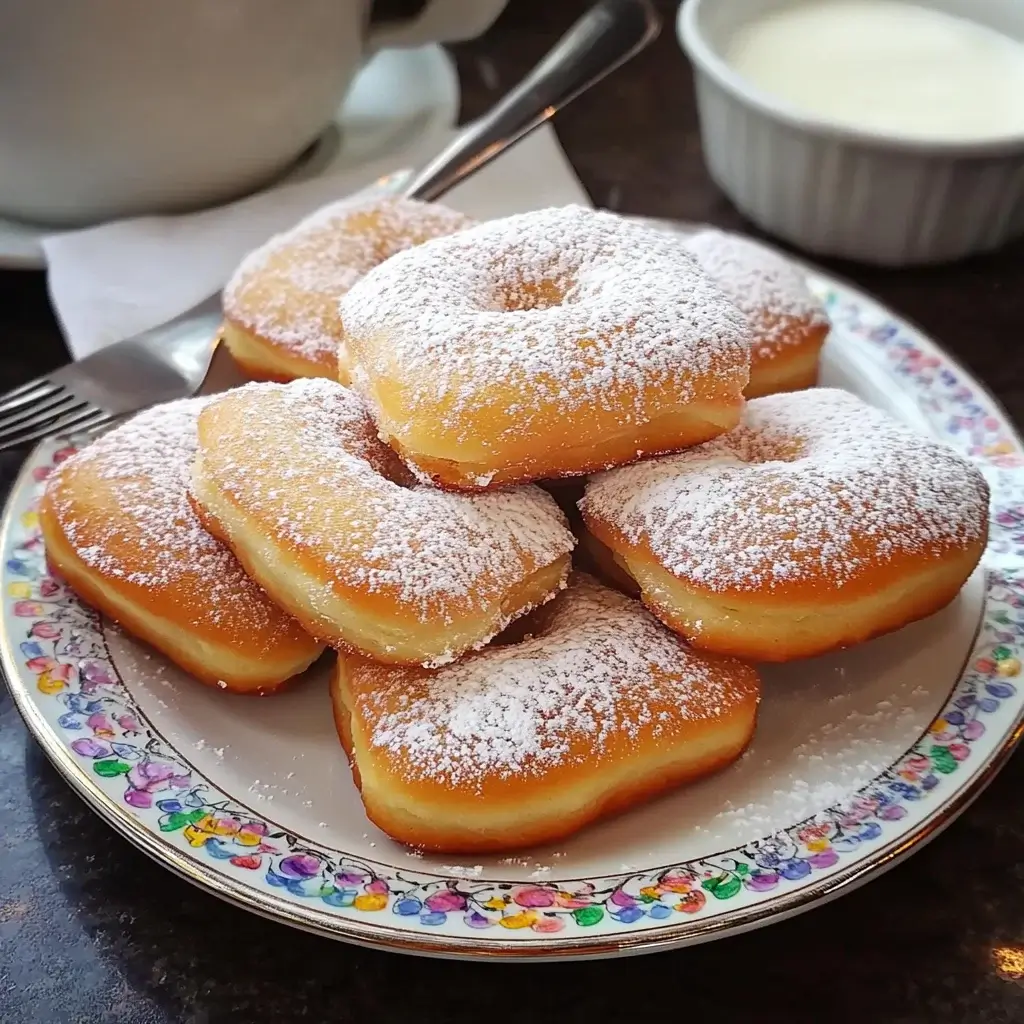

There are few foodie pilgrimages more iconic than a trip to New Orleans’ French Quarter for a plate of warm, powdered sugar-dusted beignets and a café au lait. I remember my first encounter with these legendary treats like it was yesterday. The air was thick with humidity and the sweet, yeasty aroma of frying dough. We sat at a bustling outdoor café, the sounds of Dixieland jazz drifting from a nearby street corner. When the beignets arrived – three pillowy squares, generously, almost comically, buried under a mountain of powdered sugar – it felt like a ceremony. The first bite was pure bliss: a slightly crisp exterior giving way to a light, airy, chewy interior, the sweetness of the sugar perfectly balanced by the rich, dark coffee. It wasn’t just a donut; it was an experience, a taste of history and culture. Recreating that magic at home felt like a lofty goal, but after much delicious experimentation, this “French Quarter Donuts” recipe brings a taste of the Big Easy right into my own kitchen. My family now eagerly anticipates “Beignet Mornings,” a tradition filled with laughter, sticky fingers, and the delightful mess of powdered sugar everywhere – a small price to pay for such heavenly indulgence.
Why These French Quarter Donuts (Beignets) Will Transport You to New Orleans
These aren’t your average donuts. Beignets, the quintessential French Quarter delight, are a unique and utterly charming confection. This recipe aims to capture the authentic spirit and taste of those famous New Orleans treats, making them accessible to home bakers everywhere.
What makes these French Quarter Donuts so special?
- The Unique Texture: Unlike ring donuts or cake donuts, beignets are square or irregularly shaped pieces of choux-like yeast dough, deep-fried to golden perfection. They puff up dramatically when fried, creating a hollowish, airy interior and a delightfully tender, slightly chewy texture with a delicately crisp exterior.
- The Iconic Powdered Sugar Avalanche: Beignets are traditionally served generously, and I mean generously, dusted (or rather, buried) in powdered sugar. This isn’t just a garnish; it’s an integral part of the beignet experience, adding a cloud-like sweetness that melts in your mouth.
- A Taste of History and Culture: Beignets have a rich history, brought to Louisiana by French-Creole colonists in the 18th century. They are deeply woven into the fabric of New Orleans culture, synonymous with Café du Monde and Café Beignet. Making them at home is like taking a delicious bite out of that heritage.
- Surprisingly Simple Dough: While they seem exotic, the dough itself is relatively straightforward to make, especially if you have a stand mixer. It’s a simple yeast dough enriched with egg and a bit of sugar. The magic happens in the resting and frying.
- The Joy of Freshly Fried: There’s nothing quite like a warm, freshly fried donut. The contrast between the hot, pillowy dough and the cool, sweet powdered sugar is simply irresistible. This recipe allows you to experience that fresh-from-the-fryer perfection at home.
- Fun to Make (and Eat!): From watching the dough rise to seeing the beignets puff up in the hot oil, the process is enjoyable. And let’s be honest, the eating part, with powdered sugar inevitably dusting your nose and clothes, is pure, unadulterated fun.
- Perfect for Sharing: A batch of beignets is meant to be shared. They are ideal for weekend brunches, special occasion breakfasts, or as a delightful treat to accompany a cup of coffee or café au lait with friends and family.
This recipe isn’t just about following steps; it’s about recreating an atmosphere, a feeling, a moment of pure indulgence. Get ready to bring the festive spirit of the French Quarter into your kitchen.
Complete Ingredients for Authentic French Quarter Donuts (Beignets)
To create these iconic New Orleans treats, you’ll need the following ingredients:
For the Beignet Dough:
- Active Dry Yeast: 2 1/4 teaspoons (1 standard packet, or 7g)
- Warm Water: 1/4 cup (60ml), about 105-115°F (40-46°C) – too hot will kill the yeast, too cool and it won’t activate.
- Granulated Sugar: 1/4 cup (50g), plus a pinch for proofing the yeast
- Evaporated Milk: 3/4 cup (180ml), warmed slightly (can substitute with whole milk, but evaporated milk is traditional for richness)
- Large Egg: 1, lightly beaten
- Salt: 1/2 teaspoon
- Unsalted Butter: 2 tablespoons (28g), melted and slightly cooled (or vegetable shortening, melted)
- All-Purpose Flour: 3 1/2 to 4 cups (420g to 480g), plus more for dusting. Start with 3 1/2 cups and add more as needed. Bread flour can also be used for a slightly chewier texture.
- Vanilla Extract (Optional): 1/2 teaspoon, for added flavor depth
For Frying:
- Vegetable Oil, Canola Oil, Peanut Oil, or Cottonseed Oil: Approximately 4-6 cups (or enough for at least 2-3 inches depth in your frying pot). Cottonseed oil is traditionally used in New Orleans.
For Serving:
- Powdered Sugar (Confectioners’ Sugar): At least 1-2 cups, for generous dusting. You can never have too much!
A Note on Ingredients:
- Yeast: Ensure your yeast is fresh and not expired. Proofing it in warm water with a pinch of sugar helps confirm its activity.
- Evaporated Milk: This adds a distinct richness and slight caramel note characteristic of traditional beignets. If you must substitute, use whole milk.
- Flour: The amount of flour can vary slightly depending on humidity and the specific brand of flour. The dough should be soft and slightly sticky, but manageable.
- Frying Oil: Use a neutral-flavored oil with a high smoke point. Cottonseed oil is authentic, but vegetable or canola oil are more common and work well.
- Powdered Sugar: Don’t skimp! This is a key component of the beignet experience.
Step-by-Step Instructions to Craft Your Own Beignets
Follow these detailed instructions to make perfect, pillowy French Quarter Donuts.
1. Proof the Yeast:
* In a small bowl, combine the 1/4 cup of warm water (105-115°F / 40-46°C) with a pinch of the granulated sugar.
* Sprinkle the 2 1/4 teaspoons of active dry yeast over the water.
* Let it stand for 5-10 minutes until the mixture is foamy and bubbly. This indicates the yeast is active. If it doesn’t foam, your yeast may be old, and you’ll need to start over with fresh yeast.
2. Combine Wet Ingredients:
* In the large bowl of a stand mixer fitted with the dough hook attachment (or a large mixing bowl if making by hand), combine the remaining 1/4 cup of granulated sugar, the 3/4 cup of warmed evaporated milk, the lightly beaten egg, the 1/2 teaspoon of salt, and the 2 tablespoons of melted butter (and vanilla extract, if using).
* Once the yeast mixture is foamy, add it to the wet ingredients in the bowl. Stir briefly to combine.
3. Add Flour and Mix the Dough:
* Gradually add 3 1/2 cups of the all-purpose flour to the wet ingredients.
* Using a Stand Mixer: Mix on low speed until the flour is incorporated and a shaggy dough begins to form. Increase the speed to medium-low and knead for 5-7 minutes. The dough should become smooth, elastic, and pull away from the sides of the bowl, though it will still be slightly sticky to the touch. If the dough is overly sticky after a few minutes of kneading, add the remaining 1/2 cup of flour, a tablespoon at a time, until it reaches the desired consistency.
* Making by Hand: If mixing by hand, stir the flour into the wet ingredients with a wooden spoon until a shaggy dough forms. Turn the dough out onto a lightly floured surface and knead for 8-10 minutes until smooth and elastic. Add more flour sparingly as needed to prevent sticking.
4. First Rise (Bulk Fermentation):
* Lightly grease a large bowl with oil or cooking spray.
* Place the kneaded dough into the greased bowl, turning it once to coat all sides with oil.
* Cover the bowl tightly with plastic wrap or a clean kitchen towel.
* Let the dough rise in a warm, draft-free place for 1.5 to 2 hours, or until it has doubled in size. The exact time will depend on the temperature of your kitchen.
5. Roll and Cut the Dough:
* Once the dough has doubled, gently punch it down to release the air.
* Turn the dough out onto a well-floured work surface. The dough will be soft.
* Using a lightly floured rolling pin, roll the dough out into a rectangle approximately 1/4 to 1/3-inch thick. Try to keep the thickness even.
* Using a sharp knife or a pizza cutter, cut the dough into 2.5 to 3-inch squares or rectangles. You can also cut them into diamond shapes if you prefer. Don’t worry if they aren’t perfectly uniform; irregularity is part of their charm. You should get about 18-24 beignets.
6. Prepare for Frying (Optional Second Rise):
* Lightly flour a baking sheet. Place the cut beignet pieces on the floured baking sheet, ensuring they don’t touch.
* Cover them loosely with a kitchen towel and let them rest for another 15-30 minutes while you heat the oil. This short rest can help them puff up more dramatically. This step is optional; some fry immediately after cutting.
7. Heat the Frying Oil:
* Pour your chosen frying oil into a large, heavy-bottomed pot (like a Dutch oven) or a deep fryer to a depth of at least 2-3 inches.
* Heat the oil over medium-high heat until it reaches a temperature of 360-370°F (182-188°C). Use a deep-fry thermometer or candy thermometer to monitor the temperature accurately. If the oil is too cool, the beignets will absorb too much oil and be greasy. If it’s too hot, they will brown too quickly on the outside before the inside is cooked.
8. Fry the Beignets:
* Carefully place 3-4 pieces of dough into the hot oil at a time, being sure not to overcrowd the pot. They will puff up almost immediately.
* Fry for about 1-2 minutes per side, or until they are beautifully golden brown and puffy. They cook very quickly. Use tongs or a slotted spoon to gently turn them as they fry to ensure even browning.
* Once golden brown on both sides, use a spider skimmer or slotted spoon to remove the beignets from the oil, allowing any excess oil to drip back into the pot.
9. Drain and Dust with Powdered Sugar:
* Immediately transfer the hot, fried beignets to a wire rack lined with paper towels to drain briefly.
* While the beignets are still very warm, generously (and I mean generously) dust them with powdered sugar. The traditional way is to place them in a paper bag with a good amount of powdered sugar and shake gently to coat, or use a fine-mesh sieve to shower them from above. Don’t be shy!
10. Serve Immediately:
* Beignets are best enjoyed fresh and warm, within minutes of being fried.
* Serve with a hot cup of café au lait (coffee with chicory and hot milk) for the truly authentic New Orleans experience.
Nutrition Facts (Approximate)
- Servings: This recipe makes approximately 18-24 beignets. A serving is typically 2-3 beignets.
- Calories per beignet: Approximately 100-150 calories (before the mountain of powdered sugar).
Please note: This nutritional information is a very rough estimate and can vary significantly based on:
- The exact size of the beignets.
- The amount of oil absorbed during frying (which depends on oil temperature and fry time).
- The amount of powdered sugar used for dusting (which is often substantial!).
Beignets are an indulgent treat, best enjoyed for their deliciousness rather than their nutritional profile!
Preparation and Cook Time
Making beignets involves some resting time for the dough, but the active work is manageable.
- Yeast Proofing Time: 5-10 minutes
- Dough Mixing & Kneading: 10-15 minutes
- First Rise: 1.5 – 2 hours
- Rolling & Cutting (Optional Second Rest): 15-20 minutes (plus 15-30 minutes optional rest)
- Frying Time: Approximately 2-4 minutes per batch (expect 5-7 batches).
- Total Time: Approximately 2.5 – 3.5 hours (largely due to rise times).
The hands-on time is significantly less. Plan accordingly for the dough rising.
How to Serve Your Authentic French Quarter Donuts (Beignets)
Serving beignets is all about embracing the sweet, messy, joyful experience. Here’s how to do it right:
- The Classic Presentation:
- Serve them piping hot, fresh from the fryer.
- Pile 2-3 beignets on a small plate or in a paper-lined basket.
- Dust them extravagantly with powdered sugar. The goal is for them to look like they’ve been caught in a sweet snowstorm. More is more!
- The Perfect Accompaniment: Café au Lait:
- For the quintessential New Orleans experience, serve your beignets with a steaming cup of café au lait. Traditionally, this is made with dark roast coffee (often with chicory) and hot, scalded milk, mixed in equal proportions.
- A strong cup of regular black coffee or espresso also pairs wonderfully.
- Embrace the Mess:
- Provide plenty of napkins! Eating beignets is a delightfully messy affair, with powdered sugar invariably ending up on fingers, faces, and clothes. It’s all part of the fun.
- Serving for a Crowd:
- If making a large batch for a party or brunch, try to fry them in batches as close to serving time as possible so everyone gets them warm.
- You can keep earlier batches warm in a very low oven (around 200°F / 93°C) on a wire rack, but they are truly best fresh.
- Set up a “dusting station” with a bowl of powdered sugar and a sifter or a paper bag so guests can re-dust if needed.
- Optional Dipping Sauces (Non-Traditional but Fun):
- While not traditional for classic New Orleans beignets, some people enjoy dipping sauces. Consider:
- Chocolate sauce
- Raspberry or strawberry coulis
- Salted caramel sauce
- A dollop of lightly sweetened whipped cream
- While not traditional for classic New Orleans beignets, some people enjoy dipping sauces. Consider:
- Atmosphere:
- If you want to go all out, put on some New Orleans jazz music to set the mood!
The most important thing is to serve them with enthusiasm and a readiness to enjoy a truly special treat.
Additional Tips for Beignet Bliss (5 Tips)
Achieve beignet perfection with these expert tips:
- Don’t Skip Proofing the Yeast:
- Tip: Always test your yeast by dissolving it in warm water with a pinch of sugar. Wait for it to get foamy before proceeding.
- Why it matters: This confirms your yeast is active and alive. If your yeast is dead, your dough won’t rise, and you’ll end up with flat, dense beignets. This simple step can save you from wasting ingredients and time.
- Monitor Oil Temperature Religiously:
- Tip: Use a deep-fry or candy thermometer to maintain the oil temperature between 360-370°F (182-188°C). Adjust the heat under your pot as needed to keep it in this range.
- Why it matters: If the oil is too cool, the beignets will absorb too much oil and become greasy and heavy. If it’s too hot, the outside will burn before the inside is cooked through, resulting in a raw, doughy center. Consistent temperature is key for that perfect golden, puffy result.
- Don’t Overcrowd the Frying Pot:
- Tip: Fry only 3-4 beignets at a time, depending on the size of your pot. They need space to float freely and puff up.
- Why it matters: Adding too many pieces of dough at once will significantly lower the oil temperature, leading to greasy beignets. It also makes it harder to flip them and ensure even cooking.
- Work with Well-Floured Surfaces and Hands:
- Tip: Beignet dough is soft and can be sticky. Keep your work surface, rolling pin, and hands lightly floured when rolling and cutting the dough.
- Why it matters: This prevents the dough from sticking and tearing, making it much easier to handle and cut into neat shapes. However, use just enough flour to prevent sticking; too much excess flour can make the beignets tough or burn in the frying oil.
- Dust with Powdered Sugar While Warm:
- Tip: As soon as the beignets come out of the fryer and have drained for a few seconds, dust them generously with powdered sugar while they are still hot.
- Why it matters: The warmth and slight residual oil on the surface of the beignets help the powdered sugar adhere beautifully, creating that signature snowy coating. If you wait until they are cool, the sugar won’t stick as well.
By following these tips, you’ll be well on your way to creating beignets that rival those from the French Quarter!
FAQ Section: Your French Quarter Donut (Beignet) Questions Answered
Here are answers to some common questions about making these delightful treats:
Q1: My beignets didn’t puff up much. What went wrong?
- A: Several factors could be at play:
- Yeast Issues: Your yeast might have been old, inactive, or killed by water/milk that was too hot. Always proof your yeast first.
- Dough Didn’t Rise Enough: The dough might not have been given enough time to double in size during the first rise, or the rising environment was too cold.
- Oil Temperature Too Low: If the oil isn’t hot enough, the beignets won’t get that quick burst of steam inside that causes them to puff dramatically.
- Dough Rolled Too Thin: If the dough is rolled extremely thin, there’s less material to puff. Aim for 1/4 to 1/3-inch thickness.
- Old Dough: Dough that has over-proofed significantly might lose some of its puffing power.
Q2: Can I make the beignet dough ahead of time?
- A: Yes, you can! After the first rise (when the dough has doubled), you can punch it down, cover it tightly with plastic wrap, and refrigerate it for up to 24 hours. When ready to use, let the dough sit at room temperature for about 30-60 minutes to make it easier to roll out. Then proceed with rolling, cutting, and frying as directed. Some say a cold fermentation even improves the flavor.
Q3: What’s the best way to store leftover beignets? And how do I reheat them?
- A: Beignets are unequivocally best eaten fresh, within an hour or two of frying. They tend to lose their delightful texture and become a bit tough as they sit.
- Storage (If you must): If you have leftovers, store them in an airtight container at room temperature for up to one day. Do not refrigerate, as this can make them stale faster.
- Reheating (To revive them slightly): The best way to reheat is in an oven or toaster oven. Preheat to 300-325°F (150-160°C) and heat for about 5-7 minutes, or until just warmed through. This can help crisp them up a little. Microwaving is not recommended as it can make them chewy and tough. Re-dust with powdered sugar after reheating. However, manage expectations – they won’t be quite like fresh.
Q4: Can I use an air fryer to make beignets?
- A: While you can cook beignet dough in an air fryer, the result will be very different from traditional deep-fried beignets. They will be more like baked rolls than the light, airy, slightly crispy treats you get from deep frying. They won’t puff up as dramatically or develop the same texture. If you’re looking for a lower-fat option, it’s worth a try, but don’t expect an authentic beignet experience. You’d likely need to brush them with melted butter before air frying and then dust with powdered sugar.
Q5: Why are my beignets greasy?
- A: Greasy beignets are usually a result of the frying oil temperature being too low.
- Oil Too Cool: If the oil isn’t hot enough (below 360°F / 182°C), the dough will absorb oil instead of quickly searing and cooking.
- Overcrowding the Pot: Adding too many beignets at once will drop the oil temperature significantly.
- Insufficient Draining: Ensure you let them drain on a wire rack over paper towels for a few moments after removing them from the oil.
Use a thermometer to maintain the correct oil temperature throughout the frying process.

French Quarter Donuts recipe
Ingredients
For the Beignet Dough:
- Active Dry Yeast: 2 1/4 teaspoons (1 standard packet, or 7g)
- Warm Water: 1/4 cup (60ml), about 105-115°F (40-46°C) – too hot will kill the yeast, too cool and it won’t activate.
- Granulated Sugar: 1/4 cup (50g), plus a pinch for proofing the yeast
- Evaporated Milk: 3/4 cup (180ml), warmed slightly (can substitute with whole milk, but evaporated milk is traditional for richness)
- Large Egg: 1, lightly beaten
- Salt: 1/2 teaspoon
- Unsalted Butter: 2 tablespoons (28g), melted and slightly cooled (or vegetable shortening, melted)
- All-Purpose Flour: 3 1/2 to 4 cups (420g to 480g), plus more for dusting. Start with 3 1/2 cups and add more as needed. Bread flour can also be used for a slightly chewier texture.
- Vanilla Extract (Optional): 1/2 teaspoon, for added flavor depth
For Frying:
- Vegetable Oil, Canola Oil, Peanut Oil, or Cottonseed Oil: Approximately 4-6 cups (or enough for at least 2-3 inches depth in your frying pot). Cottonseed oil is traditionally used in New Orleans.
For Serving:
- Powdered Sugar (Confectioners’ Sugar): At least 1-2 cups, for generous dusting. You can never have too much!
Instructions
Proof the Yeast:
* In a small bowl, combine the 1/4 cup of warm water (105-115°F / 40-46°C) with a pinch of the granulated sugar.
* Sprinkle the 2 1/4 teaspoons of active dry yeast over the water.
* Let it stand for 5-10 minutes until the mixture is foamy and bubbly. This indicates the yeast is active. If it doesn’t foam, your yeast may be old, and you’ll need to start over with fresh yeast.
2. Combine Wet Ingredients:
* In the large bowl of a stand mixer fitted with the dough hook attachment (or a large mixing bowl if making by hand), combine the remaining 1/4 cup of granulated sugar, the 3/4 cup of warmed evaporated milk, the lightly beaten egg, the 1/2 teaspoon of salt, and the 2 tablespoons of melted butter (and vanilla extract, if using).
* Once the yeast mixture is foamy, add it to the wet ingredients in the bowl. Stir briefly to combine.
3. Add Flour and Mix the Dough:
* Gradually add 3 1/2 cups of the all-purpose flour to the wet ingredients.
* Using a Stand Mixer: Mix on low speed until the flour is incorporated and a shaggy dough begins to form. Increase the speed to medium-low and knead for 5-7 minutes. The dough should become smooth, elastic, and pull away from the sides of the bowl, though it will still be slightly sticky to the touch. If the dough is overly sticky after a few minutes of kneading, add the remaining 1/2 cup of flour, a tablespoon at a time, until it reaches the desired consistency.
* Making by Hand: If mixing by hand, stir the flour into the wet ingredients with a wooden spoon until a shaggy dough forms. Turn the dough out onto a lightly floured surface and knead for 8-10 minutes until smooth and elastic. Add more flour sparingly as needed to prevent sticking.
4. First Rise (Bulk Fermentation):
* Lightly grease a large bowl with oil or cooking spray.
* Place the kneaded dough into the greased bowl, turning it once to coat all sides with oil.
* Cover the bowl tightly with plastic wrap or a clean kitchen towel.
* Let the dough rise in a warm, draft-free place for 1.5 to 2 hours, or until it has doubled in size. The exact time will depend on the temperature of your kitchen.
5. Roll and Cut the Dough:
* Once the dough has doubled, gently punch it down to release the air.
* Turn the dough out onto a well-floured work surface. The dough will be soft.
* Using a lightly floured rolling pin, roll the dough out into a rectangle approximately 1/4 to 1/3-inch thick. Try to keep the thickness even.
* Using a sharp knife or a pizza cutter, cut the dough into 2.5 to 3-inch squares or rectangles. You can also cut them into diamond shapes if you prefer. Don’t worry if they aren’t perfectly uniform; irregularity is part of their charm. You should get about 18-24 beignets.
6. Prepare for Frying (Optional Second Rise):
* Lightly flour a baking sheet. Place the cut beignet pieces on the floured baking sheet, ensuring they don’t touch.
* Cover them loosely with a kitchen towel and let them rest for another 15-30 minutes while you heat the oil. This short rest can help them puff up more dramatically. This step is optional; some fry immediately after cutting.
7. Heat the Frying Oil:
* Pour your chosen frying oil into a large, heavy-bottomed pot (like a Dutch oven) or a deep fryer to a depth of at least 2-3 inches.
* Heat the oil over medium-high heat until it reaches a temperature of 360-370°F (182-188°C). Use a deep-fry thermometer or candy thermometer to monitor the temperature accurately. If the oil is too cool, the beignets will absorb too much oil and be greasy. If it’s too hot, they will brown too quickly on the outside before the inside is cooked.
8. Fry the Beignets:
* Carefully place 3-4 pieces of dough into the hot oil at a time, being sure not to overcrowd the pot. They will puff up almost immediately.
* Fry for about 1-2 minutes per side, or until they are beautifully golden brown and puffy. They cook very quickly. Use tongs or a slotted spoon to gently turn them as they fry to ensure even browning.
* Once golden brown on both sides, use a spider skimmer or slotted spoon to remove the beignets from the oil, allowing any excess oil to drip back into the pot.
9. Drain and Dust with Powdered Sugar:
* Immediately transfer the hot, fried beignets to a wire rack lined with paper towels to drain briefly.
* While the beignets are still very warm, generously (and I mean generously) dust them with powdered sugar. The traditional way is to place them in a paper bag with a good amount of powdered sugar and shake gently to coat, or use a fine-mesh sieve to shower them from above. Don’t be shy!
10. Serve Immediately:
* Beignets are best enjoyed fresh and warm, within minutes of being fried.
* Serve with a hot cup of café au lait (coffee with chicory and hot milk) for the truly authentic New Orleans experience.
Nutrition
- Serving Size: one normal portion
- Calories: 100-150