
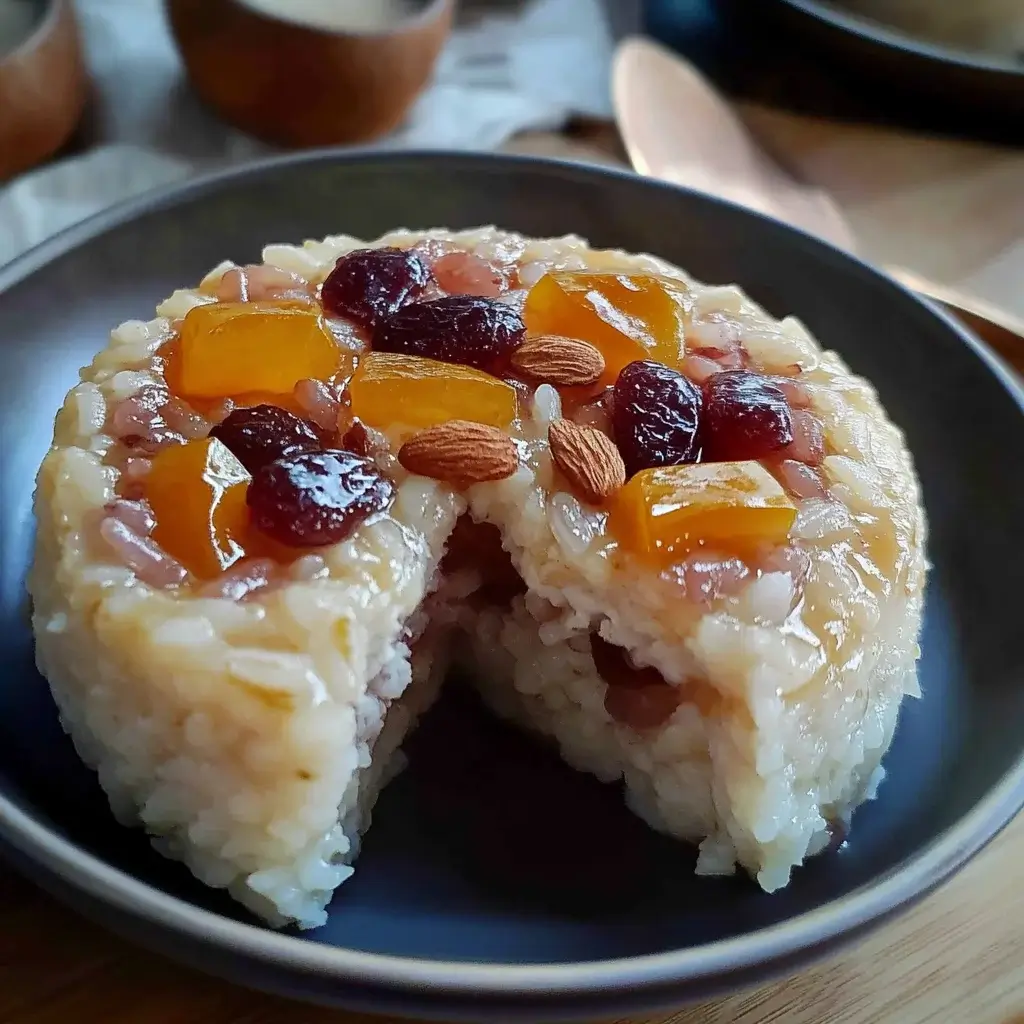

Eight Treasure Rice Pudding, or Bābǎo fàn (八寶飯) as it’s beautifully known in Chinese, is more than just a dessert; it’s a symbol of abundance, prosperity, and togetherness. My first encounter with this glistening, jewel-toned pudding was during a Chinese New Year celebration at a friend’s home. The table was laden with festive dishes, but it was the Bābǎo fàn, presented as the grand finale, that truly captured my attention. It was a work of art – a dome of pearly white rice studded with vibrant, colorful dried fruits and nuts, shimmering under a light syrup.
I remember being initially hesitant. Sticky rice desserts weren’t something I grew up with, and the combination of sweet rice with beans and dried fruit was unfamiliar. But one bite was all it took to convert me. The texture was incredibly satisfying – the chewy, slightly sweet glutinous rice perfectly complementing the soft, yielding red bean paste hidden within. Each “treasure” – the candied fruits and nuts – offered bursts of different flavors and textures, creating a delightful symphony in my mouth. It wasn’t just sweet; it was complex, comforting, and deeply satisfying.
That first experience sparked a fascination. I learned that Bābǎo fàn is a traditional dish, especially popular during Chinese New Year and other celebratory occasions. The “eight treasures” are symbolic of good fortune and represent wishes for prosperity and happiness in the coming year. While the exact “treasures” can vary regionally and by family tradition, they are always carefully chosen for their visual appeal, flavor, and auspicious meanings.
Since then, I’ve made Eight Treasure Rice Pudding many times, each attempt deepening my appreciation for its artistry and flavor. It’s become a cherished dish in my own home, a way to bring a touch of Chinese tradition and symbolism to our special occasions. It’s a bit of a labor of love, requiring some preparation and steaming time, but the result is always worth it. If you’re looking for a dessert that’s not only delicious but also visually stunning and rich in cultural significance, then you absolutely must try making Eight Treasure Rice Pudding. Prepare to be amazed by the transformation of simple ingredients into a culinary masterpiece that’s sure to impress and delight!
Ingredients to Assemble Your Eight Treasures
Creating Eight Treasure Rice Pudding is like crafting a culinary jewel box. Each ingredient, carefully selected, contributes to the overall flavor, texture, and visual appeal of this festive dessert. Here’s a detailed list of what you’ll need to gather your own eight treasures and build this delightful pudding:
- 1 cup Glutinous Rice (Sweet Rice): This is the foundation of our pudding. It’s crucial to use glutinous rice, also known as sweet rice or sticky rice. Short-grain glutinous rice is ideal. Do not substitute with regular long-grain rice, as it won’t provide the necessary stickiness.
- 2 tablespoons Lard or Neutral Oil (Vegetable Oil, Canola Oil): Traditionally, lard is used for its rich flavor and to help the rice become extra fluffy and slightly savory. However, for a vegetarian or lighter option, a neutral oil like vegetable or canola oil works perfectly well.
- 1 cup Red Bean Paste (Anko): This sweet, smooth paste is a vital component, providing a creamy, sweet filling that contrasts beautifully with the chewy rice and the textures of the dried fruits and nuts. You can use store-bought red bean paste (available at Asian grocery stores) for convenience, or make your own from scratch if you are feeling ambitious. Store-bought is perfectly acceptable and saves considerable time.
- Eight Treasures – A Colorful Assortment (Choose at least 8, or a mix of your favorites): This is where the artistry and symbolism come in. Select a variety of dried fruits and nuts for a mix of flavors, textures, and colors. Traditional choices often include:
- Candied Winter Melon (Tang Dong Gua 糖冬瓜): Offers a subtle sweetness and a slightly chewy texture. It’s often translucent and adds a beautiful glistening element.
- Candied Lotus Seeds (Lian Zi 蓮子): Provide a slightly nutty, sweet flavor and a pleasant, firm texture. They are also considered auspicious, symbolizing fertility and abundance.
- Red Dates (Jujubes – Hong Zao 紅棗): Offer a naturally sweet, date-like flavor and a chewy texture. They symbolize prosperity and family unity.
- Raisins (Putao Gan 葡萄乾): Add sweetness and a familiar chewy texture. Choose golden or dark raisins for visual variety.
- Dried Apricots (Xing Fu Gan 杏脯乾): Provide a tangy-sweet flavor and a soft, chewy texture. Their orange color adds vibrancy.
- Dried Longan (Long Yan Rou 龍眼肉): Offer a unique, slightly smoky sweetness and a chewy texture.
- Goji Berries (Gou Qi Zi 枸杞子): Add a slightly tart-sweet flavor and a pop of bright red color. They are also considered to be very healthy.
- Candied Pineapple (Bo Luo Tang 菠蘿糖): Provides a tropical sweetness and a chewy texture. Adds a different flavor profile from the other fruits.
- Nuts (Optional but highly recommended for texture and flavor):
- Walnuts (He Tao 核桃): Offer a slightly bitter, nutty flavor and a crunchy texture.
- Almonds (Xing Ren 杏仁): Provide a mild, nutty flavor and a satisfying crunch.
- Pine Nuts (Song Zi 松子): Add a delicate, buttery flavor and a soft, slightly oily texture.
- Cashews (Yao Guo 腰果): Offer a creamy, mild flavor and a satisfying crunch.
- ¼ – ½ cup Granulated Sugar (Adjust to Taste): The sweetness level is customizable. Start with ¼ cup and adjust to ½ cup or more depending on your preference and the sweetness of your dried fruits and red bean paste.
- 1 cup Water: Used for steaming the rice and making the syrup.
- Optional for Syrup:
- 1 tablespoon Cornstarch (for thickening): If you prefer a thicker syrup, cornstarch slurry (cornstarch mixed with a little cold water) can be added.
- Osmanthus Syrup or Honey (for drizzling): Osmanthus syrup adds a delicate floral aroma and enhances the sweetness. Honey provides a natural sweetness and a lovely flavor.
Step-by-Step Instructions: Assembling Your Treasure Pudding
Creating Eight Treasure Rice Pudding is a rewarding process, bringing together simple ingredients to create a stunning and flavorful dessert. Follow these steps carefully to assemble your own treasure pudding:
Step 1: Prepare the Glutinous Rice
- Rinse the Rice: Place the glutinous rice in a fine-mesh sieve and rinse it under cold running water until the water runs clear. This removes excess starch and helps prevent the rice from becoming overly gummy.
- Soak the Rice (Optional but Recommended): While not as crucial as for purple sticky rice, soaking the glutinous rice for at least 30 minutes to 1 hour can still improve the texture and reduce steaming time. Cover the rinsed rice with cold water in a bowl and let it soak.
- Drain the Rice: After soaking (or rinsing if you skip soaking), drain the rice thoroughly using a sieve.
Step 2: Steam the Glutinous Rice
- Prepare the Steamer: You can use a bamboo steamer, a metal steamer basket, or a rice cooker with a steaming function. Line the bottom of your steamer with parchment paper or cheesecloth to prevent sticking.
- Cook the Rice: Spread the drained rice evenly in the prepared steamer basket. Make a few wells in the rice with your finger to allow steam to penetrate evenly.
- Steam for 20-25 minutes: Place the steamer over a pot of boiling water (ensure water doesn’t touch the steamer basket). Cover tightly and steam over medium-high heat until the rice is cooked through and translucent, but still slightly firm to the bite.
- Fluff and Add Oil/Lard: Once steamed, transfer the rice to a large bowl. While the rice is still hot, drizzle the lard or neutral oil over it and sprinkle with sugar. Use a rice paddle or spatula to gently fluff and mix the oil and sugar into the rice, ensuring it’s evenly distributed. This step adds flavor and helps the rice stay moist and fluffy.
Step 3: Prepare the “Treasures” and Red Bean Paste
- Prepare Dried Fruits and Nuts: If using larger dried fruits like red dates or dried apricots, you may want to halve or quarter them for easier arrangement and eating. Nuts can be left whole or roughly chopped.
- Red Bean Paste: If using store-bought red bean paste, ensure it’s ready to use. If making homemade, prepare it in advance. (For a quick homemade version, you can boil red beans until soft, then mash and sweeten with sugar, cooking down to a paste consistency).
Step 4: Assemble the Eight Treasure Rice Pudding
- Grease a Bowl: Choose a heatproof bowl (about 6-8 inches in diameter) that you will use to mold the pudding. Grease the inside of the bowl lightly with oil to prevent sticking.
- Arrange the Treasures: This is the artistic part! Arrange the dried fruits and nuts in a decorative pattern on the bottom and sides of the greased bowl. Be creative! You can create floral patterns, geometric designs, or simply distribute them attractively. Remember that this bottom layer will become the top of your pudding when inverted.
- Layer with Rice: Gently spoon about half of the cooked glutinous rice into the bowl, pressing it lightly to create a layer over the arranged treasures.
- Add Red Bean Paste Filling: Spoon the red bean paste over the rice layer, spreading it evenly to create a filling layer.
- Top with Remaining Rice: Spoon the remaining glutinous rice over the red bean paste, pressing it down gently to seal the filling and create a smooth surface.
Step 5: Steam the Pudding Again
- Steam for 15-20 minutes: Place the bowl of assembled pudding in the steamer. Steam again for another 15-20 minutes over medium heat. This second steaming helps to meld the flavors together and ensure the pudding is heated through.
Step 6: Prepare the Syrup (Optional but Recommended)
- Make Simple Syrup: While the pudding is steaming for the second time, prepare a simple syrup. In a small saucepan, combine ½ cup water and 2 tablespoons sugar (or to taste). Heat over medium heat, stirring until the sugar dissolves and the syrup slightly thickens.
- Thicken Syrup (Optional): For a thicker syrup, mix 1 teaspoon of cornstarch with 1 tablespoon of cold water to create a slurry. Pour the cornstarch slurry into the simmering syrup and stir constantly until the syrup thickens to your desired consistency. Remove from heat.
- Flavor Syrup (Optional): You can add a touch of osmanthus syrup or honey to the simple syrup for extra flavor.
Step 7: Invert and Serve
- Remove from Steamer: Carefully remove the bowl of steamed pudding from the steamer. Let it cool slightly for a few minutes.
- Invert onto Serving Plate: Place a serving plate over the top of the bowl. Holding the plate firmly against the bowl, quickly invert the pudding onto the plate. Gently tap the bottom of the bowl if needed to release the pudding.
- Drizzle with Syrup: Spoon the prepared syrup over the inverted pudding, allowing it to drizzle down the sides.
- Garnish (Optional): You can garnish with osmanthus flowers (if available) or a few extra dried fruits or nuts for visual appeal.
- Serve Warm or at Room Temperature: Eight Treasure Rice Pudding can be enjoyed warm or at room temperature.
Eight Treasure Rice Pudding Nutrition Facts (Estimated)
Please remember these are estimated nutritional values and can vary based on the specific ingredients and portion sizes you use. This is an approximate breakdown per serving (assuming the recipe serves approximately 8-10 people):
- Serving Size: Approximately ½ cup cooked Eight Treasure Rice Pudding
- Calories per Serving: 280-350 calories (depending on sugar content, oil/lard used, and amount of red bean paste and dried fruits)
- Total Fat: 8-12g (can vary significantly depending on oil/lard and nuts)
- Saturated Fat: 3-7g (lower if using vegetable oil, higher if using lard and nuts)
- Cholesterol: 0-10mg (negligible unless using lard)
- Sodium: 50-100mg (naturally occurring in ingredients, may be slightly higher in store-bought red bean paste)
- Total Carbohydrates: 50-60g
- Dietary Fiber: 2-4g (from rice, dried fruits, and nuts)
- Sugars: 30-40g (from added sugar, red bean paste, and dried fruits)
- Protein: 3-5g
Nutritional Highlights:
- Energy Source: Primarily a carbohydrate-rich dessert, providing a good source of energy from glutinous rice and sugars.
- Fiber: Contains some dietary fiber from glutinous rice, dried fruits, and nuts, which aids in digestion.
- Vitamins and Minerals: Dried fruits contribute some vitamins and minerals, such as potassium, iron, and antioxidants (depending on the specific fruits used). Nuts provide healthy fats, protein, and additional vitamins and minerals.
- Iron: Red bean paste provides some iron.
Important Considerations:
- Sugar Content: This is a dessert and is relatively high in sugar. Be mindful of portion sizes if you are watching your sugar intake.
- Carbohydrate Content: High in carbohydrates, so consider this if you are managing carbohydrate intake.
- Fat Content: Fat content can vary depending on the use of lard, oil, and nuts. While nuts provide healthy fats, lard is high in saturated fat. Choose oil for a lower saturated fat option.
- Portion Control: Due to the calorie and carbohydrate density, portion control is important.
Disclaimer: This nutritional information is an estimate. For accurate nutritional values, use a nutrition calculator with the specific brands and measurements of ingredients you use.
Preparation Time for Eight Treasure Rice Pudding
The preparation of Eight Treasure Rice Pudding involves several steps, but the process is manageable if broken down. Here’s a time breakdown:
- Rice Soaking Time (Optional): 30 minutes – 1 hour (passive)
- Rice Rinsing and Preparation: 10 minutes
- First Steaming of Rice: 20-25 minutes (passive)
- Preparing Treasures and Red Bean Paste: 20-30 minutes (active, can be done while rice steams)
- Assembling the Pudding: 15-20 minutes (active)
- Second Steaming of Pudding: 15-20 minutes (passive)
- Syrup Preparation (Optional): 5-10 minutes (active)
- Cooling and Inverting: 10-15 minutes (passive)
Total Time (including optional soaking): Approximately 1 hour 45 minutes – 2 hours 30 minutes
Hands-on Time: Approximately 1 hour – 1 hour 30 minutes (rinsing, preparing treasures, assembling, syrup making)
Tips for Time Management:
- Prepare Red Bean Paste Ahead: If making homemade red bean paste, prepare it a day or two in advance to save time on the day of making the pudding.
- Soak Rice While Preparing Treasures: If soaking rice, do it while you are preparing and chopping the dried fruits and nuts.
- Multitask During Steaming: While the rice is steaming, you can prepare the treasures and red bean paste. While the pudding is steaming the second time, you can make the syrup.
How to Serve Eight Treasure Rice Pudding: Festive Presentations
Eight Treasure Rice Pudding is not only delicious but also visually stunning, making presentation a key part of the experience. Here are some serving suggestions to showcase this festive dessert:
- Inverted and Drizzled:
- Classic Inverted Presentation: The most traditional way is to invert the pudding onto a plate, revealing the beautiful pattern of treasures on top.
- Generous Syrup Drizzle: Drizzle the prepared syrup generously over the pudding, allowing it to cascade down the sides. The glistening syrup enhances the visual appeal and adds extra sweetness.
- Individual Portions: For smaller gatherings or a more elegant touch, make individual puddings in small ramekins and invert each onto a small plate.
- Garnishes for Elegance:
- Osmanthus Flowers: If available, a sprinkle of dried osmanthus flowers on top adds a delicate floral aroma and a touch of sophistication.
- Extra Treasures: Arrange a few extra pieces of the dried fruits and nuts used in the pudding around the base of the inverted pudding for a cohesive and abundant look.
- Fresh Mint Leaves: A few fresh mint leaves can provide a pop of green color and a refreshing contrast.
- Serving Temperature and Occasions:
- Warm or Room Temperature: Eight Treasure Rice Pudding is traditionally served warm or at room temperature. It’s delicious either way.
- Chinese New Year Staple: This dessert is almost essential for Chinese New Year celebrations. It symbolizes good fortune and prosperity for the new year.
- Festive Banquets and Gatherings: Perfect for any special occasion, family banquet, or festive gathering where you want to impress and delight your guests.
- Dessert Course: Serve as the final, sweet course of a meal.
- Accompaniments (Optional):
- Chinese Tea: Serve with a pot of fragrant Chinese tea, such as Jasmine tea or Oolong tea, to complement the sweetness of the pudding.
- Fresh Fruit: While the pudding is already laden with fruit, you could offer a small plate of fresh fruit on the side for a lighter contrast if desired.
- Symbolism in Presentation:
- Round Shape: The round shape of the pudding symbolizes completeness and unity, especially important during family gatherings and holidays.
- “Eight Treasures”: Emphasize the “eight treasures” aspect when presenting the dish, highlighting the symbolic meaning of abundance and good fortune.
Additional Tips for Perfect Eight Treasure Rice Pudding
Here are five additional tips to help you create a flawless and delicious Eight Treasure Rice Pudding:
- Quality of Glutinous Rice Matters: Use high-quality glutinous rice for the best texture. Look for short-grain glutinous rice that is pearly white and opaque. Avoid older rice that may be dry and less sticky. Fresh, good-quality rice will yield a chewier and more flavorful pudding.
- Don’t Overcook the Rice (First Steaming): In the first steaming stage, steam the rice until it’s cooked through but still slightly firm to the bite. Overcooked rice will become too mushy and lose its pleasant chewiness in the final pudding. It will continue to soften during the second steaming.
- Be Generous with “Treasures” but Balance Flavors: While it’s called “Eight Treasure Rice Pudding,” you can use more than eight types of dried fruits and nuts. However, aim for a balance of flavors and textures. Don’t overload the bowl with too many treasures that overwhelm the rice and red bean paste. Choose a variety that complements each other in taste and appearance.
- Adjust Sweetness to Your Preference: The recipe suggests a sugar amount, but taste as you go. Consider the sweetness of your red bean paste and dried fruits. Adjust the sugar in the rice and the syrup accordingly to achieve your desired level of sweetness. You can always add more sugar, but you can’t easily remove it.
- Grease the Bowl Thoroughly for Easy Inverting: Properly greasing the bowl is essential for a clean inversion of the pudding. Use a neutral oil or a light coating of cooking spray to grease the entire inside of the bowl, especially the bottom and sides where the treasures are arranged. This will prevent the pudding from sticking and ensure it releases cleanly onto the serving plate.
Frequently Asked Questions (FAQ) About Eight Treasure Rice Pudding
Here are five frequently asked questions about Eight Treasure Rice Pudding to guide you through making this special dessert:
Q1: Can I use other types of rice besides glutinous rice?
A: No, glutinous rice (sweet rice, sticky rice) is essential for Eight Treasure Rice Pudding. Regular long-grain or medium-grain rice will not work. Glutinous rice has a unique starch content that gives it the characteristic sticky and chewy texture necessary for this dessert. Substituting other types of rice will result in a completely different texture and will not be authentic.
Q2: Can I skip soaking the glutinous rice?
A: While soaking is optional for Eight Treasure Rice Pudding (unlike purple sticky rice where it’s crucial), it is still recommended to soak the rice for at least 30 minutes to 1 hour. Soaking helps the rice cook more evenly and become slightly softer, reducing the overall steaming time. Skipping soaking will require slightly longer steaming time for the rice to cook through.
Q3: Can I use different fillings or “treasures” than the traditional ones?
A: Yes, while there are traditional “treasures,” you can definitely customize the dried fruits and nuts based on your preferences and what’s available. Feel free to substitute or add other dried fruits like candied cherries, cranberries, figs, or different types of nuts like pistachios, macadamia nuts, or peanuts. The key is to choose a variety that provides a mix of colors, flavors, and textures, and maintains the symbolic abundance.
Q4: How do I prevent the pudding from sticking to the bowl when inverting?
A: Thoroughly greasing the bowl is the most important step to prevent sticking. Grease the entire inside of the bowl generously with oil or cooking spray before arranging the treasures and layering the rice. Also, letting the pudding cool slightly for a few minutes after the second steaming before inverting can help it release more easily. If it still sticks slightly, gently tap the bottom of the bowl or use a thin spatula to loosen the edges.
Q5: How do I reheat leftover Eight Treasure Rice Pudding? How long does it last?
A: Store leftover Eight Treasure Rice Pudding in an airtight container in the refrigerator for up to 3-4 days. To reheat, the best method is to gently steam it again for about 10-15 minutes, which will restore its moisture and texture. You can also microwave it in short intervals, covered with a damp paper towel or a splash of water, but steaming is preferred for maintaining the texture.
Print
Eight Treasure Rice Pudding recipe
Ingredients
- 1 cup Glutinous Rice (Sweet Rice): This is the foundation of our pudding. It’s crucial to use glutinous rice, also known as sweet rice or sticky rice. Short-grain glutinous rice is ideal. Do not substitute with regular long-grain rice, as it won’t provide the necessary stickiness.
- 2 tablespoons Lard or Neutral Oil (Vegetable Oil, Canola Oil): Traditionally, lard is used for its rich flavor and to help the rice become extra fluffy and slightly savory. However, for a vegetarian or lighter option, a neutral oil like vegetable or canola oil works perfectly well.
- 1 cup Red Bean Paste (Anko): This sweet, smooth paste is a vital component, providing a creamy, sweet filling that contrasts beautifully with the chewy rice and the textures of the dried fruits and nuts. You can use store-bought red bean paste (available at Asian grocery stores) for convenience, or make your own from scratch if you are feeling ambitious. Store-bought is perfectly acceptable and saves considerable time.
- Eight Treasures – A Colorful Assortment (Choose at least 8, or a mix of your favorites): This is where the artistry and symbolism come in. Select a variety of dried fruits and nuts for a mix of flavors, textures, and colors. Traditional choices often include:
- Candied Winter Melon (Tang Dong Gua 糖冬瓜): Offers a subtle sweetness and a slightly chewy texture. It’s often translucent and adds a beautiful glistening element.
- Candied Lotus Seeds (Lian Zi 蓮子): Provide a slightly nutty, sweet flavor and a pleasant, firm texture. They are also considered auspicious, symbolizing fertility and abundance.
- Red Dates (Jujubes – Hong Zao 紅棗): Offer a naturally sweet, date-like flavor and a chewy texture. They symbolize prosperity and family unity.
- Raisins (Putao Gan 葡萄乾): Add sweetness and a familiar chewy texture. Choose golden or dark raisins for visual variety.
- Dried Apricots (Xing Fu Gan 杏脯乾): Provide a tangy-sweet flavor and a soft, chewy texture. Their orange color adds vibrancy.
- Dried Longan (Long Yan Rou 龍眼肉): Offer a unique, slightly smoky sweetness and a chewy texture.
- Goji Berries (Gou Qi Zi 枸杞子): Add a slightly tart-sweet flavor and a pop of bright red color. They are also considered to be very healthy.
- Candied Pineapple (Bo Luo Tang 菠蘿糖): Provides a tropical sweetness and a chewy texture. Adds a different flavor profile from the other fruits.
- Nuts (Optional but highly recommended for texture and flavor):
- Walnuts (He Tao 核桃): Offer a slightly bitter, nutty flavor and a crunchy texture.
- Almonds (Xing Ren 杏仁): Provide a mild, nutty flavor and a satisfying crunch.
- Pine Nuts (Song Zi 松子): Add a delicate, buttery flavor and a soft, slightly oily texture.
- Cashews (Yao Guo 腰果): Offer a creamy, mild flavor and a satisfying crunch.
- ¼ – ½ cup Granulated Sugar (Adjust to Taste): The sweetness level is customizable. Start with ¼ cup and adjust to ½ cup or more depending on your preference and the sweetness of your dried fruits and red bean paste.
- 1 cup Water: Used for steaming the rice and making the syrup.
- Optional for Syrup:
- 1 tablespoon Cornstarch (for thickening): If you prefer a thicker syrup, cornstarch slurry (cornstarch mixed with a little cold water) can be added.
- Osmanthus Syrup or Honey (for drizzling): Osmanthus syrup adds a delicate floral aroma and enhances the sweetness. Honey provides a natural sweetness and a lovely flavor.
Instructions
Step 1: Prepare the Glutinous Rice
- Rinse the Rice: Place the glutinous rice in a fine-mesh sieve and rinse it under cold running water until the water runs clear. This removes excess starch and helps prevent the rice from becoming overly gummy.
- Soak the Rice (Optional but Recommended): While not as crucial as for purple sticky rice, soaking the glutinous rice for at least 30 minutes to 1 hour can still improve the texture and reduce steaming time. Cover the rinsed rice with cold water in a bowl and let it soak.
- Drain the Rice: After soaking (or rinsing if you skip soaking), drain the rice thoroughly using a sieve.
Step 2: Steam the Glutinous Rice
- Prepare the Steamer: You can use a bamboo steamer, a metal steamer basket, or a rice cooker with a steaming function. Line the bottom of your steamer with parchment paper or cheesecloth to prevent sticking.
- Cook the Rice: Spread the drained rice evenly in the prepared steamer basket. Make a few wells in the rice with your finger to allow steam to penetrate evenly.
- Steam for 20-25 minutes: Place the steamer over a pot of boiling water (ensure water doesn’t touch the steamer basket). Cover tightly and steam over medium-high heat until the rice is cooked through and translucent, but still slightly firm to the bite.
- Fluff and Add Oil/Lard: Once steamed, transfer the rice to a large bowl. While the rice is still hot, drizzle the lard or neutral oil over it and sprinkle with sugar. Use a rice paddle or spatula to gently fluff and mix the oil and sugar into the rice, ensuring it’s evenly distributed. This step adds flavor and helps the rice stay moist and fluffy.
Step 3: Prepare the “Treasures” and Red Bean Paste
- Prepare Dried Fruits and Nuts: If using larger dried fruits like red dates or dried apricots, you may want to halve or quarter them for easier arrangement and eating. Nuts can be left whole or roughly chopped.
- Red Bean Paste: If using store-bought red bean paste, ensure it’s ready to use. If making homemade, prepare it in advance. (For a quick homemade version, you can boil red beans until soft, then mash and sweeten with sugar, cooking down to a paste consistency).
Step 4: Assemble the Eight Treasure Rice Pudding
- Grease a Bowl: Choose a heatproof bowl (about 6-8 inches in diameter) that you will use to mold the pudding. Grease the inside of the bowl lightly with oil to prevent sticking.
- Arrange the Treasures: This is the artistic part! Arrange the dried fruits and nuts in a decorative pattern on the bottom and sides of the greased bowl. Be creative! You can create floral patterns, geometric designs, or simply distribute them attractively. Remember that this bottom layer will become the top of your pudding when inverted.
- Layer with Rice: Gently spoon about half of the cooked glutinous rice into the bowl, pressing it lightly to create a layer over the arranged treasures.
- Add Red Bean Paste Filling: Spoon the red bean paste over the rice layer, spreading it evenly to create a filling layer.
- Top with Remaining Rice: Spoon the remaining glutinous rice over the red bean paste, pressing it down gently to seal the filling and create a smooth surface.
Step 5: Steam the Pudding Again
- Steam for 15-20 minutes: Place the bowl of assembled pudding in the steamer. Steam again for another 15-20 minutes over medium heat. This second steaming helps to meld the flavors together and ensure the pudding is heated through.
Step 6: Prepare the Syrup (Optional but Recommended)
- Make Simple Syrup: While the pudding is steaming for the second time, prepare a simple syrup. In a small saucepan, combine ½ cup water and 2 tablespoons sugar (or to taste). Heat over medium heat, stirring until the sugar dissolves and the syrup slightly thickens.
- Thicken Syrup (Optional): For a thicker syrup, mix 1 teaspoon of cornstarch with 1 tablespoon of cold water to create a slurry. Pour the cornstarch slurry into the simmering syrup and stir constantly until the syrup thickens to your desired consistency. Remove from heat.
- Flavor Syrup (Optional): You can add a touch of osmanthus syrup or honey to the simple syrup for extra flavor.
Step 7: Invert and Serve
- Remove from Steamer: Carefully remove the bowl of steamed pudding from the steamer. Let it cool slightly for a few minutes.
- Invert onto Serving Plate: Place a serving plate over the top of the bowl. Holding the plate firmly against the bowl, quickly invert the pudding onto the plate. Gently tap the bottom of the bowl if needed to release the pudding.
- Drizzle with Syrup: Spoon the prepared syrup over the inverted pudding, allowing it to drizzle down the sides.
- Garnish (Optional): You can garnish with osmanthus flowers (if available) or a few extra dried fruits or nuts for visual appeal.
- Serve Warm or at Room Temperature: Eight Treasure Rice Pudding can be enjoyed warm or at room temperature.
Nutrition
- Serving Size: one normal portion
- Calories: 280-350
- Sugar: 30-40g
- Sodium: 50-100mg
- Fat: 8-12g
- Saturated Fat: 3-7g
- Carbohydrates: 50-60g
- Fiber: 2-4g
- Protein: 3-5g
- Cholesterol: 0-10mg