
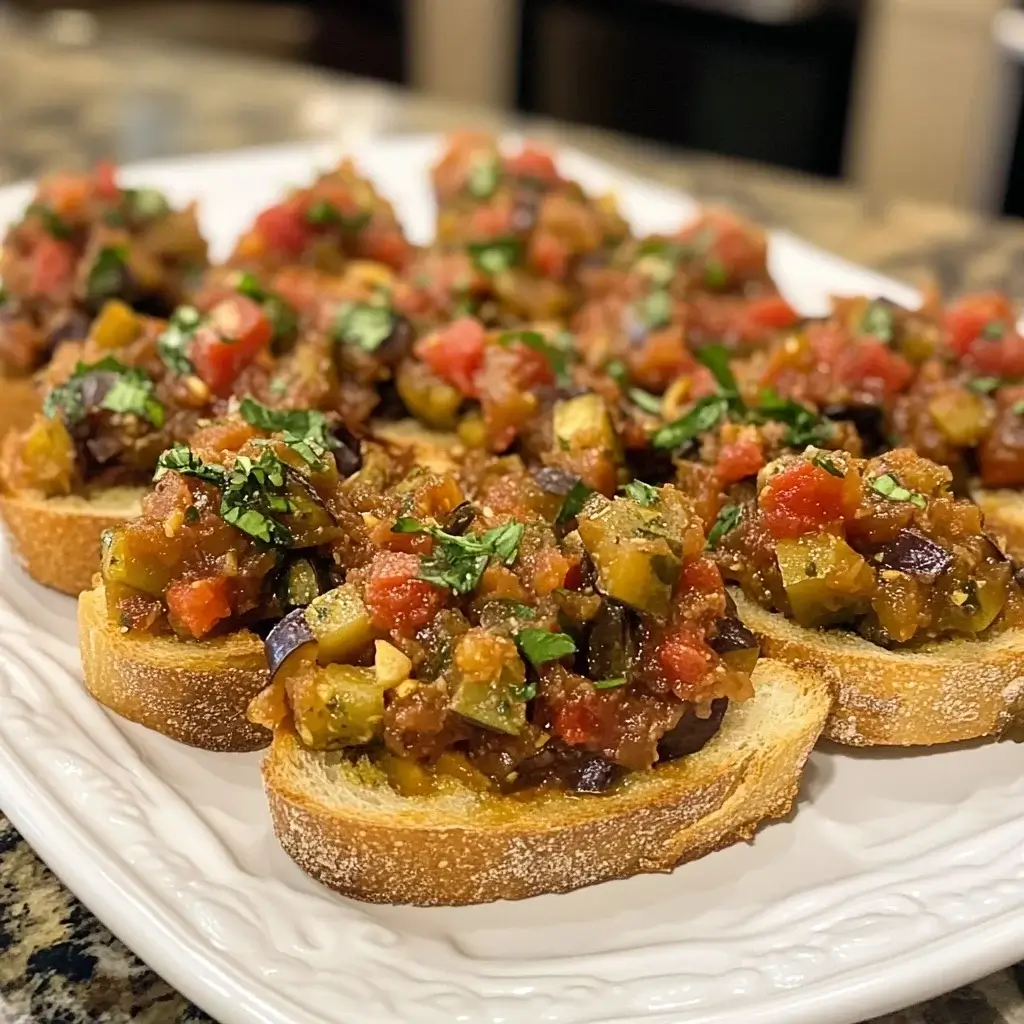
There’s a unique charm in the way certain dishes can transport you to a different place and time. The Eggplant Caponata on Crostini is one such dish, taking me back to a quaint little bistro in Sicily where I first fell in love with its rich, tangy flavors. When I prepared it for my family, they were equally enchanted by the explosion of taste and texture. The combination of sweet and sour, the tenderness of the eggplant, and the crunchy crostini beneath it created a symphony on the palate that was nothing short of delightful. This recipe quickly became a family favorite, a testament to the harmony of flavors that embodies the essence of Italian cuisine. The caponata itself, with its mix of eggplant, onions, tomatoes, olives, and capers, is both hearty and refreshing, offering a balance of savory depth and zesty brightness. The slight bitterness of the eggplant melds seamlessly with the sweet-sour notes from the vinegar and sugar, making every bite a moment of culinary bliss. Paired with the crisp, toasted crostini, the dish provides a satisfying contrast of textures that make it a perfect appetizer or light main course. What I love most about this dish is how it brings together so many elements of traditional Italian cooking—simplicity, seasonality, and a deep respect for fresh ingredients—into one unforgettable bite.
Ingredients
To recreate this Italian classic in your kitchen, gather the following ingredients:
- 2 medium-sized eggplants, peeled and diced
- 1 large onion, finely chopped
- 2 cloves of garlic, minced
- 1 celery stalk, finely chopped
- 1 red bell pepper, diced
- 1/4 cup of green olives, pitted and sliced
- 1/4 cup of capers, rinsed
- 1/4 cup of tomato paste
- 1/4 cup of red wine vinegar
- 2 tablespoons of sugar
- 1/4 cup of extra virgin olive oil
- Salt and pepper to taste
- 1 baguette, sliced
- Fresh basil leaves for garnish
Instructions
The preparation of Eggplant Caponata on Crostini involves several steps, but each contributes to the final culinary masterpiece. Begin by preheating your oven to 375°F (190°C). Arrange the diced eggplant on a baking sheet, drizzle with olive oil, and season with salt and pepper. Roast for about 25 minutes, until the eggplant becomes tender and slightly golden.
While the eggplant roasts, heat olive oil in a large skillet over medium heat. Add the onion, garlic, celery, and red bell pepper, sautéing until the vegetables are soft and fragrant. Stir in the tomato paste, allowing it to cook for a couple of minutes to develop its flavors.
Once the eggplant is ready, add it to the skillet along with the green olives, capers, red wine vinegar, and sugar. Mix well and let the mixture simmer for about 10 minutes, allowing the flavors to meld together beautifully. Adjust the seasoning with salt and pepper to your liking.
For the crostini, lightly brush the baguette slices with olive oil and toast them in the oven until they are crisp and golden brown. To serve, top each crostini with a generous spoonful of the caponata and garnish with fresh basil leaves.
Nutrition Facts
This recipe serves approximately 8 people, with each serving containing roughly 150 calories. It’s a dish that’s not only rich in flavor but also relatively light, making it a perfect appetizer or light snack.
Preparation Time
The great thing about Eggplant Caponata on Crostini is that it doesn’t require an entire afternoon in the kitchen. The total preparation and cooking time is around 45 minutes. This includes 25 minutes for roasting the eggplant, 10 minutes of simmering, and about 10 minutes to prepare and toast the crostini.
How to Serve Eggplant Caponata on Crostini
Eggplant Caponata on Crostini is a versatile dish that can elevate any dining experience, whether you’re hosting a formal dinner or enjoying a casual lunch. Here are several delightful ways to serve this delicious Mediterranean-inspired dish:
1. As an Appetizer Before a Classic Italian Meal
Caponata on crostini makes for an elegant and flavorful appetizer that can set the tone for an Italian feast. To enhance the experience, consider pairing it with a glass of dry white wine, such as Pinot Grigio or Verdicchio, which complements the rich and tangy flavors of the caponata. For presentation, arrange the crostini on a decorative platter, garnished with fresh basil leaves or a drizzle of balsamic reduction. This not only adds visual appeal but also provides an extra layer of flavor.
2. Alongside a Fresh Green Salad for a Light Lunch
For a lighter meal, serve Eggplant Caponata on crostini alongside a crisp green salad. A simple arugula salad tossed with lemon vinaigrette or a mixed greens salad with cherry tomatoes, cucumbers, and a light olive oil dressing works beautifully. This combination creates a balanced meal, where the richness of the caponata is offset by the freshness of the salad. You can also incorporate some toasted nuts or seeds into the salad for added texture and nutrition.
3. Paired with a Selection of Cheeses and Cured Meats for a Sophisticated Antipasto Platter
Transform your Eggplant Caponata on crostini into a centerpiece for an antipasto platter. Select a variety of cheeses—such as aged Parmigiano-Reggiano, creamy goat cheese, or tangy gorgonzola—and an array of cured meats like prosciutto, salami, or bresaola. Add olives, marinated artichokes, and roasted peppers for extra flavor and color. This arrangement allows guests to mix and match, creating their own perfect bites, while the caponata serves as a delightful contrast to the savory meats and creamy cheeses.
4. As a Topping for Grilled Chicken or Fish for a Flavorful Main Course
Elevate your main dishes by using Eggplant Caponata as a vibrant topping for grilled chicken or fish. The sweetness of the caponata, combined with its rich, savory undertones, complements the smokiness of grilled meats beautifully. Simply grill your protein of choice, then spoon a generous helping of caponata over it just before serving. This not only adds a burst of flavor but also introduces a colorful presentation that is sure to impress your guests. For an added touch, serve with a side of herbed quinoa or couscous to soak up the delicious juices.
5. In a Picnic Spread, as It Travels Well and Tastes Great at Room Temperature
Eggplant Caponata on crostini is an excellent choice for picnics, as it is portable and can be enjoyed at room temperature without losing its flavor or texture. Pack the crostini in a sturdy container to prevent them from becoming soggy, and store the caponata in a separate jar. When you’re ready to eat, simply assemble the crostini on-site. To enhance your picnic, consider including a selection of fresh fruits, artisanal bread, and refreshing beverages like sparkling water or a light rosé. This combination of flavors and textures will create a delightful outdoor dining experience.
Conclusion
Eggplant Caponata on crostini is a versatile dish that can be adapted for various occasions and settings. Whether served as an appetizer, paired with salads and cheeses, used as a topping for proteins, or included in a picnic spread, this dish brings a taste of the Mediterranean to your table. With its rich flavors and appealing presentation, Eggplant Caponata is sure to impress your guests and elevate your culinary repertoire.
Additional Tips for Perfecting Your Eggplant Caponata on Crostini
To ensure that your Eggplant Caponata on Crostini is not only enjoyable but also a culinary masterpiece, here are some detailed tips to enhance your cooking experience and the final dish:
1. Use Fresh Ingredients
Fresh ingredients are the cornerstone of any great dish, and caponata is no exception. When selecting eggplant, look for ones that are firm, glossy, and heavy for their size, with smooth, unblemished skin. This indicates ripeness and ensures a sweeter, more flavorful result. Fresh basil is equally important; choose vibrant green leaves without any brown spots. Additionally, using ripe tomatoes or high-quality canned tomatoes can elevate the dish’s overall taste. When it comes to olive oil, opt for a high-quality extra virgin variety, as it plays a significant role in the dish’s flavor profile.
2. Don’t Rush the Roasting Process
Roasting eggplant properly is crucial for achieving a deep, rich flavor. To do this, cut the eggplant into uniform cubes to ensure even cooking. Toss the cubes in olive oil and season generously with salt. Spread them in a single layer on a baking sheet to allow for proper air circulation. Roast in a preheated oven at around 400°F (200°C) for 25-30 minutes, or until the eggplant is tender and has developed a beautiful golden-brown color. This caramelization process enhances the natural sweetness of the eggplant, adding depth to your caponata.
3. Balance the Sweet and Sour
Caponata is known for its unique sweet and sour flavor profile, which is achieved through a careful balance of sugar and vinegar. Start by adding a small amount of sugar and vinegar, and taste the mixture as you go. Different types of vinegar (such as balsamic, red wine, or apple cider) can impart varying levels of tanginess and sweetness, so feel free to experiment. The goal is to find a harmonious balance that suits your palate. Remember, you can always add more, but it’s difficult to take away once added, so proceed gradually.
4. Prepare in Advance
One of the great things about caponata is that it improves with time. Preparing it a day in advance allows the flavors to meld and develop, resulting in a more complex and satisfying dish. Once cooked, let the caponata cool to room temperature before transferring it to an airtight container and refrigerating. When you’re ready to serve it, simply let it come to room temperature or gently reheat it on the stove. This make-ahead aspect also makes it an ideal dish for entertaining, as it allows you to spend less time in the kitchen and more time with your guests.
5. Experiment with Variations
While the classic caponata recipe is delightful on its own, don’t hesitate to get creative! Adding ingredients like toasted pine nuts can introduce a delightful crunch and nutty flavor, while raisins or currants can contribute a touch of sweetness that complements the dish beautifully. You might also explore using different types of vegetables, such as zucchini or bell peppers, for added color and nutrition. For a spicier kick, consider incorporating red pepper flakes or fresh chili peppers. The versatility of caponata means you can tailor it to suit your taste preferences or seasonal availability.
6. Choosing the Right Crostini
The crostini itself plays a crucial role in the overall presentation and enjoyment of your caponata. Opt for a good quality baguette or ciabatta; slice it into thin rounds and brush with olive oil before toasting. Toasting can be done in the oven or on a grill, but aim for a golden-brown color and a crisp texture. This provides the perfect base for the caponata, allowing it to hold up without becoming soggy. You may also consider adding a sprinkle of sea salt or a light rub of garlic on the crostini before assembling for an added flavor dimension.
By paying attention to these detailed tips, you can elevate your Eggplant Caponata on Crostini into a dish that not only impresses your guests but also delights your palate with every bite. Happy cooking
FAQ Section
Here are some common questions about Eggplant Caponata on Crostini:
Q: Can I make the caponata ahead of time?
A: Absolutely! In fact, the flavors develop beautifully overnight, making it a great dish to prepare a day in advance.
Q: Can I freeze the caponata?
A: Yes, you can freeze the caponata in an airtight container for up to three months. Thaw it in the refrigerator before serving.
Q: What other types of bread can I use for the crostini?
A: While a baguette is traditional, you can use ciabatta, sourdough, or any crusty bread that you prefer.
Q: Is there a way to make this dish vegan?
A: The recipe is naturally vegan, so you don’t need to make any substitutions.
Q: How do I store leftovers?
A: Store any leftover caponata in an airtight container in the refrigerator for up to five days. It’s delicious served cold or at room temperature.