
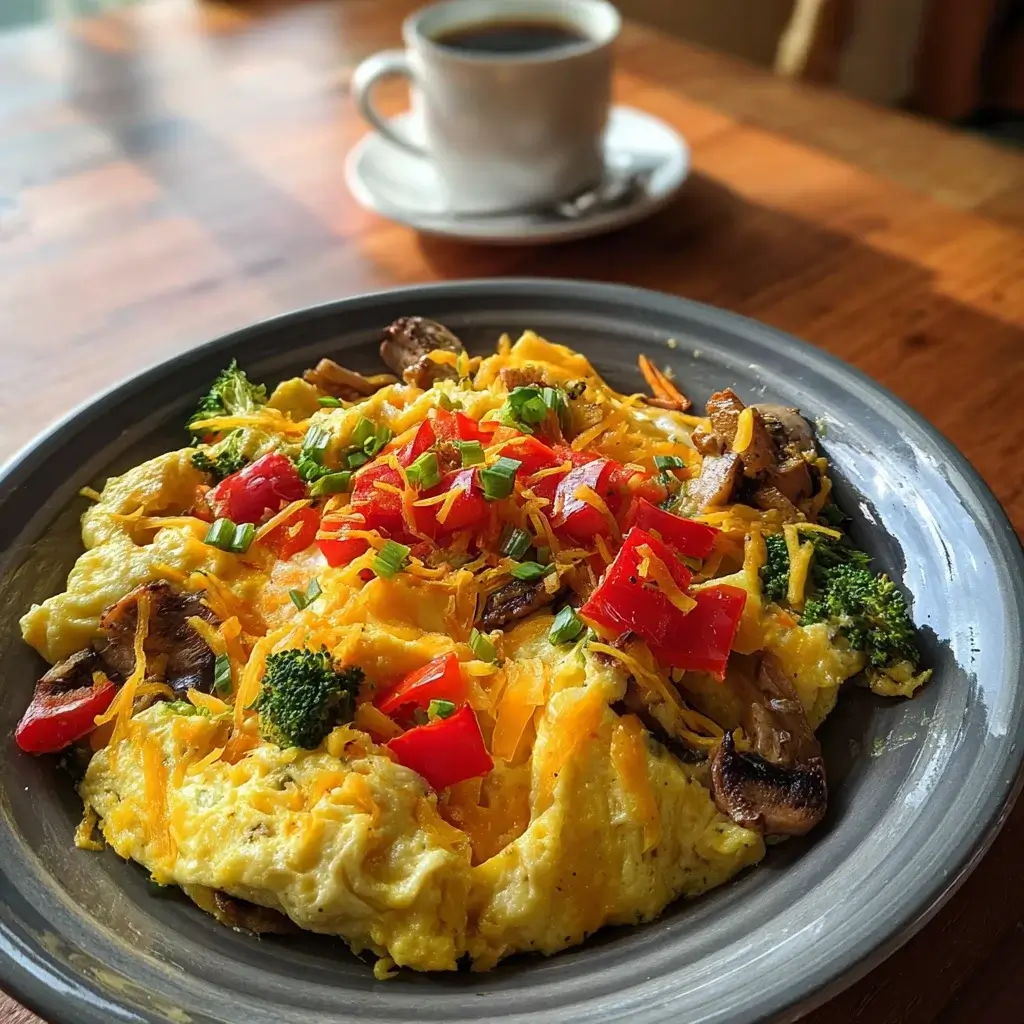

In the heart of my bustling kitchen, where the morning sun streams through the window and the aroma of freshly brewed coffee fills the air, one recipe has become a cherished staple for my family: the Egg and Veggie Scramble. This isn’t just a recipe; it’s a canvas for culinary creativity, a celebration of fresh ingredients, and a surefire way to start our day on a delicious and nutritious note. I still remember the first time I whipped up this vibrant scramble. The kids, usually picky eaters, were drawn in by the colorful medley of vegetables, and their skepticism quickly turned into enthusiastic munching. My husband, a man of simple tastes, declared it the “best breakfast ever,” a title he doesn’t bestow lightly. Since that day, this humble dish has graced our breakfast table countless times, each iteration slightly different, reflecting the seasonal produce available and our mood of the day. It has seen us through hectic weekday mornings, lazy weekend brunches, and even the occasional “breakfast for dinner” night. The beauty of the Egg and Veggie Scramble lies in its simplicity and versatility. It’s a forgiving recipe that welcomes experimentation, making it perfect for both novice cooks and seasoned chefs. This article is more than just a set of instructions; it’s an invitation to my kitchen, a sharing of a beloved family favorite that I hope will bring as much joy and nourishment to your home as it has to mine.
Complete with the ingredients amount
This recipe is designed to be adaptable, so feel free to substitute with your favorite vegetables or what you have on hand. The quantities below serve two people generously.
- Eggs: 4 large, preferably organic and free-range for the best flavor and nutritional value.
- Assorted Vegetables: About 2 cups, chopped. A colorful combination not only looks appealing but also provides a wider range of nutrients. My go-to mix includes:
- 1/2 cup of diced red bell pepper
- 1/2 cup of chopped spinach or kale
- 1/4 cup of diced red onion
- 1/4 cup of sliced mushrooms (cremini or button work well)
- 1/4 cup of cherry tomatoes, halved
- Fat for cooking: 1 tablespoon of unsalted butter or olive oil. Butter adds a rich flavor, while olive oil is a healthier alternative.
- Milk or Cream (optional): 2 tablespoons of whole milk, heavy cream, or a non-dairy alternative like almond milk. This is the secret to creamy, fluffy scrambled eggs.
- Cheese (optional): 1/4 cup of shredded cheese. Cheddar, feta, goat cheese, or a Mexican blend all work wonderfully.
- Seasoning: Salt and freshly ground black pepper to taste.
- Fresh Herbs (optional garnish): 1 tablespoon of chopped fresh parsley, chives, or cilantro.
Instructions
Follow these simple steps to create a perfect Egg and Veggie Scramble every time.
- Prepare the Vegetables: The key to a great scramble is to have all your ingredients prepped and ready before you start cooking. Wash and chop all your vegetables into bite-sized pieces. If you’re using harder vegetables like carrots or broccoli, it’s a good idea to blanch them or sauté them for a few extra minutes before adding the other vegetables.
- Sauté the Vegetables: Heat the butter or olive oil in a medium-sized non-stick skillet over medium heat. Once the pan is hot, add the onions and bell peppers and sauté for 3-4 minutes until they begin to soften. Next, add the mushrooms and cook for another 2-3 minutes until they release their moisture and start to brown. Finally, add the spinach or kale and cherry tomatoes and cook for another minute until the greens have wilted. Season the vegetables with a pinch of salt and pepper.
- Whisk the Eggs: While the vegetables are cooking, crack the eggs into a medium-sized bowl. Add the milk or cream if you’re using it, and season with a pinch of salt and pepper. Whisk the eggs vigorously for about a minute until the yolks and whites are completely combined and the mixture is light and frothy. This incorporates air into the eggs, resulting in a fluffier scramble.
- Cook the Eggs: Pour the whisked egg mixture over the sautéed vegetables in the skillet. Let the eggs cook undisturbed for about 30 seconds, or until the edges start to set.
- Scramble Gently: Using a rubber spatula, gently push the eggs from the edges of the pan towards the center. Continue this process, folding the cooked portions over the uncooked portions, until the eggs are about 80% cooked. They should still be slightly moist and glossy.
- Add the Cheese: If you’re using cheese, sprinkle it over the eggs during the last minute of cooking. Gently fold the eggs a few more times to distribute the cheese and allow it to melt.
- Serve Immediately: Remove the skillet from the heat. The residual heat will continue to cook the eggs, so it’s best to take them off the heat when they are slightly underdone to your liking. Garnish with fresh herbs, if desired, and serve immediately.
Nutrition Facts (Servings and calories per serving)
The nutritional information provided below is an estimate for one serving of the Egg and Veggie Scramble, based on the ingredients listed above. The exact values may vary depending on the specific ingredients and quantities used.
- Servings: This recipe makes 2 servings.
- Calories per serving: Approximately 350-450 calories.
Here’s a more detailed breakdown of the estimated nutritional content per serving:
- Protein: 20-25 grams
- Fat: 25-35 grams
- Saturated Fat: 10-15 grams
- Carbohydrates: 8-12 grams
- Fiber: 3-5 grams
- Sugar: 4-6 grams
- Key Vitamins and Minerals: This scramble is a good source of Vitamin A, Vitamin C, Vitamin D, Vitamin B12, iron, and calcium.
The calorie count can be reduced by using less or no cheese and opting for olive oil instead of butter. To increase the protein content, you can add an extra egg white or two.
The Art of Customization: Making the Scramble Your Own
The true magic of this recipe lies in its adaptability. Think of the ingredient list as a starting point, a suggestion rather than a strict rule. By understanding how different ingredients behave and interact, you can create a truly personalized scramble that caters to your specific tastes, dietary needs, and whatever treasures you happen to have in your refrigerator.
Vegetable Variations: A Rainbow of Possibilities
The “2 cups of assorted vegetables” is an invitation to experiment. Aim for a variety of colors and textures to make your scramble both visually appealing and nutritionally diverse.
- The Alliums (Flavor Base): Red onion provides a mild sweetness, but you can easily substitute it with yellow onion for a more pungent flavor, shallots for a delicate touch, or green onions (scallions) added at the end for a fresh, sharp bite. Leeks, when well-washed and thinly sliced, offer a sophisticated, subtle onion flavor.
- Hearty and Hardy: For a more substantial scramble, consider adding diced potatoes or sweet potatoes. These will need a head start in the pan; sauté them for 8-10 minutes before adding other vegetables to ensure they are tender. Other great options include finely chopped broccoli or cauliflower florets, diced zucchini or yellow squash, and chopped asparagus spears.
- Leafy Greens: Spinach and kale are classic choices, but don’t stop there. Swiss chard, with its colorful stems, adds both beauty and an earthy flavor. Arugula, tossed in at the very end, will wilt slightly and add a peppery kick.
- A Touch of Sweetness: Besides bell peppers, you can incorporate corn kernels (fresh or frozen), grated carrots, or diced butternut squash for a hint of natural sweetness that pairs wonderfully with the savory eggs.
- Umami Boosters: Mushrooms are umami powerhouses. While cremini and button mushrooms are readily available, consider elevating your scramble with shiitake for a smoky depth or oyster mushrooms for a delicate, seafood-like flavor. Sun-dried tomatoes, rehydrated and chopped, also provide a concentrated burst of savory, tangy flavor.
Cheese Choices: From Creamy to Crumbly
Cheese is an optional but highly recommended addition that takes the scramble to another level of deliciousness.
- Excellent Melters: For that classic, gooey cheese pull, you can’t go wrong with shredded cheddar (sharp or mild), Monterey Jack, Colby, or a simple Mexican blend. Provolone and mozzarella also melt beautifully.
- Crumbly and Tangy: Feta cheese is a fantastic choice for a Mediterranean-inspired scramble, adding a salty, briny flavor that cuts through the richness of the eggs. Goat cheese (chèvre) will melt into creamy pockets of tangy goodness. Cotija cheese is a perfect topping for a Mexican-style scramble.
- Nutty and Complex: For a more sophisticated flavor profile, try Gruyère, which has a nutty, slightly sweet taste. A good quality Parmesan or Pecorino Romano, grated finely and stirred in at the end, will add a sharp, salty punch.
Protein Power-Ups
To make your scramble even more filling and protein-rich, consider adding some cooked meat or plant-based protein.
- Meaty Additions: Crumbled and cooked breakfast sausage, diced ham, crispy bacon, or chopped Canadian bacon are all excellent choices. Ensure they are cooked through before adding the eggs.
- Plant-Based Proteins: For a vegetarian or vegan protein boost, add a handful of black beans or chickpeas along with the vegetables. Crumbled firm tofu can be sautéed with the veggies to mimic the texture of eggs, or you can add cubes of smoked tofu for extra flavor.
Herbs and Spices: The Finishing Touch
Fresh herbs and spices are the final layer of flavor that can transform your scramble from good to great.
- Fresh Herbs: While parsley, chives, and cilantro are excellent all-rounders, consider branching out. Fresh dill pairs wonderfully with feta and spinach. Basil brings a sweet, anise-like flavor that is perfect for an Italian-inspired scramble with tomatoes and mozzarella. Thyme and rosemary, used sparingly, can add a lovely, earthy aroma.
- Dried Spices: Don’t underestimate the power of your spice rack. A pinch of smoked paprika can add a smoky depth. A dash of red pepper flakes will provide a welcome kick of heat. Turmeric will not only add a beautiful golden color but also a host of health benefits. A pinch of cumin or coriander can lend a warm, earthy flavor, perfect for a Mexican-style scramble.
Preparation time
- Prep time: 10 minutes (for washing and chopping the vegetables)
- Cook time: 10-12 minutes
- Total time: 20-22 minutes
This quick and easy recipe is perfect for busy mornings when you need a satisfying and healthy meal without spending too much time in the kitchen.
How to Serve
The versatility of the Egg and Veggie Scramble extends to how it can be served. Here are some of my family’s favorite ways to enjoy this dish:
- Classic Breakfast Plate:
- Serve the scramble alongside a slice of whole-wheat toast or a warm tortilla.
- Add a side of fresh fruit, such as sliced avocado or a bowl of mixed berries.
- A dollop of sour cream or salsa on top adds a delicious finishing touch.
- Breakfast Burrito or Taco:
- Spoon the scramble into a warm flour or corn tortilla.
- Top with your favorite burrito fixings, such as black beans, corn, pico de gallo, and a sprinkle of cotija cheese.
- Roll it up for a portable and satisfying breakfast on the go.
- Breakfast Bowl:
- Create a hearty breakfast bowl by layering the scramble over a bed of cooked quinoa, brown rice, or roasted sweet potatoes.
- Top with a drizzle of your favorite sauce, such as a chipotle aioli or a cilantro-lime dressing.
- Stuffed Avocado:
- For a low-carb and nutrient-dense option, serve the scramble inside a halved avocado.
- Simply scoop out a small portion of the avocado flesh to create a well for the scramble.
- With a Side of Greens:
- Serve the scramble over a bed of fresh arugula or mixed greens for a light and healthy meal.
- The warmth of the eggs will slightly wilt the greens, creating a delicious warm salad.
Additional tips (5 tips)
- Don’t Overcrowd the Pan: Use a skillet that is large enough to comfortably hold all your ingredients. Overcrowding the pan will cause the vegetables to steam rather than sauté, resulting in a less flavorful and watery scramble.
- Low and Slow is the Way to Go: For the creamiest and most tender scrambled eggs, cook them over low to medium-low heat. High heat can cause the eggs to become tough and rubbery.
- The “80% Cooked” Rule: To avoid overcooked and dry eggs, always remove them from the heat when they are about 80% cooked. The residual heat from the pan will continue to cook them to perfection.
- Salt at the Right Time: For the best texture, salt your eggs just before you pour them into the pan. Salting them too early can break down the proteins and result in watery eggs.
- Meal Prep for a Quicker Breakfast: You can save time in the morning by prepping your vegetables in advance. Chop your onions, peppers, and other sturdy vegetables and store them in an airtight container in the refrigerator for up to 3 days.
FAQ section ( 5 Q/A)
1. Can I make this recipe ahead of time?
While Egg and Veggie Scrambles are best enjoyed fresh, you can certainly do some prep work in advance to save time. As mentioned in the tips, you can chop your vegetables ahead of time. You can also whisk the eggs and store them in an airtight container in the refrigerator for up to two days. When you’re ready to eat, simply sauté the veggies and then add the pre-whisked eggs.
2. How do I store and reheat leftovers?
Leftover scramble can be stored in an airtight container in the refrigerator for up to 3 days. To reheat, you can gently warm it in a non-stick skillet over low heat until warmed through. You can also microwave it in 30-second intervals, stirring in between, until it reaches your desired temperature. Be careful not to overheat it, as this can make the eggs rubbery.
3. What are some other vegetable combinations I can try?
The possibilities are endless! Here are a few ideas to get you started:
- Mediterranean: Spinach, feta cheese, Kalamata olives, and sun-dried tomatoes.
- Mexican: Black beans, corn, jalapeños, and a Mexican cheese blend.
- Springtime: Asparagus, peas, and goat cheese.
- Autumn: Butternut squash, kale, and sage.
4. How can I make this recipe dairy-free?
To make this recipe dairy-free, simply use olive oil instead of butter for cooking and omit the milk or cream and cheese. You can use a dairy-free milk alternative like almond milk or unsweetened soy milk to achieve a creamy texture in your eggs. There are also many delicious dairy-free cheese alternatives available on the market.
5. How can I add more protein to this recipe?
There are several ways to boost the protein content of your scramble. You can:
Stir in some cooked lentils or chickpeas for a plant-based protein boost.
Add an extra egg or two.
Incorporate cooked, diced chicken, turkey sausage, or lean ham.
Add a scoop of cottage cheese to the eggs before whisking.
Leftover scramble can be stored in an airtight container in the refrigerator for up to 3 days. To reheat, you can gently warm it in a non-stick skillet over low heat until warmed through. You can also microwave it in 30-second intervals, stirring in between, until it reaches your desired temperature. Be careful not to overheat it, as this can make the eggs rubbery.
3. What are some other vegetable combinations I can try?
The possibilities are endless! Here are a few ideas to get you started:
- Mediterranean: Spinach, feta cheese, Kalamata olives, and sun-dried tomatoes.
- Mexican: Black beans, corn, jalapeños, and a Mexican cheese blend.
- Springtime: Asparagus, peas, and goat cheese.
- Autumn: Butternut squash, kale, and sage.
4. How can I make this recipe dairy-free?
To make this recipe dairy-free, simply use olive oil instead of butter for cooking and omit the milk or cream and cheese. You can use a dairy-free milk alternative like almond milk or unsweetened soy milk to achieve a creamy texture in your eggs. There are also many delicious dairy-free cheese alternatives available on the market.
5. How can I add more protein to this recipe?
There are several ways to boost the protein content of your scramble. You can:
- Add an extra egg or two.
- Incorporate cooked, diced chicken, turkey sausage, or lean ham.
- Add a scoop of cottage cheese to the eggs before whisking.
- Stir in some cooked lentils or chickpeas for a plant-based protein boost.

Egg and Veggie Scrambles recipe
Ingredients
-
Eggs: 4 large, preferably organic and free-range for the best flavor and nutritional value.
-
Assorted Vegetables: About 2 cups, chopped. A colorful combination not only looks appealing but also provides a wider range of nutrients. My go-to mix includes:
-
1/2 cup of diced red bell pepper
-
1/2 cup of chopped spinach or kale
-
1/4 cup of diced red onion
-
1/4 cup of sliced mushrooms (cremini or button work well)
-
1/4 cup of cherry tomatoes, halved
-
-
Fat for cooking: 1 tablespoon of unsalted butter or olive oil. Butter adds a rich flavor, while olive oil is a healthier alternative.
-
Milk or Cream (optional): 2 tablespoons of whole milk, heavy cream, or a non-dairy alternative like almond milk. This is the secret to creamy, fluffy scrambled eggs.
-
Cheese (optional): 1/4 cup of shredded cheese. Cheddar, feta, goat cheese, or a Mexican blend all work wonderfully.
-
Seasoning: Salt and freshly ground black pepper to taste.
-
Fresh Herbs (optional garnish): 1 tablespoon of chopped fresh parsley, chives, or cilantro.
Instructions
-
Prepare the Vegetables: The key to a great scramble is to have all your ingredients prepped and ready before you start cooking. Wash and chop all your vegetables into bite-sized pieces. If you’re using harder vegetables like carrots or broccoli, it’s a good idea to blanch them or sauté them for a few extra minutes before adding the other vegetables.
-
Sauté the Vegetables: Heat the butter or olive oil in a medium-sized non-stick skillet over medium heat. Once the pan is hot, add the onions and bell peppers and sauté for 3-4 minutes until they begin to soften. Next, add the mushrooms and cook for another 2-3 minutes until they release their moisture and start to brown. Finally, add the spinach or kale and cherry tomatoes and cook for another minute until the greens have wilted. Season the vegetables with a pinch of salt and pepper.
-
Whisk the Eggs: While the vegetables are cooking, crack the eggs into a medium-sized bowl. Add the milk or cream if you’re using it, and season with a pinch of salt and pepper. Whisk the eggs vigorously for about a minute until the yolks and whites are completely combined and the mixture is light and frothy. This incorporates air into the eggs, resulting in a fluffier scramble.
-
Cook the Eggs: Pour the whisked egg mixture over the sautéed vegetables in the skillet. Let the eggs cook undisturbed for about 30 seconds, or until the edges start to set.
-
Scramble Gently: Using a rubber spatula, gently push the eggs from the edges of the pan towards the center. Continue this process, folding the cooked portions over the uncooked portions, until the eggs are about 80% cooked. They should still be slightly moist and glossy.
-
Add the Cheese: If you’re using cheese, sprinkle it over the eggs during the last minute of cooking. Gently fold the eggs a few more times to distribute the cheese and allow it to melt.
-
Serve Immediately: Remove the skillet from the heat. The residual heat will continue to cook the eggs, so it’s best to take them off the heat when they are slightly underdone to your liking. Garnish with fresh herbs, if desired, and serve immediately.
Nutrition
- Serving Size: one normal portion
- Calories: 350-450
- Sugar: 4-6 grams
- Fat: 25-35 grams
- Saturated Fat: 10-15 grams
- Carbohydrates: 8-12 grams
- Fiber: 3-5 grams
- Protein: 20-25 grams