
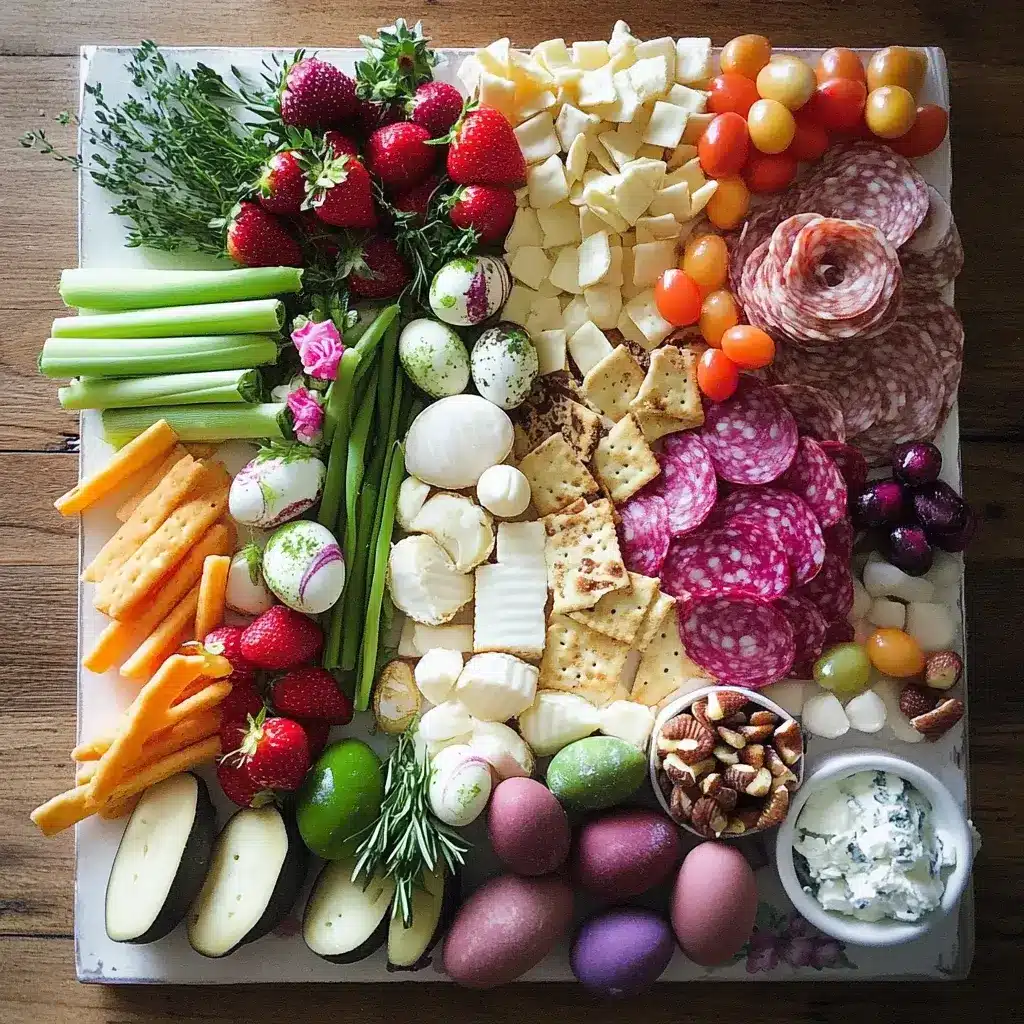

Easter celebrations in my family are always vibrant and joyful, filled with laughter, colorful decorations, and of course, delicious food. While the Easter ham and roasted lamb are always eagerly anticipated, it’s the appetizers that truly set the festive tone. This year, I decided to ditch the usual store-bought dips and chips and create something both beautiful and healthy: an Easter Cheese and Crudités Board. Let me tell you, it was a game-changer! The board became the centerpiece of our appetizer spread, a stunning array of colors and textures that was as pleasing to the eye as it was to the palate. Kids and adults alike flocked to it, happily munching on crisp vegetables and sampling creamy cheeses. It was incredibly easy to assemble, freeing me up to focus on other aspects of our Easter gathering. Not only was it a hit in terms of taste and presentation, but it also felt good knowing we were offering a healthier and fresher appetizer option amidst all the Easter treats. If you’re looking for a show-stopping yet effortless appetizer for your Easter celebration, look no further – this Easter Cheese and Crudités Board is guaranteed to impress your guests and elevate your springtime gathering.
Ingredients for a Bountiful Easter Cheese and Crudités Board
Creating a visually appealing and delicious Easter Cheese and Crudités Board is all about selecting a variety of high-quality ingredients that offer different flavors, textures, and colors. Think of it as a celebration of spring’s bounty, incorporating fresh, seasonal vegetables and complementary cheeses and accompaniments. Here’s a comprehensive list of ingredients to consider for your board:
Cheeses (Select 3-5 for Variety):
- Brie (Soft, Creamy): A classic soft cheese with a bloomy rind, Brie offers a rich, buttery flavor that is crowd-pleasing. A small wheel of Brie is perfect for a cheese board. You can even bake it briefly for a warm, melty option.
- Cheddar (Firm, Sharp or Mild): A versatile and popular cheese, Cheddar provides a firm texture and varying levels of sharpness depending on the aging. Opt for a block of aged sharp cheddar for a bolder flavor or a mild cheddar for broader appeal. Consider a white cheddar for visual contrast.
- Goat Cheese (Soft, Tangy): Goat cheese, also known as chèvre, offers a tangy, slightly earthy flavor and a creamy texture. Choose a log of plain goat cheese or one flavored with herbs or honey for added interest.
- Havarti (Semi-Soft, Buttery): Havarti is a mild, creamy, and buttery cheese that is incredibly versatile and well-liked, even by those who are less adventurous cheese eaters. It’s a great “bridge” cheese that complements many flavors.
- Monterey Jack (Semi-Hard, Mild): Monterey Jack is a mild, slightly sweet, and creamy cheese that melts beautifully and is very approachable. Pepper Jack, with added jalapeños, can offer a touch of spice for those who enjoy it.
- Fontina (Semi-Soft, Nutty): Fontina is a semi-soft cheese with a nutty, earthy, and slightly tangy flavor that becomes more pronounced as it ages. It’s a delicious and slightly more sophisticated option.
- Blue Cheese (Crumbly, Pungent): For those who enjoy bold flavors, a blue cheese like Gorgonzola, Stilton, or Roquefort adds a pungent, salty, and creamy element. Offer a small wedge, as blue cheese can be polarizing.
- Smoked Gouda (Semi-Hard, Smoky): Smoked Gouda provides a unique smoky flavor that adds complexity to the board. It’s a semi-hard cheese with a smooth texture and slightly sweet notes.
Crudités (Fresh, Colorful, and Crisp):
- Carrots (Orange, Sweet, Crunchy): Baby carrots are convenient and readily available, but you can also use full-sized carrots peeled and cut into sticks. Rainbow carrots offer a beautiful color variety.
- Celery Sticks (Green, Crisp, Refreshing): Celery sticks provide a refreshing crunch and mild flavor that pairs well with creamy dips and cheeses.
- Cucumbers (Green, Cool, Mild): English cucumbers or Persian cucumbers, sliced into rounds or sticks, offer a cool and refreshing element.
- Bell Peppers (Red, Yellow, Orange, Green – Sweet, Crisp): Bell peppers in a variety of colors add sweetness, crunch, and vibrant visual appeal. Cut them into strips or wedges.
- Broccoli Florets (Green, Earthy, Slightly Bitter): Raw broccoli florets offer a slightly bitter and earthy flavor and a satisfying crunch. Blanching them briefly can mellow the bitterness if preferred.
- Cauliflower Florets (White, Mild, Nutty): Raw cauliflower florets are mild and slightly nutty, providing a blank canvas for dips and cheeses. Like broccoli, blanching can soften their texture slightly.
- Cherry Tomatoes (Red, Sweet, Juicy): Cherry tomatoes or grape tomatoes add pops of sweetness and juicy texture. Choose colorful varieties like red, yellow, or orange.
- Radishes (Red & White, Peppery, Crisp): Radishes offer a peppery bite and a crisp texture. French breakfast radishes are particularly elegant.
- Snap Peas (Green, Sweet, Crisp): Snap peas are sweet, crunchy, and edible pod peas that are easy to eat and visually appealing.
- Asparagus Spears (Green, Earthy, Tender-Crisp): Raw asparagus spears, especially thinner ones, can be surprisingly delicious and offer a slightly grassy flavor.
- Endive (Pale Yellow/White, Slightly Bitter, Crisp): Endive leaves can be used as scoops for dips or simply enjoyed for their slightly bitter and crisp texture.
- Fennel Bulb (White, Anise-like, Crisp): Thinly sliced fennel bulb offers a unique anise-like flavor and a crisp texture.
Dips (Creamy, Flavorful, Complementary):
- Hummus (Classic, Creamy, Nutty): Classic hummus, whether store-bought or homemade, is a versatile and healthy dip that pairs well with many vegetables. Consider different flavors like roasted red pepper or garlic hummus.
- Ranch Dip (Creamy, Herbaceous, Tangy): Ranch dip is a crowd-pleasing classic that complements a wide variety of vegetables. Opt for a homemade version or a high-quality store-bought ranch.
- French Onion Dip (Creamy, Savory, Oniony): French onion dip, either homemade or a good quality store-bought version, is another savory and creamy dip that pairs well with crudités.
- Spinach Artichoke Dip (Creamy, Rich, Flavorful): Spinach artichoke dip, served cold or warm, offers a richer and more decadent dip option.
- Baba Ghanoush (Smoky, Creamy, Eggplant): Baba ghanoush, a smoky eggplant dip, offers a Mediterranean flair and a unique flavor profile.
- Tzatziki (Greek Yogurt, Cucumber, Dill): Tzatziki, a Greek yogurt-based dip with cucumber and dill, is a refreshing and light option that pairs well with Mediterranean-style boards.
- Guacamole (Avocado, Creamy, Limey): Guacamole, a creamy avocado dip, is a vibrant and flavorful option, though it’s best to make it fresh or buy high-quality store-bought guacamole.
Accompaniments (Sweet, Savory, Textural):
- Crackers (Variety of Textures and Flavors): Offer a selection of crackers, including water crackers (neutral), wheat crackers (nutty), and flavored crackers (like rosemary or olive oil crackers). Gluten-free crackers should also be included if needed.
- Breadsticks (Crisp, Neutral): Breadsticks provide a crisp and neutral accompaniment for cheeses and dips.
- Pita Bread (Soft, Warm, Versatile): Warm pita bread wedges are excellent for scooping hummus or baba ghanoush.
- Olives (Briny, Salty, Savory): A mix of olives, such as Kalamata, Castelvetrano, or Nicoise, adds briny, salty, and savory notes.
- Pickles (Sour, Crunchy, Tangy): Pickles, like cornichons or dill pickles, offer a sour and crunchy contrast to the richness of cheese and dips.
- Nuts (Roasted, Salted, Textural): Roasted and salted nuts, such as almonds, walnuts, pecans, or pistachios, add crunch and savory flavor.
- Dried Fruits (Sweet, Chewy, Contrasting Texture): Dried fruits like apricots, cranberries, figs, or dates offer sweetness and chewiness, complementing cheeses and savory elements.
- Fresh Fruits (Seasonal, Sweet, Juicy): Fresh fruits, especially seasonal spring fruits like grapes, strawberries, blueberries, raspberries, or melon wedges, add sweetness, juiciness, and vibrant color.
- Honey or Jam (Sweet, Complementary to Cheese): A small jar of honey or fruit jam (fig jam, apricot jam, or raspberry jam) pairs beautifully with cheeses, especially goat cheese and Brie.
- Mustard (Dijon, Whole Grain – Tangy, Spicy): Dijon mustard or whole grain mustard provides a tangy and spicy element that cuts through the richness of cheese and sausage.
- Prosciutto or Salami (Savory, Salty, Cured Meat – Optional): For a non-vegetarian option, thinly sliced prosciutto or salami can be added to the board for savory, salty, and meaty flavors.
Ingredient Notes and Substitutions:
- Cheese Selection: Choose cheeses that offer a variety of textures (soft, semi-soft, firm, hard, crumbly) and flavor profiles (mild, sharp, tangy, nutty, pungent, smoky). Consider dietary restrictions and guest preferences when selecting cheeses. Label cheeses if you are offering a wide variety.
- Crudités Variety: Select a range of colorful vegetables with different textures and flavors. Choose vegetables that are in season for the freshest and most flavorful options. Wash and prepare vegetables ahead of time to save time on the day of assembly.
- Dip Choices: Offer a mix of creamy, savory, and perhaps a lighter or more unique dip option. Consider dietary needs when choosing dips (e.g., vegan hummus, dairy-free ranch). Homemade dips often taste superior, but high-quality store-bought dips are a convenient option.
- Accompaniments Customization: Tailor the accompaniments to complement the cheeses and dips you have selected. Consider sweet, savory, salty, and textural contrasts. Think about dietary needs and guest preferences when selecting accompaniments.
Step-by-Step Instructions to Assemble Your Easter Cheese and Crudités Board
Creating a visually stunning and appetizing Easter Cheese and Crudités Board is easier than you might think! It’s all about thoughtful arrangement and layering of ingredients to create a board that is both beautiful and functional. Follow these step-by-step instructions to assemble your masterpiece:
Step 1: Choose Your Board and Serving Dishes
- Select a Serving Board: Choose a large serving board or platter as your base. Options include wooden cutting boards, slate boards, marble slabs, large platters, or even a clean baking sheet. Consider the size of your gathering and the amount of ingredients you plan to use when selecting the board size. A round or rectangular board works well.
- Gather Small Bowls and Dishes: Collect small bowls, ramekins, or dishes to hold dips, olives, nuts, honey, or other smaller accompaniments. Using small dishes helps to contain these items and adds visual height and interest to the board.
Step 2: Arrange the Cheeses
- Place Cheeses First: Start by placing the cheeses on the board. Position them strategically, spacing them out to create visual anchors. Consider placing larger cheese blocks or wheels first.
- Vary Cheese Placement: Arrange cheeses in different shapes and orientations. Place some cheese wedges upright, some flat, and some in small bowls or on cheese markers.
- Consider Cheese Types and Flavors: Think about spacing out strong cheeses (like blue cheese) from milder cheeses to prevent flavor contamination. Also, consider visual variety by placing cheeses of different shapes and colors near each other.
Step 3: Add Dips and Spreads
- Place Dips in Bowls: Fill your small bowls or ramekins with the chosen dips (hummus, ranch, French onion dip, etc.).
- Position Dip Bowls Strategically: Place the bowls of dips around the cheeses, filling in some of the larger gaps on the board. Consider placing dips near vegetables that pair well with them.
- Consider Dip Colors and Textures: Vary the placement of dips with different colors and textures to create visual interest.
Step 4: Arrange Crudités
- Group Crudités by Type: Group similar vegetables together (e.g., carrot sticks together, celery sticks together, etc.).
- Create Visual Piles and Rows: Arrange the crudités in visually appealing piles, rows, or bundles around the cheeses and dips. Think about creating height and texture by layering vegetables.
- Use Color Variety: Strategically place vegetables of different colors next to each other to create a vibrant and colorful display. Alternate colors and shapes to make it visually dynamic.
- Arrange Crudités for Easy Access: Make sure vegetables are arranged in a way that is easy for guests to reach and grab. Fan out vegetable sticks or arrange florets so they are easily accessible.
- Fill in Gaps with Crudités: Use crudités to fill in the larger gaps and spaces between the cheeses and dips, creating a bountiful and full-looking board.
Step 5: Add Accompaniments
- Place Accompaniments in Small Bowls or Directly on the Board: Place olives, nuts, pickles, dried fruits, fresh fruits, honey, jam, mustard, and any other accompaniments in small bowls or directly onto the board in the remaining spaces.
- Use Accompaniments to Fill Small Gaps: Use smaller accompaniments like olives, nuts, and dried fruits to fill in any remaining small gaps and spaces on the board, making it look abundant and complete.
- Create Textural Variety: Incorporate accompaniments with different textures – crunchy nuts, chewy dried fruits, briny olives – to add textural interest to the board.
- Consider Color and Shape: Use colorful fruits, olives, and other accompaniments to add pops of color and visual interest to the board.
Step 6: Garnish and Finishing Touches
- Garnish with Fresh Herbs (Optional): Garnish the board with fresh herbs like rosemary sprigs, thyme sprigs, parsley sprigs, or edible flowers for a final touch of freshness and visual appeal, especially for Easter, consider spring herbs or flowers.
- Add Cheese Markers (Optional): If you have a variety of cheeses, consider adding cheese markers or labels to identify each cheese for your guests.
- Check for Balance and Flow: Take a step back and look at your board. Ensure there is a good balance of colors, textures, and heights. Adjust ingredients as needed to create a visually appealing and balanced board.
- Ensure Easy Access: Make sure all elements of the board are easily accessible to guests for enjoying.
Step 7: Serve and Enjoy!
- Serve Immediately or Shortly After Assembly: For the freshest and crispiest crudités, serve the board shortly after assembly.
- Replenish as Needed: As guests enjoy the board, replenish vegetables, crackers, or dips as needed to keep it looking full and inviting.
- Provide Serving Utensils: Place small spoons or knives with dips and soft cheeses for easy serving and to prevent cross-contamination.
By following these step-by-step instructions, you can create a stunning and delicious Easter Cheese and Crudités Board that will impress your guests and be the highlight of your appetizer spread. The key is to be creative, think about visual appeal, and have fun with the arrangement!
Nutrition Facts: A Wholesome and Delightful Appetizer
An Easter Cheese and Crudités Board offers a wonderful balance of flavors and textures, and it can also be a relatively nutritious appetizer option, especially when compared to processed snacks and sugary treats often found at holiday gatherings. Here’s a look at the nutritional aspects of a typical serving of a cheese and crudités board:
Serving Size: A serving size is difficult to define precisely for a cheese and crudités board, as guests will likely graze and select items according to their preferences. A reasonable estimate for a single serving might include:
- 1-2 ounces of cheese (variety of types)
- 1-2 cups of crudités (variety of vegetables)
- 1-2 tablespoons of dip
- A small handful of crackers or accompaniments
Approximate Calories per Serving (Estimated Range): 300-500 calories (This is a wide range and can vary significantly depending on the types and amounts of cheese, dips, and accompaniments chosen. Leaner cheeses, lighter dips, and fewer crackers will result in a lower calorie count).
Macronutrients (Approximate Values – Per Estimated Serving Range):
- Protein: 15-25 grams – Cheese is a significant source of protein. The amount will vary depending on the types and quantities of cheese consumed. Protein is essential for satiety and muscle building.
- Fat: 20-35 grams – Cheese is also a source of fat, and dips can contribute fat as well. The type of fat will vary depending on the cheeses and dips chosen. Some cheeses and dips contain saturated fat, while others provide unsaturated fats.
- Carbohydrates: 15-30 grams – Carbohydrates come from vegetables, crackers, dips, and fruits. Vegetables are primarily complex carbohydrates and fiber, while crackers and fruits contribute more simple carbohydrates.
- Fiber: 5-10 grams – Crudités are excellent sources of dietary fiber. Fiber is crucial for digestive health, helps regulate blood sugar levels, and promotes feelings of fullness.
Micronutrients (Vitamins and Minerals):
- Vitamins (Variety depending on vegetables): Crudités are packed with vitamins, including:
- Vitamin A: Carrots, bell peppers, and dark leafy greens are rich in Vitamin A, essential for vision, immune function, and skin health.
- Vitamin C: Bell peppers, broccoli, and tomatoes are good sources of Vitamin C, an antioxidant that supports the immune system.
- Vitamin K: Leafy green vegetables like kale and spinach are rich in Vitamin K, important for blood clotting and bone health.
- Folate (Vitamin B9): Leafy greens and broccoli are sources of folate, important for cell growth and development.
- Minerals (Variety depending on cheeses and vegetables):
- Calcium: Cheese is a major source of calcium, crucial for bone health, muscle function, and nerve transmission.
- Potassium: Many vegetables, including potatoes, spinach, and broccoli, are good sources of potassium, important for heart health and blood pressure regulation.
- Iron: Some vegetables, like spinach and beans (in hummus), contain iron, essential for carrying oxygen in the blood.
- Magnesium: Leafy greens, nuts, and seeds provide magnesium, involved in muscle and nerve function, blood sugar control, and blood pressure regulation.
Health Benefits:
- Good Source of Protein: Cheese provides a good source of protein, which is important for satiety and muscle maintenance.
- Rich in Vitamins and Minerals: Crudités and cheeses offer a wide range of essential vitamins and minerals.
- High in Fiber: Crudités are excellent sources of dietary fiber, promoting digestive health and satiety.
- Hydrating: Crudités, especially cucumbers and celery, have high water content, contributing to hydration.
- Naturally Gluten-Free (Board can be made gluten-free): Cheese and vegetables are naturally gluten-free. Choose gluten-free crackers and accompaniments to make the entire board gluten-free.
- Versatile and Customizable: You can customize the board to include healthier cheese and dip options, increasing the nutritional value.
Health Considerations:
- Fat and Saturated Fat Content: Cheese and some dips can be high in fat, including saturated fat. Choose leaner cheeses and dips in moderation, especially if you are watching your fat intake.
- Sodium Content: Cheese, olives, pickles, and some crackers can be high in sodium. Be mindful of sodium levels, especially if you are sodium-sensitive.
- Calorie Density: Cheese and dips are calorie-dense. Be mindful of portion sizes if you are managing your weight.
Tips for a Healthier Board:
- Choose Leaner Cheeses: Opt for lower-fat cheeses like part-skim mozzarella, feta, goat cheese, or reduced-fat cheddar.
- Lighten Up Dips: Make homemade dips using Greek yogurt or hummus as a base instead of mayonnaise or sour cream. Offer hummus, baba ghanoush, or salsa as healthier dip options.
- Increase Crudités Variety and Quantity: Emphasize crudités and offer a wide variety to encourage vegetable consumption.
- Limit Crackers and Processed Accompaniments: Offer whole-grain crackers in moderation and limit processed accompaniments.
- Include Fresh Fruits: Add fresh fruits like berries and grapes for natural sweetness and added nutrients.
An Easter Cheese and Crudités Board can be a delicious and relatively healthy appetizer option when you make mindful choices about the ingredients and portion sizes. It’s a great way to offer a fresh and vibrant alternative to heavier, processed appetizers.
Preparation Time: Effortless Elegance in Minutes
One of the greatest advantages of an Easter Cheese and Crudités Board is its incredibly quick and easy preparation. It’s the perfect appetizer for busy hosts who want to impress without spending hours in the kitchen.
Total Preparation Time: Approximately 20-30 minutes (mostly assembly time).
Breakdown of Preparation Time:
- Vegetable Washing and Cutting (If using whole vegetables): 10-15 minutes (If using pre-cut baby carrots and other pre-cut veggies, this time is significantly reduced).
- Cheese Preparation (Slicing, Cubing, Arranging): 5-10 minutes (If using pre-sliced or pre-cubed cheeses, this time is reduced).
- Dip Preparation (If homemade): 5-15 minutes per dip (If using store-bought dips, this time is eliminated).
- Board Assembly and Arrangement: 10-15 minutes
Time-Saving Tips:
- Use Pre-Cut Vegetables: Opt for pre-cut baby carrots, celery sticks, bell pepper strips, and broccoli/cauliflower florets to significantly reduce vegetable prep time.
- Store-Bought Dips: Utilize high-quality store-bought dips to eliminate dip-making time.
- Pre-Sliced or Pre-Cubed Cheese: Purchase pre-sliced or pre-cubed cheeses if available to save time on cheese preparation.
- Prepare Vegetables Ahead of Time: Wash and cut vegetables a day or two in advance and store them in airtight containers in the refrigerator. Crisp vegetables can be stored in containers with a damp paper towel to maintain freshness.
- Assemble Board Just Before Serving: Assemble the board shortly before guests arrive to ensure the crudités are crisp and fresh.
Make-Ahead Tips:
- Vegetables: As mentioned, vegetables can be washed and cut 1-2 days in advance and stored properly.
- Homemade Dips: Homemade dips can often be made 1-2 days in advance and stored in the refrigerator. Flavors may even develop and improve overnight.
- Cheese (Limited): Cheese can be taken out of the refrigerator about 30-60 minutes before serving to come to room temperature for better flavor. However, fully assembling the board with cheese too far in advance is not recommended as the cheese may dry out or sweat.
- Accompaniments: Crackers, olives, nuts, dried fruits, and other accompaniments can be pre-portioned into small bowls or containers ahead of time for easy assembly.
Tips for Efficient Assembly:
- Plan Your Layout: Have a general idea of how you want to arrange the board before you start placing ingredients. Visualizing the layout beforehand will make the assembly process smoother.
- Work in Stages: Follow the step-by-step assembly instructions (cheeses first, then dips, crudités, accompaniments). This structured approach makes assembly more efficient.
- Use Serving Utensils: Use tongs or spoons to arrange ingredients on the board to keep your hands clean and ensure a neat presentation.
The minimal preparation time is a major advantage of an Easter Cheese and Crudités Board. It allows you to create an impressive and healthy appetizer without spending excessive time in the kitchen, leaving you more time to enjoy the Easter festivities with your family and guests.
How to Serve Your Easter Cheese and Crudités Board: Presentation and Enjoyment
Serving your Easter Cheese and Crudités Board is just as important as the ingredients themselves. Thoughtful presentation and offering helpful serving tips will enhance your guests’ enjoyment and make your appetizer board a true centerpiece.
Presentation Ideas:
- Color Coordination: Arrange ingredients by color to create a visually appealing rainbow effect. Group similar colors together and alternate contrasting colors for a vibrant display.
- Vary Heights and Textures: Create visual interest by varying the heights of ingredients and incorporating different textures. Use bowls and ramekins to elevate dips and smaller items. Layer vegetables and cheeses to add dimension.
- Symmetry vs. Asymmetry: You can choose a symmetrical arrangement for a more formal and structured look, or an asymmetrical arrangement for a more relaxed and organic feel. Both can be beautiful depending on your style.
- Easter Theme Touches: Incorporate subtle Easter-themed elements for a festive touch.
- Edible Flowers: Garnish with edible flowers in spring colors (pansies, violas, primroses) for a delicate Easter touch.
- Pastel Colors: Use pastel-colored serving bowls or napkins to complement the Easter theme.
- Easter Egg Accents (Subtle): Carefully place a few mini decorated Easter eggs (non-edible, for decoration only) around the board for a festive hint. Avoid overcrowding with decorations.
- Spring Herbs: Use spring herbs like dill, chives, and parsley as garnishes to reinforce the spring theme.
- Board Placement: Position the board as a centerpiece on your appetizer table or buffet. Ensure it is easily accessible to guests from all sides if possible.
Serving Utensils and Accessories:
- Cheese Knives: Provide appropriate cheese knives for each type of cheese, especially for soft cheeses and harder cheeses. Label knives if helpful.
- Small Spoons and Spreading Knives: Offer small spoons for dips and jams, and small spreading knives for soft cheeses like Brie or goat cheese.
- Toothpicks or Small Forks: Provide toothpicks or small forks for guests to easily pick up olives, pickles, or smaller items.
- Napkins and Plates: Ensure plenty of napkins and small appetizer plates are readily available near the board.
- Serving Tongs: Tongs can be helpful for guests to serve themselves vegetables or crackers without using their hands directly.
Serving Tips for Guests:
- Introduce the Board: Briefly introduce the cheese and crudités board to your guests, highlighting the different cheeses, dips, and any special or homemade items.
- Cheese Pairing Suggestions (Optional): If you have carefully selected cheese pairings, you can offer subtle suggestions to guests (e.g., “The goat cheese pairs wonderfully with the honey and dried apricots”).
- Dietary Information (If Applicable): If you have included gluten-free, vegan, or other dietary-specific options, you can subtly point them out to guests who may have those needs.
- Encourage Grazing and Sampling: Invite guests to graze and sample different combinations of cheeses, vegetables, dips, and accompaniments.
- Offer Refills: Keep an eye on the board and replenish vegetables, crackers, dips, or cheeses as needed throughout your gathering to keep it looking abundant and inviting.
- Temperature Considerations: Serve the board at room temperature for the best flavor of the cheeses. If it is a very warm day, you may want to keep the board in a cool place or bring it out in stages to maintain freshness. Keep dips chilled until serving.
By focusing on both the visual presentation and providing helpful serving tips, you can ensure that your Easter Cheese and Crudités Board is not only delicious but also a delightful and seamless part of your Easter celebration. It’s about creating an inviting and enjoyable experience for your guests.
Expert Tips for an Exceptional Easter Cheese and Crudités Board
To take your Easter Cheese and Crudités Board from good to truly exceptional, here are five expert tips that will elevate your appetizer to the next level and impress your guests:
Tip 1: Select Cheeses with Intention – Variety and Balance are Key:
Don’t just grab any cheeses at the store. Choose your cheeses with intention, focusing on variety and balance. Aim for a mix of textures (soft, semi-soft, firm, hard) and flavor profiles (mild, sharp, tangy, nutty, pungent). Consider the “cheese families”: fresh, bloomy rind, washed rind, semi-hard, hard, blue. Including cheeses from different families will provide a more complex and interesting tasting experience. Think about the “story” you want to tell with your cheese selection. Do you want to highlight local cheeses? Showcase different milk types (cow, goat, sheep)? A well-curated cheese selection is the foundation of a great board.
Tip 2: Prep Crudités for Maximum Crispness and Visual Appeal:
Crisp, fresh crudités are essential. Don’t just wash and toss them on the board. Take the time to prep them properly. Cut vegetables into uniform sizes and shapes for visual appeal and easy dipping. For vegetables that tend to wilt (like celery and carrots), crisp them by soaking them in ice water for 20-30 minutes before arranging them on the board. Pat vegetables dry before placing them on the board to prevent excess moisture. Consider blanching heartier vegetables like broccoli and cauliflower briefly to tenderize them slightly and enhance their color. Properly prepped crudités not only taste better but also look more appealing on the board.
Tip 3: Homemade Dips Elevate the Experience (But Choose Wisely):
Homemade dips can truly elevate your cheese and crudités board, adding a personal touch and often superior flavor compared to store-bought options. However, don’t feel obligated to make all dips from scratch. Choose 1-2 homemade dips to focus on, perhaps a standout hummus or a flavorful ranch dip. For other dips, opt for high-quality store-bought options to save time and effort. Consider offering a variety of dip textures and flavor profiles – creamy, chunky, savory, tangy, perhaps a spicier option. Homemade dips show extra effort and care, but a balanced approach with some store-bought selections is perfectly acceptable and often practical.
Tip 4: Arrange for Flow and Abundance – Visual Storytelling:
Think of your cheese and crudités board as visual storytelling. Arrange ingredients in a way that creates flow and visual interest. Start with the cheeses as anchors, then build around them with dips, crudités, and accompaniments. Don’t be afraid to overlap ingredients and create layers for a sense of abundance and richness. Use bowls and ramekins to add height and dimension. Consider color, texture, and shape as you arrange. Aim for a board that looks both bountiful and balanced, inviting guests to explore and discover different combinations. A well-arranged board is a feast for the eyes as well as the palate.
Tip 5: Consider Temperature and Timing – Freshness is Key:
Temperature and timing are crucial for maintaining the quality and freshness of your cheese and crudités board. Take cheeses out of the refrigerator 30-60 minutes before serving to allow them to come to room temperature and develop their full flavor. Keep dips chilled until serving and place them on the board just before guests arrive. Assemble the crudités board relatively close to serving time to ensure the vegetables remain crisp. If serving outdoors, be mindful of temperature and consider keeping the board in a shaded area or using chilled platters to keep ingredients cool. Freshness is paramount for both flavor and food safety. Plan your assembly timing accordingly to ensure the board is at its best when your guests are ready to enjoy it.
By implementing these five expert tips, you’ll create an Easter Cheese and Crudités Board that is not only visually stunning and effortlessly elegant but also incredibly delicious, thoughtfully curated, and a true highlight of your Easter celebration. These details are what separate a good appetizer from a truly memorable one.
Frequently Asked Questions About Easter Cheese and Crudités Boards
Here are five frequently asked questions about Easter Cheese and Crudités Boards, along with detailed answers to help you plan, prepare, and serve your board with confidence:
Q1: How far in advance can I prepare an Easter Cheese and Crudités Board?
A: While it’s best to assemble the board relatively close to serving time for maximum freshness, you can definitely do some prep work in advance to save time on the day of your Easter gathering:
- Vegetables: Wash and cut all your crudités 1-2 days ahead of time. Store them in airtight containers in the refrigerator. Crisp vegetables like carrots and celery can be stored submerged in water or with a damp paper towel to maintain crispness.
- Homemade Dips: Prepare homemade dips 1-2 days in advance and store them in airtight containers in the refrigerator. Flavors often meld and improve overnight.
- Cheese (Limited): Take cheeses out of the refrigerator 30-60 minutes before serving to allow them to come to room temperature for optimal flavor. However, avoid fully assembling the board with cheese too far in advance as cheese can dry out or sweat. You can slice or cube firmer cheeses a few hours ahead and store them in an airtight container in the refrigerator.
- Accompaniments: Portion out crackers, olives, nuts, dried fruits, and other accompaniments into small bowls or containers the day before for easy assembly.
On the day of serving, focus on assembling the board itself. Arrange the cheeses, place the dips, and then arrange the prepped crudités and accompaniments. Aim to assemble the board no more than 1-2 hours before serving to ensure the vegetables are crisp and fresh and the cheeses are at their best temperature. For outdoor events or warmer temperatures, assemble closer to serving time and keep chilled components refrigerated until just before placing them on the board.
Q2: What are some good vegetarian and vegan options for an Easter Cheese and Crudités Board?
A: An Easter Cheese and Crudités Board is naturally vegetarian-friendly, but you can easily make it vegan-friendly or cater to vegan guests with thoughtful substitutions and additions:
- Vegan Cheeses: Include vegan cheeses made from nuts, soy, or other plant-based sources. There are many good quality vegan cheeses available now, including vegan Brie, cheddar, and creamy cashew cheeses. Label vegan cheeses clearly.
- Vegan Dips: Offer vegan dips like hummus, baba ghanoush, guacamole, white bean dip, or vegan ranch dip (many store-bought ranch dips are vegan, or you can make a homemade vegan ranch).
- Plant-Based Protein (Optional): For a heartier vegan option, consider adding marinated and grilled tofu skewers, edamame, or roasted chickpeas to the board.
- Focus on Crudités and Accompaniments: Ensure a wide variety of colorful and interesting crudités and vegan-friendly accompaniments like olives, nuts, roasted vegetables, artichoke hearts, and marinated mushrooms are included.
- Gluten-Free Options: Offer gluten-free crackers, breadsticks, or vegetable chips to accommodate gluten-free guests.
Clearly label vegan and gluten-free items on the board so guests with dietary restrictions can easily identify suitable options. A well-planned cheese and crudités board can be inclusive and enjoyable for guests with various dietary preferences.
Q3: How do I keep my crudités from drying out or wilting on the board?
A: Keeping crudités crisp and fresh on a cheese board, especially if it’s sitting out for a while, requires a few strategies:
- Crisp Vegetables in Ice Water: Soak cut vegetables like carrots, celery, and bell peppers in ice water for 20-30 minutes before arranging them on the board. This helps to hydrate and crisp them up. Pat them thoroughly dry before placing them on the board.
- Arrange Crudités Densely: Arrange the crudités relatively densely on the board, close together. This helps to create a microclimate that retains moisture.
- Mist Vegetables Lightly (Optional): Just before serving, you can lightly mist the vegetables with cool water using a spray bottle. Be careful not to over-mist, as too much water can make the board soggy.
- Use a Chilled Platter (Optional): If you have a platter that can be chilled (like a marble or slate platter), chilling it before assembly can help to keep the vegetables cooler for longer, especially if serving outdoors or in a warm environment.
- Replenish Crudités Regularly: Replenish the crudités on the board throughout your event as needed. You can keep extra prepped vegetables chilled in the refrigerator and add fresh batches to the board as guests enjoy them.
- Avoid Direct Sunlight and Heat: Position the cheese and crudités board away from direct sunlight and heat sources, which can cause vegetables to wilt and cheeses to sweat.
By using these techniques, you can help keep your crudités crisp and appealing for a longer period, ensuring your guests enjoy fresh and delicious vegetables throughout your Easter gathering.
Q4: What are some budget-friendly cheese and crudités options for a large Easter gathering?
A: Creating a beautiful and bountiful Easter Cheese and Crudités Board doesn’t have to break the bank. Here are some budget-friendly tips:
- Choose Affordable Cheeses: Select one or two more affordable cheeses like cheddar, Monterey Jack, Havarti, or mozzarella, alongside one slightly more special cheese. Block cheddar is often more economical than pre-sliced or specialty cheeses.
- Utilize Seasonal Vegetables: Focus on vegetables that are in season and readily available in your area. Seasonal vegetables are typically more affordable and at their peak flavor. Carrots, celery, cucumbers, bell peppers are often budget-friendly staples.
- Buy Vegetables in Bulk: Purchase vegetables in bulk if you are serving a large crowd, as bulk purchases are often more economical.
- Make Homemade Dips: Homemade dips are often more cost-effective than store-bought, especially if you are making larger quantities. Hummus, ranch dip, or French onion dip can be made from relatively inexpensive ingredients.
- Use Less Expensive Crackers and Bread: Opt for store-brand crackers or baguette slices instead of expensive specialty crackers.
- Emphasize Quantity over Variety (Within Budget): Rather than buying a huge variety of expensive cheeses, focus on having generous quantities of a few well-chosen, affordable cheeses and a wide array of budget-friendly crudités.
- Utilize Pantry Staples for Accompaniments: Use pantry staples like olives from a jar, nuts you already have on hand, or homemade pickled vegetables to keep costs down.
With some smart planning and ingredient choices, you can create a stunning and delicious Easter Cheese and Crudités Board even on a budget, proving that impressive entertaining doesn’t have to be expensive.
Q5: How should I store leftovers from an Easter Cheese and Crudités Board?
A: Proper storage of leftovers will help maintain their quality and ensure food safety:
- Cheese: Wrap leftover cheese tightly in plastic wrap or beeswax wrap and store it in an airtight container in the refrigerator. Cheese is best consumed within 3-5 days.
- Crudités: Store leftover crudités in airtight containers in the refrigerator, ideally separated by type. Some vegetables, like celery and carrots, can be stored submerged in water to help maintain crispness. Consume within 2-3 days for best quality. Vegetables may lose some crispness after being on the board.
- Dips: Store leftover dips in airtight containers in the refrigerator. Consume within 3-4 days, depending on the type of dip. Hummus and yogurt-based dips generally last for about 3-4 days, while mayonnaise-based dips may be best consumed within 2-3 days.
- Crackers and Accompaniments: Store leftover crackers, breadsticks, nuts, dried fruits, and other dry accompaniments in airtight containers at room temperature to maintain crispness.
It’s important to note that cheese and crudités will be at their best quality when freshly assembled. While leftovers can be stored and enjoyed, they may not be as crisp or flavorful as when initially served. Always use your best judgment regarding food safety and discard any leftovers that show signs of spoilage or have been left at room temperature for extended periods (more than 2 hours).
Print
Easter Cheese and Crudites Board recipe
Ingredients
Cheeses (Select 3-5 for Variety):
-
- Brie (Soft, Creamy): A classic soft cheese with a bloomy rind, Brie offers a rich, buttery flavor that is crowd-pleasing. A small wheel of Brie is perfect for a cheese board. You can even bake it briefly for a warm, melty option.
-
- Cheddar (Firm, Sharp or Mild): A versatile and popular cheese, Cheddar provides a firm texture and varying levels of sharpness depending on the aging. Opt for a block of aged sharp cheddar for a bolder flavor or a mild cheddar for broader appeal. Consider a white cheddar for visual contrast.
-
- Goat Cheese (Soft, Tangy): Goat cheese, also known as chèvre, offers a tangy, slightly earthy flavor and a creamy texture. Choose a log of plain goat cheese or one flavored with herbs or honey for added interest.
-
- Havarti (Semi-Soft, Buttery): Havarti is a mild, creamy, and buttery cheese that is incredibly versatile and well-liked, even by those who are less adventurous cheese eaters. It’s a great “bridge” cheese that complements many flavors.
-
- Monterey Jack (Semi-Hard, Mild): Monterey Jack is a mild, slightly sweet, and creamy cheese that melts beautifully and is very approachable. Pepper Jack, with added jalapeños, can offer a touch of spice for those who enjoy it.
-
- Fontina (Semi-Soft, Nutty): Fontina is a semi-soft cheese with a nutty, earthy, and slightly tangy flavor that becomes more pronounced as it ages. It’s a delicious and slightly more sophisticated option.
-
- Blue Cheese (Crumbly, Pungent): For those who enjoy bold flavors, a blue cheese like Gorgonzola, Stilton, or Roquefort adds a pungent, salty, and creamy element. Offer a small wedge, as blue cheese can be polarizing.
-
- Smoked Gouda (Semi-Hard, Smoky): Smoked Gouda provides a unique smoky flavor that adds complexity to the board. It’s a semi-hard cheese with a smooth texture and slightly sweet notes.
Crudités (Fresh, Colorful, and Crisp):
-
- Carrots (Orange, Sweet, Crunchy): Baby carrots are convenient and readily available, but you can also use full-sized carrots peeled and cut into sticks. Rainbow carrots offer a beautiful color variety.
-
- Celery Sticks (Green, Crisp, Refreshing): Celery sticks provide a refreshing crunch and mild flavor that pairs well with creamy dips and cheeses.
-
- Cucumbers (Green, Cool, Mild): English cucumbers or Persian cucumbers, sliced into rounds or sticks, offer a cool and refreshing element.
-
- Bell Peppers (Red, Yellow, Orange, Green – Sweet, Crisp): Bell peppers in a variety of colors add sweetness, crunch, and vibrant visual appeal. Cut them into strips or wedges.
-
- Broccoli Florets (Green, Earthy, Slightly Bitter): Raw broccoli florets offer a slightly bitter and earthy flavor and a satisfying crunch. Blanching them briefly can mellow the bitterness if preferred.
-
- Cauliflower Florets (White, Mild, Nutty): Raw cauliflower florets are mild and slightly nutty, providing a blank canvas for dips and cheeses. Like broccoli, blanching can soften their texture slightly.
-
- Cherry Tomatoes (Red, Sweet, Juicy): Cherry tomatoes or grape tomatoes add pops of sweetness and juicy texture. Choose colorful varieties like red, yellow, or orange.
-
- Radishes (Red & White, Peppery, Crisp): Radishes offer a peppery bite and a crisp texture. French breakfast radishes are particularly elegant.
-
- Snap Peas (Green, Sweet, Crisp): Snap peas are sweet, crunchy, and edible pod peas that are easy to eat and visually appealing.
-
- Asparagus Spears (Green, Earthy, Tender-Crisp): Raw asparagus spears, especially thinner ones, can be surprisingly delicious and offer a slightly grassy flavor.
-
- Endive (Pale Yellow/White, Slightly Bitter, Crisp): Endive leaves can be used as scoops for dips or simply enjoyed for their slightly bitter and crisp texture.
-
- Fennel Bulb (White, Anise-like, Crisp): Thinly sliced fennel bulb offers a unique anise-like flavor and a crisp texture.
Dips (Creamy, Flavorful, Complementary):
-
- Hummus (Classic, Creamy, Nutty): Classic hummus, whether store-bought or homemade, is a versatile and healthy dip that pairs well with many vegetables. Consider different flavors like roasted red pepper or garlic hummus.
-
- Ranch Dip (Creamy, Herbaceous, Tangy): Ranch dip is a crowd-pleasing classic that complements a wide variety of vegetables. Opt for a homemade version or a high-quality store-bought ranch.
-
- French Onion Dip (Creamy, Savory, Oniony): French onion dip, either homemade or a good quality store-bought version, is another savory and creamy dip that pairs well with crudités.
-
- Spinach Artichoke Dip (Creamy, Rich, Flavorful): Spinach artichoke dip, served cold or warm, offers a richer and more decadent dip option.
-
- Baba Ghanoush (Smoky, Creamy, Eggplant): Baba ghanoush, a smoky eggplant dip, offers a Mediterranean flair and a unique flavor profile.
-
- Tzatziki (Greek Yogurt, Cucumber, Dill): Tzatziki, a Greek yogurt-based dip with cucumber and dill, is a refreshing and light option that pairs well with Mediterranean-style boards.
-
- Guacamole (Avocado, Creamy, Limey): Guacamole, a creamy avocado dip, is a vibrant and flavorful option, though it’s best to make it fresh or buy high-quality store-bought guacamole.
Accompaniments (Sweet, Savory, Textural):
-
- Crackers (Variety of Textures and Flavors): Offer a selection of crackers, including water crackers (neutral), wheat crackers (nutty), and flavored crackers (like rosemary or olive oil crackers). Gluten-free crackers should also be included if needed.
-
- Breadsticks (Crisp, Neutral): Breadsticks provide a crisp and neutral accompaniment for cheeses and dips.
-
- Pita Bread (Soft, Warm, Versatile): Warm pita bread wedges are excellent for scooping hummus or baba ghanoush.
-
- Olives (Briny, Salty, Savory): A mix of olives, such as Kalamata, Castelvetrano, or Nicoise, adds briny, salty, and savory notes.
-
- Pickles (Sour, Crunchy, Tangy): Pickles, like cornichons or dill pickles, offer a sour and crunchy contrast to the richness of cheese and dips.
-
- Nuts (Roasted, Salted, Textural): Roasted and salted nuts, such as almonds, walnuts, pecans, or pistachios, add crunch and savory flavor.
-
- Dried Fruits (Sweet, Chewy, Contrasting Texture): Dried fruits like apricots, cranberries, figs, or dates offer sweetness and chewiness, complementing cheeses and savory elements.
-
- Fresh Fruits (Seasonal, Sweet, Juicy): Fresh fruits, especially seasonal spring fruits like grapes, strawberries, blueberries, raspberries, or melon wedges, add sweetness, juiciness, and vibrant color.
-
- Honey or Jam (Sweet, Complementary to Cheese): A small jar of honey or fruit jam (fig jam, apricot jam, or raspberry jam) pairs beautifully with cheeses, especially goat cheese and Brie.
-
- Mustard (Dijon, Whole Grain – Tangy, Spicy): Dijon mustard or whole grain mustard provides a tangy and spicy element that cuts through the richness of cheese and sausage.
-
- Prosciutto or Salami (Savory, Salty, Cured Meat – Optional): For a non-vegetarian option, thinly sliced prosciutto or salami can be added to the board for savory, salty, and meaty flavors.
Instructions
Step 1: Choose Your Board and Serving Dishes
-
- Select a Serving Board: Choose a large serving board or platter as your base. Options include wooden cutting boards, slate boards, marble slabs, large platters, or even a clean baking sheet. Consider the size of your gathering and the amount of ingredients you plan to use when selecting the board size. A round or rectangular board works well.
-
- Gather Small Bowls and Dishes: Collect small bowls, ramekins, or dishes to hold dips, olives, nuts, honey, or other smaller accompaniments. Using small dishes helps to contain these items and adds visual height and interest to the board.
Step 2: Arrange the Cheeses
-
- Place Cheeses First: Start by placing the cheeses on the board. Position them strategically, spacing them out to create visual anchors. Consider placing larger cheese blocks or wheels first.
-
- Vary Cheese Placement: Arrange cheeses in different shapes and orientations. Place some cheese wedges upright, some flat, and some in small bowls or on cheese markers.
-
- Consider Cheese Types and Flavors: Think about spacing out strong cheeses (like blue cheese) from milder cheeses to prevent flavor contamination. Also, consider visual variety by placing cheeses of different shapes and colors near each other.
Step 3: Add Dips and Spreads
-
- Place Dips in Bowls: Fill your small bowls or ramekins with the chosen dips (hummus, ranch, French onion dip, etc.).
-
- Position Dip Bowls Strategically: Place the bowls of dips around the cheeses, filling in some of the larger gaps on the board. Consider placing dips near vegetables that pair well with them.
-
- Consider Dip Colors and Textures: Vary the placement of dips with different colors and textures to create visual interest.
Step 4: Arrange Crudités
-
- Group Crudités by Type: Group similar vegetables together (e.g., carrot sticks together, celery sticks together, etc.).
-
- Create Visual Piles and Rows: Arrange the crudités in visually appealing piles, rows, or bundles around the cheeses and dips. Think about creating height and texture by layering vegetables.
-
- Use Color Variety: Strategically place vegetables of different colors next to each other to create a vibrant and colorful display. Alternate colors and shapes to make it visually dynamic.
-
- Arrange Crudités for Easy Access: Make sure vegetables are arranged in a way that is easy for guests to reach and grab. Fan out vegetable sticks or arrange florets so they are easily accessible.
-
- Fill in Gaps with Crudités: Use crudités to fill in the larger gaps and spaces between the cheeses and dips, creating a bountiful and full-looking board.
Step 5: Add Accompaniments
-
- Place Accompaniments in Small Bowls or Directly on the Board: Place olives, nuts, pickles, dried fruits, fresh fruits, honey, jam, mustard, and any other accompaniments in small bowls or directly onto the board in the remaining spaces.
-
- Use Accompaniments to Fill Small Gaps: Use smaller accompaniments like olives, nuts, and dried fruits to fill in any remaining small gaps and spaces on the board, making it look abundant and complete.
-
- Create Textural Variety: Incorporate accompaniments with different textures – crunchy nuts, chewy dried fruits, briny olives – to add textural interest to the board.
-
- Consider Color and Shape: Use colorful fruits, olives, and other accompaniments to add pops of color and visual interest to the board.
Step 6: Garnish and Finishing Touches
-
- Garnish with Fresh Herbs (Optional): Garnish the board with fresh herbs like rosemary sprigs, thyme sprigs, parsley sprigs, or edible flowers for a final touch of freshness and visual appeal, especially for Easter, consider spring herbs or flowers.
-
- Add Cheese Markers (Optional): If you have a variety of cheeses, consider adding cheese markers or labels to identify each cheese for your guests.
-
- Check for Balance and Flow: Take a step back and look at your board. Ensure there is a good balance of colors, textures, and heights. Adjust ingredients as needed to create a visually appealing and balanced board.
-
- Ensure Easy Access: Make sure all elements of the board are easily accessible to guests for enjoying.
Step 7: Serve and Enjoy!
-
- Serve Immediately or Shortly After Assembly: For the freshest and crispiest crudités, serve the board shortly after assembly.
-
- Replenish as Needed: As guests enjoy the board, replenish vegetables, crackers, or dips as needed to keep it looking full and inviting.
-
- Provide Serving Utensils: Place small spoons or knives with dips and soft cheeses for easy serving and to prevent cross-contamination.
Nutrition
- Serving Size: one normal portion
- Calories: 300-500
- Fat: 20-35 grams
- Carbohydrates: 15-30 grams
- Fiber: 5-10 grams
- Protein: 15-25 grams