

Easter baking at my house is a serious business, and every year, I try to come up with something that’s both delicious and visually stunning to wow my family. Last Easter, I decided to ditch the usual Easter eggs and chocolate bunnies and go for something a little more…bunny-shaped! That’s when I stumbled upon the idea of an Easter Bunny Carrot Cake. Honestly, I was a bit intimidated at first – shaping a cake like a bunny seemed like a recipe for disaster. But armed with a bunny-shaped cake pan and a whole lot of enthusiasm, I dove in. And let me tell you, the result was pure magic. The aroma of warm spices filling the kitchen, the moist, flavorful carrot cake, and the sheer delight on my kids’ faces when they saw the adorable bunny cake – it was all worth it. The cream cheese frosting was the perfect sweet and tangy complement, and decorating it with coconut ‘fur’ and candy eyes was such a fun family activity. This Easter Bunny Carrot Cake wasn’t just a dessert; it was an experience, a centerpiece that brought so much joy and laughter to our celebration. If you’re looking to create a truly memorable Easter treat that’s as fun to make as it is to eat, this Easter Bunny Carrot Cake is an absolute winner. Get ready to hop into the kitchen and bake some Easter magic!
Ingredients for Your Adorable Easter Bunny Carrot Cake
Creating a show-stopping Easter Bunny Carrot Cake starts with gathering the right ingredients. Quality ingredients are key to ensuring a moist, flavorful cake and a stable, delicious frosting. Here’s a detailed list of everything you’ll need, broken down for both the cake and the cream cheese frosting:
For the Moist and Spiced Carrot Cake:
- 3 cups All-Purpose Flour: The foundation of our cake. Measure correctly by spooning flour into your measuring cup and leveling it off, rather than scooping directly from the bag, to avoid using too much flour which can result in a dry cake. For a slightly denser cake, you can use cake flour, but all-purpose works beautifully for a classic carrot cake texture.
- 2 teaspoons Baking Soda: The leavening agent that helps the cake rise and become light and airy. Ensure your baking soda is fresh for optimal results. Old baking soda can lose its effectiveness.
- 1 teaspoon Ground Cinnamon: A warm, essential spice for carrot cake, providing that signature cozy flavor. Use high-quality cinnamon for the best aroma and taste. Ceylon cinnamon is often considered to be of higher quality than cassia cinnamon.
- 1 teaspoon Ground Nutmeg: Adds a hint of warmth and complexity. Freshly grated nutmeg is even more aromatic and flavorful, if you have it available. A little goes a long way with nutmeg, so measure accurately.
- ½ teaspoon Ground Ginger: Provides a subtle spice and depth of flavor that complements the cinnamon and nutmeg beautifully. Ground ginger adds a gentle warmth without being overpowering.
- ½ teaspoon Ground Cloves: A potent spice that adds a warm, pungent note. Use cloves sparingly as they can easily overpower the other spices if used in excess. They contribute a distinct depth and warmth to the spice blend.
- ½ teaspoon Salt: Enhances the flavors of all the other ingredients and balances the sweetness. Salt is crucial in baking to control the yeast activity (in yeasted doughs) and balance flavors in cakes and cookies. Use fine sea salt or table salt.
- 2 cups Granulated Sugar: Sweetens the cake and contributes to its moistness. You can also use a mix of granulated and light brown sugar for a richer, more molasses-like flavor. Brown sugar also adds extra moisture.
- 1 cup Vegetable Oil: Adds moisture and tenderness to the cake. Vegetable oil, canola oil, or even melted coconut oil (cooled) work well. Oil-based cakes tend to be moister than butter-based cakes.
- 4 large Eggs: Bind the ingredients together and add richness and structure. Use large eggs at room temperature for better emulsification and volume.
- 1 teaspoon Vanilla Extract: Enhances the overall flavor profile and adds a touch of sweetness and aroma. Use pure vanilla extract for the best flavor, avoiding imitation vanilla if possible.
- 3 cups Grated Carrots: The star ingredient! Use fresh, firm carrots for the best flavor and texture. Grate them finely using a box grater or food processor. Avoid pre-shredded carrots, as they can be drier and less flavorful. Freshly grated carrots are moister and sweeter.
- 1 cup Chopped Walnuts or Pecans (optional): Adds texture and nutty flavor. Walnuts are classic in carrot cake, but pecans are also delicious. You can toast the nuts lightly before chopping to enhance their flavor. Omit if you prefer a nut-free cake or have nut allergies.
- 1 cup Raisins or Golden Raisins (optional): Adds sweetness and chewiness. Raisins or golden raisins are a traditional addition to carrot cake. You can soak them in hot water or rum for 15-20 minutes and drain before adding to plump them up and add extra moisture. Omit if you prefer a raisin-free cake.
For the Tangy Cream Cheese Frosting:
- 8 ounces Cream Cheese, softened: The base of our frosting, providing a tangy, creamy richness. Use full-fat cream cheese for the best flavor and texture. Ensure it is properly softened to room temperature to avoid lumps in your frosting.
- ½ cup (1 stick) Unsalted Butter, softened: Adds richness, flavor, and structure to the frosting. Use unsalted butter at room temperature. Softened butter whips up more easily and creates a smoother frosting.
- 4 cups Powdered Sugar: Sweetens and thickens the frosting. Sift the powdered sugar before measuring to remove any lumps and ensure a smooth frosting.
- 1 teaspoon Vanilla Extract: Enhances the flavor of the frosting and complements the cream cheese. Use pure vanilla extract.
- Pinch of Salt: Balances the sweetness and enhances the other flavors in the frosting. A small pinch of salt makes a big difference in balancing the sweetness of the frosting.
For Easter Bunny Decoration (Optional but Recommended for Bunny Cake):
- Bunny-Shaped Cake Pan: Essential for creating the bunny shape. You can find these online or at specialty baking stores. Ensure it’s well-greased and floured for easy cake release.
- Shredded Coconut: For creating the bunny “fur.” Use unsweetened or sweetened coconut flakes, depending on your preference. You can toast some of the coconut for a golden brown “fur” effect.
- Food Coloring (Pink, Optional): For tinting coconut for bunny ears or paws. Gel food coloring is more concentrated and less likely to thin out your frosting or coconut than liquid food coloring.
- Candy Eyes or Chocolate Chips: For creating the bunny’s eyes. Candy eyes are readily available at craft stores or baking supply stores. Mini chocolate chips or even small pieces of dark chocolate can also work.
- Pink Candy or Frosting: For the bunny’s nose. Small pink candies like M&Ms, jelly beans, or a dollop of pink frosting can be used. You can also use a small piece of pink fondant.
- Piping Bag and Tip (Optional): For piping frosting details. A star tip or round tip can be used for borders or decorative elements.
Instructions: Baking Your Hop-tastic Easter Bunny Carrot Cake
Let’s get baking! Follow these step-by-step instructions to create your adorable and delicious Easter Bunny Carrot Cake. Baking is a science, so precise measurements and following the steps in order are important for the best results.
Step 1: Prepare the Cake Batter
- Preheat Oven and Prepare Pan: Preheat your oven to 350°F (175°C). Grease and flour your bunny-shaped cake pan (or a 9×13 inch rectangular pan if not making a bunny shape). Ensure all nooks and crannies of the bunny pan are greased and floured to prevent sticking. Alternatively, you can use baking spray with flour.
- Whisk Dry Ingredients: In a large mixing bowl, whisk together the flour, baking soda, cinnamon, nutmeg, ginger, cloves, and salt. Whisking helps to aerate the flour and evenly distribute the leavening and spices, ensuring a consistent cake texture.
- Combine Wet Ingredients: In a separate large bowl, whisk together the granulated sugar, vegetable oil, eggs, and vanilla extract until well combined. Ensure the eggs are fully incorporated into the sugar and oil mixture.
- Combine Wet and Dry Ingredients: Gradually add the dry ingredients to the wet ingredients, mixing on low speed with an electric mixer or by hand with a spatula until just combined. Be careful not to overmix. Overmixing can develop gluten and result in a tough cake. Mix until just a few streaks of flour remain.
- Fold in Carrots, Nuts, and Raisins (Optional): Gently fold in the grated carrots, and if using, chopped walnuts or pecans and raisins or golden raisins. Use a spatula to gently fold these ingredients in until evenly distributed throughout the batter. Folding ensures you don’t overmix the batter after adding the carrots and nuts.
Step 2: Bake the Carrot Cake
- Pour Batter into Prepared Pan: Pour the cake batter into the prepared bunny-shaped cake pan (or 9×13 inch pan), spreading it evenly. If using a bunny pan, ensure the batter is evenly distributed in all parts of the bunny shape.
- Bake: Bake for 30-40 minutes for a bunny-shaped pan, or 30-35 minutes for a 9×13 inch pan, or until a wooden skewer inserted into the center comes out clean. Baking times can vary depending on your oven and the pan type. Start checking for doneness around 30 minutes and check every few minutes thereafter. The cake should spring back lightly when gently pressed in the center and the edges should be lightly golden brown.
- Cool in Pan: Let the cake cool in the pan for 10-15 minutes before inverting it onto a wire rack to cool completely. Cooling in the pan allows the cake to firm up slightly, making it easier to invert without breaking. Cooling completely is essential before frosting to prevent the frosting from melting.
Step 3: Prepare the Cream Cheese Frosting
- Beat Cream Cheese and Butter: In a large mixing bowl, using an electric mixer, beat the softened cream cheese and softened butter until smooth and creamy. Ensure both are at room temperature for a lump-free frosting. Beat until light and fluffy.
- Gradually Add Powdered Sugar: Gradually add the powdered sugar, one cup at a time, beating on low speed until incorporated. Once all powdered sugar is added, increase speed to medium and beat until the frosting is smooth and fluffy. Sifting the powdered sugar beforehand will help prevent lumps in the frosting.
- Add Vanilla Extract and Salt: Stir in the vanilla extract and salt. Mix until just combined. Taste and adjust sweetness or tanginess if needed.
Step 4: Frost and Decorate Your Easter Bunny Carrot Cake
- Frost the Cake: Once the cake is completely cool, frost it generously with the cream cheese frosting. For a bunny shape, you can start by frosting the entire bunny with a thin crumb coat, then apply a thicker layer of frosting. If using a 9×13 inch pan, simply frost the top of the cake evenly.
- Create Coconut “Fur” (Optional, for Bunny Cake): If you’re making a bunny cake, divide the shredded coconut into bowls if you want to color some of it. Leave some coconut white for the bunny’s body. Tint some coconut pink with food coloring for the bunny’s ears and paws, if desired. To tint coconut, place coconut in a bowl, add a few drops of gel food coloring, and toss with a fork or your hands until evenly colored.
- Apply Coconut: Press the white shredded coconut all over the frosted bunny cake to create the “fur.” Use tinted coconut for ear insides and paw pads, if desired. Gently press the coconut into the frosting so it adheres well.
- Add Bunny Features: Use candy eyes or chocolate chips for the bunny’s eyes. Attach a pink candy or a dollop of pink frosting for the bunny’s nose. You can use extra frosting and a piping bag to pipe a border around the base of the cake or add other decorative elements.
- Chill (Optional): Chill the frosted and decorated cake in the refrigerator for at least 30 minutes to allow the frosting to set and the decorations to firm up. This makes slicing and serving easier.
Step 5: Serve and Enjoy!
Your adorable Easter Bunny Carrot Cake is ready to be the star of your Easter celebration! Slice, serve, and watch the smiles bloom.
Nutrition Facts for Easter Bunny Carrot Cake (per serving)
(Please note: Nutritional information is an estimate and can vary based on specific ingredients used, brands, portion sizes, and inclusion of nuts and raisins. The following is an approximate guide per serving, assuming a moderate slice of cake from a 9×13 inch pan or a bunny cake serving, including cream cheese frosting.)
- Servings: Approximately 12-16 servings (depending on slice size)
- Calories per serving (approximate): 450-600 calories
- Fat: 25-35g
- Saturated Fat: 12-18g
- Cholesterol: 80-100mg
- Sodium: 250-350mg
- Carbohydrates: 50-70g
- Sugar: 35-50g
- Fiber: 1-2g
- Protein: 4-6g
Key Nutritional Considerations:
- Calorie Density: Carrot cake with cream cheese frosting is a dessert and is relatively calorie-dense due to the sugar, oil, frosting, and flour. Portion control is important.
- Fat Content: The vegetable oil in the cake and the cream cheese and butter in the frosting contribute significantly to the fat content, particularly saturated fat.
- Sugar Content: The cake and frosting are high in sugar. You can reduce sugar by using less sugar in the cake batter and frosting, or by using sugar substitutes, though this may affect texture and taste.
- Carrots and Nuts (Optional): Carrots provide some vitamins and fiber, and nuts (if used) add healthy fats and protein, but these are in relatively small amounts compared to the overall calorie and sugar content.
- Enjoy in Moderation: Like all desserts, Easter Bunny Carrot Cake is best enjoyed in moderation as part of a balanced diet.
Preparation Time for Easter Bunny Carrot Cake
- Prep Time: Approximately 30-45 minutes (grating carrots, measuring ingredients, making batter and frosting).
- Bake Time: Approximately 30-40 minutes.
- Cooling Time: Approximately 1-2 hours (cake must cool completely before frosting).
- Frosting and Decorating Time: Approximately 30-45 minutes (frosting, applying coconut, decorating bunny).
- Total Time: 3-4 hours (including cooling time).
Time-Saving Tips:
- Use a Food Processor for Carrots: A food processor with a grating attachment makes grating carrots much faster than using a box grater.
- Make Frosting Ahead: You can make the cream cheese frosting a day ahead and store it in the refrigerator in an airtight container. Let it soften slightly at room temperature before using.
- Bake Cake Layers Ahead: You can bake the cake layers (or the bunny cake) a day ahead. Wrap them tightly in plastic wrap once cooled and store at room temperature overnight or in the refrigerator for longer storage. Frost and decorate on the day of serving.
- Skip Intricate Decorations: For a simpler cake, you can skip the coconut “fur” and just frost the cake smoothly and add simple candy decorations.
How to Serve Easter Bunny Carrot Cake
Easter Bunny Carrot Cake is a festive centerpiece that’s perfect for serving at various Easter gatherings. Here are some serving suggestions:
- As a Dessert Centerpiece:
- Easter Dinner Dessert: Serve as the grand finale to your Easter dinner. The bunny shape makes it especially festive for Easter.
- Easter Brunch Dessert: Equally delightful as a dessert for Easter brunch.
- Display on Cake Stand: Place the cake on a pretty cake stand to elevate its presentation.
- Serving Temperature & Timing:
- Serve Chilled or Room Temperature: Carrot cake can be enjoyed slightly chilled or at room temperature. Chilling helps the frosting set and makes slicing cleaner.
- Slice and Serve: Slice the cake into wedges or bunny-shaped portions (if using a bunny pan) and serve on dessert plates.
- Serve After Meal or as Afternoon Treat: Perfect to serve after a meal or as a special afternoon treat during Easter weekend.
- Accompaniments (Optional):
- Vanilla Ice Cream or Whipped Cream: A scoop of vanilla ice cream or a dollop of whipped cream complements the spiced carrot cake and tangy frosting beautifully.
- Fresh Berries: A side of fresh berries like strawberries, raspberries, or blueberries adds a touch of freshness and color.
- Coffee or Tea: Pairs perfectly with coffee, tea, or milk.
- Presentation Ideas:
- Festive Platter: Arrange slices of carrot cake on a festive Easter-themed platter.
- Individual Plates: Serve each slice on individual dessert plates, garnished with a few fresh berries or a sprig of mint.
- Candied Carrots (Garnish): For an extra touch, you can make candied carrot ribbons to garnish the cake.
- Easter Candies Around Cake: Scatter Easter candies like jelly beans or chocolate eggs around the base of the cake for a festive presentation.
Additional Tips for the Best Easter Bunny Carrot Cake
To make your Easter Bunny Carrot Cake truly exceptional, here are five additional tips:
- Use Freshly Grated Carrots: Freshly grated carrots are crucial for the best flavor and moisture. Avoid pre-shredded carrots, which are often drier and less flavorful. Grate the carrots just before you make the batter.
- Don’t Overmix the Batter: Overmixing the batter can develop gluten, resulting in a tough cake. Mix the wet and dry ingredients until just combined. A few streaks of flour are okay; they will disappear as you fold in the carrots and nuts.
- Test Cake for Doneness Properly: Use a wooden skewer inserted into the center of the cake to test for doneness. It should come out clean or with just a few moist crumbs attached. Avoid overbaking, as it can dry out the cake.
- Cool Cake Completely Before Frosting: Ensure the cake is completely cool before frosting. Frosting a warm cake will cause the frosting to melt and slide off. Allow ample cooling time.
- Soften Cream Cheese and Butter Properly: Make sure the cream cheese and butter for the frosting are properly softened to room temperature. This will ensure a smooth, lump-free frosting. If they are too cold, the frosting will be lumpy; if they are melted, the frosting will be too thin.
Frequently Asked Questions (FAQ) about Easter Bunny Carrot Cake
Here are five frequently asked questions about Easter Bunny Carrot Cake to help you bake with confidence:
Q1: Can I make this carrot cake ahead of time?
A: Yes, absolutely! Carrot cake is a great make-ahead dessert. You can bake the cake layers (or bunny cake) 1-2 days in advance. Wrap them tightly in plastic wrap once completely cooled and store at room temperature or in the refrigerator. You can also make the cream cheese frosting a day ahead and store it in an airtight container in the refrigerator. Frost and decorate the cake on the day you plan to serve it. Assembling ahead of time can save you stress on Easter day.
Q2: Can I freeze carrot cake?
A: Yes, carrot cake freezes very well, both frosted and unfrosted. For best results, freeze the cake unfrosted. Wrap cooled cake layers (or bunny cake) tightly in plastic wrap, then in foil, and freeze for up to 2-3 months. Thaw overnight in the refrigerator before frosting and decorating. Frosted cake can also be frozen, but the frosting texture may change slightly upon thawing. Freeze frosted cake uncovered until frosting is firm, then wrap in plastic wrap and foil.
Q3: Can I make this cake without nuts or raisins?
A: Yes, definitely. The nuts and raisins are optional ingredients. If you prefer a nut-free or raisin-free cake, simply omit them from the recipe. The cake will still be delicious and moist without them. If you are omitting nuts due to allergies, ensure all other ingredients are also allergy-safe.
Q4: Can I use a different type of pan?
A: Yes, if you don’t have a bunny-shaped cake pan, you can bake this carrot cake in a 9×13 inch rectangular pan, two 9-inch round cake pans, or even cupcakes. Adjust baking times accordingly. For a 9×13 inch pan, bake for 30-35 minutes. For round cake pans, bake for 25-30 minutes. For cupcakes, bake for 18-22 minutes. Always check for doneness with a skewer.
Q5: How do I prevent my carrot cake from being dry?
A: To ensure a moist carrot cake:
- Measure Flour Correctly: Avoid using too much flour. Spoon flour into your measuring cup and level it off, rather than scooping directly from the bag.
- Use Oil: Oil-based cakes tend to be moister than butter-based cakes. Vegetable oil in this recipe helps keep it moist.
- Don’t Overbake: Overbaking is the most common cause of dry cake. Test for doneness with a skewer and remove the cake from the oven as soon as it’s done.
- Store Properly: Store leftover cake in an airtight container at room temperature for a few days or in the refrigerator for longer storage to prevent it from drying out.
Enjoy creating this adorable and delicious Easter Bunny Carrot Cake! It’s sure to be a hit at your Easter celebration and a fun baking project for the whole family. Happy Easter Baking!
Print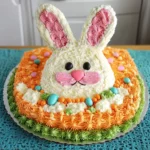
Easter Bunny Carrot Cake recipe
Ingredients
For the Moist and Spiced Carrot Cake:
- 3 cups All-Purpose Flour: The foundation of our cake. Measure correctly by spooning flour into your measuring cup and leveling it off, rather than scooping directly from the bag, to avoid using too much flour which can result in a dry cake. For a slightly denser cake, you can use cake flour, but all-purpose works beautifully for a classic carrot cake texture.
- 2 teaspoons Baking Soda: The leavening agent that helps the cake rise and become light and airy. Ensure your baking soda is fresh for optimal results. Old baking soda can lose its effectiveness.
- 1 teaspoon Ground Cinnamon: A warm, essential spice for carrot cake, providing that signature cozy flavor. Use high-quality cinnamon for the best aroma and taste. Ceylon cinnamon is often considered to be of higher quality than cassia cinnamon.
- 1 teaspoon Ground Nutmeg: Adds a hint of warmth and complexity. Freshly grated nutmeg is even more aromatic and flavorful, if you have it available. A little goes a long way with nutmeg, so measure accurately.
- ½ teaspoon Ground Ginger: Provides a subtle spice and depth of flavor that complements the cinnamon and nutmeg beautifully. Ground ginger adds a gentle warmth without being overpowering.
- ½ teaspoon Ground Cloves: A potent spice that adds a warm, pungent note. Use cloves sparingly as they can easily overpower the other spices if used in excess. They contribute a distinct depth and warmth to the spice blend.
- ½ teaspoon Salt: Enhances the flavors of all the other ingredients and balances the sweetness. Salt is crucial in baking to control the yeast activity (in yeasted doughs) and balance flavors in cakes and cookies. Use fine sea salt or table salt.
- 2 cups Granulated Sugar: Sweetens the cake and contributes to its moistness. You can also use a mix of granulated and light brown sugar for a richer, more molasses-like flavor. Brown sugar also adds extra moisture.
- 1 cup Vegetable Oil: Adds moisture and tenderness to the cake. Vegetable oil, canola oil, or even melted coconut oil (cooled) work well. Oil-based cakes tend to be moister than butter-based cakes.
- 4 large Eggs: Bind the ingredients together and add richness and structure. Use large eggs at room temperature for better emulsification and volume.
- 1 teaspoon Vanilla Extract: Enhances the overall flavor profile and adds a touch of sweetness and aroma. Use pure vanilla extract for the best flavor, avoiding imitation vanilla if possible.
- 3 cups Grated Carrots: The star ingredient! Use fresh, firm carrots for the best flavor and texture. Grate them finely using a box grater or food processor. Avoid pre-shredded carrots, as they can be drier and less flavorful. Freshly grated carrots are moister and sweeter.
- 1 cup Chopped Walnuts or Pecans (optional): Adds texture and nutty flavor. Walnuts are classic in carrot cake, but pecans are also delicious. You can toast the nuts lightly before chopping to enhance their flavor. Omit if you prefer a nut-free cake or have nut allergies.
- 1 cup Raisins or Golden Raisins (optional): Adds sweetness and chewiness. Raisins or golden raisins are a traditional addition to carrot cake. You can soak them in hot water or rum for 15-20 minutes and drain before adding to plump them up and add extra moisture. Omit if you prefer a raisin-free cake.
For the Tangy Cream Cheese Frosting:
- 8 ounces Cream Cheese, softened: The base of our frosting, providing a tangy, creamy richness. Use full-fat cream cheese for the best flavor and texture. Ensure it is properly softened to room temperature to avoid lumps in your frosting.
- ½ cup (1 stick) Unsalted Butter, softened: Adds richness, flavor, and structure to the frosting. Use unsalted butter at room temperature. Softened butter whips up more easily and creates a smoother frosting.
- 4 cups Powdered Sugar: Sweetens and thickens the frosting. Sift the powdered sugar before measuring to remove any lumps and ensure a smooth frosting.
- 1 teaspoon Vanilla Extract: Enhances the flavor of the frosting and complements the cream cheese. Use pure vanilla extract.
- Pinch of Salt: Balances the sweetness and enhances the other flavors in the frosting. A small pinch of salt makes a big difference in balancing the sweetness of the frosting.
For Easter Bunny Decoration (Optional but Recommended for Bunny Cake):
- Bunny-Shaped Cake Pan: Essential for creating the bunny shape. You can find these online or at specialty baking stores. Ensure it’s well-greased and floured for easy cake release.
- Shredded Coconut: For creating the bunny “fur.” Use unsweetened or sweetened coconut flakes, depending on your preference. You can toast some of the coconut for a golden brown “fur” effect.
- Food Coloring (Pink, Optional): For tinting coconut for bunny ears or paws. Gel food coloring is more concentrated and less likely to thin out your frosting or coconut than liquid food coloring.
- Candy Eyes or Chocolate Chips: For creating the bunny’s eyes. Candy eyes are readily available at craft stores or baking supply stores. Mini chocolate chips or even small pieces of dark chocolate can also work.
- Pink Candy or Frosting: For the bunny’s nose. Small pink candies like M&Ms, jelly beans, or a dollop of pink frosting can be used. You can also use a small piece of pink fondant.
- Piping Bag and Tip (Optional): For piping frosting details. A star tip or round tip can be used for borders or decorative elements.
Instructions
Step 1: Prepare the Cake Batter
- Preheat Oven and Prepare Pan: Preheat your oven to 350°F (175°C). Grease and flour your bunny-shaped cake pan (or a 9×13 inch rectangular pan if not making a bunny shape). Ensure all nooks and crannies of the bunny pan are greased and floured to prevent sticking. Alternatively, you can use baking spray with flour.
- Whisk Dry Ingredients: In a large mixing bowl, whisk together the flour, baking soda, cinnamon, nutmeg, ginger, cloves, and salt. Whisking helps to aerate the flour and evenly distribute the leavening and spices, ensuring a consistent cake texture.
- Combine Wet Ingredients: In a separate large bowl, whisk together the granulated sugar, vegetable oil, eggs, and vanilla extract until well combined. Ensure the eggs are fully incorporated into the sugar and oil mixture.
- Combine Wet and Dry Ingredients: Gradually add the dry ingredients to the wet ingredients, mixing on low speed with an electric mixer or by hand with a spatula until just combined. Be careful not to overmix. Overmixing can develop gluten and result in a tough cake. Mix until just a few streaks of flour remain.
- Fold in Carrots, Nuts, and Raisins (Optional): Gently fold in the grated carrots, and if using, chopped walnuts or pecans and raisins or golden raisins. Use a spatula to gently fold these ingredients in until evenly distributed throughout the batter. Folding ensures you don’t overmix the batter after adding the carrots and nuts.
Step 2: Bake the Carrot Cake
- Pour Batter into Prepared Pan: Pour the cake batter into the prepared bunny-shaped cake pan (or 9×13 inch pan), spreading it evenly. If using a bunny pan, ensure the batter is evenly distributed in all parts of the bunny shape.
- Bake: Bake for 30-40 minutes for a bunny-shaped pan, or 30-35 minutes for a 9×13 inch pan, or until a wooden skewer inserted into the center comes out clean. Baking times can vary depending on your oven and the pan type. Start checking for doneness around 30 minutes and check every few minutes thereafter. The cake should spring back lightly when gently pressed in the center and the edges should be lightly golden brown.
- Cool in Pan: Let the cake cool in the pan for 10-15 minutes before inverting it onto a wire rack to cool completely. Cooling in the pan allows the cake to firm up slightly, making it easier to invert without breaking. Cooling completely is essential before frosting to prevent the frosting from melting.
Step 3: Prepare the Cream Cheese Frosting
- Beat Cream Cheese and Butter: In a large mixing bowl, using an electric mixer, beat the softened cream cheese and softened butter until smooth and creamy. Ensure both are at room temperature for a lump-free frosting. Beat until light and fluffy.
- Gradually Add Powdered Sugar: Gradually add the powdered sugar, one cup at a time, beating on low speed until incorporated. Once all powdered sugar is added, increase speed to medium and beat until the frosting is smooth and fluffy. Sifting the powdered sugar beforehand will help prevent lumps in the frosting.
- Add Vanilla Extract and Salt: Stir in the vanilla extract and salt. Mix until just combined. Taste and adjust sweetness or tanginess if needed.
Step 4: Frost and Decorate Your Easter Bunny Carrot Cake
- Frost the Cake: Once the cake is completely cool, frost it generously with the cream cheese frosting. For a bunny shape, you can start by frosting the entire bunny with a thin crumb coat, then apply a thicker layer of frosting. If using a 9×13 inch pan, simply frost the top of the cake evenly.
- Create Coconut “Fur” (Optional, for Bunny Cake): If you’re making a bunny cake, divide the shredded coconut into bowls if you want to color some of it. Leave some coconut white for the bunny’s body. Tint some coconut pink with food coloring for the bunny’s ears and paws, if desired. To tint coconut, place coconut in a bowl, add a few drops of gel food coloring, and toss with a fork or your hands until evenly colored.
- Apply Coconut: Press the white shredded coconut all over the frosted bunny cake to create the “fur.” Use tinted coconut for ear insides and paw pads, if desired. Gently press the coconut into the frosting so it adheres well.
- Add Bunny Features: Use candy eyes or chocolate chips for the bunny’s eyes. Attach a pink candy or a dollop of pink frosting for the bunny’s nose. You can use extra frosting and a piping bag to pipe a border around the base of the cake or add other decorative elements.
- Chill (Optional): Chill the frosted and decorated cake in the refrigerator for at least 30 minutes to allow the frosting to set and the decorations to firm up. This makes slicing and serving easier.
Step 5: Serve and Enjoy!
Your adorable Easter Bunny Carrot Cake is ready to be the star of your Easter celebration! Slice, serve, and watch the smiles bloom.
Nutrition
- Serving Size: one normal portion
- Calories: 450-600
- Sugar: 35-50g
- Sodium: 250-350mg
- Fat: 25-35g
- Saturated Fat: 12-18g
- Carbohydrates: 50-70g
- Fiber: 1-2g
- Protein: 4-6g
- Cholesterol: 80-100mg