
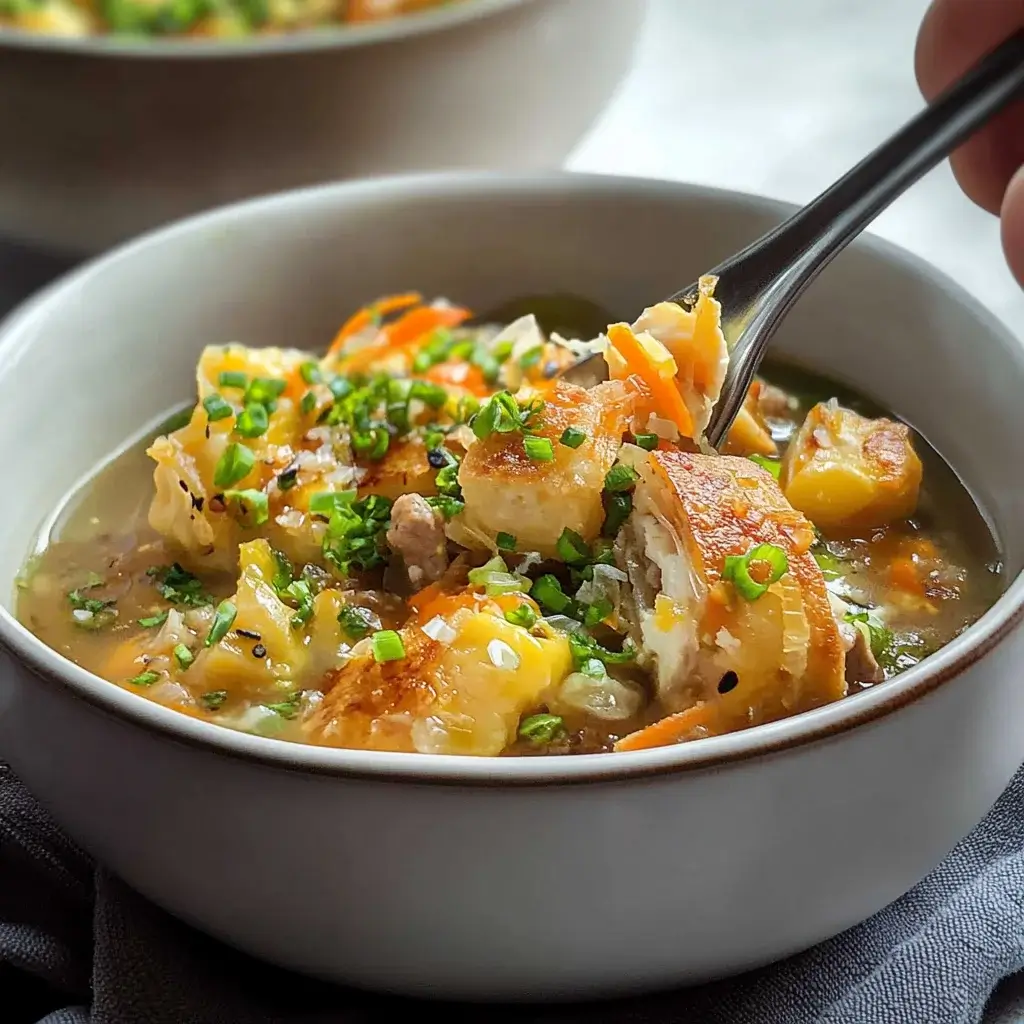
Let me tell you a secret: sometimes, the best recipes are born out of pure laziness… or, let’s call it culinary efficiency! I adore the flavors of a classic egg roll – that crispy wrapper giving way to savory pork, cabbage, and a hint of ginger. But the process of actually making egg rolls? Folding, frying, the whole shebang? On a busy weeknight? Forget about it. That’s where Deconstructed Egg Roll Soup comes in.
This isn’t just “egg roll filling in a bowl.” It’s a deliberate and delicious transformation. It captures all the essential tastes and textures of an egg roll – the savory pork (or chicken, or tofu!), the tender cabbage, the aromatic ginger and garlic, the richness of sesame oil, and the comforting warmth of broth – and presents them in a comforting, easy-to-eat soup form. My family is soup-obsessed, and this one quickly became a top request. They love the robust flavor, the satisfying chunks of protein and vegetables, and the fun of adding their own garnishes. It’s hearty enough for a main course, quick enough for a weeknight, and flavorful enough to satisfy even the most discerning palates. If you’re craving those egg roll flavors without the hassle, prepare to be converted. This Deconstructed Egg Roll Soup is about to become your new weeknight staple.
Ingredients: Your Shopping List for Flavor
The magic of Deconstructed Egg Roll Soup lies in its simple yet flavorful ingredients. Each component plays a crucial role in creating that signature egg roll taste in a comforting soup. Here’s what you’ll need to gather to embark on this culinary adventure:
- 1 pound Ground Pork (or Ground Chicken, or Vegetarian Protein): The heart of the soup! Ground pork is traditional and provides a rich, savory flavor that mimics the classic egg roll filling. However, ground chicken is a leaner and equally delicious alternative. For a vegetarian or vegan version, you can use crumbled firm tofu, plant-based ground meat substitutes, or even lentils.
- 1 tablespoon Cooking Oil (Vegetable, Canola, or Olive Oil): Needed for browning the protein and sautéing the aromatics and vegetables. Vegetable or canola oil are neutral options, while olive oil adds a subtle fruity note. Sesame oil can be used for sautéing for an extra layer of flavor, but it’s often best to reserve it for finishing.
- 1 medium Yellow Onion, diced: Provides a foundational savory flavor base for the soup. Yellow onions are versatile and mellow when cooked.
- 2-3 cloves Garlic, minced: Garlic is essential for that pungent, aromatic depth that is characteristic of egg rolls. Freshly minced garlic is always best for the most vibrant flavor.
- 1 tablespoon Fresh Ginger, grated or minced: Ginger adds warmth, spice, and a touch of citrusy brightness that is crucial to the authentic egg roll flavor profile. Fresh ginger is highly recommended, but in a pinch, you can use ground ginger (start with ½ teaspoon and adjust to taste).
- 8 cups Chicken Broth (or Vegetable Broth): The liquid base of the soup. Chicken broth provides a richer flavor, while vegetable broth is perfect for vegetarian or vegan versions. Low-sodium broth is recommended to control the salt level, allowing you to season to taste later.
- 1 head Green Cabbage (about 1 pound), shredded: Cabbage is the star vegetable and a key ingredient in egg roll filling. Green cabbage is traditional and provides a slightly peppery and crisp-tender texture. You can also use Napa cabbage for a milder and more delicate flavor. Pre-shredded cabbage can save time, but freshly shredded cabbage tends to have better texture.
- 1 cup Shredded Carrots: Carrots add sweetness, color, and a subtle crunch to the soup. Pre-shredded carrots are convenient, or you can shred your own.
- ¼ cup Soy Sauce (Low Sodium Preferred): Soy sauce provides the essential salty, umami flavor that is fundamental to Asian-inspired cuisine and egg rolls. Low sodium soy sauce is recommended to control saltiness. For a gluten-free option, use tamari or coconut aminos.
- 2 tablespoons Rice Vinegar: Rice vinegar adds a touch of acidity that balances the richness of the soy sauce and other savory flavors. It also brightens the soup and adds complexity. White vinegar or apple cider vinegar can be used as substitutes, but rice vinegar offers a milder and slightly sweeter acidity that is ideal for this dish.
- 1 tablespoon Sesame Oil (Toasted Sesame Oil Recommended): Sesame oil is a finishing oil that adds a distinct nutty aroma and flavor that is quintessential in egg rolls and Asian cuisine. Toasted sesame oil has a richer and more pronounced flavor than regular sesame oil and is highly recommended.
- 1 teaspoon Sugar (Granulated or Brown Sugar): A touch of sugar balances the savory and acidic flavors and enhances the overall taste. Granulated or brown sugar both work well. You can also use honey or maple syrup.
- ½ teaspoon Red Pepper Flakes (Optional, for Spice): Red pepper flakes add a touch of heat to the soup, mimicking the subtle spice sometimes found in egg rolls. Adjust the amount to your preference, or omit if you prefer a milder soup.
- Salt and Black Pepper to taste: Essential seasonings to enhance all the flavors. Taste the soup after cooking and adjust salt and pepper as needed. Remember that soy sauce is already salty, so season cautiously.
- 2 Large Eggs, lightly beaten: The “egg roll” element! Beaten eggs are drizzled into the hot soup to create delicate egg ribbons, adding richness and texture.
Optional Garnishes (Highly Recommended for Flavor and Presentation):
- Sliced Green Onions: Adds freshness, color, and a mild oniony flavor as a garnish.
- Sesame Seeds (Toasted): Adds visual appeal and a nutty crunch as a garnish.
- Crispy Wonton Strips or Fried Wonton Chips: For added texture and a nod to the “wrapper” element of egg rolls. You can buy pre-made wonton strips or bake or fry your own.
- Sriracha or Chili Garlic Sauce: For extra heat and flavor customization at the table.
- Fresh Cilantro or Parsley, chopped: For a fresh, herbaceous garnish.
Ingredient Variations and Substitutions:
- Protein Swaps: As mentioned, ground chicken, crumbled tofu, plant-based ground meat, or lentils are all excellent protein alternatives. You can also use shrimp or diced cooked chicken or pork.
- Vegetable Additions: Feel free to add other vegetables you enjoy. Sliced mushrooms, water chestnuts, bamboo shoots, bean sprouts, or bell peppers would all be delicious additions.
- Broth Variations: Beef broth can be used for a richer flavor, or you can use bone broth for added nutrients.
- Spice Enhancements: If you like it spicier, add more red pepper flakes, a pinch of cayenne pepper, or a dash of your favorite hot sauce. You can also add a minced fresh chili pepper like Serrano or jalapeño.
- Flavor Boosters: A teaspoon of fish sauce (for non-vegetarians) can add extra umami depth. A splash of Shaoxing cooking wine (Chinese rice wine) can also enhance the flavor.
Instructions: Step-by-Step to Soup Success
Deconstructed Egg Roll Soup is surprisingly easy and quick to make. Follow these simple steps to bring this flavorful soup to your table in no time:
Step 1: Brown the Protein
- Heat the Oil: Place a large pot or Dutch oven over medium-high heat. Add the cooking oil and let it heat up for a few seconds until it shimmers.
- Brown the Protein: Add the ground pork (or chosen protein) to the hot pot. Break it up with a spoon or spatula and cook, stirring occasionally, until browned and cooked through. Drain off any excess grease if using ground pork. Browning the protein adds depth of flavor to the soup.
Step 2: Sauté Aromatics and Vegetables
- Add Onion and Garlic: Add the diced onion to the pot with the browned protein. Cook, stirring occasionally, for about 3-5 minutes, or until the onion becomes softened and translucent.
- Add Garlic and Ginger: Add the minced garlic and grated ginger to the pot. Cook, stirring constantly, for about 1 minute, or until fragrant. Be careful not to burn the garlic and ginger. Sautéing the aromatics releases their flavors and infuses the soup base.
Step 3: Build the Soup Base
- Add Broth and Cabbage: Pour the chicken broth (or vegetable broth) into the pot. Add the shredded cabbage and shredded carrots.
- Bring to a Simmer: Bring the soup to a simmer over medium heat.
- Simmer and Cook Vegetables: Reduce the heat to low, cover the pot, and simmer for about 10-15 minutes, or until the cabbage is tender-crisp but not mushy. Simmering allows the flavors to meld together and the cabbage to soften to the desired texture.
Step 4: Season and Flavor
- Stir in Soy Sauce, Rice Vinegar, Sesame Oil, and Sugar: Stir in the soy sauce, rice vinegar, sesame oil, sugar, and red pepper flakes (if using).
- Taste and Season: Taste the soup and adjust seasoning as needed. Add salt and black pepper to taste. You may need to add more soy sauce for saltiness, rice vinegar for acidity, or sugar for balance, depending on your preference.
Step 5: Create Egg Ribbons
- Reduce Heat to Low: Ensure the soup is at a gentle simmer (not a rolling boil). Reduce the heat to low.
- Drizzle in Beaten Eggs Slowly: Slowly drizzle the lightly beaten eggs into the simmering soup in a thin, steady stream. As the egg hits the hot broth, it will cook and form delicate ribbons. Avoid pouring the egg in all at once, as this will result in clumps rather than ribbons.
- Let Eggs Cook Briefly: Let the egg ribbons cook for about 1-2 minutes, undisturbed, until they are set. Do not stir vigorously at this point, or the egg ribbons may break apart.
Step 6: Serve and Garnish
- Ladle into Bowls: Ladle the Deconstructed Egg Roll Soup into bowls.
- Garnish Generously: Garnish each bowl with your desired toppings, such as sliced green onions, toasted sesame seeds, crispy wonton strips, sriracha, and fresh cilantro.
- Serve Hot: Serve immediately and enjoy!
Tips for Perfect Deconstructed Egg Roll Soup:
- Don’t Overcook the Cabbage: The cabbage should be tender-crisp, not mushy. Simmering for 10-15 minutes is usually sufficient, but cooking time may vary depending on the thickness of your shredded cabbage.
- Control the Spice: Adjust the amount of red pepper flakes to your preference. Start with a small amount and add more to taste. You can always add more spice at the table with sriracha or chili garlic sauce.
- Use Toasted Sesame Oil: Toasted sesame oil has a much richer and more pronounced flavor than regular sesame oil. It makes a significant difference in the overall taste of the soup.
- Don’t Boil Vigorously When Adding Eggs: Ensure the soup is at a gentle simmer when you drizzle in the eggs. A rolling boil can make the egg ribbons tough and break apart.
- Garnish is Key: Garnishes not only add visual appeal but also contribute significantly to the flavor and texture of the soup. Don’t skip them!
Nutrition Facts: Delicious and Nutritious
Deconstructed Egg Roll Soup is not only incredibly flavorful and satisfying but also a relatively healthy and nutritious meal option. It’s packed with vegetables, lean protein (if using pork or chicken), and a flavorful broth base. Here’s a general estimate of the nutritional information per serving (based on a recipe serving 6-8 people):
Serving Size: Approximately 1.5 – 2 cups
Calories per Serving: Approximately 200-300 calories (This can vary depending on the type of protein used, amount of oil, and serving size)
Approximate Nutritional Breakdown per Serving:
- Total Fat: 10-15 grams
- Saturated Fat: 3-5 grams (higher if using ground pork)
- Monounsaturated Fat: 5-8 grams
- Polyunsaturated Fat: 1-2 grams
- Cholesterol: 50-75 mg (higher if using ground pork)
- Sodium: 500-800 mg (depending on broth and soy sauce used)
- Total Carbohydrates: 15-20 grams
- Dietary Fiber: 4-6 grams
- Sugars: 5-8 grams (naturally occurring from vegetables and added sugar)
- Protein: 15-20 grams (depending on protein source)
- Vitamin K: Excellent source (from cabbage)
- Vitamin C: Good source (from cabbage and carrots)
- Vitamin A: Good source (from carrots)
- Folate: Moderate source
- Potassium: Moderate source
Health Benefits:
- Relatively Low in Calories: A satisfying and flavorful meal option that is relatively low in calories compared to traditional egg rolls or other heavier soups.
- High in Protein: Provides a good source of protein, which is essential for satiety, muscle building, and overall health.
- Rich in Vegetables: Packed with cabbage and carrots, which are excellent sources of vitamins, minerals, and fiber.
- Good Source of Fiber: The fiber content from vegetables promotes digestive health, helps regulate blood sugar levels, and contributes to feelings of fullness.
- Lower in Fat than Egg Rolls: Significantly lower in fat than traditional fried egg rolls, making it a healthier alternative for enjoying those flavors.
- Customizable: You can easily adjust the recipe to be lower in sodium, lower in fat, or vegetarian/vegan to suit your dietary needs.
Important Note: These are approximate values, and the exact nutritional content can vary based on specific ingredients used, serving sizes, and cooking methods. For more precise nutritional information, you can use online nutrition calculators and input the specific ingredients and quantities you use in the recipe.
Preparation Time: Soup on the Table in Minutes
One of the best things about Deconstructed Egg Roll Soup is how quick and easy it is to prepare. It’s perfect for busy weeknights when you need a flavorful and satisfying meal on the table in a hurry.
- Prep Time: Approximately 15-20 minutes
- This includes dicing the onion, mincing the garlic and ginger, shredding the cabbage and carrots (if not using pre-shredded), and measuring out the other ingredients. Efficient chopping and prepping can reduce this time.
- Cook Time: Approximately 20-25 minutes
- This includes browning the protein, sautéing the aromatics and vegetables, simmering the soup, and adding the eggs. The soup simmers relatively quickly, and the egg ribbons cook in just a minute or two.
Total Time: Approximately 35-45 minutes
From start to finish, you can have a steaming bowl of delicious and healthy Deconstructed Egg Roll Soup on your table in under 45 minutes! This makes it a fantastic option for a quick weeknight dinner, a light lunch, or even a comforting weekend meal.
How to Serve Deconstructed Egg Roll Soup: Serving Suggestions
Deconstructed Egg Roll Soup is a complete meal in itself, but there are many ways to enhance the serving experience and customize it to your liking. Here are some serving suggestions:
Garnish Ideas (Essential for Flavor and Texture):
- Green Onions (Sliced): A must-have for freshness and mild onion flavor.
- Toasted Sesame Seeds: Adds visual appeal and a nutty crunch.
- Crispy Wonton Strips or Fried Wonton Chips: Provides textural contrast and a nod to the egg roll wrapper.
- Sriracha or Chili Garlic Sauce: For those who like extra heat, offer these condiments on the side for individual customization.
- Fresh Cilantro or Parsley (Chopped): Adds a fresh, herbaceous note.
- Lime Wedges: A squeeze of lime juice can brighten the soup and add a citrusy zing.
Main Course Pairings (Though it’s often a Main Dish itself):
- Serve as a light lunch or dinner on its own. It’s hearty and satisfying enough to be a complete meal.
- Pair with a side salad for a lighter meal. A simple green salad or Asian-inspired slaw would complement the soup beautifully.
- Serve with steamed rice or noodles for a heartier meal. If you want to stretch the soup further or make it more substantial, serve it over a bed of rice or noodles.
- Accompany with spring rolls or potstickers (for a more indulgent meal). If you’re craving the full egg roll experience, serve the soup alongside some spring rolls or potstickers (either homemade or store-bought).
Cuisine Pairings:
- Asian-Inspired Meals: Naturally pairs well with other Asian dishes. Serve it as a starter or side dish alongside stir-fries, noodle dishes, or other Asian-inspired main courses.
- Comfort Food Meals: Its warm and comforting nature makes it a great addition to cozy comfort food meals.
- Light and Healthy Meals: Fits perfectly into light and healthy meal plans due to its vegetable-rich and protein-packed nature.
Occasions to Serve:
- Weeknight Dinners: Its quick and easy preparation makes it ideal for busy weeknights.
- Lunch: A satisfying and flavorful option for lunch at home or at work (if packed in a thermos).
- Casual Gatherings: Great for casual get-togethers with friends and family.
- Soup Weather: Perfect for chilly days and evenings when you crave a warm and comforting bowl of soup.
- Potlucks (in a slow cooker or large pot): Can be easily transported and kept warm for potlucks or gatherings.
Serving Suggestions for Presentation:
- Ladle into attractive soup bowls.
- Garnish generously and artfully. Arrange garnishes neatly and appealingly on top of the soup.
- Serve hot and steaming.
- Offer garnishes in small bowls on the side so everyone can customize their soup.
Additional Tips for Perfect Deconstructed Egg Roll Soup
Here are five additional tips to elevate your Deconstructed Egg Roll Soup from good to absolutely fantastic:
- Use High-Quality Broth: The broth is the foundation of any good soup, and Deconstructed Egg Roll Soup is no exception. Using a high-quality chicken or vegetable broth will significantly enhance the overall flavor. Homemade broth is always best, but if using store-bought, opt for low-sodium and look for brands that are flavorful and not overly salty.
- Don’t Skimp on the Aromatics: Garlic and ginger are crucial for the authentic egg roll flavor. Use fresh, high-quality garlic and ginger and sauté them properly to release their full aroma and flavor. Freshly grated ginger is far superior to ground ginger in this recipe.
- Balance the Flavors: Egg Roll Soup is all about balance – savory, salty, acidic, and a touch of sweetness. Taste and adjust seasoning throughout the cooking process. Don’t be afraid to add a little more soy sauce for saltiness, rice vinegar for acidity, or sugar for balance until you achieve the perfect flavor profile for your taste.
- Customize the Spice Level: The recipe includes red pepper flakes for a subtle spice, but you can easily customize the spice level to your preference. If you like it spicier, add more red pepper flakes, a pinch of cayenne pepper, or a dash of hot sauce. If you prefer a milder soup, reduce or omit the red pepper flakes altogether.
- Embrace the Garnishes: Garnishes are not just for looks – they add layers of flavor and texture that truly complete the soup. Don’t underestimate the importance of garnishes like green onions, sesame seeds, crispy wonton strips, and a drizzle of sriracha. They elevate the soup from a simple meal to a truly satisfying culinary experience.
FAQ: Your Burning Questions Answered
Q1: Can I make Deconstructed Egg Roll Soup vegetarian or vegan?
A: Absolutely! It’s very easy to make this soup vegetarian or vegan.
- Vegetarian: Simply substitute the ground pork or chicken with crumbled firm tofu, plant-based ground meat substitutes, or lentils. Use vegetable broth instead of chicken broth. Ensure your soy sauce and sesame oil are vegetarian-friendly (most are).
- Vegan: Follow the vegetarian substitutions above. Ensure your vegetable broth is vegan (some may contain animal products). Omit the egg ribbons entirely or explore vegan egg drop soup alternatives using cornstarch slurry or silken tofu blended into the broth for a creamy texture (though this will change the nature of the “egg ribbon” element).
Q2: Can I make this soup ahead of time?
A: Yes, Deconstructed Egg Roll Soup is a great make-ahead soup. The flavors actually tend to meld and deepen even more overnight.
- Make Ahead: Prepare the soup up to Step 4 (before adding the eggs). Let it cool slightly, then store it in an airtight container in the refrigerator for up to 3-4 days.
- Reheat: When ready to serve, reheat the soup gently on the stovetop over medium heat until heated through.
- Add Eggs Fresh: Just before serving, bring the reheated soup to a gentle simmer, reduce the heat to low, and then proceed with Step 5 to drizzle in the beaten eggs and create fresh egg ribbons. Garnishing should also be done just before serving for optimal texture and freshness.
Q3: Can I freeze Deconstructed Egg Roll Soup?
A: You can freeze the soup base (without the eggs) for longer storage.
- Freeze Soup Base: Prepare the soup up to Step 4 (before adding the eggs). Let it cool completely, then transfer it to freezer-safe containers or freezer bags, leaving some headspace for expansion. Freeze for up to 2-3 months.
- Thaw and Reheat: Thaw the frozen soup base overnight in the refrigerator or use the defrost setting on your microwave. Reheat the thawed soup base on the stovetop over medium heat until heated through.
- Add Eggs Fresh: Just before serving, bring the reheated soup to a gentle simmer, reduce the heat to low, and then proceed with Step 5 to drizzle in the beaten eggs and create fresh egg ribbons. Garnishing should also be done just before serving.
- Note on Egg Texture: While the soup base freezes well, the texture of egg ribbons may change slightly upon freezing and thawing. For best results, always add the eggs fresh just before serving.
Q4: What are good substitutions for cabbage if I don’t have any?
A: While cabbage is a key ingredient for the authentic egg roll flavor, you can substitute it with other vegetables in a pinch, though it will slightly alter the flavor and texture.
- Napa Cabbage: A milder and more delicate cabbage variety that can be used interchangeably with green cabbage.
- Bok Choy: Chopped bok choy can be used as a substitute, offering a slightly different but still pleasant flavor and texture.
- Kale or Spinach: For a leafy green option, chopped kale or spinach can be added in the last few minutes of cooking. They will wilt quickly and provide nutrients, but will not replicate the texture of cabbage.
- Broccoli Slaw Mix: Pre-packaged broccoli slaw mix (which often contains shredded broccoli, carrots, and sometimes red cabbage) can be used for convenience. It will have a slightly different flavor profile but still provide a shredded vegetable element.
Q5: Can I make this soup in a slow cooker or Instant Pot?
A: Yes, you can adapt this recipe for both a slow cooker and Instant Pot, although the egg ribbon step is best done on the stovetop at the end.
- Slow Cooker:
- Brown the protein and sauté the onions, garlic, and ginger in a skillet on the stovetop as directed in Step 1 and 2.
- Transfer the browned protein and aromatics to a slow cooker. Add the broth, cabbage, carrots, soy sauce, rice vinegar, sesame oil, sugar, and red pepper flakes.
- Cook on low for 4-6 hours or on high for 2-3 hours.
- About 15-20 minutes before serving, transfer the soup to a stovetop pot or use a separate pot. Bring to a gentle simmer, reduce heat to low, and proceed with Step 5 to add the egg ribbons.
- Instant Pot:
- Use the “Sauté” function to brown the protein and sauté the onions, garlic, and ginger in the Instant Pot as directed in Step 1 and 2. Drain excess grease if needed.
- Add the broth, cabbage, carrots, soy sauce, rice vinegar, sesame oil, sugar, and red pepper flakes.
- Secure the lid and cook on “Manual” or “Pressure Cook” for 5 minutes, followed by a quick pressure release.
- Carefully remove the lid. Bring the soup to a gentle simmer using the “Sauté” function (or transfer to stovetop if easier), reduce heat to low, and proceed with Step 5 to add the egg ribbons.
Both methods require finishing the egg ribbon step on the stovetop for best results, as it’s difficult to control the gentle simmer needed for egg ribbons in a slow cooker or Instant Pot directly.
Print
Deconstructed Egg Roll Soup recipe
Ingredients
-
- 1 pound Ground Pork (or Ground Chicken, or Vegetarian Protein): The heart of the soup! Ground pork is traditional and provides a rich, savory flavor that mimics the classic egg roll filling. However, ground chicken is a leaner and equally delicious alternative. For a vegetarian or vegan version, you can use crumbled firm tofu, plant-based ground meat substitutes, or even lentils.
-
- 1 tablespoon Cooking Oil (Vegetable, Canola, or Olive Oil): Needed for browning the protein and sautéing the aromatics and vegetables. Vegetable or canola oil are neutral options, while olive oil adds a subtle fruity note. Sesame oil can be used for sautéing for an extra layer of flavor, but it’s often best to reserve it for finishing.
-
- 1 medium Yellow Onion, diced: Provides a foundational savory flavor base for the soup. Yellow onions are versatile and mellow when cooked.
-
- 2–3 cloves Garlic, minced: Garlic is essential for that pungent, aromatic depth that is characteristic of egg rolls. Freshly minced garlic is always best for the most vibrant flavor.
-
- 1 tablespoon Fresh Ginger, grated or minced: Ginger adds warmth, spice, and a touch of citrusy brightness that is crucial to the authentic egg roll flavor profile. Fresh ginger is highly recommended, but in a pinch, you can use ground ginger (start with ½ teaspoon and adjust to taste).
-
- 8 cups Chicken Broth (or Vegetable Broth): The liquid base of the soup. Chicken broth provides a richer flavor, while vegetable broth is perfect for vegetarian or vegan versions. Low-sodium broth is recommended to control the salt level, allowing you to season to taste later.
-
- 1 head Green Cabbage (about 1 pound), shredded: Cabbage is the star vegetable and a key ingredient in egg roll filling. Green cabbage is traditional and provides a slightly peppery and crisp-tender texture. You can also use Napa cabbage for a milder and more delicate flavor. Pre-shredded cabbage can save time, but freshly shredded cabbage tends to have better texture.
-
- 1 cup Shredded Carrots: Carrots add sweetness, color, and a subtle crunch to the soup. Pre-shredded carrots are convenient, or you can shred your own.
-
- ¼ cup Soy Sauce (Low Sodium Preferred): Soy sauce provides the essential salty, umami flavor that is fundamental to Asian-inspired cuisine and egg rolls. Low sodium soy sauce is recommended to control saltiness. For a gluten-free option, use tamari or coconut aminos.
-
- 2 tablespoons Rice Vinegar: Rice vinegar adds a touch of acidity that balances the richness of the soy sauce and other savory flavors. It also brightens the soup and adds complexity. White vinegar or apple cider vinegar can be used as substitutes, but rice vinegar offers a milder and slightly sweeter acidity that is ideal for this dish.
-
- 1 tablespoon Sesame Oil (Toasted Sesame Oil Recommended): Sesame oil is a finishing oil that adds a distinct nutty aroma and flavor that is quintessential in egg rolls and Asian cuisine. Toasted sesame oil has a richer and more pronounced flavor than regular sesame oil and is highly recommended.
-
- 1 teaspoon Sugar (Granulated or Brown Sugar): A touch of sugar balances the savory and acidic flavors and enhances the overall taste. Granulated or brown sugar both work well. You can also use honey or maple syrup.
-
- ½ teaspoon Red Pepper Flakes (Optional, for Spice): Red pepper flakes add a touch of heat to the soup, mimicking the subtle spice sometimes found in egg rolls. Adjust the amount to your preference, or omit if you prefer a milder soup.
-
- Salt and Black Pepper to taste: Essential seasonings to enhance all the flavors. Taste the soup after cooking and adjust salt and pepper as needed. Remember that soy sauce is already salty, so season cautiously.
-
- 2 Large Eggs, lightly beaten: The “egg roll” element! Beaten eggs are drizzled into the hot soup to create delicate egg ribbons, adding richness and texture.
Optional Garnishes (Highly Recommended for Flavor and Presentation):
-
- Sliced Green Onions: Adds freshness, color, and a mild oniony flavor as a garnish.
-
- Sesame Seeds (Toasted): Adds visual appeal and a nutty crunch as a garnish.
-
- Crispy Wonton Strips or Fried Wonton Chips: For added texture and a nod to the “wrapper” element of egg rolls. You can buy pre-made wonton strips or bake or fry your own.
-
- Sriracha or Chili Garlic Sauce: For extra heat and flavor customization at the table.
-
- Fresh Cilantro or Parsley, chopped: For a fresh, herbaceous garnish.
Instructions
Step 1: Brown the Protein
-
- Heat the Oil: Place a large pot or Dutch oven over medium-high heat. Add the cooking oil and let it heat up for a few seconds until it shimmers.
-
- Brown the Protein: Add the ground pork (or chosen protein) to the hot pot. Break it up with a spoon or spatula and cook, stirring occasionally, until browned and cooked through. Drain off any excess grease if using ground pork. Browning the protein adds depth of flavor to the soup.
Step 2: Sauté Aromatics and Vegetables
-
- Add Onion and Garlic: Add the diced onion to the pot with the browned protein. Cook, stirring occasionally, for about 3-5 minutes, or until the onion becomes softened and translucent.
-
- Add Garlic and Ginger: Add the minced garlic and grated ginger to the pot. Cook, stirring constantly, for about 1 minute, or until fragrant. Be careful not to burn the garlic and ginger. Sautéing the aromatics releases their flavors and infuses the soup base.
Step 3: Build the Soup Base
-
- Add Broth and Cabbage: Pour the chicken broth (or vegetable broth) into the pot. Add the shredded cabbage and shredded carrots.
-
- Bring to a Simmer: Bring the soup to a simmer over medium heat.
-
- Simmer and Cook Vegetables: Reduce the heat to low, cover the pot, and simmer for about 10-15 minutes, or until the cabbage is tender-crisp but not mushy. Simmering allows the flavors to meld together and the cabbage to soften to the desired texture.
Step 4: Season and Flavor
-
- Stir in Soy Sauce, Rice Vinegar, Sesame Oil, and Sugar: Stir in the soy sauce, rice vinegar, sesame oil, sugar, and red pepper flakes (if using).
-
- Taste and Season: Taste the soup and adjust seasoning as needed. Add salt and black pepper to taste. You may need to add more soy sauce for saltiness, rice vinegar for acidity, or sugar for balance, depending on your preference.
Step 5: Create Egg Ribbons
-
- Reduce Heat to Low: Ensure the soup is at a gentle simmer (not a rolling boil). Reduce the heat to low.
-
- Drizzle in Beaten Eggs Slowly: Slowly drizzle the lightly beaten eggs into the simmering soup in a thin, steady stream. As the egg hits the hot broth, it will cook and form delicate ribbons. Avoid pouring the egg in all at once, as this will result in clumps rather than ribbons.
-
- Let Eggs Cook Briefly: Let the egg ribbons cook for about 1-2 minutes, undisturbed, until they are set. Do not stir vigorously at this point, or the egg ribbons may break apart.
Step 6: Serve and Garnish
-
- Ladle into Bowls: Ladle the Deconstructed Egg Roll Soup into bowls.
-
- Garnish Generously: Garnish each bowl with your desired toppings, such as sliced green onions, toasted sesame seeds, crispy wonton strips, sriracha, and fresh cilantro.
-
- Serve Hot: Serve immediately and enjoy!
Tips for Perfect Deconstructed Egg Roll Soup:
-
- Don’t Overcook the Cabbage: The cabbage should be tender-crisp, not mushy. Simmering for 10-15 minutes is usually sufficient, but cooking time may vary depending on the thickness of your shredded cabbage.
-
- Control the Spice: Adjust the amount of red pepper flakes to your preference. Start with a small amount and add more to taste. You can always add more spice at the table with sriracha or chili garlic sauce.
-
- Use Toasted Sesame Oil: Toasted sesame oil has a much richer and more pronounced flavor than regular sesame oil. It makes a significant difference in the overall taste of the soup.
-
- Don’t Boil Vigorously When Adding Eggs: Ensure the soup is at a gentle simmer when you drizzle in the eggs. A rolling boil can make the egg ribbons tough and break apart.
-
- Garnish is Key: Garnishes not only add visual appeal but also contribute significantly to the flavor and texture of the soup. Don’t skip them!
Nutrition
- Serving Size: one normal portion
- Calories: 200-300 calories
- Sugar: 5-8 grams
- Sodium: 500-800 mg
- Fat: 10-15 grams Saturated Fat: 3-5 g
- Saturated Fat: 3-5 grams
- Carbohydrates: 15-20 grams
- Fiber: 4-6 grams
- Protein: 15-20 grams
- Cholesterol: 50-75 mg