

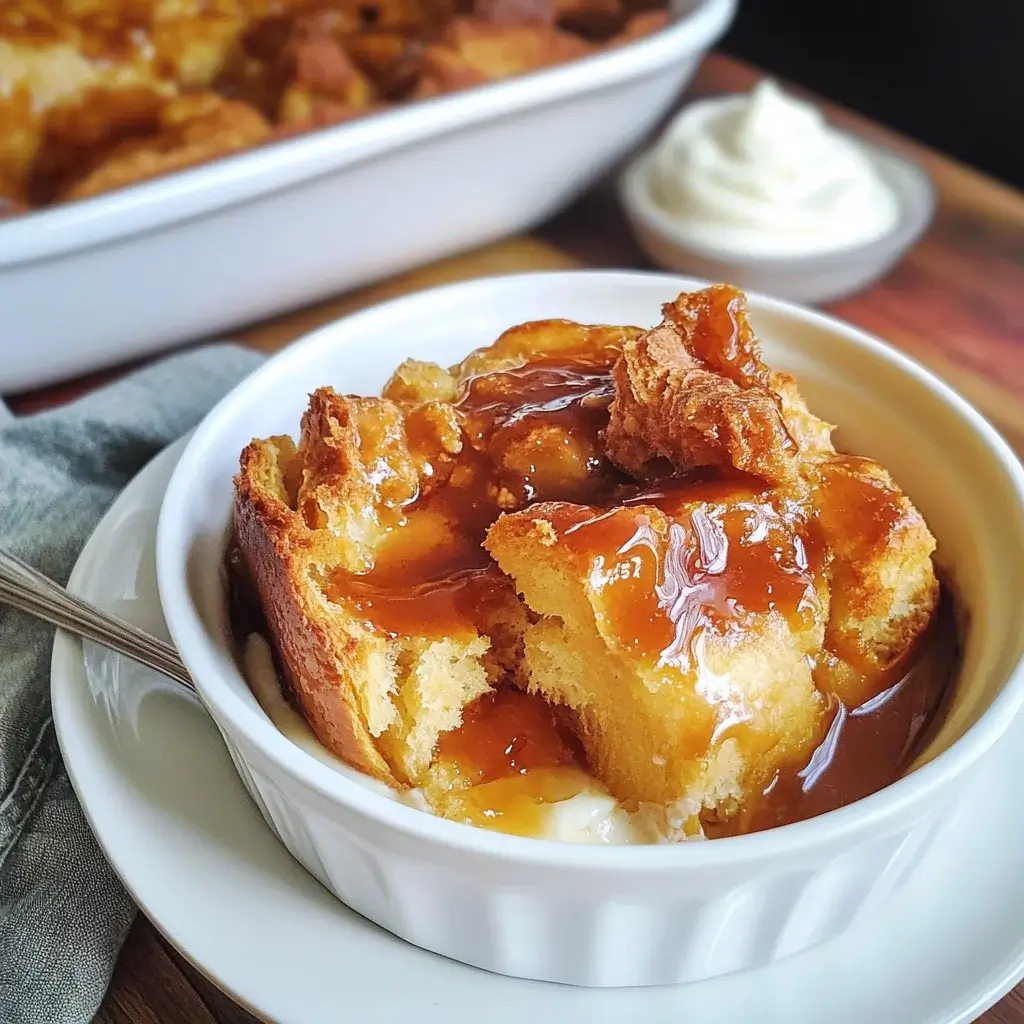

The first time I tasted Croissant Bread Pudding with Caramel, it was a revelation. I had always been a fan of bread pudding, but using croissants as the base? Pure genius! The flaky, buttery layers of the croissant soaked up the rich custard in a way that transformed the humble bread pudding into something truly decadent. This wasn’t just dessert; it was an experience. Served warm with a generous drizzle of homemade caramel, each bite was a symphony of textures – soft, pillowy bread, creamy custard, and that luscious, gooey caramel. My family absolutely adored it, and it quickly became a requested dish for holidays and special occasions. It’s surprisingly easy to make, yet feels incredibly elegant and impressive. If you’re looking for a dessert that will wow your guests and become a beloved family favorite, look no further than this Croissant Bread Pudding with Caramel. It’s pure comfort food elevated to an art form.
Ingredients: What You Need to Create Decadent Croissant Bread Pudding with Caramel
Creating this heavenly Croissant Bread Pudding with Caramel is all about using quality ingredients that complement each other beautifully. While the ingredient list is relatively straightforward, understanding the role of each component will help you achieve the best possible results. Let’s break down each ingredient and discuss why it’s important and any variations you might consider.
- Croissants: The Star of the Show (6-8 large croissants):The foundation of our bread pudding’s exceptional texture and flavor is, undoubtedly, croissants. Their inherent buttery richness and flaky layers are what set this recipe apart.
- Day-Old Croissants: Using day-old croissants is highly recommended for bread pudding. Slightly stale croissants are ideal because they absorb the custard better without becoming overly soggy. Freshly baked croissants can be too soft and may become mushy when soaked. If you only have fresh croissants, you can lightly dry them out by leaving them uncovered at room temperature for a few hours or gently toasting them in a low oven (200°F/95°C) for about 10-15 minutes. Just ensure they don’t brown too much.
- Plain Croissants: Plain croissants are the best choice for this recipe as they allow the flavors of the custard and caramel to shine through. Avoid using flavored croissants (like chocolate or almond) as they can clash with the intended flavor profile of the bread pudding.
- Large Croissants: Using large croissants is preferable as they provide more substantial pieces for the bread pudding. If using smaller croissants, you might need to adjust the quantity slightly to achieve the desired volume.
- Butter Croissants: Authentic butter croissants are essential for the rich, buttery flavor that makes this bread pudding so indulgent. Avoid croissants made with margarine or shortening, as they won’t provide the same depth of flavor.
- Tearing vs. Cubing: For a more rustic and textured bread pudding, tear the croissants into roughly 1-2 inch pieces. For a more uniform and neater presentation, you can cube the croissants into similar-sized pieces. Tearing tends to create more varied textures with crispy edges and softer interiors.
- Custard Base: Richness and CreaminessThe custard is what transforms the croissants into a luscious bread pudding. It provides moisture, richness, and binds everything together.
- Eggs (4 large): Eggs are crucial for the structure and richness of the custard. They provide binding and contribute to the creamy texture when baked. Use large eggs for the recipe as specified.
- Whole Milk (2 cups): Whole milk provides a good balance of richness and moisture for the custard. You can substitute with:
- 2% Milk: Will result in a slightly less rich custard, but still works well.
- Half-and-Half (1 cup milk + 1 cup heavy cream): For an even richer and more decadent custard.
- Heavy Cream (2 cups): Will create an incredibly rich and dense bread pudding, almost bordering on crème brûlée texture. Use sparingly if you prefer a lighter texture.
- Dairy-Free Milk Alternatives (for Dairy-Free Option): Unsweetened almond milk, soy milk, oat milk, or coconut milk (canned full-fat for richness, or carton for lighter) can be used to make a dairy-free version. Note that using dairy-free milk might slightly alter the texture and richness. Coconut milk will impart a subtle coconut flavor.
- Granulated Sugar (1/2 cup): Granulated sugar provides the necessary sweetness to balance the richness of the custard and croissants. You can adjust the amount slightly to your sweetness preference.
- Brown Sugar (light or dark): Using brown sugar will add a subtle molasses flavor and a slightly deeper sweetness. You can substitute part or all of the granulated sugar with brown sugar for a richer flavor.
- Vanilla Extract (1 tablespoon): Pure vanilla extract is essential for adding warmth and enhancing the overall flavor profile of the bread pudding. Use high-quality vanilla extract for the best results. Vanilla bean paste can also be used for a more intense vanilla flavor (use 1 tablespoon).
- Ground Cinnamon (1/2 teaspoon, optional): Cinnamon adds a warm, comforting spice note that complements the flavors of croissant and caramel beautifully. It’s optional but highly recommended for a classic bread pudding flavor. You can also use other warm spices like nutmeg, cardamom, or a pinch of cloves.
- Pinch of Salt: Salt enhances the sweetness and balances the flavors of the custard.
- Butter: For Greasing and Richness (2 tablespoons unsalted butter):
- For Greasing Baking Dish: Butter is used to grease the baking dish to prevent the bread pudding from sticking and to add a subtle buttery flavor to the edges.
- Melted Butter (Optional, for drizzling): Some recipes call for drizzling melted butter over the croissants before baking for extra richness and golden browning. This is optional but can enhance the overall indulgence.
- Caramel Sauce: The Crowning Glory (for drizzling):Caramel sauce is the perfect finishing touch, adding a luscious sweetness and gooey texture that elevates the bread pudding to another level.
- Homemade Caramel Sauce (Highly Recommended): Homemade caramel sauce is surprisingly easy to make and tastes far superior to most store-bought versions. The basic ingredients for homemade caramel sauce are:
- Granulated Sugar (1 cup): The base for the caramel.
- Unsalted Butter (1/2 cup, cut into pieces): Adds richness and creaminess.
- Heavy Cream (1/2 cup, warmed): Creates a smooth and pourable caramel sauce.
- Pinch of Salt: Balances the sweetness and enhances the flavor.
- Vanilla Extract (1 teaspoon, optional): Adds extra flavor depth.
- Store-Bought Caramel Sauce (Convenient Option): If you are short on time, a good quality store-bought caramel sauce can be used. Look for a caramel sauce that is thick, rich, and made with real butter and cream for the best flavor.
- Homemade Caramel Sauce (Highly Recommended): Homemade caramel sauce is surprisingly easy to make and tastes far superior to most store-bought versions. The basic ingredients for homemade caramel sauce are:
- Optional Additions (For Customization):
- Raisins or Dried Cranberries (1/2 cup): For a classic touch and chewy texture. Soak them in warm water or rum for 30 minutes to plump them up before adding.
- Chocolate Chips (1/2 cup, semi-sweet or dark): For chocolate lovers, adding chocolate chips creates a delightful chocolate-caramel combination.
- Chopped Nuts (1/2 cup, pecans, walnuts, almonds): Toasted nuts add crunch and a nutty flavor. Toast them lightly in a dry pan or oven to enhance their flavor.
- Bourbon or Rum (2 tablespoons, optional): For a boozy kick, add a splash of bourbon or rum to the custard or caramel sauce.
By carefully selecting your ingredients and considering these options, you can create a Croissant Bread Pudding with Caramel that is not only incredibly delicious but also perfectly tailored to your preferences.
Instructions: Step-by-Step Guide to Baking Perfect Croissant Bread Pudding
Baking a Croissant Bread Pudding with Caramel is a rewarding process, and following these step-by-step instructions will guide you to create a truly exceptional dessert.
Step 1: Prepare the Croissants
- Preheat Oven: Preheat your oven to 350°F (175°C).
- Prepare Croissants: If using day-old croissants, tear or cube them into 1-2 inch pieces and place them in a large bowl. If using fresh croissants, lightly dry them out as mentioned in the ingredient section.
- Arrange in Baking Dish: Grease a 9×13 inch baking dish (or similar size) with butter. Arrange the croissant pieces evenly in the prepared baking dish.
Step 2: Make the Custard
- Whisk Eggs and Sugar: In a separate large bowl, whisk together the eggs and granulated sugar until pale and slightly thickened.
- Add Milk, Vanilla, and Spices: Gradually whisk in the milk, vanilla extract, cinnamon (if using), and a pinch of salt until well combined and smooth.
Step 3: Soak the Croissants
- Pour Custard Over Croissants: Pour the custard mixture evenly over the croissants in the baking dish.
- Press Gently: Gently press down on the croissants with a spatula or your hands to ensure they are submerged in the custard.
- Soak (Optional but Recommended): For a moister bread pudding, let the croissants soak in the custard for at least 30 minutes at room temperature, or up to 1 hour in the refrigerator. Soaking allows the croissants to fully absorb the custard, resulting in a softer and more flavorful bread pudding. If short on time, you can skip soaking, but the texture might be slightly less moist.
Step 4: Bake the Bread Pudding
- Bake: Bake in the preheated oven for 40-50 minutes, or until the bread pudding is golden brown on top and the custard is set. To check for doneness, insert a knife into the center; it should come out mostly clean (a little moistness is okay, but no liquid custard). The center should be set and not jiggly.
- Cool Slightly: Let the bread pudding cool in the baking dish for at least 10-15 minutes before serving. This allows it to set further and makes it easier to slice and serve.
Step 5: Make the Caramel Sauce (While Bread Pudding Bakes)
- Melt Sugar (Dry Caramel Method – for Homemade Caramel): In a medium saucepan, heat granulated sugar over medium heat. Do not stir initially. As the sugar melts around the edges, gently swirl the pan to encourage even melting. Continue heating until the sugar is completely melted and turns a deep amber color (be careful not to burn it).
- Add Butter (Carefully!): Remove the pan from the heat and carefully add the cold butter pieces. It will bubble up and sputter, so be cautious. Stir until the butter is melted and incorporated into the caramel.
- Add Warmed Heavy Cream (Slowly): Slowly pour in the warmed heavy cream while stirring constantly. The caramel may seize up initially, but continue stirring over low heat until it becomes smooth and creamy again.
- Add Salt and Vanilla (Optional): Stir in a pinch of salt and vanilla extract (if using).
- Cool Slightly and Thicken: Let the caramel sauce cool slightly; it will thicken as it cools. If it becomes too thick, you can thin it out with a tablespoon or two of milk or cream.
Step 6: Assemble and Serve
- Drizzle with Caramel Sauce: Generously drizzle the warm caramel sauce over the warm Croissant Bread Pudding.
- Serve Warm: Serve the Croissant Bread Pudding warm, ideally with extra caramel sauce on the side for drizzling.
- Optional Toppings (Serve with): Consider serving with vanilla ice cream, whipped cream, fresh berries, or a sprinkle of toasted nuts for added indulgence and flavor.
Following these detailed instructions will help you bake a perfect Croissant Bread Pudding with Caramel every time. Enjoy this decadent and comforting dessert!
Nutrition Facts: Indulge Responsibly
Croissant Bread Pudding with Caramel is undeniably a decadent dessert, and while it’s meant to be enjoyed as a treat, understanding its nutritional profile can help you indulge responsibly. Here’s a general overview of the nutrition facts per serving. Please note that these are estimates and can vary based on specific ingredients, portion sizes, and the amount of caramel sauce used.
(Per Serving – Approximately 1 slice, Recipe yields roughly 12 servings)
- Servings Per Recipe: Approximately 12 servings (9×13 inch baking dish)
- Calories Per Serving: Approximately 350-500 calories per serving. This range is quite broad due to variations in ingredients, especially the richness of the custard (milk vs. cream) and the amount of caramel sauce. Using whole milk and a moderate amount of caramel will result in the lower end of the range, while using heavy cream and generous caramel will be on the higher end.
- Protein: 8-12 grams of protein per serving. Protein primarily comes from the eggs and milk in the custard.
- Fat: 20-30 grams of fat per serving. The fat content is significant due to the butter in croissants, butter in caramel sauce, and the dairy in the custard (milk or cream). Croissants are inherently high in fat, contributing substantially to the overall fat content.
- Saturated Fat: 12-18 grams of saturated fat per serving. Saturated fat comes from butter, croissants, and dairy.
- Cholesterol: 150-200 mg of cholesterol per serving. Cholesterol is primarily from eggs and dairy.
- Carbohydrates: 40-60 grams of carbohydrates per serving. Carbohydrates come from croissants, sugar in the custard, and sugar in the caramel sauce.
- Sugar: 30-45 grams of sugar per serving. Sugar content is high due to added sugar in the custard and caramel sauce, as well as naturally occurring sugars in croissants and milk.
- Fiber: 1-2 grams of fiber per serving. Fiber content is relatively low, mainly from croissants.
- Sodium: 150-250 mg of sodium per serving. Sodium comes from butter, salt added to the recipe, and naturally occurring sodium in ingredients.
- Vitamins and Minerals (in smaller amounts): Calcium (from milk), some B vitamins, and trace amounts of iron and other minerals.
Nutritional Considerations:
- High in Calories and Fat: Croissant Bread Pudding with Caramel is a calorie-dense and fat-rich dessert, primarily due to the croissants, butter, and cream. Enjoy in moderation as an occasional treat rather than an everyday dessert.
- High in Sugar: The sugar content is significant, mainly from added sugars in the custard and caramel sauce. Be mindful of portion sizes, especially if you are watching your sugar intake.
- Source of Protein: It does provide a moderate amount of protein, primarily from eggs and dairy.
- Low in Fiber: The fiber content is low, so it’s not a significant source of dietary fiber.
- Indulgent Treat: It’s best viewed as an indulgent dessert for special occasions or when you want a truly decadent treat.
Tips for Making it Slightly Healthier (Still a Treat):
- Use 2% Milk instead of Whole Milk or Cream: Reduces fat and calories slightly.
- Reduce Sugar in Custard and Caramel: Slightly reduce the amount of sugar in both components, but be mindful that it will affect the taste and texture.
- Increase Spices: Enhance flavor with spices like cinnamon, nutmeg, and vanilla to make it feel more flavorful without adding extra sugar.
- Serve Smaller Portions: Portion control is key. Enjoy a smaller slice to manage calorie and sugar intake.
- Pair with Fresh Fruit: Serve with fresh berries or sliced fruit to add some vitamins, minerals, and fiber to balance the richness of the dessert.
Remember, Croissant Bread Pudding with Caramel is meant to be a special treat. Enjoy it in moderation as part of a balanced diet.
Preparation Time: Plan Ahead for Indulgence
While Croissant Bread Pudding with Caramel is not a complicated recipe, it does require some time for preparation and baking. Planning ahead will ensure a smooth and enjoyable baking experience.
- Active Preparation Time: Approximately 25-30 minutes. This includes:
- Preparing croissants (tearing or cubing).
- Making the custard mixture (whisking ingredients).
- Soaking croissants in custard (if doing).
- Making caramel sauce (if homemade).
- Assembling the bread pudding in the baking dish.
- Inactive Time (Soaking – Optional): 30 minutes to 1 hour (optional soaking time). This is time where the croissants are soaking in the custard and requires no active involvement.
- Baking Time: 40-50 minutes. This is the oven time, during which you are free to do other things.
- Cooling Time: 10-15 minutes (before serving). Allowing it to cool slightly helps it set and makes it easier to serve.
- Total Time (Active + Inactive + Baking + Cooling): Approximately 1 hour 45 minutes to 2 hours 15 minutes (including optional soaking). Without soaking, the total time is closer to 1 hour 15 minutes to 1 hour 30 minutes.
Breakdown of Time Allocation:
- Croissant Prep & Assembly: 10-15 minutes (tearing/cubing, arranging in dish).
- Custard Preparation: 5-7 minutes (whisking custard ingredients).
- Soaking (Optional): 30-60 minutes (inactive).
- Caramel Sauce (Homemade): 10-15 minutes (making caramel sauce).
- Baking: 40-50 minutes (inactive oven time).
- Cooling: 10-15 minutes (inactive).
Tips to Manage Time Efficiently:
- Use Day-Old Croissants: Using day-old croissants eliminates the need for drying out fresh croissants.
- Make Caramel Sauce Ahead: The caramel sauce can be made a day or two in advance and stored in the refrigerator. Reheat gently before serving. This breaks up the preparation into stages.
- Skip Soaking (If Short on Time): While soaking enhances the texture, you can skip it if you’re pressed for time. The bread pudding will still be delicious.
- Organize Ingredients: Have all ingredients measured and prepped before starting to streamline the process.
- Multi-task: While the bread pudding is baking, you can clean up or prepare other parts of your meal if serving it as part of a larger menu.
While it’s not a super quick dessert, the hands-on time is relatively short, and the reward of a warm, decadent Croissant Bread Pudding with Caramel is well worth the time invested.
How to Serve Croissant Bread Pudding with Caramel: Elevate the Dessert Experience
Croissant Bread Pudding with Caramel is a dessert that’s meant to be savored and enjoyed. Here are some delightful serving suggestions to elevate the experience and make it even more special:
- Serving Temperature:
- Warm: Croissant Bread Pudding is best served warm, ideally shortly after baking. The warmth enhances the comforting flavors and textures.
- Slightly Cooled: Allowing it to cool slightly for 10-15 minutes after baking makes it easier to slice and serve while still retaining its warmth.
- Essential Toppings & Accompaniments:
- Caramel Sauce (Extra): Always serve with extra caramel sauce on the side for drizzling. Let guests add as much as they desire.
- Vanilla Ice Cream: A classic pairing! The cold, creamy vanilla ice cream contrasts beautifully with the warm bread pudding and caramel.
- Whipped Cream: Lightly sweetened whipped cream adds a delicate and airy texture to complement the richness of the bread pudding.
- Crème Fraîche or Mascarpone: For a tangier and more sophisticated topping, try crème fraîche or mascarpone cheese.
- Optional Garnishes for Added Flair:
- Fresh Berries (Strawberries, Raspberries, Blueberries): Fresh berries add a burst of color, freshness, and a touch of acidity to balance the sweetness.
- Sliced Bananas or Peaches: Complement the caramel flavor and add a fruity dimension.
- Toasted Nuts (Pecans, Walnuts, Almonds): Chopped and toasted nuts provide a satisfying crunch and nutty flavor.
- Chocolate Shavings or Curls: For chocolate lovers, a sprinkle of chocolate shavings or curls adds visual appeal and a hint of chocolate.
- Dusting of Powdered Sugar: A light dusting of powdered sugar adds a delicate sweetness and elegant finish.
- Fresh Mint Sprigs: A sprig of fresh mint adds a pop of green and a refreshing aroma.
- Serving Occasions:
- Dessert for Special Occasions: Perfect for holidays (Thanksgiving, Christmas, Easter), birthdays, anniversaries, and dinner parties. It’s impressive and feels celebratory.
- Brunch or Breakfast Treat: While rich, it can be a decadent treat for a special brunch or breakfast gathering.
- Comfort Food Dessert: Ideal for cozy nights in, family gatherings, or anytime you crave comforting and indulgent dessert.
- Drink Pairings:
- Coffee or Espresso: The richness of the bread pudding pairs wonderfully with the bitterness and warmth of coffee or espresso.
- Tea (Black Tea, Earl Grey, Vanilla Tea): Black tea or Earl Grey complements the caramel and spices. Vanilla tea enhances the vanilla notes in the dessert.
- Dessert Wine (Port, Sauternes): For a more sophisticated pairing, a dessert wine like Port or Sauternes can complement the richness and sweetness.
- Milk (Cold or Warm): A simple glass of cold or warm milk is a classic and comforting pairing.
- Bourbon or Whiskey (Small Glass): For adults, a small glass of bourbon or whiskey can complement the caramel and spice notes.
By using these serving suggestions, you can transform your Croissant Bread Pudding with Caramel into a truly memorable and delightful dessert experience. The key is to offer variety in textures and flavors to balance the richness and sweetness of the bread pudding.
Additional Tips for Exquisite Croissant Bread Pudding
To consistently bake an exceptional Croissant Bread Pudding with Caramel that will impress every time, here are five additional tips to elevate your recipe:
- Use High-Quality Croissants: The foundation of this bread pudding is croissants, so using high-quality, authentic butter croissants is crucial. Look for croissants that are flaky, buttery, and have a good flavor on their own. Avoid using pre-packaged croissants that might be dry or lack flavor. Freshly baked croissants from a good bakery will make a significant difference in the final taste and texture.
- Don’t Overbake: Overbaking can lead to a dry and tough bread pudding. Bake just until the custard is set and the top is golden brown. The center should be set but still slightly moist. Use the knife test to check for doneness – a knife inserted into the center should come out mostly clean. Err on the side of slightly underbaked rather than overbaked to ensure a moist and creamy texture.
- Toast Nuts (If Using) for Enhanced Flavor: If you are adding nuts like pecans, walnuts, or almonds, take the extra step to toast them lightly before adding them to the bread pudding. Toasting nuts in a dry pan or oven for a few minutes intensifies their nutty flavor and adds a more pronounced taste to the dessert. Toasted nuts also provide a better textural contrast.
- Make Caramel Sauce from Scratch (If Possible): While store-bought caramel sauce is convenient, homemade caramel sauce takes the flavor of this bread pudding to another level. Homemade caramel has a richer, deeper flavor and a smoother texture. The dry caramel method, as described in the instructions, is relatively simple and yields a truly exceptional caramel sauce that complements the bread pudding perfectly.
- Experiment with Flavor Variations (Subtle Tweaks): Once you’ve mastered the basic recipe, feel free to experiment with subtle flavor variations to customize it to your taste. Consider:
- Citrus Zest: Add orange or lemon zest to the custard for a bright, citrusy note.
- Spices: Experiment with different spices like nutmeg, cardamom, ginger, or chai spice blend in addition to or instead of cinnamon.
- Alcoholic Infusion: Add a tablespoon or two of bourbon, rum, or brandy to the custard or caramel sauce for a boozy depth of flavor.
- Coffee or Espresso Powder: Add a teaspoon of instant espresso powder to the custard for a mocha-caramel flavor.
- Salted Caramel: Increase the salt in the caramel sauce slightly to create a salted caramel version, which balances the sweetness beautifully.
By incorporating these tips, you’ll consistently create a Croissant Bread Pudding with Caramel that is not only delicious but also showcases your baking skills and attention to detail.
FAQ: Common Questions About Croissant Bread Pudding
Here are five frequently asked questions about making and enjoying Croissant Bread Pudding with Caramel, along with their helpful answers:
Q1: Can I use fresh croissants for bread pudding, or do they have to be day-old?
A: Day-old croissants are generally recommended for bread pudding because they are slightly drier and absorb the custard better without becoming mushy. Fresh croissants can be used, but they might be too soft and could result in a slightly denser texture. If using fresh croissants, you can lightly dry them out by leaving them uncovered at room temperature for a few hours or gently toasting them in a low oven (200°F/95°C) for about 10-15 minutes to remove some of the moisture.
Q2: Can Croissant Bread Pudding be made ahead of time?
A: Yes, Croissant Bread Pudding can be made ahead of time, which is convenient for entertaining or meal prepping. You can assemble the bread pudding (pour custard over croissants in the baking dish) and store it, unbaked, in the refrigerator for up to 24 hours. Bake as directed when ready to serve. The caramel sauce can also be made 1-2 days in advance and stored in an airtight container in the refrigerator. Reheat gently before serving. Baked bread pudding is best enjoyed fresh but can be stored in the refrigerator for 2-3 days and reheated, though the texture may be slightly less perfect after reheating.
Q3: Can I substitute the croissants with another type of bread?
A: While croissants are what make this recipe truly special, you can substitute them with other types of bread, but the texture and flavor will be different. Good alternatives include:
* Brioche: Brioche bread, like croissants, is rich and buttery, making it a good substitute, though it will be less flaky.
* Challah: Challah bread is also slightly sweet and rich, offering a softer texture than croissants.
* French Bread or Baguette: Use day-old French bread or baguette for a more classic bread pudding texture.
* Panettone or Stollen (Holiday Variations): For a festive twist, use panettone or stollen during the holidays.
Q4: How do I store leftover Croissant Bread Pudding?
A: Store leftover Croissant Bread Pudding in an airtight container in the refrigerator for up to 2-3 days. To reheat, you can:
* Microwave: Reheat individual slices in the microwave on medium power until warmed through.
* Oven: Reheat in a preheated oven at 325°F (160°C) for about 10-15 minutes, or until warmed through. Cover loosely with foil to prevent over-browning.
* Room Temperature: Some people enjoy it at room temperature as well, though the texture is best when warm.
Q5: Can I make Croissant Bread Pudding without caramel sauce?
A: Yes, you can make Croissant Bread Pudding without caramel sauce, but the caramel sauce is a key component that elevates the dessert and complements the rich custard and croissants. If you prefer to omit it, you can serve it with other sauces like:
* Vanilla Sauce or Crème Anglaise: A classic vanilla custard sauce.
* Chocolate Sauce: For a chocolate twist.
* Fruit Compote or Berry Sauce: For a lighter, fruitier option.
* Maple Syrup or Honey: For a simpler sweetness.
However, for the full experience of “Croissant Bread Pudding with Caramel”, the caramel sauce is highly recommended!
These FAQs should address common questions and help you feel confident in making and customizing your delicious Croissant Bread Pudding with Caramel!
Print
Croissant Bread Pudding with Caramel recipe
Ingredients
- Croissants: The Star of the Show (6-8 large croissants):The foundation of our bread pudding’s exceptional texture and flavor is, undoubtedly, croissants. Their inherent buttery richness and flaky layers are what set this recipe apart.
- Day-Old Croissants: Using day-old croissants is highly recommended for bread pudding. Slightly stale croissants are ideal because they absorb the custard better without becoming overly soggy. Freshly baked croissants can be too soft and may become mushy when soaked. If you only have fresh croissants, you can lightly dry them out by leaving them uncovered at room temperature for a few hours or gently toasting them in a low oven (200°F/95°C) for about 10-15 minutes. Just ensure they don’t brown too much.
- Plain Croissants: Plain croissants are the best choice for this recipe as they allow the flavors of the custard and caramel to shine through. Avoid using flavored croissants (like chocolate or almond) as they can clash with the intended flavor profile of the bread pudding.
- Large Croissants: Using large croissants is preferable as they provide more substantial pieces for the bread pudding. If using smaller croissants, you might need to adjust the quantity slightly to achieve the desired volume.
- Butter Croissants: Authentic butter croissants are essential for the rich, buttery flavor that makes this bread pudding so indulgent. Avoid croissants made with margarine or shortening, as they won’t provide the same depth of flavor.
- Tearing vs. Cubing: For a more rustic and textured bread pudding, tear the croissants into roughly 1-2 inch pieces. For a more uniform and neater presentation, you can cube the croissants into similar-sized pieces. Tearing tends to create more varied textures with crispy edges and softer interiors.
- Custard Base: Richness and CreaminessThe custard is what transforms the croissants into a luscious bread pudding. It provides moisture, richness, and binds everything together.
- Eggs (4 large): Eggs are crucial for the structure and richness of the custard. They provide binding and contribute to the creamy texture when baked. Use large eggs for the recipe as specified.
- Whole Milk (2 cups): Whole milk provides a good balance of richness and moisture for the custard. You can substitute with:
- 2% Milk: Will result in a slightly less rich custard, but still works well.
- Half-and-Half (1 cup milk + 1 cup heavy cream): For an even richer and more decadent custard.
- Heavy Cream (2 cups): Will create an incredibly rich and dense bread pudding, almost bordering on crème brûlée texture. Use sparingly if you prefer a lighter texture.
- Dairy-Free Milk Alternatives (for Dairy-Free Option): Unsweetened almond milk, soy milk, oat milk, or coconut milk (canned full-fat for richness, or carton for lighter) can be used to make a dairy-free version. Note that using dairy-free milk might slightly alter the texture and richness. Coconut milk will impart a subtle coconut flavor.
- Granulated Sugar (1/2 cup): Granulated sugar provides the necessary sweetness to balance the richness of the custard and croissants. You can adjust the amount slightly to your sweetness preference.
- Brown Sugar (light or dark): Using brown sugar will add a subtle molasses flavor and a slightly deeper sweetness. You can substitute part or all of the granulated sugar with brown sugar for a richer flavor.
- Vanilla Extract (1 tablespoon): Pure vanilla extract is essential for adding warmth and enhancing the overall flavor profile of the bread pudding. Use high-quality vanilla extract for the best results. Vanilla bean paste can also be used for a more intense vanilla flavor (use 1 tablespoon).
- Ground Cinnamon (1/2 teaspoon, optional): Cinnamon adds a warm, comforting spice note that complements the flavors of croissant and caramel beautifully. It’s optional but highly recommended for a classic bread pudding flavor. You can also use other warm spices like nutmeg, cardamom, or a pinch of cloves.
- Pinch of Salt: Salt enhances the sweetness and balances the flavors of the custard.
- Butter: For Greasing and Richness (2 tablespoons unsalted butter):
- For Greasing Baking Dish: Butter is used to grease the baking dish to prevent the bread pudding from sticking and to add a subtle buttery flavor to the edges.
- Melted Butter (Optional, for drizzling): Some recipes call for drizzling melted butter over the croissants before baking for extra richness and golden browning. This is optional but can enhance the overall indulgence.
- Caramel Sauce: The Crowning Glory (for drizzling):Caramel sauce is the perfect finishing touch, adding a luscious sweetness and gooey texture that elevates the bread pudding to another level.
- Homemade Caramel Sauce (Highly Recommended): Homemade caramel sauce is surprisingly easy to make and tastes far superior to most store-bought versions. The basic ingredients for homemade caramel sauce are:
- Granulated Sugar (1 cup): The base for the caramel.
- Unsalted Butter (1/2 cup, cut into pieces): Adds richness and creaminess.
- Heavy Cream (1/2 cup, warmed): Creates a smooth and pourable caramel sauce.
- Pinch of Salt: Balances the sweetness and enhances the flavor.
- Vanilla Extract (1 teaspoon, optional): Adds extra flavor depth.
- Store-Bought Caramel Sauce (Convenient Option): If you are short on time, a good quality store-bought caramel sauce can be used. Look for a caramel sauce that is thick, rich, and made with real butter and cream for the best flavor.
- Homemade Caramel Sauce (Highly Recommended): Homemade caramel sauce is surprisingly easy to make and tastes far superior to most store-bought versions. The basic ingredients for homemade caramel sauce are:
- Optional Additions (For Customization):
- Raisins or Dried Cranberries (1/2 cup): For a classic touch and chewy texture. Soak them in warm water or rum for 30 minutes to plump them up before adding.
- Chocolate Chips (1/2 cup, semi-sweet or dark): For chocolate lovers, adding chocolate chips creates a delightful chocolate-caramel combination.
- Chopped Nuts (1/2 cup, pecans, walnuts, almonds): Toasted nuts add crunch and a nutty flavor. Toast them lightly in a dry pan or oven to enhance their flavor.
- Bourbon or Rum (2 tablespoons, optional): For a boozy kick, add a splash of bourbon or rum to the custard or caramel sauce.
Instructions
Step 1: Prepare the Croissants
- Preheat Oven: Preheat your oven to 350°F (175°C).
- Prepare Croissants: If using day-old croissants, tear or cube them into 1-2 inch pieces and place them in a large bowl. If using fresh croissants, lightly dry them out as mentioned in the ingredient section.
- Arrange in Baking Dish: Grease a 9×13 inch baking dish (or similar size) with butter. Arrange the croissant pieces evenly in the prepared baking dish.
Step 2: Make the Custard
- Whisk Eggs and Sugar: In a separate large bowl, whisk together the eggs and granulated sugar until pale and slightly thickened.
- Add Milk, Vanilla, and Spices: Gradually whisk in the milk, vanilla extract, cinnamon (if using), and a pinch of salt until well combined and smooth.
Step 3: Soak the Croissants
- Pour Custard Over Croissants: Pour the custard mixture evenly over the croissants in the baking dish.
- Press Gently: Gently press down on the croissants with a spatula or your hands to ensure they are submerged in the custard.
- Soak (Optional but Recommended): For a moister bread pudding, let the croissants soak in the custard for at least 30 minutes at room temperature, or up to 1 hour in the refrigerator. Soaking allows the croissants to fully absorb the custard, resulting in a softer and more flavorful bread pudding. If short on time, you can skip soaking, but the texture might be slightly less moist.
Step 4: Bake the Bread Pudding
- Bake: Bake in the preheated oven for 40-50 minutes, or until the bread pudding is golden brown on top and the custard is set. To check for doneness, insert a knife into the center; it should come out mostly clean (a little moistness is okay, but no liquid custard). The center should be set and not jiggly.
- Cool Slightly: Let the bread pudding cool in the baking dish for at least 10-15 minutes before serving. This allows it to set further and makes it easier to slice and serve.
Step 5: Make the Caramel Sauce (While Bread Pudding Bakes)
- Melt Sugar (Dry Caramel Method – for Homemade Caramel): In a medium saucepan, heat granulated sugar over medium heat. Do not stir initially. As the sugar melts around the edges, gently swirl the pan to encourage even melting. Continue heating until the sugar is completely melted and turns a deep amber color (be careful not to burn it).
- Add Butter (Carefully!): Remove the pan from the heat and carefully add the cold butter pieces. It will bubble up and sputter, so be cautious. Stir until the butter is melted and incorporated into the caramel.
- Add Warmed Heavy Cream (Slowly): Slowly pour in the warmed heavy cream while stirring constantly. The caramel may seize up initially, but continue stirring over low heat until it becomes smooth and creamy again.
- Add Salt and Vanilla (Optional): Stir in a pinch of salt and vanilla extract (if using).
- Cool Slightly and Thicken: Let the caramel sauce cool slightly; it will thicken as it cools. If it becomes too thick, you can thin it out with a tablespoon or two of milk or cream.
Step 6: Assemble and Serve
- Drizzle with Caramel Sauce: Generously drizzle the warm caramel sauce over the warm Croissant Bread Pudding.
- Serve Warm: Serve the Croissant Bread Pudding warm, ideally with extra caramel sauce on the side for drizzling.
- Optional Toppings (Serve with): Consider serving with vanilla ice cream, whipped cream, fresh berries, or a sprinkle of toasted nuts for added indulgence and flavor.
Nutrition
- Serving Size: one normal portion
- Calories: 350-500
- Sugar: 30-45 grams
- Sodium: 150-250 mg
- Fat: 20-30 grams
- Saturated Fat: 12-18 grams
- Carbohydrates: 40-60 grams
- Fiber: 1-2 grams
- Protein: 8-12 grams
- Cholesterol: 150-200 mg